
软银集团

Search documents
疯狂的筹码:OpenAI 1000亿美元融资背后的AI生死局
Xin Lang Cai Jing· 2025-12-21 06:21
Group 1 - OpenAI is seeking a $100 billion funding plan with a post-money valuation expectation of $830 billion, positioning itself close to the trillion-dollar club despite not being profitable yet [1][2] - The AI industry is undergoing a significant transformation from a "light asset software industry" to a "heavy asset heavy industry," necessitating massive computational resources for advanced models like GPT-5 and the Stargate project [2][3] - OpenAI's cash burn could exceed $200 billion by 2030, making the $100 billion funding critical to secure future computational supply against competition from Google, Meta, and Anthropic [3] Group 2 - Oracle's $300 billion cloud service agreement over five years is crucial for its financial stability, as it heavily invests in data centers, raising concerns about debt risk [4][5] - The funding from OpenAI would not only guarantee Oracle's revenue but also help stabilize its balance sheet by allowing OpenAI to sign more prepayment contracts [5] - CoreWeave, a new player in the computational power market, relies on high leverage to acquire GPUs, and OpenAI's funding would provide a credit backing for its contracts valued at $22.4 billion [5][6] Group 3 - The discussion around an "AI bubble" has resurfaced, with critics pointing out OpenAI's high price-to-sales ratio of over 40 despite annual revenues nearing $20 billion [6][7] - Historical parallels are drawn to the 1850s railroad boom, suggesting that current investments in AI infrastructure may lead to significant future advancements despite skepticism [7][8] - The funding represents a substantial investment in a potential productivity revolution, with implications for advancements in energy, chip, and cooling technologies [8] Group 4 - The funding sources for OpenAI include significant commitments from SoftBank and Amazon, while medium-sized venture capital firms have exited the game [9][10] - The involvement of sovereign wealth funds and major corporations indicates a shift in AI competition from a developer-centric model to a strategic confrontation at the national level [10][11] - This centralization of capital is reshaping global power structures, with economies possessing cheap energy, substantial funds, and top talent gaining dominance in the digital age [11]
日本将启动耗资190亿美元的国家人工智能项目
Xin Lang Cai Jing· 2025-12-21 05:18
格隆汇12月21日|据读卖新闻,日本政府将与私营部门合作启动一项大型项目,开发总价值约3万亿日 元(约合190亿美元)的国家人工智能系统。预计明年春季,软银集团及其他十余家日本企业将组建新 公司,开发日本最大的基础人工智能模型。新公司将由软银集团牵头组建,汇集约100名通过公司竞赛 选拔出的专家,包括软银工程师和Preferred Networks公司的开发人员。日本政府强调,人工智能直接影 响工业竞争力和国家安全,过度依赖国外技术会带来战略风险,这也是启动该项目的原因之一。 ...

陆家嘴财经早餐2025年12月21日星期日
Wind万得· 2025-12-20 22:19
Regulatory Changes - The internet platform pricing is facing strong regulation with the issuance of the "Internet Platform Pricing Behavior Rules" by the National Development and Reform Commission, the State Administration for Market Regulation, and the National Internet Information Office, effective from April 10, 2026. The rules prohibit unreasonable restrictions on pricing behavior by platform operators and mandate that they cannot sell goods or services below cost [1] Technology Developments - Moore Threads held the first "MUSA Developer Conference" in Beijing, launching the new GPU architecture "Huagang" and two chips "Huashan" and "Lushan" based on this architecture. The new architecture boasts a 50% increase in computing density and a 10-fold improvement in energy efficiency, supporting large-scale intelligent computing clusters [1] - The global first commercial supercritical carbon dioxide power generation unit has successfully commenced operation in Guizhou, enhancing power generation efficiency by over 85% and net power output by over 50% [9] Financial Market Insights - The A-share IPO market is expected to see 114 companies listed in 2025, raising a total of 129.6 billion yuan, a 94% year-on-year increase, with an average first-day closing increase of 257% [5] - The ETF market is experiencing significant activity, with the A500 ETF reaching a scale of 245.935 billion yuan and accounting for nearly 70% of the net inflow into stock ETFs [5] Agricultural and Industrial Developments - The Ministry of Agriculture and Rural Affairs has registered 1,048 new varieties of specialty crops, with 98.5% being domestically bred [6] - The Inner Mongolia Silicon Source New Energy Electronic Materials Technology Co., Ltd. has officially put into production a project for the annual output of 20,000 tons of silicon-carbon anode materials, achieving a global first in the large-scale preparation of CVD silicon-carbon anode materials [9] International Relations and Economic Policies - The U.S. government has reached agreements with nine pharmaceutical companies to lower drug prices for federal programs, aiming to align U.S. drug prices with those in other wealthy countries [14] - The Reserve Bank of India has approved a proposal to shift to a risk-based pricing system for deposit insurance, marking a significant change in the current uniform premium model [15]


普京年度记者会:愿谈判结束俄乌冲突;“数十万份”爱泼斯坦案文件将公布;美军大规模空袭叙利亚境内“伊斯兰国”目标 | 一周国际财经
Mei Ri Jing Ji Xin Wen· 2025-12-20 16:40
Core Viewpoint - The emergence of AI smartphones, particularly represented by ByteDance's "Doubao Phone" nubia M153, signifies a significant shift in the mobile internet landscape, contrasting with the API standardization approach taken by Apple and Google, leading to a redefined relationship among smartphone manufacturers, app developers, and users [5][7][12]. Group 1: AI Smartphone Development - On December 19, ByteDance announced collaborations with hardware manufacturers like vivo, Lenovo, and Transsion to advance AI smartphone technology following the launch of the "Doubao Phone" [5][6]. - The "Doubao Phone" utilizes GUI technology to enable AI assistants to perform complex tasks across applications, which has prompted a defensive response from mainstream apps [5][10]. - The core technology of the "Doubao Phone" is based on a deep integration of GUI and system-level permissions, allowing AI to execute tasks like ordering food and comparing prices seamlessly [7][10]. Group 2: Technical Route Comparison - The competition between the GUI paradigm represented by Doubao and the API paradigm led by Apple and Google highlights a fundamental divergence in AI smartphone strategies [12][13]. - The GUI approach allows for broader application compatibility without requiring developer cooperation, while the API approach emphasizes stability, privacy, and efficiency but relies on app developers to integrate their functionalities [12][13]. - Apple and Google are currently focusing on API development, which is seen as a more conservative and slower approach compared to the rapid advancements in GUI technology [17][20]. Group 3: Market Implications - According to Canalys, the global AI smartphone shipment share is expected to rise from 16% in 2024 to 54% by 2028, with a compound annual growth rate of 63% from 2023 to 2028, driven by major players like Samsung and Apple [20][21]. - The introduction of AI assistants in smartphones raises concerns among major app developers about potential disruptions to their business models, as AI could bypass traditional app functionalities [21][22]. - The future ecosystem of AI smartphones is anticipated to evolve into a "layered governance" structure, where different players will have varying degrees of influence and control over AI operations [22][23].



OpenAI,65倍,8300亿美元
Ge Long Hui· 2025-12-20 11:39
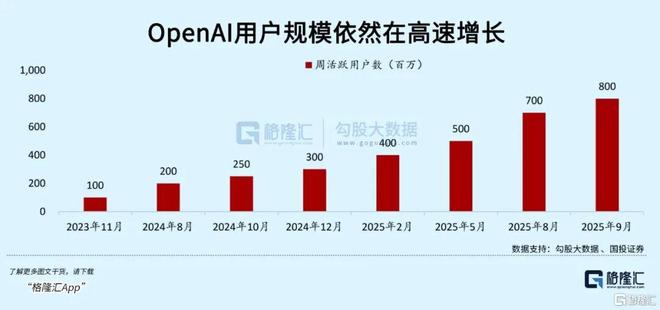
Core Viewpoint - OpenAI plans to raise $100 billion in a new funding round, potentially increasing its valuation to $830 billion, a significant jump from $500 billion just two days prior, highlighting the rapid escalation in perceived value within the AI sector [1][3]. Group 1: Valuation and Revenue Projections - If OpenAI achieves its target valuation of $830 billion, its price-to-sales ratio would be 65 times based on projected revenues of $12.7 billion in 2025 [2][3]. - OpenAI's revenue is expected to grow significantly, with estimates of $3.7 billion in 2024 and $12.7 billion in 2025, representing a 243% increase [6][7]. - The revenue structure includes substantial contributions from consumer subscriptions, enterprise services, and ecosystem commissions, with projections indicating that by 2029, revenues could reach $100 billion [7][8]. Group 2: Technological Advancements - OpenAI's competitive edge is attributed to its technological moat, particularly with the development of GPT-5, which utilizes a dual-track design for improved efficiency and cost reduction [3][11]. - The company is also working on "recursive self-improvement" technology, which could enhance model training efficiency by tenfold, necessitating a significant portion of the new funding [3][12]. Group 3: Financial Needs and Expenditures - OpenAI's projected costs for training advanced models are expected to soar into the tens of billions, driven by hardware and energy expenses, with estimates indicating a need for $100 billion in funding to support these initiatives [13][14]. - The company plans to invest heavily in building its own data centers to reduce reliance on external cloud services, with projected expenditures exceeding $450 billion from 2024 to 2030 [16][20]. Group 4: Market Dynamics and Competition - OpenAI faces intense competition for talent, necessitating substantial investments in employee compensation to retain top researchers amid offers from tech giants [20][21]. - The involvement of major investors, including SoftBank and Middle Eastern sovereign wealth funds, reflects a strategic interest in securing a foothold in the evolving AI landscape [25][26]. Group 5: Risks and Future Outlook - OpenAI's current business model is characterized by high cash burn rates, with projections indicating potential losses of $14 billion in 2026 and cumulative losses of $44 billion from 2023 to 2028 [23]. - The company's future hinges on successfully achieving AGI and significantly lowering inference costs; failure to do so could lead to a substantial market correction [27].
华尔街日报:OpenAI融资成败,将决定整个数据中心行业的命运
美股IPO· 2025-12-20 04:18
CNBC的Jim Cramer周五建议,OpenAI应该以万亿美元估值融资2000亿美元。这笔资金将使公司能够支付甲骨文现在建设数据中心所需的资金。如 果实现这一目标,其他超大规模计算企业将不得不继续在基础设施上投入资金,数据中心股票才能"起飞"。但如果OpenAI无法筹集足够资金,市场将 出现逆转。 12月19日,OpenAI正计划在一轮新的融资中募集高达1000亿美元资金,这轮融资目前处于早期阶段。如果OpenAI能顺利募集到全额目标资金,其公 司估值可能高达8300亿美元。 CNBC的Jim Cramer周五建议,OpenAI应该"趁热打铁",以万亿美元估值融资2000亿美元。他表示,这笔资金将使公司能够支付甲骨文现在建设数 据中心所需的资金。 如果实现这一目标,其他超大规模计算企业将不得不继续在基础设施上投入资金,数据中心股票才能"起飞"。 尽管人工智能股票周五反弹,纳指上涨 1.31%,但该板块近几个月来一直承压。 3000亿美元承诺引发市场担忧 OpenAI与甲骨文的合作关系已引起市场高度关注。 这家ChatGPT开发商承诺向甲骨文支付超过3000亿美元,用于数据中心建设。Cramer指出,甲骨文 ...
路透:卖光英伟达、抵押Arm加杠杆!软银“孤注一掷”OpenAI,力争年底前资金到位
美股IPO· 2025-12-20 04:18
Core Viewpoint - SoftBank is aggressively raising funds to fulfill its $30 billion investment commitment to OpenAI, aiming to complete the remaining $22.5 billion by the end of the year [1][4][11]. Fundraising Strategies - SoftBank, led by founder Masayoshi Son, is utilizing large-scale asset disposals and debt financing to secure the necessary funds [3][6]. - Son has sold all of SoftBank's $5.8 billion stake in Nvidia and reduced its T-Mobile US holdings by $4.8 billion [4][7]. - The company is also considering leveraging its shares in Arm Holdings to obtain a margin loan of $11.5 billion, having recently increased the loan limit by $6.5 billion [9][10]. Focus on OpenAI - The Vision Fund's investment managers have been instructed to shift their focus entirely to the OpenAI deal, indicating the urgency of the situation [8]. - OpenAI's valuation has surged since the initial investment agreement in April, with estimates now approaching $900 billion, significantly increasing the potential returns for SoftBank [11]. Financial Needs of OpenAI - OpenAI is facing rising costs for training and operating AI models, necessitating the new funds from SoftBank [12]. - CEO Sam Altman has stated that OpenAI aims to invest $1.4 trillion to build 30GW of computing power, with a weekly increase of 1GW, highlighting the substantial financial requirements [13][14].

卖光英伟达、抵押Arm加杠杆!软银“孤注一掷”OpenAI,力争年底前资金到位
Hua Er Jie Jian Wen· 2025-12-20 03:55
Core Insights - SoftBank Group and its founder Masayoshi Son are aggressively raising funds to fulfill a massive investment commitment to OpenAI, totaling $22.5 billion, with a deadline set for the end of this year [1][5] - The urgency of this funding push highlights SoftBank's ambitions in the AI sector and reflects the significant capital pressures faced by top global dealmakers in the trillion-dollar AI infrastructure race [1][2] Fundraising Strategies - SoftBank is employing multiple strategies to secure the necessary funds, including liquidating assets, utilizing its balance sheet, and leveraging debt instruments [2] - Key asset disposals include the complete sale of its $5.8 billion stake in Nvidia and a $4.8 billion reduction in its holdings of T-Mobile US [1][2] Focus on OpenAI - Investment managers at SoftBank's Vision Fund have been instructed to shift their focus entirely to the OpenAI deal, indicating the strategic importance of this investment [3] - SoftBank plans to take its payment application PayPay public, with an anticipated IPO in the first quarter of next year, potentially raising over $20 billion [3] Leveraging Arm Holdings - A significant source of funding for SoftBank comes from margin loans secured against its holdings in Arm Holdings, with the loan capacity recently expanded by $6.5 billion, bringing the total available financing to $11.5 billion [4] - The tripling of Arm's stock price since its IPO provides SoftBank with substantial additional collateral without needing to sell this core asset [4] OpenAI's Valuation Surge - The urgency to complete the funding is driven by OpenAI's soaring valuation, which has reportedly increased to nearly $900 billion since SoftBank's initial investment agreement in April, which was based on a $300 billion valuation [5] - This new funding is critical for OpenAI as it faces rising costs associated with training and operating AI models, with CEO Sam Altman stating a goal of investing $1.4 trillion to build 30GW of computing capacity [6]


日本为何完全放弃人形机器人?
虎嗅APP· 2025-12-20 03:27
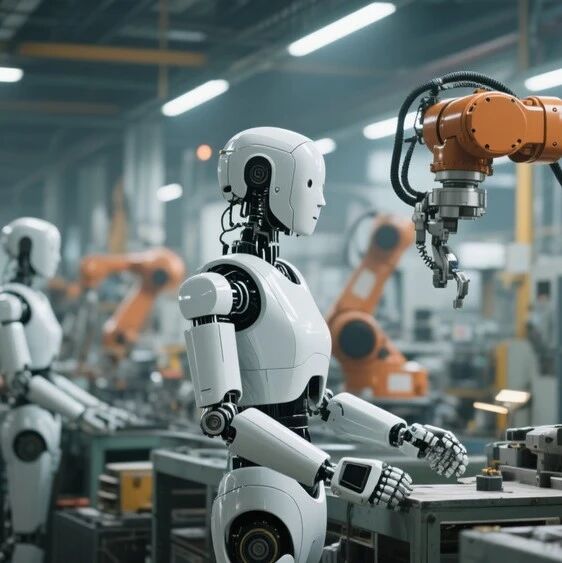
Core Viewpoint - Japan has largely abandoned the humanoid robot sector, focusing instead on industrial robots due to past failures and a lack of commercial viability in humanoid robotics [6][8][10]. Group 1: Humanoid Robots - Japan entered the humanoid robot market early but faced significant losses, leading to a strategic withdrawal from this sector [8][10]. - Notable humanoid robots like ASIMO and Pepper experienced development and production halts, with ASIMO priced at $2.5 million and Pepper at ¥198,000, resulting in low sales volumes [10][12]. - The Japanese market has shifted focus away from humanoid robots, emphasizing that there is no necessity for robots to resemble humans [12][18]. Group 2: Industrial Robots - Japan excels in industrial robotics, with companies like FANUC, Yaskawa, and Kawasaki holding significant market shares [27][28]. - The global industrial robot market is projected to account for approximately 71.4% of total revenue by 2024, indicating a strong demand for industrial robots [25]. - Japan's industrial robots are characterized by high reliability and long operational lifespans, often exceeding 20 years [39][40]. Group 3: Economic and Technological Factors - Japan's technological landscape lacks the maturity seen in the U.S. and China regarding AI and large models, which are crucial for advanced robotics [20][21]. - The country faces challenges in talent acquisition, particularly in AI and engineering, which hampers innovation in humanoid robotics [21][22]. - Japan's economic structure and risk aversion contribute to its cautious approach to new robotic technologies, preferring stability over rapid innovation [22][23]. Group 4: Market Dynamics - The demand for humanoid robots is currently limited, with most buyers being experimental or marketing-oriented rather than seeking mass production [17][19]. - Japan's industrial robots are designed for B2B applications, maintaining profitability and stability, contrasting with the more speculative nature of humanoid robotics [29][30]. - The Japanese robotics industry is largely self-sufficient, relying on domestic components, which enhances reliability and reduces dependency on imports [40][42].
OpenAI融资成败,将决定整个数据中心行业的命运
Hua Er Jie Jian Wen· 2025-12-20 02:23
OpenAI能否成功筹集大规模资金,正成为数据中心板块未来走向的关键变量。 12月19日华尔街见闻提及,OpenAI正计划在一轮新的融资中募集高达1000亿美元资金,这轮融资目前 处于早期阶段。如果OpenAI能顺利募集到全额目标资金,其公司估值可能高达8300亿美元。 CNBC的Jim Cramer周五建议,OpenAI应该"趁热打铁",以万亿美元估值融资2000亿美元。他表示, 这笔资金将使公司能够支付甲骨文现在建设数据中心所需的资金。 如果实现这一目标,其他超大规模计算企业将不得不继续在基础设施上投入资金,数据中心股票才 能"起飞"。尽管人工智能股票周五反弹,纳指上涨1.31%,但该板块近几个月来一直承压。 这笔债券发行后,投资者对OpenAI的支付能力产生疑虑,数据中心板块因此承压。 周五Cramer对OpenAI筹集资金的能力相当乐观。但他接着指出这家公司"狂妄自大",并暗示现在可能 是该公司"谦卑的时刻",或者也可能"证明他们的傲慢是有道理的"。 Cramer提出,即使OpenAI分阶段融资,例如现在通过私募融资1000亿美元,明年再通过公开发行融资 1000亿美元,那么数据中心主题仍能保持活力。 ...