
南京银行

Search documents
中国银行股价创新高!红利低波ETF(512890)近60个交易日资金狂揽47亿元,机构持续看好红利资产配置价值
Xin Lang Ji Jin· 2025-11-20 03:13
Core Viewpoint - The article highlights the performance and investment appeal of the Dividend Low Volatility ETF (512890), which has shown significant capital inflows and strong market recognition. Group 1: ETF Performance - The Dividend Low Volatility ETF (512890) rose by 1.15% to 1.233 CNY, with a trading volume of 4.18 billion CNY, leading its category in terms of transaction scale [1][3] - Over the past five trading days, the ETF has seen a net inflow of 180 million CNY, and over the last 20 trading days, the net inflow reached 1.15 billion CNY, indicating strong investor interest [2][3] - As of November 19, 2025, the ETF's total circulation scale was 21.431 billion CNY, ranking first among similar products, reflecting market confidence in the dividend low volatility strategy [2][3] Group 2: Investment Strategy and Holdings - The ETF's top holdings include major banks and transportation sectors, such as China Grain Reserves Corporation, Nanjing Bank, and Agricultural Bank of China, showcasing a focus on stable dividend-paying stocks [2][6] - The ETF has achieved a cumulative return of 143.68% since its inception in December 2018, outperforming its benchmark, making it a viable option for investors seeking stable returns amid market volatility [6] Group 3: Market Outlook - Analysts from Zheshang Securities express optimism about the value of dividend assets, predicting a balanced market style in 2026, with cyclical and technology growth sectors performing well [5] - The banking sector is highlighted as having significant investment potential due to its low historical valuations and strong dividend policies, making it an attractive choice for long-term investors [5]





新高再添1股!中国银行、工商银行均创历史新高
Ge Long Hui· 2025-11-20 03:13
Core Viewpoint - The A-share market has seen a significant increase in bank stocks, with notable gains for major banks such as Bank of China and Industrial and Commercial Bank of China reaching historical highs [1] Group 1: Stock Performance - Bank of China has risen over 4%, while Postal Savings Bank and China Construction Bank have increased by more than 3% [1] - Other banks such as Minsheng Bank, Huaxia Bank, Everbright Bank, Nanjing Bank, and Bank of Communications have seen gains exceeding 2%, and Shanghai Pudong Development Bank and Industrial and Commercial Bank have risen over 1% [1] Group 2: Market Milestones - Bank of China and Industrial and Commercial Bank both reached historical highs during the trading session [1] - Year-to-date, Bank of China has accumulated a 19% increase, while Industrial and Commercial Bank has seen a 26% rise [1] - Industrial and Commercial Bank's market capitalization has surpassed Agricultural Bank of China, reclaiming the top position in the market [1]

今年A股重要股东增持金额超930亿元,创近3年新高
Huan Qiu Wang· 2025-11-20 02:06
【环球网财经综合报道】Wind数据显示,截至11月19日,今年以来A股公司重要股东合计增持超过100亿股,按照区间 交易均价计算,合计增持金额超930亿元,金额创近3年新高。 《金融时报》则发文称,近年来,外国投资者重新评估中国股市,购股力度达到四年来新高。今年1月至10月,流入 中国股票的离岸资金达5060亿美元,远超2024年的数额。这一趋势受益于中资股的强劲表现,包括人工智能的推动和 亚洲金融市场的上市热潮。 从行业看,13个行业年内增持金额超过30亿元,银行、基础化工、公用事业等行业增持金额排在前列。从单家公司 看,今年以来增持金额超10亿元的公司有17家,6家公司增持金额超过25亿元,位居榜首的是南京银行。 《南华早报》发文称,摩根士丹利首席分析师劳拉·王等人在报告中表示,2025年中国公司利润预计增长6%,并建议 投资者关注具有创新能力和符合国家科技自立五年计划目标的科技股,以及能抵御市场波动的高股息股票。 ...


让“科技繁花”结出“产业硕果” 南京银行全力打造“科技金融特色名片”
Jin Rong Shi Bao· 2025-11-20 01:59
Core Insights - Nanjing Bank is committed to supporting innovative enterprises through tailored financial services, enhancing its reputation in the technology finance sector [1][4] - The bank has developed a new credit culture focused on future potential rather than historical performance, emphasizing team capabilities and cash flow over traditional collateral [2][3] - Nanjing Bank has implemented a "four-special" mechanism to empower technology innovation, including strategic, institutional, product, and team specialization [4] Group 1: Financial Support and Growth - Nanjing Bank has provided significant financial support to innovative companies, with cumulative funding exceeding 850 billion yuan and services extended to nearly 88,000 enterprises by September 2025 [1] - A specific case highlights a pet supplies company that received initial credit support of 4.8 million yuan, which grew to 55 million yuan, resulting in a revenue increase from 20 million yuan to 320 million yuan [3][5] - The bank's approach demonstrates a successful model of "financial + industry" integration, fostering mutual growth between financial institutions and enterprises [3] Group 2: Innovative Financial Models - Nanjing Bank has shifted from traditional debt financing to a model that combines equity and debt, addressing the needs of early-stage companies [5][6] - The bank has launched a "loan + equity" service model, which has already served over 200 companies and aims to become the first in Jiangsu to implement a "subscription rights registration + loan" business by 2024 [6] - A collaborative fund established with local government and investment institutions has successfully invested in 16 projects, showcasing the effectiveness of a "four-party linkage" model [7][8] Group 3: Ecosystem Development - Nanjing Bank is evolving from a mere financial provider to a co-builder of an industrial ecosystem, creating a network of nearly 20,000 technology enterprises and various investment and service institutions [9] - The bank plans to launch a "smart loan manager" platform by the end of 2024, facilitating real-time matching of financial needs among enterprises and investors [9][10] - The bank's service philosophy emphasizes building an open, collaborative, and win-win ecosystem, allowing for innovative solutions and growth opportunities for technology enterprises [11]
八年磨一剑,硅基智能冲击 “数字人第一股”:B 端红利难掩盈利薄弱与竞争压力
3 6 Ke· 2025-11-20 01:58
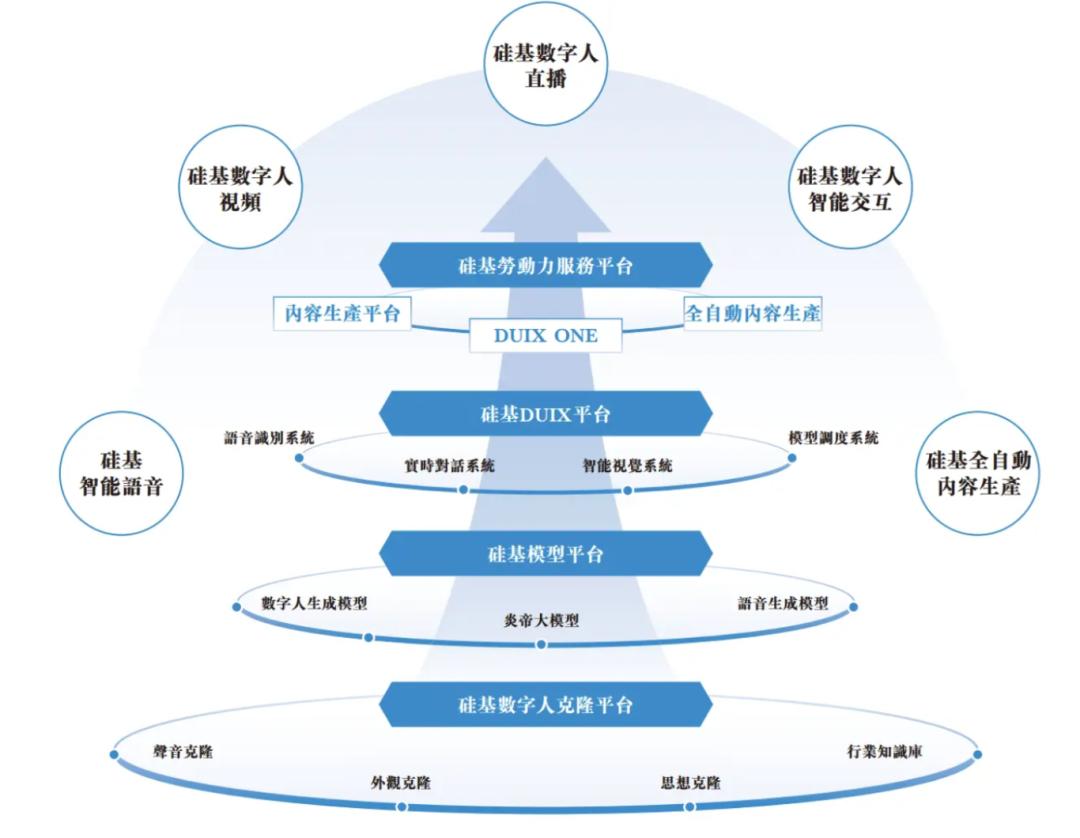
Core Viewpoint - The company, Silicon-based Intelligence, is set to become the first digital human operator to go public in Hong Kong by submitting its prospectus to the Hong Kong Stock Exchange, aiming for profitability through AI-driven digital human solutions [1]. Group 1: Company Overview - Silicon-based Intelligence was founded in August 2017 by entrepreneur Si Ma Huapeng, capitalizing on the AI boom initiated by AlphaGo, with a focus on voice technology for customer service in finance and telecommunications [2]. - The company has evolved through three technological leaps, introducing its first AIGC digital human in 2019, which integrated voice and image technologies [3]. - By 2024, the company launched a multimodal large model, DUIXONE, transitioning its business model from selling tools to providing comprehensive API platforms for various applications [3]. Group 2: Financial Performance - The company reported revenues of RMB 2.23 billion, RMB 5.31 billion, RMB 6.55 billion, and RMB 3.26 billion for the years 2022, 2023, 2024, and the first half of 2025, respectively, with growth rates of 138.12%, 23.40%, and 11.26% [6]. - In 2025, Silicon-based Intelligence achieved an adjusted net profit of approximately RMB 529 million, marking a turnaround from previous losses [1][11]. - The average customer value increased significantly from RMB 380,000 in 2022 to RMB 1,130,000 in the first half of 2025, reflecting a strategic focus on large clients [11]. Group 3: Market Position and Competition - Silicon-based Intelligence holds a leading position in China's digital human market with a 32.2% market share as of 2024, amidst increasing competition from major players like Baidu, Tencent, and Huawei [5][15]. - The company has completed eight rounds of financing since its inception, raising over RMB 1 billion, with significant investments from Tencent and other notable funds [5]. - The digital human market is projected to grow to RMB 155 billion by 2030, but current demand remains below the "100 billion level," posing challenges for the company [11][17]. Group 4: Strategic Focus and Challenges - The company employs a "small but beautiful" strategy, focusing on B-end markets and offering standardized products to meet the needs of small and medium-sized enterprises [8]. - Despite achieving profitability, the company faces challenges such as reliance on a few large clients, with the top five clients contributing over 64.4% of revenue in 2023 [10]. - The competitive landscape is intensifying, leading to price reductions that have pressured profit margins, with gross margins declining from 45.8% in 2023 to 31.6% in the first half of 2025 [14][15].

成交价低至六折 银行“直供房”密集挂牌
Zheng Quan Shi Bao· 2025-11-19 23:32
Core Insights - The article discusses the increasing trend of banks directly selling properties, referred to as "direct supply housing," as a means to dispose of non-performing assets and recover funds quickly [1][3][4]. Group 1: Overview of Direct Supply Housing - "Direct supply housing" refers to properties that banks acquire through debt recovery processes after borrowers default on loans, allowing banks to sell these properties directly on the market [1][3]. - The number of "direct supply housing" listings has significantly increased, with various types of properties, including commercial shops and residential units, being auctioned across multiple provinces in China [2][4]. Group 2: Market Dynamics and Implications - Properties listed as "direct supply housing" often have starting prices significantly lower than market value, with many properties being sold at discounts of up to 60% [1][2]. - Despite the low prices of "direct supply housing," their impact on the overall second-hand housing market is considered limited, as they represent a small segment and primarily consist of non-residential properties [4][5]. Group 3: Non-Performing Asset Management - The rise of "direct supply housing" is seen as a response to the need for banks to shorten the asset disposal cycle and recover funds more efficiently, especially as many properties have previously failed to sell at auction [4][6]. - The increase in non-performing loans, particularly in retail sectors such as personal consumption and credit card debts, highlights the challenges faced by banks, especially smaller financial institutions, in managing these assets [6].
年内重要股东增持超930亿元 金额创近三年新高
Zheng Quan Shi Bao Wang· 2025-11-19 23:21
Core Viewpoint - The significant increase in share buybacks by major shareholders in A-share listed companies indicates a strong confidence in future growth prospects and aims to enhance market sentiment [3][4]. Summary by Category Share Buyback Plans - Several A-share listed companies have announced buyback plans in November, including Huangtai Liquor with a plan to buy back between 70 million to 140 million yuan, Jiangsu Cable with 100 million to 150 million yuan, and Hualan Biological with 30 million to 60 million yuan [1]. Total Buyback Amount - As of November 19, the total buyback amount by major shareholders in A-shares has exceeded 93 billion yuan, marking a new high for 2023 [2][3]. Industry Analysis - Thirteen industries have seen buyback amounts exceeding 3 billion yuan, with the banking, basic chemicals, and public utilities sectors leading the way. The banking sector alone has seen over 10.7 billion yuan in buybacks [4]. Individual Company Insights - Seventeen companies have reported buybacks exceeding 1 billion yuan, with Nanjing Bank leading at over 5.9 billion yuan. Other notable companies include Salt Lake Co., BYD, and Yangtze Power [6]. - Salt Lake Co. has seen a buyback of over 4.5 billion yuan, primarily from Minmetals Group, with a significant stock price increase of over 68% this year [6][7]. - BYD's buybacks, totaling nearly 3 billion yuan, are driven by confidence from executives and employee stock plans, reflecting a positive outlook on the company's future [7][8]. Market Performance - Companies that have announced buyback plans have generally outperformed the market, with an average stock price increase of over 15% since the announcements, compared to a 13% increase in the CSI 300 index [9][11].


成交价低至六折 银行“直供房”密集挂牌 不良处置提速
Zheng Quan Shi Bao· 2025-11-19 23:16
Core Viewpoint - The increase in "direct supply housing" from banks is a strategy for disposing of non-performing assets and quickly recovering funds, with expectations for further growth in this area [1][4][6]. Group 1: Overview of "Direct Supply Housing" - "Direct supply housing" refers to properties obtained by banks through debt recovery processes after borrowers default on loans, allowing banks to sell these properties directly to the market [1][3]. - The trend of banks listing "direct supply housing" in bulk is evident, with over a hundred properties currently available for auction across various regions, including commercial shops, residential units, and factories [2][4]. - Properties listed as "direct supply housing" often have starting prices significantly below market value, with many properties marked as "below market average" [2][4]. Group 2: Market Impact and Trends - The auctioning of "direct supply housing" is primarily a response to the need for banks to shorten the asset disposal cycle and recover funds more quickly, especially after previous judicial auctions resulted in unsold properties [4][6]. - Despite the increasing attention on "direct supply housing," its impact on the broader second-hand housing market is limited, as these properties represent a small segment and are primarily non-residential [4][5]. - The current trend shows a rise in non-performing loan transfers among banks, indicating a growing concern over retail loan default rates, particularly in personal loans and credit card debts [6]. Group 3: Characteristics and Advantages - Compared to regular judicial auction properties, "direct supply housing" has clearer ownership and fewer hidden disputes, leading to faster auction and transfer processes [5]. - The emergence of "direct supply housing" highlights the challenges faced by commercial banks, especially smaller institutions, in managing non-performing assets effectively [6].
大位数据科技(广东)集团股份有限公司关于对外担保的进展公告
Shang Hai Zheng Quan Bao· 2025-11-19 18:43
证券代码:600589 证券简称:大位科技 公告编号:2025-076 大位数据科技(广东)集团股份有限公司 关于对外担保的进展公告 本公司董事会及全体董事保证本公告内容不存在任何虚假记载、误导性陈述或者重大遗漏,并对其内容 的真实性、准确性和完整性承担法律责任。 重要内容提示: ● 担保对象及基本情况 本次担保发生后,公司为资产负债率70%以下子公司提供的担保余额为3,000.00万元,剩余可用担保额 度为47,000.00万元。 ■ ● 累计担保情况 ■ 一、担保情况概述 (一)担保的基本情况 近日,大位数据科技(广东)集团股份有限公司(以下简称"公司"或"大位科技")全资子公司森华易腾 与南京银行股份有限公司北京分行(以下简称"南京银行北京分行")签署了《最高债权额度合同》(合 同编号:A0419682511180055243,以下简称"主合同"),主合同约定债权额度为人民币1,000.00万元, 债权发生期间为2025年11月17日至2026年11月16日。 为支持本次融资业务的开展,公司与南京银行北京分行签署了《最高额保证合同》(合同编号: Ec119682511180073203),公司为森华易腾 ...

年内重要股东增持超930亿元金额创近三年新高
Zheng Quan Shi Bao· 2025-11-19 18:01
Group 1 - In November, several A-share listed companies announced share buyback plans, including Huangtai Liquor with a plan to buy back between 70 million to 140 million yuan, Jiangsu Cable with a plan of 100 million to 150 million yuan, and Hualan Biological with a plan of 30 million to 60 million yuan [1][2] - As of November 19, 2023, the total amount of share buybacks by major shareholders of A-share companies exceeded 93 billion yuan, marking a new high for 2023 [2][3] - A total of 111 companies have announced ongoing buyback plans this year, primarily in the machinery, electronics, basic chemicals, and pharmaceutical industries [7][8] Group 2 - The banking sector led the buyback amounts, exceeding 10.7 billion yuan, with significant contributions from basic chemicals and public utilities, which reached 8.73 billion yuan and 6.82 billion yuan respectively [3] - Notably, Nanjing Bank topped the list with over 5.9 billion yuan in buybacks, followed by Salt Lake Co. with over 4.5 billion yuan, and BYD with nearly 3 billion yuan [4][5] - The average stock price increase for the 111 companies with ongoing buyback plans was over 15%, outperforming the average increase of the CSI 300 index [7][9] Group 3 - Salt Lake Co. reported significant production and sales of potassium chloride and lithium carbonate, with a production of 1.9898 million tons and sales of 1.7779 million tons for potassium chloride, and 20,000 tons for lithium carbonate [5] - BYD's share buybacks were primarily conducted by company executives and employee stock ownership plans, totaling nearly 3 billion yuan, reflecting confidence in the company's future [5][6] - Longyang Electric announced a buyback plan with a total amount exceeding 2.5 billion yuan, with the Three Gorges Group being a significant shareholder [6]