万达

Search documents
王健林甩卖48座万达广场!这些富人把钱用哪去了呢?
Sou Hu Cai Jing· 2025-05-29 19:18
Group 1 - Wang Jianlin is selling 48 Wanda Plazas to a consortium including Taikang Zhuhai, Gaohe Fengde, Tencent, JD Pinduoduo, and Sunshine Insurance, indicating a significant asset divestment [1] - The rental yield of Wanda Plazas has decreased from 8.3% in 2015 to 5.1% in 2024, reflecting the downturn in China's commercial real estate market and the impact of e-commerce [3] - High-net-worth individuals are diversifying their investments away from domestic real estate, with a shift towards global asset allocation, as highlighted by the increasing overseas asset allocation ratio reaching 28% in 2024, up 12 percentage points from previous years [9][7] Group 2 - Tencent's involvement in acquiring Wanda Plazas through its affiliated companies suggests a strategic move to integrate offline retail with online platforms, emphasizing the value of foot traffic in physical stores [5] - The trend among wealthy individuals is moving towards flexible and globally diversified assets, moving away from traditional real estate investments [7] - The focus on tax planning is increasing among high-net-worth individuals, with investment immigration becoming a popular method for optimizing global tax structures [11] Group 3 - The demand for investment immigration is rising, with a 47% year-on-year increase in applications, primarily driven by concerns for children's education and family safety [13] - The sale of Wanda Plazas reflects a broader reassessment of wealth transfer strategies among China's affluent, as the next generations face global competition [15]


能屈能伸!王健林再卖48座万达,全是熟人接盘,网友却一边倒怒赞
Sou Hu Cai Jing· 2025-05-29 06:45
Core Viewpoint - Wang Jianlin, once a real estate giant, is now frequently in the news for selling assets, indicating a significant shift in his business strategy and approach to debt management [1][9][17] Group 1: Asset Sales - On May 25, Wang Jianlin announced the sale of 48 Wanda Plazas, which were purchased by a consortium including Taikang, Tencent, and others, highlighting a collaborative approach among familiar business partners [3][4] - The 48 Wanda Plazas are located in prime areas of major cities like Beijing, Guangzhou, Chengdu, and Hangzhou, suggesting substantial rental income potential [6][9] - Wang Jianlin's asset sales have exceeded 100 billion yuan over the years, reflecting a strategic move to reduce debt and streamline operations [9][11] Group 2: Business Strategy and Transformation - Wang Jianlin's shift from a heavy asset model to a light asset operation model indicates a strategic pivot aimed at reducing risks and stabilizing cash flow [11][15] - The transformation of Wanda from being the "largest landlord" to a "light asset operator" suggests a focus on commercial operations and digital services, potentially unlocking larger market opportunities [15][17] - This approach is seen as a proactive response to the challenges faced by the real estate sector, positioning the company for future growth despite current market conditions [11][15] Group 3: Public Perception and Leadership - Public sentiment towards Wang Jianlin has shifted positively, with many viewing his asset sales as responsible and strategic rather than as a sign of defeat [11][17] - Wang's willingness to acknowledge challenges and actively address them has earned him respect, contrasting with other real estate leaders who may avoid accountability [13][17] - The narrative surrounding Wang Jianlin emphasizes his resilience and ability to adapt, reinforcing the idea that true leadership is demonstrated in times of adversity [16][17]
从“捡便宜”到“大包袱”,李思廉接盘万达酒店的8年之痛
Xin Jing Bao· 2025-05-27 14:06
Core Viewpoint - The article discusses the financial struggles of R&F Properties, which is facing a liquidity crisis after acquiring a large number of hotels from Wanda Group in 2017. The once-promising acquisition has turned into a burden, leading to significant debt and asset liquidation challenges [1][2]. Group 1: Acquisition and Initial Success - In 2017, R&F Properties acquired over 70 hotels from Wanda Group for approximately 19 billion yuan, at a price of about 60% of market value, making it the "largest luxury hotel owner globally" [2]. - Following the acquisition, R&F's hotel revenue surged by over 190% to exceed 7 billion yuan in 2018, but the company still reported a net loss of 459 million yuan that year [2]. Group 2: Financial Struggles and Debt Issues - R&F Properties announced an extension of the deadline for its offshore debt restructuring to July 31, 2025, reflecting its difficult financial situation with over 100 billion yuan in debts maturing [1][2]. - The company plans to restructure three outstanding priority notes totaling approximately 4.53 billion USD by the end of 2024, which is crucial for alleviating its debt burden [1][2]. Group 3: Asset Liquidation and Management Challenges - R&F's hotel asset portfolio has drastically reduced from nearly 90 to just 22 hotels by 2024, primarily due to a lack of management control over 68 hotels that were taken over by a receiver due to unpaid debts [4]. - The operational revenue from R&F's hotel segment fell from 6.365 billion yuan to 4.373 billion yuan in 2024, indicating a significant decline in performance [4]. Group 4: Current Financial Status - As of 2024, R&F Properties reported a loss attributable to shareholders of 17.71 billion yuan, with current liabilities exceeding current assets by approximately 31.68 billion yuan [5]. - The total debt, including bank loans and bonds, amounts to 113.55 billion yuan, with 103.57 billion yuan due within the next 12 months, while cash reserves are only 3.86 billion yuan [5]. Group 5: Future Outlook - R&F Properties has nearly liquidated all major overseas assets and plans to continue asset sales in 2025 to generate liquidity, although the timing and success of these sales remain uncertain [6].
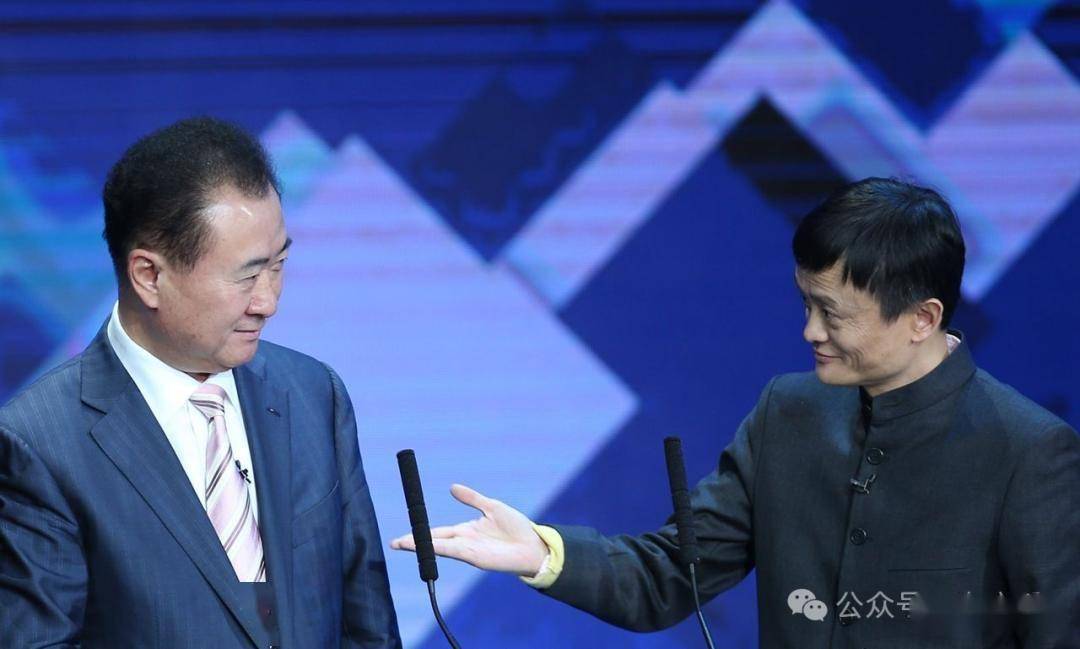
2012年12月12日,央视年度经济人物颁奖晚会上,王健林与马云立下1亿赌约
Sou Hu Cai Jing· 2025-05-27 07:53
Core Viewpoint - The article chronicles the rise and fall of Wang Jianlin and his company Wanda, highlighting the significant bets made on the future of e-commerce and the subsequent financial struggles faced by Wanda due to excessive debt and market changes. Group 1: Historical Context - In December 2012, Wang Jianlin and Jack Ma made a $100 million bet regarding e-commerce's market share in China by 2022, with Wang betting against the rise of e-commerce [1] - At that time, Ma had just capitalized on the success of "Singles' Day," and Wang was the newly crowned richest man in China with a net worth of 150 billion yuan [3] Group 2: Company Growth and IPO - In 2014, Wanda went public in Hong Kong, raising approximately 30 billion HKD, marking it as the largest IPO in Hong Kong that year [3] - By 2015, Wang's net worth had increased to 220 billion yuan, reaffirming his status as China's richest man [3] Group 3: Strategic Decisions and Global Expansion - Facing a declining stock price, Wang decided to privatize Wanda and return to A-shares for better valuation, executing a buyback at a premium price of 52.8 HKD per share [5] - Wanda embarked on a global acquisition spree, including a $10 billion purchase of AMC, a $3.2 billion acquisition of a UK yacht club, and investments in various international projects [5][6] Group 4: Financial Challenges - By 2017, Wanda's aggressive overseas investments raised concerns among regulators, leading to a tightening of credit and a subsequent liquidity crisis for the company [9][10] - The company faced significant debt, with estimates of over 800 billion yuan in total liabilities by 2023, exacerbated by the COVID-19 pandemic and a downturn in the real estate market [20][21] Group 5: Asset Liquidation and Current Status - To manage its debt, Wanda has sold over 80 Wanda Plaza locations, including a recent sale of 48 plazas to quickly raise 50 billion yuan [24] - The company has lost significant value, with Wang's wealth decreasing by nearly 200 billion yuan, and he has lost control over Wanda's management due to extensive debt and asset pledges [26]
“开盒”,坚决打击!
新华网财经· 2025-05-27 06:24
Core Viewpoint - The Central Cyberspace Administration of China has issued a notice to strengthen the rectification of the "opening box" issue, emphasizing the need for various measures to block the dissemination of related information and enhance protective measures [1][2]. Group 1: Measures to Address "Opening Box" Issues - The Central Cyberspace Administration has outlined multiple dimensions for addressing the "opening box" issue, including blocking information dissemination, improving early warning mechanisms, increasing punitive measures, optimizing protective measures, and enhancing public awareness [1]. - A special meeting was held to ensure major platforms like Weibo, Tencent, Douyin, Kuaishou, Baidu, Xiaohongshu, Zhihu, Bilibili, and Douban implement the tasks outlined in the notice with a "zero tolerance" approach [1][2]. Group 2: Specific Actions and Responsibilities - Websites are urged to thoroughly clean up various types of illegal personal information postings and to close or dissolve accounts and groups that organize or incite "opening box" activities [2]. - The administration plans to enhance protective measures by guiding platforms to upgrade their defenses against online violence and to set up quick reporting channels for "opening box" issues [2]. - There will be a focus on increasing the intensity of punitive actions against illegal collection and use of personal information, as well as against activities that involve leaking, stealing, or selling personal information [2].

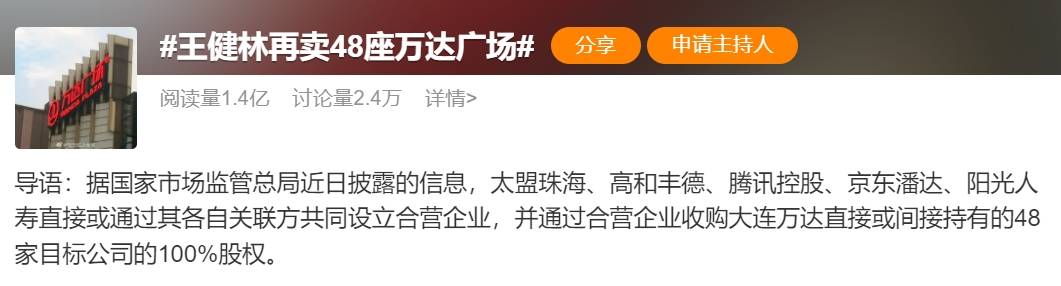
400亿债务压顶,王健林再卖48座万达广场
Sou Hu Cai Jing· 2025-05-26 11:02
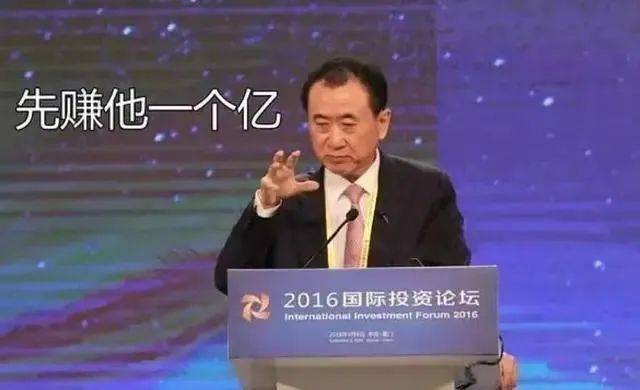
先是抛售万达商旅、酒店,给融创和富力;后是抛售万达影业给腾讯;再后来,退无可退的老王,只能抛售自己的核心资产——万达广场。 今日,曝出消息,迫于债务压力,王健林再次出售48座万达广场,这是继2023年30座、2024年26座、今年初5座后,王健林第四次抛售核心资产还债。 三年不到,万达共计出售了100多座广场,债务压力可见一斑。 据了解,万达今年到期的债务约400亿元,但账上只有116亿现金,缺口较大,加之王健林本人的股权已被冻结,上市也遥遥无期,除了变卖广场,很难找到 其他的融资渠道。 值得注意的是,虽然王健林让出了广场的所有权,但保留了经营权,未来万达仍可通过物业管理,从这些广场上获得相应的收益。 从2017年暴雷以来,这位前首富的工作可能就剩下了"还债"二字,每次媒体曝出万达的消息均与此有关。 前段时间,王健林多次被路人拍到变瘦的照片,与2015年登上首富时的状态,判若两人。那时的他神采奕奕,在采访中贡献了"定个小目标,先赚它1个 亿"的名场面。从此,中文互联网上,经常用"1个小目标"代指1个亿。 时过境迁,如今,每年都在为还债发愁的老王,不知回想起当年的盛况会有何感想? 不过可喜的是,万达化债的情况, ...
王健林再卖48座万达广场,71岁骨瘦如柴,王思聪却在国外享受生活
Sou Hu Cai Jing· 2025-05-26 10:14
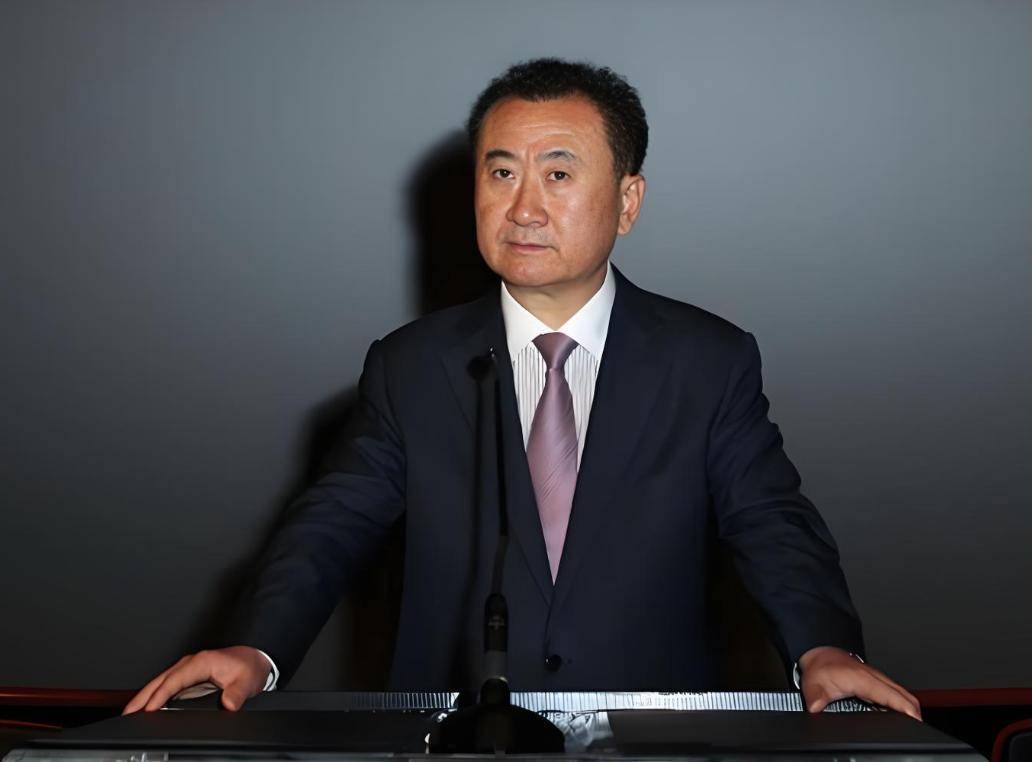
Core Viewpoint - Wang Jianlin, the founder of Wanda, is selling 48 Wanda Plazas as part of his efforts to repay a staggering debt of 600 billion yuan, reflecting the company's ongoing financial struggles and his commitment to addressing the crisis [1][4]. Group 1: Financial Struggles - Since the real estate industry's upheaval in 2017, Wanda's high-leverage model has collapsed, leading to a broken capital chain and transforming Wang Jianlin from a "richest man" to a "debtor" [2]. - Wang has pledged all of Wanda's equity and sold 77 hotels and over 60 Wanda Plazas to gradually repay debts [4]. Group 2: Personal Impact - Wang Jianlin's perseverance has improved his reputation among creditors, who now view him as trustworthy, despite the immense pressure causing visible aging and fatigue [6][9]. - The contrast between Wang Jianlin's current appearance and his previous robust image highlights the toll that financial stress has taken on him [9]. Group 3: Family Dynamics - Wang Jianlin's son, Wang Sicong, appears to be living a carefree life abroad, seemingly detached from the family's financial crisis, which raises questions about the family's asset planning [11][16]. - Despite the family's current challenges, it is suggested that Wang Jianlin has likely secured a financial safety net for his son, ensuring that he can maintain a comfortable lifestyle regardless of Wanda's situation [18][20].
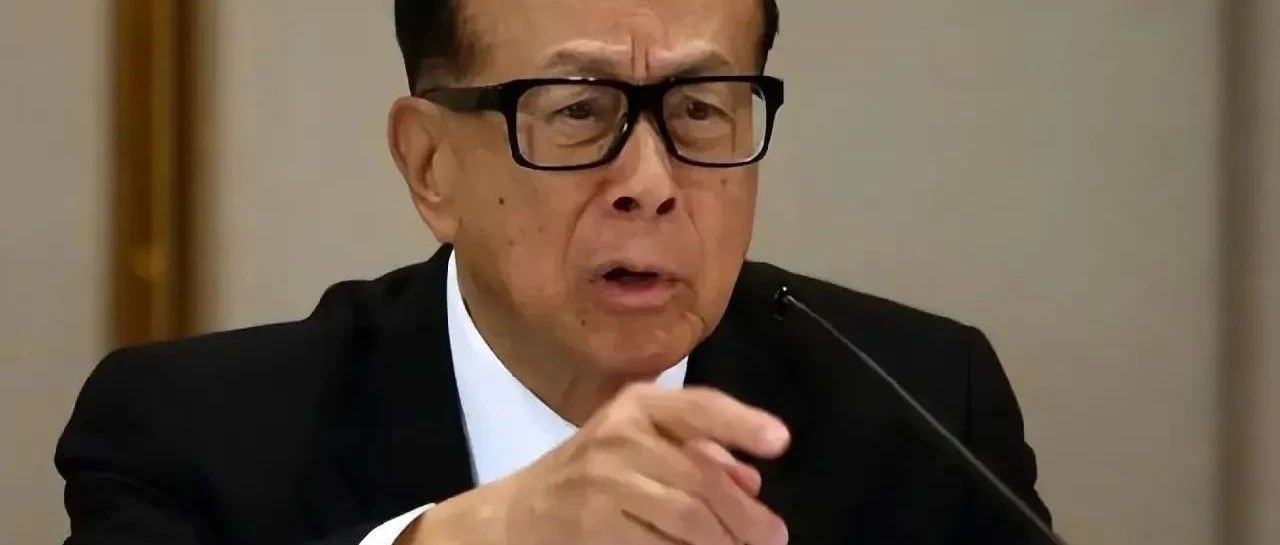
一次逮捕十人,李嘉诚栽了!
商业洞察· 2025-05-26 09:07
Core Viewpoint - The article discusses the recent arrest of ten individuals associated with Cheung Kong Holdings, highlighting issues of bribery, substandard construction, and the implications for the company's reputation in the real estate market [1][2]. Group 1: Project Overview - The "Hong Kong First Home" project by Cheung Kong Holdings is akin to affordable housing in mainland China, designed for young first-time buyers, featuring high-density living with 3,000 units across six buildings [3]. - The project has raised concerns due to allegations of construction quality issues, including insufficient reinforcement and building misalignment, leading to the arrests [2][3]. Group 2: Business Model Analysis - Li Ka-shing, often referred to as the "Godfather of Business" and "Godfather of Real Estate," has built his fortune not through rapid construction but by land speculation, a strategy that contrasts sharply with the high-turnover model of mainland developers like Evergrande and Country Garden [5][7]. - Cheung Kong Holdings employs a strategy of land hoarding, delaying construction to benefit from land appreciation, which has led to criticism of the company's practices as exploitative [9][10]. Group 3: Market Implications - The article suggests that mainland developers cannot adopt the same land hoarding strategy due to their need to deliver results to local governments and secure financing, highlighting a fundamental difference in operational strategies between Hong Kong and mainland real estate companies [10][11]. - The long-term land holding strategy has allowed Cheung Kong Holdings to avoid project failures, unlike other developers who have faced significant financial distress [11].

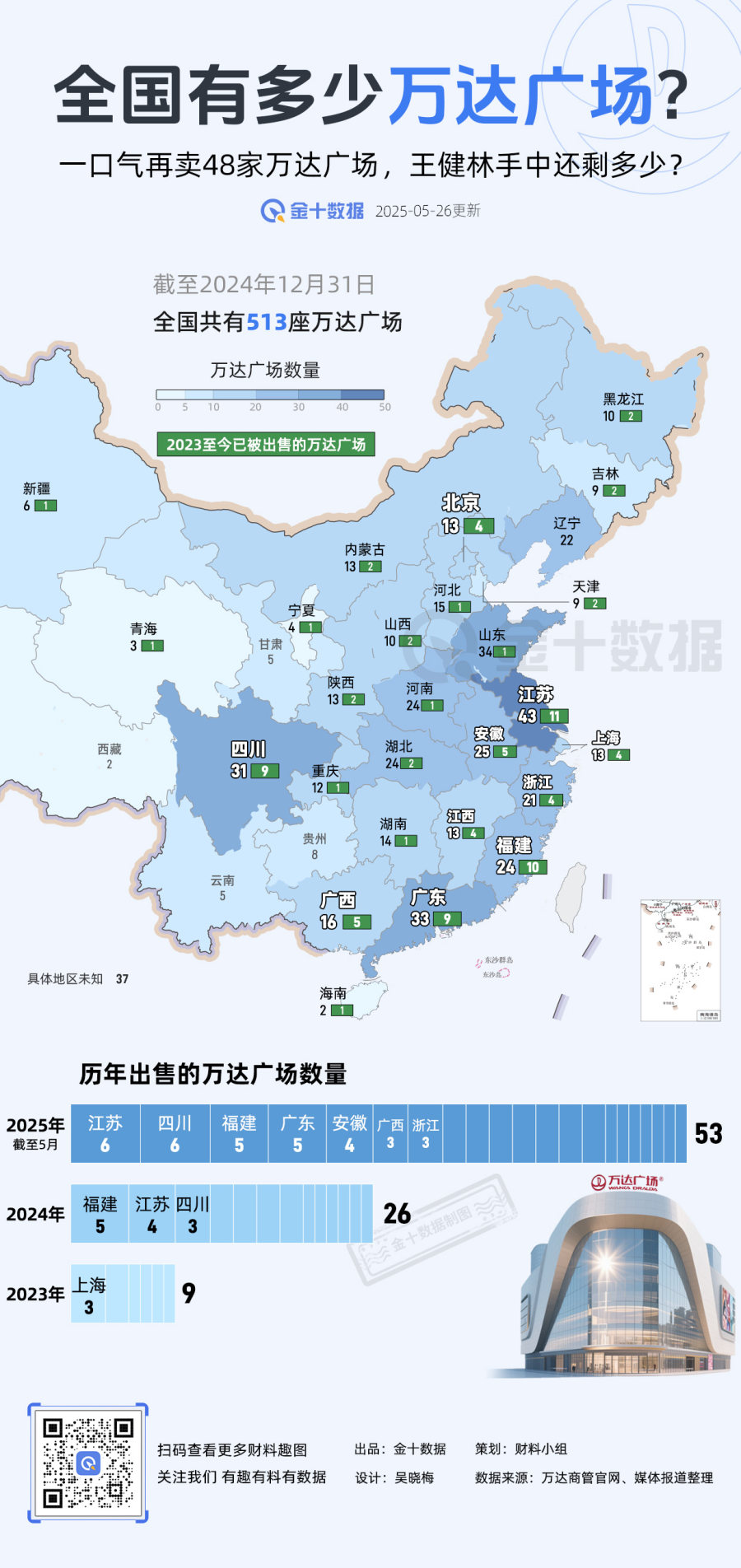
两年半被卖掉88个,现在还姓“王”的万达广场有多少?
news flash· 2025-05-26 07:56
Core Viewpoint - The article discusses the recent financial performance of a major company, highlighting significant revenue growth and strategic initiatives that are expected to drive future profitability [4] Group 1: Financial Performance - The company reported a revenue increase of 15% year-over-year, reaching $5 billion in the last quarter [4] - Net income rose to $1 billion, reflecting a 20% increase compared to the previous year [4] - Earnings per share (EPS) improved to $2.50, up from $2.00, indicating strong operational efficiency [4] Group 2: Strategic Initiatives - The company is investing $500 million in technology upgrades to enhance operational capabilities [4] - A new product line is set to launch in Q2, which is projected to contribute an additional $300 million in revenue [4] - The company plans to expand its market presence in Asia, targeting a 10% market share increase over the next two years [4]
5年后房价到底是“白菜价”还是“黄金价”?其实早就说清楚了!
Sou Hu Cai Jing· 2025-05-09 05:04
Policy Changes - The real estate market in China is experiencing significant fluctuations due to a series of favorable policies, including relaxed purchase and sale restrictions, historical lows in mortgage rates, and reduced down payment requirements [1] - Major cities have implemented policies such as "recognizing the house, not the loan," which were previously unimaginable [1] Market Response - Despite the favorable policies, the market remains unresponsive, with declining sales figures and increasing inventory levels [1] - Major developers like Evergrande and Country Garden are facing severe financial difficulties, leading to project delays and an increase in unfinished buildings [1] Housing Supply and Demand - The number of unsold homes in China is approaching 120 million, sufficient to accommodate 300 to 400 million people, while 14 million new homes are added to the market annually, indicating a supply surplus [5] - Urbanization rates are nearing 70%, and demographic trends such as aging populations and declining birth rates are expected to further impact housing demand [5] Future Price Predictions - Predictions suggest that housing prices in first-tier cities will stabilize and align more closely with income levels, avoiding significant increases or decreases [6] - In contrast, third and fourth-tier cities may experience a "cabbage price" scenario due to population outflow and oversupply, leading to a market characterized by "price without market" [8] Shift in Market Dynamics - The introduction of affordable housing projects is expected to disrupt the commodity housing market, shifting the focus back to housing as a necessity rather than an investment vehicle [6] - The changing landscape suggests that housing will return to its primary function as a place to live, rather than a speculative asset [8] Investment Considerations - As housing becomes more accessible, new investment strategies may emerge, prompting individuals to consider alternatives such as stocks, mutual funds, or entrepreneurship [8]