
农夫山泉

Search documents
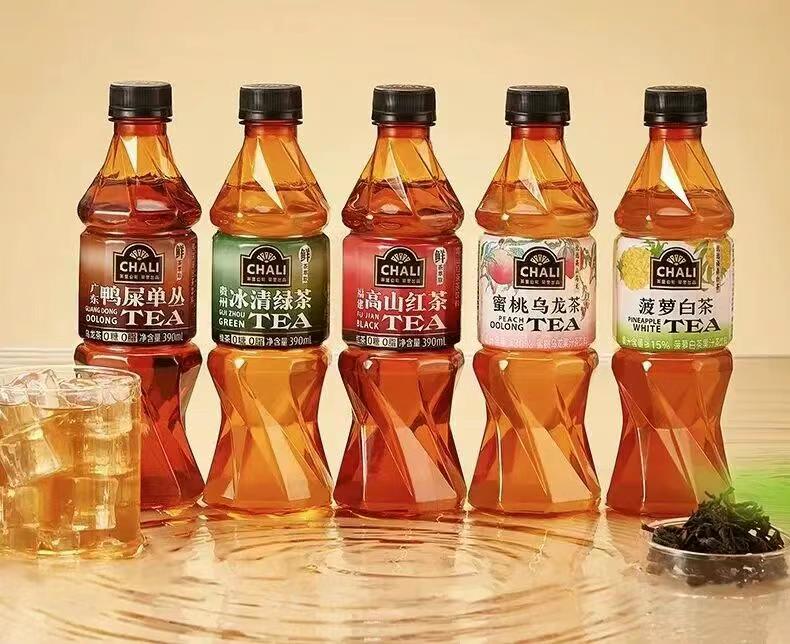
从“中国版立顿”到欠薪风波,茶里发生了什么?
3 6 Ke· 2026-02-05 22:58
Core Insights - The article discusses the rise and fall of ChaLi, a brand that was once considered a "star brand" in the new consumption wave, and examines the strategic missteps that led to its current challenges [2][20]. Company Overview - ChaLi was founded in 2013 by Tan Qiong, who initially had no background in tea but became involved through a feasibility study for a B2B tea trading platform [3][6]. - The brand focuses on high-quality, convenient tea products, primarily using original leaf triangular tea bags, which cater to modern consumption habits [4][5]. Financial and Market Performance - ChaLi experienced rapid growth during the new consumption boom from 2018 to 2021, achieving significant sales milestones, including nearly 10 million sales during the 2016 Double Eleven shopping festival [9]. - The brand was often referred to as the "Chinese version of Lipton," benefiting from multiple rounds of financing and a strong market presence [8][9]. Strategic Challenges - The brand faced significant challenges as the market for bagged tea matured, leading to increased competition and a shift in consumer preferences [12][14]. - A strategic miscalculation in the ready-to-drink (RTD) tea segment resulted in cash flow issues, contributing to delayed salary payments and supplier settlements [2][11][17]. Industry Context - The tea market in China is characterized by diverse consumer preferences and fragmented consumption scenarios, making it difficult for any single brand to dominate [14][20]. - The decline of traditional bagged tea sales and the challenges faced by established brands like Lipton indicate that the market may not support a "next Lipton" scenario [12][14]. Lessons Learned - The experience of ChaLi highlights the importance of aligning organizational capabilities with market demands, especially when transitioning to new product categories [20]. - The brand's journey underscores that the second growth curve is not guaranteed and requires a robust organizational structure and financial resilience [20][21].

AI时代,企业为何集体走向艺术?京东、腾讯、梅见、喜茶的艺术实践观察
Sou Hu Cai Jing· 2026-02-05 18:50
Core Viewpoint - The rapid development of AI technology is prompting companies to adjust their organizational structures and job roles, leading to a re-evaluation of talent assessment standards and the integration of art into brand building and daily operations [1][3]. Group 1: Art Practices - JD.com plans to build a contemporary art museum in Shenzhen Bay, covering over 10,000 square meters, operating as an independent contemporary art institution, and focusing on themes related to technology, ecology, urbanization, and future living [5][6]. - Tencent is advancing the "Teng Chuang Future" art space, applying technologies like AI and VR/AR in cultural heritage protection and art display, including projects like the digital restoration of Dunhuang murals [8][9]. - Mei Jian Qing Mei Jiu has created China's first art space centered around alcohol, integrating online exhibitions and offline artistic collaborations, promoting Eastern aesthetics in contemporary life [11][12]. - Heytea incorporates artists and design agencies into its brand visual construction, launching global collaborations and themed stores to embed art into high-frequency consumer scenarios [15][16]. - Nongfu Spring integrates art into product packaging, collaborating with illustrators and photographers to create visually appealing designs that enhance brand recognition [20]. - Bilibili extends its online content ecosystem into offline public cultural spaces, showcasing original artworks and inviting creators to participate in exhibitions, enhancing community engagement [22][23]. Group 2: Core Characteristics - JD.com's art museum includes exhibition, performance, and educational spaces, facilitating various cultural activities while aligning with its technological and logistical background [5][6]. - Tencent's art initiatives leverage AI for detail restoration and digital archiving, enhancing efficiency in cultural heritage preservation and creating interactive exhibition spaces [9]. - Mei Jian Qing Mei Jiu collaborates with numerous artists to apply artistic works directly to product packaging, making art a part of everyday consumption [12]. - Heytea's artistic elements are integrated into packaging and store design, enhancing visual experiences and facilitating brand recognition among young consumers [17]. - Nongfu Spring's artistic packaging serves as a high-frequency display medium, reinforcing brand identity through consistent visual engagement [20]. - Bilibili's art practices emphasize community involvement, transforming viewers into participants and creators, thereby extending the lifecycle of content and IP [24]. Group 3: Brand Logic - JD.com's art museum enhances its brand image by adding cultural and emotional dimensions, transitioning from a purely e-commerce platform to a comprehensive institution with technological and cultural attributes [6]. - Tencent's involvement in cultural heritage and digital exhibitions strengthens its brand positioning as a technology and culture hybrid, expanding its business space in the digital cultural sector [9]. - Mei Jian Qing Mei Jiu differentiates itself in a saturated beverage market by enhancing the cultural and emotional value of its products through artistic collaboration [13]. - Heytea's artistic visual strategy helps establish brand recognition and emotional connections with consumers, increasing premium pricing and repeat purchase rates [17]. - Nongfu Spring's continuous design investment builds a stable perception of quality and aesthetics, creating long-term brand assets [20]. - Bilibili's offline exhibitions enhance community ties and user engagement, fostering a participatory culture that extends the relevance of its content [24]. Conclusion - Companies are increasingly entering the art sector through three main approaches: establishing physical cultural spaces, utilizing technology to transform art experiences, and integrating art into products and daily consumption [25].

春节消费旺季大幕拉开,各地促消费政策密集出台,为全年消费市场\"开门红\"注入强劲动力
Xin Lang Cai Jing· 2026-02-05 12:24
Group 1 - Yum China reported a strong financial performance for the year 2025, with operating profit reaching $1.3 billion, reflecting an 11% year-on-year growth [1][3] - The company opened 1,706 new stores in 2025, expanding its network to 18,101 locations across over 2,500 cities in China [1][3] - In Q4 2025, Yum China's operating profit saw a significant increase of 25% year-on-year, with same-store sales growing for the third consecutive quarter [1][3] Group 2 - The Ministry of Commerce and nine other agencies issued a notice regarding the "2026 Spring Festival Special Activity Plan," promoting various food-related events to enhance consumer engagement during the holiday [1][3] - The plan includes initiatives such as launching New Year's Eve dinner packages, organizing food festivals, and encouraging local food markets to attract more consumers [1][3] - Huachuang Securities highlighted that the upcoming Spring Festival consumption season is expected to see strong recovery, driven by government-led consumption policies and diverse promotional activities [2][4] - The Hong Kong Stock Connect Consumption ETF closely tracks the consumption theme index, which includes leading companies in traditional service sectors and high-growth assets, with a rolling P/E ratio of 17.9 and a dividend yield of 3.6% as of February 4 [2][4]

曾一年捞金1652亿,被误认国货30年的日本巨头,为何如今卖不动了?
商业洞察· 2026-02-05 09:52
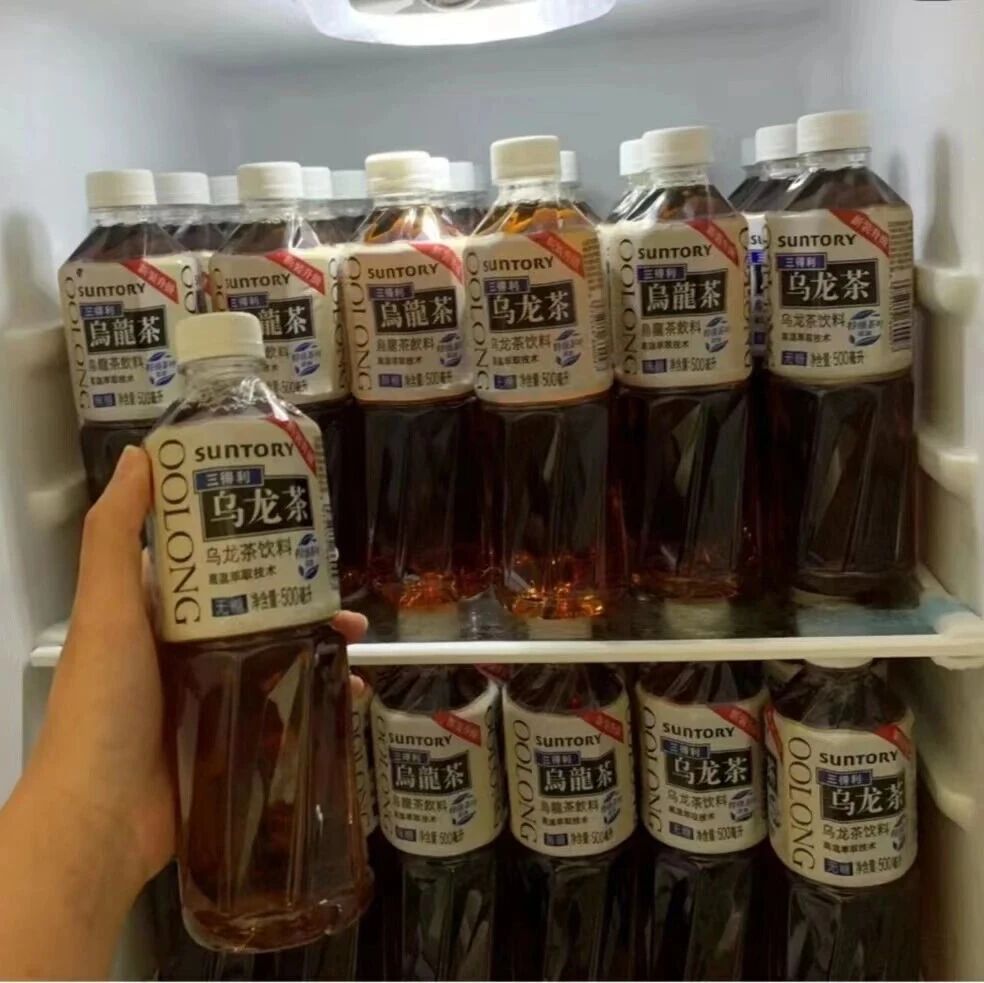
一年捞金1600多亿,曾一度超过农夫山泉和统一品牌。 三得利,这个被国人喜爱了三十多年的饮料品牌,因名字极具中式韵味,长期被误认为是国货,实则是 日本品牌。 过去39年,凭借出色的本土化策略,它不仅在国内积累了大量忠实用户,也实现了丰厚盈利。 机构数据显示,从2020年开始,其营收和净利连年增长。 2024年财报显示,总营收已经突破1651.8亿元 (RMB)。 | 年度 李俊 | | | | | | | | --- | --- | --- | --- | --- | --- | --- | | | 2017 2018 9 2019 V | 2020 | 2021 | 2022 | 2023 | 2024 | | 截止: | 31/12 31/12 31/12 | 31/12 | 31/12 | 31/12 | 31/12 | 31/12 | | 利润表 > | | | | | | | | 总营收 | ANG AND MAG | 1,178,137 | 1,268,917 | 1,450,397 | 1.591.722 | 1,696,765 | | 毛利 | REC RED MAC | 483,855 | ...
春节消费旺季大幕拉开,各地促消费政策密集出台,为全年消费市场“开门红”注入强劲动力
Mei Ri Jing Ji Xin Wen· 2026-02-05 06:00
(文章来源:每日经济新闻) 商务部等9单位关于印发《2026"乐购新春"春节特别活动方案》的通知,结合开展中华美食荟、老字号 嘉年华活动,组织餐饮名店、老字号餐饮企业、地方特色小吃等,推出年夜饭套餐、新春团圆宴,推出 美食增值服务,如现场表演、免费小吃、幸运抽奖等。鼓励各地发布美食地图,结合本地实际在步行 街、公园、社区等设置年味美食市集,举办美食大赛、厨艺比拼、晒晒我家的团圆饭等活动,结合各类 美食活动推广节日热销商品,吸引更多群众一起"寻味中国年"。 华创证券认为,春节消费旺季大幕拉开,各地促消费政策密集出台,为全年消费市场的"开门红"注入强 劲动力。通过梳理全国各地的春节促消费活动,观察到本轮活动呈现出"政府主导、多方联动、全域覆 盖"的鲜明特征,其核心在于通过"政策+活动"的双轮驱动,深度融合商、文、旅、体、展等多元业态, 旨在激发消费潜力、优化消费供给、营造浓厚节日氛围。在强有力的政策支持和丰富多彩的活动供给 下,2026年春节消费市场有望迎来强劲复苏,消费数据或将超市场预期,为全年消费市场的持续回暖奠 定坚实基础。 港股通消费ETF华夏(513230)紧密跟踪中证港股通消费主题指数,覆盖酒旅、餐饮 ...
春节消费旺季大幕拉开,各地促消费政策密集出台,为全年消费市场"开门红"注入强劲动力
Mei Ri Jing Ji Xin Wen· 2026-02-05 05:59
华创证券认为,春节消费旺季大幕拉开,各地促消费政策密集出台,为全年消费市场的"开门红"注入强 劲动力。通过梳理全国各地的春节促消费活动,观察到本轮活动呈现出"政府主导、多方联动、全域覆 盖"的鲜明特征,其核心在于通过"政策+活动"的双轮驱动,深度融合商、文、旅、体、展等多元业态, 旨在激发消费潜力、优化消费供给、营造浓厚节日氛围。在强有力的政策支持和丰富多彩的活动供给 下,2026年春节消费市场有望迎来强劲复苏,消费数据或将超市场预期,为全年消费市场的持续回暖奠 定坚实基础。 港股通消费ETF华夏(513230)紧密跟踪中证港股通消费主题指数,覆盖酒旅、餐饮等传统服务业龙 头,更包含潮玩、金饰等高成长资产,以及运动服饰、白电等高股息标的,截至2月4日,指数滚动市盈 率为17.9倍,位于2020年发布以来2.3%分位处,股息率达3.6%;指数成分股近乎囊括港股消费的各个领 域,包括泡泡玛特、百胜中国、安踏体育、农夫山泉等消费龙头。 2月4日百胜中国公布2025年全年业绩,受强劲财报影响,今日涨幅超过9%,创出2023年10月以来新 高。全年来看,百胜中国经营利润达到13亿美元,同比实现11%的强劲增长,2025 ...
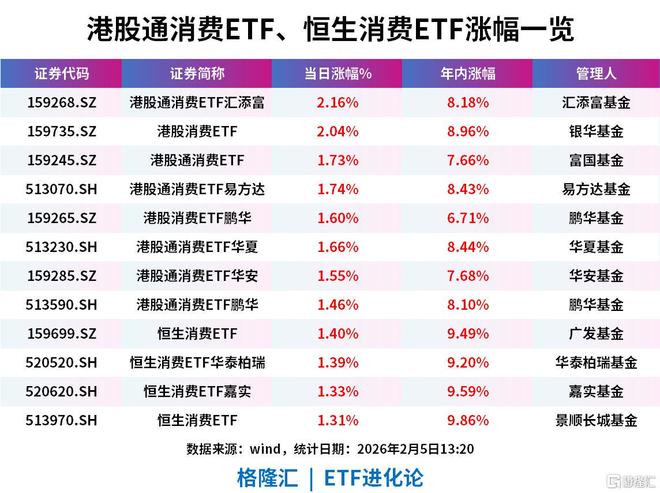
百胜中国涨超9%,名创优品涨超5%,港股通消费ETF、港股消费ETF、恒生消费ETF上涨
Ge Long Hui· 2026-02-05 05:42
Core Viewpoint - The Hong Kong stock market's consumer stocks have seen significant gains, driven by strong performances from companies like Yum China and Miniso, which have positively influenced various consumer ETFs [1][5]. Group 1: Stock Performance - Yum China experienced a rise of over 9%, reaching a new high since October 2023, following the announcement of its strong financial results for 2025 [5]. - Miniso's stock increased by over 5% after announcing a share buyback program [6]. - Multiple consumer ETFs, including those managed by Huatai-PB, E Fund, and others, have also shown positive growth, with increases ranging from 1.31% to 2.16% on the day [2]. Group 2: Financial Highlights - Yum China's operating profit for the year reached $1.3 billion, reflecting a robust year-on-year growth of 11%, with plans to open 1,706 new stores, expanding its network to over 18,101 locations across more than 2,500 cities in China [5]. - The fourth quarter of 2025 saw a significant 25% year-on-year increase in operating profit for Yum China, with same-store sales rising for the third consecutive quarter [5]. Group 3: Market Trends and Consumer Sentiment - The upcoming Chinese New Year is expected to boost consumer spending, supported by various government-led promotional activities aimed at stimulating consumption [7]. - The integration of diverse sectors such as commerce, culture, tourism, and exhibitions is anticipated to enhance consumer engagement and spending during the festive season [7].
临近春节港股消费再度活跃,港股通消费ETF华夏(513230)冲击三连阳
Mei Ri Jing Ji Xin Wen· 2026-02-05 03:37
消息面上,1月30日,泡泡玛特创始人、CEO王宁在举办的中英商务论坛上表示,泡泡玛特宣布将伦敦 定为欧洲总部所在地。此外,泡泡玛特已与美国商业地产集团Simon展开合作,计划在全美超过20家 Simon购物中心及TheMills购物中心新增标准零售形式的线下门店。值得一提是,泡泡玛特近于1月19日 回购140万股普通股,总金额2.5亿港元;于1月21日回购50万股普通股,总金额9649万港元。此前,花 旗认为,市场对泡泡玛特IP生命力与孵化能力的估值仍显不足。随着非LABUBU系列的重磅新品上市反 响热烈,以及近期启动的股份回购计划,投资者信心有望进一步提升。 港股通消费ETF华夏(513230)紧密跟踪中证港股通消费主题指数,覆盖酒旅、餐饮等传统服务业龙 头,更包含潮玩、金饰等高成长资产,以及运动服饰、白电等高股息标的,截至2月4日,指数滚动市盈 率为17.9倍,位于2020年发布以来2.3%分位处,股息率达3.6%;指数成分股近乎囊括港股消费的各个领 域,包括泡泡玛特、百胜中国、安踏体育、农夫山泉等消费龙头。 近日,德勤预期,2026年香港零售销售按年增长近8%至约4100亿港元。德勤表示,香港消费市场去 ...
错版马茅溢价近千元,茅台农夫山泉生肖产品溢价对比引关注
Sou Hu Cai Jing· 2026-02-05 02:48
Core Viewpoint - The article discusses the collectible value of the limited edition Maotai and Nongfu Spring zodiac-themed products, highlighting the market dynamics and pricing strategies that have led to significant price premiums for both products [2][4][18]. Group 1: Maotai's Pricing and Market Response - The Maotai limited edition (丙午马年) was released with a packaging error, leading to a price surge on secondary markets from 1899 yuan to as high as 2800 yuan shortly after the error was acknowledged [2][11]. - Maotai's market capitalization has surpassed 1 trillion yuan, and the company experienced an 8.61% stock price increase following rumors of its participation in SpaceX's funding round, although the company later denied these claims [4][6]. - The sales strategy of Maotai has faced criticism for perceived "hunger marketing," as the actual sales volume reported (212 million bottles) fell short of expectations based on user engagement [7][14]. Group 2: Nongfu Spring's Strategy and Market Performance - Nongfu Spring's zodiac water has achieved a price premium exceeding 8 times its original price, with secondary market prices reaching around 170 yuan per bottle, showcasing a different approach to scarcity and consumer engagement [6][18]. - The company employs a strategy of not selling the zodiac water directly but rather offering it through a lottery system, which enhances its perceived scarcity and collectible value [18][22]. - The secondary market for Nongfu Spring's zodiac water has seen significant price increases, with complete sets being sold for around 1888 yuan, indicating a strong demand driven by consumer participation and the absence of official pricing [22][23]. Group 3: Comparative Analysis of Collectible Value - While Maotai is recognized for its high-end status and traditional collectible value, Nongfu Spring's approach has allowed it to achieve higher premiums despite lacking the same historical collectible attributes [22][23]. - The storage and preservation requirements for Maotai are more stringent compared to Nongfu Spring's products, which can retain value even after expiration due to their design and cultural significance [22][23]. - The financial barriers for collecting Maotai are significantly higher, making it less accessible to average consumers compared to Nongfu Spring's zodiac water, which has a lower entry price point [22][23].



新消费概念股再获市场追捧 巨子生物涨超5%
Xin Lang Cai Jing· 2026-02-05 02:29
Group 1 - The new consumption concept in Hong Kong stocks is showing active performance, with notable increases in companies such as Giant Bio (+5.54%), Mao Geping (+4.42%), Miniso (+3.92%), and Pop Mart (+3.79%) [2][3] - The State Council has issued a plan to accelerate the cultivation of new growth points in service consumption, focusing on enhancing key areas such as transportation, housekeeping, online audio-visual services, and inbound consumption [2][4] Group 2 - Pop Mart's new product series, PUCKY and Starry People, have gained significant popularity, with market estimates suggesting that the valuation of Pop Mart's IP potential is still underestimated [5] - Recent trends indicate that Pop Mart's new products are selling out on official websites and commanding high premiums on second-hand platforms, with hidden versions priced at 2-3 times and 3-6 times their original prices [5] - The cosmetics industry is projected to grow, with a retail sales increase of 6.18% year-on-year in 2023, as consumer spending stabilizes and the demand for product upgrades continues [5] Group 3 - The channel landscape is showing differentiated characteristics, with platforms like Douyin leading in sales and Tmall achieving its best growth in four years during the Double Eleven shopping festival [6] - Local brands are steadily increasing their market share, although market differentiation is intensifying, with companies like Anta, Pop Mart, and Haidilao identified as industry favorites for optional consumption [6][7] - Five major investment themes have been identified for 2026, focusing on emotional value consumption, health and wellness needs, the silver economy, emerging channel penetration, and multi-brand strategies [7]

