尼康

Search documents
卡片机卖到9000块,理光沾了富士的光
Hu Xiu· 2025-08-22 13:42
Group 1 - Ricoh has officially launched the fourth generation of its GR series camera, the GR4, priced at 8999 yuan, which is a significant increase of 2800 yuan compared to the previous GR3 model [4][5][27] - The pricing strategy reflects a broader trend in the camera market where traditional pricing structures based on specifications are being challenged, as seen with Fujifilm's similar pricing strategies [28][30][36] - The GR4's pricing is not an isolated case but part of a growing trend where emotional value and brand perception are becoming key drivers of pricing in the camera industry [32][33][36] Group 2 - The GR4 features several upgrades over the GR3, including a slightly larger sensor with a resolution increase from 24.24 million to 25.74 million pixels, five-axis stabilization, and improved autofocus capabilities [12][14][17] - The internal storage has been significantly increased from 2GB to 53GB, enhancing usability for users who may forget to bring an SD card [20][21] - The camera introduces new film simulation modes and enhanced customization options, appealing to its core user base that values unique color science and aesthetic output [22][26] Group 3 - The camera market is experiencing a shift from a focus on technical specifications to an emphasis on user experience and emotional value, as consumers seek cameras that provide a distinct style and ease of use [44][45][56] - The GR series is designed for quick and intuitive shooting, emphasizing a philosophy of simplicity and immediacy in photography, which resonates with users looking for a non-intrusive and enjoyable experience [53][55] - The current market dynamics suggest that the camera industry may not be shrinking but rather evolving into a more diverse and interesting landscape, similar to the watch market where different consumer needs coexist [65][66]


前瞻全球产业早报:中国月度用电量破万亿大关
Qian Zhan Wang· 2025-08-22 12:48
Group 1: Electricity Consumption in China - China's total electricity consumption reached 1.02 trillion kilowatt-hours in July, marking a historic milestone and the first time any country has surpassed this threshold [2] - This figure represents an 8.6% year-on-year increase and has doubled compared to ten years ago, equivalent to the annual electricity consumption of ASEAN countries [2] - The share of renewable energy sources, including wind, solar, and biomass, has significantly increased, accounting for nearly one-quarter of the total consumption, indicating a rapid pace of green energy transition in China [2] Group 2: Hainan Free Trade Port - The implementation of the cross-border asset management pilot program in Hainan Free Trade Port began on August 21, allowing global institutions and qualified foreign individual investors to participate [3] - The investment products available include private asset management products, publicly offered securities investment funds, and insurance asset management products, with an initial pilot scale capped at 10 billion yuan [3] Group 3: Technology Companies Recognition - Three companies from the "Hangzhou Six Little Dragons," namely DeepSeek, Yushu Technology, and Yundongchu Technology, were included in the 2025 "Fortune" China Technology 50 list [4] Group 4: Economic Growth in Hubei - Hubei Province has achieved its "14th Five-Year Plan" economic growth target a year ahead of schedule, with its economic total surpassing 6 trillion yuan [5] - The province's share of the central region's economy increased from 19.5% at the end of the "13th Five-Year Plan" to an expected 20.9% by 2024, enhancing its regional collaborative strength [5] Group 5: AI and Robotics Developments - WeRide launched an end-to-end assisted driving solution in collaboration with Bosch, with plans for mass production by 2025 [7] - Zhiyuan Robotics initiated its first entrepreneurial acceleration plan focused on embodied intelligence, aiming to incubate over 50 high-potential early-stage projects and create a trillion-level industrial ecosystem within three years [7] Group 6: Market Movements and Investments - WanTai Biologics announced that its nine-valent HPV vaccine has received the batch release certificate, marking its official market entry and potential new revenue stream [8] - Intel is reportedly seeking additional funding through discounted placements while SoftBank has announced a $2 billion investment in Intel, which is expected to make it the fifth-largest shareholder [14]

智元灵犀X2即将完成量产,将于8月底开始陆续供应;马斯克的星链赢得更多豪华航司青睐,稳步进军机上Wi-Fi市场丨智能制造日报
创业邦· 2025-08-22 03:16
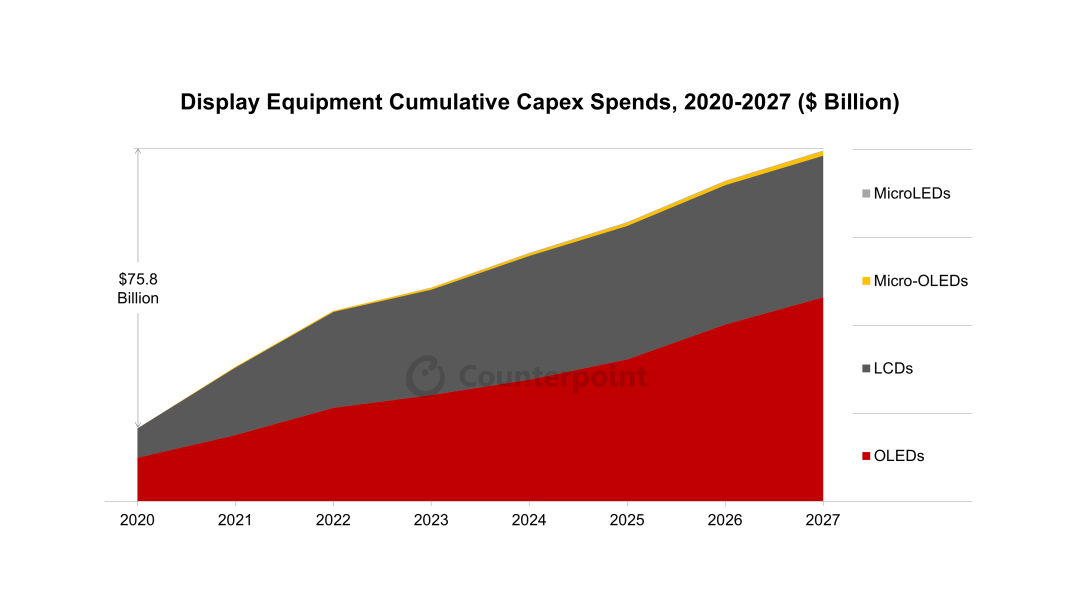
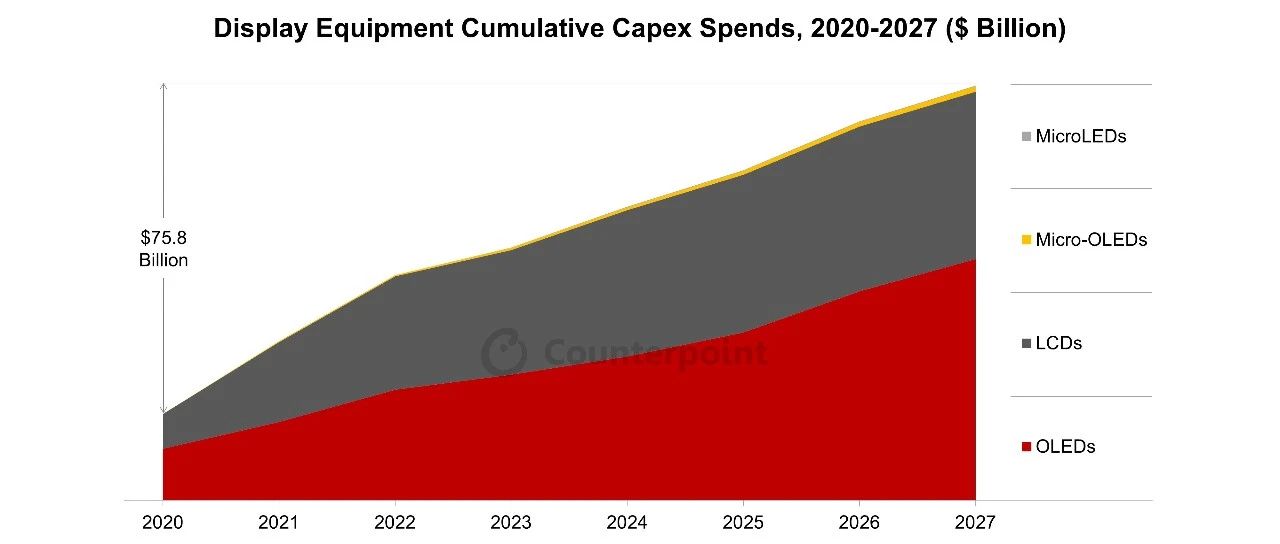
Group 1 - Antig's plan to build three natural gas power plants has been approved to supply power to Meta's largest data center in Louisiana, which covers 4 million square feet and is expected to consume up to 5 gigawatts of electricity annually when fully operational [2] - Global display equipment spending is projected to reach $75.8 billion from 2020 to 2027, driven primarily by OLED technology, with OLED-related equipment spending expected to grow by 31% year-on-year in 2025, while LCD spending is anticipated to decline by 45% [2] - Nikon announced the closure of its Yokohama factory by September 30, with production lines moving to other facilities in Kanagawa and Tokyo, primarily affecting microscope products and flat panel display manufacturing equipment [2] Group 2 - SpaceX's Starlink service has gained traction in the in-flight Wi-Fi market, signing contracts with major airlines such as Air France and Qatar Airways, with ongoing negotiations with Emirates and other regional airlines [3] - The Zhiyuan Lingxi X2 robot is set to complete mass production by the end of August, with unlimited shipments starting in the fourth quarter [3]

8点1氪|12306回应高铁能否加挂吸烟车厢;官方通报50升油箱被加67.96升汽油;辛巴快手账号作品清空
3 6 Ke· 2025-08-22 00:24
Group 1 - 12306 responded that it is currently not possible to add a smoking carriage to high-speed trains due to safety considerations, although suggestions for such a carriage on green trains will be reported [2][3] - Chengdu's market supervision bureau reported an incident where a car with a 50-liter fuel tank was filled with 67.96 liters of gasoline, leading to an ongoing investigation [2][3] - Yonghui Supermarket reported a total revenue of 29.948 billion yuan for the first half of 2025, a year-on-year decline of 20.73%, and a net loss of 241 million yuan compared to a profit of 275 million yuan in the same period last year [5][6] Group 2 - Bilibili's second-quarter revenue reached 7.34 billion yuan, a year-on-year increase of 20%, with a net profit of 220 million yuan and an adjusted net profit of 560 million yuan, both hitting record highs [13] - China Petroleum & Chemical Corporation (Sinopec) reported a net profit of 21.483 billion yuan for the first half of 2025, a year-on-year decrease of 39.8%, with total revenue of 1.41 trillion yuan, down 10.6% [14] - Miniso's second-quarter adjusted net profit was 690 million yuan, a year-on-year increase of 10.6%, with total revenue of 4.97 billion yuan, up 23.1% [15] Group 3 - Meta has paused some hiring in its AI department to conduct planning and forecasting [11] - The AI toy market has seen a significant surge, with sales increasing by 600% year-on-year, driven by the integration of large language model technology [11] - DeepSeek announced a price adjustment for its API interface calls, effective September 6, 2025, and will cancel night-time discounts [10] Group 4 - The Korean government announced measures to restrict foreign purchases of housing in major areas to curb speculative demand [9] - Korean investors have increased their holdings in Chinese stocks from 19.083 billion yuan at the end of 2024 to 24.475 billion yuan by August 18, 2025, marking a nearly 30% increase [9] - Nikon will close its Yokohama factory by September 30, 2025, with minimal expected impact on annual profits [10]


Counterpoint Research:2020-2027年期间全球显示器设备支出预计累计达到758亿美元
智通财经网· 2025-08-21 01:17
Group 1 - The core viewpoint of the article highlights the increasing capital expenditure in the display manufacturing sector driven by the growing demand for OLED and LCD displays across various industries, with a projected total global spending of $75.8 billion from 2020 to 2027 [1][5] Group 2 - The primary technology driving significant capital expenditure is OLED, with a projected 31% year-on-year growth in OLED-related equipment spending by 2025, while LCD spending is expected to decline by 45% [2] - From 2025 to 2027, OLED is anticipated to account for 80% of total investment, while LCD's share will drop to just 17% [2] Group 3 - Most OLED manufacturers with 6th generation production lines are expanding to 8.7 generation lines without changing deposition methods, benefiting from stable yields and advancements in Fine Metal Mask (FMM) technology [6] - Chinese manufacturers are exploring alternatives to FMM technology, with companies like Visionox and Tianma considering light-patterned OLED and RGB inkjet OLED processes, respectively, as key moves for competitiveness and cost advantages [6] Group 4 - The display equipment supply chain is lengthy and fragmented, with over 170 different manufacturers tracked in the display equipment industry [9] - Canon, including Anelva and Tokki, is expected to lead the market with a projected 9% revenue growth by 2025, achieving a market share of 12% [9] - Applied Materials' market share is expected to slightly decline to 9%, while Nikon's market share is projected to decrease with a 22% year-on-year revenue drop [9]
2020-2027年全球显示设备支出将攀升至760亿美元
Counterpoint Research· 2025-08-21 01:02
Core Viewpoint - The global display equipment spending is projected to reach $75.8 billion from 2020 to 2027, driven by increasing demand for OLED and LCD displays across various industries including IT, automotive, and mobile devices [4][5]. Group 1: Market Trends - The major technology driving capital expenditures is OLED, followed by LCD and Micro-OLED. By 2025, OLED-related equipment spending is expected to grow by 31%, while LCD spending is projected to decline by 45% [6]. - From 2025 to 2027, OLED is anticipated to account for 80% of total investments, with LCD's share dropping to just 17% [6]. Group 2: Technological Developments - Most manufacturers with 6th generation OLED production lines are expanding to 8.7 generation without changing deposition methods, benefiting from stable yields and advancements in Fine Metal Mask (FMM) technology [7]. - Chinese manufacturers are exploring alternatives to FMM technology, with companies like Visionox and Huaxing Optoelectronics adopting new deposition methods such as photopatterned OLED and RGB inkjet OLED [9]. Group 3: Competitive Landscape - Canon, including Tokki and Anelva, is expected to continue leading the display equipment market, with a projected revenue growth of 9% by 2025, capturing a market share of 12% [11]. - The market share of Applied Materials is expected to slightly decline to 9%, while Nikon's market share is anticipated to decrease with a projected revenue drop of 22% this year [14]. - The display equipment supply chain is lengthy and fragmented, with 170+ manufacturers tracked. The competitive landscape is shifting due to geopolitical changes and the rise of local Chinese suppliers [14]. Group 4: Industry Insights - The report covers progress in OLED, LCD, and Micro-OLED production lines, market sizes, shares, and forecasts, along with quarterly revenues of over 130 display equipment suppliers [18].
俄罗斯的光刻机往事
半导体行业观察· 2025-08-20 01:08
Core Viewpoint - The article discusses the historical context and current status of Planar (KB-TEM), a Belarusian semiconductor equipment manufacturer, highlighting its significance in the semiconductor industry and the challenges it faces in a competitive landscape. Group 1: Historical Background - The Soviet Union made significant contributions to semiconductor technology, including the development of contact lithography machines, but lagged behind Western advancements [7][10]. - Planar, established in 1963, became a key player in the Soviet semiconductor industry, focusing on lithography equipment and precision instruments [4][5]. - After the dissolution of the Soviet Union, Planar transitioned to a market-oriented operation while maintaining its technological heritage [4][5]. Group 2: Technological Development - Planar's core advantage lies in its low-cost, high-reliability semiconductor manufacturing equipment, which is widely used in research institutions in Russia and Belarus [5]. - The company has developed competitive technologies in contact and proximity lithography, although it has not kept pace with advancements made by companies like ASML and Nikon [5][10]. - Planar's laser direct-write lithography machines are utilized for research and small-scale chip production, providing an alternative to traditional lithography methods [14]. Group 3: Market Position and Challenges - Planar's lithography equipment is considered one of the few "advanced" options available to countries in the CIS region, despite being outdated compared to global standards [10][14]. - The company faces increasing competition as geopolitical dynamics shift, with both China and Russia striving for independent semiconductor manufacturing capabilities [14][19]. - Planar's efforts to market its products, such as participating in trade shows, have not yet translated into a strong competitive position against more established players like V-Technology [19].
快讯|尼康子公司推出摄像机器人;卡西欧宠物机器人在日本热销;361度与斯坦德机器人合作等
机器人大讲堂· 2025-08-18 13:36
Group 1: North American Robotics Industry - The North American robotics industry continues to show strong growth, with a 4.3% increase in robot orders and a 7.5% increase in revenue in the first half of 2025 compared to the same period in 2024 [2] - A total of 17,635 robots were ordered in North America in the first half of 2025, with a total value of $1.094 billion [2] - The automotive sector led the growth with a 34% increase in orders, while the plastics and rubber sector grew by 9% and the life sciences/pharmaceutical/biomedical sector by 8% [2] - Collaborative robots (cobots) saw a growing market share, with 3,085 units ordered in the first half of 2025, valued at $114 million [2] - In the second quarter, cobots accounted for 23.7% of total orders and 14.7% of total revenue [2] Group 2: Strategic Collaborations - 361 Degrees International Limited announced a strategic partnership with Stand Robot Technology Co., focusing on wearable robots and high-performance materials [5] - The collaboration aims to enhance global sales of Stand's embodied intelligent robots, leveraging 361 Degrees' resources for material development and supply chain advantages [5] - The partnership will drive smart manufacturing and intelligent retail, optimizing production processes and enhancing consumer experiences [5] Group 3: Innovations in Robotics - Casio launched a small robotic companion named Moflin, priced at 59,400 yen (approximately $400), featuring AI capabilities that allow it to respond to voice and touch [8] - Moflin can develop over 40,000 different personality patterns, adapting to its environment and learning from its interactions [8] - Nikon's MRMC Cinebot Nano, the smallest and most affordable motion control system to date, was introduced at a price of £20,000 (approximately $27,000) [11] - The Cinebot Nano features a nine-axis robotic arm with a working range of one meter and a maximum camera payload of 7 kg [11] - VinMotion, a Vietnamese startup, showcased its humanoid robot prototype capable of synchronized dance, relying on real-time command execution through a network infrastructure [14] - The technology demonstrated by VinMotion highlights its expertise in motion control, real-time computing, and distributed coordination [14]

How Kodak went from film giant to facing financial peril
Fox Business· 2025-08-13 16:15
Core Viewpoint - Kodak, once a leader in the photography industry, is facing significant challenges that may lead to its permanent shutdown due to financial instability and inability to adapt to technological changes [2][4]. Company History - Kodak was founded in the late 1880s by George Eastman, who invented a dry plate formula and patented a machine for preparing large numbers of plates, revolutionizing photography [4][6]. - The introduction of the Kodak camera in 1888, which was preloaded with film for 100 pictures, made photography accessible to the masses [8][10]. - Kodak invented the world's first digital camera in 1975 but failed to embrace digital technology, fearing it would harm its film business, which contributed to its decline [10][12]. Financial Situation - Kodak has expressed "substantial doubt" about its ability to continue operations, as indicated in a recent SEC filing [2][3]. - The company has significant debt obligations due within 12 months but remains confident in its ability to manage and refinance its debts [3][12]. - Kodak filed for bankruptcy in 2012 and has since closed, sold, or spun off parts of its consumer imaging portfolio, shifting focus to commercial printing and technology [15][16]. Current Operations - Currently, Kodak's business model focuses on business solutions while still manufacturing films and chemicals [16]. - The company has attempted to revive its brand through various marketing and partnership agreements, including collaborations with fashion retailers [17].


Kodak says there's 'substantial doubt' it can stay in business
Fox Business· 2025-08-12 18:05
Group 1 - Kodak has announced "substantial doubt" about its ability to continue operations, as stated in a recent SEC filing [1][3] - The company plans to address its financial obligations by utilizing funds expected from its pension plan, aiming to pay off some debt and preferred stock [2] - Kodak's plans to refinance its remaining debt and preferred stock obligations are considered unreliable under U.S. accounting rules, raising concerns about its business viability [3] Group 2 - Kodak was a pioneer in film photography, dominating the market for much of the 20th century and controlling over 80% of the U.S. film market at its peak [5] - The company's failure to adapt to digital photography led to the collapse of its core business, struggling against competitors like Canon, Sony, and Nikon [8] - After filing for bankruptcy in 2012, Kodak emerged in 2013 but has not regained its former market dominance, shifting focus to commercial printing and technology [11]