Cerebras Systems

Search documents
A year after filing to IPO, still-private Cerebras Systems raises $1.1B
Yahoo Finance· 2025-09-30 13:00
Core Insights - Cerebras Systems raised $1.1 billion in a Series G funding round, valuing the company at $8.1 billion, co-led by Fidelity and Atreides Management [1] - The company has raised nearly $2 billion since its founding in 2015, with the previous funding round being $250 million in 2021 [2] - The recent funding follows significant growth attributed to the launch of AI inference services in August 2024, which has led to increased demand [3] Funding and Valuation - The Series G funding round was co-led by Fidelity and Atreides Management, with participation from Tiger Global, Valor Equity Partners, and 1789 Capital [1] - Cerebras was valued at over $4 billion during its last funding round in 2021 [2] - The company has now raised a total of almost $2 billion in its 10-year history [2] Growth and Expansion - The company experienced explosive growth linked to its AI inference services, which were launched in August 2024 [3] - By the second quarter of 2024, the company believed it had crossed a tipping point in AI utility, leading to overwhelming demand for inference services [4] - Cerebras has opened five new data centers in 2025, with plans for more in Montreal and Europe [4] Use of Funds - The recent funding will primarily be used for expanding data center operations and U.S. manufacturing hubs, along with some unspecified technological advancements [5] - The company initially planned for an IPO in September 2024 but faced regulatory delays [5] Regulatory Challenges - The IPO was delayed due to a review by the Committee on Foreign Investment in the United States related to a $335 million investment from G42 [6] - Further delays occurred in early 2025 due to unfilled positions in CFIUS at the beginning of President Trump's term [6]
The unicorn killer: Why regulatory risk keeps destroying startup value and what to do about it
Yahoo Finance· 2025-09-22 13:30
Regulatory Risks and Their Impact on Companies - StubHub's legal and regulatory expenses for 2024 reached $93.9 million, nearly doubling from $48.2 million in 2023, highlighting the financial burden of regulatory challenges [1] - Multiple urban personal mobility companies faced bans and restrictions, leading to significant valuation collapses, with one dockless scooter firm being delisted from the NYSE due to a market cap drop below $15 million [2] - AI chipmaker Cerebras Systems experienced delays in its IPO due to regulatory reviews, which ultimately affected its market position and valuation [3] - Regulatory and narrative risks are increasingly recognized as major threats to portfolio returns, with many investors underestimating their potential impact [4] The Complexity of Regulatory Environments - The regulatory landscape has become a critical factor in determining company valuations, scalability, and exit readiness, with companies needing to conduct thorough regulatory risk assessments [7] - Emerging industries, such as lab-grown meat and drone delivery services, face challenges from state-level prohibitions despite securing federal approvals, creating a complex regulatory environment [5] - High-flying startups have seen valuations drop by over 50% due to increased regulatory scrutiny, particularly in sectors like daily fantasy sports [6] Strategies for Navigating Regulatory Challenges - Companies are advised to build regulatory defenses proactively, including political risk insurance and structuring operations across multiple jurisdictions to mitigate exposure [8] - Crisis playbooks for regulatory challenges should be developed, including pre-identified legal counsel and government relations specialists [9] - Recognizing regulatory risk as both a threat and an opportunity can help companies create barriers to entry that protect market leaders [10] Future Outlook on Regulatory Risks - The regulatory environment is expected to become more complex and unpredictable due to geopolitical tensions and domestic political polarization [11] - Future portfolio disasters are likely to stem from policy shifts rather than traditional competitive disruptions, emphasizing the need for companies to be aware of regulatory risks [12]
Cerebras Partners with Carahsoft and Joins Department of Defense's Tradewinds Solutions Marketplace to Accelerate U.S. Government AI Solutions
Businesswire· 2025-09-10 18:02
SUNNYVALE, Calif.--(BUSINESS WIRE)--Cerebras Systems, the pioneer in accelerating generative AI, today announced a strategic partnership with Carahsoft Technology Corp., The Trusted Government IT Solutions Provider®. The collaboration will combine Cerebras' industry-leading AI inference with Carahsoft's deep public-sector distribution network, accelerating adoption of Cerebras Inference across Federal, State and Local Government, as well as Higher Education and K-12 School Systems, via streamli. ...
这个国家,疯抢AI芯片
半导体行业观察· 2025-09-02 01:11
Core Viewpoint - G42 is actively exploring AI chip alternatives beyond Nvidia and plans to establish a massive AI campus in the UAE-US, aiming to position the region as a global tech hub [2][3]. Group 1: Strategic Partnerships and Negotiations - G42 is in talks with major US chip manufacturers including AMD, Qualcomm, and Cerebras Systems, indicating a strategic move to diversify its supply chain and enhance resilience [2][4]. - The company is also negotiating with tech giants like Google, AWS, and Meta for their presence in the AI campus, which is set to be the largest AI infrastructure project outside the US, with a planned power generation capacity of 5 GW [2][3]. Group 2: Project Phases and Infrastructure - The AI campus will be developed in phases, starting with a 1 GW phase called "Interstellar Gateway," which is expected to launch in 2026 through a collaboration involving OpenAI, Abu Dhabi MGX, SoftBank, and Oracle [3]. - The initial phase will utilize Nvidia's advanced Grace Blackwell GB300 system, but this will only account for 20% of the total planned capacity [3]. Group 3: Competitive Landscape - G42 faces significant regional competition from Saudi Arabia's AI entity, Humain, which has announced a $77 billion AI infrastructure project aimed at building 1.9 GW of data center capacity by 2030 [6]. - Humain is also forming partnerships with AWS and Nvidia, indicating a similar strategy to G42 in establishing a multi-vendor AI ecosystem [6]. Group 4: Geopolitical and Regulatory Considerations - G42's strategy includes ensuring compliance with US government regulations, which is crucial for its ambitions and partnerships [5]. - The broader regulatory environment appears to be shifting favorably for such collaborations, enhancing G42's prospects in the AI sector [5].


再涨1290点!华尔街投行,疯狂唱多!
券商中国· 2025-09-01 23:35
Core Viewpoint - The S&P 500 index is expected to rise by 20% to 7750 points by the end of next year, driven by significant investments in artificial intelligence [1][2]. Group 1: Market Predictions - Evercore ISI predicts the S&P 500 index will reach 7750 points by the end of next year, indicating a potential increase of 1290 points from the latest closing level of 6460 points [1][2]. - The index has already risen nearly 10% since the beginning of the year, with a strong performance from technology stocks like Nvidia, Meta, and Microsoft, each increasing by at least 20% this year [2][3]. - Evercore ISI's optimistic scenario suggests the index could hit 9000 points if consumer and investor confidence remains high, while a pessimistic outlook could see it drop to 5000 points if inflation remains high and economic growth stagnates [2]. Group 2: AI Investments - OpenAI is seeking to establish a data center in India with a capacity of at least 1 gigawatt, which could become one of the largest data centers in the country [1][6]. - Major tech companies, including Microsoft and Alphabet, are also investing in data centers in India, with Microsoft announcing an additional $3 billion investment earlier this year [6][7]. - OpenAI's global expansion includes plans for a massive data center cluster in Abu Dhabi, in partnership with local AI company G42, with a total capacity of up to 5 gigawatts [7][8]. Group 3: Market Sentiment and Economic Indicators - The U.S. stock market has experienced four consecutive months of gains, driven by strong corporate earnings and optimism regarding potential interest rate cuts [2][3]. - Recent reports indicate that the breadth of the market has improved, particularly in cyclical sectors like consumer discretionary, industrials, and financials, as the S&P 500 index reached the milestone of 6500 points [4]. - Upcoming employment data and inflation reports are critical, as they may influence the Federal Reserve's interest rate decisions [4][5].

传G42寻求芯片供应商多元化 减少对英伟达(NVDA.US)依赖
智通财经网· 2025-09-01 13:30
报道称,G42正寻求与芯片制造商AMD(AMD.US)、Cerebras Systems以及高通(QCOM.US)合作,以提供 该园区的部分计算能力。 报道称,该集团仍在与包括亚马逊(AMZN.US)、微软(MSFT.US)、Meta(META.US)以及埃隆·马斯克旗 下xAI在内的美国大型科技公司进行谈判,邀请其成为该数据中心的入驻客户,其中与谷歌 (GOOGL.US)的谈判进展最为深入。 智通财经APP获悉,据报道,阿布扎比支持的科技集团G42计划为阿联酋-美国人工智能(AI)园区实现芯 片供应商多元化,不再局限于英伟达(NVDA.US)。 该人工智能园区是在5月份美国总统唐纳德·特朗普访问阿联酋期间宣布的,当时他宣布与这个海湾国家 达成超过2000亿美元的交易。 ...

深度|英伟达最新挑战者Cerebras创始人对话谷歌前高管:我们正处于一个无法预测拐点的阶段
Z Potentials· 2025-08-15 03:53
Core Insights - The article discusses the transformative impact of AI on industries, emphasizing the role of open-source and data in global AI competition, as well as the challenges of AI safety and alignment, and the limitations of power in the development of AGI [2][16]. Group 1: AI Hardware Innovations - Cerebras Systems, led by CEO Andrew Feldman, is focused on creating the fastest and largest AI computing hardware, which is crucial for the growing demand for AI technologies [2][3]. - The company’s chip is 56 times larger than the largest known chip, designed specifically for AI workloads that require massive simple computations and unique memory access patterns [8][9]. - The collaboration between hardware and software is essential for accelerating AGI development, with a focus on optimizing matrix multiplication and memory access speeds [11][12]. Group 2: Open Source and Global Competition - The open-source ecosystem is seen as a vital area for innovation, particularly benefiting smaller companies and startups in competing against larger firms with significantly more capital [18][19]. - The cost of processing tokens has dramatically decreased, from $100 per million tokens to as low as $1.50 or $2, fostering innovation and broader application of technology [19]. - The competition in AI is perceived to be primarily between the US and China, with emerging markets also adopting Chinese open-source models [18]. Group 3: Power Supply and AGI Development - Power supply is identified as a critical limitation for AGI development, with high electricity costs in Europe posing challenges [42][45]. - The discussion highlights the need for significant energy resources, such as nuclear power, to support large data centers essential for AI operations [44][46]. - The article suggests that the future of AGI may depend on the establishment of new nuclear power plants to meet the energy demands of advanced AI systems [46]. Group 4: AI Safety and Alignment - AI alignment refers to ensuring that AI systems reflect human values and norms, with ongoing efforts to develop testing methods to check for potential dangers in AI models [35][36]. - The challenge remains in maintaining alignment in self-improving systems, raising concerns about the potential risks of releasing advanced AI without proper oversight [37][38]. - The responsibility for AI safety is shared between hardware and software, emphasizing the need for collaboration in addressing these challenges [39].

清华大学研究团队在晶圆级芯片领域取得重要进展
半导体行业观察· 2025-07-20 04:06
Core Viewpoint - Tsinghua University's research team has made significant advancements in wafer-scale chips, presenting three key research outcomes at the ISCA 2025 conference, focusing on high-performance AI model training and inference scenarios [1][9]. Group 1: Research Achievements - The team developed a collaborative design optimization methodology for wafer-scale chips, integrating computational architecture, integration architecture, and compilation mapping, which has gained recognition in both academia and industry [1][9]. - The research includes a paper on interconnect-centric computational architecture, addressing physical constraints and proposing a "Tick-Tock" co-design framework that optimizes physical and logical topologies [10][12][13]. - Another paper presents a vertically stacked integration architecture that addresses the challenges of tightly coupled heterogeneous design factors, achieving significant improvements in system-level integration density and performance metrics [14][18]. Group 2: Wafer-Scale Chip Technology - Wafer-scale chips represent a disruptive technology that integrates multiple computing, storage, and interconnect components into a single chip, significantly enhancing computational power and efficiency [3][8]. - The design allows for a larger number of transistors to be integrated, overcoming limitations faced by traditional chips, and achieving a chip area of approximately 40,000 square millimeters [4][8]. - The architecture enables higher interconnect density and shorter interconnect distances, resulting in performance and energy efficiency improvements, with potential density reaching over twice that of current supernode solutions [8][9]. Group 3: Industry Context - Major global tech companies, including Tesla and Cerebras Systems, are investing in wafer-scale chip technology, with Tesla's Dojo chip achieving 9 PFlops of computing power and Cerebras' WSE-3 chip integrating 400 trillion transistors [24][25]. - TSMC is also advancing wafer-scale systems, aiming for mass production by 2027, which will enhance computational density and data transfer efficiency [25]. - The advancements in wafer-scale chips are critical for the AI industry's future, as they provide a foundation for high-performance computing necessary for large-scale AI applications [23][26].


台积电大力发展的SoW,是什么?
半导体行业观察· 2025-07-04 01:13
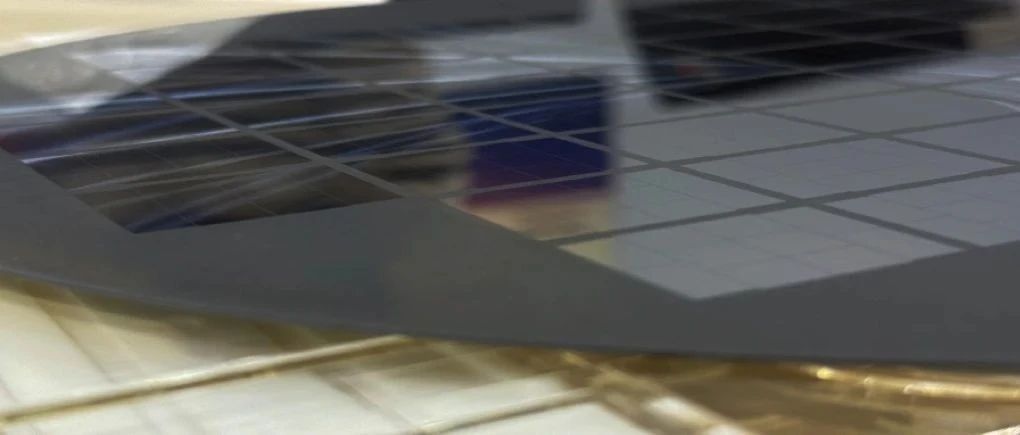
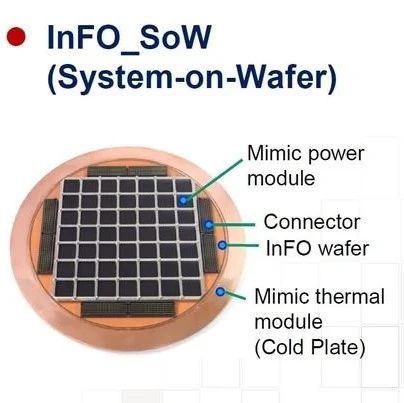
Core Viewpoint - TSMC is actively developing advanced packaging technology called System over Wafer (SoW), which integrates large-scale, high-speed systems on 300mm silicon wafers or similar-sized substrates, offering high computational power, fast data transmission, and reduced power consumption [1][3]. Group 1: InFO Technology Development - The origin of SoW technology lies in TSMC's InFO (Integrated Fan-Out) packaging technology, designed for mobile processors, which allows for miniaturization and thin packaging [3]. - TSMC provided CoWoS (Chip on Wafer) packaging technology for high-performance large-scale logic (FPGA, GPU) around 2020, utilizing silicon interposers for high-density connections [3]. - TSMC has also prepared and mass-produced InFO_oS (Chip on Wafer) technology, which uses InFO for high-density connections between chips, serving as a low-cost packaging solution for high-performance large-scale logic [3][5]. Group 2: InFO_SoW Application - InFO_SoW extends the RDL size of InFO_oS to 300mm silicon wafers, placing multiple silicon chips face down on the RDL, with power modules and I/O IC connectors installed on the back [5][6]. - The basic structure of InFO_SoW features a six-layer wiring design with different rules for the silicon side and the back, capable of handling approximately 7,000W of power through water cooling [6][19]. Group 3: Cerebras Systems and WSE Technology - Cerebras Systems has applied InFO_SoW technology in its deep learning accelerator, the WSE (Wafer Scale Engine), which has a surface area of 46,225 square mm [10][19]. - The main difference between InFO_SoW and WSE technology lies in how they handle silicon chips; InFO_SoW assumes small chips are placed on a wafer-sized RDL, while WSE manufactures 84 microchips on a 300mm wafer [10][11]. - Cerebras has released multiple generations of WSE, with the first generation using 16nm technology, the second generation using 7nm, and the third generation using 5nm technology, significantly increasing transistor counts [17][18]. Group 4: Performance and Future Developments - The performance of InFO_SoW technology shows a reduction in wiring width/spacing by half compared to multi-chip modules (MCM), doubling the wiring density and data transmission rate per unit length [19]. - TSMC is also developing the next generation of InFO_SoW technology, named SoW-X (eXtreme), which differs from SoW-P by distributing components across processors and memory modules [21][23].
2025年纳斯达克IPO及上市的关键机遇!
Sou Hu Cai Jing· 2025-06-05 06:37
2025年纳斯达克强劲而充满活力的IPO市场无疑将为企业和投资者创造重大机遇: 强劲的经济、较低的波动率指数(VIX)(低于20)以及低于近年来的资本成本,对2025年的IPO市场来说,无疑是利好因 素。对于那些估值合理、管理良好、现金流为正且盈利路径清晰的公司而言,2025年的IPO市场尤为火爆。 4. 成长型和新兴公司的机遇 纳斯达克举办的首届IPO峰会等活动,正在为中小盘股公司提供战略指导和人脉拓展,助力其顺利进入公开市场。成长期 公司正在利用这些资源,进一步优化IPO准备工作,提升投资者曝光度。 5. 特定行业的顺风 生命科学领域有望迎来突破性的一年,因为投资者对具有创新能力和短期盈利能力的企业依然兴趣浓厚。鉴于持续的数字 化转型趋势,金融科技和人工智能导向的公司也受到了一些颇具吸引力的关注。 1. 市场势头强劲、活动活跃 纳斯达克受益于IPO活动的增加,今年迄今已有49家新公司申请IPO,36家公司已定价发行,同比增长63.6%。由于投资者 似乎更愿意承担风险,且宏观经济环境可能比过去更为有利。 2. 知名且多元化的行业代表 许多知名公司正着手IPO,包括Stripe、Klarna、Revolut、 ...