Hugging Face

Search documents
GPT重大更新,Hugging Face发布开源机器人AI模型
Mei Ri Jing Ji Xin Wen· 2025-06-05 00:57
Market Overview - On June 4, 2025, the Sci-Tech AI ETF Huaxia (589010) rose by 0.2%, with leading stocks such as Optoelectronics increasing by 4.65%, Youfang Technology by 2.96%, and Kingsoft Office by 2.72% [1] - The Robotics ETF (562500) increased by 0.6%, with stocks like Yijiahe rising by 5.65%, Optoelectronics by 4.65%, and Green Harmony by 4.61% [1] - The trading volume for the day was 441 million yuan, making it the top ETF in the same category, with a turnover rate of 3.43%, indicating active market transactions [1] Key Developments - On June 5, OpenAI launched significant updates for ChatGPT, including a meeting transcription mode for macOS users and support for the MCP protocol, enabling integration with tools like GitHub and SharePoint [2] - OpenAI reported that its paid enterprise users have surpassed 3 million, a substantial increase from 2 million reported in February, and projected revenue for the year is expected to reach $12.7 billion, up from a previous estimate of $3.7 billion [2] AI Model Launch - Hugging Face introduced an open-source AI model named SmolVLA, known for its smaller scale and superior performance in both virtual and real environments compared to larger models [3] - The model features 450 million parameters and can run on consumer-grade GPUs, making it accessible for affordable hardware systems [3] Institutional Insights - GF Securities believes that the tech sector, particularly AI-related stocks, has met necessary conditions for a rebound after three months of adjustment, with TMT transaction volume reaching the lower bound of the 2023 AI narrative [4] - The firm noted that the financing balance is at a low point for the year, potentially providing incremental capital for future market movements, with key product launches from major companies in June being critical [4] Popular ETFs - The Robotics ETF (562500) is the only fund in the market with over 10 billion yuan in scale, offering the best liquidity and comprehensive coverage of the Chinese robotics industry [5] - The Sci-Tech AI ETF Huaxia (589010) is positioned as the "brain" of robotics, with a 20% fluctuation range and the ability to capture pivotal moments in the AI industry [5]

从开源模型到开源机器人:Hugging Face的“具身智能”野心
3 6 Ke· 2025-06-03 11:52
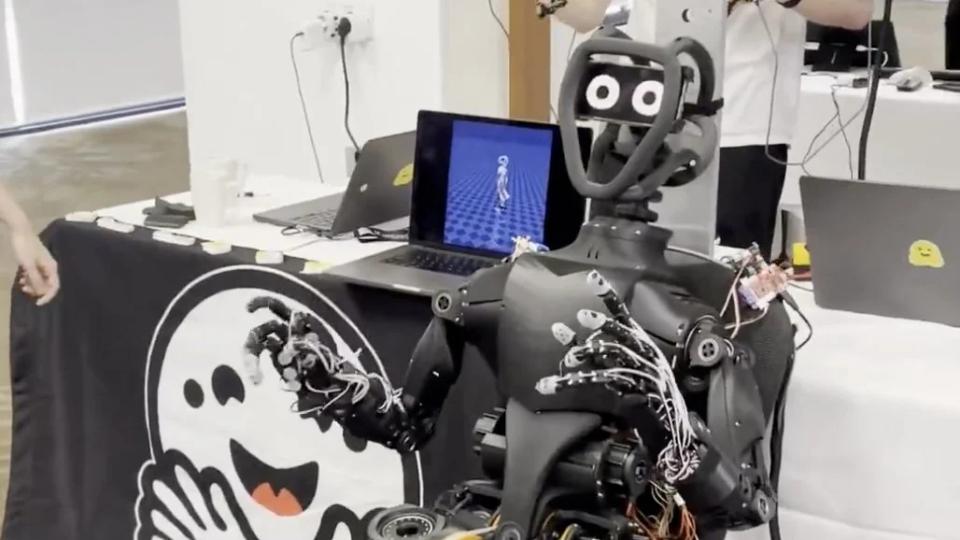
Core Insights - Hugging Face has officially entered the embodied AI sector by launching two humanoid robots, HopeJR and Reachy Mini, marking its first venture into hardware after establishing a strong presence in software [2][3] - The acquisition of Pollen Robotics, the creator of the modular humanoid robot Reachy, has provided the technological foundation for this transition, allowing Hugging Face to leverage Pollen's engineering and design principles in its new robots [2][3] - The company aims to expand beyond chatbots and model hosting to create AI systems capable of interacting in real-world environments while maintaining its commitment to open-source principles [2][3] Company Overview - Hugging Face, founded in 2016, initially launched a chatbot application for teenagers before evolving into a comprehensive machine learning development platform that supports model hosting, dataset sharing, and API integration [3] - The company recognizes the necessity for AI to interact with the physical world, prompting its focus on embodied intelligence and robotics, which are designed for experimentation, collaboration, and reproducibility [3] Product Details - HopeJR is a full-sized humanoid robot designed for developers and researchers, featuring a modular platform with multiple cameras, articulated limbs, and voice interaction capabilities, allowing for testing of language models and perception systems in real-world scenarios [6] - HopeJR boasts 66 degrees of freedom (DOF) and aims to achieve walking capabilities in real-world environments following successful simulations [6] - Reachy Mini is a smaller version of the original Reachy robot, designed for educational purposes and independent developers, featuring functionalities like expression display and basic object manipulation [9] - The introduction of Reachy Mini aims to lower barriers for developers, making it easier to experiment without the costs and complexities associated with larger robots [9] Future Outlook - While specific pricing and release dates for HopeJR and Reachy Mini have not been disclosed, both robots will operate under a loose open-source license [10] - The company plans to introduce benchmark challenges, developer toolkits, and a dedicated robot section on Hugging Face Hub, along with deep integration with the PyTorch robotics platform LeRobot [10] - Hugging Face's CEO emphasizes the open-source strategy to prevent monopolization of robotics technology by a few large companies, reiterating the mission to democratize AI and robotics [10]

腾讯研究院AI速递 20250603
腾讯研究院· 2025-06-02 15:08
Group 1: AI Mechanisms and Tools - Mamba's core authors introduced two attention mechanisms, GTA and GLA, designed for inference, which can double decoding speed and throughput [1] - Flowith launched Agent Neo, the world's first AI agent capable of infinite execution and output, with a million-token context capability [2] - FLUX.1 Kontext is a unified framework for various image tasks, excelling in character consistency and rapid generation speed [3] Group 2: General AI Agents - Fairies, a general AI agent developed by Peking University alumni, can perform 1,000 operations without an invitation code [4][5] - ElevenLabs released Conversational AI 2.0, enhancing voice assistants' ability to understand user intent and manage multi-modal interactions [6] Group 3: AI Applications and Market Trends - Google launched the experimental Google AI Edge Gallery, allowing local execution of AI models on mobile devices [7] - Hugging Face introduced two open-source humanoid robots, with prices starting at $250, aimed at AI application development [8] - Mary Meeker's AI trends report highlighted a 99.7% drop in AI inference costs over two years, with Chinese models emerging at significantly lower costs [9] Group 4: Future of AI - OpenAI's COO Lightcap discussed the transition from conversational models to general AI agents, with over 3 million paid seats for ChatGPT Enterprise [10] - LeCun's research indicated that large language models struggle with nuanced semantic tasks, questioning their path to artificial general intelligence [11]
250美元起售,还开源,Hugging Face 发布史上最亲民人形机器人
机器之心· 2025-05-31 04:00
Core Viewpoint - Hugging Face has officially open-sourced two humanoid robots, HopeJR and Reachy Mini, moving closer to Elon Musk's prediction of 10 billion humanoid robots by 2040 [1][31]. Group 1: Robot Specifications - HopeJR is a full-sized humanoid robot with 66 degrees of freedom, capable of walking and arm movement [3]. - Reachy Mini is a desktop robot that can move its head, speak, and listen, designed for testing AI applications [5][20]. Group 2: Pricing and Availability - HopeJR is priced at approximately $3,000, while Reachy Mini costs between $250 and $300, depending on tariffs [7]. - The company plans to start shipping the first batch of robots by the end of the year, with a waiting list already open [7]. Group 3: Open Source and Community Impact - The open-sourcing of these robots allows anyone to assemble and understand their workings, democratizing access to robotic technology [7][28]. - Hugging Face aims to build an open-source robotics ecosystem, breaking down barriers to knowledge and technology, making robotics accessible to a wider audience [28][30]. Group 4: Development and Features - HopeJR requires developers to manually control it and record actions for training through imitation learning algorithms [10][12]. - Reachy Mini is designed to help develop AI applications, allowing for testing before deployment in real-world scenarios [20]. Group 5: Previous Initiatives - This is not Hugging Face's first venture into robotics; they previously launched the LeRobot project and the SO-100 robotic arm design [26][28].

速递|Hugging Face全力进军AI机器人:发布两款开源人形机器人,最低仅售250美元
Z Potentials· 2025-05-30 03:23
Core Viewpoint - Hugging Face has launched two new humanoid robots, HopeJR and Reachy Mini, as part of its expansion into the robotics sector, emphasizing open-source technology and affordability [1][3]. Group 1: Product Launch - The company introduced HopeJR, a full-sized humanoid robot with 66 degrees of freedom, capable of walking and arm movements, and Reachy Mini, a desktop robot that can rotate its head, speak, and listen [1]. - The estimated price for HopeJR is around $3,000, while Reachy Mini is priced between $250 and $300, depending on tariff policies [3]. Group 2: Open Source and Accessibility - The open-source nature of these robots allows anyone to assemble, reconstruct, and understand their operation, preventing monopolization by a few large companies [3]. Group 3: Strategic Acquisitions - The launch of these robots is partly attributed to the acquisition of Pollen Robotics, which provided new capabilities for the development of these humanoid robots [4]. Group 4: Future Developments - Hugging Face has been actively entering the robotics industry, with plans to launch LeRobot in 2024, a resource collection that includes open-source AI models, datasets, and tools for building robotic systems [6]. - In 2025, the company released an upgraded version of its 3D printable programmable robotic arm SO-101, developed in collaboration with The Robot Studio [6].

马斯克脑机接口公司Neuralink融资6亿美元,估值90亿美元;Hugging Face推出两款新型人形机器人丨全球科技早参
Mei Ri Jing Ji Xin Wen· 2025-05-30 00:03
Group 1: Google and AI Innovations - Google has launched the Gemini model, allowing users to analyze video content stored in Google Drive, generating summaries or answering questions without watching the videos, significantly enhancing information retrieval efficiency [2] - This innovation may strengthen Google's competitive position in the AI sector, attracting more users and developers, and putting pressure on competitors like OpenAI [2] Group 2: Neuralink Financing - Neuralink, Elon Musk's brain-computer interface company, has raised $600 million in its latest funding round, bringing its valuation to $9 billion, up from $5 billion in the previous round [3] - This financing solidifies Neuralink's leading position in the brain-computer interface field and may stimulate interest in related sectors such as medical technology and artificial intelligence [3] Group 3: Robotics Development - Hugging Face has introduced two new open-source robots: HopeJR, a full-sized humanoid robot with 66 degrees of freedom, and Reachy Mini, a desktop robot capable of head movement and speech [4] - This initiative may attract more developers and promote the proliferation of robotics technology, increasing attention in the sector [4] Group 4: AMD Acquisition - AMD has acquired the silicon photonics startup Enosemi, although specific terms of the deal have not been disclosed [5] - This acquisition signifies AMD's strategic expansion in AI and high-performance computing, addressing the growing demand for faster and more efficient data transmission [5] Group 5: Supercomputer Collaboration - The U.S. Department of Energy announced that the upcoming "Doudna" supercomputer, set to launch in 2026, will utilize technology from NVIDIA and Dell, named after Nobel laureate Jennifer Doudna [6] - This collaboration reinforces NVIDIA and Dell's leadership in AI and high-performance computing, potentially accelerating advancements in AI model training, autonomous driving, and scientific computing [6]
首个科研智能体“天团”出道!近期AI新鲜事还有这些……
红杉汇· 2025-05-14 14:05
Group 1: AI Research Assistants - FutureHouse launched four AI research assistants named Crow, Falcon, Owl, and Phoenix, designed to enhance human research efficiency [3] - Crow, Falcon, and Owl have surpassed top search models like o3-mini, GPT-4.5, and Claude-3.7 in search accuracy and precision, allowing for detailed inquiries about experimental designs and research limitations [5] - These AI assistants can generate and evaluate new hypotheses and plan experiments much faster than traditional methods, with a transparent reasoning process that allows users to track the basis for conclusions [6] Group 2: Amazon's Robotics Innovation - Amazon introduced a new warehouse robot system called Vulcan, which has human-like tactile perception capabilities, enhancing its ability to handle various products [8][11] - The robot uses force feedback sensors to adjust grip strength, significantly reducing damage rates of items, as evidenced by a drop in damage rates from 1.8% to 0.3% in tested scenarios [11] Group 3: AI in Animal Communication - Baidu has applied for a patent for an AI technology that can accurately identify animal emotions and translate them into human language, potentially facilitating deeper emotional communication between species [12] Group 4: Google DeepMind's Gemini Update - Google DeepMind released an updated version of Gemini 2.5 Pro, which significantly enhances programming capabilities, ranking first in both LMArena and WebDev Arena programming leaderboards [15] - The new version allows users to create web applications and games with minimal input, lowering the entry barrier for design-oriented developers [15] Group 5: Affordable Robotics - Hugging Face is selling a programmable, 3D-printable robotic arm called SO-101, which can perform basic tasks and is designed for educational and small manufacturing applications [18][21] Group 6: Adobe's Firefly Image Model - Adobe launched the Firefly Image Model 4 series, integrating various AI tools for image, video, audio, and vector generation, emphasizing speed and control [22][24] - The new models offer improved detail and realism, with enhanced capabilities for handling complex scenes and fine structures [24]
微软华人AI团队核心成员被曝加入腾讯混元,知情人称与裁员无关|独家
AI前线· 2025-05-14 08:12
Core Viewpoint - The WizardLM team, including key member Can Xu, has left Microsoft to join Tencent's Hunyuan division, amidst speculation regarding the timing of their departure coinciding with Microsoft's global layoffs [1][2]. Group 1: Team Departure and Background - Can Xu announced his departure from Microsoft, clarifying that it was his personal decision and not the entire WizardLM team [1]. - Most core members of the WizardLM team have reportedly already left Microsoft prior to the announcement, and their departure is not directly related to the layoffs affecting approximately 6,000 employees [2]. - The WizardLM team was established in early 2023, focusing on the development of advanced large language models (LLMs) [4]. Group 2: Team Members and Contributions - Key members of the WizardLM team include Qingfeng Sun and Can Xu, both of whom have significant backgrounds in AI research and have contributed to various projects at Microsoft [5]. - Can Xu has led the development of several models under the WizardLM series, with over 40 papers published in top international conferences and more than 3,300 citations on Google Scholar [5]. Group 3: Model Development and Achievements - The WizardLM team introduced the Evol-Instruct method, which generates diverse instruction data using LLMs, outperforming human-created datasets in evaluations [6][9]. - The WizardLM model has achieved notable performance metrics, including a 97.8% score compared to ChatGPT on the Evol-Instruct test set [10]. - In a ranking of large language models, WizardLM was placed fourth globally, marking it as the top open-source model from a Chinese team [13][14]. Group 4: Tencent's AI Strategy - Tencent has restructured its AI model development framework, focusing on "computing power, algorithms, and data," and plans to invest approximately 124.9 billion USD in AI development this year [24][26]. - The company has established new technical departments dedicated to large language models and multimodal models to enhance its AI capabilities [24][25]. Group 5: Challenges and Community Impact - Following the release of the WizardLM-2 models, Microsoft retracted them due to missing toxicity testing, which has raised concerns within the AI community [19][21]. - The CEO of Hugging Face expressed that Microsoft's actions have negatively impacted various open-source projects and the community at large [21][23].



微软这支神秘的华人AI团队加入腾讯混元,曝与裁员无关|独家
AI前线· 2025-05-14 05:47
Core Viewpoint - The WizardLM team, creators of advanced large language models, has transitioned from Microsoft to Tencent's AI development organization, Hunyuan, aiming to enhance LLM training technology and develop superior AI models [1][3][31]. Group 1: Team Transition and Background - The WizardLM team, consisting of six key members, has left Microsoft amid speculation regarding layoffs affecting 3% of the workforce, although their departure is reportedly unrelated to these layoffs [4][6]. - The team was established in early 2023, focusing on the development of advanced large language models, with notable members including Qingfeng Sun and Can Xu, both of whom have significant experience in AI research [7][9][10]. - The team has previously contributed to the development of models such as WizardLM, WizardCoder, and WizardMath, and has published over 40 papers in top international conferences [10][13]. Group 2: Model Development and Achievements - WizardLM has released models that outperform Google's Gemma 3 series and have ranked among the top four global large language models in competitions [3][16]. - The core algorithm, Evol-Instruct, allows for the efficient generation of complex instruction data, leading to superior performance in human evaluations compared to traditional methods [13][14][17]. - The WizardLM-30B model achieved a 97.8% score compared to ChatGPT in specific tests, showcasing its advanced capabilities [14]. Group 3: Tencent's AI Strategy - Tencent has restructured its AI development framework, focusing on "computing power, algorithms, and data," and plans to invest approximately 124.9 billion USD in AI development [28][30]. - The company has established new technical departments dedicated to large language models and multimodal models, aiming to enhance AI capabilities in natural language processing and data integration [28][29]. - Following the acquisition of the WizardLM team, Tencent's ambition in the AI sector is expected to grow, with the team continuing to develop and release AI models [31].

贸易战下的产业韧性(二):AI大模型的商业“回旋镖”,重新落到了云计算
3 6 Ke· 2025-05-11 23:28
Core Viewpoint - The domestic large model industry is attempting to break through its current challenges and reconstruct a new order, but the unstable market environment poses significant risks [1] Group 1: Open Source Trends - DeepSeek has disrupted the industry's perception of open-source models, prompting OpenAI's CEO to reconsider the validity of open-source strategies [1] - Domestic large model companies like Alibaba, Baidu, and SenseTime are accelerating their open-source initiatives [1] - Open-source is seen as a key strategy to reduce dependency on foreign software and hardware, but the commercial viability of open-source projects remains complex [2][5] Group 2: Challenges in Implementation - Developers face significant technical adaptation and maintenance costs, despite open-source models lowering the technical barrier [4] - The integration of large models into existing systems requires extensive customization, which can be resource-intensive for companies [4] - The complexity of data acquisition, cleaning, and labeling poses additional challenges for businesses, particularly small and medium-sized enterprises [4] Group 3: Investor Sentiment - Investors are cautious about the open-source model due to the unclear profitability and traditional software sales evaluation methods not being applicable [5] - The potential for significant financial loss if investments in proprietary models are undermined by open-source alternatives is a concern for investors [4][5] Group 4: Business Models - Chinese large model companies are adopting a "free-to-use plus value-added services" model to build a commercial framework around open-source models [6][8] - Companies like Baidu are leveraging their cloud services to monetize the usage of their open-source models, creating a win-win situation for developers and the company [8] - The success of open-source models may depend more on the quality of cloud services than on the models themselves, as seen in the strategies of Meta and Hugging Face [9][10] Group 5: Future Outlook - Open-source is viewed as a pathway for the Chinese large model industry to overcome technological barriers, but commercial sustainability is equally important [10] - The increasing tariff barriers from the U.S. add pressure to the large model industry, making the choice of cloud platforms more critical than the open-source models themselves [10]