
中信银行

Search documents
个人养老金缴存倒计时,金融机构出招冲刺
Sou Hu Cai Jing· 2025-12-25 14:59
Core Insights - The personal pension system in China began pilot programs in select cities at the end of 2022 and is set for nationwide rollout by the end of December 2024, with over 150 million accounts opened to date [1][2] Group 1: Personal Pension Contributions - As the year-end approaches, financial institutions are intensifying marketing efforts to boost personal pension contributions, which are a key part of China's multi-tiered pension system [2] - The tax benefits associated with personal pensions, including pre-tax deductions on contributions and low tax rates upon withdrawal, are encouraging residents to optimize their personal tax and enhance retirement savings [2] Group 2: Bank Marketing Strategies - Banks are implementing tiered rewards and differentiated products to attract customers for personal pension contributions, moving from broad marketing to more refined operations [3][4] - Various banks are offering unique incentives, such as cash rewards for account opening and contributions, with examples including Citic Bank's promotional activities and Industrial and Commercial Bank of China's multiple reward schemes [4][5][6] Group 3: Industry Trends and Customer Engagement - The focus of bank marketing has shifted from merely acquiring new accounts to enhancing customer engagement and activity, addressing the issue of inactive accounts post-opening [8] - Banks are innovating in deposit methods and creating a comprehensive pension financial ecosystem, including features like automatic deductions and integrating non-financial services to encourage ongoing contributions [8] Group 4: Investment Performance and Product Offerings - Over 98% of personal pension fund products have achieved positive returns, with an average yield exceeding 15%, highlighting the strong performance of available investment options [10][11] - The types of investable products include savings, funds, insurance, and wealth management products, with funds offering a wider range of options and higher potential returns [10][12] Group 5: Investment Strategy Recommendations - Investment strategies for personal pensions should vary by age and risk tolerance, with younger individuals advised to allocate a higher percentage to growth-oriented funds, while older individuals should prioritize safety and stability [12]


这家总资产规模近19万亿的国有大行将迎来领导人员调整
Bei Ke Cai Jing· 2025-12-25 12:06
新京报贝壳财经讯(记者黄鑫宇)中国邮政集团有限公司(下称"邮政集团")近日在官方微信公众号披 露,在2025年12月23日召开的党组会议上,该集团宣布了中共中央组织部关于芦苇、刘建军的职务任免 决定。芦苇将出任邮政集团副总经理、党组成员,同时免去刘建军的邮政集团副总经理、党组成员职 务。相关职务任免按有关法律规定办理。 四年半前(即2021年6月1日),邮政集团党组召开会议,宣布了中共中央组织部关于刘建军任职的通 知:经研究,刘建军任邮政集团党组成员、副总经理。此后的2021年8月,他出任邮储银行行长。 刘建军现任邮储银行党委书记、行长。同样根据公开信息,他1965年8月出生,目前已年满60周岁。 Wind显示,截至2025年9月末,邮储银行总资产规模约为18.61万亿元,同比增长11.10%。 编辑 岳彩周 校对 柳宝庆 公开信息显示,芦苇系"70后"、出生于1971年10月,今年54周岁。1994年7月至1997年1月,他就职于北 京青年实业集团公司。1997年1月,芦苇加入中信银行,历任总行计划财务部(现财务会计部)副总经 理、总经理,资产负债部总经理,香港分行筹备组副组长,中信银行董事会秘书,深圳分行 ...

中信银行呼和浩特分行以“联合舰队”模式为内蒙古高质量发展赋能
Zhong Guo Jin Rong Xin Xi Wang· 2025-12-25 11:51
Core Viewpoint - The collaboration between CITIC Bank Hohhot Branch and CITIC Group, termed the "CITIC Joint Fleet," is focused on high-quality development in Inner Mongolia, providing significant financial support to local enterprises and government projects [1][2]. Group 1: Financial Contributions - The "CITIC Joint Fleet" has invested nearly 10 billion yuan in local government bonds and provided over 3 billion yuan in joint financing for various enterprises in Inner Mongolia this year [1]. - The bank offers comprehensive financial support through a model that integrates commercial banking, investment banking, and financial consulting, optimizing collaboration with local governments and enterprises [1]. Group 2: Strategic Focus Areas - The bank is tailoring comprehensive financial solutions around key areas such as energy strategy, green development, and rural revitalization, advancing financial services for the real economy [2]. - The "Joint Fleet" employs a combination of loans, bonds, equity, and consulting services to support key enterprises and projects in sectors like new energy, ecological agriculture, and modern chemical industries [2]. Group 3: Future Directions - CITIC Bank Hohhot Branch plans to continue expanding the scope and depth of the "Joint Fleet," focusing on ecological protection, infrastructure development, and modern energy economy in Inner Mongolia [2].

中信银行包头分行:科技金融精准赋能企业“拔节生长”
Zhong Guo Jin Rong Xin Xi Wang· 2025-12-25 11:34
Core Insights - The article highlights the commitment of China CITIC Bank's Baotou branch to support the development of Baotou's "two rare earth bases" and strategic emerging industry clusters by focusing on technology finance as a key area for high-quality growth [1] Group 1: Service Foundation and Mechanism - China CITIC Bank's Baotou branch has established a specialized mechanism for technology finance, offering preferential internal fund transfer pricing for technology loans, prioritizing approvals, and expediting processing to support technology enterprises throughout their growth lifecycle [2] - The bank has provided nearly 10 billion yuan in credit support to key technology enterprises in advanced manufacturing sectors such as steel, rare earth, and crystalline silicon photovoltaic [2] Group 2: Product Support and Financing Solutions - The bank addresses challenges faced by technology enterprises, such as "first loan difficulties, slow financing, and diverse needs," by leveraging core enterprise credit and utilizing supply chain financial products like "Commercial Bill e-loan, Order e-loan, and Distributor e-loan" to provide convenient financing support [3] - In the current year, the bank has disbursed a total of 3.252 billion yuan in online financing and has supported 8 specialized and innovative enterprises with approximately 100 million yuan through the "Science and Technology e-loan" product, along with an 800 million yuan stock pledge financing [3] Group 3: Digital Services and Financial Management - The bank has enhanced its digital service capabilities, having implemented the "Tianyuan Treasury" system for 8 private technology enterprises, enabling dynamic visibility of funds, one-click allocation, and automatic synchronization of financial and operational data [4] - The bank has completed nearly 200 million USD in foreign exchange transaction settlements this year, providing one-stop services for cross-border technology enterprises, including financing, settlement, and exchange rate hedging [4] Group 4: Scene Integration and Targeted Services - The bank actively integrates into the local innovation ecosystem, shifting from a passive service model to proactive engagement by collaborating with key park management committees to conduct policy briefings and business matching activities [5] - By 2025, the bank has served 68 technology enterprises, disbursed 6.8 billion yuan in technology finance loans, and achieved a loan balance exceeding 4.4 billion yuan, covering cutting-edge fields such as rare earth functional materials, new energy equipment, and intelligent manufacturing [5] - The bank's leadership emphasizes a commitment to serving the real economy and deepening technology finance to contribute to Baotou's development as a regional innovation hub and modern industrial system [5]
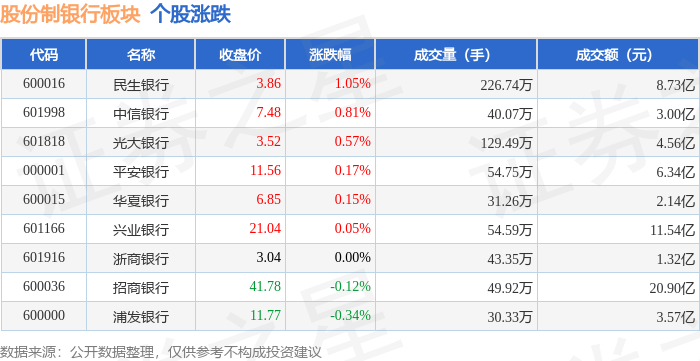
股份制银行板块12月25日涨0.12%,民生银行领涨,主力资金净流入1.22亿元
Zheng Xing Xing Ye Ri Bao· 2025-12-25 09:03
Group 1 - The banking sector saw a slight increase of 0.12% on December 25, with Minsheng Bank leading the gains [1] - The Shanghai Composite Index closed at 3959.62, up 0.47%, while the Shenzhen Component Index closed at 13531.41, up 0.33% [1] - The trading volume for Minsheng Bank was 2.2674 million shares, with a transaction value of 873 million yuan [1] Group 2 - The net inflow of main funds in the banking sector was 122 million yuan, while retail funds experienced a net outflow of 69.36 million yuan [1] - The detailed fund flow for individual banks shows that Ping An Bank had a net inflow of 51.47 million yuan from main funds [2] - Industrial Bank experienced the highest net outflow from main funds at 70.30 million yuan [2]



商业银行“出海”验成色:中行领跑,谁在悄然发力?
2 1 Shi Ji Jing Ji Bao Dao· 2025-12-25 08:34
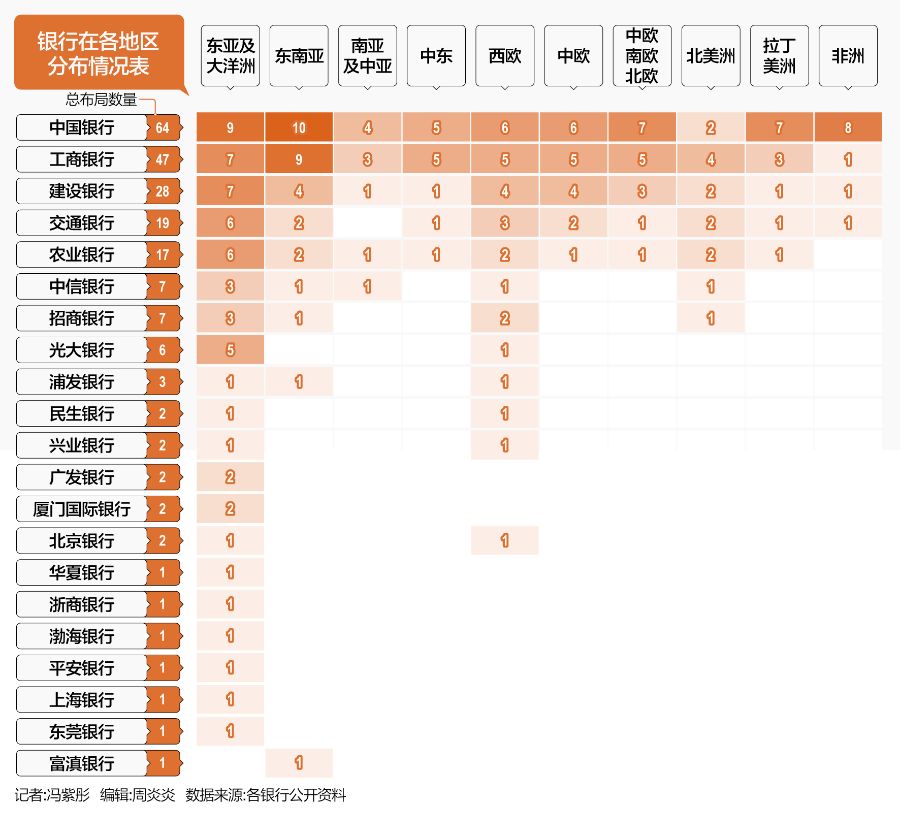
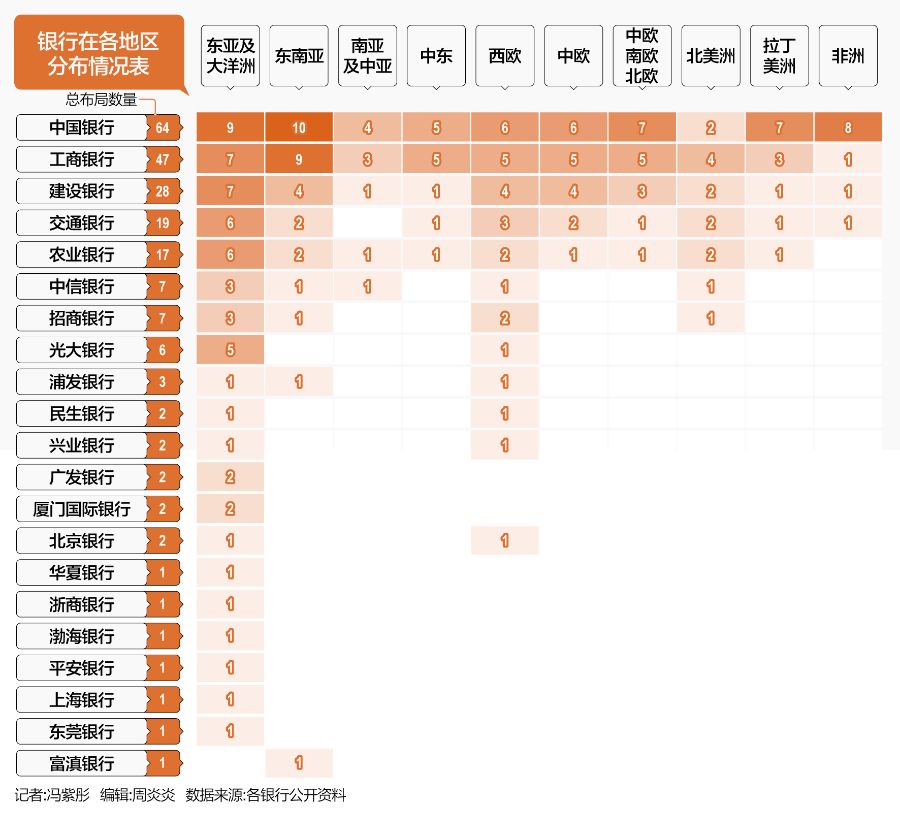
Core Insights - Chinese banks are expanding their overseas presence, establishing a comprehensive service network that covers major financial centers globally and key regions along the Belt and Road Initiative [1][4] - The internationalization strategy of Chinese banks has shifted from focusing primarily on traditional markets in Europe and the US to emerging markets in Southeast Asia, the Middle East, Latin America, and countries involved in the Belt and Road Initiative [1][9] Group 1: Overseas Expansion Strategies - Chinese banks utilize three main forms for overseas expansion: representative offices, branches, and subsidiaries, with larger banks often establishing branches or subsidiaries in mature markets and starting with representative offices in emerging markets [2][4] - The distribution of overseas institutions varies among banks, with a notable focus on new emerging markets and developing countries [2][4] Group 2: Performance of Major Banks - Bank of China leads in global presence with 539 overseas branches in 64 countries, including 45 countries involved in the Belt and Road Initiative, and has a strong focus on enhancing its competitive edge in Southeast Asia [4][12] - Industrial and Commercial Bank of China has 413 overseas institutions in 49 countries, with a significant presence in 30 Belt and Road countries, showcasing a flexible internationalization strategy [4][12] - Agricultural Bank of China has established 13 branches and 4 representative offices, focusing on supporting high-quality Belt and Road initiatives [4][12] Group 3: Revenue Growth and Performance Metrics - In the first half of 2025, Bank of China reported overseas revenue of 783.13 billion yuan, a 14.4% increase from the previous year, with overseas revenue accounting for 23.77% of total revenue [11][12] - Agricultural Bank of China achieved a 21.03% increase in overseas revenue, while Construction Bank's overseas revenue grew by 40.92%, indicating strong expansion momentum [12][14] - Shanghai Pudong Development Bank's overseas revenue surged by 119.37%, marking a significant growth and highlighting the effectiveness of its international strategy [14] Group 4: Challenges and Market Dynamics - Chinese banks face regulatory challenges in overseas markets, including compliance with both domestic and foreign regulations, which can lead to significant penalties [15][19] - The demand from Chinese enterprises for overseas financial services is evolving, with a shift towards more complex needs such as global treasury management and cross-border mergers and acquisitions [16][17] - Small and medium-sized enterprises are becoming a key growth driver for overseas financial services, emphasizing the need for lower financing thresholds and cost-effective payment solutions [16][17] Group 5: Future Directions and Strategic Focus - The future competitiveness of Chinese banks in international markets will depend on enhancing global collaboration, improving localization capabilities, and strengthening compliance risk management [18][19] - Emphasis on financial technology innovation and the development of cross-border digital infrastructure will be crucial for expanding their international footprint [19]





深度丨商业银行“出海”验成色:中行领跑,谁在悄然发力?
2 1 Shi Ji Jing Ji Bao Dao· 2025-12-25 08:32
Core Insights - Chinese banks are expanding their overseas presence, establishing a comprehensive service network that covers major financial centers globally and key regions along the Belt and Road Initiative [1][2] - The internationalization strategy of Chinese banks has shifted from traditional markets in Europe and the US to emerging markets in Southeast Asia, the Middle East, Latin America, and countries involved in the Belt and Road Initiative [1][2] Group 1: Global Expansion Strategy - Chinese banks are utilizing representative offices, branches, and subsidiaries for overseas expansion, with larger banks often establishing branches in mature markets and starting with representative offices in emerging markets [2] - The distribution of overseas institutions shows that major state-owned banks are leading the expansion, with a focus on both traditional and emerging markets [2][4] Group 2: Performance Metrics - As of June 2025, Bank of China leads with 539 overseas branches in 64 countries, including 45 Belt and Road countries, showcasing its extensive global network [4] - Industrial and Commercial Bank of China follows with 413 overseas institutions in 49 countries, including 250 in Belt and Road countries, demonstrating a flexible international strategy [4] - Agricultural Bank of China has established 13 branches and 4 representative offices, focusing on supporting high-quality Belt and Road initiatives [4] Group 3: Revenue Growth and Market Dynamics - In the first half of 2025, Bank of China reported overseas revenue of 783.13 billion yuan, a 14.4% increase from the previous year, with overseas revenue accounting for 23.77% of total revenue [12] - Industrial and Commercial Bank of China's overseas revenue was 562.52 billion yuan, showing a slight decline of 1.88%, while Agricultural Bank of China experienced a 21.03% increase [12][11] - The growth of overseas revenue among joint-stock banks, such as Shanghai Pudong Development Bank, which saw a 119.37% increase, highlights the varying performance across banks [14] Group 4: Challenges and Future Directions - Chinese banks face regulatory challenges in overseas markets, including compliance with both domestic and foreign regulations, which can lead to significant penalties [15] - The demand for diversified financial services is evolving, with a shift from traditional trade financing to more complex needs such as global treasury management and cross-border mergers [16] - Future competitiveness will depend on enhancing global collaboration, local operational capabilities, compliance risk management, and financial technology innovation [18][19]
果然财经|2025的攒金账本:“年涨七成,不敢再等过年了!”
Sou Hu Cai Jing· 2025-12-25 06:40
Market Overview - The international gold price surged from $2,600 per ounce at the beginning of the year to $4,500 per ounce by late December, marking an increase of over 70% throughout the year [3][5] - Domestic gold jewelry prices also rose significantly, with the price per gram reaching around 1,400 yuan, and some high-end ancient gold pieces exceeding 2,000 yuan per gram [3][5] Consumer Behavior - The rise in gold prices has led to a shift in consumer purchasing behavior, with many consumers adopting a "buy high" mentality, resulting in long queues at gold stores [3][5] - New investment strategies, termed "new three golds," have emerged among younger consumers, who are now treating gold purchases similarly to stock trading, focusing on technical indicators and market timing [6][7] Industry Dynamics - The gold market is experiencing significant changes, with upstream mining companies benefiting from rising prices, as evidenced by substantial profit increases among major A-share gold mining firms [9] - Conversely, downstream retail gold businesses are facing challenges such as high inventory levels and increased operational pressures, leading to a contraction in franchise stores [10] Financial Adjustments - Banks are adjusting their gold investment thresholds in response to market risks, with several banks raising the minimum investment amounts for gold accumulation plans [11] Risks and Speculation - The surge in gold prices has led to risky behaviors among investors, including using loans to purchase gold, which poses significant financial risks [12] - The popularity of judicial auctions for gold bars has created a speculative environment, with some investors experiencing both significant gains and losses [12]

光大银行表态“稳步筹划”AIC,此前曾持续探索“投贷联动”
Hua Er Jie Jian Wen· 2025-12-25 05:29
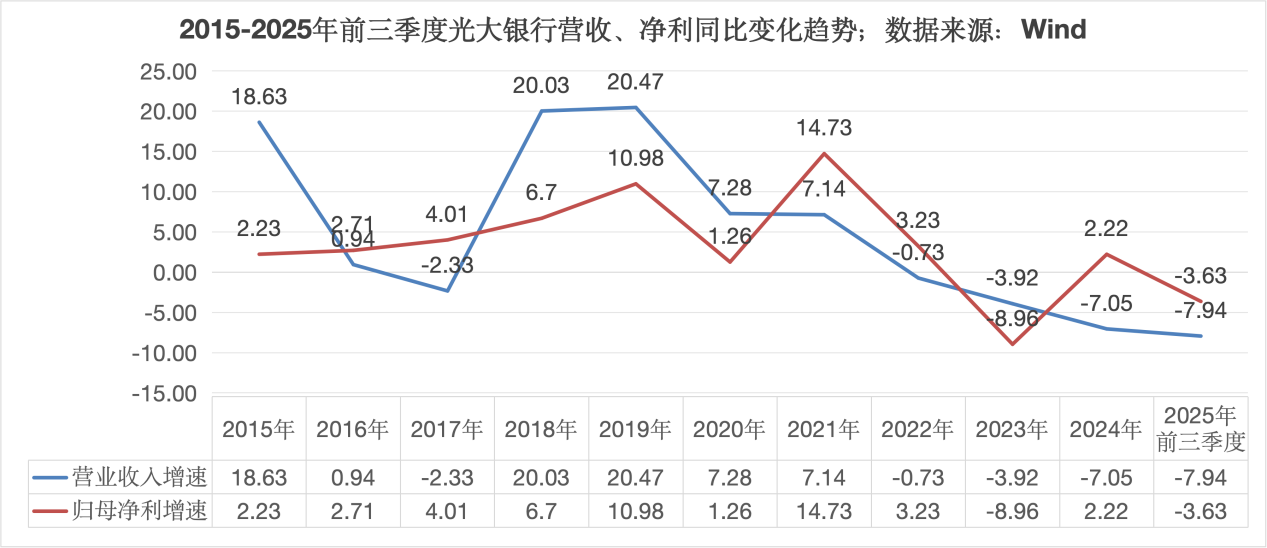
Core Viewpoint - The establishment of Asset Investment Companies (AICs) by banks is expanding, with the potential for increased investment in equity and support for technology-driven enterprises, enhancing service to the real economy [1][2]. Group 1: AIC Establishment and Operations - Everbright Bank is planning to establish an AIC and is in communication with regulatory bodies to advance this initiative [1]. - As of now, eight bank-affiliated AICs are operational, with major banks like China Merchants Bank, Industrial Bank, and CITIC Bank having launched their AICs with registered capital of 15 billion, 10 billion, and 10 billion respectively [1]. - The regulatory support for AICs is set to expand by March 2025, allowing national banks to establish AICs and broadening the scope of equity investment [1]. Group 2: Competitive Advantages of AICs - China Merchants Bank leverages its extensive experience and mature team for equity investments [3]. - Industrial Bank has a rich reserve of project resources, enhancing its ability to integrate production and finance through AICs [5]. - CITIC Bank focuses on group synergy, utilizing its comprehensive financial resources to enhance its investment capabilities [6]. Group 3: Everbright Bank's Strategy and Challenges - Everbright Bank has been exploring equity investment through its Hong Kong subsidiary and has seen success in private equity projects [4][12]. - The bank's loan balance for technology enterprises grew nearly 10% in the first half of 2025, indicating a strong focus on supporting innovation [22]. - Despite challenges such as declining profitability and increased credit impairment provisions, Everbright Bank is committed to transforming into a leading wealth management bank [20][14]. Group 4: Future Prospects and Strategic Importance - The AIC license is expected to fill gaps in Everbright Bank's service offerings, particularly in providing comprehensive financing solutions for technology and startup enterprises [23]. - The bank aims to convert the growth dividends of technology enterprises into products for high-net-worth clients, enhancing its wealth management services [23]. - The leadership structure of the new AIC will be crucial for its future operations, with attention on who will lead the initiative if approved [26].

科技金融培育增长新动能,中信银行杭州分行助力“创新浙江”建设
Mei Ri Jing Ji Xin Wen· 2025-12-25 04:20
Group 1 - Zhejiang's innovation capability has ranked fourth nationally for four consecutive years, with R&D investment intensity increasing from 2.77% in 2020 to a projected 3.22% in 2024 [1] - CITIC Bank Hangzhou Branch has served nearly 8,000 technology enterprises, with a comprehensive financing scale of nearly 400 billion yuan, significantly contributing to the cultivation of new productive forces and the upgrading of the technology industry [1][3] - The bank has established a "six specialized system" to enhance its technology finance services, including dedicated teams, specialized resources, and proprietary product services [2] Group 2 - CITIC Bank Hangzhou Branch has launched specialized products such as Talent Loans and Technology Achievement Transformation Loans, which assess technology enterprises based on their technical strength and talent value rather than traditional financial metrics [2][3] - The bank has facilitated over 300 billion yuan in comprehensive financing for more than 1,000 hard technology enterprises in the past three years, with eight companies achieving initial public offerings in 2024 [3] Group 3 - The bank has built an integrated service system that includes collaboration with securities firms, equity investment institutions, and research institutes to provide comprehensive services for technology enterprises [4] - In March 2023, the bank issued a 100 million yuan merger loan for a key "little giant" enterprise, demonstrating its commitment to supporting high-tech sectors [4] Group 4 - CITIC Bank Hangzhou Branch has established a cross-border service office to provide comprehensive financing services, including equity and debt financing for technology enterprises [5] - The bank has set up a 100 billion yuan industry fund in collaboration with local governments and a 50 billion yuan precision manufacturing industry fund with partners, contributing to the capital needs of Zhejiang's advanced manufacturing cluster [6] Group 5 - The bank has successfully launched the first technology achievement transformation loan, providing nearly 10 million yuan to a research transformation enterprise, setting a benchmark for financial support in technology transfer [7] - CITIC Bank Hangzhou Branch's collaborative network with local universities and investment institutions aims to support the financing needs of technology enterprises in Zhejiang [7]