Stripe

Search documents
Federal judge rejects SEC and Ripple’s joint motion to settle lawsuit: CNBC Crypto World
CNBC Television· 2025-06-26 21:18
Today, Circle resumes its post IPO rally. A federal judge, pushes back on a settlement between the SEC and Ripple, and Zack Abrams, co-founder of Bridge, discusses the wave of stable coin interest on Wall Street. Welcome to CNBC's Crypto World.I'm Talia Kaplan. Major cryptocurrencies in the green along with stocks as the S&P 500 continued its march toward the all-time high set earlier in the year. Some factors for the rise include the potential for lower interest rates later this year, a calming tariff envi ...


华丽的demo唾手可得,好的AI产品来之不易 | Jinqiu Select
锦秋集· 2025-06-25 15:24
Core Insights - The article discusses the rapid growth of AI startups, emphasizing that achieving a 10x annual growth rate has become the new standard, surpassing traditional SaaS benchmarks [2][21] - It highlights the importance of transitioning from flashy demos to solid products, as the complexity of real-world applications creates a significant gap between demonstration and actual product functionality [1][5][8] Group 1: Growth Dynamics - AI companies are achieving faster growth rates than traditional software companies, with some reaching over 10x year-on-year growth [21] - The shift in enterprise purchasing behavior has led to a more proactive approach in seeking AI solutions, significantly shortening sales cycles [22][23] - The cost of creating AI applications has drastically decreased, enabling the development of previously unfeasible long-tail tools [26][30] Group 2: Product Development Challenges - Creating a compelling AI product is more challenging than producing a demo, as real-world user behavior is unpredictable and requires sophisticated model orchestration [6][10][12] - Companies must invest heavily in understanding specific business environments to ensure their AI products are effectively integrated [14][15] Group 3: Competitive Advantages - Speed and early momentum are crucial for establishing brand dominance and customer loyalty in the AI sector [3][34] - Building a strong moat involves becoming a core record system for clients, creating workflow lock-in, deep vertical integration, and maintaining trust-based relationships [36][37][40][44]

Will Stablecoins Kill Visa's Cash Cow?
The Motley Fool· 2025-06-24 09:00
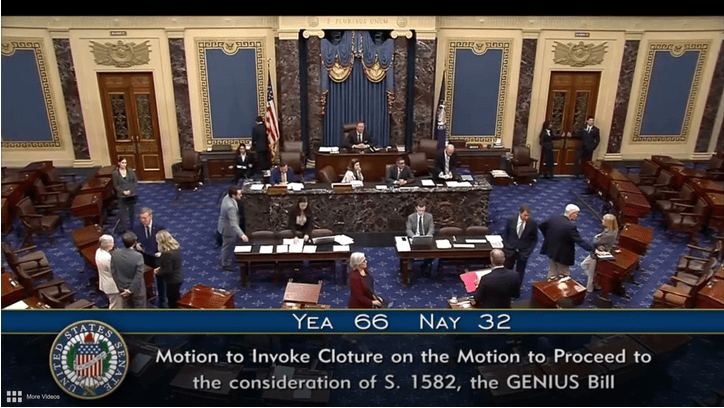
Core Viewpoint - New stablecoin legislation is causing concern among investors regarding Visa's business, leading to a nearly 10% decline from its all-time highs, as merchants and fintech companies are increasingly accepting stablecoins for transactions [1][5]. Group 1: Stablecoins and Legislation - Stablecoins are cryptocurrencies pegged to fiat currencies, such as the U.S. dollar, providing more reliability than traditional cryptocurrencies like Bitcoin [3]. - Recent legislation passed by the U.S. Senate aims to regulate stablecoins, ensuring issuers maintain proper reserves and undergo regular audits [4]. - The acceptance of stablecoins by merchants is expected to increase, potentially allowing them to bypass Visa's payment processing [5]. Group 2: Competitive Landscape - Merchants are motivated to adopt stablecoins to avoid the 2%-3% transaction fees charged by Visa, which could save them billions annually [6][14]. - Despite the push for stablecoins, Visa maintains a significant competitive advantage due to its extensive global acceptance, with 150 million merchants and 4.8 billion cards in circulation [10]. - Consumers are unlikely to abandon Visa due to the cash-back rewards and perks associated with using Visa cards, which stablecoins do not currently offer [11][14]. Group 3: Investment Perspective - Although Visa's stock has declined, it is not expected to plummet to zero, and the company is considered a high-quality business [15][16]. - The current price-to-earnings ratio of 34 suggests that Visa may not be a solid buy at this time, as it is a mature company with stable but slow growth prospects [15].


Circle股价暴涨背后,《天才法案》如何重塑稳定币格局
3 6 Ke· 2025-06-24 04:29
Core Viewpoint - The recent surge in Circle's stock price and the competitive landscape of stablecoins highlight the growing importance of compliant stablecoins like USDC in the financial ecosystem, especially as regulatory frameworks evolve in the U.S. [1][4][9] Group 1: Circle's Market Performance - Circle's stock debuted at $31 on June 5 and surged to over $275 by June 23, marking an increase of nearly 800% in less than three weeks, making it a focal point in the U.S. stock market [1][4]. - The market's enthusiasm for Circle reflects the intensifying competition in the stablecoin sector, particularly between compliant USDC and non-compliant USDT [1][4]. Group 2: Regulatory Environment - The ongoing discussions around the U.S. "GENIUS Act" aim to establish a regulatory framework for stablecoins, which could significantly impact the competitive dynamics between compliant and non-compliant stablecoins [1][9]. - The lack of a unified federal regulatory framework in the U.S. contrasts with Europe, which has already implemented specific regulations for stablecoins [9][10]. Group 3: Circle and Coinbase Partnership - Circle and Coinbase initially established a joint venture, Center, to issue USDC, with both companies holding equal shares. However, operational control has shifted predominantly to Circle [10][13]. - The partnership agreement allows Coinbase to receive 50% of USDC's profits, with additional bonuses based on the volume of USDC held on Coinbase's platform [10][15]. Group 4: Market Dynamics and Future Outlook - The stablecoin market is projected to grow significantly, with U.S. and Canadian governments targeting a $2 trillion issuance by 2028, up from the current $250 billion [6][9]. - The competitive landscape is expected to evolve as traditional financial institutions, including major banks, explore issuing their own stablecoins, intensifying the competition [22][24]. Group 5: USDC's Growth Trajectory - USDC's circulation has grown from approximately $4 billion in 2018 to around $610 billion currently, driven by factors such as the DeFi boom and increased institutional adoption [26][30]. - Key events, such as the collapse of Silicon Valley Bank, have impacted USDC's market performance, leading to a significant reduction in its issuance [29][36]. Group 6: Profitability and Business Models - The profitability of stablecoin operations varies significantly, with USDC's high promotional costs impacting its net profit margins compared to USDT, which has leveraged non-compliant assets for higher returns [38][44]. - USDT's business model, which includes a mix of compliant and non-compliant assets, has allowed it to maintain a competitive edge in profitability despite regulatory scrutiny [39][44].

2026年,99%的AI创业公司将会倒闭?
Hu Xiu· 2025-06-24 00:45
Core Insights - The article draws parallels between the dot-com bubble of the late 1990s and the current AI-driven startup landscape, highlighting that many AI tools are essentially rebranded OpenAI products without substantial innovation [6][7][12] - The dependency of AI startups on OpenAI's technology creates a fragile ecosystem where the failure of these startups could significantly impact OpenAI's revenue and market position [15][21][30] Group 1: AI Startup Landscape - Many so-called "AI tools" are merely sophisticated interfaces for OpenAI's API, lacking original technology or infrastructure [8][28] - The business model of these shell products relies on exploiting information asymmetry, charging users significantly more than the actual cost of API calls [11][22] - The relationship between OpenAI and these shell products is interdependent, with OpenAI needing the distribution channels provided by these startups [18][19] Group 2: Risks and Vulnerabilities - The reliance on shell products creates a risk for OpenAI, as the collapse of these companies could lead to a loss of customers and revenue streams [17][21] - The entire AI ecosystem is vulnerable to disruptions in the supply chain, particularly concerning NVIDIA, which provides the hardware necessary for AI model training and deployment [37][46] - Regulatory actions or geopolitical tensions could also pose significant risks to the AI infrastructure, potentially halting operations across the board [52][53] Group 3: Competitive Landscape - Companies like Jasper and Copy.ai illustrate the challenges faced by AI startups, with many struggling to maintain profitability and market relevance in the face of competition from larger players like OpenAI and Microsoft [31][32][34] - The article emphasizes that true survival in the AI space will depend on companies that can build genuine user experiences rather than relying solely on API calls [36][68] - The current trend of shell products is unsustainable, as they lack the foundational technology and infrastructure necessary for long-term success [62][69] Group 4: Infrastructure and Future Outlook - The article posits that foundational infrastructure providers like NVIDIA and AWS will ultimately prevail, as they are essential for the functioning of the AI ecosystem [62][65] - The future of AI will be shaped by companies that can innovate beyond mere API usage and create lasting value for users [66][68] - The cyclical nature of tech bubbles suggests that the current AI boom will eventually end, leading to a consolidation of power among those who control the underlying infrastructure [69][70]



真正好的工作,都会让你感到痛苦
洞见· 2025-06-23 09:56
洞见 ( DJ00123987 ) —— 不一样的观点,不一样的故事, 3000 万人订阅的微信大号。点击标题下蓝字 " 洞见 " 关注,我们将为您提供有价值、有意思的 延伸阅读。 枫不经霜叶不红。 ♬ 点上方播放按钮可收听洞见主播素年锦时 朗读音频 移动支付巨头Stripe帕特里克·克里森与英伟达CEO黄仁勋有一次炉边对话。 他问黄仁勋:你在斯坦福大学的活动上,为什么会说,我希望你们经历足够剂量的痛苦和折磨。 黄仁勋这样回答: 人们常常误解,最好的工作是能一直给你快乐。但其实没有哪一件伟大的事情,是容易做到的。所以根据定义,我希望你伟大,用我的话来 说,我希望你受苦。 一个人躲了苦,避了麻烦,也注定失去了成长的机会。 真正好的工作,都会让你受难受苦。 我一直很相信一句话:You are what you suffer. 意译过来就是: 承受怎样的痛苦,成就怎样的人生。 一个在工作中受不得一点风吹雨打的人,和一个经历千锤万磨的人,注定会走向不同的未来。 苏宁电器发起一项"1200计划",预备从各校优秀毕业生中挑选人才,争取用2~3年的时间,将这群毕业生培养成企业的中层领导。 实习生林南,就是这"1200计划" ...

亚尼斯·瓦鲁法基斯| 特朗普的稳定币炼金术:为下一场全球金融危机做好准备?
Sou Hu Cai Jing· 2025-06-20 06:51
Core Insights - The recent legislative developments in the U.S. and Hong Kong regarding stablecoins highlight their growing importance as a bridge between digital and traditional finance, with major companies like JD and Alibaba seeking stablecoin licenses [1][3] - Stablecoins are seen as a tool for enhancing cross-border payments, but they also pose significant regulatory challenges and risks to the traditional financial system [1][5] Group 1: Legislative Developments - The U.S. Senate passed the GENIUS Act, establishing a federal regulatory framework for dollar-pegged stablecoins, while Hong Kong has implemented comprehensive regulations for fiat-backed stablecoins [1][3] - The GENIUS Act is viewed as a means to weaponize stablecoins, intertwining them with U.S. dollar dominance and potentially undermining financial stability [5][15] Group 2: Market Dynamics - The total market capitalization of stablecoins has reached $250 billion, with Tether alone generating $13 billion in pre-tax profits, indicating a significant financial impact [6][7] - The number of stablecoin wallets surged from 27 million to 46 million year-over-year, with transaction volumes increasing by 84%, showing a growing reliance on stablecoins for crypto trading [6][7] Group 3: Systemic Risks - The potential for moral hazard exists as stablecoin issuers may over-issue tokens beyond their dollar reserves, leading to a risk of runs similar to bank runs [9] - The migration of deposits from U.S. banks to stablecoins could create financial instability, as it may lead to increased demand for U.S. Treasuries and affect interest rates [10] - The collapse of stablecoins could have severe repercussions for the broader financial system, particularly if they are tied to major financial institutions [11][13] Group 4: Global Implications - The potential failure of stablecoins issued outside the U.S. could transmit financial risks globally, raising concerns among European and developing nations about their reliance on dollar-backed stablecoins [14] - Countries like China are taking proactive measures to mitigate risks associated with stablecoins by promoting their own digital currencies [14] Group 5: Future Outlook - The GENIUS Act's regulatory framework may inadvertently pave the way for a financial crisis by allowing unregulated stablecoin proliferation and limiting the Federal Reserve's ability to respond effectively [15][16] - The projected growth of stablecoins could lead to a significant shift in the financial landscape, with estimates suggesting a potential increase to $2 trillion by 2028 [7][8]
Coinbase Brings Stablecoins to eCommerce With Coinbase Payments
PYMNTS.com· 2025-06-19 22:13
Core Insights - Coinbase has launched a stablecoin payments stack aimed at eCommerce platforms, facilitating quicker market entry for payment service providers and marketplaces [2][3] - The solution, Coinbase Payments, is designed to simplify the integration of stablecoin payments by abstracting blockchain complexities, enabling businesses to offer crypto-native payments without needing specialized teams [3] Group 1: Market Demand and Adoption - Over half of the Fortune 500 companies are building on blockchain technology, and one-third of small businesses are already utilizing cryptocurrency [2] - Shopify has begun allowing merchants to accept USDC stablecoins, indicating a growing trend among eCommerce platforms to adopt stablecoin payments [4] Group 2: Challenges and Considerations - Despite increasing demand, stablecoin payments face challenges such as fragmented tooling and a lack of production-ready infrastructure, which have hindered broader adoption [3] - The complexities of using stablecoins for consumer payments at checkout present challenges, as there are no standardized dispute resolution processes compared to traditional card networks [6] Group 3: Consumer Perspective - Consumers may view holding stablecoins in digital wallets similarly to prepaid or gift cards, which could limit their appeal compared to credit cards that offer rewards and reversible transactions [7][8]


YC最新路演揭示AI创业生存法则:再不垂直,就是死
虎嗅APP· 2025-06-18 10:31
Core Insights - The investment landscape has shifted from a focus on general technology to a more pragmatic approach, emphasizing vertical AI applications that address specific industry workflows [2][3][4] - Y Combinator (YC) has become a significant player in the startup ecosystem, having incubated over 3,000 companies with a combined valuation exceeding $800 billion [2] Group 1: Trends in AI Startups - The proportion of AI-native companies in recent YC demo days has increased, indicating a rapid iteration and product development cycle [3][4] - Startups are now focusing on solving multiple pain points within a single industry rather than addressing a single aspect across various sectors [4][10] - Technical expertise alone is no longer a competitive advantage; deep understanding of vertical business needs is crucial [5][8] Group 2: Changes in Startup Dynamics - The barrier to entry for startups has lowered, with some teams achieving annual revenues of $10 million within 12 months, often with fewer than 10 members [5][6] - The concept of "Vibe Coding" allows developers to focus on high-level goals while AI handles code generation, changing the traditional coding landscape [5][6] - The share of vertical AI projects in YC has risen from 19% in 2023 to 40% in 2025, while horizontal AI projects have decreased from 49% to 26% [6] Group 3: Case Studies of Vertical AI Applications - Kirana AI provides an AI store manager for grocery stores, enhancing operational efficiency and safety through real-time alerts and data analysis [10][11] - Eloquent AI focuses on automating complex workflows in financial services, overcoming regulatory challenges by directly connecting AI to client databases [11][12] - The potential for AI to replace entire teams in specific industries presents a new value proposition, moving beyond subscription fees to capturing significant service fees [12][13] Group 4: Future Outlook - The future of startups may involve founders immersing themselves in the industries they aim to serve, as exemplified by a YC startup that employed a medical billing professional to understand the field better [13] - The integration of AI agents into various workflows will require a conducive environment for data sharing and collaboration across industries [13]

比我们想象还要震撼!“硅谷创投教父”霍夫曼深度剖析:当前的硅谷投资与科技趋势
聪明投资者· 2025-06-18 08:33
Core Viewpoint - The article discusses the transformative impact of AI and robotics on the future of work and wealth distribution, emphasizing the need for investors to adapt to these changes and identify valuable investment opportunities in the AI sector [6][89]. Group 1: AI Trends and Investment Opportunities - The current AI wave is just beginning, with rapid growth and the emergence of thousands of new companies daily, although many may not survive beyond five years [8][13]. - Investment in AI is heavily concentrated in a few hot startups, with a stark divide in funding availability [3][24]. - The strategies of "open source" and "distillation" are reshaping the competitive landscape in AI, allowing smaller companies to innovate at lower costs [31][33]. - Investors should focus on small models and vertical AI that cater to specific industry needs, as these areas present significant growth potential [40][43]. Group 2: Evaluating AI Companies - Six key factors for assessing the investment value of AI companies include team quality, proprietary data, innovative business models, patent technology, network effects, and brand strength [36][39]. - Companies that can leverage proprietary data to create competitive advantages are more likely to attract investment [36][39]. Group 3: Robotics and AI Integration - The future direction of society is towards the integration of AI and robotics, with the potential for robots to perform traditional jobs at lower costs [81][89]. - As AI technology advances, the cost of humanoid robots may eventually match that of hiring human workers, leading to widespread adoption in various sectors [83][89]. - The development of AI agents capable of executing complex tasks will redefine job roles and the nature of work [48][50]. Group 4: Market Dynamics and Challenges - The venture capital landscape has changed significantly, with a 60% reduction in funding compared to 2021, making it harder for new funds to raise capital [15][16]. - Many unicorn companies are experiencing valuation declines, and the exit timelines for investments are lengthening [16][17]. - Investors must be cautious of overvalued companies in the AI space, as not all will achieve the expected profitability [12][20]. Group 5: Future Implications - The article highlights the potential for AI to replace many traditional jobs, raising questions about the future of work and human identity [90][91]. - The ongoing advancements in AI and robotics will likely lead to a significant shift in wealth distribution, with those controlling these technologies gaining substantial economic power [6][89].