
智源研究院

Search documents
智源点将:AI人才进阶的北京故事
Bei Jing Shang Bao· 2026-02-03 13:45
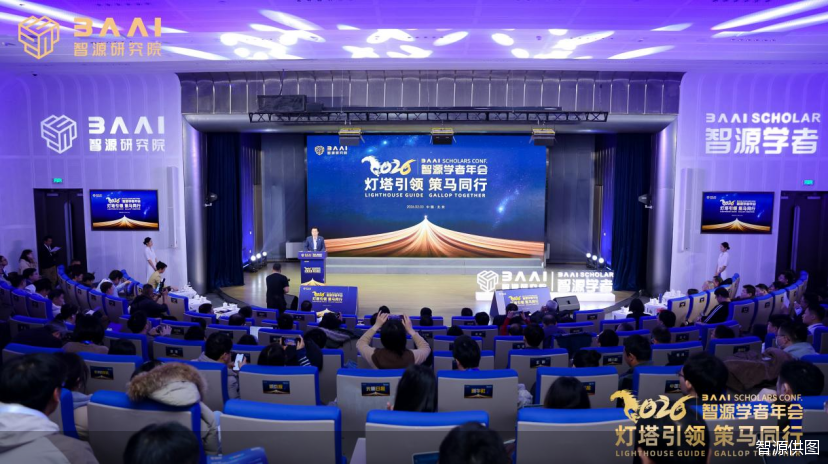
本批次共计立项50项研究课题,具有重要的学术探索价值及面向产业创新的实际需求,致力于推动从基础研究到技术 应用的全链条突破。新晋智源学者覆盖基础软硬件研发、生命科学与人工智能交叉创新、具身智能、量子智能融合等 多个关键领域与科研突破的重要问题。 智源研究院还将为智源学者提供分层分类的支持体系,包括为战略性任务配置专项经费、提供高质量数据集及开源算 法生态、为原创性成果拓展多元应用场景并推动商业化落地、配备专属工程化团队与专业级算力设备等。此外,研究 院还将通过系列路演、产业对接与孵化加速等活动,积极促进科研成果向现实生产力转化。 智源研究院理事长、北京大学教授黄铁军介绍,智源学者计划现已迈入3.0创新引领阶段,这是中国人工智能从并跑到 领跑跃迁的关键期。智源肩负着引领未来人工智能技术发展方向的责任,将联合更多优秀学者一起,构建人工智能产 业创新生态。 北京市科委、中关村管委会党组成员、副主任张金辉表示,当前人工智能正在重塑全球的产业格局,北京一直坚持创 新与应用并重,已经成为培育全球人工智能创新策源和产业生态的优质沃土。期待后续智源学者们与智源一起,共建 底层技术生态、坚持原始创新、加速成果转化,为建设国际科 ...

智源多模态大模型成果登上Nature杂志
Bei Jing Shang Bao· 2026-01-29 05:02
该研究推出的Emu3模型,核心突破在于仅采用"预测下一个词元"的自回归路线,将文本、图像、视频 统一到同一表示空间,通过单一Transformer架构实现多模态数据的联合训练,无需依赖对比学习、扩散 模型等专用路线。实验显示,其在文生图、视觉语言理解、视频生成等任务上的性能,可与各类成熟的 任务专用模型相媲美,还能拓展至图文交错生成、机器人操作建模等场景。 Nature编辑点评指出,该成果证明了自回归路线在多模态领域的通用性,对构建可扩展、统一的多模态 智能系统具有重要意义。后续迭代的Emu3.5版本进一步实现"预测下一个状态"的能力跃迁,获得了可 泛化的世界建模能力。 据悉,Emu系列模型自2022年启动研发,历经多次迭代,智源团队已开源视觉分词器等关键技术,并通 过大规模实验揭示了多模态自回归模型的训练特性。此次成果不仅确立了自回归作为生成式人工智能统 一路线的重要地位,也为原生多模态助手、具身智能等领域的发展奠定了基础。 北京商报讯(记者 陶凤 王天逸)1月28日,智源研究院主导的多模态大模型研究成果"通过预测下一个 词元进行多模态学习的多模态大模型"正式上线国际顶级学术期刊Nature,预计2月12日 ...
争做全模态顶尖 “六小虎”想重塑AI赛道
Nan Fang Du Shi Bao· 2026-01-20 23:14
Core Viewpoint - The competition in the AI sector is evolving, with companies like "Big Model Six Little Tigers" focusing on next-generation technologies and full-modal capabilities, moving away from traditional labels of large and small firms [4][5]. Group 1: Industry Trends - The AI landscape is shifting towards a new competitive logic, with companies aiming to excel in full-modal capabilities rather than traditional traffic competition [4]. - Baichuan Intelligence, once perceived as lagging, is re-entering the market with a focus on the healthcare sector, planning to launch consumer applications and develop sleep-related hardware [4][5]. - Ant Group's AI health product "AQ" has been rebranded to "Ant Afu," emphasizing health companionship and achieving over 15 million monthly active users within six months of its launch [4]. Group 2: Company Strategies - Baichuan Intelligence's CEO Wang Xiaochuan emphasizes their unique advantages, including superior model performance, targeted problem-solving, and a stable professional team, distinguishing them from larger firms [5]. - The company is focusing on high-value scenarios rather than consensus-driven approaches typical of larger firms [5]. - The "Dark Moon" project has shifted its strategy from aggressive user acquisition to enhancing model technology, completing a $500 million Series C funding round to accelerate model training and development [6]. Group 3: Technological Developments - Some smaller players are targeting the AI smartphone market by providing underlying operating systems rather than hardware, such as Zhipu's AutoGLM, which supports over 50 application scenarios [7]. - The AI Agent series model "Step-GUI" from Jiyue Xingchen has been upgraded to enhance privacy control while expanding its operational capabilities across numerous applications [7]. Group 4: Market Challenges - AI hardware faces challenges related to privacy and security, with examples of user issues in AI smartphone applications highlighting the need for improved functionality [10]. - The commercial viability of large models remains unclear, with no company having established a complete business model, leading to significant risks in hardware investments compared to software [10][11]. - The concept of a "super entrance" in the AI market is debated, with the potential for more neutral and open platforms to emerge as true leaders rather than established giants [11].

智源《2026十大 AI技术趋势》:“技术泡沫”是假命题,具身智能将迎行业“出清”
Zhong Guo Jing Ying Bao· 2026-01-08 16:31
Core Insights - The focus of AI foundational model competition has shifted from "how large the parameters are" to "whether it can understand how the world operates," indicating a transition from merely predicting the next word to predicting the next state of the world [1] - AI is moving from "functional imitation" to "understanding the laws of the physical world," suggesting a clearer development path as it integrates into the real world [1] Group 1: 2026 AI Technology Trends - The ten major AI technology trends for 2026 include: 1. World models becoming a consensus direction for AGI, with Next State Prediction (NSP) potentially emerging as a new paradigm [2] 2. Embodied intelligence entering industry selection and implementation phases, moving beyond laboratory demonstrations [2] 3. Multi-agent systems determining application limits, with the initial formation of a "TCP/IP" for the Agent era [2] 4. AI's role in research evolving from a supportive tool to an autonomous "AI scientist," with domestic scientific foundational models quietly emerging [2] 5. A clearer new landscape for leading players in the AI era, with high-profit opportunities still available in vertical tracks [2] 6. Industry applications entering a "disillusionment valley," with a "V-shaped" recovery expected in the second half of 2026 [2] 7. The rising proportion of synthetic data, which is expected to break the "2026 depletion curse" [2] 8. Reasoning optimization has not yet peaked, and the "technology bubble" is a false proposition [2] 9. The open-source compiler ecosystem gathering collective intelligence, with heterogeneous full-stack foundations leading to inclusive computing power [2] 10. AI security evolving towards mechanisms that are explainable and self-evolving in response to deception [2] Group 2: Key Developments in AI - The report addresses the prevalent "bubble" debate in the industry, asserting that reasoning efficiency remains the core bottleneck and competitive focus for large-scale AI applications, with "technology bubble" being a false proposition [3] - Algorithmic innovation and hardware transformation are driving down reasoning costs and improving energy efficiency, making high-performance model deployment feasible at the resource-constrained edge [3] - Synthetic data is becoming the core fuel for model training, particularly in autonomous driving and robotics, supported by the "corrective expansion law" [3] Group 3: Transition to Physical World - The year 2026 is identified as a critical watershed for AI, marking the transition from the digital world to the physical world and from technical demonstrations to scalable value [4] - This transition is driven by three clear mainlines: 1. The "elevation" of cognitive paradigms, with AI beginning to learn physical laws, providing a new cognitive foundation for complex tasks like autonomous driving simulation and robot training [4] 2. The "embodiment" and "socialization" of intelligence, with humanoid robots entering real production scenarios, indicating that embodied intelligence is moving out of laboratories [4] 3. The "dual-track application" of value realization, with a super application portal forming on the consumer side and measurable commercial value products emerging in vertical fields on the enterprise side [4]
中国AI崛起,“根”在这里
Bei Ke Cai Jing· 2026-01-08 08:52
Core Insights - The "AI New Year First Meeting" was held in Beijing on January 5, focusing on the construction of the 2026 Beijing Artificial Intelligence Innovation High Ground [5][18] - Beijing has rapidly advanced its position in the global AI landscape, with numerous prominent AI models emerging from the city [4][8] - The city is recognized as a fertile ground for tech startups due to its talent pool, research resources, and supportive government policies [4][11][18] Group 1: AI Development and Innovation - The Beijing Academy of Artificial Intelligence officially released the "Zhongzhi FlagOS 1.6," a software stack aimed at solving compatibility issues for training large models across different AI chips [5] - Beijing's AI research output is significant, with 7,340.3 adjusted papers and an AI index of 402.59, placing it first globally [8] - The city has transformed from a "follower" to a core source of AI research and innovation [8] Group 2: Talent and Ecosystem - The concentration of high-end, interdisciplinary talent in Beijing is a key factor driving innovation in the AI sector [4][11] - The presence of major universities like Tsinghua University facilitates a strong academic atmosphere, fostering a culture of innovation among young researchers [6][11] - Companies in Beijing benefit from a well-established AI ecosystem that encourages collaboration and avoids isolated development [11][12] Group 3: Government Support and Policy - The Beijing government demonstrates a deep understanding of technological frontiers, providing strong support for long-term investments and early-stage startups [18][19] - The city is developing multiple innovation districts, including the Haidian Original Community, to enhance its AI industry landscape [18][20] - Beijing's development strategy emphasizes a "one committee, one industry, one area, one product" approach to foster AI integration across various sectors [19] Group 4: Industry Growth and Future Prospects - By 2025, Beijing's core AI industry is projected to reach a scale of 450 billion yuan, with over 2,500 companies established [16] - The city is expected to continue leading in AI innovation, contributing to various sectors such as healthcare, governance, and industry [22][23] - The narrative of Beijing's AI development reflects China's commitment to technological self-reliance and innovation [22][23]
2025科技与资本报告|对话王仲远:警惕具身智能“伪需求”泡沫
Bei Jing Shang Bao· 2025-12-14 07:40
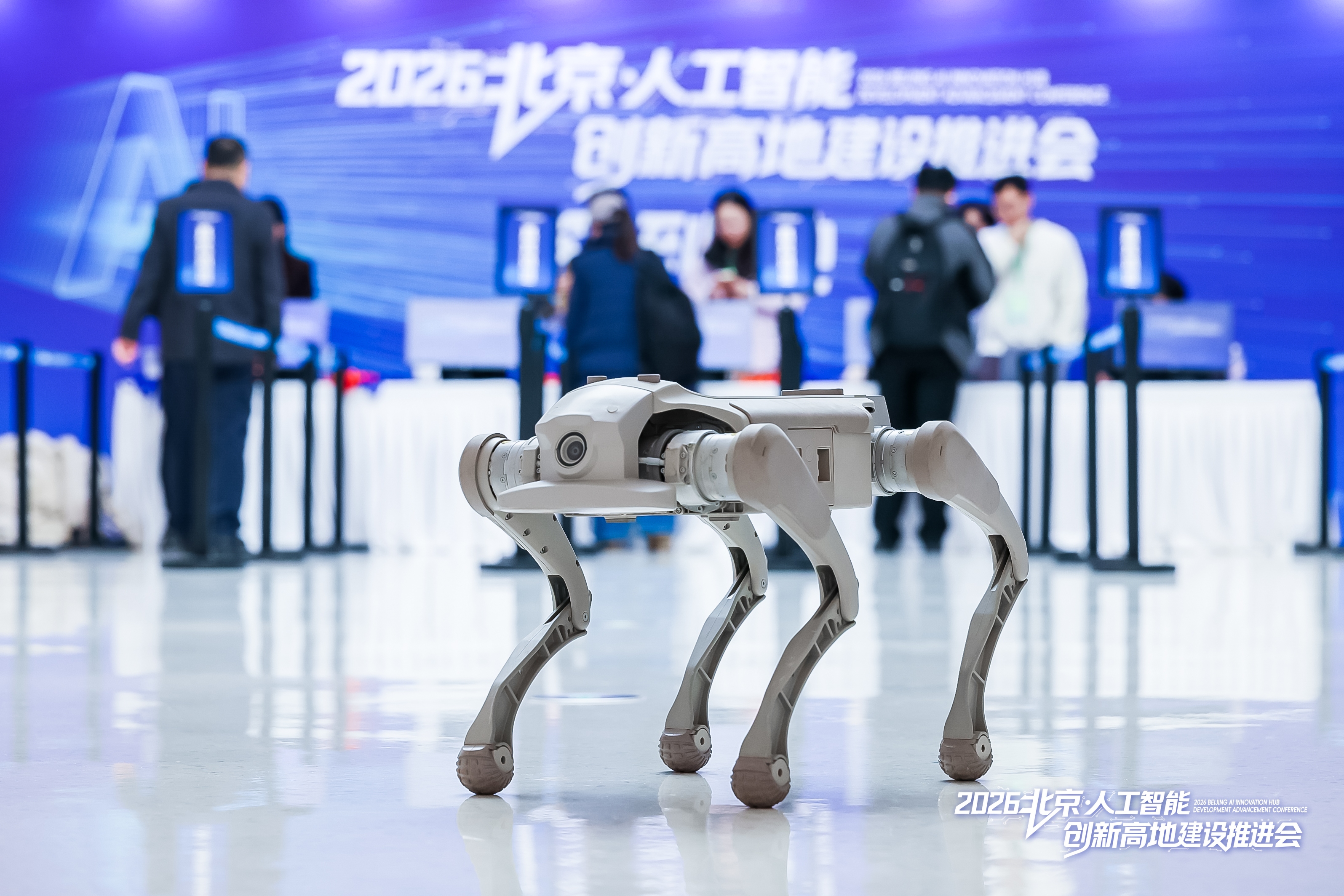
鼎好大厦A座2楼的具身智能训练场内,机械臂和人形机器人正在精准地执行着各种复杂任务。这里是智源研究院具身智能组探索人工智能边界的试验田。 在这里,能看到智源研究院30余家具身智能合作伙伴的机器,也能看到同一项任务更通用的解法。 去啃那些更前瞻性的研究,成为人工智能创新引领者,是智源研究院创立之初就定下的愿景。跟着智源研究院的科研布局,可以看到行业发展的趋势。作为 新型研究机构,智源研究院负责向创业公司提供"安卓操作系统",让企业专心做硬件。这样的定位让其对模型、硬件、产业有着更清晰、中立的观察。 "具身智能的发展,应该先通过专用模型在特定场景落地,形成数据闭环,再逐步向通用化发展,而不是一开始就追求'万能具身'",在与北京商报记者的交 流中,智源研究院院长王仲远多次表达了这一核心观点。让他担忧的是,具身智能订单的需求真伪、创业公司能否活下来。让他欣喜的是,资本市场用实际 行动证明了各方对具身智能的未来有了共识,技术、产业都在螺旋式上升。 Q:11月,黄仁勋、约书亚·本吉奥、李飞飞等六人同台讨论了AI泡沫等话题,您怎么看待AI泡沫? A:和某些其他赛道不同,AI赛道本身是没有泡沫的,AI技术确实在实实在在地便利 ...

对话王仲远 警惕具身智能“伪需求”泡沫
Bei Jing Shang Bao· 2025-12-10 12:00
鼎好大厦A座2楼的具身智能训练场内,机械臂和人形机器人正在精准地执行着各种复杂任务。这里是 智源研究院具身智能组探索人工智能边界的试验田。在这里,能看到智源研究院30余家具身智能合作伙 伴的机器,也能看到同一项任务更通用的解法。 去啃那些更前瞻性的研究,成为人工智能创新引领者,是智源研究院创立之初就定下的愿景。跟着智源 研究院的科研布局,可以看到行业发展的趋势。作为新型研究机构,智源研究院负责向创业公司提 供"安卓操作系统",让企业专心做硬件。这样的定位让其对模型、硬件、产业有着更清晰、中立的观 察。 "具身智能的发展,应该先通过专用模型在特定场景落地,形成数据闭环,再逐步向通用化发展,而不 是一开始就追求'万能具身'",在与北京商报记者的交流中,智源研究院院长王仲远多次表达了这一核 心观点。让他担忧的是,具身智能订单的需求真伪、创业公司能否活下来。让他欣喜的是,资本市场用 实际行动证明了各方对具身智能的未来有了共识,技术、产业都在螺旋式上升。 Q:11月,黄仁勋、约书亚·本吉奥、李飞飞等六人同台讨论了AI泡沫等话题,您怎么看待AI泡沫? A:和某些其他赛道不同,AI赛道本身是没有泡沫的,AI技术确实在实实在 ...

100亿都不够烧!机器人公司CEO们给出新判断:具身智能不能再照搬LLM
Sou Hu Cai Jing· 2025-11-22 02:41
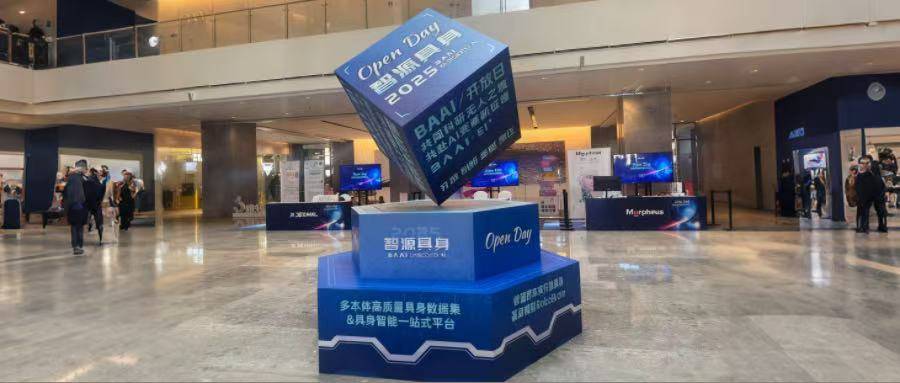
Core Insights - The event highlighted the latest advancements in embodied intelligence by the Zhiyuan Research Institute, focusing on the importance of world models and the development of a comprehensive embodied brain system [2][3] Group 1: Zhiyuan's Full-Stack Layout - Zhiyuan introduced the native multimodal world model Emu3.5, which expanded training data from 15 years of video to 790 years and increased parameter size from 8 billion to 34 billion, enhancing video and image generation speed [5] - The institute is constructing a cross-heterogeneous ontology embodied intelligence system, including RoboBrain, RoboOS, and RoboBrain-0, deployed across various robotic forms for tasks ranging from navigation to complex interactions [5] Group 2: Key Elements of Embodied Intelligence - The role of world models in embodied intelligence was debated, with experts emphasizing the need for models that predict the next state based on the robot's form and goals, rather than merely generating videos [7][10] - There is a consensus that embodied intelligence should not follow the current language-first paradigm but rather adopt a structure centered on action and perception [10][12] - The importance of real data was highlighted, with discussions on the necessity of combining real, simulated, and video data for effective learning in robots [15][17] Group 3: Investment Priorities - When asked how to allocate 10 billion, experts prioritized talent acquisition, computational power, and data engines as key investment areas [19][21] - There were differing views on the importance of infrastructure versus model development, with some advocating for a focus on creating a comprehensive data engine for continuous digitalization [21][22] Group 4: Human-like Robots and Hardware Limitations - The debate on whether human-like robots represent the ultimate form of embodied intelligence concluded that neither models nor hardware define each other; rather, the specific application scenarios dictate the requirements [22][24] - Experts suggested that a layered structure for embodied intelligence should be adopted, where higher-level models can be reused across different robotic forms, but lower-level models must be tailored to specific hardware [23][24] Conclusion - The discussions at the event signaled a proactive search for solutions to achieve a closed-loop system in embodied intelligence, emphasizing the need for models, hardware, and scaling to evolve together [24]

振臂一挥,大半个具身机器人圈都来了!智源研究院:别藏了,谁贡献数据多,谁的大脑就更好用
量子位· 2025-11-21 06:29
Core Insights - The article discusses the significant impact of the "Embodied Intelligence Martial Arts Conference" held by Zhiyuan Research Institute, which gathered major players in the robotics industry to address data sharing and collaboration challenges [2][4][6]. Group 1: Zhiyuan's Role and Strategy - Zhiyuan Research Institute aims to be the "Android" of the embodied intelligence era, focusing on creating a collaborative ecosystem rather than competing directly in the market [5][21]. - The institute leverages its non-profit status to break down data silos, encouraging companies to share valuable data through mutual agreements [6][10]. - By providing a neutral platform, Zhiyuan positions itself as a "wall breaker," facilitating cooperation between academic and industrial sectors [11][9]. Group 2: Addressing Industry Pain Points - The robotics industry faces significant challenges due to data silos, where data from one type of robot cannot be utilized by another, leading to inefficiencies [7][8]. - Zhiyuan has introduced open-source high-quality real-world data, addressing the industry's need for better data [15]. - The launch of the RoboXstudio development platform and CoRobot data framework streamlines the development process for startups, allowing them to focus on product innovation [16][17]. Group 3: Standardization and Evaluation - The lack of standardized evaluation metrics in the robotics field has led to discrepancies between demo performances and real-world applications [18][20]. - Zhiyuan has established the RoboChallenge committee to create quantifiable and traceable evaluation standards for robotic models [20]. - This initiative aims to ensure that all robotic models can be assessed fairly, promoting transparency and reliability in the industry [20]. Group 4: Future Vision and Ecosystem Development - Zhiyuan envisions a future where robot development is as simple as building with blocks, emphasizing the need for a robust foundational framework [24][25]. - The institute is focused on creating a comprehensive system for embodied intelligence, including advancements in RoboBrain and Emu models to enhance learning and understanding [23][26]. - By gathering industry data and establishing standards, Zhiyuan aims to become a fundamental resource for the embodied intelligence sector, akin to essential utilities [26][29].
一口气翻20个跟头!智源机器人秀“绝活”,离进入家庭场景还有多远?
Zhong Zheng Wang· 2025-11-21 02:19
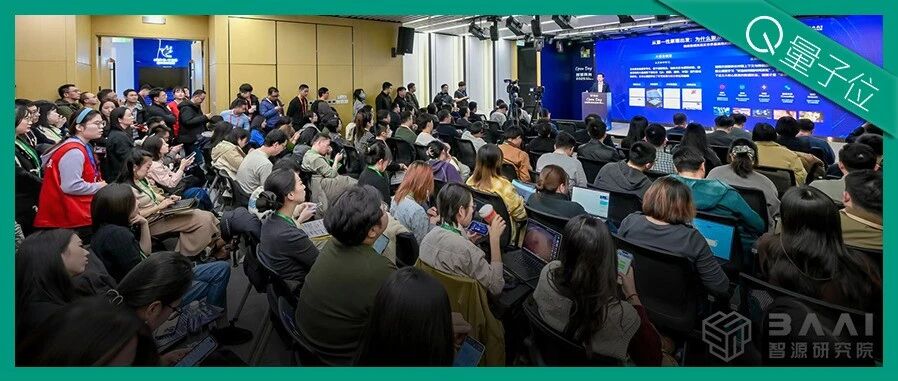
Core Insights - The humanoid robot showcased at the 2025 Zhiyuan Embodied Intelligence Open Day demonstrated significant advancements in movement capabilities, including the ability to perform continuous somersaults and dance for extended periods, indicating progress in full-body control [1] - The current state of artificial intelligence is at a pivotal point, transitioning from specialized robots (1.0) to general embodied intelligence (2.0), although challenges such as usability and hardware stability remain [1] - The timeline for humanoid robots to enter household environments is projected to be five to ten years, with industrial applications expected to be adopted more quickly [1] Industry Developments - Consensus among industry experts suggests that a layered system that decouples task planning, perception, and control will enhance practical efficiency and operational stability in the short term [2] - In the long term, the industry aims to evolve towards a general base model that is transferable and reusable, necessitating the establishment of unified scene representation standards and efficient data feedback systems [2] - Zhiyuan Research Institute has developed a comprehensive embodied intelligence technology system, including a core embodied brain, a standardized platform for heterogeneous data collection, and evaluation metrics to facilitate the transition from research to industrial application [2]