Sprott Asset Management

Search documents
The Strategic Case for Copper Miners and the COPP ETF
Etftrends· 2026-02-19 20:01
Core Insights - The global copper market is undergoing a fundamental transformation, with copper emerging as a critical mineral with strong growth prospects, driven by disruptive technologies like artificial intelligence (AI) [1] - The demand for copper is expected to surge due to the electrification of data centers and the green energy transition, making it essential for a digital and sustainable future [1][1] - There are significant supply constraints in the copper market, with a structural deficit likely to persist for decades due to the lengthy time required to bring new mines into production [1][1] Electrification in the Digital Age - Data centers will require significantly more power, leading to increased electricity demand and, consequently, higher copper requirements compared to traditional facilities [1] - Specialized chips and the massive electrical infrastructure necessary for AI and green technologies will further support copper's investment case [1] - Copper is described as the "connective tissue" of the modern economy, essential for AI data centers and the electrification of the global grid [1] Forthcoming Supply Constraints - It takes an average of 15 to 20 years to bring a new copper mine from discovery to production, which limits the ability to meet rising demand [1] - Current production levels are unable to keep pace with demand, leading to a potential long-term supply-demand gap [1] - Geopolitical tensions and tariffs are causing fragmented pricing, with secure and domestic supply chains commanding a premium [1] Investing in the Copper Ecosystem - Investors are encouraged to look beyond physical copper and consider opportunities in the mining ecosystem, such as the Sprott Copper Miners ETF (COPP) [1] - The COPP fund provides exposure to physical copper and tracks the Nasdaq Sprott Copper Miners Index (NSCOPP), which includes large- and mid-cap companies [1] - This fund offers potential diversification benefits and pure-play exposure to the copper mining sector [1]


Tailwinds Could Push Copper to More Record Highs
Etftrends· 2026-02-05 20:12
Core Insights - Copper experienced a strong rally at the end of 2025, which is continuing into the first month of the new year [1] - Jacob White, Director of ETF Product Management at Sprott Asset Management, emphasized the fundamental drivers behind this trend [1] Industry Summary - The copper market is showing resilience and strength, indicating potential investment opportunities [1] - The ongoing rally suggests a favorable outlook for copper prices, influenced by various market dynamics [1]

Copper is on fire, tracking gold as a precious metal hitting record-high values. Should you start investing in it?
Yahoo Finance· 2026-02-01 20:00
Core Insights - Copper is emerging as a key metal to watch, following a significant price surge of 35% in 2025, reaching $11,771 per metric tonne, driven by supply and demand dynamics [1] - A predicted shortfall of 150,000 tons in global copper supply in 2025 highlights the increasing demand for copper, which is essential for various applications including power grids and electronics [1] Group 1: Demand and Supply Dynamics - BHP forecasts that global demand for copper will increase sixfold by 2050, largely due to the growth of data centers and improving living standards in developing economies [2] - The launch of the world's first physically backed ETF for copper by Sprott Asset Management in 2024 has seen a price increase of nearly 46% in 2025, reflecting strong market interest [2][3] Group 2: Market Trends and Investor Sentiment - In the U.S., stockpiling of copper is occurring as investors anticipate potential tariffs by mid-2026, which is exacerbating supply challenges and driving prices higher [3] - Copper is increasingly viewed as an economic indicator, reflecting investor sentiment regarding the performance of the U.S. market [3] Group 3: Safe-Haven Asset Perspective - Similar to gold and silver, copper is gaining recognition as a safe-haven asset amid concerns over tariffs and geopolitical tensions affecting the stock market [5] - Analysts suggest that investors interested in AI should consider investing in copper-related ETFs, indicating a strategic shift towards this metal [6]
Why This Rare Earth ETF Excludes the Biggest Rare Earth Market
Yahoo Finance· 2026-01-26 11:00
Core Viewpoint - The Sprott Rare Earths Ex-China ETF (REXC) is set to launch, focusing on rare earth elements while excluding Chinese companies, reflecting a growing demand for non-China sources amid geopolitical tensions and energy transition efforts [1][2]. Group 1: ETF Overview - Sprott Asset Management has filed for the Sprott Rare Earths Ex-China ETF (REXC), which could launch by April and will trade on Nasdaq [1]. - This ETF aims to cater to the increasing demand for rare earth elements while aligning with the U.S. strategy to reduce reliance on China for these critical materials [2]. Group 2: Market Context - The demand for rare earth elements is rising due to global energy usage increases, driven by electrification and the expansion of data centers for AI [3]. - Over 100 countries have committed to net-zero emissions by 2050, shifting energy reliance from fossil fuels to renewable sources, although U.S. policies under President Trump have diverged from this commitment [3]. Group 3: Industry Dynamics - The launch of ex-China funds has surged in recent years, influenced by geopolitical tensions between the U.S. and China, although these funds have been slow to attract significant assets [4]. - Existing rare-earth element ETFs, such as the $2 billion VanEck Rare Earth and Strategic Metals ETF (REMX) and Sprott's $380 million Critical Materials ETF (SETM), have shown strong returns of 109% and 114% over the past year, respectively [5].
铀行业专家电话会纪要与 2026 年展望-Uranium Expert Call Takeaways and 2026 Outlook
2026-01-13 11:56
Summary of Uranium Industry Insights Industry Overview - The discussion centers on the uranium industry, particularly the outlook for uranium and key investor debates, featuring insights from John Ciampaglia, CEO of Sprott Asset Management, which holds over 75 million pounds of physical uranium in storage after purchasing 8.7 million pounds last year [1] Key Points and Arguments Market Sentiment and Pricing - 2025 was a favorable year for uranium equities and market sentiment, although prices remained stable due to low contracting volumes. The market was initially hindered by uncertainties related to tariffs and energy policy, but a shift in the policy environment led to increased contracting towards the end of the year, with September to November seeing approximately 40 million pounds contracted, bringing the total for 2025 to around 100 million pounds [2] - The U.S. government committed $80 billion to build reactors, aiming to streamline approval processes and expedite construction of 10 new large reactors by 2030, which is expected to mitigate execution risks [3] Demand Dynamics - Uranium demand is projected to grow over 50% by 2035, with a compound annual growth rate (CAGR) of 4% per year, driven primarily by new nuclear capacity in China and India. The demand growth is expected to be back-end loaded, with significant contributions from reactor extensions and refurbishments [9][18] - The U.S. currently consumes over 40 million pounds of uranium annually, indicating substantial potential for policy support to stimulate domestic production [4] Contracting and Supply Challenges - Utilities are expected to increase contracting as they recognize supply challenges, with 2025 contracting likely around 100 million pounds, still below the theoretical replacement rate of 150 million pounds per year. The next wave of contracting is anticipated to see higher prices due to supply constraints [5] - The supply of uranium is characterized by high geographical concentration, with 75% of global production coming from Kazakhstan, Canada, and Namibia. The industry is facing challenges such as permitting delays and supply chain frictions, which could prolong project lead times [12][56] Strategic Initiatives and Policy Support - The U.S. government is building a strategic uranium reserve, with $75 million allocated for purchasing legacy U.S. production at prices above spot rates. This initiative is part of a broader strategy to secure domestic uranium supply amid geopolitical tensions [4] - The Biden Administration's ongoing Section 232 review could incentivize domestic production and establish price floors for uranium offtake [4] Financial Demand and Trust Buying - Financial demand from physical trusts, such as Sprott Physical Uranium Trust, has significantly influenced uranium prices, with holdings increasing from 35 million pounds in 2020 to 80 million pounds in 2023. However, a collapse in trust buying in 2023/24 has contributed to weaker uranium prices [52][53] - The role of financial demand is crucial as it removes volumes from tradeable inventories, tightening the spot market and potentially altering contracting behavior [54] Future Outlook - The uranium market is expected to face a growing deficit driven by supply discipline from major producers like Cameco and Kazatomprom. Legislative changes in Kazakhstan are tightening access to uranium contracts, which could further impact supply dynamics [11] - The anticipated growth in nuclear power generation is likely to lead operators to add to uranium inventories, with two-thirds of utilities' demand over the next two decades currently uncovered [31] Additional Important Insights - The construction of new nuclear reactors has slowed significantly compared to historical rates, with political will diminishing in the West. However, there is a push for faster and cheaper nuclear rollout through consolidation of reactor models and improved regulatory frameworks [32][35] - Small modular reactors (SMRs) are emerging as a potential solution for reliable electricity, with significant investments from both government and private sectors, although their deployment is not expected until the 2030s [42][43] This comprehensive overview highlights the key dynamics and future outlook of the uranium industry, emphasizing the interplay between demand, supply, policy, and financial factors that will shape the market in the coming years.

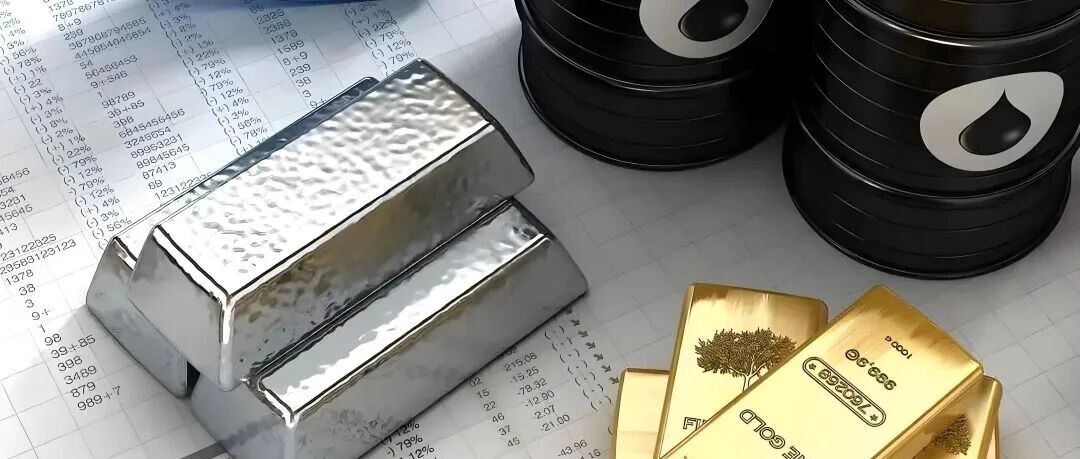
一盎司白银罕见贵过一桶油!商品市场的“新霸主”来了?
美股研究社· 2025-12-30 10:49
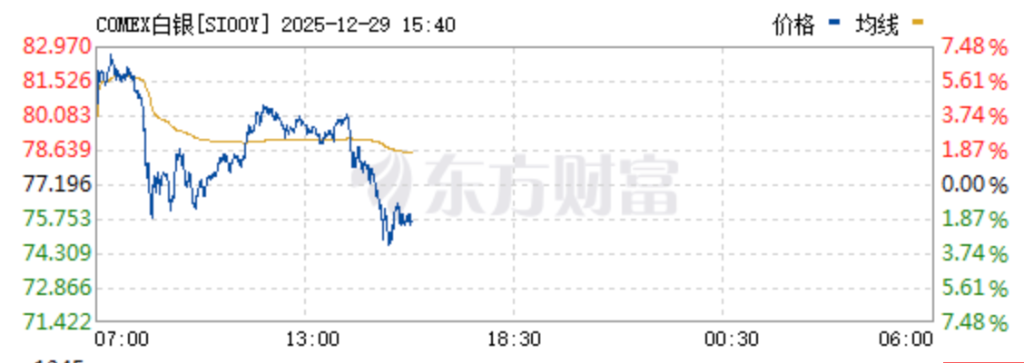
Core Viewpoint - Silver prices have surpassed a 45-year record and are expected to double, creating a rare phenomenon in the commodity market where the price of silver exceeds that of crude oil [3]. Group 1: Silver Price Dynamics - As of December 29, COMEX silver prices reached $74.79 per ounce, while WTI crude oil was at $57.68 per barrel, marking a rare occurrence since the launch of WTI futures in 1983 [3]. - The strong rise in silver prices is driven by both investment and industrial demand, with silver being used as a wealth preservation tool and a hedge against currency devaluation [5][9]. - Industrial applications, particularly in clean energy sectors like solar panels and electric vehicles, have significantly increased silver consumption, providing robust long-term demand support [5][9]. Group 2: Supply Constraints - The supply constraints in the silver market are becoming a key structural factor supporting its price, as global pure silver deposits are nearly exhausted, leading to silver being produced as a byproduct of other metals [13]. - The current gold-silver ratio is around 60, indicating potential for silver prices to rise relative to gold, with arguments suggesting that silver prices need to exceed $200 per ounce to surpass inflation-adjusted historical peaks [13]. - Despite the bullish sentiment, there are cautious views in the market, with some analysts predicting a potential price correction for silver to around $42 per ounce by the end of next year [13]. Group 3: Oil Market Challenges - The global oil market is facing dual pressures of oversupply and structural demand transformation, with international oil prices having dropped 21% since 2025, reaching low levels post-pandemic recovery [6][14]. - Analysts suggest that restoring the historical price relationship between oil and silver may require a significant correction in silver prices rather than a strong rebound in the oil market [14]. - U.S. crude oil production has surged to approximately 13.5 million barrels per day, contributing to the ongoing supply imbalance, and unless major oil-producing countries coordinate substantial production cuts, the oversupply situation is likely to worsen [14].
一盎司白银罕见贵过一桶油!商品市场的“新霸主”来了?
华尔街见闻· 2025-12-29 10:24
Group 1: Silver Price Surge - The price of silver has surpassed $74 per ounce, exceeding the price of crude oil for the first time in 45 years, driven by strong demand and structural supply constraints [1][2] - Silver's price increase is attributed to both investment demand and industrial applications, particularly in clean energy sectors like solar panels and electric vehicles [2][7] - The current silver market is characterized by a significant supply constraint, as global pure silver deposits are nearly depleted, leading to silver being produced as a byproduct of mining other metals [11] Group 2: Industrial Demand and Investment Behavior - The industrial demand for silver is robust, with the solar industry consuming nearly 30% of the global annual silver production, highlighting a structural demand gap [8] - Investment behavior is shifting, with some investors turning to silver as a more affordable alternative to gold, especially as gold prices rise above $4,500 per ounce [9] - The ETF market reflects this trend, with iShares Silver Trust showing a significant price advantage over SPDR Gold ETF, attracting funds into the silver sector [10] Group 3: Oil Market Challenges - The global oil market is facing a supply surplus and structural demand transformation, with international oil prices having dropped 21% since 2025, reaching low levels post-pandemic recovery [3][14] - Analysts predict that unless major oil-producing countries coordinate substantial production cuts, the oversupply situation in the global oil market will worsen [14] - Geopolitical stability could further exacerbate supply-demand imbalances by releasing more oil production capacity [15]
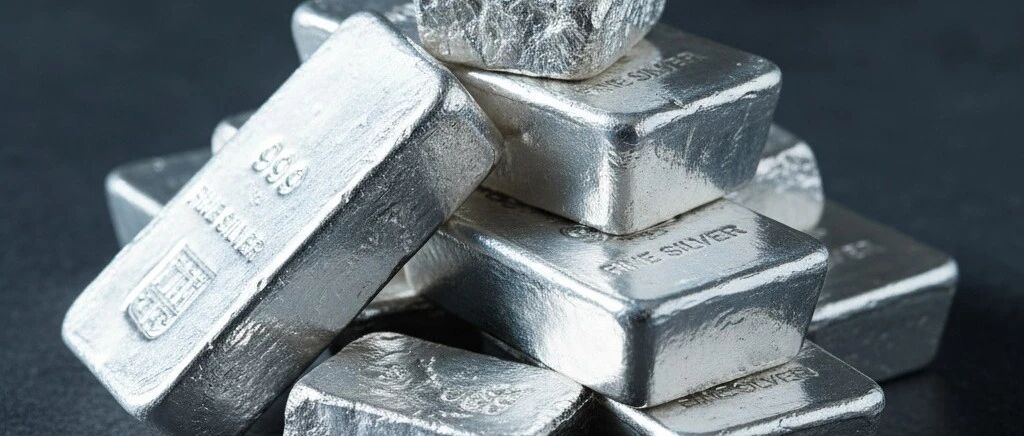
一盎司白银罕见贵过一桶油!商品市场的“新霸主”来了?
Hua Er Jie Jian Wen· 2025-12-29 08:05
12月29日,截止发稿,COMEX白银价格为75.75美元/盎司,现货白银价格为75.89美元/盎司,WTI原油为57.39美元/桶。自1983年WTI原油期货交 易启动以来,白银价格持续高于原油的情形极为罕见,仅在2020年疫情期间短暂出现过两次。 白银价格突破45年纪录并预计将翻倍上涨,创造了大宗商品市场的罕见景象:一盎司现货白银和期货白银的价格均超过了一桶原油。贵金属在避 险需求与结构性供应紧张推动下持续走强,而原油市场则在供需格局再平衡过程中承压。 白银价格的强劲上涨,主要得益于投资者和工业需求的双重驱动。在工业应用方面,从太阳能电池板到电动汽车等清洁能源领域,对白银的消耗 量持续攀升,为其提供了坚实的长期需求支撑。与此同时,全球原油市场面临供给过剩与需求结构转型的双重压力,2025年以来国际油价累计下 跌21%,已回落至疫情复苏后的低位水平。 在工业应用层面,白银因其优异的导电性与抗菌性,成为新能源转型与科技产业的关键材料。需求不仅来自传统珠宝与医疗器械制造,更显著的 推动力源自光伏、电动汽车及数据中心等高速增长领域。花旗分析指出,仅太阳能产业就已消耗全球白银年产量的近30%,凸显其结构性需求缺 口 ...
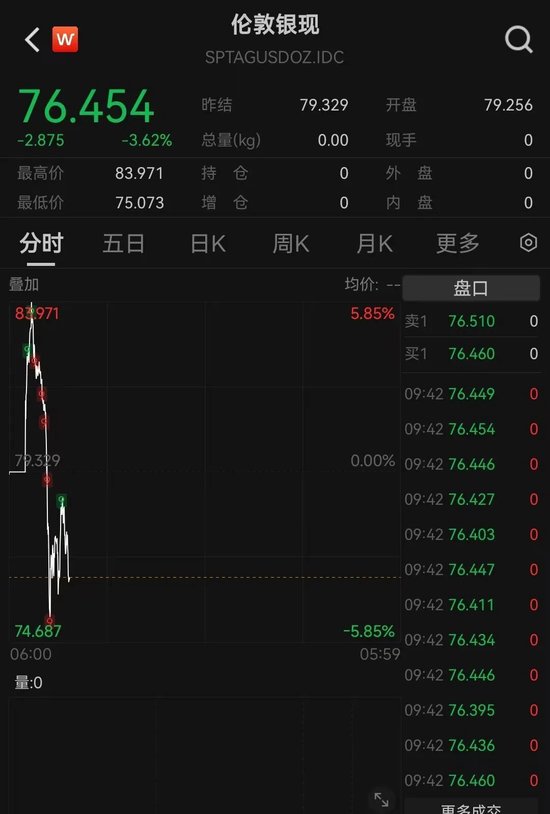
白银跳水,一度跌超5%!黄金也跌了,马斯克曾对银价上涨表示担忧:这对工业发展“不是好事”
Xin Lang Cai Jing· 2025-12-29 02:20
| W | | | 伦敦银现 | | | | | | --- | --- | --- | --- | --- | --- | --- | --- | | | | | SPTAGUSDOZ.IDC | | | | | | 76.454 | | 昨结 | 79.329 | | 开盘 | | 79.256 | | -2.875 | -3.62% | 总量(kg) | 0.00 | | 现主 | | 0 | | 最高价 | 83.971 | 持 包 | | 0 タト | 물 | | 0 | | 最低价 | 75.073 | 指 ਿ | | 0 B | 醫 | | 0 | | 分时 | 五日 | 日K | 围K | 月K | | 車 名 | 0 | | 叠加 | | | | 均价:- | | 盘口 | | | 83.971 | | | | 5.85% | 荧1 | 76.510 | 0 | | | | | | | 331 | 76.460 | 0 | | | | | | | | 09:42 76.449 | 0 | | | | | | | | 09:42 76.454 | 0 | | | | | | | 0.00% 0 ...
华尔街日报:一盎司白银现在竟然比一桶石油更值钱
美股IPO· 2025-12-29 00:19
Core Viewpoint - The price of silver has surpassed that of oil for the first time in 45 years, driven by strong demand for the precious metal and an oversupply of oil leading to lower fuel prices [3]. Group 1: Silver Market Dynamics - Silver prices have reached a record high of $76.486 per ounce, significantly higher than the $56.74 per barrel price of U.S. crude oil [3]. - Demand for silver is robust from both investors and industrial buyers, particularly in sectors like solar energy, where nearly 30% of annual silver production is consumed [4]. - The competition for silver is intensifying as industrial buyers, including those in the solar panel industry, compete with investors who are shifting from gold to more affordable silver [4]. Group 2: Investment Trends - The surge in gold prices has led to increased silver imports in countries like India, where silver is favored by savers [5]. - Exchange-traded funds (ETFs) are also seeing a shift, with the largest silver ETF, iShares Silver Trust, priced at $71.12 per share, compared to the SPDR Gold Trust at $416.74 per share [5]. - The supply of silver is constrained, as it is primarily a byproduct of mining other metals, and the global pure silver reserves are nearly depleted [5]. Group 3: Price Predictions and Market Sentiment - Silver bulls argue that the gold-silver ratio is around 60, suggesting potential for silver prices to rise significantly [6]. - Conversely, some analysts predict a decline in precious metal prices, forecasting silver to drop to around $42 per ounce by the end of next year [7]. - The oil market is also under pressure, with expectations of a 21% drop in oil prices by 2025, which could further impact the silver market if the price ratio reverses [8].