
世界一流企业

Search documents
五粮液集团:锚定世界一流,奋进十五五新征程
Sou Hu Cai Jing· 2026-02-21 14:21
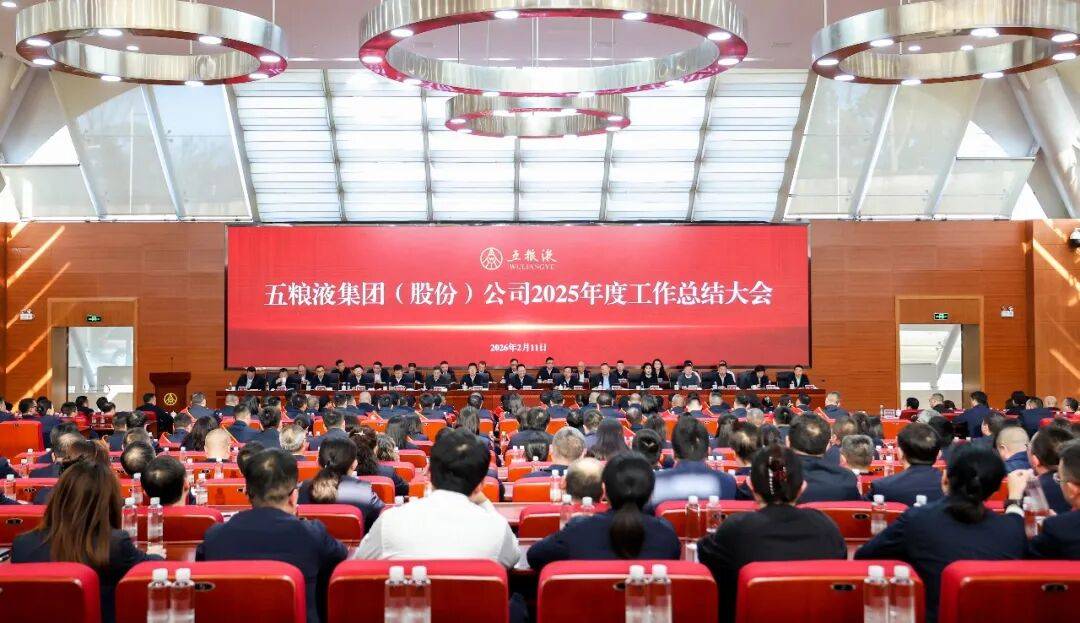
Core Viewpoint - Wuliangye Group held its 2025 annual work summary conference, summarizing achievements during the 14th Five-Year Plan and outlining the development blueprint for the 15th Five-Year Plan, while also recognizing outstanding individuals and teams [1][3]. Group 1: Achievements and Strategic Goals - During the 14th Five-Year Plan, Wuliangye effectively implemented government strategies, aiming to build a "world-class liquor enterprise" and successfully enhanced its comprehensive strength and industry position [3][5]. - The company faced challenges such as the pandemic and economic downturn but managed to maintain steady growth in its core liquor business and upgrade its non-liquor sectors, laying a solid foundation for future development [7]. - The 15th Five-Year Plan will focus on historical classic industries and emerging pillar industries, emphasizing high-quality development and aiming to enter the Fortune Global 500 by the end of 2030 [7][8]. Group 2: Key Focus Areas for 2026 - In 2026, Wuliangye will prioritize five key areas: innovation in liquor and its supporting industries, optimization of non-liquor sectors, enhancement of corporate governance, strengthening of party leadership, and ensuring safety and environmental protection [8]. - The company aims to stabilize high-quality development, create new engines for growth, and solidify its governance framework to support its strategic objectives [8]. Group 3: Recognition and Awards - The conference recognized 17 special contribution teams, 65 advanced collectives, 65 party building pioneers, 29 production experts, 44 marketing leaders, 12 technical leaders, and 67 management excellence individuals [10].


南网储能入选国务院国资委国有企业世界一流专业领军培育企业
Zhong Guo Fa Zhan Wang· 2026-02-09 03:48
Core Viewpoint - The State-owned Assets Supervision and Administration Commission (SASAC) has announced the inclusion of South Grid Energy Storage Company in the list of world-class leading enterprises and cultivation enterprises among state-owned enterprises, highlighting its significant role in the energy sector during the transition to a new power system [1] Group 1: Company Overview - South Grid Energy Storage Company is the first publicly listed company in China focusing on pumped storage and new energy storage businesses [1] - The company aims to build a world-class enterprise by focusing on both "hard power" (key performance indicators) and "soft power" (management capabilities) [1] Group 2: Industry Context - The selection of leading enterprises comes at a critical time as China advances its "dual carbon" strategy and accelerates the construction of a new power system [1] - Energy storage is recognized as a crucial resource for ensuring the safe and stable operation of the power grid, becoming an important support for the transformation of China's energy structure [1] Group 3: Strategic Positioning - South Grid Energy Storage Company positions itself as a key player in the new power system, focusing on maintaining grid safety and stability, leading the pumped storage industry, and being a frontrunner in the new energy storage sector [1] - The company has achieved global leadership in core energy storage indicators and has developed the first domestically produced pumped storage unit export switchgear, achieving autonomy in core control system components [1]

财界观察 | 从“城市运营商”到“海洋引领者”,青岛国信如何驶向世界一流?
Xin Lang Cai Jing· 2026-02-08 03:29
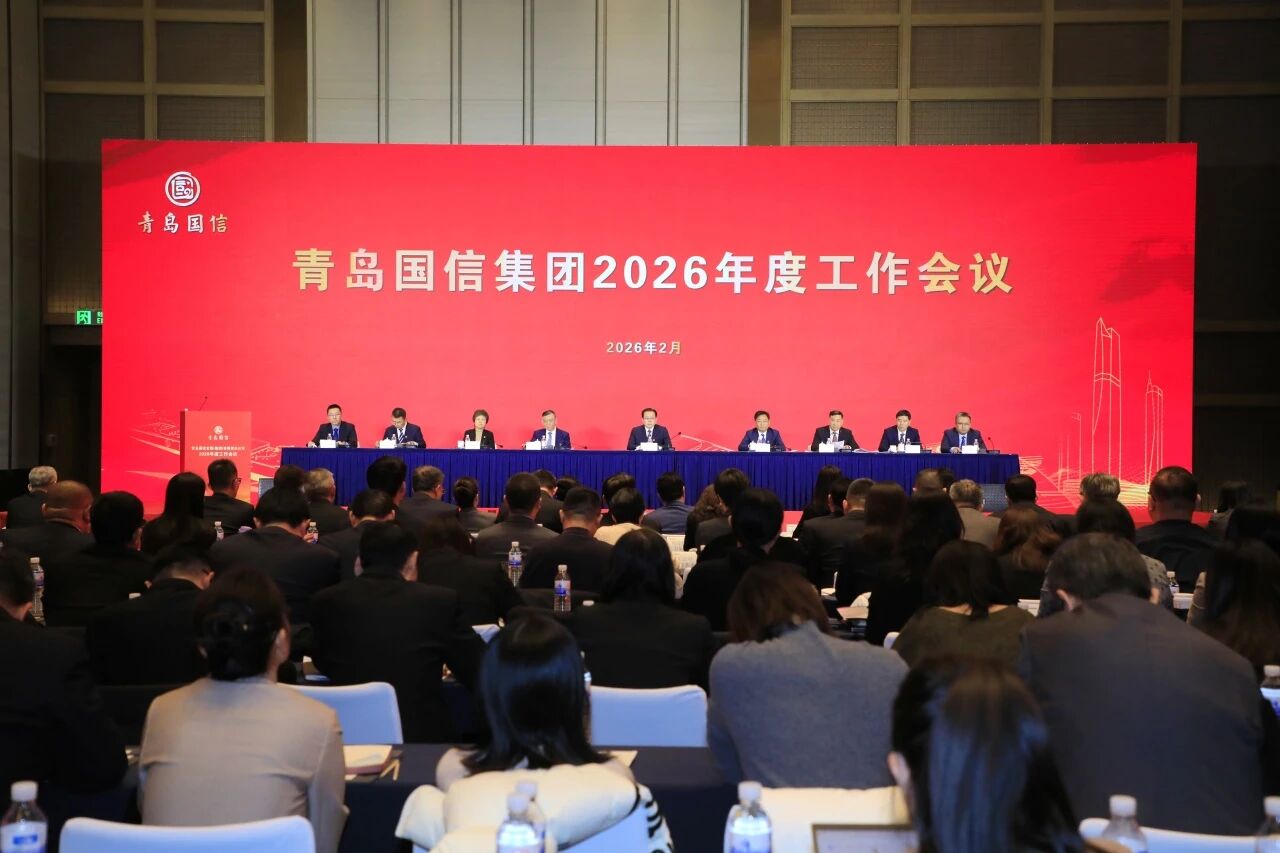
Core Insights - The article highlights the significant transformation and performance of Qingdao Guoxin Group amidst the global economic recovery, serving as a key indicator of local economic vitality and the implementation of the marine power strategy [1][3]. Financial Performance - In 2025, Qingdao Guoxin Group achieved an operating income of 22.7 billion yuan and a total profit of 3.03 billion yuan, both reflecting a year-on-year increase of 15%, demonstrating robust asset appreciation in a complex economic environment [3][4]. Strategic Focus - The group emphasizes a dual approach of "wisdom breaking the deadlock" and "practical action," focusing on macroeconomic analysis and strategic determination to navigate uncertainties while deepening core business and transformation [6][9]. - The meeting recognized outstanding individuals and teams, reinforcing the culture of practical action and the value of human resources within the organization [7][9]. Development Goals - Qingdao Guoxin Group aims to establish itself as a world-class enterprise with a clear focus on marine industries, aligning with national strategies and local development goals [11][12]. - The group plans to enhance its operational framework by integrating three main industries: marine industry as the leader, supported by financial investment and urban operations [12][13]. Future Strategies - The group intends to implement "three major leaps" to overcome development bottlenecks, focusing on reform capabilities, innovation in development, and international openness [14][15]. - To support these strategies, the group emphasizes the importance of three foundational pillars: party leadership, talent cultivation, and comprehensive safety measures [17].
省政协十三届四次会议举行第二次全体会议信长星刘小涛听取委员发言 张义珍出席
Xin Hua Ri Bao· 2026-02-05 00:12
Group 1 - The Jiangsu Provincial Political Consultative Conference emphasized the importance of innovation and entrepreneurship ecosystems, with suggestions for strengthening institutional design and policy incentives to accelerate the development of an OPC innovation ecosystem [2] - The integration of artificial intelligence into higher education was proposed to promote a virtuous cycle of education, technology, and talent, transforming resource advantages into developmental strengths [2] - Recommendations were made to enhance the intelligent transformation of the manufacturing industry by sharing pilot experiences and reducing technical barriers for small and medium-sized enterprises [2] Group 2 - A call for systematic policies to support talent cultivation and the construction of a youth-friendly and fertility-friendly society was highlighted, aiming to enhance urban renewal and rural revitalization [2] - The establishment of a comprehensive overseas service system was suggested to align with international high-standard trade rules, facilitating orderly overseas development and industry safety [2] - The need for a collaborative approach to build a unified market for technology services in the Yangtze River Delta was emphasized, focusing on high-quality development in the technology service sector [2]
完善中国特色现代企业制度 加快建设更多世界一流企业
Xin Hua Ri Bao· 2026-02-04 21:55
中共中央"十五五"规划建议提出,完善中国特色现代企业制度,弘扬企业家精神,加快建设更多世界一 流企业。建议:一是加强制度设计,鼓励支持民营企业苦练内功。进一步推动落实民营经济促进法相关 配套政策法规出台,加快统筹协调,制定民营企业现代企业制度评价标准,引导规模大、行业代表性强 的民营企业先行先试,以现代企业制度的完善实现民营企业高质量发展。二是强化社会协同,构建精准 高效服务体系。发挥优秀企业示范引领作用,加强媒体宣传,总结推广成功经验。深化教育培训,提升 企业家法治素养、合规意识和治理能力。引导专业机构为民营企业完善现代企业制度提供相关公共服 务,推动企业加快建立健全覆盖业务各领域、全流程的合规管理体系。充分发挥行业协会商会作用,组 织经验交流,推动形成行业自律机制。三是弘扬企业家精神,建设更多世界一流企业。引导广大民营企 业家把握发展大势,坚定发展信心,以制度创新赋能企业发展,合理优化企业投资布局,积极发展新质 生产力,进一步释放活力、增强韧性,推动建设更多世界一流企业,为实现"十五五"开好局起好步、推 进中国式现代化江苏新实践贡献智慧力量。 高晓东 高晓东 ...

【石油化工】发挥能源保供“顶梁柱”作用,为建设能源强国努力奋斗——中国石油集团跟踪报告之六(赵乃迪/蔡嘉豪/王礼沫)
光大证券研究· 2026-01-28 23:07
Core Viewpoint - The article discusses the strategic goals and achievements of China National Petroleum Corporation (CNPC) during the 14th Five-Year Plan and outlines the objectives for the 15th Five-Year Plan, emphasizing the company's commitment to high-quality development and becoming a world-class enterprise [4][5][6]. Group 1: Strategic Goals and Achievements - CNPC has successfully navigated significant challenges during the 14th Five-Year Plan, enhancing its comprehensive strength, market competitiveness, and international influence [5]. - The company has maintained strong operational performance, ranking among the top in profits among central enterprises for four consecutive years [5]. - CNPC has made substantial progress in technology independence and self-reliance, contributing to national strategic technological capabilities [5]. Group 2: Future Development Plans - By 2030, CNPC aims to achieve high-quality development and establish itself as a world-class enterprise, focusing on value creation, energy supply security, and technological innovation [6]. - The company plans to enhance its governance system and modernize its management structure to support its strategic objectives [6]. - Emphasis will be placed on intelligent, green, and integrated development within the modern energy and chemical industry [6]. Group 3: Business Transformation and Integration - CNPC is enhancing its integrated advantages across the oil and gas industry, with a focus on increasing reserves and production [7]. - In 2024, the company expects to achieve a domestic crude oil production of 106.15 million tons, a year-on-year increase of 0.3%, and a domestic natural gas production of 158.6 billion cubic meters, a year-on-year increase of 3.8% [7]. - The company is optimizing its product structure in the refining and chemical sectors, with plans to produce over 2 million tons of new materials in 2024 [7].

——中国石油集团跟踪报告之六:发挥能源保供顶梁柱作用,为建设能源强国努力奋斗
EBSCN· 2026-01-28 03:30
Investment Rating - The report maintains an "Overweight" rating for the oil and petrochemical industry [1] Core Insights - The China National Petroleum Corporation (CNPC) has demonstrated significant resilience and competitive strength, achieving top-tier performance among state-owned enterprises for four consecutive years [4] - The strategic goal for the next five years is to fully realize high-quality development by 2030 and to establish a world-class enterprise [5] - The company aims to enhance its core competitiveness and fulfill its responsibilities in ensuring national energy security and advancing modernization [6] Summary by Sections Strategic Goals - CNPC's chairman emphasized the importance of strategic goals to empower a better life through energy security, highlighting the company's achievements during the 14th Five-Year Plan [4] - The company plans to implement a dual-phase strategy to achieve high-quality development and establish itself as a world-class enterprise by 2030 [6] Operational Highlights - In 2024, CNPC is projected to achieve a domestic crude oil production of 106.15 million tons, a year-on-year increase of 0.3%, and a natural gas production of 158.6 billion cubic meters, up 3.8% [8] - The company is focusing on optimizing its product structure in the refining and chemical sectors, with plans to produce over 2 million tons of new materials in 2024 [8] Reform and Transformation - CNPC is actively pursuing reforms to enhance its governance and operational efficiency, including the implementation of a divisional system to improve management effectiveness [9] - The company is committed to deepening its technological innovation and digital transformation to lead in smart development [9] Investment Opportunities - The report suggests focusing on several entities under CNPC, including China National Petroleum, Kunlun Energy, and China Oil Engineering, which are expected to benefit from the integrated advantages of the CNPC [10]
剧锦文:国资新重组体现国家战略引领
Huan Qiu Wang· 2026-01-12 22:54
Core Viewpoint - The restructuring of China Petroleum & Chemical Corporation (Sinopec) and China Aviation Oil Group is a continuation of strategic restructuring in state-owned enterprises (SOEs) aimed at optimizing the layout and structure of state-owned economy, driven by national strategy [1] Group 1: Economic Security - The restructuring aims to ensure the safe operation of the national economy, especially in the context of increasing external complexities and uncertainties [2] - The merger will enhance the security of China's oil energy supply chain, as Sinopec is the world's largest refining company and the largest aviation fuel producer in China, while China Aviation Oil is the largest aviation fuel service provider in Asia [2] Group 2: Asset Allocation Efficiency - The restructuring focuses on improving the efficiency of state-owned asset allocation, addressing the need for better operational efficiency in SOEs, which have historically been seen as stabilizers of the economy [3] - The total assets of central enterprises under the State-owned Assets Supervision and Administration Commission (SASAC) are projected to reach 90 trillion yuan by 2025, highlighting the necessity for enhanced asset allocation efficiency [3] Group 3: World-Class Enterprises - The goal of cultivating world-class enterprises has been emphasized in national strategies, with specific characteristics such as product excellence, brand prominence, innovation leadership, and modern governance [4] - The merger of Sinopec and China Aviation Oil is expected to create a benchmark for world-class enterprises in the petrochemical sector, enhancing resource allocation, technological leadership, and industry influence [4] Group 4: Technological and Industrial Revolution - The restructuring is also a response to the new technological and industrial revolution, focusing on integrating into strategic emerging industries and increasing investment in high-tech sectors [5] - State-owned enterprises are encouraged to leverage their advantages in data and electricity supply to support the rapid development of industries like artificial intelligence and quantum technology [5]

为中国式现代化建设贡献更大力量——习近平总书记重要指示激励中央企业砥砺前行、奋发有为
Ren Min Ri Bao· 2025-12-25 00:41
Group 1 - General Secretary Xi Jinping emphasized the importance of central enterprises in serving the Party and the country's work, promoting high-quality economic and social development, and contributing to the modernization of China [1][2] - Central enterprises are encouraged to focus on their main responsibilities and continuously optimize the layout of state-owned economy to enhance core functions and competitiveness [2][3] - The State-owned Assets Supervision and Administration Commission (SASAC) plans to implement the "14th Five-Year Plan" for central enterprises, aiming for a comprehensive optimization of the state-owned economy [2] Group 2 - Companies like China Southern Power Grid and China Huaneng Group are committed to fulfilling their economic, political, and social responsibilities while ensuring energy supply and supporting national energy security [2][3] - China Railway Engineering Corporation is focused on integrating into national strategies and promoting the transformation and upgrading of the construction industry [3] - The aviation and energy sectors, represented by China Aviation Industry Corporation and China Dongfang Electric Corporation, are prioritizing technological innovation and deep integration of technology and industry [4] Group 3 - The need for further reform and improvement of the modern enterprise system with Chinese characteristics is highlighted, aiming to build world-class enterprises [6][7] - China Energy Construction Group is focusing on reform to stimulate corporate vitality and enhance operational efficiency [6] - China Changan Automobile Group is committed to transforming into a smart low-carbon travel technology company, aiming for global competitiveness [7]


不断增强国有企业核心功能、提升核心竞争力——访国务院国资委党委书记、主任张玉卓
Jing Ji Ri Bao· 2025-12-19 22:09
Core Viewpoint - The article discusses the strategic framework and key tasks outlined in the "Suggestions for Formulating the 15th Five-Year Plan for National Economic and Social Development" approved by the 20th Central Committee of the Communist Party of China, focusing on how state-owned enterprises (SOEs) can implement these directives effectively [1]. Group 1: Strengthening Innovation - State-owned enterprises are identified as a crucial part of the national strategic technology force, with a focus on enhancing independent and original innovation capabilities [2]. - R&D investment by SOEs has exceeded 1 trillion yuan for three consecutive years, targeting critical technologies in areas such as industrial mother machines and software [2]. - The plan emphasizes increasing high-quality technology supply, particularly in areas where other enterprises lack the willingness or capability to invest [2]. Group 2: Efficient Results Transformation - SOEs will leverage their role as "chain leaders" to accelerate the construction of major pilot verification platforms and enhance the application of technological achievements [3]. - There will be a focus on increasing procurement of first sets and first batches of products to promote market entry and productivity [3]. Group 3: High-Level Innovation Ecosystem - The plan aims to gather high-level innovation resources and improve the mechanisms for R&D funding, particularly increasing the proportion of basic research investment [3]. - It calls for deeper integration of industry, academia, and research, as well as international cooperation in innovation [3]. Group 4: Modernizing the Industrial System - The article highlights the need for SOEs to optimize industrial layouts by upgrading traditional industries and developing strategic emerging industries [4]. - Investment in emerging industries has seen an annual growth rate of over 20% during the 14th Five-Year Plan, with a focus on sectors like new energy and high-end equipment manufacturing [4][5]. Group 5: Reforming State-Owned Enterprises - The next phase of SOE reform will focus on enhancing core functions and competitiveness, with an emphasis on strategic security and public service [6]. - The governance structure of SOEs will be improved to strengthen the leadership of the Communist Party and enhance management efficiency [6][7]. Group 6: Building World-Class Enterprises - The plan aims to cultivate a number of world-class enterprises as a reflection of national economic and technological strength [8]. - SOEs will focus on enhancing value creation, innovation capabilities, and modern governance structures to align with global standards [8][9].