中华文明传承

Search documents
从年味读懂文脉绵延(今日谈)
Ren Min Ri Bao· 2026-02-20 23:09
Core Viewpoint - The article emphasizes the importance of inheriting and promoting Chinese civilization, particularly during the Spring Festival, which serves as a cultural and spiritual bond for the Chinese people and a cross-cultural "world language" [1] Group 1: Cultural Significance - The Spring Festival is highlighted as a time when traditional customs are revitalized, with events like temple fairs and street performances attracting significant public interest [1] - The festival embodies deep sentiments of family and national pride, reflecting the enduring and evolving nature of Chinese culture [1] Group 2: Technological Integration - Innovative experiences such as virtual reality (VR) red envelopes and intelligent mascots are becoming new customs among contemporary youth, showcasing the blend of tradition and modern technology [1] Group 3: Global Appeal - There has been a remarkable increase in foreign tourist bookings for Spring Festival flights, with a year-on-year growth of over 400%, indicating a growing global interest in experiencing Chinese cultural festivities [1]
坚定文化自信 建设文化强国丨千年汉字贯古今
Zhong Yang Ji Wei Guo Jia Jian Wei Wang Zhan· 2026-01-30 00:45
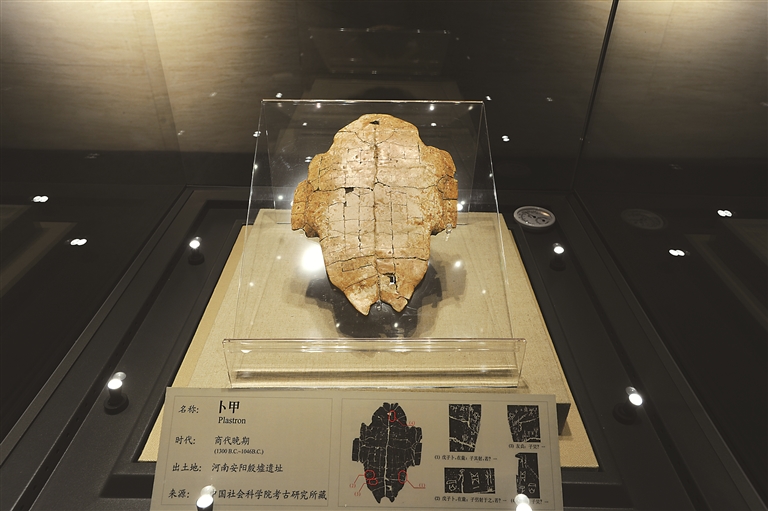
中国文字博物馆展出甲骨片,内容为卜辞。 汉代正直碑。首句书"正直是以扬名于州里",故得此名。该碑字体结构规整,笔画开张有度,为新隶体。 甲骨文"中"象旗帜之形,其上下部都有飘带。直线的中间加上圈形指示符号,表示中央、中点等一般含义。 秦系简牍的"中"字省略了象征斿的部分,小篆和隶书字形中间的圈形又变为方形,成为了现在楷书的"中"。 甲骨文已具备象形、指事、会意、形声四种造字方法。比如"人"字,是用一个侧面直立的"人"来表示,它是 最基本的一个象形文字。"雨"字,用线条表象气流在天空中的运动状态,象征自然的丰富变化。山川河流、 风雨雷电,先人把对自然、对生命的观察与思考融入到造字中。我们说中国的文字是"活"的,是因为它不仅 仅表音、表意、表情,更重要的是在造字之初,汉字就涵盖了我们古人对社会、对自然的最朴实的理解和思 考。 中国文字博物馆前广场。前方为凤鸟雕塑,取形于青铜器凤鸟纹。后方为字坊,取金文中"字"之形。中国文 字博物馆供图 习近平总书记指出,中国字是中国文化传承的标志。殷墟甲骨文距离现在3000多年,3000多年来,汉字结构 没有变,这种传承是真正的中华基因。 在中国文字博物馆,"中国文字发展史"陈列 ...

器以载道:博物馆里的中华文明基因图谱(下)
Xin Lang Cai Jing· 2026-01-13 18:48
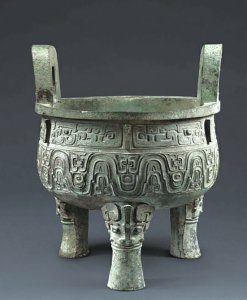
Core Insights - The article highlights the significance of ancient Chinese artifacts, particularly bronze vessels, as crucial historical records that reflect the social structure and cultural practices of their time [10][11][19]. Group 1: Major Artifacts - The Dake Ding, a bronze vessel from the Western Zhou period, stands at 93.1 cm tall and weighs 201.5 kg, showcasing advanced bronze casting techniques with intricate beast face patterns [10][11]. - The Lianhe Fanghu, a bronze vessel from the Spring and Autumn period, features exquisite dragon motifs and symbolizes the fusion of Central Plains and southern cultures [12]. - The Guiye-shaped stone tool, discovered in Heilongjiang, measures 25 cm in length and represents a high level of stone tool manufacturing technology, dating back approximately 9,000 years [13][14][15]. Group 2: Cultural Significance - The Dake Ding's inscriptions document the feudal system and land distribution in the Western Zhou period, emphasizing the importance of historical responsibility in Chinese culture [11]. - The East Han ceramic performer figurine, measuring 66.5 cm, illustrates the popularity of performance arts during the Han dynasty, reflecting the cultural richness of the Sichuan region [17][18]. - The Gold-inlaid Beast Head Agate Cup from the Tang dynasty exemplifies the high craftsmanship of Tang jade artifacts and serves as evidence of cultural exchanges between the East and West [19][20].
文化中国行丨从长安到“一带一路” 千年文脉传承与现代文明交融共生
Yang Shi Xin Wen Ke Hu Duan· 2026-01-07 12:51
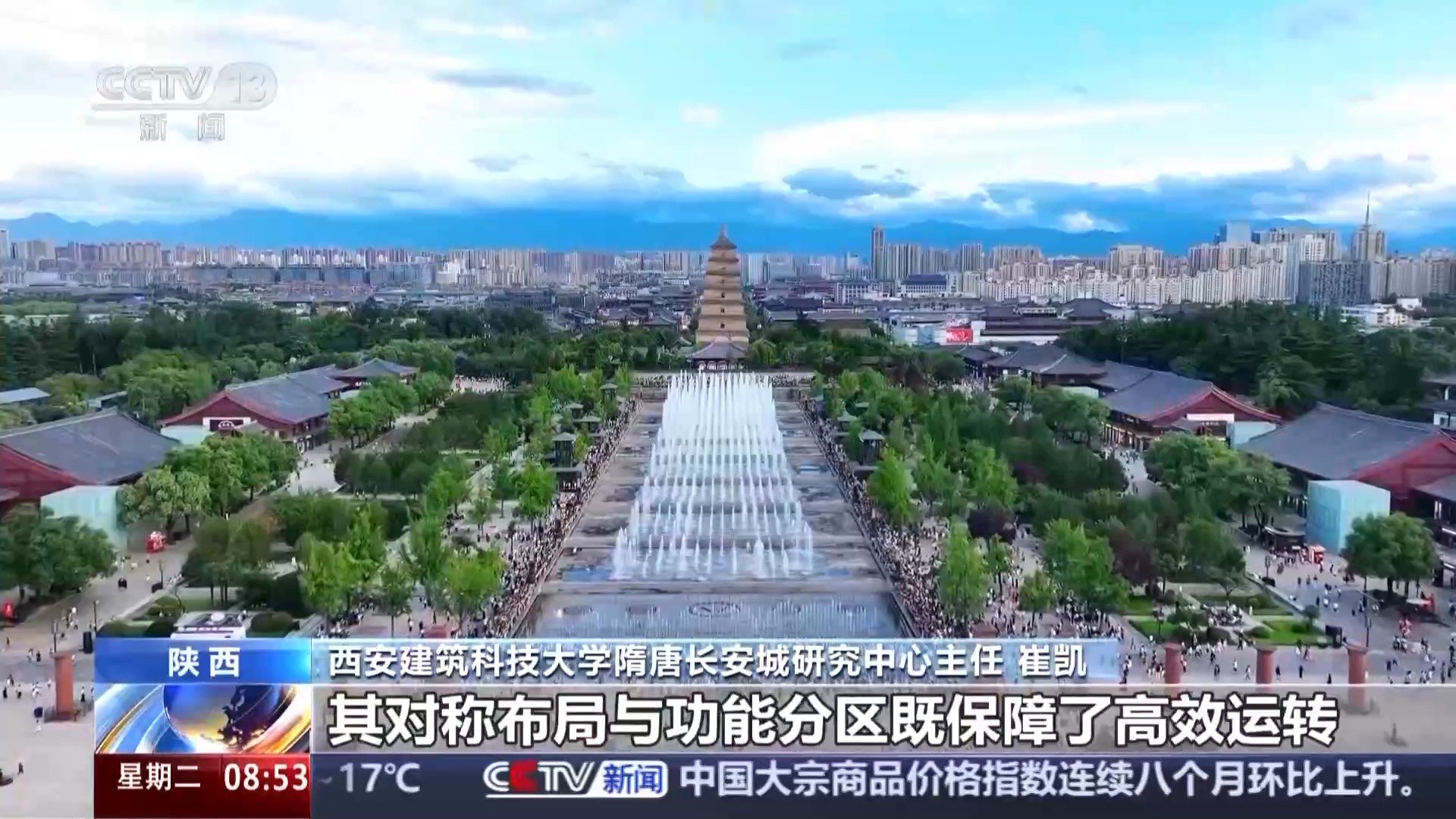
Core Insights - Xi'an, with over 3,100 years of city history and 1,100 years as a capital, is a significant cultural and historical center of Chinese civilization, particularly during the Tang Dynasty [1] - The city layout of Chang'an during the Tang Dynasty, characterized by a symmetrical design and functional zoning, has profoundly influenced urban planning in subsequent Chinese dynasties and even extended to Korea and Japan [3] Historical Significance - The Big Wild Goose Pagoda and Small Wild Goose Pagoda are prominent architectural landmarks in ancient Chang'an, symbolizing the cultural exchange between the East and West during the peak of the Silk Road [4] - The Xi'an Beilin Museum, comprising the Confucius Temple and a collection of over 4,000 stone inscriptions, reflects the historical changes and intercultural exchanges of the ancient city [6] Economic Development - Chang'an was a bustling trade hub with over 220 industries and more than 40,000 merchants, facilitating the exchange of spices, silk, and porcelain, and giving rise to early financial practices such as the cabinet and flying money [10] - The economic growth led to advancements in craftsmanship, particularly in the mass production of porcelain and silk, influenced by techniques from the Western Regions [11] Modern Relevance - The modern "Chang'an" freight trains symbolize the continuation of Xi'an's role as a core hub in the Belt and Road Initiative, connecting Central Asia, West Asia, and Europe [13]
习近平参观“百年守护——从紫禁城到故宫博物院”展览 蔡奇参观展览
Shang Hai Zheng Quan Bao· 2025-10-27 20:50
Core Points - The article highlights the visit of Xi Jinping to the Palace Museum on its 100th anniversary, emphasizing the importance of the museum in preserving Chinese culture and history [1] - The exhibition titled "A Century of Guardianship - From the Forbidden City to the Palace Museum" showcases 200 valuable cultural relics and documents, divided into three sections: "Cultural Heritage," "Centennial Legacy," and "Diverse Atmosphere" [1] Group 1 - The Palace Museum is recognized as a significant symbol of Chinese civilization, carrying the cultural genes of the Chinese nation [1] - Xi Jinping stressed the importance of protecting the museum and enhancing its role as a patriotic education base and a window for the world to understand Chinese civilization [1] - The museum is encouraged to uphold the principle that cultural relics belong to the people and to improve the protection, restoration, and utilization of these relics [1]
习近平参观“百年守护——从紫禁城到故宫博物院”展览
Xin Hua She· 2025-10-27 09:05
Core Points - The exhibition "A Century of Guardianship: From the Forbidden City to the Palace Museum" was visited by Xi Jinping on the occasion of the 100th anniversary of the Palace Museum [2] - The exhibition features 200 valuable cultural relics and documents, showcasing the development and achievements of the Palace Museum over the past century [2] - Xi Jinping emphasized the importance of protecting the Palace Museum as a significant symbol of Chinese civilization and its role in serving the people [2] Summary by Sections - **Exhibition Overview** - The exhibition is divided into three sections: "Cultural Heritage," "Century of Inheritance," and "Diverse Phenomena" [2] - It includes a variety of artworks such as calligraphy, paintings, bronze wares, jade, and porcelain that reflect the rich history of the Chinese nation [2] - **Leadership Remarks** - Xi Jinping highlighted the Palace Museum's role in carrying the cultural genes of the Chinese nation and its importance as a patriotic education base [2] - He called for the enhancement of cultural relic protection, restoration, and utilization to better serve the public and promote understanding of Chinese civilization [2]
把中华文明瑰宝呵护好、弘扬好、发展好
Ren Min Ri Bao· 2025-10-12 22:10
Core Viewpoint - The Palace Museum, celebrating its 100th anniversary in 2025, is a significant cultural symbol of China, representing the preservation and promotion of Chinese civilization and heritage [42][43][47]. Group 1: Historical Significance - The Palace Museum was established on October 10, 1925, and has since become a cultural landmark for the Chinese people and a treasure of human civilization [46][47]. - Over its 100 years, the museum has witnessed and adapted to significant changes in Chinese society, reflecting the intertwined fate of the nation and its cultural heritage [53][54]. - The museum houses over 1.95 million artifacts, showcasing the richness of Chinese material culture and spiritual pursuits [49]. Group 2: Cultural Exchange and Modernization - The museum serves as a bridge for cultural exchange, hosting exhibitions that highlight interactions between Chinese and Western civilizations [50]. - Recent initiatives include the "Digital Palace Museum," which aims to enhance public engagement through technology and creative cultural products [55]. - The museum's expansion includes new facilities and exhibitions, such as the "Hundred Years of Guardianship" exhibition, which features 200 artifacts and attracts global visitors [51][52]. Group 3: Future Aspirations - The Palace Museum aims to continue promoting cultural prosperity and building a strong cultural nation, aligning with the broader goals of Chinese modernization [58][59]. - The next decade is expected to see further developments in cultural heritage preservation and public engagement, enhancing the museum's role in contemporary society [57][58].
跟着总书记探寻中华文明|麦积山石窟:文化瑰宝 匠心传承
Xin Hua She· 2025-10-06 08:57
Core Points - Xi Jinping emphasized the importance of cultural heritage and national pride during his visit to the Maijishan Grottoes, urging cultural workers to continue the "Mogao Spirit" and contribute to the preservation and innovation of traditional Chinese culture [2] Group 1 - The Maijishan Grottoes, one of China's four major grottoes, was established approximately 1,600 years ago during the Later Qin dynasty [2] - In 2014, the Maijishan Grottoes were included in the UNESCO World Heritage List as part of the "Silk Road: the Network of Roads from Chang'an to the Tianshan Mountains" [2]
跟着总书记探寻中华文明丨麦积山石窟:文化瑰宝 匠心传承
Xin Hua She· 2025-10-05 01:20
Core Points - Xi Jinping emphasized the importance of cultural heritage and national pride during his visit to the Maijishan Grottoes, urging cultural workers to continue the "Mogao Spirit" and contribute to the preservation and innovation of Chinese traditional culture [2] Group 1 - The Maijishan Grottoes, one of China's four major grottoes, were established approximately 1,600 years ago during the Later Qin dynasty [2] - In 2014, the Maijishan Grottoes were included in the UNESCO World Heritage List as part of the "Silk Roads: the Routes Network of Chang'an-Tianshan Corridor" [2]
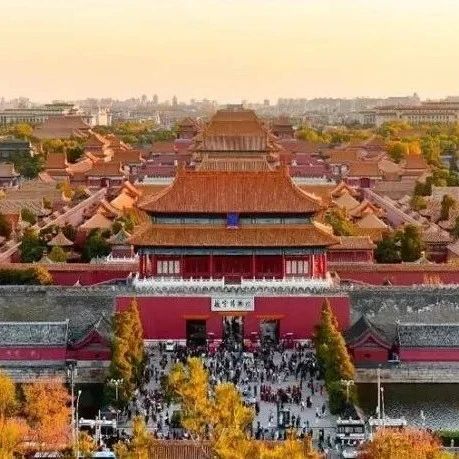
申遗成功!这条7.8公里的“龙脉”,藏着北京的千年密码
凤凰网财经· 2025-08-26 13:26
Core Viewpoint - The article celebrates the one-year anniversary of the successful UNESCO World Heritage application for Beijing's central axis, highlighting its historical significance and cultural value as a representation of Chinese civilization [1][3][6]. Group 1: Historical Significance - The Beijing central axis is described as the longest and most complete urban axis in the world, predating Paris's Champs-Élysées by 500 years and Washington's axis by 3,000 years [16]. - Spanning 7.8 kilometers from Yongdingmen to Bell and Drum Towers, it connects over 20 landmarks, each with its own historical narrative [18][20]. - The Forbidden City, located on this axis, houses 1.8 million cultural relics, each telling a story of Chinese civilization [22]. Group 2: Cultural Artifacts - The article introduces the "Zhongzhou National Treasures" postage stamp album, featuring 80 stamps and 5 bookplates that encapsulate the essence of the Forbidden City's treasures [10][13]. - Each stamp serves as a "mobile museum," allowing collectors to engage with Chinese history and culture [15][28]. - The collection includes various categories of cultural artifacts, such as paintings, ceramics, metals, jade, and furniture, showcasing the richness of Chinese heritage [69]. Group 3: Limited Edition and Collectibility - The "Zhongzhou National Treasures" album is limited to 2,000 sets, each with a unique serial number, enhancing its collectible value [88][92]. - The album is presented in a luxurious dark red hard shell packaging, symbolizing the grandeur of the Forbidden City [89]. - The opportunity to own this collection is framed as a rare chance to connect with China's cultural legacy, especially in light of the central axis's recent recognition [96][98].