
产业生态构建

Search documents
首程控股再获外资加仓,产业生态布局成信心锚点
Ge Long Hui· 2026-02-25 01:49
市场分析指出,时隔一个多月,外资在同一价格区间再度出手,意味着并非短期投机行为,而是基于对 公司基本面和转型成效的深度研判后的战略性加仓。首程控股正加速从传统资产管理平台向"产业生态 构建者"转型,其在机器人及智能制造领域的布局已进入收获期,多个被投项目预计将于2026年陆续启 动上市流程,为公司带来持续的资产增值预期。 首程控股(0697.HK)于今日再度迎来外资机构的大规模建仓。据披露,此次交易以每股约2.08港元的价 格完成。值得注意的是,此次大宗交易定价与一月中旬的大宗交易定价保持一致,显示出国际资本对公 司价值的持续性认可。 更重要的是,在港股市场波动背景下,首程控股能够连续获得外资溢价增持,既是对其产业深耕能力的 肯定,也反映出国际资本对中国新质生产力相关赛道的高度关注。随着转型红利的持续释放,公司有望 迎来更多长期资本的青睐。 公司独特的"资本+场景+运营"三维模式已形成闭环生态,成长逻辑清晰且逐步兑现。此次外资的再度 入场,将进一步优化公司股权结构,增加国际机构投资者的占比,为公司的未来发展注入更多元的资源 与视角。国有资本的战略调整与外资的持续流入形成良性互动,共同推动公司价值提升。 ...
超级IPO背后,上海国资正在批量胜出
投中网· 2026-02-13 07:46
用超长周期穿越技术波动,在行业最不拥挤的时候成为定价者,而不是追随者。 作者丨簪竹 来源丨 投中网 当多数地方产业基金仍在募资与出手之间摇摆时,上海已在多个关键赛道连续收获确定性回报。 无论是诞生于北京、深圳的硬科技独角兽,还是扎根本土的产业新星,上海国资的身影越来越多出现 在明星企业的股东名单中。"GPU芯片四小龙"齐聚资本市场,Minimax等AI明星登陆港股,印证了 上海在硬科技赛道的精准落子,而其"时间合伙人"的投资耐心则在生物医药领域当中尽显。 港股市场给出了最新注脚。2026年2月,生物医药板块情绪回暖,来自上海的宝济药业股价一度冲高 至150港元,较招股价上涨逾四倍。若将时间线拉回至去年12月,其上市首日便录得129%的涨幅。 站在结果回看,单个项目的账面回报当然值得欢呼,但其出手时点更加值得深入研究。过去几年,一 级市场快速降温,生物医药首当其冲:估值回调、募资趋紧、退出通道收缩,叠加行业从资本驱动转 向技术兑现,大量资金选择观望甚至撤退。真正仍在逆周期下注的长期资本,并不多见。 2024年3月,上海市国资委宣布设立总规模1000亿元的三大先导产业母基金,明确押注集成电路、生 物医药与人工智能 ...

英思特:公司持续深耕消费电子领域
Zheng Quan Ri Bao Zhi Sheng· 2026-02-09 13:04
Core Viewpoint - The company is committed to deepening its presence in the consumer electronics sector by focusing on high-end, high-value-added product positioning through technological innovation and global capacity layout [1] Group 1: Product Strategy - The company aims to expand the depth and breadth of cooperation with key clients by aligning with customer needs and enriching its product structure [1] - The development of more adaptable product solutions is a priority for the company [1] Group 2: Industry Collaboration - The company plans to enhance collaborative innovation with upstream and downstream enterprises to build an integrated industrial ecosystem encompassing "materials - devices - applications" [1] - Joint research and resource sharing will be utilized to strengthen the overall competitiveness of the industry chain [1] Group 3: Market Adaptation and R&D Investment - The company will actively expand into emerging fields in response to market demand changes and increase specialized R&D investment [1] - A cross-disciplinary R&D team will be established, collaborating with universities and research institutions to accelerate the transformation of technological achievements [1] - The goal is to diversify the business structure and inject new momentum for long-term sustainable development [1]
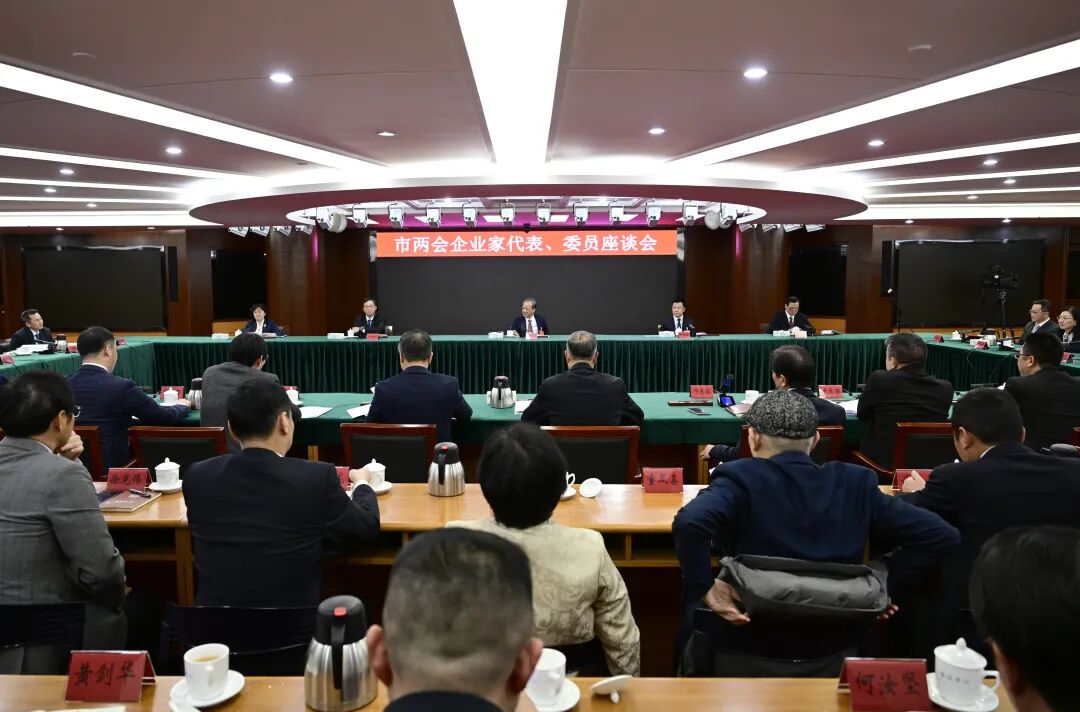
郭文海尹念红与市两会企业家代表、委员座谈:凝聚政企同心拼经济强大动力 以愚公移山之志攻坚克难争先进位
Xin Lang Cai Jing· 2026-02-04 17:28
Core Viewpoint - The meeting emphasized the importance of collaboration between government and enterprises to drive economic growth and ensure a strong start to the "14th Five-Year Plan" period [1][6]. Group 1: Government Support and Initiatives - The city government is committed to supporting traditional manufacturing industries, which are considered the foundation of the local economy, by promoting digital and intelligent transformation policies [5]. - The government encourages enterprises to leverage the "industrial transformation" policy to optimize and upgrade their operations, with a focus on sectors like lighting, furniture, home appliances, clothing, and hardware [5]. - The city plans to continue hosting promotional events, such as "Guangdong Goods Going Global," to enhance the visibility of local products and facilitate market expansion [5]. Group 2: Business Engagement and Feedback - Business leaders expressed their appreciation for the favorable business environment and efficient government workforce, sharing successful examples of collaboration between government and enterprises [3]. - Entrepreneurs are encouraged to submit leads for investment opportunities that align with their supply chains to assist in the city's high-quality development [3]. - The government is tasked with actively addressing business concerns and ensuring that all suggestions are acknowledged and acted upon [3][6]. Group 3: Future Goals and Economic Development - The city aims to create a first-class business environment that fosters innovation and growth, with a focus on overcoming challenges and achieving significant results in key areas such as industrial transformation and environmental management [6]. - The leadership calls for a collective effort from entrepreneurs and government to achieve the economic and social development goals set for the year, emphasizing the need for proactive market exploration and collaboration [6].
广西社科院吴坚:平陆运河将给广西带来产业格局重塑机遇
2 1 Shi Ji Jing Ji Bao Dao· 2026-01-30 14:04
21世纪经济报道记者 李果 广西南宁报道 《21世纪》:"十五五"时期,广西的重点城市如南宁、钦州在发展过程中,如要进一步提升经济竞争力 和产业吸引力,需要重点破解过去发展中遇到的哪些问题? 吴坚:"十五五"时期,南宁、钦州等广西重点城市要进一步提升经济竞争力和产业吸引力,不能仅满足 于基础设施的硬联通,更需在发展的软环境和深层次结构上破解三大核心问题。 首先,是产业配套服务能力的短板问题。过去,广西的一些园区存在"重招商、轻服务"的倾向,导致企 业入驻后,在金融服务、技术服务、法律服务等专业服务方面支撑不足,这直接影响了企业的运营效率 和扩大再投资的意愿。未来,要着力推动科技、金融、法律、会计、认证、医疗等专业服务协同升级, 构建全方位、高水平的商务服务生态,这是提升市场经营便利地整体竞争力的重要保障。 其次,是中心城市辐射带动能力与产业协同的失衡问题。尽管北部湾城市群规划已久,但中心城市辐射 带动力有限、部分节点城市发展不及预期、港口同质化竞争等问题依然存在。南宁作为首府,其辐射功 能和发展能级有待进一步加强,需大力发展先进制造业和生产性服务业,真正成为区域发展的"大 脑"和"引擎"。同时,北钦防一体化需 ...
筑链光明!半导体与集成电路产业生态交流对接会成功举办
半导体芯闻· 2026-01-21 10:13
1月20日,深圳市光明区人民政府联合深圳市半导体与集成电路产业联盟主办的 半导体与集 成电路产业生态交流对接会 在深圳光明文化艺术中心圆满落幕! 深圳市与光明区相关部门 负责人,光明科学城、各产业园区的代表,重投集团、深芯盟相关领导,深圳理工大学、中 山大学(深圳)等高校学者专家,基本半导体、景旺电子、华封科技、芯碁微装、安谋科 技、上海骄成超声等链上企业代表参会。 作为湾芯展构建产业生态体系的重要落地场景,本次活动紧扣国家强化战略科技力量的发展导向,依托 深圳光明区作为大湾区综合性国家科学中心先行启动区的独特优势,聚焦先进封装、半导体材料、特色 工艺等核心领域,共探协同创新路径,充分彰显了湾芯展以展会为枢纽、赋能产业生态的核心价值。 会上,深圳市光明区人民政府相关负责人着重就光明区营商环境与产业布局进行了详细解读,强调了光 明区推动半导体产业发展的战略决心与政策支持,为现场嘉宾勾勒出区域产业发展的广阔蓝图。 实地参观 实地参观 自由洽谈 自由洽谈 此次交流对接会的成功举办,既是湾芯展服务产业生态构建的重要实践,更是展会平台价值的 延伸与落地,通过精准链接区域资源与产业需求,搭建"政、产、学、研、资"一体化高 ...
为什么越有钱的上市公司,越不敢并购?——渐进式融合如何重塑并购价值
Sou Hu Cai Jing· 2026-01-21 08:42
本篇文章约3500字,预计阅读时长需6-10分钟。 文章撰写不易,也希望能获得您的点赞、转发与推荐! 一位市值百亿的上市公司董事长,在深夜战略会上抛出一个问题:"我们账上趴着几十亿,行业机会就在眼前,为什么并购还是不敢动?" 会议室陷入漫长的沉默。这不是个例,而是一场正在A股蔓延的"并购瘫痪"。 这背后,实则是两种逻辑的生死博弈:是延续购买资产的旧脚本走向内卷,还是切换至投资未来的新系统打开增长。 在中国超过五千家上市公司中,超过八成的董事长将产业并购列为TOP 3优先事项;但与此同时,超过六成的公司在过去三年中,未能成功推进任何一项 旨在构建第二曲线的战略并购。 不是没有钱,不是没有标的,而是整个决策系统陷入了一种渴望与恐惧的僵局——渴望增长的新故事,更恐惧故事演变成摧毁市值的事故。 这完美解释了那个令人费解的现象:为什么那么多渴望增长的上市公司,手握重金,却在并购这件事上既充满渴望,又屡屡受挫? 这不是假设,而是2025年产业并购市场的分裂现实。一方面,交易数量在理性回暖;另一方面,超过60%已完成的并购在三年内未能兑现价值承诺,反而 侵蚀了收购方自身的市值——这一数据与时代伯乐长期跟踪研究的并购价值损耗 ...

首程控股机器人投资组合回报超四倍,多个明星项目实现超十倍收益
Ge Long Hui· 2026-01-17 04:48
Core Insights - The company, First Journey Holdings (0697.HK), has achieved significant returns from its investments in the robotics industry, with an overall return exceeding four times in approximately two years [1] - Early investments in companies such as Yushu Technology, Galaxy General Robotics, Self-variable Robotics, and Micro Differential Flying have yielded returns of over ten times, showcasing the company's exceptional investment acumen [1] Investment Strategy - First Journey Holdings has systematically entered the robotics sector since 2024, focusing on building a complete industrial ecosystem rather than merely financial investments [1] - The company employs a "top-notch" strategy, concentrating on investing in leading enterprises within various sub-sectors of the industry [1] Key Investments - Core members of the investment portfolio include Yushu Technology, a leader in the global quadruped robot market, Galaxy General Robotics, which focuses on embodied intelligent models, and Micro Differential Flying in the flying robot sector [1] Unique Investment Model - The company's unique model of simultaneous investment and deep empowerment has been crucial for achieving high returns [1] - First Journey Holdings has redefined the traditional relationship between investors and portfolio companies by positioning itself as a "partner" and "chief customer," providing not only capital but also extensive support through its nationwide smart parking assets, industrial parks, and robotics experience stores [1] Ecosystem Development - The robotics ecosystem of First Journey Holdings has entered a phase of realization, with approximately 20 invested robotics projects, including Yushu Technology and Yundongchu Technology, entering the listing guidance stage [2] - The company anticipates that around four portfolio companies will initiate the listing process by 2026, reflecting its transition from an industrial investor to a comprehensive service platform in the robotics sector [2] Value Creation - The integrated approach of "investment + operation + ecosystem" has allowed First Journey Holdings to create industrial synergy value that far exceeds mere financial returns [2]

品质驱动下的内外共进:启程酒管2025年度成果深度解读
Sou Hu Wang· 2026-01-16 10:22
Core Insights - The hotel industry is undergoing significant transformation in 2025, with Qicheng Hotel Management positioning itself as an innovator, driving product upgrades and service innovations that contribute to both its growth and the industry's momentum [1] Group 1: Product Innovation - Qicheng Hotel Management has initiated the 3.0 era, setting new standards in the hotel industry by upgrading the service standards of Meihua Lizi Hotels [1] - The company focuses on three key experience dimensions for modern business travelers: "sense of ritual, worry-free business travel, and lifestyle," offering a flexible service combination of "12 standard items + 14 optional items" to enhance guest experiences [1] - The introduction of the "Spring Breeze Ambassador" butler IP system elevates personalized service to a new level [1] Group 2: Global Expansion - In October 2025, Qicheng Hotel Management signed its first overseas project in Kuala Lumpur, Malaysia, marking the beginning of its international journey [3] - The company aims to export its mature hotel management model and unique service philosophy to the global market, participating actively in international competition and collaboration [3] Group 3: Industry Ecosystem Development - Meihua Lizi Hotels hosted multiple investment appreciation events in cities like Xi'an, Chengdu, and Wuhan in 2025, engaging in deep discussions with seasoned investors from across the country [5] - The company is building an open and win-win industry ecosystem, collaborating with investors, suppliers, and industry experts to advance its brand strategy [5] Group 4: Service Philosophy Innovation - Qicheng Hotel Management emphasizes differentiation and personalization in its services while maintaining standardized operational advantages [6] - A systematic training program ensures that every guest receives efficient and attentive service, redefining service standards in the mid-to-high-end hotel sector [6] Group 5: Long-term Vision - Qicheng Hotel Management is committed to continuously refining its operational system and solidifying brand value [8] - The company aims to provide reliable and sustainable growth support for its partners through a dual approach of standardized expansion and localized adaptation, paving the way for high-quality sustainable development in the future [8]

股东减持引外资积极接盘,首程控股(00697.HK)完成大宗股权交接
Ge Long Hui· 2026-01-15 05:39
Core Viewpoint - The recent stock price fluctuations of Shoucheng Holdings (00697.HK) are attributed to significant capital structure optimization and the introduction of international long-term investors [1] Group 1: Stock Market Activity - Large foreign institutional investors have taken advantage of market conditions to accumulate shares at approximately HKD 2.08 per share, indicating strong confidence in the company's intrinsic value and future development strategy [1] - The substantial share acquisition at near block trade prices signals a positive reception of the company's stock by high-quality international capital [1] Group 2: Company Transformation - Shoucheng Holdings is successfully transitioning from a traditional asset management platform to an "industry ecosystem builder," with its investments in the robotics sector entering a harvest phase [1] - The company expects several of its invested enterprises to initiate IPO processes by 2026, showcasing the potential for significant returns [1] - A unique "capital + scenario + operation" three-dimensional model has been established, creating a closed-loop ecosystem with clear growth logic [1] Group 3: Future Outlook - The completion of the block trade will further diversify Shoucheng Holdings' equity structure, bringing new perspectives and resources from both state-owned capital adjustments and foreign institutional entry [1] - This influx of international investment is anticipated to inject new market vitality into the company and reinforce investor consensus on its long-term value [1]