
人形机器人量产

Search documents
地缘冲突催生新能源产业机遇-欧洲-中东户储双轮驱动-海风出海加速
2026-03-30 05:15
Summary of Key Points from Conference Call Records Industry Overview - The conference call discusses the renewable energy sector, particularly focusing on home energy storage, offshore wind, solid-state transformers, humanoid robots, lithium battery materials, and photovoltaic technologies across Europe and the Middle East. Key Insights and Arguments Home Energy Storage - In the Middle East, home energy storage penetration is expected to rise from less than 1.5% to 15%-20% due to geopolitical conflicts driving demand for energy security [1] - In Europe, the economic viability of home energy storage is enhanced when natural gas prices exceed €50-60/MWh, leading to a payback period of less than 6 years [1][4] - Current penetration in Europe is approximately 6%, indicating significant growth potential [4] Offshore Wind Energy - Offshore wind energy is crucial for energy security in Europe, with the EU recently announcing a €5 billion subsidy to stimulate installations [1][10] - China's "14th Five-Year Plan" aims for 100GW of offshore wind capacity, doubling the previous target [1][10] Solid-State Transformers (SST) - SSTs are gaining policy support and are expected to become the ultimate solution for data centers by 2026 [1][6] - Delta's SST products have already been adopted in a Meituan project, with further developments expected from companies like Sifang and Weidi Technology [1][6] Humanoid Robots - The humanoid robot industry is approaching a production inflection point, with Tesla's G3 expected to begin mass production in summer 2026 [1][7] - UBTECH has secured nearly 10,000 orders for humanoid robots, indicating strong market demand [1][7] Lithium Battery Materials - The lithium battery sector is entering a production peak in Q2, with lithium hexafluorophosphate supply being particularly tight [1][8] - Copper foil and separator production cycles exceed two years, but price elasticity is expected to improve with increased production [1][8] Photovoltaic Industry - The demand for BC solar cells in Europe is surging, driven by geopolitical tensions and energy security needs [2][8] - Tesla's 100GW ground station project requires equipment delivery by Q3 2026, which will boost related supply chains [2][8] Additional Important Insights - The investment strategy in the renewable energy sector focuses on segments benefiting from geopolitical tensions and those with relatively low valuations and safety margins [3] - The differences in market drivers between Europe and the Middle East for home energy storage highlight the unique challenges and opportunities in each region [4] - The economic advantages of balcony storage systems in Europe are notable, particularly their ease of installation and lower initial costs [5] - The U.S. transformer market is experiencing a significant supply gap, projected to reach 14,000 units by 2025, driven by data center construction and grid upgrades [1][10] This summary encapsulates the critical points discussed in the conference call, providing a comprehensive overview of the current state and future prospects of the renewable energy sector.
一个大脑控制所有机器人,真的可能吗?特斯拉、Skild AI、Agility 激辩人形机器人的量产路线|GTC 2026
AI科技大本营· 2026-03-18 07:52
Core Insights - The article discusses the transition of humanoid robots from laboratory settings to real-world applications, emphasizing the challenges and strategies involved in scaling production and deployment [1][3][10]. Group 1: Industry Trends - The focus of discussions has shifted from whether humanoid robots can be created to how they can be effectively produced and integrated into various environments [3][5]. - Companies are recognizing that the most significant challenges now lie in ensuring robots can operate reliably and continuously in real-world conditions, rather than merely getting them to move [8][10]. Group 2: Data Collection Strategies - Agility Robotics emphasizes a "data pyramid" approach, where the most valuable data comes from direct remote operation in real environments, while lower tiers consist of easier-to-collect data that may be less relevant [28][30]. - Physical Intelligence advocates for collecting large amounts of real-world data from various robot forms to enhance the model's understanding and adaptability [38][41]. - Tesla's experience with autonomous driving data informs its humanoid robot development, focusing on identifying valuable data rather than just accumulating large volumes [44][46]. Group 3: Simulation and Real-World Integration - The article highlights the importance of simulation in training robots, but stresses that it cannot fully replace real-world data due to the complexities of physical interactions [84][90]. - Companies are exploring how to bridge the "sim-to-real gap" by using real-world data to refine simulations and improve robot performance in unpredictable environments [111][128]. Group 4: Model Architecture - Different companies are pursuing varied approaches to robot intelligence, with some advocating for a single, unified model to control multiple robot forms, while others prefer a layered architecture for task management [130][132]. - The hierarchical model allows for more efficient task execution and supervision, enabling robots to break down complex tasks into manageable steps [132][135].



人形机器人产业迈入量产新阶段,天弘中证机器人ETF联接基金(A/C:014880/014881)乘机器人产业量产东风,布局人形机器人黄金赛道
Xin Lang Cai Jing· 2026-02-25 06:03
Group 1 - The core viewpoint of the articles highlights significant advancements in humanoid robots showcased during the 2026 Spring Festival Gala, indicating a transition from initial development to large-scale production in the industry starting from 2026 [1][2] - Four major domestic humanoid robot manufacturers participated in the gala, demonstrating their capabilities in various scenarios, which reflects the progress made by Chinese humanoid robot companies in 2025 [1] - Unitree Technology launched its fourth quadruped robot, Unitree As2, which boasts performance metrics such as a peak torque of 90 N·m, a maximum speed of 5 m/s, and a range of over 13 km with a 15 kg load, indicating substantial improvements in robotic technology [1] Group 2 - The robotics sector, particularly humanoid robots, has gained strong market attention and order growth following the Spring Festival Gala, suggesting a shift towards mainstream consumer recognition [2] - The Tianhong CSI Robotics ETF Fund has shown impressive historical returns, with A-class shares yielding 28.92% and C-class shares yielding 28.67% in 2025, indicating strong performance in the robotics investment space [3] - The top ten stocks in the CSI Robotics Index are heavily weighted towards humanoid robot-related companies, with a concentration of approximately 40%-45% among key players, highlighting the industry's focus on this segment [3]

万亿人形机器人赛道 ,哪个环节最可能爆发?
3 6 Ke· 2026-01-12 12:57
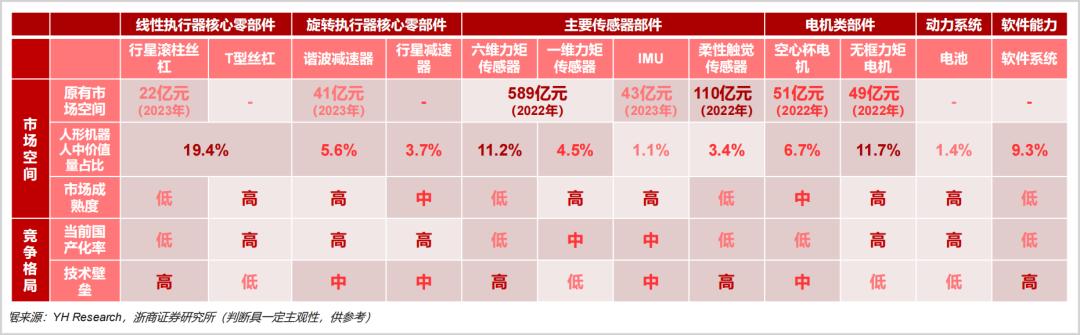
Core Viewpoint - The humanoid robot industry is experiencing significant growth, with a projected commercialization breakthrough in 2025, leading to a surge in production capacity and market demand [1][2][3]. Group 1: Industry Trends - 2025 is identified as the year of commercialization for humanoid robots, with applications expanding across various sectors including entertainment, logistics, and security [2]. - Major players like Tesla and Figure are planning substantial production increases, with Tesla aiming for a production line capable of 1 million units annually by 2026 [2][4]. - The Chinese humanoid robot market is expected to reach nearly 38 billion yuan by 2030, with a compound annual growth rate (CAGR) exceeding 61% from 2024 to 2030 [4]. Group 2: Production Capacity and Cost - Leading companies in China, such as UTree Technology and UBTECH, are projected to achieve production capacities exceeding 10,000 units by 2026, with significant sales growth from millions to billions [3][4]. - The cost of producing a humanoid robot is decreasing, with Tesla's Optimus 03 expected to have a unit cost below $20,000, a reduction of over 60% from earlier prototypes [3][4]. - The BOM cost for a humanoid robot manufactured using Chinese supply chains is approximately $46,000, compared to nearly $130,000 for non-Chinese supply chains [4]. Group 3: Key Components and Market Opportunities - The execution layer of humanoid robots, particularly the screw mechanism, represents a significant cost component, with linear actuators accounting for 19.4% of the overall value [5][6]. - Planetary roller screws are highlighted as a critical component due to their superior performance characteristics, with a projected market value of 22.96 billion yuan by 2030, growing at a CAGR of 154.1% [8][9]. - The market for planetary roller screws is currently dominated by foreign suppliers, presenting substantial opportunities for domestic manufacturers to capture market share [8][9]. Group 4: Company Analysis - Among domestic manufacturers, Hengli Hydraulic is leading in production capacity and is expected to benefit significantly from the industry's growth, with a projected annual industrial output exceeding 3 billion yuan [10][12]. - Wuzhou Xinchun and Beite Technology are also focusing on screw technology, but their production capacity is expected to ramp up more slowly compared to Hengli Hydraulic [10][12]. - Financial performance varies among these companies, with Hengli Hydraulic showing stable profit growth, while Wuzhou Xinchun has faced challenges with revenue stagnation [14][16].


突破4100点!沪指再创新高
Wind万得· 2026-01-09 03:28
Market Performance - The A-share market has shown strong performance at the beginning of the year, with market sentiment improving and a resonance between funding and policy [3] - On January 9, the Shanghai Composite Index rose over 0.6%, surpassing 4100 points, reaching its highest level since July 2015 [3] Index and Sector Performance - The Shanghai Composite Index closed at 4106.68, with a gain of 23.70 points or 0.58% [5] - The ChiNext Index and the Science and Technology Innovation Board also saw positive movements, with increases of 0.84% and 0.98% respectively [5] - Notable sectors on that day included commercial aerospace and AI applications, which performed exceptionally well [6] Economic Indicators - The National Bureau of Statistics reported that consumer demand increased due to effective policies promoting consumption, with the CPI rising 0.2% month-on-month and 0.8% year-on-year [9] - The PPI increased by 0.2% month-on-month but decreased by 1.9% year-on-year, influenced by international commodity prices and domestic capacity management policies [9] Future Outlook - Several overseas institutions, including Goldman Sachs and UBS, are optimistic about Chinese assets, predicting a rebound in 2026 driven by profit growth and innovation [10] - The A-share market is expected to enter a new upward trend, with a focus on sectors like technology and biotechnology [10] - Domestic institutions believe the market may transition from a "structural bull" to an "index bull," with AI applications and mergers and acquisitions being key areas of interest [10] - The computer sector is anticipated to improve, with low institutional holdings providing potential future growth opportunities [10] AI Industry Insights - Huachuang Securities emphasizes the importance of domestic AI computing power chips, especially in light of overseas restrictions, highlighting the need for self-sufficiency in this area [11]

人形机器人冲刺资本市场:融资铺路量产,“自我造血”仍是大考
机器人圈· 2026-01-08 10:13
Core Viewpoint - The humanoid robot industry in China is experiencing a surge in IPO activities, driven by policy support and market confidence, but faces challenges in technology and application scenarios [2][6]. Group 1: IPO Activities - Companies like Yushu Technology, Leju Robotics, and Yundongchu Technology are actively pursuing IPOs, with Yushu Technology being a frontrunner expected to submit its listing application between October and December 2025 [3][4]. - Yushu Technology has completed 10 rounds of financing, with a post-investment valuation exceeding 12 billion yuan, and reported revenue surpassing 1 billion yuan in 2025 [3][4]. - Leju Robotics and Yundongchu Technology are also advancing their IPO processes, with Leju planning to complete its advisory work by mid-2025 and Yundongchu having launched its IPO advisory in December 2025 [4][5]. Group 2: Industry Challenges - Despite the push for IPOs, the humanoid robot industry faces significant challenges, including limited technological breakthroughs and insufficient core application scenarios [2][6]. - The industry is expected to cross a critical production milestone by 2026, but mass production is hindered by technical and supply chain issues, necessitating substantial funding for ongoing development [7][8]. - Companies must focus on achieving stable order volumes, reducing costs, and improving profitability to navigate through market cycles successfully [9][10]. Group 3: Market Dynamics - The market is witnessing a shift towards commercial viability, with an increase in verifiable application scenarios and real orders in sectors like industrial and service applications [6][10]. - Companies are exploring diverse commercial pathways, particularly in standardized sectors such as commercial services and smart retail, to accumulate real-world data and validate their business models [11][12]. - The success of humanoid robots in achieving large-scale production is contingent upon aligning customer demand, core technology, and cost control [11][12].

3分钟速览2025年度关键词,领略中国发展新前沿
Zhong Guo Xin Wen Wang· 2025-12-31 08:30
Core Insights - In 2025, China is expected to achieve significant breakthroughs in various fields including culture, technology, and economy, highlighting its rapid progress on the path of opening up to the world [2] Group 1: Cultural Developments - The expansion of short dramas for international markets is a notable trend, indicating a growing cultural export capacity [2] Group 2: Technological Advancements - The mass production of humanoid robots marks a significant technological milestone, showcasing China's advancements in robotics [2] Group 3: Economic Initiatives - The operational commencement of the Hainan Free Trade Port represents a key economic development, enhancing China's international attractiveness [2]

重磅利好,突袭!刚刚,直线封板!
Zheng Quan Shi Bao Wang· 2025-12-25 04:52
Core Viewpoint - The recent surge in the robotics sector is primarily driven by the acquisition of 43% of Fenglong Co. by UBTECH, which is seen as a significant catalyst for the market [1][2]. Group 1: Market Performance - On December 25, 2023, robotics concept stocks in the A-share market experienced a collective rise, with companies like Jilun Intelligent hitting the daily limit, and others such as Tailor Co., Fenglong Co., and Tianqi Co. also showing strong performance [1]. - The robotics ETF saw a nearly 2% increase, with stocks like Guanglian Aviation and Haoshi Electromechanical reaching their daily limit or rising over 10% [2]. Group 2: Acquisition Details - UBTECH announced its plan to acquire 9,395,750 shares of Fenglong Co., representing 43% of its total shares, through a combination of "agreement transfer + tender offer" at a price of 17.72 yuan per share, totaling approximately 1.665 billion yuan [2]. - Analysts believe that the collaboration between UBTECH, focused on humanoid robots, and Fenglong Co., known for its expertise in precision manufacturing and supply chain management, will enhance industry synergy and drive the commercialization of humanoid robot technology [2]. Group 3: Industry Outlook - UBTECH has secured nearly 1.4 billion yuan in orders for humanoid robots this year, with expectations to increase production capacity to 10,000 units by 2026 [3]. - The industry is anticipated to face challenges in mass production, particularly in developing a sophisticated AI brain, which is crucial for the practical application of humanoid robots [4]. - Tesla's advancements in AI and robotics are expected to accelerate the evolution of humanoid robots, with prototype production anticipated by early 2026 [5].

从春晚扭秧歌到演唱会空翻 2026年人形机器人还能“火力全开”吗?
天天基金网· 2025-12-24 08:41
Core Viewpoint - The humanoid robot industry is on the verge of mass production, with significant interest from major companies and expected policy support, indicating a strong upward trend and a favorable investment window by 2026 [2][4][8]. Industry Overview - The recent performance of humanoid robots, showcased at a concert, highlights the technological advancements and commercial potential in entertainment [7]. - The humanoid robot sector has seen a surge in orders and capital activity since 2025, with leading companies initiating IPOs and mergers [7]. Market Projections - Multiple brokerages predict that 2025 will mark the beginning of mass application for humanoid robots, with 2026 expected to see expanded application scenarios and deeper industry involvement [4][8]. - The first batch of humanoid robots is anticipated to begin mass production and delivery in 2026, with expected shipment volumes increasing exponentially compared to 2025 [4][8]. Investment Opportunities - Key suppliers in the humanoid robot supply chain are recommended for investment as the market prepares for significant growth [4][8]. - Recent data shows a rebound in the humanoid robot sector index and leading stocks, indicating a return of capital to the market [8].

永赢基金张璐:2026年人工智能产业链最大的机会和风险
Jing Ji Guan Cha Wang· 2025-12-22 07:17
Group 1 - The core viewpoint is that humanoid robots have reached a critical point where the focus has shifted from novelty to practicality, emphasizing the need for robots to be genuinely useful [1] - Three major pain points need to be addressed for robots to become useful: reducing costs, enhancing intelligence, and improving product performance [1] - Cost reduction is essential, with the target price for household robots needing to drop below 200,000 yuan (approximately 28,000 USD) to facilitate widespread adoption [1] Group 2 - The keyword for the humanoid robot sector in 2026 is "mass production," indicating a significant shift in the industry [2] - The biggest investment opportunities will arise from exploring extensions around mass production, including hardware companies benefiting from increased market share and software applications [2] - Major risks include uncertainties in supply and demand matching, with potential concerns over demand growth not meeting expectations or excessive capacity expansion leading to temporary oversupply [2]