以人为本的新型城镇化

Search documents
突出以人为本 建设现代化人民城市
Xin Lang Cai Jing· 2026-01-24 19:37
Core Insights - The meeting focused on "promoting urban connotation development and enhancing governance efficiency in the capital" as a key theme for urban development in Beijing [1][2][3] Group 1: Urban Development Strategy - The emphasis is on learning and implementing Xi Jinping's important discussions on urban work, aiming for higher quality, efficiency, and sustainability in urban development [1][3] - The strategy includes optimizing the capital's functions and spatial layout, with a focus on the "Four Centers" to drive urban development and showcase the achievements of Chinese-style modernization [3] Group 2: Committee Contributions - Various committee members from different sectors provided suggestions, including the need for leading urban revival projects to create vibrant and innovative cities [2] - Specific proposals included enhancing the protection and utilization of core area housing, accelerating the construction of a beautiful Beijing, and developing a modern urban transportation system [2] Group 3: People-Centric Urban Governance - The importance of a people-centered approach in building a modern city was highlighted, focusing on improving urban governance and adapting to demographic changes [4] - There is a call for enhancing the quality of life for residents, including support for youth entrepreneurship and balanced educational development [4] Group 4: Infrastructure and Innovation - High standards for infrastructure development are emphasized as a foundation for high-quality growth, with a focus on technological innovation and the cultivation of emerging industries [3] - The integration of cultural resources into economic development is also a priority, aiming to transform cultural advantages into developmental benefits [3]
以人为本为城镇注入灵魂
第一财经· 2025-12-05 00:24
Core Viewpoint - The article emphasizes the importance of a people-centered new urbanization strategy in China, aiming to enhance urbanization quality and unleash the potential of urban-rural integration for economic growth [2][3]. Group 1: New Urbanization Strategy - The new urbanization strategy focuses on improving the quality of urbanization by prioritizing human needs, which is seen as a shift from infrastructure-centric development to a more holistic approach that considers the well-being of individuals [2][3]. - The strategy aims to address the structural issues in China's economy, particularly the shortcomings in domestic demand and consumption, by fostering vibrant urban markets [3][5]. Group 2: Historical Context and Evolution - Urbanization has been a key driver of China's economic rise since the reform and opening up, with significant government-led initiatives contributing to urban development [2][3]. - The article highlights the transition from a focus on physical infrastructure ("seeing things") to a focus on human experiences and community engagement ("seeing people") as a necessary evolution in urbanization thinking [3][4]. Group 3: Implementation Challenges - To effectively implement the people-centered urbanization, it is crucial to overcome the traditional reliance on infrastructure expansion and instead focus on community involvement and public decision-making [4][5]. - The article stresses the need for reforms in the household registration system to facilitate population mobility and address long-standing gaps in public services provided by local governments [5][6]. Group 4: Future Outlook - The new urbanization strategy is positioned as a critical component of China's broader economic and social policies, aiming to create a more inclusive and resilient urban environment that reflects the diverse needs of its residents [4][6]. - By prioritizing human-centered development, the strategy seeks to enhance the overall quality of life in cities, making them more attractive and livable for all [4][6].


一财社论:以人为本为城镇注入灵魂
Di Yi Cai Jing· 2025-12-04 13:36
Core Viewpoint - The essence of the new urbanization is to prioritize people, emphasizing that urbanization should focus on human needs and experiences rather than merely infrastructure development [1][4]. Group 1: New Urbanization Strategy - The Chinese government is advancing a new urbanization strategy centered on human needs, aiming to enhance the quality of urbanization and unlock the potential of urban-rural integration to drive economic growth [2][3]. - This approach marks a shift in understanding urbanization from a focus on physical infrastructure ("seeing things") to a focus on people ("seeing people"), recognizing cities as places of opportunity and freedom for individuals [2][3]. Group 2: Economic Implications - The new urbanization strategy is crucial for addressing structural issues in the Chinese economy, particularly the shortcomings in domestic demand and consumption [3][5]. - By embedding a people-centered philosophy into urbanization, the strategy aims to stimulate market activity and economic vitality, which are essential for overcoming deep-seated economic challenges [3][4]. Group 3: Implementation Challenges - To effectively implement this people-centered urbanization, it is necessary to break away from traditional urbanization models that overly focus on infrastructure, ensuring that urban development genuinely reflects the needs and aspirations of residents [4][5]. - The strategy requires reforms in the household registration system to facilitate population mobility and address long-standing gaps in public services provided by local governments [5][6]. Group 4: Social and Public Services - Enhancing social security and public service equality is vital for providing citizens with a sense of security, which in turn encourages consumer confidence and spending [6]. - The new urbanization approach emphasizes the importance of open governance and public service that prioritizes human development, aiming to create a supportive environment for all residents [6].
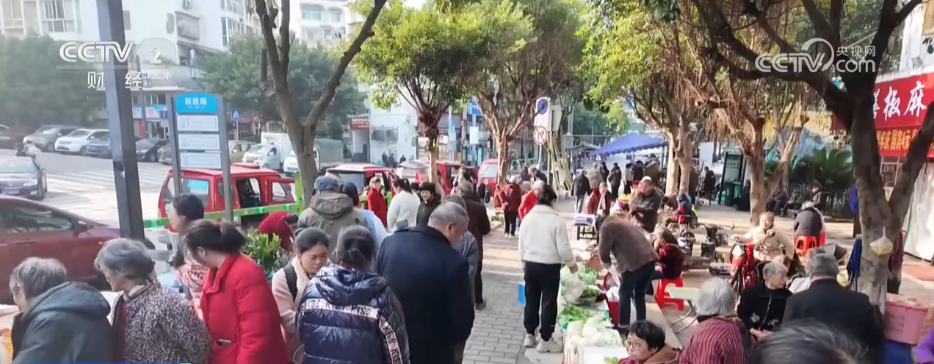
“潮汐摊区” 巧解城市治理难题 “关键小事”见证民生温度
Yang Shi Wang· 2025-11-30 10:42
Group 1 - The core idea of the article is the implementation of a new management approach for street vendors in Chongqing's Banan district, aligning with the "people-centered" urbanization strategy outlined in the 14th Five-Year Plan [1][3] - Banan has identified conflicts between public demand and urban management, particularly with street vendors causing traffic congestion and disorder, leading to the introduction of "tidal stall areas" as a solution [3][5] - The "tidal stall areas" operate during specific hours, providing organized temporary stalls that cater to commuters, enhancing convenience for residents while managing street vendor activities [5][8] Group 2 - Currently, there are five "tidal stall areas" in Banan, which have become popular among local farmers for income generation and serve as convenient stops for residents [8] - Plans are in place to establish an additional 33 "tidal stalls," with public input being sought for their locations, indicating a community-driven approach to urban management [7] - The "tidal stall" model has been adopted nationwide, with over 100 cities setting up more than 100,000 such stalls, showcasing its scalability and effectiveness [7]
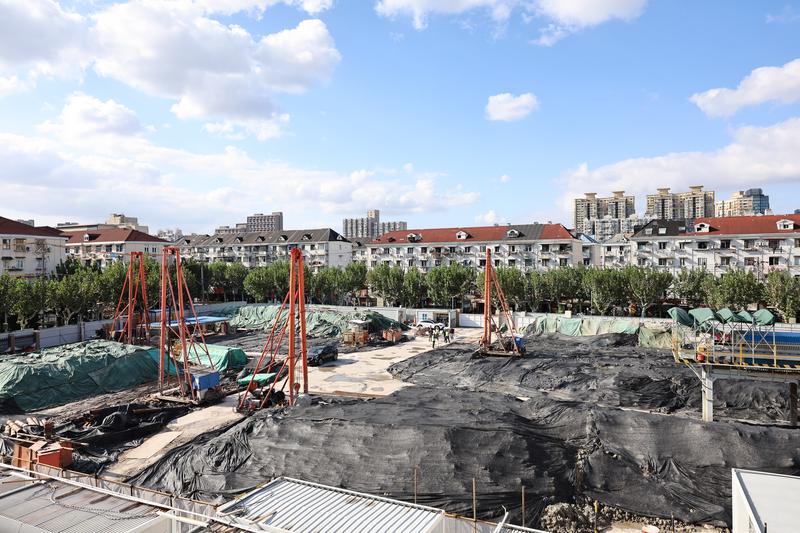
总体消灭“拎马桶”,上海为何用30多年完成一件事
Di Yi Cai Jing· 2025-11-18 14:29
Core Insights - The "toilet relocation" project in Shanghai is set to be completed by September 2025, marking a significant milestone in urban renewal efforts that have spanned over 30 years [1][2][14] - The initiative aims to improve living conditions in old neighborhoods, transitioning from shared toilet facilities to independent bathrooms, thereby enhancing the quality of life for residents [2][4][14] Summary by Sections Historical Context - Shanghai has been working on the renovation of old neighborhoods since the 1990s, with a focus on areas with inadequate sanitation facilities [2] - The Yangpu District, a key area for this initiative, has seen significant changes, with one-third of the city's old neighborhoods located there [2][3] Project Implementation - The renovation process involves complex challenges, including space constraints and diverse property ownership situations [3][4] - A comprehensive approach is being taken, with community engagement to ensure that residents' needs and preferences are considered in the redesign [3][4] Specific Projects - The Huangxing Road 1039 project involves the demolition and reconstruction of three buildings without sanitation facilities, aiming to complete the project within four years [3][4] - The project has successfully achieved 100% resident agreement on the new plans within just 13 days, indicating strong community support [4] Broader Urban Renewal Strategy - Shanghai's urban renewal strategy includes various methods tailored to specific neighborhoods, such as demolition and reconstruction, as well as retrofitting existing structures [7][9] - The city has identified over 14,000 households still using shared toilet facilities, with a goal to complete renovations within two years [7] Future Directions - The ongoing urban renewal efforts are part of a larger trend towards modernizing living conditions in line with national urbanization goals, emphasizing the importance of investing in both infrastructure and community well-being [11][13][14] - The city is preparing for a new round of urban renewal initiatives, focusing on improving living standards and community facilities [13][14]
人民热评:深入推进以人为本的新型城镇化
Ren Min Wang· 2025-11-13 12:01
Group 1 - The core viewpoint emphasizes the importance of "people-centered new urbanization" and the need for "household registration system reform" as a breakthrough for equal access to public services [1] - The reform aims to transition from a management tool to a service carrier for household registration, allowing more cities to implement "zero-threshold household registration" for new citizens [1] - The reform acknowledges that every worker contributing to urban development should enjoy equal benefits, enhancing the inclusivity of cities [1] Group 2 - The equalization of public services is the core principle of the household registration reform, reflecting social fairness and justice [2] - Various cities are optimizing infrastructure and public service supply to ensure that migrant populations can not only settle but thrive in urban areas [2] - The reform includes lowering enrollment barriers for migrant children, integrating stable employment migrants into public housing, and expanding medical and pension services [2] Group 3 - Each step of the household registration reform is closely linked to the well-being of the populace, ensuring that children of migrant workers can study in the cities where their parents work [3] - The advancement of people-centered urbanization allows every city builder to equally enjoy the fruits of development [3]
激活存量资源潜力 赋能城市高质量发展(专题深思)
Ren Min Ri Bao· 2025-11-11 22:40
Core Viewpoint - The article emphasizes the importance of balancing the utilization of both incremental and stock resources to enhance resource allocation efficiency, which is crucial for promoting high-quality urban development [1] Group 1: Urban Development Strategies - The transition from large-scale land development to revitalizing existing urban resources is a necessary requirement for stable urbanization, as seen in developed economies [2] - Historical examples include the transformation of London's Canary Wharf and Hamburg's HafenCity, which successfully repurposed old industrial areas into modern urban spaces [2] Group 2: Activation of Stock Resources - Since the reform and opening up, China has experienced rapid urbanization, leading to a significant accumulation of land, housing, and infrastructure resources [3] - Activating stock resources is essential for transforming urban development methods, optimizing economic structures, and converting growth drivers [3] - Cities often face inefficiencies due to overbuilding and inadequate operational planning, highlighting the need for tailored approaches to activate stock resources [3] Group 3: Economic Structure Transformation - The contribution of the tertiary sector to GDP is projected to reach 56.7% by 2024, necessitating adjustments in urban resource functions to support industrial transformation [4] - Various initiatives have been undertaken, such as converting old factories into tech incubators and updating traditional commercial areas into cultural and tourism complexes [4] Group 4: Collaborative Efforts for Resource Activation - Activating urban stock resources requires top-level design, local innovation, and active market participation to convert dormant value into dynamic growth [5] - Recent policies have been introduced to provide institutional support for the revitalization of urban stock assets [5] - A comprehensive understanding of asset inventories and the establishment of cross-departmental collaboration mechanisms are essential for effective urban renewal planning [5][6] Group 5: Infrastructure Management - Improving the management of infrastructure assets is crucial for enhancing operational efficiency and achieving a balance between economic and social benefits [7] - Strategies include expanding the functions of public facilities and implementing dynamic pricing mechanisms for public utilities to ensure sustainable asset operations [7]
综合整治“内卷式”竞争,将有力有效破除各种市场障碍
Mei Ri Jing Ji Xin Wen· 2025-10-24 04:31
Group 1 - The establishment of a unified market is essential for smooth circulation, with the negative list for market access reduced from 328 to 106 items, and over 4,200 policies hindering factor flow have been cleared, although there are still obstacles to address [2] - The "15th Five-Year Plan" emphasizes the need for a strong domestic market as a strategic foundation for modernization, focusing on expanding domestic demand and addressing three key tasks: expanding increment, improving efficiency, and ensuring smooth circulation [3] - During the "15th Five-Year" period, it is expected that over 700,000 kilometers of underground pipelines will be constructed or renovated, with new investment demand exceeding 5 trillion yuan [3] Group 2 - The plan includes initiatives for human-centered new urbanization, orderly promotion of the urbanization of agricultural transfer populations, and vigorous implementation of urban renewal, which will significantly promote a virtuous cycle of investment and consumption, revealing substantial domestic demand potential [3]
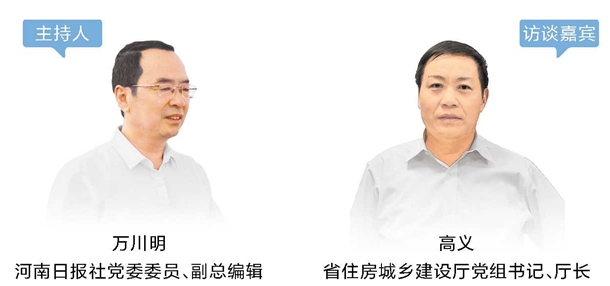
总编有约·“两高四着力”大家谈丨建人民之城 创幸福生活
He Nan Ri Bao· 2025-07-23 00:46
Core Viewpoint - The article discusses the comprehensive deployment of the "people-oriented new urbanization" strategy in Henan Province, emphasizing the importance of the Zhengkai urban integration and the development of the Zhongmu New District as a core growth area for urbanization and regional development [3][4]. Group 1: Urbanization Strategy - The Zhengkai urban integration is highlighted as a crucial initiative to accelerate the development of the Zhengzhou metropolitan area and enhance its role as a core city in the Central Plains urban agglomeration [3]. - Zhongmu New District is positioned as a strategic hub that connects resources and functions between Zhengzhou and Kaifeng, aiming to transform from a "lowland" to a "core growth pole" in urbanization [3][5]. Group 2: Infrastructure and Public Services - The province has implemented significant infrastructure improvements, including the renovation of over 15,000 kilometers of old pipelines and the expansion of urban rail transit exceeding 400 kilometers [5]. - Since 2019, 24,100 old residential communities have been included in renovation plans, benefiting approximately 2.94 million households [5]. Group 3: Housing and Urban Development - The province has initiated the construction of 1.0338 million public rental housing units, addressing housing difficulties for 2.0249 million families [5]. - The urbanization rate in the province is projected to be 59.22% in 2024, which is 7.78 percentage points lower than the national average, indicating significant potential for urbanization [5]. Group 4: Future Urban Development Initiatives - The provincial housing and urban-rural development department plans to enhance urban quality by focusing on integrated development within the Zhengzhou metropolitan area and improving public service facilities in county towns [6][7]. - Key initiatives include urban renewal actions, historical preservation, and the establishment of a new real estate development model to ensure housing security and meet the needs of residents [7].
宋雪涛:近期一系列政策之间的关系
雪涛宏观笔记· 2025-07-19 02:51
Core Viewpoint - The article emphasizes the acceleration of reform implementation as outlined in the Third Plenary Session, focusing on high-quality development by local governments and addressing issues such as market segmentation and local protectionism [2][5]. Group 1: Reform and Policy Direction - Recent important policies and meetings indicate a unified direction towards accelerating the execution of reform deployments from the Third Plenary Session, with a focus on building a national unified market and improving public services linked to the resident population [2][6]. - The central idea of the July Central Financial Committee meeting is to "break local protection," which involves regulating local government investment attraction behaviors and reducing direct market interventions [2][3]. Group 2: Anti-Involution and Urban Development - The "anti-involution" policy aims to address quality issues and subsidy problems rather than simply increasing prices or reducing capacity, as market failures have led to a situation where "bad money drives out good" [2][6]. - Local governments are required to adopt a correct view of performance, accelerate the transformation of government functions, and respect industrial development laws to avoid blind repetition in construction [3][5]. Group 3: Investment in People - The core idea of high-quality urban development is "people-oriented new urbanization," which emphasizes improving living conditions and public services [6][8]. - Recent policies aim to eliminate household registration restrictions for social insurance and promote basic public services based on residency, which can release consumption potential among low- and middle-income groups [9]. Group 4: Future Outlook - The upcoming Politburo meeting at the end of July is a critical juncture that will test the current policy stimulus themes, with subsequent events potentially influencing market risk preferences [12].