
低空技术

Search documents
国际科技创新中心扩围 京津冀协同创新与产业协作迈向纵深
Zhong Guo Xin Wen Wang· 2026-02-14 13:39
Core Viewpoint - The "Modern Capital Urban Circle Spatial Collaborative Planning (2023-2035)" has been officially approved, aiming to enhance the integration of innovation chains, industry chains, talent chains, and capital chains among Beijing, Tianjin, and Hebei, transforming the region into a globally competitive innovation cluster [1][2]. Group 1: Collaborative Innovation and Industry Cooperation - The planning emphasizes deepening reforms and integrating multiple regulations to promote high-quality development in the capital urban circle [2]. - It proposes strengthening technological innovation cooperation in the core areas of the urban circle, leveraging the Beijing-Tianjin and Beijing-Xiong'an corridors to develop new productive forces [2]. - The plan aims to cultivate an innovation triangle in the Beijing-Tianjin-Hebei region, enhancing the region's role as a driver of high-quality development [2]. Group 2: Education, Technology, and Talent Development - The importance of education, technology, and talent as interrelated components supporting innovation is highlighted, with a focus on original innovation, effective results transformation, and future industry layout [3]. - The university aims to enhance its innovation capabilities by building strong technological innovation platforms and focusing on cutting-edge fields such as artificial intelligence and low-altitude technology [3]. - Recommendations include stimulating innovation in universities, supporting high-level research platforms, and forming cross-disciplinary research teams to accelerate technology transfer to industry [3]. Group 3: Cross-Regional Industrial Chain Development - The unique advantages of the Beijing-Tianjin-Hebei region include a dense concentration of educational and research resources, with significant potential for original innovation [4]. - The region is encouraged to strengthen industrial collaboration in key areas such as artificial intelligence and hydrogen energy, creating cross-regional industrial chains [4]. - The plan suggests fostering a market-oriented innovation ecosystem and enhancing support for technology-based SMEs and startups [4]. Group 4: Focus on Technology Transfer and Collaboration - The university plans to leverage the opportunity of the Beijing-Tianjin-Hebei International Technology Innovation Center by focusing on discipline construction, research breakthroughs, and talent cultivation [5]. - It aims to enhance the efficiency of technology transfer and integrate into the regional technology transfer system, promoting collaboration between innovation zones and industrial parks [5].
北京丰台:2025年全年地区生产总值预计达到2600亿元
Bei Jing Shang Bao· 2026-01-13 12:56
Group 1 - The core viewpoint is that Fengtai District aims to achieve a GDP of 260 billion yuan by 2025, with a steady annual growth rate of 5.2% during the 14th Five-Year Plan period [1] - The district's general public budget revenue has increased by 30% compared to the end of the 13th Five-Year Plan, indicating strong economic development [1] - Fengtai District is focusing on technological innovation as the core driving force, with the number of national high-tech enterprises reaching 3,605 and technology contract transaction volume achieving 113.47 billion yuan [1] Group 2 - The district has seen significant innovation achievements in key areas, including the first domestic commercial aerospace large liquid launch vehicle "Tianlong 3" being ready for its maiden flight [2] - Five AI models have been registered nationally, and five companies have been included in the 2025 Beijing Industrial Internet Platform list, ranking second in the city [2] - Fengtai District is promoting technology sharing and joint efforts among enterprises, having been approved as the first national-level characteristic industrial cluster for small and medium-sized enterprises in commercial cryptography [2]
低空技术专业职称将首次启动评审
Xin Lang Cai Jing· 2026-01-05 19:46
Group 1 - The core viewpoint of the news is the introduction of a new professional title evaluation system for low-altitude technology in Beijing, which is the first of its kind in the country, aimed at fostering talent in emerging industries [1] - Starting in 2026, Beijing will initiate the first evaluation for low-altitude technology titles, conducting assessments annually for qualified professionals [1] - The new title evaluation aligns with national and local policies promoting the development of strategic emerging industries, particularly in low-altitude economy and aerospace technology [1] Group 2 - The low-altitude technology professional titles will have four levels: Assistant Engineer, Engineer, Senior Engineer, and Chief Engineer, creating a comprehensive talent development pathway [2] - The evaluation process will utilize a socialized model that includes personal application, unit recommendation, and multi-party assessment, focusing on innovation outcomes rather than traditional academic qualifications [2] - A special green channel for outstanding technical talents has been established, allowing for exceptional cases to bypass standard requirements for senior title applications based on significant contributions to the industry [3]
北京市低空技术专业职称将首次启动评审
Xin Lang Cai Jing· 2026-01-05 19:46
Core Viewpoint - Beijing has become the first city in China to establish a professional title evaluation system for low-altitude technology, aiming to foster talent in this emerging industry and align talent evaluation with industry needs [1][2]. Group 1: Professional Title Evaluation - The low-altitude technology professional title evaluation will start in 2026, with annual assessments for qualified technical personnel [1]. - The evaluation covers four major areas: low-altitude aircraft research and development, manufacturing, operational system construction, and safety assurance, addressing core aspects of the industry chain [2]. - The evaluation is open to various types of employers, including state-owned enterprises, private organizations, and social organizations, and allows applications from Hong Kong, Macau, Taiwan, and foreign talents [2]. Group 2: Title Levels and Career Development - The low-altitude technology professional title is categorized into four levels: Assistant Engineer, Engineer, Senior Engineer, and Chief Engineer, creating a comprehensive career development pathway [2]. - This structure aims to meet the career advancement needs of technical personnel at different levels, ensuring a stable talent supply for the industry's continuous development [2]. Group 3: Evaluation Process and Criteria - The evaluation process involves a socialized model of "self-application, unit recommendation, multi-party evaluation, and government guidance," with an emphasis on integrating the industry chain, talent chain, and innovation chain [3]. - The evaluation criteria focus on innovative achievements rather than solely on academic qualifications or publications, allowing various forms of contributions, such as project reports, patents, and awards, to be submitted [3]. - A green channel for outstanding technical talents who have made significant contributions to the industry is established, allowing for exceptions in the application for senior titles based on specific achievements [3].
教育部就《博士硕士学位授予资格审核办法》答记者问
Yang Shi Wang· 2025-12-25 06:33
Core Viewpoint - The newly revised "Measures for the Review of Doctoral and Master's Degree Granting Qualifications" aims to optimize graduate education and discipline settings in response to national strategic needs and technological development [2][3]. Group 1: Background and Purpose of the Revision - The revision of the "Measures" is driven by the central government's emphasis on graduate education and discipline optimization, serving as a key mechanism for high-level talent cultivation [2]. - Since the implementation of the "Degree Regulations" in 1980, the State Council Degree Committee has conducted 14 rounds of degree granting qualification reviews, leading to an increase in doctoral and master's degree granting institutions [2]. - The revision aligns with the requirements of the "Degree Law," which will be implemented in January 2025, necessitating updates to the management and quality assurance of degree granting qualifications [3]. Group 2: Key Directives of the Revision - The revision emphasizes three main directives: 1. Strategic demand, focusing on serving technological development and national strategic needs [4]. 2. Reform and decentralization, expanding the autonomy of local governments and universities in discipline settings [4]. 3. Quality standards, ensuring strict adherence to quality control and regulatory processes in degree granting qualifications [4]. Group 3: Implementation of Extraordinary Layout Review - The extraordinary layout review mechanism is designed to quickly establish degree granting points in response to urgent national needs, particularly in emerging fields [5][6]. - A pilot program has been initiated for low-altitude technology and engineering, with 24 universities authorized to establish related degree granting points [5]. Group 4: Expansion of Autonomous Review Units - Since 2017, 38 universities have been approved as autonomous review units, allowing them to independently review and establish new degree granting points [7][8]. - A total of 441 doctoral and 454 master's degree points have been added through this autonomous review process, focusing on key areas such as integrated circuits and artificial intelligence [8]. Group 5: Role of Provincial Degree Committees - Provincial degree committees are tasked with optimizing local discipline settings and ensuring alignment with regional economic needs [9]. - They are responsible for dynamically adjusting degree granting points and ensuring quality control in the review process [9]. Group 6: Quality Assurance Measures - Quality assurance is critical, with strict standards and procedures established for the review process [10]. - Regular evaluations of autonomous review units will be conducted to ensure compliance with quality standards, with potential penalties for non-compliance [10].
教育部学位管理与研究生教育司负责人就《博士硕士学位授予资格审核办法》答记者问
Xin Lang Cai Jing· 2025-12-25 06:05
Core Viewpoint - The newly revised "Measures for the Review of Doctoral and Master's Degree Granting Qualifications" aims to optimize graduate education and discipline settings in response to national strategic needs and technological development [2][3]. Group 1: Background of the Revision - The revision is driven by the central government's emphasis on graduate education and discipline optimization, with the State Council's Degree Committee having conducted 14 rounds of degree granting qualification reviews since 1980 [2]. - As of now, there are 504 doctoral degree granting institutions and 863 master's degree granting institutions in China, reflecting an ongoing optimization of discipline structures and enhancement of high-level talent cultivation capabilities [2]. Group 2: Key Directives of the Revision - The revision emphasizes three main directives: 1. Strategic Demand: Aligning degree granting qualifications with national strategic needs and enhancing talent supply-demand adaptability [4]. 2. Reform and Decentralization: Expanding the autonomy of local governments and universities in discipline settings, allowing for dynamic adjustments [4]. 3. Quality Standards: Establishing strict quality standards and regulatory mechanisms to ensure orderly and standardized review processes [4]. Group 3: Implementation of Extraordinary Layout Review - The extraordinary layout review mechanism is designed to quickly establish degree granting points in response to urgent national needs, such as the recent pilot for low-altitude technology and engineering [5][6]. - The State Council's Degree Committee will refine this mechanism based on pilot experiences, focusing on strategic emerging industries and enhancing adaptability in discipline settings [6]. Group 4: Expansion of Autonomous Review Units - Since 2017, 38 universities have been approved as autonomous review units, which can independently conduct reviews for new degree granting points [7][8]. - A total of 441 doctoral points and 454 master's points have been added through this autonomous review process, with a focus on key areas like integrated circuits and artificial intelligence [8]. Group 5: Role of Provincial Degree Committees - Provincial degree committees are tasked with optimizing local discipline settings and ensuring that degree granting points align with regional economic needs [9]. - They are responsible for dynamically adjusting degree granting points and maintaining quality standards in the review process [9]. Group 6: Quality Assurance Measures - Quality assurance is critical, with strict adherence to review procedures and conditions to ensure high standards in degree granting qualifications [10]. - The State Council's Degree Committee will conduct evaluations every three years and monitor the quality of newly established degree granting points [10].
江山如画 | 从“人追问题”到“问题找人”:低空技术改变城市治理方式
Zhong Guo Xin Wen Wang· 2025-11-26 17:13
Core Insights - The implementation of a drone-based smart platform for river and lake inspections in Changzhou has significantly improved the efficiency of identifying potential hazards, transitioning from a reactive to a proactive approach in water management [1] - The low-altitude economy is rapidly developing in Changzhou, with the establishment of a comprehensive drone inspection network that enhances water governance and addresses challenges posed by the region's complex water systems [1][2] - The drone platform has been deployed across various sectors, including emergency services, public safety, and healthcare, demonstrating its versatility and effectiveness in improving public service delivery [2][3] Summary by Sections Drone Inspection Platform - The drone inspection platform allows for full coverage of river and lake areas, enhancing the speed and efficiency of hazard detection and response [1] - The technology integrates drone networks, AI diagnostics, and automated task assignments, marking a shift from passive to active problem-solving in water management [1] Data Utilization and Applications - The drone operations have accumulated significant data, equating to over 130,000 kilometers flown, which is valuable for grassroots governance [2] - The platform has been deployed in 27 different scenarios, effectively addressing issues of redundant investment and data silos [2] Healthcare Logistics - The drone service has established four medical logistics routes for Changzhou's First People's Hospital, delivering over 4,500 medical supplies and saving 520 hours in transportation time [2] - This logistics solution has drastically reduced the time required for medical sample transport, enhancing patient care by providing quicker access to medical services [2] Broader Implications - The integration of low-altitude technology into public service systems in Changzhou is expanding, providing innovative solutions to traditional challenges and improving urban management and public service efficiency [3]
北京发布“并购十九条”,聚焦首都功能定位靶向发力
Xin Lang Cai Jing· 2025-10-29 13:45
Core Viewpoint - Beijing has released opinions to support mergers and acquisitions (M&A) to promote high-quality development of listed companies, encouraging resource allocation towards new productive forces [1] Group 1: Policy Encouragement - The opinions encourage listed companies to engage in M&A activities focused on strategic emerging industries and future industries [1] - Key sectors highlighted include artificial intelligence, healthcare, integrated circuits, intelligent connected vehicles, cultural industries, technology services, embodied intelligent robots, new energy, synthetic biology, quantum information, blockchain, advanced computing, low-altitude technology, commercial aerospace, and 6G [1] Group 2: Industrial Development - The initiative aims to accelerate the upgrading of services, advanced manufacturing, and agriculture, contributing to the construction of a modern industrial system in the capital [1]
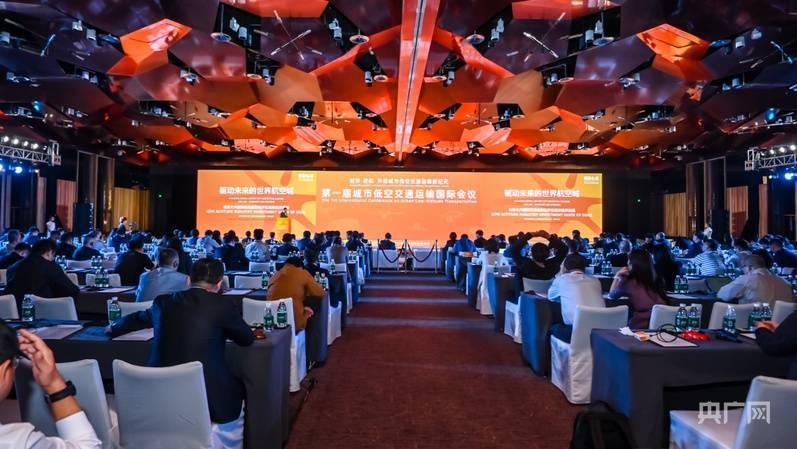
首届城市低空交通运输国际会议在北京举办
Sou Hu Cai Jing· 2025-09-26 05:00
Core Insights - The first International Conference on Urban Low-altitude Transportation was held at Beijing Daxing International Airport, focusing on the launch of two key projects in the urban low-altitude transportation sector [1][2] - The conference gathered various civil aviation management agencies, leading low-altitude technology companies, and industry experts to discuss future business models and technological trends in low-altitude technology [1] Project Launch - The first edition of the technical specification framework for civil unmanned aerial vehicle systems was released, marking a significant step in guiding the development of low-altitude transportation [2] - The construction of a supply chain service system for urban low-altitude transportation was officially initiated, aimed at reducing supply chain costs and enhancing industry efficiency [2] Strategic Development - The projects launched are part of the ongoing efforts by the Urban Air Traffic Working Committee of the China Aeronautics Society, which has been actively promoting urban air traffic system construction and policy formulation [8] - The Daxing Airport Economic Zone is positioned as a hub for low-altitude technology innovation, collaborating with various institutions to create a civil aviation innovation base [10] International Collaboration - The conference featured authoritative institutions sharing insights on the airworthiness certification of low-altitude aircraft, focusing on cutting-edge technologies and practical experiences [8] - An international exchange platform for low-altitude technology companies was established, attracting nearly 10 domestic and international aviation enterprises to discuss EVTOL and new aircraft airworthiness development [8]

两区”建设五周年,北京丰台诞生多个“全国首创
Xin Jing Bao· 2025-09-05 14:13
Group 1 - The "Two Zones" construction in Fengtai District has achieved significant milestones over five years, with a total of 2,417 projects registered and 1,553 projects implemented, leading to multiple national innovations in the service industry [1][2] - Notable projects include the largest insurance company in China, Ruizhong Life, and the global cross-border payment company, Yifuda, establishing their headquarters in Fengtai [1] - Fengtai District has created 42 innovative cases in service industry reform, including the first individual online store to physical store registration change in the country and the first "Treasury + CIPS" electronic remittance business [1] Group 2 - The Lize Financial Business District has over 1,300 enterprises and has pioneered multiple digital RMB application scenarios [2] - The Zhongguancun Fengtai Park hosts nearly 23,000 enterprises, including 2,340 national high-tech enterprises and 34 listed companies, focusing on cutting-edge fields like satellite internet and low-altitude technology [2] - In 2024, the revenue of large-scale cultural industry units in Fengtai District reached 37.74 billion yuan, marking a significant milestone [2]