住房危机

Search documents
媒体称,爱2026年不能完成建造足够的新房来缓解住房危机的目标
Shang Wu Bu Wang Zhan· 2026-02-26 16:44
《爱尔兰独立报》2月8日报道,行业调查表明,爱建材制造商计划今年供应的建筑材料最多只能满 足35,000套新房的需求,这意味着2026年爱不可能建造足够的新房来在短期内缓解住房危机。建筑材料 成本和劳动力成本的上涨是导致下滑的主要原因,但规划环境也起到了一定的作用。2025 年前九个月 的数据显示,硬件市场价值增长了5%,建筑业通胀也上涨了约 5%。爱目前获得规划许可很难,有些人 拥有场地,能够提供水和污水处理系统,但却因为一些不寻常的原因而被拒绝许可。 (原标题:媒体称,爱2026年不能完成建造足够的新房来缓解住房危机的目标) ...
西班牙巴塞罗那市4月起将上调“游客税” 每人每天最高收15欧元
Sou Hu Cai Jing· 2026-02-26 14:17
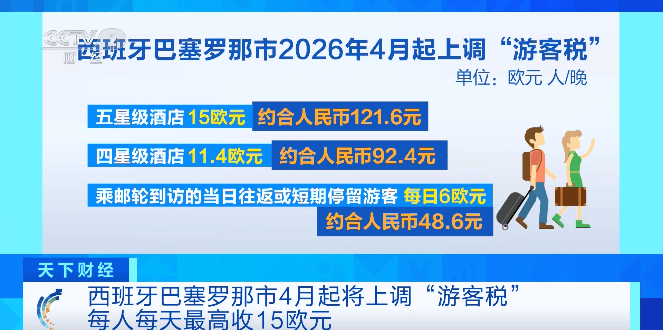
(央视财经《天下财经》)西班牙热门旅游目的地巴塞罗那市25日宣布,从今年4月起,将再次上调"游 客税",对所有造访该市的16岁以上过夜游客所征税额由当前的5至7欧元,增加至最高15欧元。当地政 府表示,此举将进一步控制游客数量,有助于缓解该市的住房问题。 当地时间25日,西班牙加泰罗尼亚地区议会通过了一项立法,将进一步提高巴塞罗那市征收的"游客 税"。根据游客所住酒店级别,税金上下浮动,其中入住五星级酒店的税金最高,可达每人每晚15欧元 (约合人民币121.6元);而在四星级酒店过夜,每晚被征税金也将达11.4欧元(约合人民币92.4元)。 乘游轮到访巴塞罗那市的游客,不论当日往返还是短期停留,也将被每日征收约6欧元(约合48.6元人 民币)的税金。 议会方面称,此次上调税金,不仅是为了进一步控制游客数量,也将作为巴塞罗那市"经济适用房"项目 的融资举措之一。资料显示,巴塞罗那市常住人口数量约160万,但年接待游客量超1500万人次,令城 市资源,尤其是住房资源承压。有观点认为,大量游客涌入致使房价被推高,从而引发该市的住房危 机。进一步加征"游客税"有助于纾解住房压力,部分游客也对此持支持态度。 不过,也有 ...

Mortgage rates fall below 6% for first time since 2023 after Trump orders $200B bond buying
New York Post· 2026-01-12 18:21
Core Viewpoint - Mortgage rates have fallen below 6% for the first time since February 2023, primarily due to President Trump's directive to purchase $200 billion in mortgage bonds to address the housing crisis [1][4]. Mortgage Rates - The average rate for a 30-year fixed residential mortgage decreased to 5.87% on Monday, down from 5.99% on Friday [1][8]. - The interest rate for a 15-year fixed mortgage also fell to 5.25% [3]. Government Actions - President Trump announced the purchase of $200 billion in mortgage bonds, stating this would lower mortgage rates and make homeownership more affordable [4]. - Federal Housing Finance Authority Director Bill Pulte confirmed that Fannie Mae and Freddie Mac would execute these purchases, with an initial $3 billion already allocated [4]. Impact on Lenders and Borrowers - The bond purchases are expected to increase the liquidity available to lenders, allowing them to offer more loans to homebuyers, which could lead to lower interest rates [5]. - UBS analysts predict that this bond buying could reduce 30-year fixed mortgage rates by more than a fifth of a percent [6]. Market Context - The average rate of outstanding US residential mortgages is currently at 4.4%, which is significantly lower than the new mortgage rates, potentially discouraging homeowners from selling [6]. - Trump's bond buying initiative represents about 1.4% of the $14.5 trillion mortgage market, indicating a limited overall impact on the market [6]. Housing Market Dynamics - Analysts express skepticism regarding the significant impact of Trump's initiatives on the housing market, including a proposed ban on institutional investors buying single-family homes [7]. - Large investors and private-equity firms have acquired a substantial number of single-family homes, but they only control about 2% of the nation's housing stock [8].

调控房价,特朗普要对华尔街开刀?
第一财经· 2026-01-08 09:23
Core Viewpoint - The article discusses President Trump's announcement to take measures to prevent institutional investors from purchasing single-family homes in the U.S., aiming to reduce housing costs for Americans. This move has led to a significant drop in the stock prices of major rental and management companies in the housing sector [3][4]. Group 1: Housing Affordability Crisis - Housing affordability has become a pressing issue for the White House, especially with the upcoming midterm elections. Trump highlighted that the dream of homeownership is increasingly out of reach for many Americans, particularly the youth [5]. - A report from the National Association of Realtors indicates that the proportion of first-time homebuyers has fallen to a historic low of 21%, with the median age of first-time buyers rising to a record 40 years [6]. - High home prices and mortgage rates hovering between 6% and 7% have made it difficult for many young Americans to own homes [6]. Group 2: Institutional Investors and Housing Market - Institutional investors have been criticized for contributing to high housing prices, particularly after purchasing foreclosed homes during the 2007-2009 financial crisis and converting them into rental properties [8]. - Various measures are being taken at federal and local levels to limit institutional investors, with 22 states proposing bipartisan legislation to restrict their activities in 2025 [8]. - The American Homeowners Alliance expressed support for government focus on housing affordability, noting that each home purchased by institutional investors reduces options for owner-occupiers [8]. Group 3: Market Data on Institutional Investors - A report from the American Enterprise Institute revealed that in Q1 2024, various investors purchased 25% of homes, while institutional investors accounted for only 1% of home purchases [9]. - Institutional investors hold a minimal share of the overall housing stock, with data showing they owned just 1% of single-family home inventory as of June last year [10]. - Blackstone's report indicated that it owned only 0.06% of single-family homes, and the overall share of institutional investors in the U.S. single-family housing market has decreased by 90% since 2022 [10].

拟禁止机构投资者购买独栋住宅,特朗普控房价先拿华尔街开刀?
Di Yi Cai Jing· 2026-01-08 09:05
Group 1 - The upcoming midterm elections have heightened the focus on housing affordability in the U.S., with President Trump announcing measures to prevent institutional investors from purchasing single-family homes, aiming to lower housing costs for Americans [1][3] - Following Trump's announcement, stock prices of major rental and management companies, including Invitation Homes and American Homes 4 Rent, experienced significant declines, with Invitation Homes dropping 6% and Blackstone Group's stock falling nearly 6% [1] - A report from the National Association of Realtors indicates that the percentage of first-time homebuyers has fallen to a historic low of 21%, with the median age of first-time buyers rising to a record 40 years, attributed to high home prices and mortgage rates between 6% and 7% [3] Group 2 - Institutional investors have been criticized for contributing to high housing prices, with a report from the U.S. Government Accountability Office suggesting that their concentrated ownership can drive up rents and home prices [5] - Various measures are being implemented at federal and local levels to limit institutional investors, including proposals to eliminate tax incentives for corporate investors and local bans on new single-family homes for long-term rental [5] - A report from the American Enterprise Institute indicates that institutional investors purchased only 1% of homes in the first quarter of 2024, with their overall share of the housing stock being minimal, owning just 0.5% of all single-family homes in the U.S. [6]

美国无家可归者人数达历史新高,2024年突破77万人
Xin Lang Cai Jing· 2025-12-26 08:48
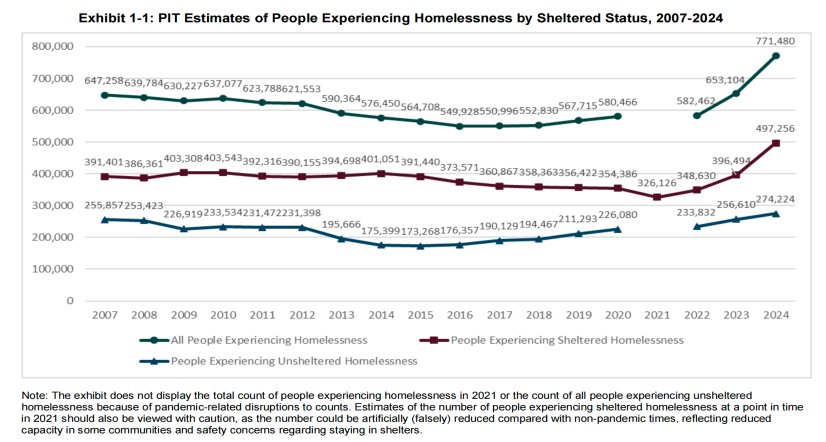
Core Insights - The total number of homeless individuals in the U.S. reached 771,480, the highest since 2007, equating to 23 homeless individuals per 10,000 people [1] - Since the pandemic, the number of homeless individuals has increased by 203,765, representing a growth of over 35.9% from 2019 to 2024 [1] - The demographic of homeless individuals is diverse, with 59.6% being male and 39.2% female, and 19.2% being children under 18 [1] Group 1 - The report indicates that 64.5% of homeless individuals reside in shelters, while over 270,000 are unsheltered [1] - The increase in homelessness is attributed to several factors, including a housing crisis, inflation, natural disasters, the expiration of pandemic relief measures, and a rise in immigrants seeking asylum [2]
【环球财经】2025年法国建筑业继续走弱
Xin Hua Cai Jing· 2025-12-17 05:54
Group 1 - The French construction industry is expected to continue weakening in 2025, with economic activity projected to decline by 4% year-on-year [1] - The new residential market is a major drag on the industry, with construction activity in this sector expected to decrease by 8.8% in 2024, while non-residential construction is projected to decline by 6.6% [1] - The industry has already lost approximately 65,000 jobs since the crisis began in 2022, with an estimated reduction of 20,000 jobs in 2025 and an additional 10,000 jobs in 2026 [1] Group 2 - The construction improvement and maintenance sector is also expected to face challenges, with a forecasted decline of 0.5% in 2026 following a 1.1% drop in 2025 [2] - The residential energy renovation sector is anticipated to be particularly weak, with activities expected to shrink by 0.8% next year [2] - The instability of policy, particularly regarding subsidy adjustments and complex regulations, is cited as a major factor undermining market confidence [2]
租金太高?纽约通过史诗级建房计划: 26,500套新房+24亿,皇后区成主战场
Sou Hu Cai Jing· 2025-10-30 19:14
Core Insights - New York City Council has approved two of the largest community development plans in 25 years, aiming to build 26,500 new housing units in Queens, addressing the city's severe housing crisis [1][5] - The two main areas targeted for development are Jamaica and Long Island City, with significant investments in infrastructure and public facilities [3][4] Group 1: Development Plans - Jamaica will see the redevelopment of 230 blocks, resulting in approximately 11,800 new housing units, alongside a $413 million investment in infrastructure improvements [3] - Long Island City will cover 54 blocks, with plans for around 14,700 new apartments and a $2 billion investment in schools and parks [3] Group 2: Political Context - The upcoming mayoral election has made housing a key issue, with candidates promising to push for the construction of hundreds of thousands of new homes [4] - The Long Island City development area overlaps with the district of candidate Zohran Mamdani, contrasting with the previous Amazon headquarters proposal that was rejected in 2018 [4] Group 3: Government Response - Mayor Eric Adams described the approved plans as a critical step in transforming New York, projecting the creation of thousands of jobs and vibrant new communities [5] - The total public investment for these housing initiatives exceeds $2.4 billion, primarily targeting middle- and low-income families [5]

美国人均GDP已经到了8万美元了,为啥老百姓还是觉得生活很困难?
Sou Hu Cai Jing· 2025-10-15 12:25
Core Insights - The article highlights the disparity between high GDP figures in the U.S. and the reality of income inequality, where a significant portion of wealth is concentrated among the top 1% while the bottom 90% experience sluggish income growth [1][3][13] Economic Disparity - From 1979 to the present, income inequality in the U.S. has widened significantly, with the top 1% capturing most of the economic growth, while the bottom 90% see minimal income increases [1] - The Gini coefficient, a measure of income inequality, increased by approximately 20% from 1980 to 2016, indicating a growing wealth gap [3] - The Federal Reserve reports that income inequality is linked to rising corporate debt, contributing to overall financial fragility [3] Inflation and Cost of Living - Inflation remains a pressing financial challenge for many Americans, with one-third of adults citing it as their top financial concern for 2024 [5] - Housing costs are a major contributor to inflation, accounting for two-thirds of inflationary pressures from 2024 to 2025, with housing prices having risen by 60% over the past six years [5][7] - The average American household is increasingly burdened by housing costs, with 31.3% spending over 30% of their income on housing [5][7] Healthcare Costs - The U.S. has the highest healthcare spending globally, with total expenditures reaching $4.9 trillion in 2023, translating to an average of $14,570 per person, a 7.5% increase from 2022 [9] - Nearly half of adults report finding healthcare costs burdensome, particularly among uninsured and minority populations [9] Education Debt - Student loan debt in the U.S. is projected to reach $1.814 trillion by 2025, affecting approximately 43 million borrowers [11] - The financial strain from education debt is compounded by rising living costs and stagnant wages, creating a cycle of financial difficulty for many households [11][13] Conclusion - The article underscores the disconnect between high GDP figures and the lived experiences of many Americans, suggesting that without addressing these systemic issues, social tensions may escalate [13]


忧虑!加拿大两大楼市公寓销售与建设双跳水 买家只能继续观望
Sou Hu Cai Jing· 2025-06-20 05:25
Group 1 - The sales of condominiums in Toronto and Vancouver are declining despite efforts to increase new housing construction, leading to rising inventory and the cancellation of numerous projects [1][3] - According to the Canada Mortgage and Housing Corporation (CMHC), condominium sales in Toronto dropped by 75% from 2022 to Q1 2025, while Vancouver saw a 37% decline, with Toronto's sales down 21.7% year-over-year and inventory exceeding 20,000 units [3][4] - The current housing crisis persists with many properties remaining unsold for months, as potential buyers are hesitant due to concerns about the global economy, despite falling prices and interest rates [4][5] Group 2 - New condominium construction in the Greater Toronto Area has sharply decreased, reaching the lowest level since 1996, as developers struggle to sell enough pre-sale units and secure financing for new projects [5][6] - At least 28 projects, totaling nearly 6,000 units, have been shelved, canceled, or entered bankruptcy since 2024 due to the decline in pre-sale activity [6] - Industry experts predict that the market will eventually recover, but there may be a supply shortage in the future due to the current lack of new housing starts, with CMHC indicating that 3.5 million homes need to be built by 2030 to restore housing affordability [7]