
全球贸易

Search documents
霍尔木兹海峡被封锁,能源之外中东局势如何冲击美国农民?|声动早咖啡
声动活泼· 2026-03-23 09:34
Core Viewpoint - The recent military conflict in the Middle East, particularly the U.S. and Israel's airstrikes on Iran, has led to significant disruptions in global energy and fertilizer markets, directly impacting American farmers and the agricultural sector [3][4]. Group 1: Impact on Energy and Fertilizer Prices - Following the closure of the Strait of Hormuz, oil and natural gas prices have surged, with urea prices rising from $500 to $700 per ton, potentially doubling if the conflict continues [4][5]. - The Middle East is a crucial supplier of nitrogen fertilizers, with approximately 30% of global fertilizer exports passing through the Strait of Hormuz, which is now blocked due to the conflict [5][6]. Group 2: Effects on American Agriculture - Urea and nitrogen fertilizers are vital for crops like wheat, rice, and corn, which provide over 40% of global caloric intake; disruptions in supply could severely affect food production [5][6]. - The conflict comes at a critical time for U.S. farmers, as they typically begin planting in April, and the interruption in fertilizer supply could lead to shortages during the planting season [9][10]. Group 3: Broader Economic Implications - The agricultural sector has already been under pressure due to rising fertilizer prices and previous supply chain disruptions from the Russia-Ukraine conflict, which had already strained the market [7][8]. - The current situation may lead to increased costs for consumers as fertilizer price hikes are expected to be passed down to grocery store prices, affecting overall living costs [10].


中东冲突下高油价情景如何冲击全球贸易,WTO这样计算
第一财经· 2026-03-21 12:15
Core Viewpoint - The WTO's report indicates that the ongoing Middle East conflict is likely to impact global trade through various channels, including rising oil prices, slowing GDP growth, and potential fertilizer supply shortages, which threaten food security in vulnerable economies [3][4]. Group 1: Global Trade Impact - If high energy prices persist for the remainder of the year, global GDP growth is expected to be revised down from a baseline forecast of 2.8% to 2.5% for 2026, with a rebound anticipated in 2027 [3][4]. - The WTO predicts a 0.5 percentage point downward adjustment in the growth rate of global goods trade for 2026, bringing it down to 1.4%, with a recovery to 2.8% in 2027 [3][4]. - The service trade growth rate is projected to decline from 4.8% to 4.1% under the influence of the conflict, with a subsequent increase to 5.2% in 2027 [8][12]. Group 2: Energy Price Assumptions - The WTO's adjusted forecast assumes that oil prices will remain at $90 per barrel and LNG prices at $16 per million British thermal units for the year [4][10]. - The report emphasizes that short-term fluctuations in energy prices are not the primary concern, and the current assumptions are deemed appropriate [9][10]. Group 3: Regional Trade Effects - In a high energy price scenario, Europe's goods export value is expected to shrink by 0.6%, compared to a 0.5% growth in the baseline scenario [12]. - The European industrial sector is particularly sensitive to high energy prices due to its reliance on natural gas imports, which could lead to significant production cuts [12][14]. - The report highlights that the conflict threatens key global shipping corridors, with a drastic reduction in shipping traffic through the Strait of Hormuz, impacting global transport services [14].
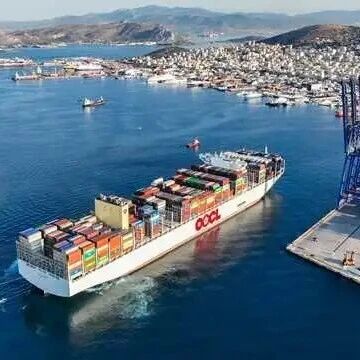
中东冲突后WTO发布首份全球贸易报告!预测今年全球货物贸易增长率放缓至1.9%
第一财经· 2026-03-19 16:06
Core Viewpoint - The WTO's latest report indicates a slowdown in global trade growth for 2026, following a surge in AI-enabled product trade in 2025, with the growth rate expected to decline from 4.6% in 2025 to 1.9% in 2026 due to normalization of trade activities after a period of heightened imports and AI-related demand [3][4]. Global Trade Forecast - The global goods trade growth rate is projected to return to normal levels after the AI-related trade surge and preemptive stockpiling of imports, with a forecasted growth of 2.6% in 2027 [3][4]. - The overall growth rate for goods and services trade in 2026 is expected to be 2.7%, down from 4.7% in 2025, while global GDP growth is anticipated to slightly decline from 2.9% in 2025 to 2.8% in 2026 and 2027 [7][8]. Impact of Energy Prices and Conflicts - High energy prices and ongoing conflicts in the Middle East pose significant risks to trade growth, potentially leading to a 0.3 percentage point reduction in GDP growth forecasts and a 0.5 percentage point reduction in trade growth forecasts for 2026 [7][8]. - If energy prices remain elevated throughout 2026, the actual growth rate of global goods trade could drop to 1.4%, with service trade growth also slowing to 4.1% [7][8]. AI-Enabled Product Demand - In 2025, the demand for AI-enabled products surged, contributing to a 21.9% increase in trade value, rising from $3.43 trillion to $4.18 trillion, despite these products only accounting for one-sixth of total global trade [11]. - AI-enabled products contributed 42% of the total increase in global trade in 2025, with key items like chips and semiconductors receiving exemptions from most new tariffs [11]. Regional Trade Predictions - In the baseline scenario, Asia is expected to lead in goods import growth at 3.3%, followed by Africa (3.2%), South America (2.5%), Europe (1.3%), and the Middle East (1.0%) [13]. - For goods exports, Asia is again projected to lead at 3.5%, with South America also at 3.5%, while the Middle East's export growth is expected to slow significantly to 0.6% [13].
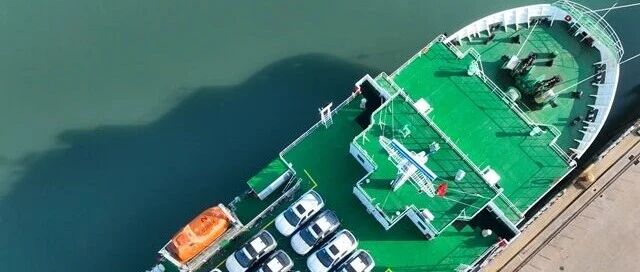
Hapag-Lloyd: Europe must engage to make Strait of Hormuz secure again
Youtube· 2026-03-17 11:11
Core Insights - The shipping industry is facing significant disruptions in global trade due to the current security situation in the Persian Gulf, with six ships and 150 seafarers stranded [1][2][5] - The company is experiencing increased costs related to shipping times, fuel prices, insurance, and storage fees due to the ongoing crisis [8] Shipping Operations - The company has had to store containers at alternative ports, such as Oman and India, until the Strait of Hormuz is accessible again [3] - There is a growing concern about the safety of shipping routes, and the company is seeking naval assistance to ensure safe passage through the Strait of Hormuz [7][11] Industry Impact - The disruptions are causing delays and increased costs for manufacturers and retailers, who are inquiring about the implications for shipping and insurance [9] - While some shipping routes outside the Persian Gulf remain operational, the situation in the Gulf is expected to continue to challenge the industry [10] Government Engagement - The company is in discussions with various governments to seek support and solutions to the crisis, emphasizing the need for a coalition response rather than relying solely on German assistance [11]

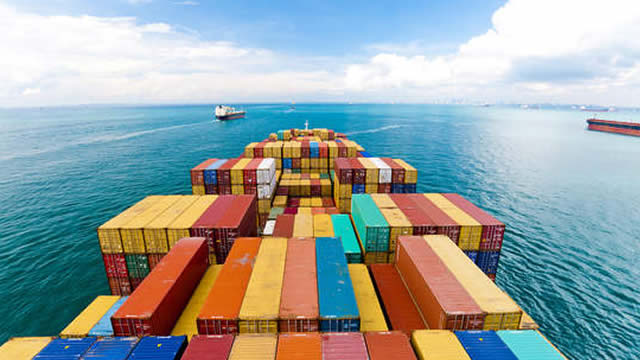
特朗普:将全球关税从10%提高到15%,立即生效
Ge Long Hui· 2026-02-22 04:57
Group 1 - Trump announced an increase in tariffs on imported goods to the U.S. from 10% to 15%, effective immediately [1] - The U.S. government will determine and issue new "legitimate tariffs" in the coming months [1] Group 2 - The Supreme Court recently rejected many provisions of the President's trade agenda, limiting the ability to impose high tariffs on any country [2] - Analysts believe that this ruling is unlikely to hinder Trump's plans to readjust global trade through tariffs [2]
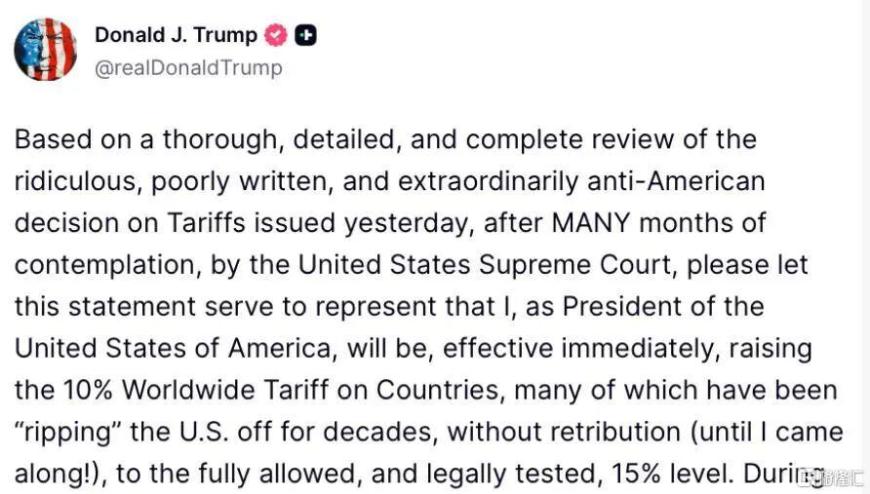
世贸组织总干事伊维拉用中文祝贺马年新春
Xin Hua She· 2026-02-17 05:04
Group 1 - The core message from the Director-General of the World Trade Organization (WTO), Iweala, emphasizes the importance of resilience, vitality, and progress in global trade, particularly in the context of the Year of the Horse [1] - Iweala highlights the remarkable resilience of world trade over the past year, reaffirming the value of an open, stable, and predictable trade environment based on a multilateral trading system [1] - There is a call for significant reforms within the WTO to adapt to the changing global economy, indicating a need for modernization and responsiveness to new challenges [1] Group 2 - Iweala expresses gratitude for China's strong support of the WTO and anticipates that China's reforms will provide support for the reform of the multilateral trading system [2]
非洲零关税大礼包来了!中国消费者钱包要鼓起来了?
Sou Hu Cai Jing· 2026-02-16 11:01
Core Viewpoint - China's zero-tariff policy for 53 African countries is expected to significantly impact the pricing of imported goods in local supermarkets, leading to lower prices for various products [1]. Group 1: Price Reductions on African Goods - The price of Kenyan avocados is projected to drop by 40%, from 20 yuan to 12 yuan each [3]. - Ethiopian Yirgacheffe coffee prices will decrease by 30%, saving consumers approximately 8 yuan per cup [3]. - South African Cabernet Sauvignon will see a 25% price reduction, making it competitive with mid-range French wines [3]. Group 2: Logistics and Supply Chain Improvements - The new "Africa Special Line" of the China-Europe Railway allows cashews from Mozambique to reach Chongqing in just 18 days [3]. - Cross-border e-commerce enables Rwandan chili sauce to be delivered to consumers' tables within 7 days after ordering [3]. - The upgraded "fresh goods channel" at Guangzhou Baiyun Airport allows Tanzanian seafood to clear customs within 3 hours [3]. Group 3: Impact on Manufacturing Costs - The zero-tariff policy on cobalt from the Democratic Republic of Congo is expected to reduce the cost of electric vehicle batteries by 5%, potentially saving consumers 7,500 yuan on a 150,000 yuan electric car [5]. - The removal of tariffs on bauxite from Guinea will lower the cost of domestic smartphone casings by 12%, intensifying price competition among brands like Xiaomi and OPPO [5]. Group 4: Market Dynamics and Consumer Behavior - African consumers are increasingly purchasing Chinese mobile phones and agricultural machinery, with Transsion mobile sales in Nigeria surging by 200% and Lovol harvesters becoming popular in Zambia [7]. - The formula for calculating future prices of African goods post-tariff removal is original price multiplied by (1 - tariff rate), exemplified by a 300 yuan South African diamond chocolate saving 45 yuan after the 15% tariff is eliminated [7]. Group 5: Global Trade Implications - The zero-tariff initiative is viewed by some Western media as "economic colonialism," yet African farmers benefit from increased income due to China's tariff exemptions, contrasting with the 25% "fair trade tax" imposed by European buyers [9]. - The initiative highlights the complexities of global trade dynamics, where savings for consumers in one region may challenge protectionist policies in another [9].

Packaging: the backbone of global trade
Yahoo Finance· 2026-02-06 08:57
Core Insights - Packaging is essential for the movement of goods in global trade, acting as a critical enabler that ensures products arrive intact and on time [1][3][7] Group 1: Role of Packaging in Global Trade - Packaging protects goods from physical damage, contamination, and environmental exposure during transportation, which is vital for maintaining product quality over long distances [3][4] - Well-designed packaging absorbs stresses from vibration, stacking pressure, and temperature changes, preventing increased breakage rates that could make long-distance trade uneconomic [4] - Standardized packaging formats enhance logistics efficiency by allowing warehouses, ports, and transport networks to operate at scale, optimizing storage and reducing handling costs [5] Group 2: Information and Compliance - Packaging carries essential information such as shipping marks, handling instructions, barcodes, and tracking data, which are crucial for the correct identification and routing of goods in international trade [6] - Compliance with regulatory requirements is supported by packaging, which helps businesses meet legal, safety, and documentation standards necessary for cross-border trade [8][9] - Specific packaging rules apply to various products, especially in sectors like food and pharmaceuticals, where failure to comply can lead to rejected shipments or market exclusion [9]
秘鲁驻广州总领事:广东秘鲁合作根基深厚,愿共拓全球贸易
2 1 Shi Ji Jing Ji Bao Dao· 2026-01-27 07:41
Group 1 - The core viewpoint of the article highlights the positive cooperation opportunities between Guangdong and Peru, particularly in cultural and trade sectors [1] - The Consul General of Peru in Guangzhou, Ruben Espino, emphasized the historical ties between China and Peru, noting that Peru was one of the first Latin American countries to accept Chinese immigrants, which contributed significantly to China's economic development [1] - Peru actively participates in global trade and considers Guangdong as a key partner for trade cooperation, with ongoing efforts to enhance communication with potential investors in the South China region [1]
阿联酋重视在全球贸易中的积极作用
Shang Wu Bu Wang Zhan· 2026-01-26 16:14
Core Viewpoint - The UAE emphasizes its active role in shaping the future of global trade during the World Economic Forum in Davos, highlighting its commitment to an open trade system based on rules and partnerships [1] Group 1: Trade Philosophy - The UAE's trade philosophy is centered around openness, partnerships, and flexibility [1] - The country is dedicated to maintaining a rules-based open trade system [1] Group 2: Supply Chain Resilience - The UAE aims to enhance the resilience of supply chains [1] Group 3: Economic Partnerships - The UAE is focused on expanding its network of comprehensive economic partnership agreements [1] - This expansion is intended to solidify the UAE's position as a global trade hub connecting the East and West [1]