公共服务均等化

Search documents
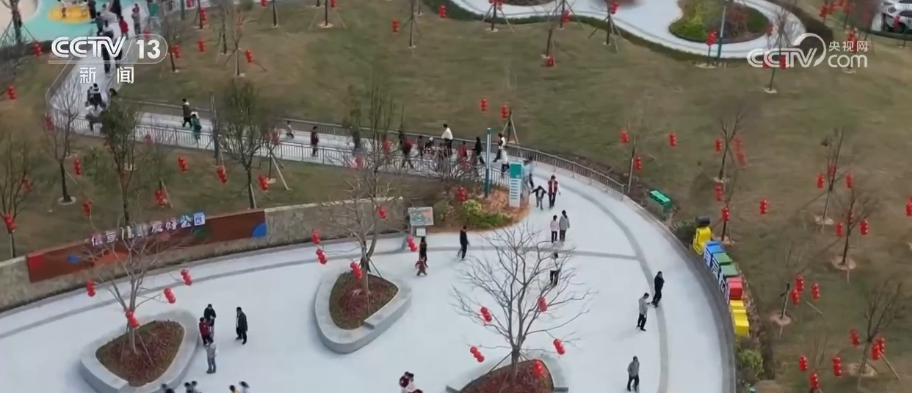
用“有爱”设计消除“障碍” 儿童友好公园守护童心度新春
Yang Shi Wang· 2026-02-20 04:05
Core Viewpoint - The newly opened barrier-free children's friendly park in Xinyi, Guangdong, aims to promote equal access to public services and enhance children's experiences during the Spring Festival holiday [1] Group 1: Park Features - The park is designed with the concept of "love without barriers, children’s hearts together," focusing on creating an inclusive environment for all children [1] - The main pathways in the park are completely barrier-free, allowing easy access for strollers and wheelchairs [1] - The park includes interactive science areas and sensory gardens, catering to both typical children and those with special needs [1] Group 2: Community Impact - The park covers a public green area of approximately 22,600 square meters, addressing the local shortage of barrier-free spaces for children's activities [1] - The initiative aims to enhance the sense of gain and happiness among the community [1]

500座便民桥连接的是什么?
Xin Lang Cai Jing· 2026-01-30 20:48
Core Viewpoint - The construction of 500 rural convenience bridges in Qinghai Province is a significant initiative aimed at improving transportation and enhancing the quality of life for rural residents, reflecting the government's commitment to equitable public services and common prosperity [1][2]. Group 1: Infrastructure Development - The government plans to build 4,000 kilometers of new and renovated rural roads and 500 convenience bridges, emphasizing the importance of infrastructure in rural development [1]. - The initiative addresses the longstanding issues of inadequate and unsafe transportation infrastructure in remote villages, where many existing bridges are made from substandard materials [1]. Group 2: Socioeconomic Impact - The construction of these bridges is expected to alleviate the difficulties faced by rural residents, such as having to wade through water or take longer routes, thereby improving access to essential services and economic opportunities [1]. - The bridges symbolize the government's commitment to connecting rural areas with broader national development, enhancing the flow of resources and opportunities between urban and rural regions [2]. Group 3: Government Commitment - The initiative is described as a "heart-to-heart bridge" between the government and the people, embodying the government's dedication to serving the public and addressing their needs [2]. - The construction of these bridges is part of a broader strategy to ensure that no ethnic group is left behind in the pursuit of common prosperity, aligning with the principle of "people-centered" development [1][2].
去年GDP同比增5%:消费贡献率53%,房地产投资下降
Nan Fang Du Shi Bao· 2026-01-19 04:55
Economic Overview - In 2025, the GDP reached 14,018.79 billion yuan, reflecting a year-on-year growth of 5.0% at constant prices [1] - Quarterly GDP growth rates were 5.4% in Q1, 5.2% in Q2, 4.8% in Q3, and 4.5% in Q4, with a quarter-on-quarter growth of 1.2% in Q4 [1] Contribution to Economic Growth - In 2025, the contribution rates to economic growth from final consumption expenditure, gross capital formation, and net exports of goods and services were 52.0%, 15.3%, and 32.7% respectively [3] - In Q4, the contribution rates were 52.9% from final consumption expenditure, 16.0% from gross capital formation, and 31.1% from net exports of goods and services [3] Investment Trends - Total fixed asset investment (excluding rural households) was 485.186 billion yuan, showing a decline of 3.8% compared to the previous year [3] - Excluding real estate development investment, total fixed asset investment decreased by 0.5% [3] - By sector, infrastructure investment fell by 2.2%, while manufacturing investment increased by 0.6%, and real estate development investment saw a significant decline of 17.2% [3]

“公共服务随人走”意味什么
Jing Ji Ri Bao· 2026-01-15 21:28
Core Insights - Urban competition is shifting from GDP and large projects to attracting talent and enhancing overall livability and happiness [1][4] - The State Council's recent meeting proposed policies to provide basic public services based on residence rather than household registration, addressing the needs of the unregistered permanent population [1][3] Group 1: Policy Changes - The transition to providing basic public services based on residence will break the rigid link between public services and household identity, allowing unregistered residents to access equal benefits in education, healthcare, social security, and housing [1][2] - The urbanization rate of permanent residents in China is projected to reach 67% by 2024, while the household registration urbanization rate is below 50%, indicating a significant gap of nearly 18 percentage points [1] Group 2: Demographic Insights - The unregistered permanent population is characterized by a younger demographic, with a higher education level and a stronger desire to integrate into urban life [2] - There is a shift from single migration to family migration, with increasing demands for comprehensive public services related to education, healthcare, and housing [2] Group 3: Economic Implications - Implementing residence-based public services is crucial for unlocking domestic demand and increasing investment in human capital [3] - Research indicates that once farmers transition to urban areas, their per capita consumption can increase by 30%, and an additional 30% after settling down [3] Group 4: Policy Implementation Strategies - The meeting emphasized targeted measures to address urgent issues in education, housing, and social security, including policies for the education of migrant children and expanding public rental housing [3][4] - A flexible approach is encouraged, allowing for local adaptations while maintaining a unified national policy framework [3][4] Group 5: Urban Development Perspective - The reform signifies a deeper shift in urban development philosophy, moving towards creating an inclusive and attractive environment for talent [4] - Cities that can foster a sense of fairness, inclusivity, and belonging will gain a competitive edge in talent acquisition and long-term resource development [4]
“尽力而为量力而行”:公租房扩围如何稳步覆盖新市民?
Zheng Quan Shi Bao· 2026-01-13 18:11
Core Viewpoint - The State Council's recent meeting emphasizes the need to address the housing issues of the unregistered permanent population by expanding the public rental housing (公租房) guarantee scope, improving education policies for migrant children, and ensuring basic public services based on residence [1][2]. Group 1: Public Rental Housing Expansion - The expansion of public rental housing guarantees will no longer be limited to registered residents but will include those holding residence permits who meet certain criteria, such as being from "double-difficult" families [2][3]. - Local governments are encouraged to assess their financial capabilities and housing resources to gradually include the unregistered permanent population in the public rental housing guarantee scope [1][3]. Group 2: Financial and Policy Implications - The inclusion of non-registered populations in public rental housing will require adjustments in fiscal policies and land allocation mechanisms, particularly in how fiscal transfers are linked to permanent population numbers [4]. - The expansion of public rental housing guarantees is expected to enhance the consumption potential of long-term urban residents, thereby stimulating domestic demand [4]. Group 3: Implementation Strategies - Local governments should establish reasonable criteria for prioritizing applicants, such as the duration of residence permit holding and employment in essential urban services [3]. - The increase in the scope of guaranteed public rental housing will necessitate a corresponding rise in supply, which can be aligned with ongoing efforts to convert existing commercial housing into affordable housing [3].
“十五五”规划!这些要求必须准确把握
Xin Jing Bao· 2026-01-05 10:57
Group 1: Core Theme of High-Quality Development - The main goal of the "15th Five-Year Plan" period is to achieve significant results in high-quality development, emphasizing the need to adhere to new development concepts and enhance the contribution of technological innovation to economic growth [2][3] - The plan aims to promote economic quality transformation, efficiency transformation, and power transformation, ensuring sustainable high-quality development [2] Group 2: New Quality Productive Forces - The plan calls for seizing opportunities from the new round of technological revolution and industrial transformation, enhancing the overall effectiveness of the national innovation system, and promoting deep integration of technological and industrial innovation [3] - It emphasizes the importance of utilizing digital, green, and artificial intelligence technologies to upgrade traditional industries and foster the growth of emerging industries [3] Group 3: Economic System Reform - The plan highlights the need for comprehensive deepening of reforms to better leverage the role of economic system reform in driving high-quality development [4] - It advocates for the establishment of a market-oriented allocation system for production factors and emphasizes the importance of high-quality supply leading demand [4] Group 4: Domestic and International Dual Circulation - The plan aims to strengthen the domestic circulation and facilitate the dual circulation of domestic and international markets, focusing on activating the potential of the vast domestic market [5] - It stresses the importance of expanding domestic demand and maintaining a stable international trade environment to enhance economic resilience [5] Group 5: Green Transformation of Economic and Social Development - The plan emphasizes the need to adopt a green development approach, promoting carbon peak and carbon neutrality goals while enhancing ecological protection and pollution control [7] - It calls for the establishment of a comprehensive green low-carbon development mechanism and the promotion of green production and consumption practices [7] Group 6: Public Service Equalization - The plan outlines the need to improve the range and content of basic public services, aiming for equal access to services across different regions and populations [8] - It emphasizes the importance of addressing public service gaps and enhancing the overall quality of public services [8] Group 7: National Security and Social Stability - The plan underscores the importance of a comprehensive national security strategy and the modernization of the national security system to ensure social order and stability [9] - It highlights the need for risk prevention and the establishment of a robust legal and policy framework for national security [9] Group 8: Party Leadership and Governance - The plan stresses the necessity of maintaining the Party's comprehensive leadership as a fundamental guarantee for advancing modernization [10] - It calls for the implementation of the Party's innovative theories to unify thought and action, ensuring effective execution of major decisions [10]
突出民生福祉 办好惠民实事
Xin Lang Cai Jing· 2026-01-03 20:20
Group 1 - The core viewpoint emphasizes the commitment of Nanning to deepen reforms in the livelihood sector during the "14th Five-Year Plan" period, focusing on employment, education, social security, healthcare, and services for the elderly and children [1][2][3] Group 2 - Nanning aims to enhance employment and entrepreneurship by establishing a robust employment promotion mechanism, stabilizing and expanding employment for key groups, and creating a "15-minute" employment service circle [1] - The city plans to improve educational quality by implementing free preschool education policies, promoting balanced development in compulsory education, and enhancing high school revitalization efforts [2] - Nanning will strengthen social security by developing a multi-tiered pension system, expanding medical insurance coverage, and improving service accessibility for vulnerable groups [2][3] - The healthcare system will be improved by advancing public hospital reforms, enhancing grassroots medical service capabilities, and promoting health data sharing [2] - Nanning will optimize support policies for childbirth and elderly care, develop integrated childcare services, and enhance the elderly care network [3] - The city will promote equal access to public services and improve resource allocation to enhance the quality of life for its residents [3]
研之有理|双向奔赴 促进城乡融合发展
Xin Lang Cai Jing· 2026-01-01 22:54
Core Viewpoint - The integration of urban and rural development is a necessary requirement for Chinese-style modernization, with significant achievements noted in Heilongjiang Province during the 14th Five-Year Plan period, although challenges such as regional imbalances and inefficient resource allocation remain [1]. Group 1: Key Strategies for Urban-Rural Integration - Establish a dual-direction flow mechanism for population, enhancing the management of migrant populations and improving policies for urbanization of agricultural workers [2]. - Develop a multi-source funding mechanism to encourage financial institutions to innovate agricultural credit products and attract social capital for rural infrastructure [2]. - Optimize land resource allocation by matching land supply with population growth and enhancing land management practices [2]. Group 2: Public Service Equitability - Create a public resource allocation mechanism based on permanent population, ensuring that educational, medical, and cultural resources are distributed equitably across urban and rural areas [3]. - Improve rural infrastructure to enhance living conditions and establish a long-term maintenance mechanism for facilities [3]. - Promote digital transformation of public services by building a comprehensive digital service platform that bridges urban-rural information gaps [3]. Group 3: Industrial Collaboration - Break traditional barriers between urban and rural industries, promoting deep integration of agriculture with secondary and tertiary industries [4]. - Focus on developing new types of urban-rural industries such as deep processing of agricultural products and rural tourism, leveraging local resources [4]. - Establish a modern rural industrial system that utilizes technology to meet market demands and encourages urban capital and talent to flow into rural areas [4][7]. Group 4: County-Level Development Mechanism - Recognize counties as fundamental units for urban-rural integration, tailoring development strategies based on local resources and industrial foundations [5]. - Strengthen the functional roles of counties by fostering leading industries and enhancing mechanisms that connect agriculture with rural development [6]. - Create modern supply chain systems for agricultural products within counties to facilitate market access for small farmers [6].
公共服务“随人走”,民生保障“不脱节”
Xin Lang Cai Jing· 2025-12-28 16:22
Core Viewpoint - The essence of promoting public services to follow people is to reshape the relationship between "money, affairs, and people," allowing fiscal resources to more accurately reflect the reality of population movement [1][2]. Group 1: Policy Changes and Implications - The Ministry of Finance plans to improve the fiscal transfer payment distribution mechanism to ensure that public services, particularly education and social insurance for migrant workers' children, are portable and follow the population [1][2]. - The current pace of population movement in China has outstripped the adjustment of public service allocation, leading to issues where migrant workers cannot enjoy urban citizen benefits due to the binding of basic public services to household registration [1][2]. - The shift from "money following people" to a more systematic approach under the leadership of the Ministry of Finance indicates a significant reform in the fiscal transfer payment mechanism, moving towards a comprehensive restructuring of public services [2][3]. Group 2: Economic and Social Impact - The reform aims to recognize population as a core resource in national development rather than merely a cost to local finances, providing stable institutional support for local governments to attract and retain populations [3]. - By achieving equalization of public services, the reform is expected to reduce residents' precautionary savings motives and unleash stable consumer demand, particularly from the agricultural migrant population, which is seen as a potential consumer group [3][4]. - The transformation of public services to follow people will require a rebalancing of fiscal powers and responsibilities between central and local governments, potentially disrupting the fiscal comfort zones of some regions [3][4].
非京籍家庭购房新政成热门话题,网友呼吁期待解决非京籍家庭子女高考问题
Sou Hu Cai Jing· 2025-12-28 13:57
Core Insights - Beijing's new policy to relax home purchase restrictions for non-local families aims to stabilize the real estate market and meet reasonable housing demands, reflecting the central government's economic directives [3][4][11] - The policy adjustments include reducing the social security or tax payment duration required for non-local families to buy homes, particularly in the city's core areas [3][4] - The immediate public response has shifted from housing accessibility to educational rights for non-local families, highlighting a significant concern regarding children's education and college entrance examinations [5][6][11] Policy Adjustments - The duration for social security or tax payments for purchasing homes within the Fifth Ring Road has been reduced from 3 years to 2 years, and for areas outside the Fifth Ring Road, from 2 years to 1 year [3][4] - Additional support is provided for multi-child families, allowing them to purchase more properties under specific conditions [3] - The policy also eliminates the distinction in mortgage rates between first and second homes, and reduces the minimum down payment for second homes from 30% to 25% [3] Market Context - Data indicates that over 80% of new residential sales in Beijing from January to July 2025 occurred outside the Fifth Ring Road, making it a key area for market activity [4] - The policy is expected to alleviate inventory pressure in these areas and may prompt similar policy adjustments in other major cities like Shanghai and Shenzhen [4] Public Sentiment - The public discourse has increasingly focused on the educational challenges faced by non-local families, particularly regarding college entrance examinations, which remain a significant barrier despite the new housing policy [5][6] - Many non-local families have expressed that their primary motivation for purchasing homes is to secure better educational opportunities for their children [7][11] Policy Integration - The disconnect between housing policies and educational services is seen as a critical shortcoming that could limit the effectiveness of the new housing policy [7][10] - Addressing educational access for non-local families is essential for enhancing the attractiveness of Beijing as a city for talent retention and growth [8][10] Long-term Implications - The new housing policy is viewed as a step towards improving public service integration, which is necessary for achieving long-term urban development goals [9][11] - Future policy adjustments should consider the educational needs of non-local families to ensure that housing stability translates into genuine living quality improvements [9][11]