前置仓模式

Search documents
重庆百货20260304
2026-03-04 14:17
2026 年以来 1–2 月(含春节假期 9 天,按农历对农历口径)公司整体经营表 现如何?分业态、分品类的主要变化与原因是什么? 春节假期 9 天口径下,由于居民出行与旅游意愿较强,本地消费承压。主业百 超店整体略有下降、降幅为小个位数;分业态看,百货同比下降 10 个百分点, 超市微降,电器下降接近 20%,汽贸受持续转型影响出现一定下滑。百超店客 单价同比有一定下滑,但较 2026 年 1 月环比实现双位数增长。 百货方面,春 节期间下滑的核心原因主要有两点:一是黄金珠宝品类承压,金价处于高位, 同比每克上涨约 700–800 元;二是 2026 年春节在 2 月,气温较 1 月同期春 节更高,冬装出清类季节性商品销售不及预期,带动男装、女装春节期间同比 下降接近 5 个百分点。拉通 1–2 月口径,百货同比下降小个位数(约 2 个百分 点),为近几年百货降幅最小的一次;女装基本持平,男装同比增长 3 个百分 点,其中 5 个战略男装品牌同比增长 20%,包括雅戈尔、比音勒芬、九牧王等 均实现双位数增长。 高化品类在 1–2 月同比增长 15%。增长来源主要包括: 第一,政企事业单位团购与美客下沉等"走 ...

美团收购叮咚买菜:一场关于城市密度的并购
Jing Ji Guan Cha Wang· 2026-02-20 15:12
陈永伟 2月5日,美团在香港联交所发布公告,宣布将以约7.17亿美元的初始对价,收购叮咚买菜中国业务 100%股权。交割完成后,叮咚买菜将成为美团的间接全资附属公司,其财务业绩将并入美团报表。对 于熟悉"生鲜大战"的人来说,这一结局并不意外,却颇具象征意义。 回头看即时零售这条赛道,会发现它的发展轨迹并不复杂:从外卖构建城市级配送网络,到前置仓探索 履约效率的极限,再到平台整合各类供给节点,行业表面上经历了多轮模式更替,但底层逻辑始终未变 ——围绕城市内部的订单密度展开。当电商已经将价格和品类推向极致,零售竞争的核心变量,正在不 可避免地转向时间。 几年前,前置仓曾是最炙手可热的创业赛道之一。成立于2017年的叮咚买菜,一度是这一赛道的头部代 表。凭借成千上万个小型仓库网络,以及"最快29分钟送达"的承诺,叮咚买菜在2021年上市前曾接近90 亿美元市值。然而短短几年后,前置仓模式迅速退潮,代表企业要么出局,要么收缩,行业整体降温。 正是在这一背景下,美团选择出手,将叮咚买菜纳入自己的即时零售版图。这并非一桩单纯的并购事 件,而更像是行业进入整合阶段的信号:创业者探索出的多种模式,正在被平台吸收,逐渐融入城市 ...


美团收购叮咚买菜:即时零售的终局是“城市折叠”
Jing Ji Guan Cha Wang· 2026-02-16 07:27
Core Insights - Meituan announced the acquisition of Dingdong Maicai's China business for approximately $717 million, marking a significant move in the instant retail sector [1][2] - The acquisition signals a shift in the industry towards consolidation, as various business models explored by entrepreneurs are being absorbed into platform-level infrastructure [2][13] - Instant retail is evolving from a startup battleground to a platform-based infrastructure, focusing on time-sensitive consumer needs rather than just price and variety [2][24] Industry Overview - The instant retail market in China is projected to reach 781 billion yuan in 2024, with a growth rate exceeding 20%, significantly outpacing traditional online retail [5] - By 2026, the market size is expected to surpass 1 trillion yuan, indicating that instant retail is becoming one of the fastest-growing segments in the overall consumption landscape [5] Consumer Behavior - Despite the maturity of e-commerce, a significant portion of retail consumption (approximately 73.9%) still occurs in local offline settings, highlighting the ongoing relevance of physical retail [3][4] - Instant retail addresses the time-sensitive nature of consumer needs, particularly for everyday items that are often unplanned purchases [4][6] Competitive Landscape - The competition in instant retail is shifting from a focus on business models to a focus on order density and delivery speed, as platforms seek to optimize their logistics networks [17][20] - Different operational models coexist in the market, including platform-connected models, self-operated models, and hybrid models, each addressing the challenge of achieving high order density in urban environments [14][15] Future Trends - The future of instant retail is likely to see a transition from traffic competition to density competition, where the efficiency of order distribution within urban areas becomes the key competitive factor [20][23] - Instant retail may lead to a convergence of e-commerce and local services, blurring the lines between online and offline retail as platforms integrate both types of orders into a unified system [22][23] - The competitive landscape may evolve into a patchwork of city-level networks, where different platforms hold varying advantages in different urban areas [21][23]
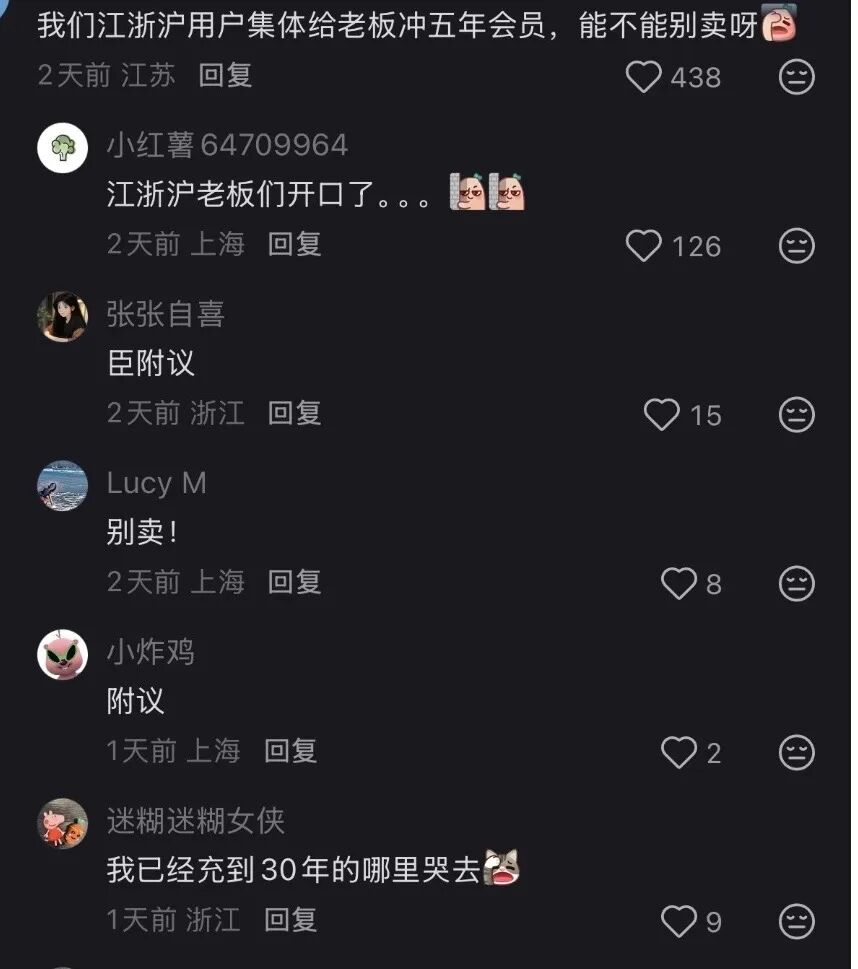
集体充会员的江浙沪,在抵制叮咚买菜被收购
3 6 Ke· 2026-02-10 04:22
Core Viewpoint - The acquisition of Dingdong Maicai by Meituan for approximately 7.17 billion USD (around 50 billion RMB) is a strategic move aimed at strengthening Meituan's position in the instant retail market, particularly in the Yangtze River Delta region, while raising concerns among users about the potential loss of Dingdong's unique brand identity and service quality [3][4][20]. Group 1: Acquisition Details - Meituan announced the acquisition of 100% equity of Dingdong Maicai's China business, which will become a wholly-owned subsidiary, with financial results incorporated into Meituan's reports [3]. - Dingdong Maicai has over 1,000 front warehouses and 7 million monthly purchasing users, with more than 80% of its business concentrated in the Yangtze River Delta, particularly Shanghai, where it holds over 30% market share [4]. - The acquisition is seen as a defensive strategy to fill gaps in Meituan's fresh food offerings and to counter competitors like Alibaba's Hema [6][19]. Group 2: User Concerns - Users express anxiety that Dingdong's unique product offerings and personalized services may be diminished within Meituan's ecosystem, similar to the fate of Mobike after its acquisition by Meituan [8][10]. - The emotional response from users reflects a deep attachment to Dingdong's brand identity, which they fear will be lost in the integration process [2][20]. - Concerns are amplified by past experiences where Meituan's acquisitions led to the erosion of brand uniqueness and operational independence [10][12]. Group 3: Market Implications - The acquisition is primarily viewed as a means to secure Meituan's position in the competitive landscape of the Yangtze River Delta, rather than a strategy for national expansion [16][19]. - Dingdong Maicai's growth has plateaued, with its GMV growth slowing significantly, indicating challenges in scaling its business model beyond its core markets [18]. - Analysts suggest that while the acquisition may enhance Meituan's operational efficiency in the fresh food sector, it is unlikely to facilitate significant nationwide expansion due to differing market dynamics in lower-tier cities [18][19].

美团即时零售转守为攻
Bei Jing Shang Bao· 2026-02-08 15:57
2026年一开场,即时零售市场就火药味十足。 美团与叮咚买菜同步发布公告,确认美团将以初始代价7.17亿美元收购叮咚买菜中国的全部业务。 作为最后的非头部独立平台,这次交易被解读为生鲜电商多头竞争的终结。叮咚买菜被美团收购,也标 志着即时零售大战进入巨头直接对决的时期。 美团急需抢时间,守住自己最后的核心阵地。美团也不想给对手创造太多机会,用最直接的正面出手, 将激战正酣的行业带入新阶段。 作为高频、高利润市场,生鲜自然是即时零售必争的核心战场。 从公司的角度看,叮咚买菜占据生鲜关键赛道、深耕前置仓模式、经营扭亏为盈,这些特征放在本地生 活布局之中,让其成为巨头眼中的优质标的。 这家成立于2017年的公司,过去一段时间频繁成为被"收购"传闻的主角。传说中的买家一变再变,终究 没有改变叮咚买菜的结局。 而从美团的角度看,过去一年外卖大战代价不小。无论是京东突然杀入外卖业务,还是来势汹汹的"淘 宝闪购",美团一次次陷入被动防守局面。 财报数据亦难掩重压。美团在2025年三季度返亏,该季度收入增长是过去几年的最低增速,净亏损为 186.32亿元,上年为盈利128.65亿元,形成鲜明反差。 更重要的是,本地生活是美团 ...
【西街观察】即时零售,美团转守为攻
Bei Jing Shang Bao· 2026-02-08 13:33
这家成立于2017年的公司,过去一段时间频繁成为被"收购"传闻的主角。传说中的买家一变再变,终究 没有改变叮咚买菜的结局。 2026年一开场,即时零售市场就火药味十足。 美团与叮咚买菜同步发布公告,确认美团将以初始代价7.17亿美元收购叮咚买菜中国的全部业务。 作为最后的非头部独立平台,这次交易被解读为生鲜电商多头竞争的终结。叮咚买菜被美团收购,也标 志着即时零售大战进入巨头直接对决的时期。 作为高频、高利润市场,生鲜自然是即时零售必争的核心战场。 从公司的角度看,叮咚买菜占据生鲜关键赛道、深耕前置仓模式、经营扭亏为盈,这些特征放在本地生 活布局之中,让其成为巨头眼中的优质标的。 这次交易肉眼可见地能扩充美团在华东市场的力量,让美团前置仓数量高速提升,在关键区域形成压倒 性优势,并降低获客成本。 电商零售不是新兴业态,不代表即时零售擦不出时代的火花。"闪购"介于电商和外卖之间,比传统外卖 品类丰富且利润更高,比传统电商配送更快、频次更密。 而从美团的角度看,过去一年外卖大战代价不小。无论是京东突然杀入外卖业务,还是来势汹汹的"淘 宝闪购",美团一次次陷入被动防守局面。 财报数据亦难掩重压。美团在2025年三季 ...
狠人王兴,拿下叮咚买菜
商业洞察· 2026-02-08 09:25
Core Viewpoint - Meituan's acquisition of Dingdong Maicai marks the end of an era for independent players in the fresh e-commerce sector, as the industry consolidates under major giants [5][22]. Group 1: Dingdong Maicai's Challenges - Dingdong Maicai, once a leading star in the fresh e-commerce market, faced significant challenges despite achieving a record quarterly revenue of 6.66 billion yuan in Q3 2025 and a net profit of 80 million yuan [7][8]. - The company struggled with stagnating growth, reporting a GMV year-on-year growth rate of only 0.1% in Q3 2025, indicating it had hit a growth ceiling [8]. - Dingdong's strategy of focusing on the Jiangsu, Zhejiang, and Shanghai regions limited its expansion potential, making it difficult to compete against larger players like Meituan and Pinduoduo [8][10]. Group 2: Meituan's Strategic Moves - Meituan's acquisition of Dingdong Maicai for approximately $717 million aims to enhance its position in the instant retail market, which is becoming increasingly competitive [5][20]. - The acquisition allows Meituan to quickly scale its operations, combining Dingdong's over 1,000 front warehouses with its own nearly 900, resulting in a total approaching 2,000, thus creating a significant competitive advantage [19][20]. - Meituan's strategy is to leverage Dingdong's established supply chain capabilities and product offerings, which are critical for succeeding in the instant retail battle against rivals like Alibaba and JD.com [19][20]. Group 3: Industry Implications - The acquisition signifies the end of the independent fresh e-commerce player era, with only Pinduoduo remaining as a significant independent competitor after Dingdong's sale [22][24]. - The competitive landscape is shifting towards a three-way battle among Meituan, Alibaba, and JD.com, intensifying the competition in the fresh e-commerce sector [24]. - The consolidation raises concerns about potential antitrust issues, as Meituan's market share in the front warehouse sector may exceed 50%, which could trigger regulatory scrutiny [24].

王兴的成全,让梁昌霖成为唯一从生鲜电商全身而退的男人
3 6 Ke· 2026-02-08 06:05
梁昌霖的办公室里,挂满了他的马拉松奖牌。他喜欢长跑,不带手机也不听音乐,能跑很久。 梁昌霖和叮咚买菜的故事主线,并非高歌猛进,而是数次在悬崖边的"苟住"——2018年烧光积蓄后拿到救命钱,堪堪躲过倒闭危机;2021年上市钟声刚落 不久,便调整战略,顶住行业扩张惯性;2024年壮士断腕般收缩战线,用连续12个季度的盈利证明生鲜电商可以不靠补贴活着。 或许连他自己也未曾预料,在生鲜电商这场漫长的马拉松中,他竟成了唯一跑到终点,且体面离开的那个人。 2月5日,美团发布公告,将以约7.17亿美元的初始对价,完成对叮咚买菜中国业务100%股权的收购。收购完成后,叮咚买菜将成为美团全资子公司,业 绩并入美团财务报表。 生鲜电商的故事里,几乎没有体面的退场。每日优鲜退市前市值缩水至不足巅峰期的10%,创始人徐正套现离场后消失于公众视野,留下供应商追债、员 工欠薪的一地鸡毛;盒马几经转型,创始人侯毅卸任时仍未实现整体盈利,带着"大业未竟"的遗憾黯然谢幕;更遑论这条赛道上满是折戟者的狼狈离场。 叮咚买菜能走到今天,也是如履薄冰。 2017年梁昌霖入局之时,生鲜赛道已是千军万马过独木桥,4000多家玩家扎堆厮杀,每日优鲜等明星公 ...

美团买下叮咚买菜中国区业务,生鲜电商“独立玩家”为何出局?
Sou Hu Cai Jing· 2026-02-07 14:51
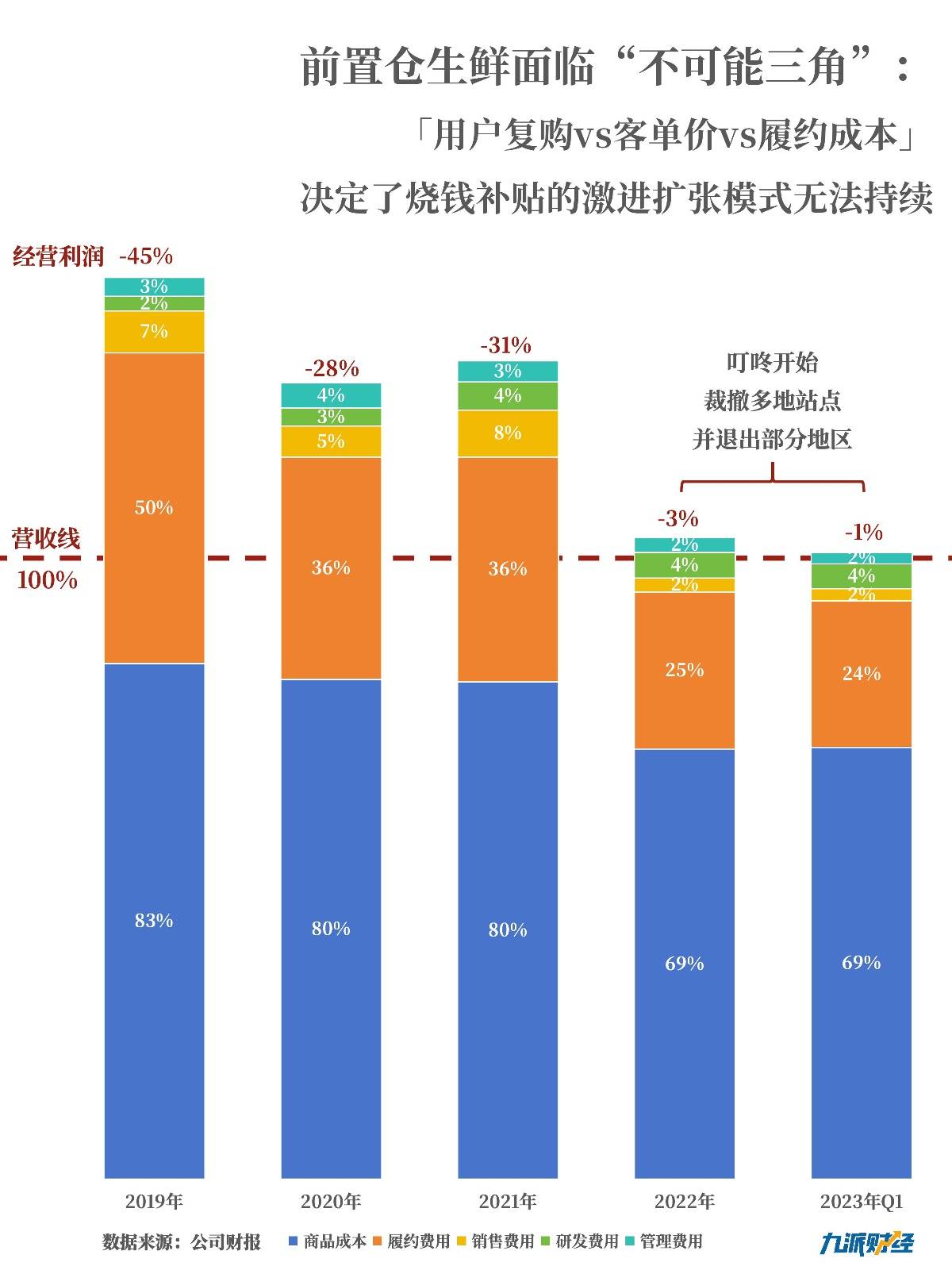
过去前置仓生鲜的商业模式一度被认为无法打破"不可能三角",难以平衡用户规模、客单价及履约成本。 为保证即时送达且覆盖更大的消费群体,需要铺设大量前置仓及储备生鲜产品,这意味着履约及商品损耗成本高,要求足够高的客单价或订单量来覆盖,但 高价又与用户规模互斥。 这个魔咒首先淘汰了首创前置仓模式的每日优鲜,宣告了烧钱补贴的发展战略无法持续。 每日优鲜倒闭后,叮咚买菜CEO梁昌霖表示,市面上对前置仓的分析有很多,但是大家忘了判断一个模式的优劣,最重要的关键点是看它能否真的满足用户 需求,是不是顺应消费者行为的变化趋势。 2025年8月,一份华泰研究报告指出,叮咚的用户画像(居家做饭群体)与美团及淘宝存在一定差异(QuestMobile数据显示,2025年7月叮咚买菜与美团/淘 宝的用户重合率为 41.3%/64.6%),有望通过稳固自身差异化的产品、服务和优势地域空间布局,形成较为坚实的用户基本盘和市场增量空间。 转折点在9月份,淘宝闪购的进攻加剧了即时零售战场白热化,进一步改变了生鲜行业的战略价值,也改变了独立玩家的生存空间。 叮咚买菜通过收缩规模、聚焦精细化运营成为率先盈利的前置仓生鲜。2021年8月,叮咚开始从 ...
美团王兴再下一城,老兵退场
Xin Lang Cai Jing· 2026-02-07 10:00
Core Viewpoint - The independent fresh e-commerce era has ended, and the second half of the battle among internet giants has begun in the fresh retail sector [4][23]. Company Overview - Dingdong Maicai, founded by Liang Changlin in 2017, has survived in a highly competitive fresh e-commerce market, witnessing the rise and fall of many players, including the collapse of Meiri Youxian and the strategic fluctuations of Hema [4][23]. - On February 5, Meituan announced the acquisition of Dingdong Maicai's China business for approximately $717 million, making it a wholly-owned subsidiary of Meituan [4][23]. Market Dynamics - The acquisition is expected to reshape the industry landscape, marking the end of the independent fresh e-commerce era and the beginning of intensified competition among major players like Meituan, Alibaba, and JD.com [4][23]. - Dingdong Maicai adopted a front warehouse model, emphasizing rapid delivery, which allowed it to survive amidst fierce competition [9][28]. Financial Performance - Dingdong Maicai achieved profitability by the fourth quarter of 2022 and has maintained profitability for 12 consecutive quarters [9][28]. - In 2024, Dingdong Maicai reported a revenue of approximately 23 billion yuan and a profit of about 300 million yuan, marking its first year of overall profitability [16][35]. Strategic Shifts - Liang Changlin emphasized a strategy of prioritizing efficiency over rapid expansion, which, while sacrificing growth opportunities, helped preserve the company's viability [9][28]. - The company has focused on enhancing its supply chain and product quality, with 85% of its fresh produce sourced directly and investments in self-operated factories and farms [16][35]. Competitive Landscape - The fresh e-commerce sector has seen a wave of closures, with competitors like Dailuobo and Yiguo Fresh facing significant challenges [10][29]. - Dingdong Maicai's cautious expansion strategy contrasts with the aggressive growth of competitors like Meituan's Xiaoxiang Supermarket and Hema, which are rapidly increasing their market presence [36][37]. Future Outlook - Liang Changlin has expressed concerns about the sustainability of independent fresh e-commerce businesses in the face of competition from larger companies, leading to the decision to sell Dingdong Maicai [18][37]. - The future of fresh retail is expected to be dominated by major players, leaving limited space for independent e-commerce companies [18][37].