反对浪费

Search documents
从生活用纸看促消费与反浪费
Ren Min Wang· 2025-12-19 04:15
Core Viewpoint - The article discusses the relationship between the upgrade of paper product consumption and the opposition to waste, emphasizing that consumption upgrades do not necessarily lead to increased waste but can enhance quality and efficiency in usage [1][3]. Group 1: Consumption Upgrade - The shift from "just enough" to "specific use" in paper products reflects an improvement in living standards and consumption upgrades, which focus on quality rather than quantity [1][2]. - Higher quality paper products, such as kitchen paper and cream paper, reduce the amount used while improving user experience, demonstrating that consumption upgrades can lead to resource savings and reduced waste [1][3]. Group 2: Supply and Demand Adaptation - Achieving a precise match between supply and demand is crucial for unifying consumption upgrades with waste reduction, as seen in products designed for specific scenarios [2][5]. - The introduction of high-quality, specialized paper products can enhance their utility and effectiveness, thereby minimizing unnecessary consumption [3][4]. Group 3: Trends in Paper Consumption - The current trends in paper consumption include scenario refinement, prioritization of quality, and increased emphasis on green and eco-friendly products, such as biodegradable paper [4][5]. - The popularity of bamboo pulp paper illustrates how environmentally friendly products can attract consumers while also reducing waste and promoting sustainable practices [4][5].
从生活用纸看促消费与反浪费(大家谈)
Ren Min Ri Bao· 2025-12-17 22:11
Core Viewpoint - The article discusses the relationship between the upgrade of paper product consumption and the opposition to waste, emphasizing that consumption upgrades do not necessarily lead to increased waste but can enhance resource efficiency and quality of life [1]. Group 1: Consumption Upgrade - The shift from "just enough" to "scene-specific" paper products reflects an improvement in living standards and consumption upgrades, which focus on quality rather than quantity [2]. - Higher quality paper products, such as kitchen towels and wet wipes, reduce the amount of paper used while enhancing user experience, demonstrating that consumption upgrades can lead to resource savings [2][3]. Group 2: Waste Reduction - The increase in paper product variety allows for more efficient use, reducing unnecessary consumption and waste, as seen with products like cream paper that require fewer sheets for the same task [3]. - The spirit of thriftiness is timeless, and rejecting waste does not mean rejecting consumption upgrades; rather, it promotes the effective use of resources [3]. Group 3: Market Trends - The paper product market is experiencing three trends: fine-tuning for specific scenarios, prioritizing quality, and increasing emphasis on green and eco-friendly products [4]. - Eco-friendly products, such as bamboo pulp paper, not only reduce deforestation but also minimize waste during use, aligning with consumer preferences for sustainable options [4][5]. Group 4: Supply and Demand Dynamics - New consumer demands are driving supply innovations, including the use of environmentally friendly materials and the design of products that are easy to degrade, promoting a balance between quality use and environmental responsibility [5].
算算这笔账 值!(金台潮声)
Ren Min Ri Bao· 2025-11-17 22:12
Core Points - The implementation of the revised "Regulations on Strict Economy and Opposition to Waste in Party and Government Agencies" has led to observable changes in behavior and practices within these institutions [1][2][3] - The emphasis on frugality is rooted in historical context, highlighting the importance of maintaining a clear and focused mission rather than succumbing to extravagance [2] - The regulations aim to optimize resource allocation, ensuring that necessary expenditures are maintained while eliminating unnecessary and extravagant spending [3][4] Summary by Sections - **Implementation Changes** - Observations from grassroots research indicate a shift towards simpler and more efficient dining practices among officials, reflecting the new regulations [1] - **Historical Context and Philosophy** - The article draws parallels between current practices and historical examples, emphasizing that frugality is not about deprivation but about commitment to core values and missions [2] - **Resource Allocation and Efficiency** - The regulations clarify that opposing waste does not mean cutting essential spending; rather, it focuses on eliminating ineffective expenditures, with a projected 5% reduction in "three public" expenses by 2025 [3] - Increased spending in social security, education, and health sectors indicates a positive reallocation of resources, enhancing public welfare [3] - **Public Perception and Commitment** - The commitment to frugality is seen as a way to gain public trust and support, reinforcing the idea that responsible governance leads to improved living conditions for the populace [4]
从“四本账”说说消费和浪费
Ren Min Ri Bao· 2025-11-17 22:01
Core Insights - The article emphasizes the importance of encouraging consumption while opposing waste, highlighting the need for a balanced approach to economic growth and sustainability [1][6]. Group 1: Consumer Behavior and Economic Growth - The article discusses the case of a drone enthusiast who, taking advantage of a trade-in policy, invested in a drone setup, reflecting a shift towards effective demand and quality supply in the consumer market [2]. - The growth of the civil drone industry in China is noted as a significant contributor to the low-altitude economy, creating new job opportunities and promoting high-quality employment [2]. - The article stresses that encouraging consumption and opposing waste leads to more effective growth, aligning with sustainable economic development [2]. Group 2: Green Consumption - A case study of an electric vehicle owner illustrates the benefits of green consumption, where participation in a vehicle-to-grid program can yield financial returns while reducing carbon emissions [3]. - The shift towards green products is highlighted, with policies supporting green consumption becoming increasingly influential in consumer choices [3]. - The article argues that opposing waste is not about reducing consumption but about enhancing the quality of life and meeting the growing demands for better living standards [3]. Group 3: Cultural Consumption - The article highlights the rising trend of cultural consumption, with increased attendance at performances and events, indicating a shift in consumer preferences towards experiences rather than material goods [4]. - The growth in ticket sales and cultural events reflects a change in consumer behavior, where value is placed on quality experiences [4]. - The integration of culture and commerce is seen as a new landscape for consumption, fostering regional development and enhancing local brands [4]. Group 4: Government Spending and Social Welfare - The article presents a case of local government spending in Zhejiang, where a significant portion of the budget is allocated to social welfare rather than extravagant expenditures, reflecting a commitment to improving citizens' lives [5]. - The increase in social spending by 21.1% year-on-year indicates a focus on investing in people and enhancing public welfare [5]. - The government's approach to fiscal responsibility is framed as a means to build public trust and ensure that resources are directed towards meaningful social initiatives [5].
人民领袖|这张交粮凭证 交售人是习近平
Yang Shi Wang· 2025-10-15 23:07
Core Viewpoint - The article highlights Xi Jinping's experiences as a farmer in Liangjiahe during the 1960s and 1970s, emphasizing his commitment to agricultural development and food security, which continues to influence his policies today [1][2][10]. Group 1: Personal Experience and Leadership - Xi Jinping worked alongside villagers in Liangjiahe, engaging in various agricultural tasks and quickly becoming a strong labor force [1]. - In December 1972, he sold 59 jin (approximately 29.5 kg) of sorghum for 5.19 yuan, reflecting the challenging agricultural conditions of the time [2][3]. - After joining the Communist Party in 1974, he led efforts to build an irrigation dam, increasing arable land and grain production from 109,465 jin in 1971 to 179,946 jin in 1974 [2][6]. Group 2: Emphasis on Food Security - Xi Jinping's experiences as a farmer instilled a deep respect for food and the labor of farmers, leading to a strong advocacy for reducing food waste [6][8]. - He has consistently highlighted the importance of food security, noting that despite improvements, there are still significant issues with food loss at various stages of the supply chain [10][11]. - National statistics indicate that China's grain production has exceeded 1.4 trillion jin in 2024, marking a significant achievement in food security [9]. Group 3: Advocacy for Reducing Food Waste - Xi Jinping has raised awareness about food waste, citing that over 22.7% of food is lost annually, equating to approximately 9.2 billion jin, which could feed 190 million people for a year if recovered [11]. - He has initiated campaigns like the "Clean Plate Campaign" to promote food conservation and has emphasized the need for a culture of frugality [11][12]. - His personal anecdotes about food conservation reflect a broader commitment to instilling values of thriftiness and respect for agricultural labor within society [7][12].


莫让临期食品变问题食品
Jing Ji Ri Bao· 2025-09-29 00:21
Group 1 - The core issue of expired food safety is highlighted, emphasizing the need for clear definitions and regulations to protect consumers and maintain market order [1][2] - The Beijing Municipal Market Supervision Administration has issued guidelines to clarify the definition of "near-expiry" food, improve labeling, and manage inventory effectively [1] - The lack of a unified standard for near-expiry food has led to consumer confusion and potential health risks, necessitating regulatory measures to prevent expired food from being sold [1] Group 2 - The market for near-expiry food in China is expanding, reflecting a growing awareness of rational consumption and waste reduction [2] - Effective management of near-expiry food requires strict adherence to rules by merchants and manufacturers, as well as proactive regulatory oversight to prevent expired products from being misrepresented [2] - Proper circulation of near-expiry food can reduce waste and provide consumers with cost-effective options, promoting a culture of rational consumption [2]
焦点访谈|“紧日子”≠“苦日子” 读懂中央“紧”字诀背后的民生温度
Yang Shi Wang· 2025-09-28 14:31
Core Viewpoint - The revised "Regulations on Strict Economy and Opposition to Waste by Party and Government Agencies" emphasizes the importance of frugality and reducing waste, reinforcing the commitment of the Chinese Communist Party to lead by example in living a frugal lifestyle [1][3][5]. Group 1: Regulations and Principles - The new regulations highlight that party and government agencies must lead by example in frugality, which is now a key principle in the revised regulations [3][5]. - The regulations aim to lower costs of public activities, scientifically allocate financial resources, and establish a long-term mechanism for promoting frugality and opposing waste [5][11]. - The revised regulations include stricter rules on budget management, travel, public reception, and resource conservation, with 33 prohibitions and 62 restrictions, increasing accountability and discipline [11][12]. Group 2: Historical Context and Political Commitment - The emphasis on frugality is rooted in the party's historical commitment to saving resources, dating back to the revolutionary era [7][9]. - The party's commitment to frugality is seen as a promise to the public, reflecting a political ethos of self-discipline and public service [3][9]. - The regulations are viewed as a significant step in the party's self-reform and a response to past issues of waste and corruption [9][11]. Group 3: Economic Implications - The reduction in "three public" expenditures in recent years indicates a trend towards greater fiscal responsibility, with a budget decrease of 0.5 billion yuan in 2024 and over 300 million yuan in 2025 [5][12]. - The savings from frugality can be redirected to improve public welfare, with over 70% of the national budget now allocated to social welfare [16][18]. - The initiative aims to enhance government efficiency and effectiveness, allowing public servants to focus on solving real issues for the populace [11][18].
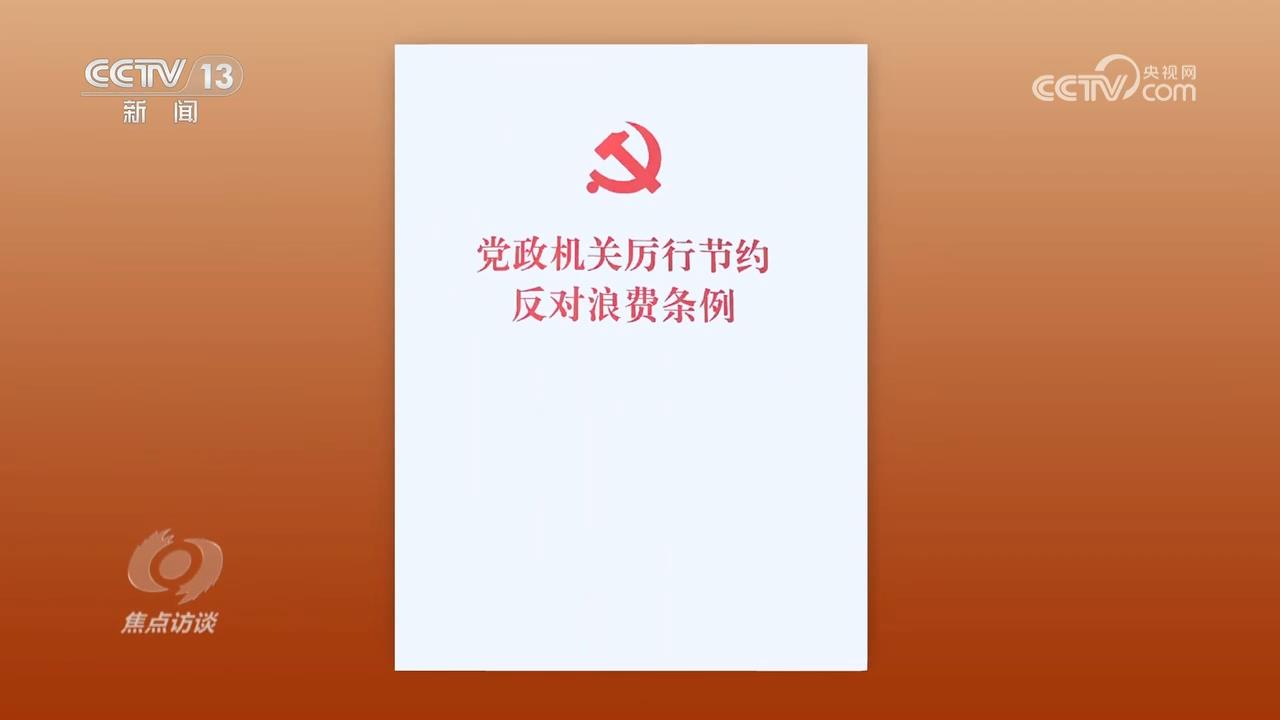
怎样正确认识反对浪费和提振消费(读者点题·共同关注)
Ren Min Ri Bao· 2025-09-14 22:03
Group 1 - The core idea of the article emphasizes the balance between promoting consumption and opposing waste, suggesting that rational consumption can coexist with efforts to reduce waste [1][3][4] - Consumption is crucial for economic growth, contributing 52% to GDP growth in the first half of the year, an increase of 7.5 percentage points compared to the previous year [2] - The article advocates for a sustainable and quality-focused consumption model that contrasts with wasteful spending, aligning with traditional values of thrift and resource conservation [3][4] Group 2 - The article addresses concerns that opposing waste might suppress consumption, clarifying that it encourages more meaningful and rational spending rather than less spending [3] - Initiatives like "small portion meals" and "shared resources" are highlighted as examples of how anti-waste measures can enhance consumption efficiency and promote a green economy [3] - The government's commitment to frugality and anti-waste policies is reinforced by new regulations aimed at fostering a culture of saving and responsible spending [4]
金一文化:签署终止协议
Ge Long Hui· 2025-08-04 12:08
Group 1 - Company signed a lease termination agreement with Wukesong Cultural and Sports Center, effective July 31, 2025, due to inability to fulfill the original contract [1] - The company will incur a loss of approximately 2.1092 million yuan due to the early termination of the lease, which will impact the annual profit for 2025 [2] - The company is required to pay a total of 1,026,260.42 yuan to Wukesong Cultural and Sports Center after offsetting the unreturned deposit [1] Group 2 - The monthly rental cost for the office space at Huaxi LIVE Center is 228,600 yuan, which is considered high [2] - The decision to terminate the lease is aligned with the company's response to national policies promoting frugality and cost-saving measures [2] - Although the early termination will result in short-term losses, it is expected to lead to long-term savings on rental costs, positively impacting the company's development [2]

河南:省直部门培训不得租用高级宾馆,用餐不得上高档菜肴、不得提供烟酒
券商中国· 2025-06-05 04:10
Core Viewpoint - The article emphasizes the importance of strict management of training expenses in government departments to promote frugality and oppose waste, aligning with the central government's regulations and guidelines [1][4]. Summary by Sections Notification Requirements - The notification prohibits unnecessary out-of-province training and mandates that any such training for senior officials must receive approval from the Provincial Organization Department [2]. - It encourages a shift from "going out" for training to "bringing in" trainers, with a preference for using internal venues for training sessions [2]. Training Expense Management - Training programs should be streamlined, with a focus on reducing duration where possible, and strict control over single-topic training [3]. - The use of training funds for non-training related expenses, such as hospitality or fixed asset purchases, is strictly forbidden [3]. - Training accommodations should primarily be standard rooms, and meals should not include high-end dishes or alcohol [3]. Implementation of Regulations - The article highlights the need for all regions and departments to understand and implement the revised regulations on frugality and waste reduction, which are crucial for the image of the party and the success of national initiatives [4]. - It calls for timely reporting of significant situations and suggestions related to the implementation of these regulations to the central government [4].