可持续的富足

Search documents
特斯拉新使命背后的生死时速
虎嗅APP· 2026-01-23 10:16
Core Viewpoint - Tesla has updated its mission to "build a world of extraordinary abundance," where people can achieve high income without the need to work [2][5]. Group 1: Tesla's Mission Evolution - Initially, Tesla's mission was to "accelerate the world's transition to sustainable energy," with a clear path outlined in the first three chapters of the "Master Plan" [3][4]. - The first chapter focused on producing high-end sports cars to fund the development of more affordable vehicles, which has been completed with models like Roadster, Model S, Model X, and Model 3 [4]. - The second chapter aimed to provide solar energy solutions and expand the electric vehicle lineup, with partial completion noted by 2025 [4]. - The third chapter, released in 2023, set a goal for 100% sustainable energy by 2050, which is still considered far from realization [4]. Group 2: Future Vision of Abundance - The concept of a world of extraordinary abundance is based on a productivity explosion driven by robots and AI, with the Optimus robot expected to surpass human capabilities in various fields [8][9]. - In this envisioned world, people would not need to work for income, and the cost of goods and services would approach zero, rendering money less significant [9]. - The future may allow for extended lifespans, but concerns about societal challenges and the potential loss of human dominance over superintelligent AI are raised [11][12]. Group 3: Current Challenges and Expectations - Tesla's focus on AI and robotics, particularly the Optimus robot and autonomous driving, is seen as crucial for achieving its new mission [16]. - The company aims to produce the Cybercab, a low-cost autonomous vehicle, with a target production capacity of 2 million units by April 2024 [16]. - However, there are concerns about Tesla's ability to meet these commitments, especially given past delays and the current decline in vehicle sales, which dropped by 8.6% year-on-year in 2025 [21]. - Investors are increasingly wary, as the company's market narrative may overshadow its fundamental performance, and 2026 is viewed as a critical year for demonstrating tangible progress [21].


股价七连跌!特斯拉第四季度交付量418227辆,不及预期
美股IPO· 2026-01-02 16:04
Core Viewpoint - Tesla's vehicle deliveries and production have declined, with a significant drop in annual delivery numbers for the second consecutive year, while its energy business continues to grow [2][3]. Group 1: Delivery and Production Data - In Q4 2025, Tesla delivered 418,227 vehicles and produced 434,358 vehicles, with an annual delivery total of 1.64 million vehicles and an annual production of approximately 1.65 million vehicles [2]. - Compared to Q4 2024, Tesla's Q4 2025 delivery volume decreased by about 16% from 495,570 vehicles, and production fell by 5.5% from 459,445 vehicles [2]. - The annual delivery volume for 2025 dropped by 8.6% from 1.79 million vehicles in 2024 to 1.64 million vehicles [2]. Group 2: Market Competition and Challenges - Tesla faces intense competition from companies like BYD, Kia, Hyundai, and Volkswagen, which has contributed to the decline in deliveries [3]. - The early termination of federal electric vehicle purchase incentives by the U.S. government has also negatively impacted Tesla's sales, as consumers shifted their purchasing decisions to Q3 [3]. - CEO Elon Musk's political activities and statements have led to consumer backlash, further complicating Tesla's market position despite the launch of a more affordable Model Y SUV [3]. Group 3: Regional Market Performance - Tesla's market share in Europe has significantly declined, with new car registrations dropping by 39% in the first 11 months of 2025, while BYD's registrations surged by 240% [4]. - The overall acceptance of pure electric vehicles in the European market has increased, with electric vehicles accounting for approximately 16% of new car sales in 2025 [4]. - Analysts suggest that the introduction of the more affordable Model Y standard version could help Tesla regain some market share in the coming quarters [4]. Group 4: Long-term Vision - Tesla's narrative extends beyond vehicle sales, focusing on Musk's vision of "sustainable prosperity," which includes promises of autonomous taxi services and humanoid robots that could perform various roles [5]. - These projects are seen as potential long-term value drivers for Tesla, supporting its future valuation [5].
马斯克拟调整特斯拉使命表述,从“可持续富足”改为“惊异富足”
Huan Qiu Wang Zi Xun· 2025-12-26 03:09
Core Viewpoint - Tesla's founder Elon Musk announced a change in the company's mission statement from "sustainable prosperity" to "astonishing prosperity," aiming for a more pleasant tone, which aligns with Tesla's recently released long-term strategic document, the "Master Plan" [1][4]. Group 1 - The fourth version of Tesla's "Master Plan" was published in September 2023, emphasizing "sustainable prosperity" and the company's commitment to driving global prosperity through its products and services [4]. - The official mission statement on Tesla's website still reflects the goal of accelerating the world's transition to sustainable energy, indicating that the new wording has not yet been formally implemented [4]. - Musk's response to previous criticisms regarding the lack of specific implementation details in the "Master Plan" suggests that the adjustment in mission wording may aim to address external concerns while remaining consistent with Tesla's long-term development direction [4]. Group 2 - Recently, Musk received a potential compensation package from Tesla valued at up to $1 trillion, contingent on the delivery of millions of vehicles, robots, and autonomous taxis over the next decade, as well as increasing the company's market value to $8.5 trillion [4]. - Musk frequently interacts with the public on social media, and the adjustment in Tesla's mission statement is perceived as a shift towards a more relaxed brand tone rather than a fundamental change in the company's strategic direction [5].
马斯克将把特斯拉使命从可持续富足改成“惊人富足”:后者更愉悦
Sou Hu Cai Jing· 2025-12-25 14:09
Group 1 - The core message from Musk is to adjust Tesla's mission statement from "sustainable prosperity" to "amazing prosperity," aiming to create a more joyful perception [1] - The latest version of Tesla's "Master Plan," released in September, emphasizes "sustainable prosperity" and aims to promote global prosperity through products and services, creating a safer, cleaner, and more enjoyable world [1] - Despite the new wording, Tesla's official mission remains "to accelerate the world's transition to sustainable energy," indicating a potential disconnect between public perception and official statements [1] Group 2 - Musk has a potential compensation plan from Tesla valued at up to $1 trillion, contingent on delivering millions of vehicles, robots, and autonomous taxis over the next decade, and increasing the company's market value to $8.5 trillion [2] - The adjustment in mission wording is not expected to signify a fundamental change in Tesla's strategic direction but may reflect Musk's desire to adopt a more relaxed brand tone [2]

特斯拉股东大会2025:擎天柱,AI与可持续富足的未来丨马斯克获批准万亿薪酬的现场演讲问答全记录
创业邦· 2025-11-08 03:23
Core Viewpoint - The article discusses Tesla's vision for the future, emphasizing the transformative potential of humanoid robots (Optimus) and AI technology in achieving "sustainable abundance" and reshaping the global economy [2][3]. Group 1: Achievements and Future Plans - Tesla's 2024 achievements include the Model Y being the best-selling car globally and significant growth in its energy business [2]. - The company aims to redefine its mission to focus on sustainable abundance, moving beyond electric vehicles to include AI and robotics [3][8]. - Elon Musk outlined plans for mass production of humanoid robots, with projections of producing hundreds of billions of units, fundamentally changing economic structures and potentially eliminating poverty [5][6]. Group 2: Technological Innovations - The Optimus robot is expected to surpass human capabilities in precision, particularly in healthcare, potentially providing superior medical care [6][7]. - Tesla's AI5 chip is designed to be the most powerful and efficient for its specific applications, significantly enhancing the performance of its robots and vehicles [16][17]. - The company is developing a network taxi (Cybercab) designed for fully autonomous operation, with production expected to start in April next year [12][20]. Group 3: Production and Supply Chain - Tesla plans to establish a production line capable of manufacturing millions of humanoid robots annually, with a target of achieving production costs around $20,000 per unit [14][18]. - The company is also focusing on battery production, with plans to build the world's largest lithium refinery to secure raw materials for battery manufacturing [23][21]. - Tesla aims to increase vehicle production significantly, targeting an annual rate of 5 million vehicles by 2028, necessitating a robust supply chain to support this growth [31][30]. Group 4: Market Expansion and Future Vision - Musk envisions a future where Tesla vehicles and robots play crucial roles in building and operating lunar and Martian bases, highlighting the company's long-term ambitions beyond Earth [39][40]. - The company is committed to enhancing its Supercharger network, aiming for global accessibility and efficiency in electric vehicle charging [22][21]. - Tesla's focus on sustainable energy solutions, including solar power and battery technology, positions it as a leader in the transition to a sustainable energy economy [19][20].
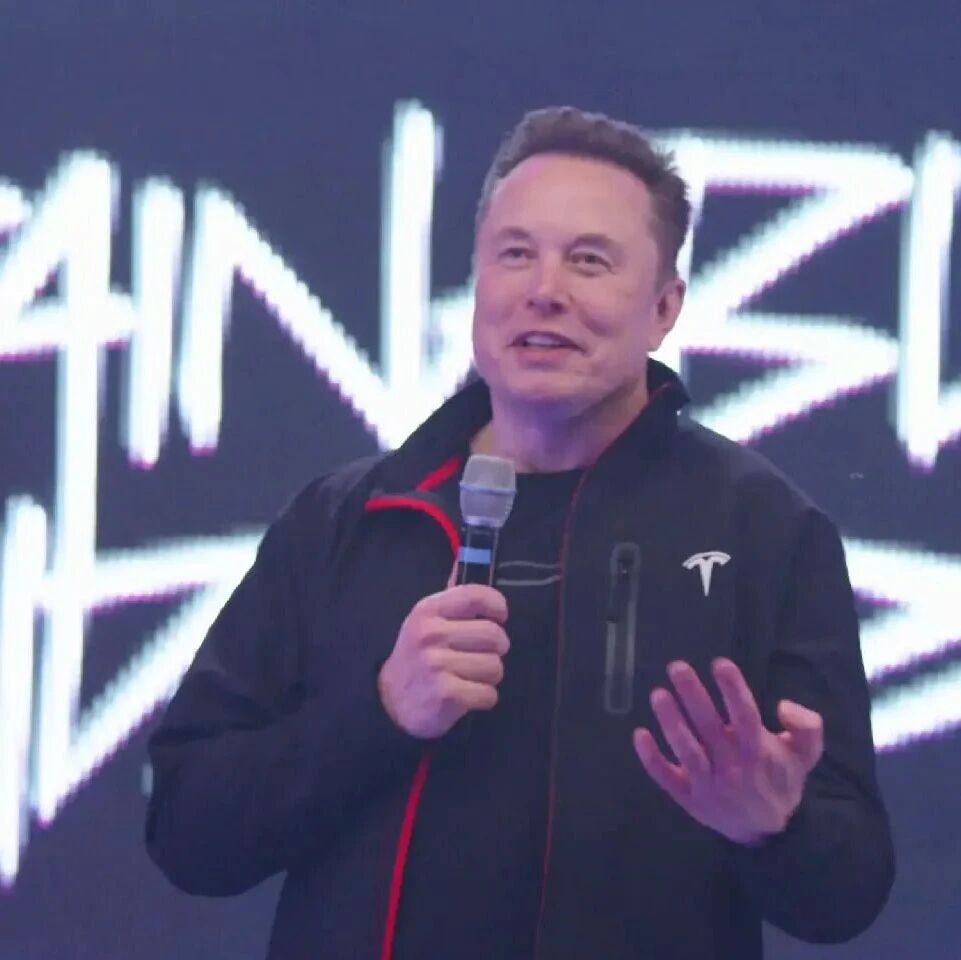
25 年特斯拉股东大会全文(3w 字):8780亿美元的薪酬计划通过,马斯克紧握控制权,目标市值8.5万亿美元
美股IPO· 2025-11-07 04:32
Core Points - The article discusses Tesla's 2025 Annual Shareholder Meeting, highlighting the company's achievements, future strategies, and shareholder proposals [1][4][6] Group 1: Business Overview - Tesla's Model Y has once again become the best-selling vehicle globally, and the company's energy deployment capacity has doubled, reaching 31 GWh in 2024, more than double that of 2023 [1][8] - The company emphasizes safety, reporting that its vehicles under Autopilot have an accident rate ten times lower than the average driver, with one accident occurring for every 6.8 million miles driven [9][10] - Tesla's energy business is expected to create value through services like RoboTaxi and virtual power plants, powered by real-world AI [8] Group 2: Future Strategies - Elon Musk introduced a new mission for the company: "sustainable prosperity," emphasizing the potential of the Optimus robot to eliminate poverty and provide exceptional healthcare [3][38] - The company plans to produce the CyberCab without pedals or steering wheels starting in April next year, utilizing a manufacturing system similar to high-capacity consumer electronics [3][35] - Musk discussed advancements in Full Self-Driving (FSD) technology, with version 14.3 expected to enable "sleeping driving" [3][41] Group 3: Shareholder Proposals - Shareholders voted on several proposals, including the authorization for investment in XAI, incorporating sustainability metrics into executive compensation, and conducting audits for child labor in the supply chain [1][13][17] - The board opposed several shareholder proposals, including those related to sustainability metrics in executive pay and child labor audits, citing existing policies and practices [13][17][19] - The proposal to eliminate supermajority voting requirements was not approved by shareholders, while the executive compensation plan received support [32]
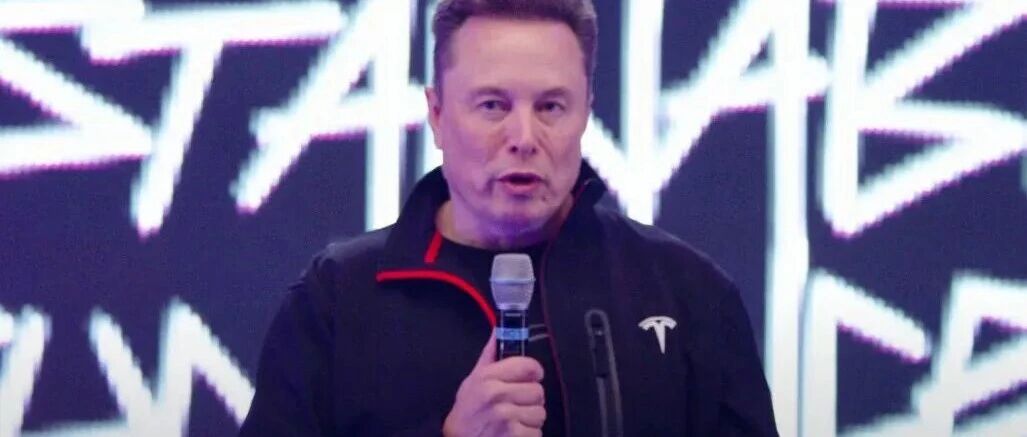
直击进博会|告别方向盘与脚踏板 特斯拉Cybercab首秀进博会
Zhong Guo Jing Ying Bao· 2025-11-05 07:50
Group 1: Event Overview - The 8th China International Import Expo (CIIE) took place from November 5 to November 10 at the National Exhibition and Convention Center in Shanghai, showcasing global enterprises and innovative technologies [2] - Tesla presented its Tesla Cybercab, a driverless electric vehicle, which features a unique design without a steering wheel or pedals, attracting significant attention [2][4] Group 2: Tesla's Vision for Sustainable Prosperity - Tesla emphasizes that achieving a sustainable and prosperous society relies on AI technology to significantly reduce costs and improve efficiency across various industries [3] - The company has updated its mission to "accelerate the world's transition to sustainable prosperity," aligning its business goals with societal advancement [3] Group 3: Cybercab Features and Production Plans - The Cybercab, designed for 1-2 passengers, utilizes Tesla Vision and neural networks for autonomous driving without the need for lidar, achieving high energy efficiency of nearly 10 kilometers per kilowatt-hour [4][5] - Tesla plans to start mass production of the Cybercab in the second quarter of 2026, with testing already underway [5] Group 4: Robotaxi Operations and Cost Efficiency - Tesla's Robotaxi service, which began operations in Austin, Texas, in June 2025, aims to significantly lower transportation costs, with projected costs per kilometer being just a few dimes [6] - The introduction of Cybercab into the Robotaxi fleet is expected to enhance vehicle utilization, increasing average annual mileage to over 80,000 kilometers per vehicle [6] Group 5: Humanoid Robots and Future Production - Tesla is set to launch production of its humanoid robots by the end of 2026, with a target of producing 1 million units annually by 2030 [7] - The humanoid robots will share technology with Tesla's vehicles, utilizing extensive visual data for training and operational tasks [7][8] Group 6: Tesla's Global Market Performance - In the third quarter, Tesla produced approximately 447,000 electric vehicles and delivered 497,000, marking a historical high [10] - The Shanghai Gigafactory has become a key export center, achieving over 95% localization of parts and a 95% automation rate, with significant sales growth in the Chinese market [11]
特斯拉电话会让市场失望,马斯克下调机器人和Robotaxi目标,称“特斯拉处于关键时刻”
硬AI· 2025-10-23 13:28
Core Viewpoint - The company is shifting its focus from electric vehicles to artificial intelligence and robotics, indicating a significant transformation in its strategic narrative [3][4][7]. Group 1: Strategic Shift - The CEO stated that the company is at a "critical turning point" in bringing AI into the real world, emphasizing that the future core strategy is "real-world AI" beyond just electric vehicles [5][7]. - The production timeline for the Optimus robot has been pushed back to late 2026, with the goal of producing one million units annually, reflecting the challenges in manufacturing and supply chain [5][9][32]. Group 2: Robotaxi and Autonomous Driving - The company plans to remove safety drivers from Robotaxi services in parts of Austin by the end of 2025 and expand to 8 to 10 metropolitan areas, a significant reduction from the previous goal of covering 50% of the U.S. population [4][10]. - The latest version of the Full Self-Driving (FSD) software has been released to all U.S. owners, with future versions expected to incorporate reasoning capabilities [6][10]. Group 3: Financial Performance - The company reported record third-quarter revenue and free cash flow of approximately $4 billion, with automotive revenue increasing by 29% quarter-over-quarter [17][25]. - The automotive business's gross margin increased slightly from 15% to 15.4%, attributed to lower material costs and economies of scale [17][28]. Group 4: AI and Technology Developments - The next-generation AI chip, AI5, is expected to be 40 times better than AI4 in certain metrics, with significant improvements in efficiency and cost-effectiveness [13][36]. - The energy storage business continues to show strong demand, with the upcoming Megapack 4 integrating substation functions to simplify deployment [15][28]. Group 5: Control and Governance - The CEO expressed concerns about maintaining control over the company while building a "robot army," linking his influence to upcoming shareholder votes on compensation and board member re-elections [12][34].
电话会让市场失望,马斯克称“特斯拉处于关键时刻”
华尔街见闻· 2025-10-23 08:18
Core Viewpoint - Tesla is shifting its narrative from being solely an electric vehicle manufacturer to becoming a leader in artificial intelligence (AI) and robotics, emphasizing its commitment to "real-world AI" and the potential of its Robotaxi and Optimus projects [1][4]. Strategic Shift - CEO Elon Musk stated that Tesla is at a "critical inflection point" in bringing AI into the real world, with a focus on "real-world AI" as the core of its future strategy, moving beyond just electric vehicles [3][4]. - The company aims to create a world without poverty through full self-driving and the Optimus robot, which Musk believes will have a significant impact [5][18]. Optimus and Robotaxi Developments - The production timeline for the Optimus robot has been pushed back to late 2026, with the latest version, Optimus V3, expected to debut in early 2026 [2][6]. - The Cybercab, designed for full autonomy without a steering wheel or pedals, is set to begin production in Q2 2026, representing a major expansion in Tesla's production capabilities [3][6]. - Musk has expressed concerns about maintaining control over the company as it develops its "robot army," linking this to upcoming shareholder votes on his compensation and influence [9][10]. Autonomous Driving and Robotaxi Expansion - Tesla plans to remove safety drivers from Robotaxis in Austin by the end of 2025 and expand the service to 8-10 metropolitan areas, a significant reduction from previous goals of covering 50% of the U.S. population [2][7][8]. - The latest version of the Full Self-Driving (FSD) software has been released to all U.S. owners, with future updates expected to enhance the vehicle's reasoning capabilities [3][7]. Financial Performance - Tesla reported record revenue, deliveries, and free cash flow of approximately $4 billion in Q3, with automotive revenue increasing by 29% quarter-over-quarter [12][19]. - The automotive gross margin slightly increased from 15% to 15.4%, attributed to lower material costs and economies of scale, despite facing over $400 million in tariff impacts [12][21]. - The energy storage business continues to show strong demand, with the upcoming Megapack 4 expected to simplify deployment processes [11][25]. AI and Chip Development - Tesla is investing heavily in AI chip development, with the AI5 chip expected to be 40 times more powerful than its predecessor, AI4, and designed for efficiency and cost-effectiveness [11][32]. - The company aims to achieve an "AI chip surplus" to support its automotive and robotics ambitions, with production planned in collaboration with Samsung and TSMC [11][31]. Shareholder Engagement - Tesla executives urged shareholders to support Musk's compensation plan and board member re-elections in the upcoming vote to ensure the company's stability and future growth [3][12].
特斯拉电话会让市场失望,马斯克下调机器人和Robotaxi目标(电话会议要点&纪要全文)
美股IPO· 2025-10-23 03:46
Core Viewpoint - Elon Musk's vision for Tesla's future is shifting towards artificial intelligence and robotics, with a focus on achieving "real-world AI" rather than just electric vehicles [3][14][28]. Group 1: Strategic Shift - Tesla is at a "critical turning point" in bringing AI into the real world, emphasizing its role as a leader in "real-world AI" [5][14]. - The company is transitioning from being solely an electric vehicle manufacturer to an AI powerhouse, with significant emphasis on AI projects [4][10]. Group 2: Production Plans - The production timeline for the Optimus robot has been pushed back to late 2026, with a target of producing one million units annually [6][16]. - The Cybercab, designed for fully autonomous driving without a steering wheel or pedals, is set to begin production in Q2 2026 [11][16]. Group 3: Challenges - Manufacturing dexterous hands and establishing a new supply chain for the Optimus robot are significant challenges [7][38]. - The lack of an existing supply chain for humanoid robots necessitates deep vertical integration by Tesla [38]. Group 4: Robotaxi Expansion - By the end of 2025, Tesla plans to remove safety drivers from Robotaxis in most areas of Austin and expand the service to 8 to 10 metropolitan areas [9][18]. - The initial goal of covering 50% of the U.S. population with Robotaxi services has been significantly narrowed [4][19]. Group 5: AI Developments - The latest version of the Full Self-Driving (FSD) software has been released, with future versions expected to incorporate reasoning capabilities [10][53]. - The AI5 chip, designed to be 40 times more powerful than its predecessor, is a key component in Tesla's AI ambitions [12][41]. Group 6: Financial Performance - Tesla reported record revenue and free cash flow of approximately $4 billion in Q3, with automotive revenue increasing by 29% quarter-over-quarter [10][22]. - Despite strong financial performance, profitability is under pressure due to tariffs and legal costs, with a total tariff impact exceeding $400 million in Q3 [22][31]. Group 7: Shareholder Concerns - Musk expressed concerns about maintaining control over the company as it builds a "robot army," linking this to upcoming shareholder votes on his compensation plan [8][20]. - The company is urging shareholders to support Musk's compensation plan to ensure stability and future growth [13].