
权益法核算

Search documents
尖峰集团:预计2025年归母净利润4.6亿元左右,同比增加325.97%左右
Ge Long Hui· 2026-01-27 08:33
格隆汇1月27日丨尖峰集团(600668.SH)公布,本公司预计2025年年度实现归属于上市公司股东的净利润 4.6亿元左右,与上年同期相比,将增加3.52亿元左右,同比增加325.97%左右。 预计2025年年度实现归属于上市公司股东的扣除非经常性损益的净利润-2.15亿元左右,与上年同期相 比,将减少3.12亿元左右,同比减少322.53%左右。 本期业绩变动的主要原因:1、2025年年度归属于上市公司股东的净利润大幅增加、扣除非经常性损益的 净利润大幅减少的主要原因是报告期公司权益法核算的联营企业天士力生物医药产业集团有限公司出售 了其所持的股权资产,使得其报告期的利润大幅增长,该部分出售资产所得的收益为非经常性收益。2. 报告期,公司持续开展节能降耗改造工作,严格控制产品成本,但水泥和熟料产品价格和销量同比均下 降。报告期,受药品集采、降费等政策及农药市场价格持续走低等因素的影响,公司的医药板块主要产 品的价格和销量同比均下降。3、报告期,经董事会批准,子公司浙江尖峰药业有限公司终止了注射用 去氧鬼臼毒素项目的临床试验及后续开发,根据《企业会计准则》等相关规定,基于会计谨慎性原则, 将该项目计入开发支 ...

一年四度“举牌”,平安看中了招行什么?
Huan Qiu Lao Hu Cai Jing· 2026-01-09 12:17
Core Viewpoint - Ping An Life has significantly increased its stake in China Merchants Bank (CMB), reaching 20.07% of CMB's H-shares by December 31, 2025, triggering regulatory disclosure requirements. This move is driven by the potential for long-term equity investment accounting benefits and high dividend yields from CMB [1][3][9]. Investment Activity - Ping An Life has made four separate acquisitions of CMB H-shares throughout 2025, starting with an initial purchase of 1.89 million shares for approximately 72.54 million HKD, reaching a 5% stake by January 10, 2025. Subsequent purchases increased its stake to 10%, 15%, and finally 20% by the end of the year [3][4]. - As of the end of 2025, Ping An Life holds approximately 922 million shares of CMB H-shares, with a book value of 43.96 billion CNY, up from 8.09 billion CNY at the time of the first acquisition [4]. Financial Implications - The net asset value of Ping An Life's holdings in CMB is approximately 50.75 billion CNY, exceeding its book value by 4.19 billion CNY. If Ping An Life appoints a director to CMB, it could recognize around 6.79 billion CNY in non-operating income [2][10]. - The trend of insurance capital appointing directors to banks has been increasing, with several insurance companies, including Dajia Life and Xinhua Life, making similar moves to enhance their influence and financial reporting [2][10]. Market Context - CMB has been experiencing declining performance metrics, with revenue growth slowing significantly since 2022. The bank's revenue growth fell from 14.04% in 2021 to 4.08% in 2022, and further into negative territory in 2023 and 2024 [5][6]. - The retail banking sector, which is crucial for CMB, has seen a decrease in profitability due to lower net interest margins and a decline in retail loan demand. The average cost of retail deposits has risen, while the average yield on retail loans has decreased, leading to a higher cost-to-income ratio [5][6]. Accounting Considerations - The new accounting standards allow insurance companies to classify equity investments at fair value, which can stabilize reported earnings. This has led to a preference for high-dividend stocks like CMB, as dividends can be recognized as investment income without affecting profit and loss statements [7][8]. - The potential for recognizing significant non-operating income through equity method accounting is a key driver for insurance companies like Ping An Life to increase their stakes in banks, especially those trading below book value [9][10].
平安人寿16次增持农行H股
2 1 Shi Ji Jing Ji Bao Dao· 2026-01-08 03:45
持股突破20% 数据显示,平安人寿对农业银行的青睐极为明显。其于2025年2月17日首次因持股比例达到5%而进行权 益披露,此举标志着其已成为农行H股的重要股东。 然而,这仅仅是个开始。在随后的10个月里,平安人寿开启了"扫货"模式。根据港交所记录,从2025年 2月至12月期间,平安人寿共计对农行H股进行了16次增持,几乎每月都有操作,增持步伐稳健而密 集。 记者丨张欣 林汉垚 编辑丨肖嘉 视频丨陈泽锴 2025年,中国平安人寿保险股份有限公司(下称"平安人寿")在港股市场展开了一场引人瞩目的银行 股"扫货"行动。其中,对农业银行H股的增持贯穿全年、力度空前。累计16次买入,推动持股比例在短 短一年内从5%,一路飙升至20.10%,大幅跃升超过15个百分点。 21世纪经济报道记者据港交所披露易公告整理发现,除农行外,平安人寿对工商银行、邮储银行、招商 银行H股也分别进行了2次、12次和15次增持。这一系列密集操作,清晰勾勒出国内险资巨头在长期利 率下行背景下,对高股息、低估值银行资产的战略性偏好与前瞻布局。 全年16次增持农行H股 平安人寿在2025年1月9日和2月12日分别增持了工行H股约5952万股和1 ...


平安人寿16次增持农行H股
21世纪经济报道· 2026-01-08 03:32
视频丨陈泽锴 2025年,中国平安人寿保险股份有限公司(下称"平安人寿")在港股市场展开了一场引人瞩目 的银行股"扫货"行动。其中,对农业银行H股的增持贯穿全年、力度空前。 累计16次买入 , 推动持股比例在短短一年内从5%,一路飙升至20.10%,大幅跃升超过15个百分点。 21世纪经济报道记者据港交所披露易公告整理发现,除农行外,平安人寿对 工商银行、邮储 银行、招商银行H股 也分别进行了2次、12次和15次增持。这一系列密集操作,清晰勾勒出国 内险资巨头在长期利率下行背景下,对高股息、低估值银行资产的战略性偏好与前瞻布局。 全年1 6次增持农行H股 持股突破2 0% 数据显示,平安人寿对农业银行的青睐极为明显。其于2025年2月17日首次因持股比例达到5% 而进行权益披露,此举标志着其 已成为农行H股的重要股东。 然而,这仅仅是个开始。在随后的10个月里,平安人寿开启了"扫货"模式。根据港交所记录, 从2025年2月至12月期间,平安人寿共计对农行H股进行了16次增持,几乎每月都有操作,增 持步伐稳健而密集。 从单次增持规模来看,5月12日增持约1.47亿股(持股比例达10.38%,触发10%举牌线), ...

博实股份:公司对哈尔滨思哲睿智能医疗设备股份有限公司的股权采用权益法进行核算
Zheng Quan Ri Bao Wang· 2026-01-07 13:10
Group 1 - The core viewpoint of the article is that Boshi Co., Ltd. (002698) utilizes the equity method for accounting its stake in Harbin Sizerui Intelligent Medical Equipment Co., Ltd., indicating that any profit or loss from Sizerui will impact the company's long-term equity investment and investment income [1] Group 2 - The company has clarified its accounting approach in response to investor inquiries on an interactive platform [1] - The financial performance of Harbin Sizerui will directly influence Boshi's financial statements, particularly in terms of long-term investments and income [1]

德展健康:公司持有东方略股份比例22.70%,对其采用权益法核算
Mei Ri Jing Ji Xin Wen· 2025-12-03 13:09
Group 1 - The company holds a 22.70% stake in its subsidiary Dongfang Lue and uses the equity method for accounting [1]

持股超3%+提名董事,长城资产入股建行将提巨额“纸面盈利”
Xin Lang Cai Jing· 2025-11-28 09:27
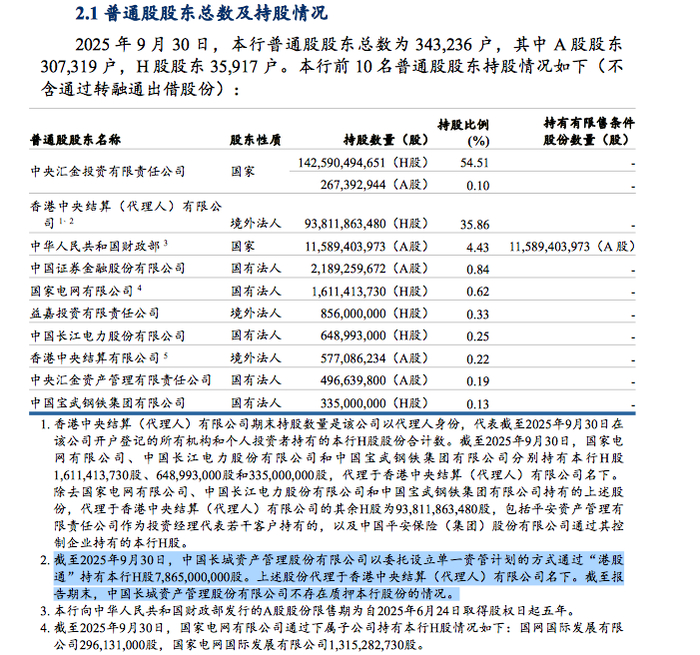
Core Viewpoint - The strategic move by China Construction Bank (CCB) to appoint the assistant president of Great Wall Asset Management Co., Ltd. as a non-executive director reflects the ongoing trend of state-owned Asset Management Companies (AMCs) deepening their involvement in bank governance through equity stakes and board nominations [1][2]. Group 1: Strategic Moves and Shareholding - Great Wall Asset has increased its stake in CCB to approximately 3.01% by acquiring 7.865 billion H-shares [3][5]. - The proposal to elect Shi Jian as a non-executive director was submitted to CCB's temporary shareholders' meeting, highlighting the rights of shareholders holding over 3% of shares to nominate directors [4]. - Shi Jian has extensive experience in financial regulation and asset management, having been with Great Wall Asset since its inception [4]. Group 2: Financial Implications - The investment in CCB is expected to lead to significant paper profits for Great Wall Asset, as it will be able to account for its stake using the equity method, potentially enhancing its financial performance [1][8]. - As of September 30, 2025, the book value of Great Wall's investment in CCB is estimated at approximately 101.14 billion RMB, based on the net asset value of CCB shares [7]. - The financial reporting implications of this investment could result in a substantial impact on Great Wall's annual report for 2025, pending regulatory approval [8][11]. Group 3: Industry Trends - The actions of Great Wall Asset are part of a broader trend where AMCs are increasingly participating in bank governance through equity stakes and board nominations, with four out of five major state-owned AMCs engaging in similar strategies [14]. - The investment strategy of AMCs has evolved from merely disposing of non-performing assets to focusing on high-dividend, undervalued assets, thereby enhancing their financial returns and strategic positioning [15]. - The involvement of AMCs in banks is seen as a dual benefit, providing financial returns while also facilitating better governance and capital management within the banking sector [16].

险企“长期股权投资”增厚利润惹争议 报表魔术有风险
2 1 Shi Ji Jing Ji Bao Dao· 2025-11-10 08:48
Core Viewpoint - The insurance industry is facing asset-liability matching pressures due to declining interest rates and an "asset shortage," prompting companies to seek long-term equity investments, particularly in undervalued bank stocks, to achieve stable returns and balance sheet improvements [1][3][12]. Group 1: Long-term Equity Investment Strategy - Insurance companies are increasingly turning to long-term equity investments as a strategy to achieve stable returns and match their liabilities [3][12]. - This strategy has sparked controversy, as it is seen as a means to smooth out volatility and achieve stable return on equity (ROE) and dividend returns, but some companies misuse it as a financial engineering tool to mask operational pressures [3][4][15]. - The shift to long-term equity investments is driven by the need for stable, high returns in a low-interest-rate environment, where traditional fixed-income assets are yielding insufficient returns [12][13]. Group 2: Accounting Practices and Implications - The accounting treatment of long-term equity investments allows insurance companies to recognize significant profits through accounting adjustments, particularly when investing in undervalued stocks [5][9]. - By applying the equity method of accounting, companies can report initial investment costs based on the fair value of the net assets of the investee, leading to inflated profits on their financial statements [7][10]. - This practice can create a disconnect between reported profits and actual cash flows, raising concerns about the sustainability of these earnings [11][19]. Group 3: Risks and Challenges - The reliance on long-term equity investments as a financial strategy can lead to systemic distortions in profit, net assets, and risk disclosures, potentially masking underlying financial health issues [4][20]. - Companies face pressures from regulatory requirements and internal assessments of solvency and profitability, which may drive them to prioritize short-term financial reporting over long-term strategic investments [14][15]. - The misuse of long-term equity investments can result in significant risks, including mismatches in capital and liquidity, potential valuation declines, and loss of market trust [20][21]. Group 4: Recommendations for Improvement - To mitigate the risks associated with long-term equity investments, regulatory bodies should establish clearer standards for recognizing significant influence and tighten rules around accounting for goodwill and fair value assessments [21][22]. - Insurance companies should enhance internal controls and focus on sustainable cash flow as a primary measure of investment success, rather than relying on one-time accounting gains [22]. - Expanding investment opportunities into infrastructure REITs, preferred stocks, and other long-term assets can help reduce dependence on equity investments and improve asset-liability matching [22].


太平资产副总辞任沪农商行董事 或触发会计核算方式调整
2 1 Shi Ji Jing Ji Bao Dao· 2025-10-24 14:41
Core Viewpoint - The resignation of Li Guanying from the board of Shanghai Rural Commercial Bank is linked to the adjustment of accounting standards for insurance funds, which may impact the bank's financial reporting and investment classification by China Taiping Insurance Group [2][6][12] Group 1: Resignation Details - Li Guanying resigned from his position as a non-executive director on October 17, 2023, nearly one year before his term was set to end on October 10, 2026 [6] - His resignation will not affect the legal number of board members or the normal operation of the board [2][6] Group 2: Investment Implications - Taiping Asset Management stated that investing in Shanghai Rural Commercial Bank is part of a diversified investment strategy for insurance funds, and the resignation is due to accounting adjustments [6][12] - The resignation may lead to a change in how China Taiping accounts for its investment in Shanghai Rural Commercial Bank, potentially shifting from equity method accounting to fair value measurement [12] Group 3: Market Reactions and Speculations - There are speculations in the market that Taiping Asset may plan to reduce its stake in Shanghai Rural Commercial Bank or adjust its cooperation strategy following Li Guanying's resignation [8][10] - Experts suggest that the impact of the resignation is difficult to predict and may simply be a normal personnel change rather than a significant strategic shift [8][10]

东方资产将入局浦发银行董事会,今年多家AMC增持银行股
Guan Cha Zhe Wang· 2025-10-10 01:37
Core Viewpoint - Oriental Asset has increased its stake in Shanghai Pudong Development Bank (SPDB) through the purchase of common shares and convertible bonds, which is expected to improve the financial statements of asset management companies (AMCs) [1][2][3] Group 1: Stake Increase Details - As of September 29, Oriental Asset holds 1.073 billion shares of SPDB, representing a 3.44% stake, and 8.6 million convertible bonds [2] - Oriental Asset was not among the top ten shareholders of SPDB as of the end of Q2, indicating a significant increase in holdings during Q3 [2] - The SPDB board has agreed to nominate Ji Hongmei, currently the Party Secretary of Oriental Asset's Shanghai branch, as a candidate for the bank's board [2] Group 2: Financial Reporting Benefits for AMCs - AMCs can improve their financial statements by investing in bank stocks, as they use the equity method for long-term investments in banks [3] - The ability to exert significant influence over the invested entity, such as appointing a director, allows AMCs to apply the equity method [3] - SPDB's current price-to-book ratio is 0.53, allowing AMCs to acquire bank equity at a cost below the fair value of identifiable net assets [3][4] Group 3: Convertible Bond Redemption Concerns - SPDB issued 50 billion yuan in convertible bonds in October 2019, maturing on October 27, 2025, with an outstanding balance of 24.572 billion yuan yet to be converted [5] - Successful conversion of the bonds would enhance the bank's core Tier 1 capital, while failure to convert would require repayment of principal and interest [5][6] - The market is closely watching whether Oriental Asset will replicate the "Everbright model" by increasing its stake in SPDB's convertible bonds to alleviate repayment pressure [6]
