标准体系建设

Search documents
提升办理质效激发高质量发展活力——四部门谈2025年代表委员建议提案办理情况
Xin Hua Wang· 2026-02-28 02:34
Group 1 - The core viewpoint of the articles emphasizes the importance of effectively handling suggestions and proposals from the National People's Congress (NPC) and the Chinese People's Political Consultative Conference (CPPCC) as a means for the government to accept supervision and fulfill its responsibilities [2] - In 2025, the State Council departments handled a total of 8,754 NPC suggestions and 4,868 CPPCC proposals, achieving completion rates of 95.6% and 97.3% respectively, with high satisfaction reported by representatives [2] - A total of over 4,900 opinions and suggestions from representatives were adopted, leading to the issuance of 2,200 related policy measures aimed at optimizing national development strategies and addressing key issues in people's livelihoods [2] Group 2 - The Ministry of Science and Technology (MOST) handled 901 suggestions and proposals in 2025, all of which were completed on time and with high quality, focusing on areas such as basic research and technology innovation [3] - MOST plans to enhance the institutionalization and standardization of the handling process for suggestions and proposals to support the construction of a strong technological nation [3] Group 3 - The Ministry of Agriculture and Rural Affairs (MARA) processed 1,449 suggestions and proposals in 2025, focusing on food security and rural talent revitalization [4] - MARA established a responsibility system to improve the quality and efficiency of handling suggestions and proposals, achieving a 100% communication rate, response rate, and satisfaction rate [4] Group 4 - The Ministry of Commerce (MOFCOM) completed 1,020 suggestions and proposals in 2025, using this process to address urgent issues faced by the public [5] - MOFCOM adopted 161 opinions and suggestions from representatives, implementing 46 policy measures to enhance trade and consumption [6] Group 5 - The State Administration for Market Regulation (SAMR) handled 1,084 suggestions and proposals in 2025, ensuring that each was addressed and responded to [7] - SAMR focused on standardization, processing 248 proposals related to standards, and published 4,929 national standards in 2025, a 56% increase year-on-year [7]

四部门谈2025年代表委员建议提案办理情况
Xin Lang Cai Jing· 2026-02-27 15:21
Core Insights - The government has successfully handled a significant number of proposals and suggestions from representatives, with a completion rate of 95.6% for the National People's Congress (NPC) and 97.3% for the Chinese People's Political Consultative Conference (CPPCC) in 2025, leading to high satisfaction among representatives [1] Group 1: Government Departments' Performance - In 2025, the State Council departments handled a total of 8,754 NPC suggestions and 4,868 CPPCC proposals, achieving timely completion and high satisfaction from representatives [1] - The departments adopted over 4,900 suggestions and implemented around 2,200 related policy measures, contributing to national development strategies and addressing key issues in people's livelihoods [1] Group 2: Ministry of Science and Technology - The Ministry of Science and Technology processed 901 proposals in 2025, all completed on time, focusing on areas such as basic research and technology innovation [2] - The Ministry aims to enhance the quality of proposal handling and support the construction of a strong technological nation through systematic and scientific approaches [2] Group 3: Ministry of Agriculture and Rural Affairs - The Ministry of Agriculture and Rural Affairs addressed 1,449 proposals in 2025, focusing on food security and rural talent revitalization [3] - The Ministry achieved a 100% communication rate, timely response rate, and satisfaction rate in handling proposals, implementing 544 related policy measures [3] Group 4: Ministry of Commerce - The Ministry of Commerce completed 1,020 proposals in 2025, using this process to address urgent public concerns and enhance domestic and international trade [4][5] - The Ministry adopted 161 suggestions and implemented 46 policy measures, focusing on consumption stimulation and innovative policies in key areas [4] Group 5: State Administration for Market Regulation - The State Administration for Market Regulation handled 1,084 proposals in 2025, ensuring every proposal received attention and feedback [6] - A significant portion of the proposals (248) related to standardization, with the agency releasing 4,929 national standards in 2025, marking a 56% increase year-on-year [6]
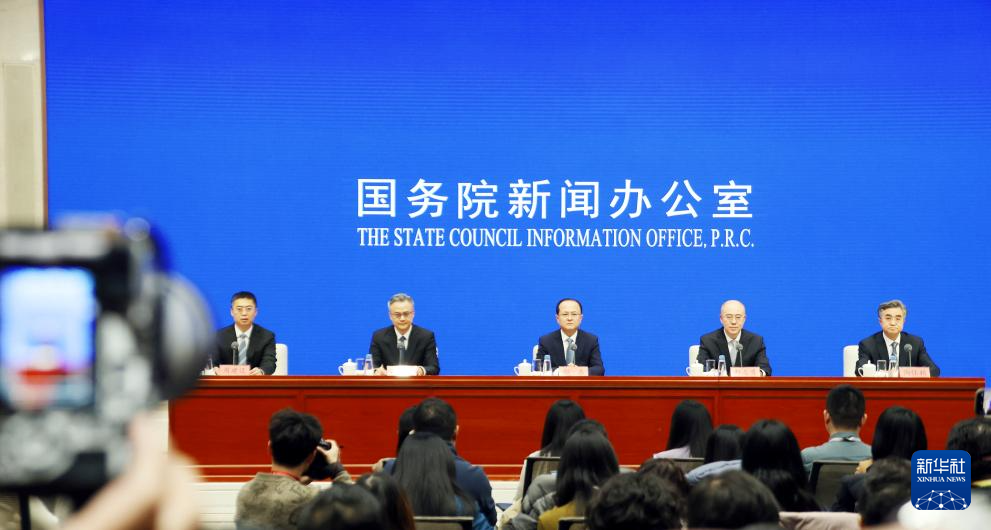
以提升办理质效激发高质量发展活力——四部门谈2025年代表委员建议提案办理情况
Xin Hua She· 2026-02-27 14:08
Summary of Key Points Core Viewpoint - The government is committed to enhancing the quality and efficiency of handling suggestions and proposals from representatives and committee members, which is essential for promoting high-quality development and reflecting the principles of whole-process people's democracy [1]. Group 1: Proposal Handling Overview - In 2025, the State Council departments handled a total of 8,754 suggestions and 4,868 proposals, achieving completion rates of 95.6% and 97.3% respectively, with representatives expressing satisfaction with the handling process [1]. - Over 4,900 opinions and suggestions from representatives were adopted, leading to the issuance of approximately 2,200 related policy measures aimed at optimizing national development strategies and addressing key issues in people's livelihoods [1]. Group 2: Technology Sector - The Ministry of Science and Technology handled 901 suggestions and proposals in 2025, all of which were completed on time and with high quality, focusing on areas such as basic research and technology integration [2]. - The Ministry aims to enhance the institutionalization and standardization of the proposal handling process to support the construction of a strong technological nation [2]. Group 3: Agriculture and Rural Affairs - The Ministry of Agriculture and Rural Affairs processed 1,449 suggestions and proposals in 2025, focusing on food security and rural talent revitalization [3]. - The Ministry achieved a 100% communication rate, timely response rate, and satisfaction rate in handling proposals, implementing 544 related policy measures [3]. Group 4: Commerce Sector - The Ministry of Commerce completed 1,020 suggestions and proposals in 2025, using this process to address urgent public concerns and enhance domestic and international trade [4][5]. - The Ministry adopted 161 suggestions and implemented 46 related policy measures, focusing on boosting consumption and developing new trade dynamics [5]. Group 5: Market Regulation - The State Administration for Market Regulation handled 1,084 suggestions and proposals in 2025, ensuring that every proposal received a response [6]. - A significant portion of the proposals (248) related to standardization, with the agency emphasizing the importance of standards in quality and development, releasing 4,929 national standards in 2025, a 56% increase year-on-year [6].
新年首推!两项汽车检测设备新标落地,筑牢国产化验证评价 “标尺”
Zhong Guo Qi Che Bao Wang· 2026-02-11 06:36
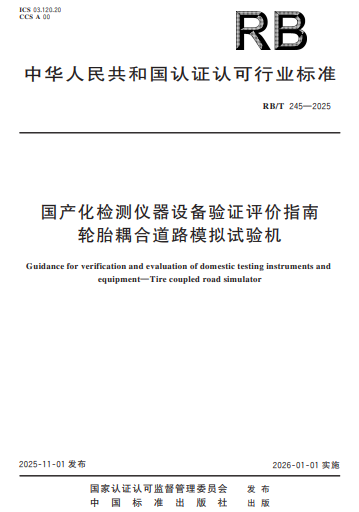
Core Viewpoint - China's automotive industry is set to achieve a milestone in 2026, maintaining its position as the world's largest producer and seller of vehicles for 17 consecutive years and the largest exporter for three years, marking a significant step towards becoming a strong automotive nation [1] Group 1: Industry Standards and Development - The National Market Supervision Administration is promoting the domestic verification and evaluation of testing instruments to enhance the technical strength and market competitiveness of domestic equipment [1] - Two new industry standards, RB/T245-2025 and RB/T246-2025, have been released to address the lack of a recognized verification and evaluation system for domestic testing equipment, aiming to break the market monopoly of foreign products [2][10] - The standards are expected to significantly reduce reliance on imported high-end testing equipment, thereby lowering supply chain risks and procurement costs [10] Group 2: Technical Specifications and Performance - RB/T245-2025 establishes a "four-dimensional" evaluation system for tire coupling road simulation testing machines, focusing on basic, performance, safety, and maintenance indicators, and introduces a domestic application level evaluation mechanism [4] - RB/T246-2025 includes a comprehensive evaluation system for road traffic flexible targets, addressing the need for standardized testing environments for intelligent connected vehicles [7][11] - The implementation of these standards is projected to reduce procurement costs of domestic tire coupling road simulation testing machines by 30% to 50% and maintenance cycles by over 40% [10] Group 3: Impact on the Automotive Industry - The new standards are part of a broader initiative to enhance the quality infrastructure of China's manufacturing sector and contribute to the stability of global supply chains [12] - The standards have been developed with reference to international best practices, ensuring scientific and advanced methodologies, which will facilitate the entry of domestic equipment into international markets [12] - The implementation of these standards is expected to enhance China's influence in global automotive standards, contributing to the country's automotive strength and innovation [12]

市场监管“新标”护航“两新” 十大传统产业升级方向明确
Xin Lang Cai Jing· 2026-02-05 20:14
Core Viewpoint - The Market Regulation Administration is set to implement hundreds of standards by 2025 to support industrial upgrades and expand consumption, focusing on optimizing traditional industries and enhancing consumer goods supply-demand compatibility [1][2]. Group 1: Standards Implementation - By 2025, the Market Regulation Administration will introduce hundreds of standards across production, consumption, and recycling to support industrial upgrades and consumption expansion [1]. - The focus will be on ten traditional industries, including petrochemicals, machinery, light industry, steel, non-ferrous metals, building materials, textiles, shipbuilding, automobiles, and electricity, to promote high-quality development [1][2]. - A total of 174 standards will be introduced for production, aimed at enhancing quality and efficiency in industries through the integration of emerging technologies and traditional industry upgrades [2][3]. Group 2: Consumer Goods Standards - The administration will develop 230 standards related to consumer goods, focusing on areas such as product exchanges, service consumption expansion, and housing renovations to enhance product and service quality [2][3]. - These standards aim to address new consumer demands for safety, quality, green, intelligent, and health aspects, thereby facilitating the upgrade of personal and household consumption [1][2]. Group 3: Circular Economy Standards - The introduction of 66 national standards will focus on the entire chain of circular industries, including second-hand product transactions, product recycling, and the use of recycled materials, to promote high-quality development in resource recycling [2]. - The goal is to establish a robust standard system for circular utilization, enhancing the overall efficiency of resource use [2]. Group 4: Mandatory Standards - The Market Regulation Administration plans to accelerate the introduction of 113 mandatory national standards, particularly in critical areas such as health, safety, and environmental protection, to strengthen the enforcement of standards [3]. - The approach will involve creating new standards, updating existing ones, and converting recommended standards into mandatory ones to ensure rigorous compliance [3].
我国已发布 “新三样”国家标准57项
Ke Ji Ri Bao· 2026-01-23 06:34
Core Insights - The rapid rise of the "new three items" industry, represented by new energy vehicles, lithium batteries, and photovoltaic products, is becoming a new engine for high-quality economic development in China [1] - The National Market Supervision Administration has published 57 national standards related to the "new three items" to support innovation and upgrade in these industries [1] Group 1: New Energy Vehicles - 13 national standards have been published in the new energy vehicle sector, covering areas such as remote service and management, battery swap safety requirements, and charging systems [1] - These standards effectively support the development of remote operation and vehicle-to-network interaction technologies [1] Group 2: Lithium Batteries - 2 national standards have been established for lithium batteries, enhancing product lifecycle traceability [1] - The focus is on improving safety, classification, quality management, and green low-carbon aspects to elevate energy efficiency and support industry upgrades [2] Group 3: Photovoltaic Products - 42 national standards have been issued for photovoltaic products, addressing green product evaluation and ground-mounted photovoltaic modules [1] - Future plans include the development of 80 new national standards focusing on product quality safety, energy consumption limits, and intelligent operation of photovoltaic systems [2] Group 4: Future Plans and Actions - The "Action Plan" aims to establish 167 national standard projects by 2025 for the "new three items" industry [1] - The National Market Supervision Administration will accelerate the development of relevant national standards and enhance dissemination through expert interpretations and on-site promotion meetings [2]
我国已发布“新三样”国家标准57项
Ke Ji Ri Bao· 2026-01-23 03:09
Group 1 - The core viewpoint of the articles highlights the rapid rise of the "new three items" industry, including new energy vehicles, lithium batteries, and photovoltaic products, as a new engine for China's high-quality economic development [1] - The National Market Supervision Administration has published a total of 57 national standards related to the "new three items" sector to support industrial safety, green, and sustainable development [1] - In the new energy vehicle sector, 13 national standards have been released, covering areas such as remote service and management, battery swap safety requirements, and charging systems, which support the development of remote operation and vehicle-network interaction technologies [1] Group 2 - The "Action Plan" for the enhancement of standards in the new energy vehicle, lithium battery, and photovoltaic industries aims to establish 167 national standard projects by 2025 [2] - The plan includes the revision and formulation of 57 national standards in the new energy vehicle sector, focusing on improving safety and product quality to support the intelligent, connected, and international development of new energy vehicles [2] - In the lithium battery sector, 30 new national standards will be developed, emphasizing product safety, classification, quality management, and green low-carbon initiatives to enhance energy efficiency and support industrial upgrades [2] Group 3 - The National Market Supervision Administration will accelerate the development of relevant national standards for the "new three items" and strengthen the dissemination of already published standards through expert interpretations and on-site promotion meetings [3] - The aim is to ensure that the industry accurately understands and timely implements the standards, thereby leading the high-quality development of the "new three items" industry [3]
工信部官员谈行业自律:呼吁企业尊重行业协会的努力,支持行业协会的工作
Xin Lang Cai Jing· 2025-12-18 07:58
Core Viewpoint - The solar industry is entering a critical phase in 2026, which marks the beginning of the "14th Five-Year Plan," emphasizing the need for improved governance and standards in the sector [1][2]. Group 1: Industry Standards and Governance - The Ministry of Industry and Information Technology (MIIT) will work with relevant departments to enhance the standard system for the solar industry, focusing on the development and implementation of mandatory national standards [1][2]. - There will be an acceleration in the release of quality safety labels for solar modules and the regulation of energy consumption limits for polysilicon [1]. Group 2: Carbon Footprint and Industry Self-Regulation - The MIIT plans to strengthen the development and application of industry standards for tiered carbon footprint accounting, aiming to lead high-quality development through advanced standards [2]. - The MIIT encourages the industry to enhance self-regulation and collaboration among enterprises, urging them to respect the efforts of industry associations in seeking consensus and to support their initiatives [2].
非关税壁垒威胁非洲出口
Shang Wu Bu Wang Zhan· 2025-12-17 16:44
Core Viewpoint - Non-tariff barriers are significantly challenging African exports, with tightening global standards creating market access pressures for exporters [1][2] Group 1: Non-Tariff Barriers - The World Bank reports that approximately 90% of global trade is now subject to non-tariff measures such as pesticide restrictions, certification rules, and packaging requirements, compared to only 15% in the late 1990s [1] - These non-tariff measures have become critical barriers to entry for export markets, particularly affecting underdeveloped countries that struggle to meet these standards or participate in their formulation [1] Group 2: Participation in Standard Setting - The participation rate of developing economies, including Africa, in the technical committees of the International Organization for Standardization is less than one-third, limiting their influence on rule-making [1] - Weak technical capabilities and insufficient funding for national standard institutions hinder these countries' ability to engage in the development of global standards [1] Group 3: Recommendations for Improvement - The World Bank suggests a three-phase framework: initially localizing international standards, then aligning with global norms to enhance competitiveness, and finally participating in the leadership of international standard-setting [1] - Successful economies view standards as strategic tools, indicating that Africa must strengthen its technical institutions and engage more deeply in international rule-making to avoid marginalization in emerging trade and technology sectors [2]
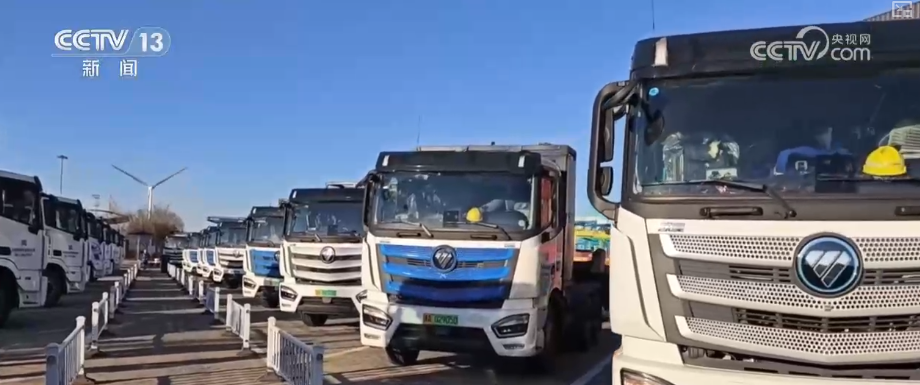
重卡产品多元技术并行向“新”向“绿” 产品畅销实现月度“七连涨”
Yang Shi Wang· 2025-11-12 02:41
Core Insights - The Chinese commercial vehicle market, particularly heavy-duty trucks, is experiencing significant growth, with production and sales exceeding 3.4 million units in the first ten months of 2025, marking a year-on-year increase of 10.9% and 9% respectively [1][3] - The heavy-duty truck market has seen a continuous monthly increase since April 2025, with an average growth rate of nearly 40% from April to October [3][4] - The transition towards new energy and clean energy heavy-duty trucks is becoming a focal point for market growth, driven by policies promoting vehicle replacement and energy efficiency [4][9] Market Dynamics - The heavy-duty truck market's recovery is attributed to various macroeconomic policies, including equipment updates, infrastructure investments, and energy strategies, which are expected to sustain growth [6][9] - The demand for new energy heavy-duty trucks is rising, with significant investments in clean energy vehicles in regions like Guangxi and Hebei, enhancing logistics efficiency and reducing carbon emissions [4][7] Technological Advancements - New energy heavy-duty trucks are gaining traction due to breakthroughs in core technologies, offering significant lifecycle cost advantages and addressing range anxiety with improved battery and powertrain solutions [11][12] - The market penetration rate of new energy commercial vehicles surpassed 30% in September 2025, reflecting the effectiveness of long-term national policies and technological advancements [14][15] Industry Standards and Infrastructure - The establishment of a comprehensive standard system is crucial for transitioning the industry from policy-driven to market-driven growth, supporting high-quality development [15][19] - The launch of the largest innovation base for new energy and intelligent connected commercial vehicles in Wuhan signifies a commitment to enhancing inspection and testing capabilities within the industry [16][18]