
汽车行业内卷

Search documents
内卷加剧、赚钱辛苦?专家:汽车行业必须整合
第一财经· 2026-01-15 08:18
Core Viewpoint - The Chinese automotive industry is experiencing a "de-involution" trend, with a need for consolidation due to increased competition and low profit margins, despite some short-term government policy effects [3][4]. Group 1: Industry Challenges - The automotive industry has faced challenges over the past few years, maintaining a low overall profit margin of approximately 4.4%, with over half of dealers operating at a loss [4]. - The average price of passenger vehicles is showing a downward trend year-on-year, indicating that while the market is expanding, the industry is undergoing painful restructuring and adjustment [4]. Group 2: Market Dynamics - The market is witnessing a phase of price stabilization, but companies are adjusting configurations and rebranding to manage costs, which complicates the pricing landscape [3]. - The industry is expected to face challenges such as the reduction of purchase tax, adjustments to replacement subsidies, and rising raw material prices [5]. Group 3: Future Predictions - UBS predicts that the wholesale market for vehicles may see a low single-digit decline, while the retail market could experience a mid-single-digit decline this year [5]. - Despite these challenges, the growth of new energy vehicles is anticipated to be around 8% this year [5].


长城汽车全面落实双休,员工:刚开始以为是谣言,不敢信
Mei Ri Jing Ji Xin Wen· 2026-01-06 12:16
Core Viewpoint - Great Wall Motors has officially implemented a full weekend off policy, marking a significant shift in its employee work schedule, which has been a topic of speculation for months [1][3][12] Group 1: Company Policy Changes - The adjustment to a full weekend off will take effect in 2026 and will apply to all employees, transitioning from a previous system of alternating work schedules [3][5] - This change represents the fourth iteration of the company's vacation policy, moving from "single and double weekends" to "double weekends" [3][12] Group 2: Employee Reactions - Employees expressed relief and joy over the new policy, highlighting the importance of spending weekends with family [2][5] - Some employees noted that while the cancellation of high-temperature leave (10 days) is a downside, the overall benefit of stable weekends outweighs this loss [1][5] Group 3: Industry Context - The automotive industry has been experiencing intense competition, leading to high levels of employee overtime and burnout [8][9] - Reports indicate that many companies in the sector have been forced to adopt extreme work schedules, with some employees working up to 100 hours of overtime per month [9][12] - The shift to a more balanced work-life approach, as seen with Great Wall Motors, is viewed as a sign of the industry moving away from harmful competitive practices [12] Group 4: Financial Performance - In 2025, Great Wall Motors achieved a record high in new car sales, reaching 1.3237 million units, a year-on-year increase of 7.33% [5] - The sales of new energy vehicles also saw significant growth, with 403,700 units sold, marking a 25.44% increase [5] - Despite the sales growth, the company faced challenges with profitability, as net profit declined by 16.97% in the first three quarters of 2025 due to high marketing and channel costs [5]


价格战“紧箍咒”来了 汽车行业能跳出内卷吗
Xin Hua Wang· 2025-12-24 23:47
Core Viewpoint - The domestic automotive industry is facing the challenge of "increasing revenue without increasing profit," primarily due to aggressive pricing strategies adopted by many companies to capture market share, leading to concerns that some vehicle prices are nearing or even below the threshold for healthy profitability [1][2]. Group 1: Industry Challenges - Many automotive companies are experiencing pressure to meet sales targets and adjust pricing policies frequently, making it difficult to achieve profitability solely through vehicle sales, with reliance shifting towards after-sales and financial services [1]. - The intense price competition, particularly in the new energy vehicle sector, is seen as a reflection of the industry's struggle with "involution," where companies are caught in a cycle of unsustainable pricing practices [2][4]. Group 2: Regulatory Response - The National Market Supervision Administration released the "Automotive Industry Pricing Behavior Compliance Guidelines" to establish clearer boundaries for pricing behavior in the industry, aiming to prevent and address illegal pricing practices [2][3]. - The guidelines emphasize that pricing should adhere to principles of fairness, legality, and good faith, warning against selling at or below cost [3]. Group 3: Industry Reactions - Major companies like BYD and Xiaopeng Motors have expressed support for the guidelines, indicating a commitment to optimizing their pricing management and compliance systems [4]. - The response from the industry suggests a consensus on the need to end harmful price wars and seek rational development paths [4][5]. Group 4: Future Directions - To escape the "price war" dilemma, companies must build differentiated core competencies and focus on genuine technological innovation, particularly in advanced fields like smart cockpits and solid-state batteries [5]. - Regulatory measures need to be comprehensive, including clear implementation details and enhanced enforcement against unfair competition practices [5][6]. - Industry self-regulation and public discourse are crucial for fostering a market culture that values innovation and quality over mere price competition [6].


打响关键一枪,汽车行业乱象被叫停!
Jin Tou Wang· 2025-12-18 08:57
Core Viewpoint - The automotive industry is undergoing significant regulatory changes aimed at curbing price wars and ensuring fair competition, with the State Administration for Market Regulation (SAMR) taking decisive actions against misleading pricing practices and excessive discounts [1][3]. Group 1: Regulatory Actions - The SAMR has officially halted price wars in the automotive sector, allowing price reductions only for inventory vehicles and prohibiting below-cost sales [1][3]. - Car manufacturers are now required to display clear pricing without misleading discounts, and they must inform consumers about delivery timelines for vehicles [1][3]. - The recent crackdown on pricing tactics is a response to practices that disrupt market order, with major companies like BYD and Xpeng already indicating changes in their sales strategies [3]. Group 2: Market Conditions - The automotive industry, now a key economic pillar, contributes 10% to the national GDP, with the penetration rate of new energy vehicles nearing 60% [5]. - The market has shifted from growth to competition for existing sales, with leading companies like BYD experiencing a decline in sales for three consecutive months, indicating a growth crisis [5]. - The average transaction price for passenger vehicles in China has dropped from 196,400 yuan to 171,600 yuan in the first half of the year, with discount rates increasing from 14.53% to 27.77% [5]. Group 3: Future Implications - In the short term, the new regulations are expected to pressure automotive sales in the coming year, particularly with the introduction of vehicle purchase taxes and restrictions on price cuts [7]. - Long-term, while the penetration of new energy vehicles exceeds 50%, the market remains competitive, and price wars may continue as a natural market-clearing mechanism [7]. - The automotive industry faces a significant challenge, with only 3 out of 71 brands currently profitable, and it is anticipated that 80% of brands may face closure if current trends continue [7].
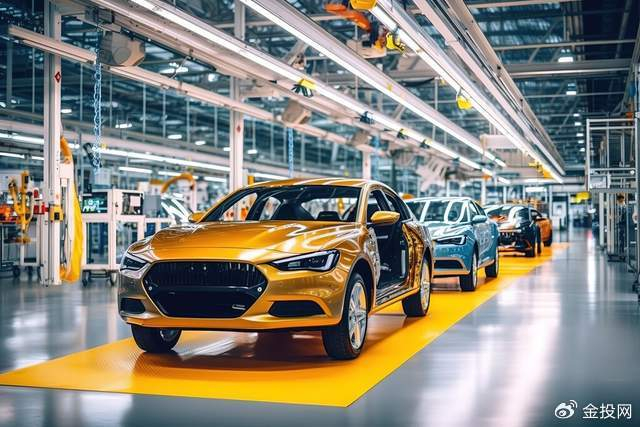
“加班5小时多发不到200元”,他们逃离了汽车圈
Di Yi Cai Jing· 2025-12-08 11:58
Core Insights - The automotive industry is experiencing significant employee turnover as professionals seek opportunities in less stressful sectors due to increasing competition and work pressure [1][2][3][4][5][6][7][8] Group 1: Employee Experiences and Industry Pressure - Many automotive professionals are leaving the industry due to intense competition and excessive work hours, leading to burnout and dissatisfaction [2][3][4] - Employees report that the shift from a standard work schedule to extended hours has not resulted in proportional salary increases, causing frustration [2][3] - The trend of "performing overtime" has become a norm, with employees feeling compelled to stay longer at work despite reduced business volume [3][4] Group 2: Career Transitions - Professionals are transitioning to other industries, such as furniture and medical sectors, where work-life balance is better and job stress is lower [2][3] - The shift to the medical industry has been noted to provide a more structured work environment with clearer compensation for overtime, contrasting with the automotive sector [3] - Some employees are moving towards technology fields like robotics, which are perceived as having greater growth potential compared to the saturated automotive market [5][6][7] Group 3: Industry Trends and Future Outlook - The automotive industry is facing declining profit margins, with sales profit rates dropping to 3.9% in October 2025, significantly below historical averages [6][7] - The competition in the automotive market is described as a "red ocean," while sectors like robotics are viewed as "blue oceans" with more growth opportunities [5][6] - The demand for technical talent in the robotics industry is increasing, with a reported 6% rise in job openings and a 32% increase in job seekers in the first five months of the year [7][8]
“加班5小时多发不到200元”,他们逃离了汽车圈
第一财经· 2025-12-08 11:47
Core Viewpoint - The automotive industry is experiencing significant internal competition and pressure, leading many professionals to leave for less stressful sectors, such as furniture and healthcare, or to pursue opportunities in emerging fields like robotics and AI [3][4][5][7]. Group 1: Industry Challenges - The automotive sector has seen increased competition, resulting in longer working hours and higher stress levels for employees, with many reporting a shift from a "9 to 5" schedule to "8 to 10" [4][5]. - Employees in the automotive industry are facing job insecurity, with companies experiencing losses and layoffs, prompting many to seek employment in more stable industries [5][6]. - The pressure to perform and the culture of "performing overtime" have led to burnout among workers, with some feeling compelled to leave the industry altogether [5][6][7]. Group 2: Career Transitions - Many professionals are transitioning from the automotive industry to sectors like healthcare and robotics, where they find better work-life balance and less intense competition [4][6][8]. - The robotics industry is seen as a "blue ocean" compared to the saturated automotive market, with significant growth potential projected, such as a forecasted market size of $154 billion by 2035 for humanoid robots [8][11]. - The shift towards robotics and AI is attracting talent from traditional automotive roles, as these fields offer more innovative and less stressful work environments [8][11]. Group 3: Financial Implications - The automotive industry's profit margins are declining, with sales profit rates reported at 4.3% in 2024 and dropping to 3.9% in October 2025, which is significantly lower than historical averages [10]. - The financial strain on automotive companies is affecting employee compensation, with performance bonuses decreasing as companies focus on cost-cutting and efficiency [10].
汽车行业波澜壮阔,他们却为何选择逃离
Di Yi Cai Jing· 2025-12-08 10:15
Core Viewpoint - The automotive industry is undergoing significant changes due to the dual forces of opportunity and chaos, driven by the waves of new energy and intelligent technology, leading to increased competition, employee burnout, and a trend of professionals leaving the sector for other industries [1][2]. Group 1: Industry Challenges - The automotive sector has seen a rise in "involution," where employees face excessive competition and pressure, leading to a decline in job satisfaction and an increase in turnover [2][4]. - Many employees report a shift from a balanced work-life schedule to extended hours, with some experiencing a significant increase in workload without corresponding salary increases [3][5]. - The industry's competitive landscape has resulted in layoffs and a challenging job market, making it difficult for professionals to find suitable positions within the sector [4][5]. Group 2: Employee Transitions - A notable trend is the migration of automotive professionals to other industries, such as healthcare and robotics, where they seek better work-life balance and less stressful environments [3][11]. - Employees like Li Ai and Wang Fang have successfully transitioned to less demanding roles in other sectors, highlighting a growing preference for jobs with clearer boundaries and reduced pressure [3][5]. - The robotics industry is becoming increasingly attractive to automotive engineers, with significant growth potential and a more stable work environment compared to the automotive sector [11][12]. Group 3: Market Dynamics - The automotive industry's profit margins have been declining, with sales profit rates dropping to 3.9% in October 2025, significantly below historical averages, which has further pressured employee compensation and job security [12][13]. - The competition in the automotive market has intensified, leading to a focus on cost-cutting and efficiency rather than innovation, which may hinder long-term growth and development [12][13]. - The shift towards robotics and automation is seen as a potential growth area, with predictions indicating a substantial market opportunity in the coming years, contrasting with the saturated automotive market [11][12].
广汽集团冯兴亚直言“狼性”企业入局加剧内卷 閤先庆称要造年轻人的车
Zhong Guo Jing Ying Bao· 2025-11-20 08:51
Group 1 - GAC Group has appointed He Xianqing as the new General Manager, with Wang Dan as Chief Accountant and several others as Vice Presidents [2] - He Xianqing emphasized the significant challenges and pressures he faces in his new role, expressing gratitude for the support he has received [2] - He Xianqing has extensive experience within GAC Group, having held various leadership positions in different subsidiaries [2] Group 2 - He Xianqing outlined the vision for "New GAC," focusing on developing products that meet customer needs and enhancing market insight [3] - The decline in Aion's performance is attributed to its previous focus on the B2B market, with plans to shift towards a B2C model [3] - GAC's collaboration with Huawei aims to create high-tech, high-performance vehicles targeting younger consumers, with two models expected to launch by 2026 [3][4] Group 3 - GAC Group is working with CATL on battery swapping technology, having signed a ten-year strategic agreement to advance smart chassis and battery swap ecosystems [4] - By mid-2026, GAC plans to establish 600 brand stores in lower-tier cities to enhance accessibility to its vehicle lineup, with over 1,000 investors already expressing interest [4] - The automotive industry is undergoing significant changes, with increased competition from agile companies, making transformation essential for survival [4]

【地方市场】2025年9月北京汽车市场分析
乘联分会· 2025-11-10 08:08
New Car Transaction Situation - In September, Beijing's new car transactions reached 64,900 units, with a month-on-month increase of 13.69% and a year-on-year increase of 4.02%. The month-on-month growth rate is 0.79 percentage points higher than the national average, while the year-on-year growth rate is 10.88 percentage points lower than the national average [4][21] - From January to September, a total of 486,600 new cars were traded in Beijing, a decrease of 2.94% compared to last year, which is 15.84 percentage points lower than the national average [4] Imported Car Sales Situation - In September, Beijing's imported car transactions totaled 2,456 units, showing a month-on-month increase of 8.29% but a year-on-year decrease of 15.22% [8][12] - From January to September, the cumulative transactions of imported cars in Beijing were 21,700 units, reflecting a year-on-year decline of 20.39% [8] New Energy Vehicle Sales Situation - In September, Beijing's new energy vehicle transactions reached 41,900 units, with a month-on-month increase of 14.25% and a year-on-year increase of 25%, accounting for 64.55% of the total new car transactions [13][21] - Pure electric vehicle sales were 26,200 units, making up 62.54% of new energy vehicle sales. However, the proportion of pure electric vehicles has been declining since June, decreasing by 7.18 percentage points [13][21] - From January to September, a total of 290,900 new energy vehicles were traded in Beijing, representing a year-on-year growth of 16.78% and accounting for 59.78% of total new car transactions [13] Used Car Transaction Situation - In September, Beijing's used car transaction volume was 62,300 units, with a month-on-month increase of 14.75% and a year-on-year increase of 11.42% [19][21] - From January to September, the cumulative used car transactions reached 501,000 units, showing a year-on-year growth of 0.81% [19] - The average transaction price of used cars in the third quarter increased by 0.02 million yuan compared to the second quarter, but decreased by 0.78 million yuan compared to the same period last year, indicating pressure on dealers [21] Market Trends and Government Policies - The third quarter saw a V-shaped trend in Beijing's new car sales, with a rapid increase in June followed by a decline in July and August, before a recovery in September [21] - Government regulations targeting issues such as blind exports and price competition were introduced, indicating a commitment to addressing the chaotic state of the automotive industry [21] - Despite short-term spikes in sales due to policy support, the overall market remains under pressure, particularly for traditional fuel vehicles, while the used car market shows signs of recovery [21]
哪吒汽车破产余波,至信股份连续两年计提大额坏账损失
Jing Ji Guan Cha Wang· 2025-10-21 12:59
Core Viewpoint - The financial struggles of Nezha Auto have led to significant impacts on its suppliers, particularly Zhixin Industrial Co., which has reported substantial bad debt losses due to overdue accounts receivable from Nezha Auto and other clients [1][2]. Group 1: Financial Impact on Zhixin Industrial - Zhixin Industrial has disclosed that it has recognized a total of 12.95 million yuan in overdue accounts receivable from Nezha Auto, which has entered bankruptcy reorganization, leading to a complete provision for bad debts [1]. - The company reported credit impairment losses of -25.34 million yuan for the fiscal year 2024, primarily due to expected credit losses related to accounts receivable from Nezha Auto [1][2]. - The total liabilities of Nezha Auto are close to 10 billion yuan, with debts to suppliers constituting nearly two-thirds of this amount, indicating a significant financial strain on its supply chain [2]. Group 2: Performance and Growth of Zhixin Industrial - Despite the challenges posed by clients like Nezha Auto and Beiqi Yinxiang, Zhixin Industrial has achieved rapid revenue growth, with reported revenues of 2.09 billion yuan, 2.56 billion yuan, and 3.09 billion yuan for the years 2022 to 2024 [2]. - The company’s net profit has also shown improvement, with figures of 52 million yuan, 120 million yuan, and 185 million yuan for the same period, indicating resilience in its financial performance [2]. - Zhixin Industrial's gross margin for its main products has been increasing annually, attributed to its strategic focus on high-value components and cost-reduction measures despite the competitive pressure in the automotive industry [3][4]. Group 3: Market Dynamics and Competitive Landscape - The automotive industry is experiencing intense competition and price declines, which have affected many players, leading to revenue declines for some comparable companies [3][4]. - Zhixin Industrial has managed to maintain a growth rate in revenue that aligns with or exceeds the average of its peers, attributed to its diverse client base and effective market strategies [3]. - The company has adapted to market pressures by optimizing its product structure and increasing the proportion of high-margin components, which has contributed to the sustainability of its gross margins [4].