经济增长预期下调

Search documents
能源价格上涨,拖累法国、葡萄牙
中国能源报· 2026-03-26 10:43
Group 1 - The French central bank forecasts a GDP growth of 0.9% for 2026, a slight downgrade from the previous prediction of 1.0% made in December 2022, primarily due to rising international energy prices influenced by geopolitical tensions [1] - The French economy is expected to show resilience at the end of 2025 and the beginning of 2026, but the worsening geopolitical environment since March has led to increased energy prices, which will hinder economic growth [1] - Inflation in France is projected to rise from 0.9% in 2025 to 1.7% in 2026 due to the impact of rising energy prices [1] Group 2 - The Portuguese central bank has revised its GDP growth forecast for 2026 down from 2.3% in December 2022 to 1.8%, influenced by military actions by the US and Israel against Iran and extreme weather conditions in early 2026 [2] - The inflation forecast for Portugal has been increased from 2.1% to 2.8% for 2026, reflecting the anticipated economic impacts of these factors [3] - The Portuguese central bank warns that prolonged or escalating conflicts in the Middle East could lead to further increases in commodity prices, increased financial market volatility, and new disruptions to global supply chains [3]


波黑央行下调2025年经济增长预期,通胀与工业疲软成主要挑战
Shang Wu Bu Wang Zhan· 2026-02-14 14:01
Economic Outlook - The Central Bank of Bosnia and Herzegovina has revised down its GDP growth forecast for 2025, citing a more significant decline in retail trade and industrial output than previously expected in the second and third quarters [1] - The service export and tourism sectors, which previously contributed significantly to economic growth, have also stagnated [1] Inflation and Cost Pressures - Inflationary pressures have intensified compared to the March forecast, with net exports showing signs of weakness [1] - In the third quarter of 2025, inflation is expected to accelerate due to base effects, significant increases in food and electricity prices, and rapid growth in average real wages impacting service prices [1] - Industrial output has shown a year-on-year decline in the first nine months of 2025, indicating increased cost pressures and challenges to domestic industry competitiveness [1] Currency and Monetary Policy - Despite economic pressures, the Central Bank's foreign exchange reserves increased significantly in the third quarter of 2025 [1] - The Central Bank did not adjust any monetary policy measures during this quarter, with the reserve calculation basis (mainly short-term domestic currency) continuing to rise, although the growth rate of the money multiplier has slightly slowed [1] Trade and Fiscal Performance - In the second quarter of 2025, the current account deficit narrowed slightly year-on-year, with most of the goods account deficit covered by net inflows from the services account and remittances from abroad [2] - In the third quarter, the trade goods deficit increased year-on-year [2] - Fiscal revenues saw an increase in indirect tax income in the third quarter of 2025, but the budget expenditure structure remains poor, with funds primarily allocated to current expenditures and capital expenditures at a very low level [2]
德国经济研究所下调德国经济增长预期
Jing Ji Guan Cha Wang· 2025-12-12 06:53
Core Viewpoint - Germany's economic growth forecast for 2025 has been revised down to 0.1%, influenced by a significant decline in exports to the United States and ongoing structural changes within the economy [1] Economic Forecast - The winter forecast reports from several major economic research institutions in Germany indicate a downward adjustment in growth expectations, with the previous forecast for 2025 being 0.2% [1] - For 2026 and 2027, the expected economic growth rates are 0.8% and 1.1% respectively, both reduced by 0.5 percentage points from earlier predictions [1] External Factors - The ongoing large-scale tariff increases imposed by the United States are exerting pressure on global economic conditions and trade, contributing to the challenges faced by the German economy [1]
【环球财经】多家研究机构下调德国经济增长预期
Xin Hua She· 2025-12-11 22:58
Core Viewpoint - Germany's economic growth forecast for 2025 has been revised down to 0.1%, a decrease from the previous estimate of 0.2%, primarily due to a significant decline in exports to the United States and underwhelming effects from fiscal measures such as the large infrastructure fund established earlier this year [1] Group 1: Economic Forecasts - Multiple key economic research institutions in Germany released winter forecast reports indicating a bleak outlook for the economy [1] - Kiel Institute for the World Economy predicts a 0.2% decline in German exports for 2025, with particularly sharp drops in exports to the U.S. [1] - Munich Institute for Economic Research notes that the ongoing U.S. tariffs are exerting pressure on global trade and the German economy, which is undergoing significant structural changes [1] Group 2: Future Projections - The Munich Institute forecasts economic growth rates of 0.8% and 1.1% for Germany in 2026 and 2027, respectively, both down by 0.5 percentage points from previous estimates [1] - The institutions involved in the forecasts include the Munich Institute, Kiel Institute, Halle Institute, and Leibniz Institute, all of which have repeatedly downgraded their growth expectations for Germany in 2025 due to the impact of U.S. tariffs [1]
多家研究机构下调德国经济增长预期
Xin Hua She· 2025-12-11 14:20
Core Viewpoint - Germany's economy is projected to grow only 0.1% in 2025, a downward revision from the previous autumn forecast of 0.2%, primarily due to a significant decline in exports to the United States [1] Economic Forecast - Multiple key economic research institutions in Germany released winter forecast reports on December 11, indicating a bleak outlook for the economy [1] - The downward adjustment in growth expectations reflects ongoing challenges in the global trade environment, particularly with the U.S. market [1]
【环球财经】三季度日本经济按年率计算下降1.8%
Xin Hua Cai Jing· 2025-11-17 02:04
Group 1 - The core viewpoint of the articles indicates that Japan's economy has contracted in the third quarter of this year, primarily due to the impact of U.S. tariffs on exports, with a quarter-on-quarter GDP decline of 0.4% and an annualized decline of 1.8% [1] - External demand has significantly affected Japan's economic performance, with exports of goods and services decreasing by 1.2% quarter-on-quarter, while imports fell by 0.1% due to weak domestic demand, contributing negatively to economic growth by 0.2 percentage points [1] - Domestic consumption, which accounts for over half of Japan's economy, saw a slight increase of 0.1% quarter-on-quarter, while business investment in equipment rose by 1.0%, and public demand increased by 0.5%. However, private residential investment dropped by 9.4%, and inventory changes also hindered domestic demand growth, contributing negatively to economic growth by 0.2 percentage points [1] Group 2 - The Japanese government has revised its economic growth forecast for the fiscal year 2025 from 1.2% to 0.7%, citing the downward pressure from U.S. tariff policies and ongoing inflation leading to weak consumer spending [2]
俄央行年内第四次降息
Xin Hua She· 2025-10-24 14:48
Core Viewpoint - The Central Bank of Russia has lowered the benchmark interest rate by 50 basis points to 16.5%, marking the fourth rate cut this year [1] Economic Outlook - The Russian economy is returning to a balanced growth trajectory, although inflation expectations remain high in recent months [1] - The annual inflation rate in Russia is projected to be between 6.5% and 7.0% by the end of 2025 [1] - The Central Bank will maintain a tight monetary policy as needed to bring inflation back to target levels [1] Growth Projections - The economic growth forecast for Russia in 2025 has been revised down from 1%-2% to 0.5%-1% [1]
柬埔寨下调2025年经济增长预期至5%
Zhong Guo Xin Wen Wang· 2025-08-25 21:21
Economic Outlook - Cambodia's Ministry of Economy has revised the economic growth forecast for 2025 from 6.3% to 5% due to various factors impacting the economy [1] - The closure of the land border with Thailand and U.S. tariff measures are identified as primary reasons for the slowdown in economic growth this year [1] Sector Performance - The optimistic outlook for Cambodia's economy was previously supported by strong performance in export-oriented industries, stable growth in tourism, and steady expansion in agriculture [1] - The closure of the Cambodia-Thailand border has disrupted manufacturing activities, limited raw material transportation and export operations, and hindered the normal flow of international tourists [1] Industrial Growth Projections - The Ministry of Economy projects that the overall industrial growth in Cambodia will be 7.1% in 2025, with the service sector expected to grow by 3.8%, agriculture by 0.9%, and a moderate recovery in the construction sector [1] - The tourism sector is showing strong resilience despite the challenges faced [1] - Exports to other markets, including the EU and China, are expected to remain robust this year [1]
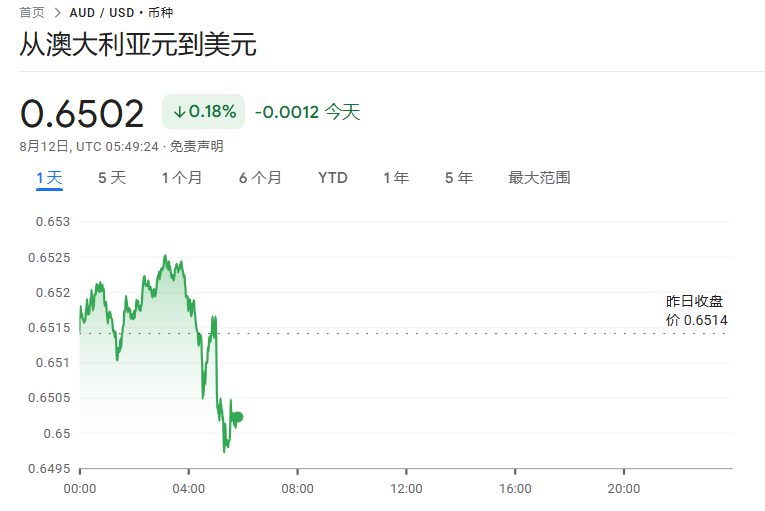
【财经分析】澳大利亚经济前景欠佳 央行年内或将继续降息
Xin Hua Cai Jing· 2025-08-12 13:49
Core Viewpoint - The Reserve Bank of Australia (RBA) has announced its third interest rate cut of the year, lowering the benchmark rate to 3.6%, the lowest level since April 2023, in response to economic conditions and inflation trends [1][2]. Interest Rate Cuts - The RBA's decision to cut rates in August was influenced by more favorable conditions compared to July, where inflation data showed a decrease in the trimmed mean inflation rate from 2.8% in April to 2.4% in May, the lowest since November 2021 [2][3]. - The RBA had previously held rates steady in July, indicating that monthly inflation data alone was not sufficient to justify a rate cut, as they preferred to wait for more comprehensive quarterly data [2][3]. Economic Growth Expectations - The RBA has revised its GDP growth forecasts downward, projecting a decrease from 2.1% to 1.7% for 2025, and from 2.2% to 2% for mid-2026 [4]. - The downward revision is attributed to expected low productivity growth, which is anticipated to impact wage growth, income, and household spending [4][5]. Labor Market and Inflation - The unemployment rate rose from 4.1% in May to 4.3% in June, exceeding the RBA's expectations, which has led analysts to suggest that the RBA should consider further rate cuts [3][4]. - Despite a slight improvement in household income and some financial indicators, the labor market remains tight, with productivity growth not rebounding, keeping unit labor costs high [5][6]. Future Rate Cuts - Analysts expect the RBA to implement another rate cut in November, with potential further cuts in 2024, as the economic outlook remains uncertain [6][7]. - The RBA's Governor has indicated a general agreement with market expectations for additional rate cuts if economic performance does not improve or if unemployment rises significantly [7][8].
宽松周期远未结束?澳洲联储年内第三次降息,大幅下调经济预期
Hua Er Jie Jian Wen· 2025-08-12 06:24
Core Viewpoint - The Reserve Bank of Australia (RBA) has continued its dovish stance by cutting the cash rate to 3.6%, marking the third rate cut of the year amid a bleak economic growth outlook [1][4]. Economic Outlook - The RBA has significantly downgraded its GDP growth forecast for 2025 from 2.1% to 1.7%, reflecting a more severe economic landscape [5]. - The long-term productivity growth assumption has been reduced from 1.0% to 0.7%, indicating a potential slowdown in the economy's growth capacity from 2.25% to 2.0% [5]. - The report attributes the lowered growth expectations to weaker-than-expected public demand growth at the beginning of 2025 [5]. Inflation and Labor Market - Core inflation has eased to 2.7%, nearing the RBA's target range of 2%-3%, providing room for monetary policy easing [7]. - The unemployment rate has risen to 4.3%, the highest level in four years, indicating initial signs of market cooling [7]. - Despite the rising unemployment, the RBA forecasts that the rate will remain stable at 4.3% until the end of 2027, suggesting a complex labor market scenario [7]. Monetary Policy Direction - The RBA's current monetary policy is perceived as still restrictive, with expectations of further easing in the future [8]. - Market predictions suggest a total rate cut of 80 basis points over the next year, bringing the cash rate down to a range of 2.85% to 3.1% [8]. - Some analysts predict a more aggressive approach, forecasting a potential 100 basis points cut within the next 12 months [8].