
资源化利用

Search documents
高能环境:进军矿业开采、赴港上市,资源化龙头扬帆起航-20260204
Xinda Securities· 2026-02-04 13:20
Investment Rating - The investment rating for the company is "Buy" [2]. Core Insights - The company is transitioning into the mining sector and plans to list in Hong Kong, aiming to enhance its position as a leader in resource utilization [4][18]. - The company has a clear and robust strategic layout focusing on resource recycling, with significant growth expected in its metal resource recycling business [4][16]. - The company has achieved a deep integration of its upstream and downstream operations, which is expected to drive profitability as production capacity is released [16][27]. Summary by Sections Company Overview - The company originated from the Institute of High Energy Physics of the Chinese Academy of Sciences and is one of the earliest enterprises in China to engage in solid waste pollution prevention [18]. - It has expanded its business into hazardous waste management and resource recycling through acquisitions, including plans to acquire stakes in three mining companies to enhance its resource recycling capabilities [4][18]. Financial Performance - The company reported a total revenue of 145 billion yuan in 2024, a year-on-year increase of 37% [23]. - The net profit attributable to the parent company for 2025 is projected to be 823 million yuan, representing a 70.8% increase compared to the previous year [11]. - The gross profit margin for the resource recycling segment has improved from 8.3% in 2023 to 13.4% in the first half of 2025 [16]. Market Dynamics - The metal prices have shown significant increases, with gold rising by 43.1%, silver by 34.8%, and bismuth by 62.5% in 2025, which is expected to enhance the company's profit margins [17]. - The company is well-positioned to benefit from the government's push for circular economy initiatives, which aim to increase resource utilization rates significantly by 2025 [34][35]. Strategic Initiatives - The company is planning to list on the Hong Kong Stock Exchange to support its international expansion and enhance its capital structure [7][18]. - The acquisition of mining rights is expected to create synergies with its existing resource recycling operations, potentially unlocking new revenue streams [17][18].

垃圾焚烧设施协同处置工业固废的监管挑战与对策
Zhong Guo Huan Jing Bao· 2026-02-03 02:09
为推动生活垃圾焚烧设施协同处置工业固废向规范化、可持续化方向发展,亟须从制度设计、监督执 行、科技支撑三方面系统构建一套科学、完备的生态环境监管体系。具体可从以下三方面着手。 在"无废城市"建设的战略框架下,生活垃圾焚烧处理作为我国城市固废治理体系的重要环节,近年来呈 现出蓬勃发展的态势。截至2025年年底,全国生活垃圾焚烧发电企业已逾千家,日处理能力突破110万 吨。然而,在行业快速发展的同时,部分地区也出现了产能利用率不足的问题。当前,生活垃圾焚烧设 施平均负荷率仅为60%左右,约四成处理能力处于闲置状态,资源配置效率亟待提升。 为优化设施利用效率、深化"无废城市"建设,浙江、广东、江苏及上海等多个省(直辖市)率先开展了 生活垃圾焚烧设施协同处置工业固体废物的探索。这一举措不仅为工业固废处置开辟了新路径,也为生 活垃圾焚烧设施的产能释放创造了条件。 然而,协同处置过程中暴露出的环境监管缺失问题亦不容忽视。尽管部分省市出台了相关管理文件,但 在焚烧工艺参数、掺烧比例、排放控制等关键环节,仍缺乏统一、明确的管控标准。监管依据的不足, 导致生态环境部门面临"无法可依、无标可循"的困境,难以有效防控潜在的生态环境 ...
金观平:变固废“包袱”为绿色财富
Jing Ji Ri Bao· 2026-01-13 02:08
Core Viewpoint - The State Council has issued the "Solid Waste Comprehensive Management Action Plan," emphasizing the importance of solid waste reduction, resource utilization, and harmless disposal as key measures for achieving a comprehensive green transformation in economic and social development [1] Group 1: Solid Waste Management Framework - The action plan aims to establish a comprehensive management system for solid waste that includes source reduction, process control, end-use, and harmless management throughout the entire chain [1] - The Ministry of Ecology and Environment will release the "Solid Waste Classification and Code Directory" in 2024, which will detail the types of solid waste, laying a foundation for enhanced environmental management [1] - A new version of the "Solid Waste Identification Standard" will be published in 2025 to address challenges in identifying by-products and the attributes of imported materials, providing precise criteria for scientific management and resource utilization [1] Group 2: Source Control and Reduction - Source control and reduction are fundamental strategies for solid waste management, especially given the large volume of waste generated during rapid industrialization and urbanization [2] - The action plan targets key areas such as industry, urban areas, and agriculture, proposing measures like the elimination of outdated production capacity and enhanced precision in industrial production management [2] - The plan aims to achieve a balance between economic and ecological benefits by focusing on immediate waste reduction and long-term transformation [2] Group 3: Resource Utilization - Resource utilization is identified as the core aspect of transforming waste into valuable resources, with significant achievements noted in the industrial sector [2] - By 2024, the comprehensive utilization rate of major solid waste is expected to reach 59%, with a replacement rate of over 50% for primary resources [2] - The action plan encourages the implementation of extended producer responsibility, promoting the recycling of electronic products, automobiles, and batteries, and supports the development of the remanufacturing industry [2] Group 4: Comprehensive Harmless Management - Comprehensive harmless management is crucial for maintaining ecological safety, with the action plan requiring pre-treatment of major industrial solid waste and the implementation of fly ash treatment in new waste incineration projects [3] - The plan addresses issues like illegal dumping and historical waste storage through five major special rectification initiatives, setting clear goals and deadlines for remediation [3] - The action plan aims to transform solid waste from a burden into green wealth through a series of actionable policies, requiring collaboration among government, enterprises, and society to sustain the effectiveness of solid waste management [3]
经济日报金观平:变固废“包袱”为绿色财富
Jing Ji Ri Bao· 2026-01-13 01:30
Core Viewpoint - The State Council has issued the "Solid Waste Comprehensive Management Action Plan," emphasizing the importance of solid waste reduction, resource utilization, and harmless treatment as essential measures for achieving a comprehensive green transformation in economic and social development [1]. Group 1: Solid Waste Management Framework - The action plan aims to establish a comprehensive management system for solid waste based on reduction, resource utilization, and harmless treatment, covering the entire process from generation to disposal [1]. - The Ministry of Ecology and Environment will release a "Solid Waste Classification and Code Directory" in 2024, which will detail the types of solid waste, laying a foundation for enhanced environmental management [1]. - A new "Solid Waste Identification Standard" will be published in 2025 to address challenges in identifying by-products and the attributes of imported materials, providing precise criteria for scientific management and resource utilization [1]. Group 2: Source Control and Resource Utilization - Source control and reduction are fundamental strategies for solid waste management, with the action plan targeting key areas such as industry, urban areas, and agriculture to eliminate outdated production capacity and enhance industrial production management [2]. - The comprehensive utilization rate of major solid waste in the industrial sector is projected to reach 59% by 2024, with a replacement rate for primary resources exceeding 50% [2]. - The action plan encourages the implementation of extended producer responsibility, promoting the recycling of electronic products, automobiles, and batteries, and supports the development of the remanufacturing industry [2]. Group 3: Comprehensive Harmless Management - The action plan emphasizes the need for comprehensive harmless management of solid waste, including pre-treatment of major industrial solid waste and the establishment of waste incineration projects with proper fly ash treatment [3]. - It addresses issues such as illegal dumping and historical waste storage through five major special rectification initiatives, setting clear goals and deadlines for remediation [3]. - The action plan aims to transform solid waste from a burden into green wealth through a combination of policies, requiring collaboration among government, enterprises, and society to ensure effective implementation and enhance ecological development advantages [3].
变固废“包袱”为绿色财富
Jing Ji Ri Bao· 2026-01-13 00:22
Core Viewpoint - The State Council has issued the "Solid Waste Comprehensive Management Action Plan," emphasizing the importance of solid waste reduction, resource utilization, and harmless treatment as key measures for achieving a comprehensive green transformation in economic and social development [1]. Group 1: Action Plan Overview - The action plan aims to establish a comprehensive management system for solid waste based on the principles of reduction, resource utilization, and harmlessness, covering the entire process from generation to disposal [1]. - The Ministry of Ecology and Environment will release a detailed classification and coding directory for solid waste in 2024, laying the groundwork for enhanced environmental management [1]. - The plan provides a systematic guide to transform waste into resources, focusing on the entire lifecycle of solid waste rather than just end-of-pipe solutions [1]. Group 2: Source Control and Resource Utilization - Source control and reduction are fundamental strategies for solid waste management, with the plan targeting key sectors such as industry, urban areas, and agriculture for effective waste reduction [2]. - The comprehensive utilization rate of major solid waste in the industrial sector is projected to reach 59% by 2024, with a replacement rate for primary resources exceeding 50% [2]. - The plan encourages the implementation of extended producer responsibility systems and the development of the remanufacturing industry to enhance recycling levels [2]. Group 3: Full Chain Harmless Management - Full chain harmless management is crucial for maintaining ecological safety, with the plan requiring pre-treatment of major industrial solid waste and proper handling of hazardous materials [3]. - The action plan addresses illegal dumping and historical waste storage through five major special rectification initiatives, setting clear goals and deadlines for remediation [3]. - The plan aims to convert solid waste burdens into green wealth through a comprehensive policy approach, requiring collaboration among government, enterprises, and society to sustain the effectiveness of solid waste management [3].
固体废物新规出台,石化行业如何着力
Zhong Guo Hua Gong Bao· 2026-01-09 02:39
Core Viewpoint - The "Comprehensive Solid Waste Management Action Plan" marks a significant shift in China's approach to solid waste management, transitioning from localized emergency responses to a systematic, full-chain governance model aimed at reducing, recycling, and safely disposing of solid waste [1][2]. Group 1: Systematic Governance - The Action Plan addresses the severe challenges of high solid waste generation, low recycling rates, and significant historical waste storage, emphasizing the need for a fundamental shift in governance models [2][3]. - It introduces a comprehensive framework focusing on five key dimensions: source control, flow regulation, risk management, monitoring systems, and enforcement responsibilities [3][4]. Group 2: Industry Challenges and Opportunities - The petrochemical industry, a major contributor to industrial solid waste, faces pressures to upgrade processes and comply with stricter regulations, which may lead to increased operational costs [5][6]. - However, the Action Plan also opens opportunities for the industry, such as enhanced support for waste resource utilization and the development of new market segments driven by circular economy initiatives [6][7]. Group 3: Technological Innovation and Upgrades - The Action Plan's higher requirements for waste resource utilization and safe disposal are expected to drive growth and innovation in the solid waste treatment equipment and technology sector [10][11]. - There is a notable shift towards smart technologies and low-carbon solutions, with an emphasis on integrating digital technologies into waste management processes [11][12]. Group 4: Social Participation and Collaboration - The involvement of social organizations is crucial for effective solid waste governance, as they can enhance monitoring capabilities and support community-level initiatives [12][13]. - Collaborative efforts among various stakeholders, including enterprises, government, and social organizations, are essential for the successful implementation of the Action Plan [15].
实现“制氢+硫磺”的双重资源化收益,我国硫化氢清洁处理技术获突破
Zhong Guo Neng Yuan Wang· 2026-01-06 15:16
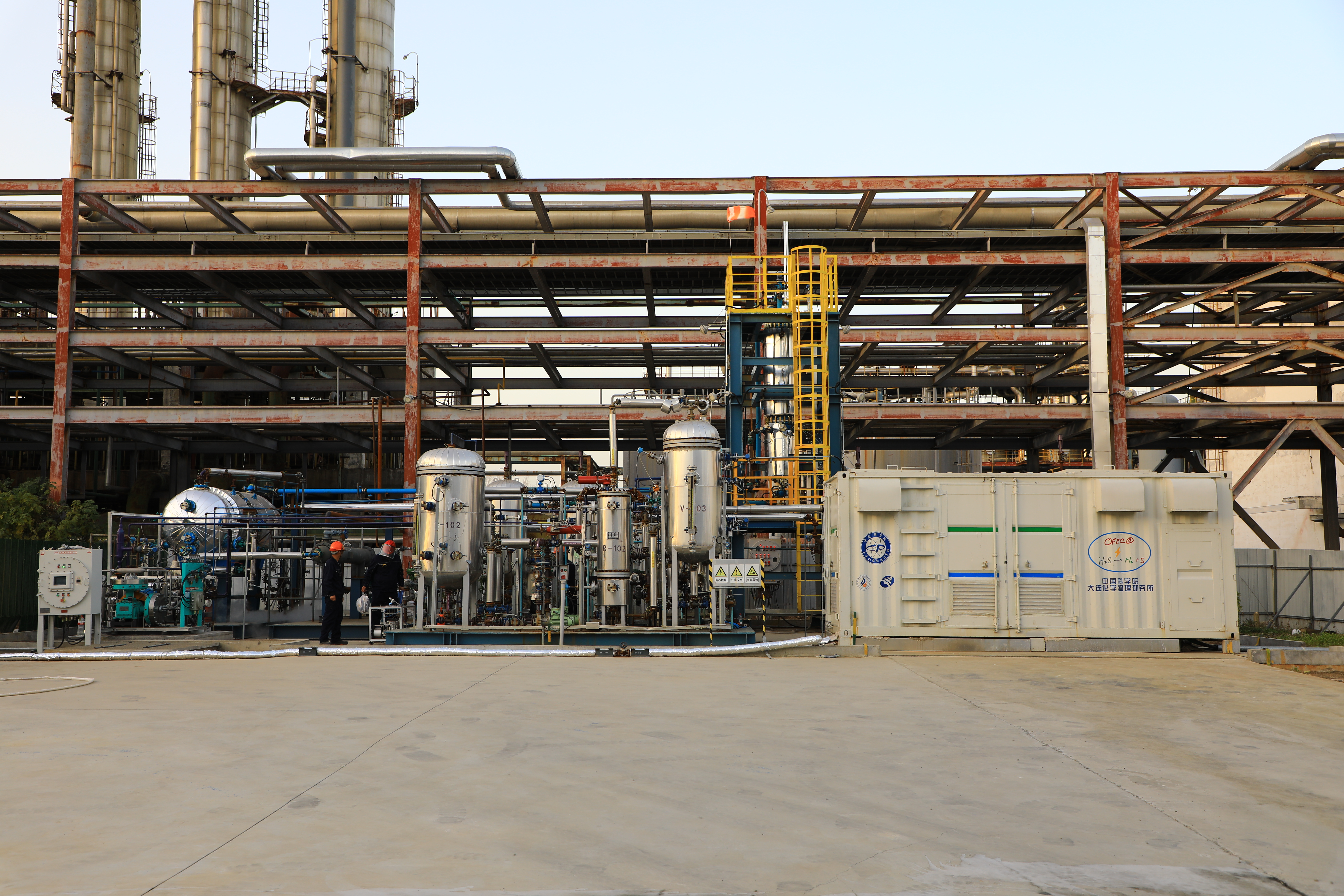
Core Viewpoint - The breakthrough in hydrogen sulfide (H2S) decomposition technology offers a new pathway for the complete elimination and resource utilization of H2S, significantly benefiting ecological protection and enabling dual resource recovery of hydrogen and sulfur [1][2][3]. Group 1: Technology Development - The "off-site electrochemical full decomposition of hydrogen sulfide to hydrogen and sulfur technology" was developed by a team led by Academician Li Can from the Dalian Institute of Chemical Physics, Chinese Academy of Sciences, after over 20 years of research [1]. - This technology has been evaluated by the China Petroleum and Chemical Industry Federation, with experts agreeing that it has reached an international leading level and recommending its scale-up and accelerated application [1]. - The technology effectively decouples chemical reactions and charge transfer, addressing engineering challenges such as sulfur precipitation on electrode surfaces and the impact of bubble adhesion on hydrogen evolution reactions [1]. Group 2: Industrial Application - The research team has partnered with enterprises to implement an industrial demonstration project in the coal chemical sector, featuring innovations in several areas, including high-efficiency electrochemical cells and systems, and high-purity hydrogen recovery technology [2]. - The project has established the world's first 100,000 cubic meters per year off-site electrochemical demonstration unit for H2S decomposition, utilizing H2S from a methanol plant with an annual capacity of 200,000 tons [2]. - The operational data indicates that the unit has run continuously for over 1,000 hours, achieving complete conversion of H2S (with H2S in exhaust <1 ppm) and producing sulfur with a purity of over 99.95% and hydrogen with a purity of over 99.999% [2]. Group 3: Market Potential - In China, approximately 8 billion cubic meters of H2S are processed annually, while globally, the annual processing volume exceeds 70 billion cubic meters, with a potential backlog of over 4 trillion cubic meters [2]. - The complete elimination and resource utilization of H2S have been longstanding challenges in the natural gas extraction, refining, and coal chemical industries [2].

德林海(688069):三季度业绩高速增长 资源化新项目开辟第二增长曲线
Xin Lang Cai Jing· 2025-10-29 08:29
Core Insights - The company reported a significant increase in Q3 performance, with a quarterly revenue of 185 million yuan, representing a year-on-year growth of 94.96%, and a net profit of 49 million yuan, up 1322.74% year-on-year, contributing to a 61.87% increase in net profit for the first three quarters of 2025 [2][3] Revenue and Profit Performance - For the first three quarters of 2025, the company achieved a total revenue of 293 million yuan, a decrease of 2.39% year-on-year, while the net profit attributable to shareholders reached 46 million yuan, an increase of 61.87% [1][2] Project Contributions - Major projects completed and recognized in Q3, such as the Tonghai County Qiluhu Blue Algae Control Project (contract value of 70.8252 million yuan) and the Yixing Offshore Deep Well Algae Control Project (contract value of 53.4 million yuan), significantly boosted revenue [2][3] Order Backlog - As of the report date, the company had a robust order backlog of approximately 501 million yuan, including significant government procurement projects, which provides a strong foundation for future performance [3] Strategic Initiatives - The company is advancing its "Lake Ecological Hospital" model, transitioning from equipment supplier to a comprehensive service provider covering monitoring, diagnosis, governance, and operation [4] International Expansion - The company is exploring international opportunities, having engaged in technical exchanges with South Korean water treatment companies, which has laid the groundwork for future overseas business [4] Growth Forecast - Revenue projections for 2025-2027 are estimated at 524 million yuan, 649 million yuan, and 750 million yuan, with year-on-year growth rates of 16.81%, 24.00%, and 15.52% respectively, while net profits are expected to reach 95 million yuan, 116 million yuan, and 137 million yuan, with substantial growth rates [4]

一张发票带动资源回收产业“转起来”
Jin Rong Shi Bao· 2025-08-27 02:29
Core Viewpoint - The implementation of the "reverse invoicing" policy in the resource recovery industry has significantly improved the business environment, facilitating smoother transactions and increasing the volume of recycled materials sold by individuals and companies [1][2][3]. Group 1: Policy Impact on Business - The "reverse invoicing" policy, effective from April 29, 2024, allows resource recovery enterprises to issue invoices to individual sellers of waste products, addressing the long-standing issue of "missing source invoices" [1][2]. - Following the policy's implementation, the volume of waste materials sold by individuals has increased by over 40%, as reported by a local recycler [1]. - As of June 2023, 13,300 resource recovery enterprises issued invoices totaling 515.2 billion yuan to 1.67 million individuals, with 5.11 million invoices issued [2]. Group 2: Industry Growth and Economic Benefits - The policy has supported the resource utilization and harmless treatment of waste materials, with companies like Guangxi Guiwu Recycling Co., Ltd. recovering approximately 8.6 million old appliances and issuing over 56 million yuan in invoices since the policy's implementation [2]. - The policy has encouraged more participation in waste recovery, with companies like Wuhu Chery Resource Technology Co., Ltd. reporting a 100% increase in the number of scrapped vehicles processed, reaching an estimated 20,000 units this year [3]. - The smooth invoicing process has reduced financial costs for companies, allowing them to allocate saved funds towards resource deep processing [2][3]. Group 3: Environmental and Economic Development - The "reverse invoicing" policy has facilitated the development of a circular economy, as seen in Ningbo Supply and Marketing Recycled Resources Technology Co., Ltd., which has produced over 45 million eco-bricks from construction waste since the policy's implementation, with sales of recycled materials increasing by over 58% [4]. - The policy has also led to a significant increase in the application for vehicle replacements and scrapping in Wuhu, driving approximately 2 billion yuan in automotive consumption [3]. Group 4: Compliance and Awareness - The implementation of the "reverse invoicing" policy has enhanced tax compliance awareness among individuals and companies in the resource recovery sector, allowing for direct transactions and reducing tax risks associated with intermediary purchases [5][6]. - Tax authorities have increased outreach efforts to educate individuals on the policy, resulting in over 150 individuals in Miluo registering as individual businesses and obtaining tax registration since the policy's rollout [6].
上海推动垃圾分类系统化、精细化—— 从理念倡导到全民行动
Ren Min Ri Bao· 2025-07-18 21:34
Core Viewpoint - Shanghai has made significant advancements in waste management through intelligent systems and community engagement, leading to improved waste classification and recycling rates. Group 1: Intelligent Waste Management - The introduction of smart garbage bins in Shanghai allows for automatic opening and monitoring, enhancing convenience for residents [1] - A comprehensive waste classification monitoring platform operates in real-time, tracking waste disposal and processing [1][2] - The city plans to establish at least 25 smart waste collection routes this year to facilitate easier waste disposal [2] Group 2: Resource Recovery and Waste Reduction - Shanghai has built 15 waste incineration facilities capable of processing 28,000 tons of waste daily, converting it into clean energy [3] - By the end of this year, the capacity for processing wet waste will increase to 11,000 tons per day, with total waste resource utilization capacity reaching 39,000 tons per day [3] Group 3: Green Living Initiatives - The city promotes a low-carbon lifestyle through a network of 15,000 service points and 198 transfer stations, integrating green practices into daily life [4] - Initiatives like the "Clean Plate Campaign" and significant reductions in packaging waste by e-commerce companies reflect the city's commitment to sustainability [4] - The success of Shanghai's waste management system is attributed to legal frameworks, comprehensive control measures, and high public awareness [4]