造芯

Search documents
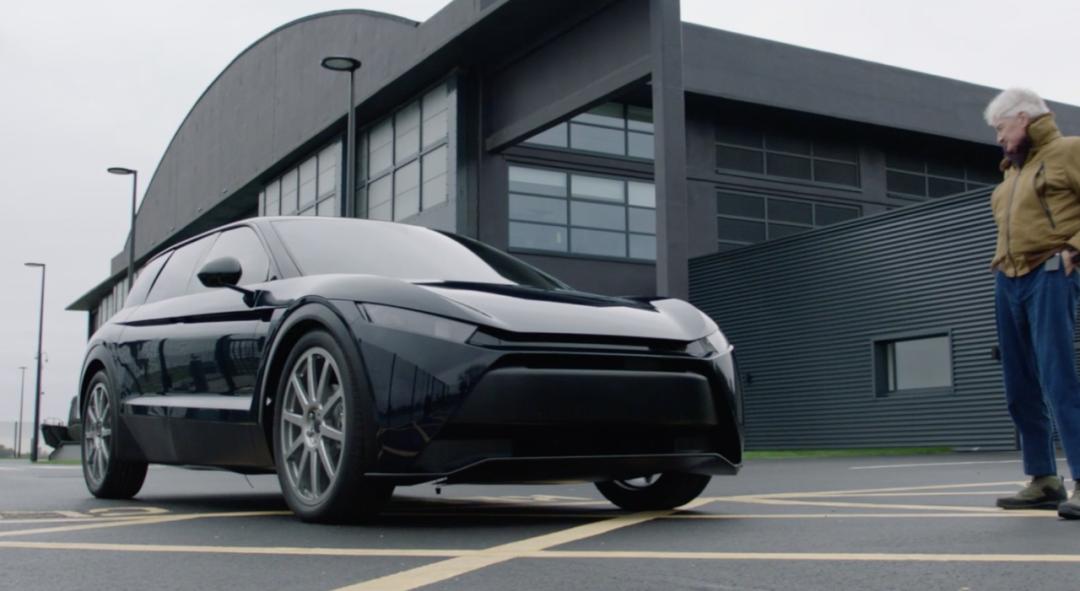
到底是谁在鼓动追觅俞浩造车?
3 6 Ke· 2025-09-26 09:58
Group 1 - The core viewpoint of the article highlights the challenges and ambitions of the new player in the automotive industry, Chasing, which aims to compete in the high-end electric vehicle market despite the difficulties faced by existing companies in the sector [1][2][3] - Chasing's automotive division is ambitious, targeting high-end brands like Bugatti and Rolls-Royce, with plans to launch multiple product lines and a focus on luxury and performance [6][7][9] - The company has a unique approach by establishing its first factory in Berlin, Germany, to leverage the local automotive supply chain and reduce costs, while aiming to launch its first production vehicle by 2027 [10][11] Group 2 - Chasing faces significant challenges in technology transfer from consumer products to automotive standards, as well as the need to establish a strong brand presence in the ultra-luxury market [15][19] - Financially, the company has reported revenues of approximately 15 billion yuan in 2024, but this may not be sufficient to cover the high costs associated with entering the automotive industry [20][22] - The founder of Chasing, Yu Hao, aspires to create a comprehensive ecosystem that includes not only automotive products but also smart home devices and astronomical exploration, indicating a broad vision for the company's future [23][25]

小米17,4499元起!雷军喊话苹果用户
Zhong Guo Zheng Quan Bao· 2025-09-25 16:25
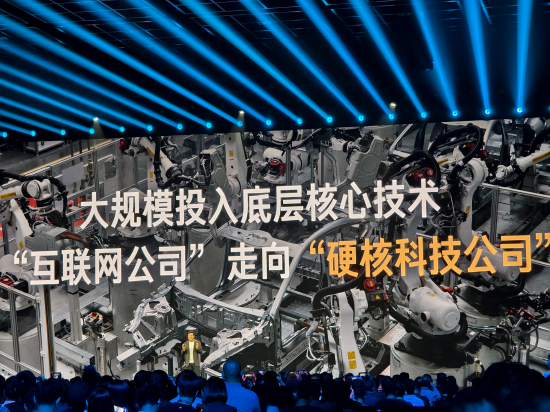
Core Insights - Xiaomi's founder Lei Jun emphasized the company's transition from an "internet company" to a "hardcore technology company" through its chip development journey, which is a crucial step in investing in core technologies [2][3] Group 1: Chip Development Journey - Xiaomi's ambition to develop its own chips began in 2014 with the establishment of Pinecone Electronics, leading to the release of its first SoC in 2017, but faced significant challenges thereafter [3][4] - The failure of the initial SoC project prompted a reevaluation, revealing that entering the high-end market is essential for success, as no smartphone company has successfully entered the SoC market from the low-end [3][4] - The complexity of chip development has increased significantly, requiring at least ten years and an investment of 50 billion yuan, leading to the re-initiation of the chip project in 2021 with the establishment of "Xuanjie" [4][5] Group 2: Financial Challenges and Strategic Decisions - In 2022, Xiaomi experienced a 15% decline in revenue, marking its first revenue drop in 15 years, which raised concerns about continuing chip development projects that require hundreds of millions in investment [4][5] - Despite financial difficulties, Lei Jun expressed strong support for continuing the chip development efforts, emphasizing the importance of building a robust chip R&D team regardless of the outcome [4][5] Group 3: Product Launches and Innovations - The self-developed mobile chip "Xuanjie O1" is set to be produced using advanced 3nm technology, with a production cost of approximately 20 million USD, and is expected to be featured in Xiaomi's upcoming devices [4][5] - The Xiaomi 17 series was launched with prices starting at 4,499 yuan, featuring high-end specifications comparable to the iPhone 17, including a 7000mAh battery for extended battery life [7][9] - The Xiaomi 17 Pro series includes innovative features such as a "wonderful back screen" for selfies and notifications, and the new "Surging OS 3" enhances connectivity with Apple devices [9]

雷军:芯片是小米发展中绝对绕不过去的,但现在造芯复杂度远超10年前
Xin Lang Ke Ji· 2025-09-25 11:19
Core Insights - The core theme of Lei Jun's annual speech is "Change," emphasizing the critical role of chip development in Xiaomi's growth strategy [1] - Lei Jun highlighted the increasing complexity of chip manufacturing, stating that developing a System on Chip (SoC) for mobile phones now requires at least 10 years and an investment of 50 billion [1] - He encouraged a mindset of experimentation, suggesting that not trying guarantees failure, and that taking risks is essential for progress [1] Group 1 - The importance of chip development in Xiaomi's success is underscored as an unavoidable path [1] - The complexity of chip manufacturing has significantly increased compared to a decade ago [1] - Lei Jun's call for courage in the face of challenges reflects a proactive approach to innovation [1]
热搜第一!雷军:小米非常非常缺人
Zhong Guo Ji Jin Bao· 2025-09-25 09:46
Core Insights - Lei Jun, the founder and CEO of Xiaomi, emphasized the company's significant need for talent during a recent video address, stating that Xiaomi is "very, very short of people" as it continues to grow rapidly [3][7]. Group 1: Talent Acquisition and Company Growth - The two most important tasks for Xiaomi are finding talent and accumulating financial resources to focus on major projects [6]. - Xiaomi has been actively promoting internal talent and recruiting externally to alleviate pressure on leadership [7]. - The company has experienced rapid growth, which has led to challenges in managing its workforce effectively [3][7]. Group 2: Addressing Criticism and Market Perception - Lei Jun acknowledged that Xiaomi's innovative business model has faced skepticism, but he believes that the company is changing perceptions through its actions [8]. - The launch of smart factories for mobile phones and cars has helped to counter negative perceptions of Xiaomi as merely an "assembly factory" [8]. Group 3: Product Development and Future Plans - Lei Jun indicated that while Xiaomi's high-end product strategy is progressing, it is too early to declare success [9]. - The upcoming launch of the Xiaomi 17 series and other high-end products is highly anticipated, with a focus on significant upgrades without increasing prices for certain models [14]. - The Xiaomi 17 series will feature the latest Surge OS 3 system, which has seen considerable improvements [14]. Group 4: Annual Speech and Strategic Vision - The 2025 annual speech by Lei Jun is set to cover the themes of change and innovation, including insights into Xiaomi's chip and automotive ventures [11][17]. - Lei Jun compared the challenges of entering the automotive and semiconductor industries to the pressures of supporting two children in college, highlighting the magnitude of the undertaking [19].
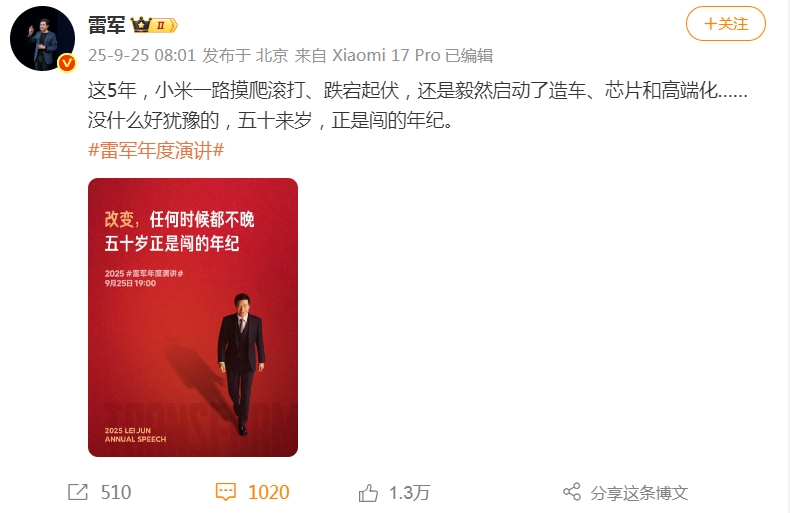
雷军“五十来岁正是闯的年纪”,出生于1969年,和余承东、陈明永同龄
Qi Lu Wan Bao· 2025-09-25 03:18
Group 1 - The core message of the news is that Xiaomi's founder, Lei Jun, reflects on the company's journey over the past five years, emphasizing the bold decisions to venture into car manufacturing and chip development, despite the challenges faced [1][4]. - Lei Jun's annual speech on September 25 will focus on the themes of change, revealing the stories behind Xiaomi's new chip and car initiatives [4]. - The decision to simultaneously pursue car manufacturing and chip development is described as a significant risk, with Lei Jun comparing it to the pressure of supporting two children in college, indicating the high stakes involved [4]. Group 2 - Lei Jun's annual speech was initially planned for June but was postponed to September to align with the launch of the Xiaomi 17 series flagship, which is expected to generate significant attention [4]. - The delay in the annual speech was seen positively by Lei Jun, as it allows for leveraging the publicity from the Xiaomi 17 series launch [4]. - The shared birth year of Lei Jun with other industry leaders like Huawei's Yu Chengdong and OPPO's Chen Mingyong highlights a generational shift in the tech industry [4].
雷军:造车造芯还养孩子,压力巨大
盐财经· 2025-09-24 10:37
Group 1 - The core viewpoint of the article is that Xiaomi's Chairman and CEO Lei Jun has made a significant decision to simultaneously pursue car manufacturing and restart chip production, investing heavily in these ventures [3][4]. - Lei Jun expressed the immense pressure of this decision, likening it to supporting two children in college, indicating the high stakes involved [4]. - The article mentions that Lei Jun will host an annual speech on September 25, focusing on the theme of "Change," where he will reveal stories behind Xiaomi's new chip and car initiatives [6].
雷军真是拼了!自称压力山大,小米 10 年家底砸向造车造芯
程序员的那些事· 2025-09-24 09:37
Core Viewpoint - Lei Jun's decision to simultaneously pursue car manufacturing and chip production represents a significant commitment of Xiaomi's resources, reflecting a bold strategy to compete with industry leaders like Apple, Porsche, and Tesla [4][6]. Group 1: Company Strategy - Xiaomi is positioning itself to directly compete with top-tier companies, as indicated by Lei Jun's statement about aiming to "fully benchmark iPhone" with the launch of the "Xiaomi 17" series [4]. - The strategy of benchmarking against world leaders is seen as a courageous move, with Lei Jun emphasizing that learning from the best is essential for eventual success [6]. Group 2: Industry Context - The decision to enter the automotive and semiconductor industries simultaneously highlights the increasing competition in technology and automotive sectors, where companies are striving to innovate and capture market share [4][5].
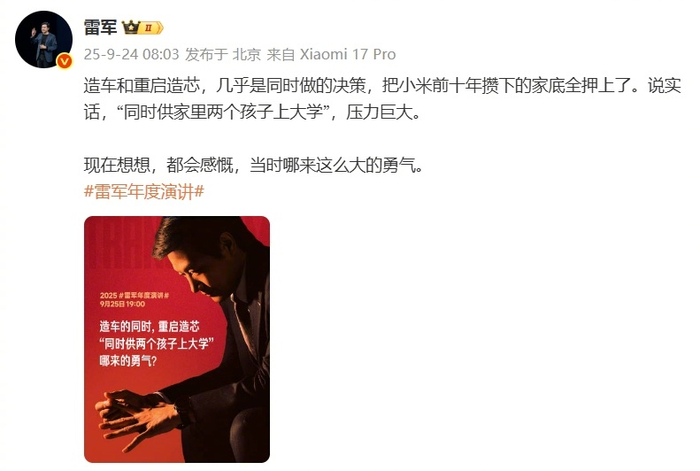
雷军:押上全部家底造车造芯,“同时供家里两个孩子上大学”,压力巨大
证券时报· 2025-09-24 08:13
Core Viewpoint - Xiaomi's Chairman and CEO Lei Jun announced that the decisions to enter the automotive industry and restart chip production were made simultaneously, indicating a significant commitment of the company's resources accumulated over the past decade [1]. Group 1 - Lei Jun expressed the immense pressure of managing both ventures, likening it to the challenge of supporting two children in college simultaneously [2]. - He is preparing for the annual speech scheduled for September 25, where he will discuss themes of "change" and reveal insights about the Xiaomi chip and car projects [4].
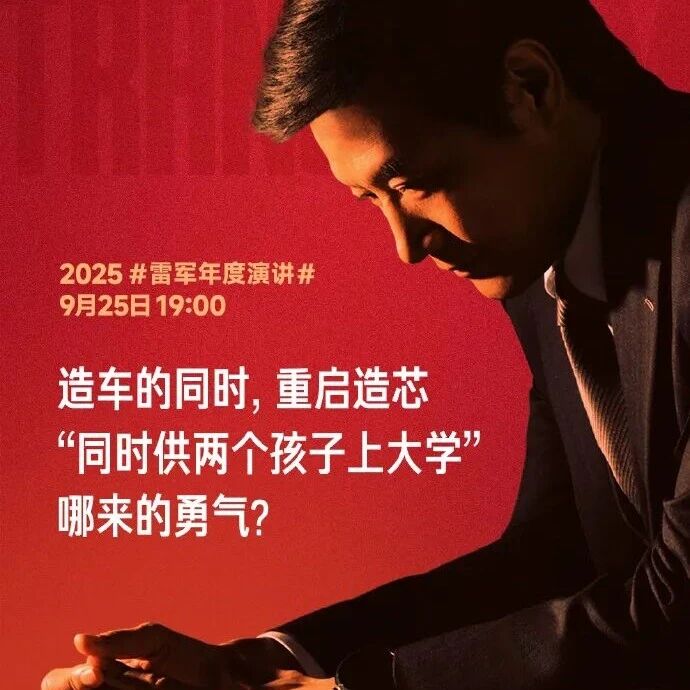
雷军:押上全部家底造车造芯,“同时供家里两个孩子上大学”,压力巨大
Sou Hu Cai Jing· 2025-09-24 06:32
Core Insights - Xiaomi's Chairman and CEO Lei Jun announced the simultaneous decision to venture into car manufacturing and restart chip production, indicating a significant commitment of resources and a high level of pressure [1] - The upcoming annual speech on September 25 will focus on the themes of change, revealing insights into Xiaomi's new chip and automotive projects [1] - Lei Jun explained the delay of this year's annual speech, originally planned for June, to align with the launch of the Xiaomi 17 series flagship, suggesting a strategic marketing approach [1] Group 1 - The decision to pursue both automotive and chip production reflects Xiaomi's long-term investment strategy and willingness to take risks [1] - The annual speech is expected to provide detailed information about Xiaomi's advancements in technology and product development [1] - The postponement of the annual speech was strategically timed to leverage the attention from the Xiaomi 17 series launch [1]
雷军称造车造芯押上家底,小米汽车销量突破22万辆
3 6 Ke· 2025-09-24 06:18
Group 1 - The core decision of Xiaomi's CEO Lei Jun to simultaneously venture into car manufacturing and restart chip production has put the company's accumulated resources at risk, likening it to the pressure of supporting two children in college [1][3] - Lei Jun's upcoming annual speech will focus on the theme of "change," where he will share stories related to Xiaomi's chip and car initiatives [1][2] - Xiaomi's automotive strategy includes the dual model approach with SU7 and YU7, aiming for a total sales target of 350,000 units for the year [2] Group 2 - As of August 2025, Xiaomi's automotive sales reached 224,800 units, achieving approximately 64% of its annual target [2] - In September 2025, Xiaomi's SU7 and YU7 models led the sales charts in their respective categories, with SU7 selling 19,848 units and YU7 selling 16,548 units [2] - In the third week of September 2025, Xiaomi ranked second in the new energy vehicle market with a weekly sales figure of 10,800 units, following Leap Motor [2]