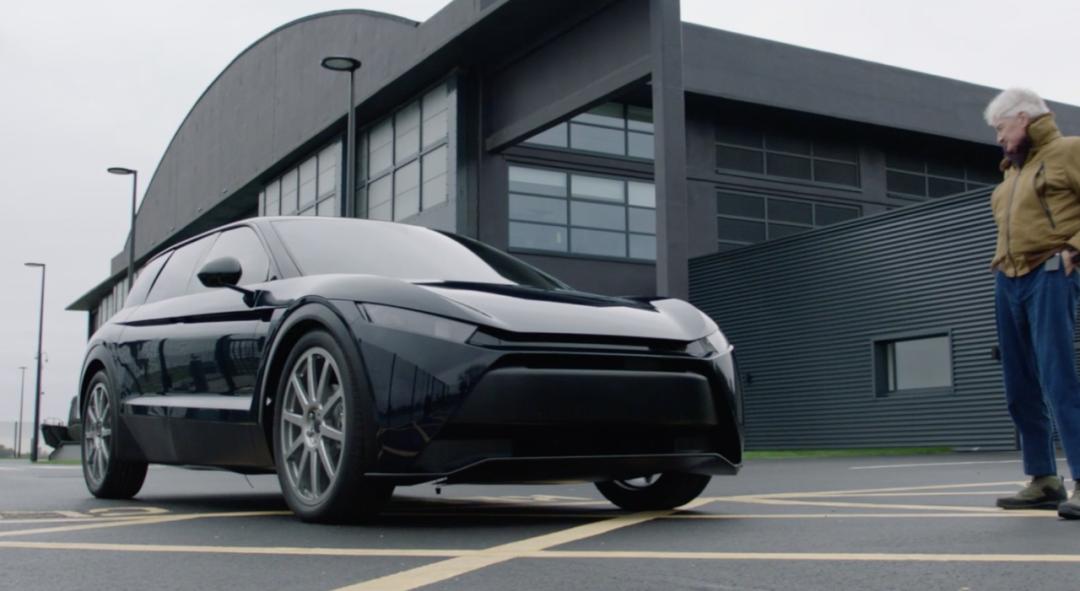
人车家全生态战略

Search documents
小米集团-W(01810):大模型和新一代SU7定价超预期
HTSC· 2026-03-20 05:05
Investment Rating - The report maintains a "Buy" rating for Xiaomi Group with a target price of HKD 43 [5][7]. Core Insights - Xiaomi's recent product launch, including the new SU7 model and the Mimo-V2-Pro AI model, exceeded market expectations in terms of pricing and features, indicating strong competitive positioning in the AI era [1][2]. - The SU7 model features significant upgrades and competitive pricing, which is approximately HKD 20,000 lower than its main competitor, Tesla, enhancing its market appeal [3]. - Xiaomi's commitment to AI development is underscored by a projected investment of over RMB 60 billion in the next three years, positioning the company as a key player in the AI landscape [2]. Summary by Sections Product Launch - Xiaomi's spring product launch showcased the new SU7 model with prices set at HKD 219,900, HKD 249,900, and HKD 303,900, reflecting only a HKD 4,000 increase from the previous generation [1]. - The Mimo-V2-Pro AI model, featuring 1 trillion parameters, ranks 8th globally in performance, demonstrating significant cost advantages compared to competitors [2]. Automotive Segment - The new SU7 model has seen strong initial demand, with over 15,000 orders within 34 minutes of launch, indicating robust market interest [3]. - The report anticipates a total delivery of 410,000 vehicles for the year, supported by improvements in sales and production processes [3]. Financial Projections - The report forecasts non-GAAP net profits of RMB 388.9 billion, RMB 345.1 billion, and RMB 453.7 billion for 2025-2027, respectively [5]. - The target price of HKD 43 corresponds to a 29x PE ratio for 2026, reflecting confidence in Xiaomi's growth trajectory [5][37]. Ecosystem Development - Xiaomi's return to the PC market with the Xiaomi Book Pro and the launch of the Watch S5 further solidify its "human-vehicle-home" ecosystem strategy, enhancing its competitive edge [4].

小米辟谣“17 Ultra徕卡版变焦环造假”
新华网财经· 2026-01-03 03:28
Core Viewpoint - Xiaomi has clarified the mechanical structure of the zoom ring in the Xiaomi 17 Ultra Leica version, refuting claims that it is merely software-controlled, emphasizing its complex and precise design [1][3]. Group 1: Product Details - The Xiaomi 17 Ultra Leica version features a mechanical zoom ring that operates through an external rotation, driving an internal gear system, which allows for precise control of zoom through physical movement [1][3]. - The starting price for the Xiaomi 17 Ultra is 6,999 yuan, which is an increase of 500 yuan compared to the previous Ultra model [1][3]. - The Xiaomi 17 Ultra Leica version is inspired by classic Leica cameras and offers customizable settings for users, such as adjusting EV and filters [1][3]. Group 2: Market Strategy - Goldman Sachs has noted that the launch of the Xiaomi 17 Ultra series reflects Xiaomi's ongoing strategy to move towards high-end products, with expectations of further penetration into the market segment priced above 6,000 yuan by 2026 [5]. - The company is also accelerating its AI development, with plans to integrate self-developed chipsets and software into future AI-native consumer devices [5]. Group 3: Leadership and Communication - Xiaomi's founder and CEO Lei Jun has highlighted the Xiaomi 17 Ultra Leica version as a significant breakthrough for the Ultra series and a reference point for the industry [4]. - A live stream event featuring Lei Jun was postponed due to illness, where he is expected to invite engineers to demonstrate the product [6].


小米最新辟谣!发布小米17 Ultra徕卡版变焦环结构原理
Zheng Quan Shi Bao· 2026-01-03 03:14
Group 1 - Xiaomi has refuted claims regarding the "fake zoom ring" of the Xiaomi 17 Ultra Leica version, stating that the zoom ring's mechanical structure is complex and precise, involving a gear system that translates physical rotation into digital signals for zoom control [2] - The Xiaomi 17 Ultra was officially launched on December 25, 2025, with a starting price of 6,999 yuan, which is an increase of 500 yuan compared to the previous Ultra model [4] - The Xiaomi 17 Ultra Leica version features a design inspired by classic Leica cameras, with a zoom ring that allows users to adjust focal lengths, priced at 7,999 yuan for the 16GB+512GB version and 8,999 yuan for the 16GB+1TB version [4] Group 2 - Goldman Sachs' latest report indicates that the launch of the Xiaomi 17 Ultra smartphone series enriches the company's product line and reflects its ongoing high-end strategy, with expectations for further penetration into the market above 6,000 yuan in China by 2026 [5] - The report also highlights Xiaomi's accelerated AI development this year, with plans to integrate self-developed chipsets, the Surge OS, and the MiMo large language model into a potential AI-native consumer terminal expected to be released in 2026 [5] - Xiaomi's strong balance sheet, robust ecosystem integration capabilities, and cost advantages from deep supply chain involvement are expected to enhance its competitiveness in the electric vehicle sector, with a "buy" rating and a target price of 53.5 HKD assigned by Goldman Sachs [5]
小米最新辟谣!
证券时报· 2026-01-03 02:50
Core Viewpoint - Xiaomi has clarified the mechanical structure of the zoom ring in the Xiaomi 17 Ultra Leica version, refuting claims that it is a software-based feature and emphasizing its complex and precise design [2]. Group 1: Product Launch and Pricing - The Xiaomi 17 Ultra was officially launched on December 25, 2025, with a starting price of 6,999 yuan, which is an increase of 500 yuan compared to the previous Ultra model [4]. - The Xiaomi 17 Ultra Leica version features a design inspired by classic Leica cameras, with a zoom ring that allows users to adjust focal lengths. The pricing for the 16GB+512GB version is 7,999 yuan, and the 16GB+1TB version is priced at 8,999 yuan [4]. Group 2: Market Strategy and Analyst Insights - Goldman Sachs has noted that the launch of the Xiaomi 17 Ultra series enriches the company's product line and reflects its ongoing high-end strategy. The firm expects Xiaomi to penetrate the market for products priced above 6,000 yuan in China and accelerate its development of high-end products overseas by 2026 [5]. - The report also highlights Xiaomi's accelerated AI development this year, with expectations for the integration of self-developed chipsets, the Surge OS, and the MiMo large language model into a potential AI-native consumer terminal by 2026. The company is viewed positively due to its strong balance sheet, robust ecosystem integration capabilities, and cost advantages from deep supply chain involvement, enhancing its competitiveness in the electric vehicle sector [5].

大行评级|高盛:小米持续推进高端化策略 予其“买入”评级及目标价53.5港元
Ge Long Hui· 2025-12-29 05:47
Core Viewpoint - Goldman Sachs reports that Xiaomi's latest release of the 17 Ultra smartphone series reflects its ongoing strategy to move upscale, with a focus on penetrating the market for products priced above 6000 yuan in China and accelerating the development of high-end products overseas [1] Group 1: Product Strategy - Xiaomi's product line has become richer with the introduction of the 17 Ultra smartphone series, indicating a commitment to high-end market penetration [1] - The company is expected to prioritize high-end product development as a key task entering next year [1] Group 2: AI Development - Xiaomi is accelerating its AI development this year, with plans to integrate self-developed chipsets, the Surge OS, and the MiMo large language model into a potential AI-native consumer terminal expected to launch in 2026 [1] Group 3: Competitive Positioning - The company is in the early stages of a multi-year ecological expansion under its human-vehicle-home ecosystem strategy, supported by a robust balance sheet and strong ecosystem integration capabilities [1] - Xiaomi's deep involvement in the supply chain provides it with cost advantages that are expected to enhance its competitiveness in the electric vehicle sector [1] Group 4: Investment Rating - Goldman Sachs has assigned a "Buy" rating to Xiaomi, with a target price of 53.5 Hong Kong dollars [1]
小米集团-W(01810):用户触点超 10 亿量级,汽车首次盈利,高端化超预期
SINOLINK SECURITIES· 2025-11-20 15:25
Investment Rating - The report maintains a "Buy" rating for the company, anticipating a price increase of over 15% in the next 6-12 months [5]. Core Insights - The company reported a revenue of 340.37 billion RMB for the first three quarters of 2025, reflecting a year-on-year growth of 32.5%, with an adjusted net profit of 32.82 billion RMB, up 73.5% [2]. - The AIoT platform has connected over 1.035 billion IoT devices, marking a 20.2% increase year-on-year, surpassing major global competitors [2]. - The company is focusing on high-end smartphone positioning, with the Xiaomi 17 series seeing over 80% of its sales from Pro and Pro Max models, and a 24.1% share in the high-end smartphone market in mainland China [3]. - The IoT and consumer products segment achieved a revenue of 27.6 billion RMB in Q3 2025, with a gross margin of 23.9%, up 3.2 percentage points year-on-year [3]. - The internet services segment saw a revenue increase of 10.8% year-on-year, with overseas internet service revenue growing by 34.9% [4]. - The automotive business is showing positive trends, with the YU7 model delivering 108,796 units, a 32.6% increase quarter-on-quarter, contributing to profitability [4]. Summary by Sections Performance Review - For Q3 2025, the company achieved a revenue of 113.12 billion RMB, a 22.3% increase year-on-year, and an adjusted net profit of 11.31 billion RMB, up 80.9% [2]. Business Analysis - The smartphone segment generated 46 billion RMB in revenue in Q3 2025, with a global shipment of 43.4 million units, maintaining a market share of 16.7% globally and 13.6% in China [3]. - The IoT and consumer products segment's revenue reached 27.6 billion RMB, with a focus on smart home appliances and a new factory for smart appliances [3]. Internet Services - The internet services segment's revenue was 9.4 billion RMB in Q3 2025, with a notable increase in overseas revenue [4]. Automotive Business - The automotive segment is on track with the YU7 model's deliveries, indicating a positive trend towards profitability despite some margin pressures [4]. Profit Forecast and Valuation - The adjusted EPS forecasts for 2025, 2026, and 2027 are 1.7, 2.0, and 2.6 RMB respectively, with corresponding PE ratios of 23.89, 20.53, and 15.03 [5].
小米的快车道与岔路口
Bei Jing Shang Bao· 2025-11-18 16:01
Core Insights - Xiaomi reported strong growth in its Q3 2025 earnings, with revenue increasing by 22.3% year-on-year to 113.1 billion yuan and adjusted net profit soaring by 80.9% to 11.3 billion yuan [1] - The company's total revenue for the first three quarters reached 340.4 billion yuan, a 32.5% increase year-on-year, while net profit grew by 73.5% to 32.8 billion yuan [1] - The "smart electric vehicle and AI innovation business" was the standout segment, generating 29 billion yuan in Q3, a staggering 199.2% increase year-on-year, and accounting for 25.6% of total revenue [1] Revenue Breakdown - The "mobile and AIoT" business generated 84.1 billion yuan, making up 74.4% of total revenue, but showed only a slight year-on-year increase of 1.6% due to a decline in smartphone shipments [2] - In contrast, the automotive segment achieved its first quarterly operating profit of 700 million yuan, with a significant contribution from vehicle sales, which surpassed 100,000 units [1][2] - Cumulatively, Xiaomi delivered over 260,000 vehicles in the first three quarters, with a target of 350,000 units for the year [2] Challenges and Public Relations - Despite the strong financial performance, Xiaomi faces challenges including product lawsuits and safety controversies, which have diverted attention from its growth trajectory [3] - Recent incidents, such as the delayed lawsuit regarding the Xiaomi SU7 Ultra and safety concerns following accidents, have raised questions about the company's product safety and public perception [3][4] - The departure of a key public relations executive amid these controversies highlights the need for a robust response strategy to manage public sentiment as the company expands into new markets [4]
快车道上的小米,岔路口中的小米
Bei Jing Shang Bao· 2025-11-18 14:33
Core Viewpoint - Xiaomi has reported strong growth in its Q3 2025 financial results, showcasing a significant increase in revenue and adjusted net profit despite challenges in the smartphone market [2][3]. Financial Performance - In Q3 2025, Xiaomi achieved a revenue of 113.1 billion yuan, representing a year-on-year growth of 22.3% [2]. - The adjusted net profit for the same period was 11.3 billion yuan, showing an impressive increase of 80.9% year-on-year [2]. - For the year-to-date period ending Q3, total revenue reached 340.37 billion yuan, up 32.5%, while net profit was 32.82 billion yuan, reflecting a growth of 73.5% [2]. Business Segments - The "Smart Electric Vehicles and AI Innovation" segment was the standout performer, generating 29 billion yuan in revenue, a staggering increase of 199.2% year-on-year, and accounting for 25.6% of total revenue [2]. - The automotive sector contributed significantly, with 28.3 billion yuan in revenue and over 100,000 units delivered, marking a transition to profitability with a quarterly operating profit of 700 million yuan [2]. Market Context - Despite the strong performance in the automotive sector, the smartphone and AIoT business, which generated 84.11 billion yuan (74.4% of total revenue), showed only a slight year-on-year increase of 1.6% due to a decline in the smartphone market [3]. - IDC data indicates that China's smartphone shipments fell by 0.5% year-on-year in Q3, continuing a downward trend from the previous quarter [3]. Challenges and Public Relations - Xiaomi faces challenges from product lawsuits, safety concerns, and public relations issues, which could distract from its growth trajectory [3][4]. - Recent controversies include a lawsuit regarding false advertising and safety discussions following incidents involving the Xiaomi SU7 model, leading to increased scrutiny of the company's safety practices [3][4]. - The departure of a key public relations executive amid these challenges raises concerns about the company's ability to manage its public image effectively [4]. Strategic Outlook - As Xiaomi transitions from a consumer electronics giant to a comprehensive ecosystem company, maintaining growth while addressing potential gaps will be crucial for navigating future challenges [5].
大行评级|招银国际:重申小米“买入”评级 小米17手机定价极具竞争力
Ge Long Hui A P P· 2025-09-29 05:47
Core Viewpoint - Xiaomi Group recently held a product launch event, introducing the flagship Xiaomi 17 series smartphones, Xiaomi Pad 8 series tablets, and a range of high-end home appliances, along with custom services for Xiaomi cars YU7 and SU7 Ultra [1] Group 1: Product Launch and Pricing - The starting price for the Xiaomi 17 is set at 4499 yuan, which is competitive compared to the iPhone 17's starting price of 5999 yuan [1] - The Xiaomi 17 Pro and Max have starting prices of 4999 yuan and 5999 yuan respectively, which are lower than the previous year's 15 Pro and Pro Ultra pricing [1] - The new models feature innovative elements such as the "Miao Xiang" back screen and direct compatibility with the Apple ecosystem, reflecting the company's strategy to directly compete with the iPhone [1] Group 2: Strategic Implications - The product launch demonstrates Xiaomi's advancement in high-end smartphones and AIoT products, reinforcing its comprehensive ecosystem strategy across vehicles, homes, and personal devices [1] - The target price for Xiaomi is maintained at 62.96 HKD, with a reiterated "Buy" rating from the research report [1]
到底是谁在鼓动追觅俞浩造车?
3 6 Ke· 2025-09-26 09:58
Group 1 - The core viewpoint of the article highlights the challenges and ambitions of the new player in the automotive industry, Chasing, which aims to compete in the high-end electric vehicle market despite the difficulties faced by existing companies in the sector [1][2][3] - Chasing's automotive division is ambitious, targeting high-end brands like Bugatti and Rolls-Royce, with plans to launch multiple product lines and a focus on luxury and performance [6][7][9] - The company has a unique approach by establishing its first factory in Berlin, Germany, to leverage the local automotive supply chain and reduce costs, while aiming to launch its first production vehicle by 2027 [10][11] Group 2 - Chasing faces significant challenges in technology transfer from consumer products to automotive standards, as well as the need to establish a strong brand presence in the ultra-luxury market [15][19] - Financially, the company has reported revenues of approximately 15 billion yuan in 2024, but this may not be sufficient to cover the high costs associated with entering the automotive industry [20][22] - The founder of Chasing, Yu Hao, aspires to create a comprehensive ecosystem that includes not only automotive products but also smart home devices and astronomical exploration, indicating a broad vision for the company's future [23][25]