
页岩革命

Search documents
方正证券:当下原油价格的驱动因素及历史走势复盘
智通财经网· 2026-02-15 01:00
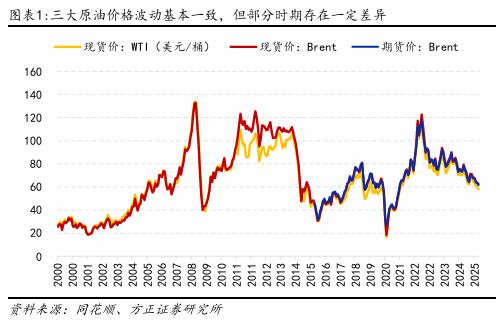
Core Viewpoint - The report from Founder Securities emphasizes that crude oil, as a core commodity in the global energy system, is significantly influenced by supply and demand fundamentals, with the U.S., Russia, and Saudi Arabia forming a tripartite balance in supply. The financial attributes of oil can lead to short-term price deviations, while the political attributes reshape its supply and demand structure [1][31]. Group 1: Crude Oil Price Influencing Factors - Crude oil prices are primarily influenced by three attributes: commodity, financial, and political [2]. - The commodity attribute determines the long-term demand trend, while the financial attribute amplifies price volatility, and the political attribute introduces uncertainty [2][27]. - The global crude oil market features three main pricing systems based on different benchmark oils: WTI, Brent, and Dubai [2]. Group 2: Supply and Demand Dynamics - The demand side of crude oil prices is highly correlated with global economic activity levels, oil inventories, and energy usage [4]. - Crude oil inventories play a crucial role in stabilizing market balance, acting as a buffer against supply disruptions [5]. - The current global crude oil supply structure is characterized by a tripartite balance among the U.S., Russia, and Saudi Arabia, with the U.S. projected to produce nearly 13.2 million barrels per day by 2024 [15]. Group 3: Financial Attributes and Market Dynamics - The dollar's role as the pricing currency for crude oil significantly impacts oil prices, reinforcing the dollar's status as the world's reserve currency [21]. - There exists a dynamic inverse relationship between the dollar index and oil prices, with the dollar's strength typically leading to lower oil prices due to decreased purchasing power in other currencies [22][26]. - The oil market exhibits dual characteristics of commodity and financial attributes, with prices influenced by both supply-demand fundamentals and global financial market conditions [27]. Group 4: Political Attributes and Geopolitical Implications - The "shale revolution" and the establishment of the OPEC+ mechanism have led to a new tripartite oil supply system, increasing interactions and conflicts in energy geopolitics [31]. - The U.S. has shifted its energy strategy from independence to dominance, aiming to lead and influence the international energy market [32]. - The U.S. intervention in Venezuela is seen as a move to re-integrate significant oil reserves into the dollar settlement framework, potentially establishing a new anchor for the petrodollar system [35].


回眸“十四五”|“一稳多增”局面喜人
Xin Lang Cai Jing· 2026-01-10 22:40
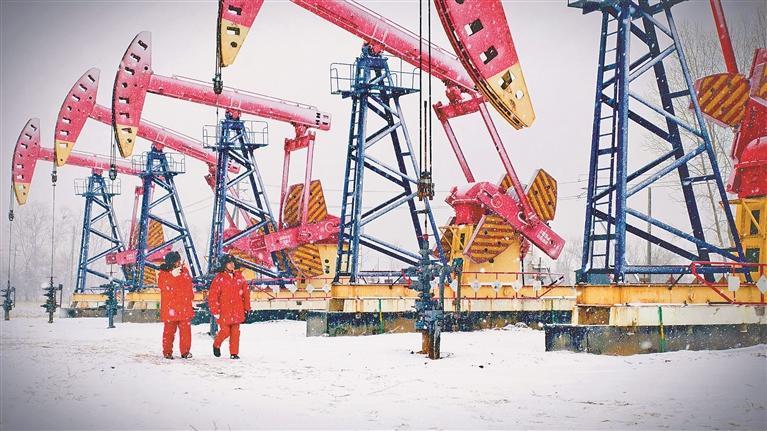
Core Viewpoint - During the "14th Five-Year Plan" period, Daqing Oilfield has achieved significant milestones in energy security and high-quality transformation, maintaining stable production of crude oil and natural gas while also developing unconventional resources and clean energy [3][4] Group 1: Energy Production and Resources - Daqing Oilfield has maintained a stable production of 30 million tons of crude oil for 11 consecutive years and has increased natural gas production to 6.1 billion cubic meters annually [3] - The company has achieved a historical high in reserves, with the SEC reserve replacement rate rising from 0.43 at the beginning of the "14th Five-Year Plan" to 1.0 [3] Group 2: Technological Advancements - Daqing Oilfield has developed five key technologies that have enabled the annual production of shale oil to increase from zero to over 1 million tons within five years, marking a milestone in China's shale revolution [3] - The company has established six national-level platforms, including key laboratories, and aims to authorize over 100 invention patents by 2025, achieving the highest level in history for the same period [4] Group 3: Green and Low-Carbon Development - The company has implemented multi-energy integration projects, achieving a cumulative production of 1.06 million tons of standard coal equivalent in renewable energy during the "14th Five-Year Plan" [4] - Daqing Oilfield has accelerated reforms, completing 72 tasks of the three-year action plan eight months ahead of schedule [4] Group 4: Cultural and Operational Excellence - The company promotes the "Daqing Spirit" and has innovated practices to enhance responsibility and performance under pressure and challenges [4] - Daqing Oilfield is transitioning from traditional oil fields to shale oil new areas, contributing significantly to the construction of an energy powerhouse [4]

港股异动 | 油气股早盘走强 中石化油服(01033)涨近9% 山东墨龙(00568)涨超7%
智通财经网· 2025-11-12 04:01
Core Viewpoint - Oil and gas stocks are experiencing a strong performance, with notable increases in share prices for companies such as Sinopec Oilfield Services and Shandong Molong, driven by significant developments in shale oil production in China [1] Group 1: Company Performance - Sinopec Oilfield Services (01033) saw an increase of 8.97%, trading at 0.85 HKD [1] - Shandong Molong (00568) rose by 7.33%, with shares priced at 4.39 HKD [1] Group 2: Industry Developments - China's largest shale oil production base, Changqing Oilfield, has achieved a cumulative production of over 20 million tons, marking a significant milestone in the country's "shale revolution" [1] - The Ministry of Natural Resources has indicated plans to accelerate the standardization of emerging and future industries during the 14th Five-Year Plan, focusing on deep-sea and deep-earth resources [1] - Several provinces are incorporating "deep earth economy" as a core direction in their respective 14th Five-Year Plans [1]

一则利好!直线拉涨停!
中国基金报· 2025-11-12 03:20
Market Overview - The A-share market showed weakness in early trading on November 12, with the ChiNext index dropping over 1% before recovering, while the Shanghai Composite Index turned positive [2] - Major indices included: Shanghai Composite Index at 4011.45 (+0.22%), Shenzhen Component Index at 13262.15 (-0.20%), and ChiNext Index at 3124.85 (-0.30%) [3] Sector Performance - The energy equipment sector led the gains, while the pharmaceutical sector experienced fluctuations but ultimately rose [3] - Notable sectors with strong performance included energy equipment (+2.36%), pharmaceuticals (+2.31%), and consumer goods [3][4] - Conversely, sectors such as power generation equipment, ultra-hard materials, and storage chips faced declines [3][4] Pharmaceutical Sector Highlights - The pharmaceutical sector saw significant activity, particularly in flu-related stocks, with companies like BoHui Innovation and YaoYiGou hitting the daily limit up [5] - The National Health Commission indicated a potential peak in flu cases in mid-December to early January, which may drive further interest in flu-related stocks [7] Energy Equipment Sector Highlights - The energy equipment sector showed strong performance, with companies like Shandong Molong and Zhun Oil Co. hitting the daily limit up [9] - The Longqing Oilfield, China's largest shale oil production base, reported cumulative production exceeding 20 million tons, marking a significant achievement in the "shale revolution" [13] Policy and Infrastructure Developments - The Ministry of Industry and Information Technology announced plans to accelerate the construction of manufacturing pilot platforms, focusing on key equipment and components to support major technological innovations [14]



油气ETF(159697)涨近1%,我国“页岩革命”取得重大成果
Sou Hu Cai Jing· 2025-11-12 02:04
Core Insights - The oil and gas sector is experiencing active performance, with significant stock price increases among key companies, indicating a positive market sentiment [1] - China's largest shale oil production base, Changqing Oilfield, has achieved a cumulative production of over 20 million tons, marking a major milestone in the country's shale revolution [1] - The current oil market faces an oversupply situation, but OPEC+'s decision to slow down production increases is expected to mitigate this risk [1] Industry Summary - As of November 12, 2025, the National Petroleum and Natural Gas Index (399439) rose by 0.31%, with notable increases in stocks such as Shengli Oilfield (10.10%) and PetroChina (6.38%) [1] - The International Energy Agency (IEA) projects a global oil demand increase of 700,000 barrels per day in 2026, while supply is expected to grow by 2.4 million barrels per day, with both OPEC+ and non-OPEC+ contributing equally [1] - The top ten weighted stocks in the National Petroleum and Natural Gas Index account for 65.09% of the index, highlighting the concentration of market influence among major players like China National Petroleum and Sinopec [2]


Enterprise Products Partners L.P.(EPD) - 2025 Q3 - Earnings Call Transcript
2025-10-30 15:02
Financial Data and Key Metrics Changes - Adjusted EBITDA for Q3 2025 was reported at $2.4 billion, with distributable cash flow (DCF) of $1.8 billion, providing a coverage ratio of 1.5x [10][18] - Net income attributable to common unitholders was $1.3 billion, or $0.61 per common unit on a fully diluted basis [14] - The partnership declared a distribution of $0.545 per common unit, representing a 3.8% increase over the same period in 2024 [14] - Total capital investments for Q3 2025 were $2 billion, including $1.2 billion for growth capital projects [17] Business Line Data and Key Metrics Changes - PDH plants showed improvement, with PDH 1 averaging 95% of nameplate capacity, while PDH 2 resumed operations after a turnaround [11] - The company purchased approximately 2.5 million common units under its buyback program for $80 million in Q3 2025 [14] - Total repurchases for the first nine months of 2025 reached $250 million, totaling approximately 8 million common units [15] Market Data and Key Metrics Changes - The company expects an inflation inflection point in discretionary free cash flow in 2026, following a four-year period of significant investments [16] - The consolidated leverage ratio was reported at 3.3x on a net basis, above the target range of 2.75x-3.25x due to capital expenditures on large projects [19] Company Strategy and Development Direction - The company announced a $3 billion increase to its buyback program, raising it from $2 billion to $5 billion, indicating a strong commitment to returning capital to unitholders [12] - Strategic investments in pipelines, marine terminals, and key acquisitions are expected to capitalize on long-term growth from the Haynesville and Permian basins [12] - The company is nearing the end of a multi-year capital deployment cycle that began in 2022, with a focus on organic growth capital expenditures returning to a mid-cycle range of approximately $2 billion-$2.5 billion per year [16] Management's Comments on Operating Environment and Future Outlook - Management expressed confidence in the upcoming projects, including the Bahia Pipeline and Seminole Pipeline Conversion, which are expected to enhance capacity and flexibility [10] - The management team highlighted that the Permian Basin remains primarily an oil basin, with the addition of more gas pipelines being beneficial for producers [23] - Management noted that the macroeconomic environment is not a concern, as they believe price will create supply and demand [26][46] Other Important Information - The company expects to see growth in cash distributions to partners commensurate with distributable cash flow per unit in the near term [17] - The acquisition of natural gas gathering systems from Occidental is expected to unlock significant revenue opportunities [93] Q&A Session Summary Question: Will the new Permian gas pipelines drive more production? - Management indicated that the Permian Basin is primarily an oil basin, and the new pipelines will enhance NGL transportation, benefiting producers [23] Question: Is there unlimited demand for LPG in Asia? - Management noted that both residential/commercial and petrochemical demand are growing, and the U.S. will export what's needed to balance the market [25][26] Question: What is the capital allocation outlook for the next few years? - Management expects organic growth CapEx in the $2 billion-$2.5 billion range, with a focus on splitting free cash flow between buybacks and debt pay down [36] Question: How is the integration of the Occidental assets going? - The acquisition is strategic, with significant organic growth opportunities expected, including an incremental $200 million in revenue [93] Question: What is the outlook for the Permian sour gas opportunity? - Management remains optimistic about the Permian sour gas opportunity, with additional treating capacity expected to come online [98]

原油供需研究框架
2025-09-03 14:46
Summary of Key Points from Conference Call Records Industry Overview - The records primarily discuss the **global oil industry**, focusing on the dynamics of **OPEC+**, **U.S. shale oil**, and **refining capacity** [1][2][3][4][5][6][7][8][9][10][11][12][13][14][15][16][17][18][19]. Core Insights and Arguments - **OPEC+ Production and Compliance**: OPEC+ has increased its voluntary production cuts, with compliance rates improving. However, actual production has often fallen below target levels in recent years [3][5]. - **Impact of Price Wars**: Saudi Arabia has engaged in two significant price wars, the first due to the U.S. shale boom and the second following a breakdown in agreements with Russia. Both resulted in financial strain for Saudi Arabia without achieving substantial market share gains [6][7]. - **U.S. Shale Revolution**: The U.S. has transitioned from a net importer to an exporter of oil due to the shale revolution, leading to global oversupply and price declines. U.S. shale companies' capital expenditures (CAPEX) are closely tied to oil prices, with a notable increase in domestic CAPEX share [7][10]. - **Resource Pressure on U.S. Shale Companies**: The lifespan of reserves for U.S. shale companies has decreased, prompting potential strategies such as reducing output or increasing CAPEX to address resource pressures [11]. - **Global Refining Trends**: There is a shift in global refining product consumption towards lighter components, with the Asia-Pacific region becoming the primary consumer, accounting for nearly 40% of global oil consumption [1][4][14]. - **Refinery Capacity and Utilization**: Global refining capacity is currently in excess, with a decline in utilization rates. China's rapid expansion in refining capacity is also facing oversupply issues [2][18]. Additional Important Insights - **OPEC+ Internal Dynamics**: Russia's strategy within OPEC+ has involved circumventing production cuts by adjusting baseline production levels, leading to internal conflicts within the organization [8]. - **Future Supply and Demand Outlook**: Projections indicate that by 2025-2026, supply from U.S. shale, Canadian pipelines, and new projects in Brazil and Kazakhstan will exceed demand growth, putting downward pressure on oil prices [2][19]. - **Capital Expenditure Trends**: Despite a recent uptick in CAPEX among U.S. shale companies, overall levels remain lower than during the peak of the shale revolution, indicating a cautious approach to investment [10][12]. - **Consumer Behavior Changes**: In the U.S., gasoline and diesel remain dominant, while in China, the consumption of lighter components like liquefied petroleum gas is increasing, reflecting a shift in energy consumption patterns [17]. This summary encapsulates the critical points discussed in the conference call records, providing a comprehensive overview of the current state and future outlook of the global oil industry.
中国石油长庆油田日产页岩油跨越万吨大关
Xin Hua Wang· 2025-08-12 06:23
Core Insights - China National Petroleum Corporation's Changqing Oilfield has achieved a significant milestone in shale oil production, with daily output surpassing 10,000 tons, reaching 10,006 tons, marking a major success in the country's "shale revolution" [1] Group 1: Production Achievements - The Changqing Oilfield's exploration and development in the Ordos Basin face challenges due to thin oil layers and strong heterogeneity, with permeability only one-thousandth of that in conventional oil fields [1] - Since 2018, the Changqing Oilfield has accelerated shale oil capacity construction and established a large-scale hydraulic fracturing scientific experimental site, leading to the development of key technologies for volume fracturing [1] - The single well output has increased from 1.5 tons to 18 tons, overcoming global challenges in developing low-pressure shale oil fields without relying on natural energy [1] Group 2: Operational Efficiency - The traditional development approach has been transformed, reducing the workforce required for a million-ton output from over 2,000 to just 200, achieving economies of scale in shale oil development [1] - In 2023, the expected shale oil production from the Changqing Oilfield is projected to reach 3.5 million tons, with 85% of this output coming from the Gansu Longdong oil area [1]
长庆油田页岩油日产量突破10000吨
Ke Ji Ri Bao· 2025-07-24 01:02
Core Insights - Changqing Oilfield's shale oil daily production has surpassed 10,000 tons, reaching 10,006 tons, marking a significant achievement in China's "shale revolution" [1][3] - In 2024, Changqing Oilfield is expected to produce 52.2% of the country's total shale oil output, having cumulatively produced over 18.5 million tons, establishing itself as a major shale oil production area in China [1][3] - The oilfield has deployed over 700,000 tons of production capacity this year, with 135 horizontal wells put into production, contributing an additional daily output of 1,320 tons, raising total production to 2 million tons [1][3] Industry Developments - Since 2011, Changqing Oilfield has adopted the North American shale revolution's "horizontal drilling + hydraulic fracturing" approach, conducting proactive technological research and pilot development experiments [2][4] - The oilfield has made significant advancements in understanding shale oil accumulation mechanisms and enrichment patterns, leading to the discovery of a 4 billion-year-old large inland freshwater lake basin's shale accumulation rules [2][4] - In 2018, Changqing Oilfield initiated the construction of China's first large-scale hydraulic fracturing scientific test site for shale oil, establishing key technologies for volume fracturing and enhancing single well output from 1.5 tons to 18 tons, overcoming global challenges in developing low-pressure shale oil fields [2][4]
【环球财经】专家:巴西石油产量增长前景受限 未来或将转为石油净进口国
Xin Hua Cai Jing· 2025-07-23 05:17
Core Insights - Brazil's oil production is projected to peak by 2030 and may decline by half by 2040, potentially leading to the country becoming a net oil importer by the 2030s due to structural, policy, and technological limitations [1][2] - The lifecycle of Brazil's conventional oil fields is typically 27 to 30 years, with existing fields nearing maturity and new resource development not yet established to maintain current production levels [2] - There is a call for the Brazilian government to expedite oil and gas block bidding processes and optimize regulatory frameworks to attract advanced extraction technologies, such as hydraulic fracturing [2] Industry Analysis - Brazil's oil production is constrained by high extraction costs, technical requirements, and outdated institutional reforms, unlike the U.S. which has benefited from the shale oil revolution [1][2] - The Campos Basin, which began production in 1977, is reaching maturity, and the pre-salt fields developed in 2008 are expected to enter a phase of production decline in the coming years [2] - Despite a projected peak production of 3.697 million barrels per day in May 2024, Brazil's production growth lacks sustainability [2] Future Outlook - There is potential for Brazil to remain a stable supplier in the global energy market if institutional barriers are addressed and technological investments are strengthened [3]