AI向实

Search documents
2026年的AI:向人立心,向实立命 | 2026商业新愿景
Jing Ji Guan Cha Wang· 2026-02-14 03:21
Core Insights - The AI landscape is rapidly evolving, with significant advancements in large models, intelligent agents, computing power, data centers, and application ecosystems, leading to a competitive environment where companies like OpenAI, Anthropic, and Google are vying for market leadership [2] - The focus for 2026 will shift from merely enhancing model capabilities to a comprehensive evaluation of cognitive direction, implementation pathways, and organizational capabilities [2] - The transformation of AI from a tool to a collaborative partner is crucial, emphasizing the need for governance and the establishment of boundaries for AI decision-making [4][5] Group 1: AI Evolution and Organizational Change - The current AI revolution differs from past technological waves as it transcends mere tool iteration, fundamentally altering the boundaries of productivity factors [3] - The concept of "Superintelligence" emerges as a new organizational form where companies operate as continuously learning systems, integrating machines, humans, and organizations [3] - The transition to a "human-centered" approach in AI is essential, where machines evolve to become proactive agents capable of executing complex tasks [4] Group 2: Governance and Human-Centric Focus - As AI becomes more autonomous, the governance of AI systems will be critical, necessitating clear boundaries for AI actions and human oversight [5] - The shift from mechanical tasks to human-centric roles will highlight the importance of human capabilities such as vision, judgment, and creativity in navigating AI's influence [6] - Companies must adapt to a new organizational structure that fosters human-machine collaboration, moving away from traditional hierarchical models [6] Group 3: Practical Application and Infrastructure Investment - The focus on "real-world" applications of AI will be paramount in 2026, requiring companies to demonstrate scalable and replicable AI solutions that yield tangible business results [7] - Investment in AI infrastructure is expected to surge, with major tech companies forecasting significant capital expenditures to support AI deployment [8][9] - The evolution of AI models will expand beyond language models to include architectures that can understand physical laws and facilitate real-world applications [8] Group 4: Future Outlook and Strategic Priorities - Despite skepticism regarding investment returns, leading companies are prioritizing AI as a key strategic initiative to drive measurable value [11] - The dual focus on enhancing human capabilities alongside AI deployment will be essential for maximizing productivity and ensuring effective organizational transformation [11]


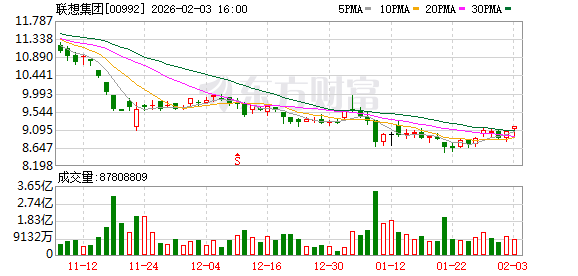
联想集团董事长兼CEO杨元庆:以混合式AI推动AI向实
Xin Hua Cai Jing· 2026-02-03 08:07
Group 1 - The core viewpoint of the article emphasizes the importance of integrating artificial intelligence (AI) with manufacturing to enhance China's position in the global value chain, as outlined in the "AI + Manufacturing" action plan released by multiple government departments [2][3] - Lenovo's Chairman and CEO, Yang Yuanqing, highlights that the current wave of AI, driven by large models, fundamentally transforms human-machine interaction, significantly improving cognitive depth and execution efficiency, which is crucial for the integration of AI into the real economy [2][3] - The article discusses the unique advantages China possesses in the field of AI and its integration with the real economy, including a large market space and a comprehensive manufacturing system, which can enhance core competitiveness and stimulate new market demands [3][4] Group 2 - Yang Yuanqing identifies three technical paths for the integration of AI large model technology with industry: public intelligence, private intelligence, and hybrid intelligence, which can effectively leverage the strengths of both while avoiding their inherent limitations [4] - The article stresses that accelerating the "AI towards reality" initiative is essential for Chinese manufacturing to seize opportunities in the current industrial transformation and to ensure sustainable economic development amid global challenges [3][4] - The construction of a hybrid intelligent system tailored to individual and enterprise needs is crucial, requiring a comprehensive approach that includes data security governance, talent development, and ethical standards to ensure a balanced and systematic transformation process [4]

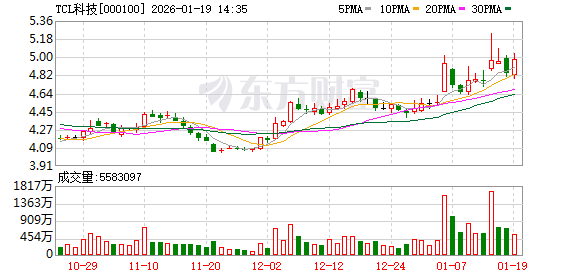
TCL李东生:未来五年,是中国科技高突破的“黄金机遇期”
Nan Fang Du Shi Bao· 2026-01-19 06:34
Core Viewpoint - The article discusses the strategic outlook for Chinese technology manufacturing companies, particularly TCL, in the context of the 14th Five-Year Plan and the evolving global economic landscape. It emphasizes the need for companies to adapt to uncertainties and leverage their strengths to establish a sustainable competitive advantage in international markets [2][3]. Group 1: Strategic Insights - The current environment is characterized by uncertainty, with trade barriers and geopolitical tensions becoming a long-term norm for Chinese companies operating overseas [3]. - TCL's core strategy for the next five years focuses on "not just going out, but also rooting down," aiming to establish five operational centers globally that function as independent entities with their own supply chains and customer service systems [5][6]. - The company aims to replicate its successful business model from China in overseas markets, enhancing its global presence and contributing to China's broader strategy of high-level openness [5][6]. Group 2: Technological Development - TCL is committed to integrating AI into its production processes, moving from mere technological showcase to practical applications that enhance manufacturing efficiency and product quality [7][10]. - The company is focusing on developing advanced technologies in the display and photovoltaic sectors, with specific attention to improving production efficiency and product performance through AI [8][9]. - TCL's approach includes creating a digital platform for carbon tracking, emphasizing the importance of green development as a competitive necessity in the face of global carbon regulations [11]. Group 3: Market Positioning - TCL's overseas revenue from smart terminals has surpassed 70%, indicating a strong international market presence and the potential for its overseas centers to become larger than the domestic market [6]. - The company is actively recruiting high-level tech talent, particularly in AI, to support its innovation and development goals [4]. - The focus on "AI towards practicality" aims to ensure that AI technologies deliver tangible benefits in manufacturing, research, and operations, thereby enhancing overall competitiveness [10].

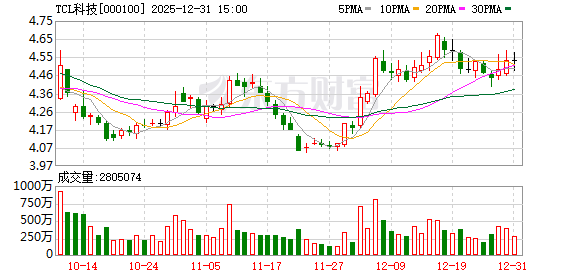
CES 2026开幕在即 TCL成最大中国参展商
Nan Fang Du Shi Bao· 2026-01-04 11:57
Group 1 - The CES 2026, known as the "Spring Festival of Technology," will take place in Las Vegas, showcasing a pivotal moment for global competition among display and consumer electronics giants from China, Japan, and South Korea [2] - TCL, as the largest Chinese exhibitor, will have a booth area of 2,453 square meters, competing directly with international leaders like Samsung, LG, and Sony in the fields of display technology and AI applications [2] - 2026 is widely regarded as the "year of AI hardware implementation," with AI transitioning from cloud to edge applications, prompting TCL to shift its exhibition strategy from merely showcasing hardware specifications to focusing on an "AI + display" ecosystem [2] Group 2 - In addition to its display technology, TCL will emphasize "AI in practice" as a key theme at the exhibition, highlighting its comprehensive layout in the "AI life" sector [3] - TCL plans to unveil products such as the Thunderbird AI/AR glasses, the TCL AiMe companion robot, and a range of AI-integrated home appliances, showcasing its commitment to the growing market of embodied intelligence and AI-native terminals [3]
AI向实,迈向产业深水区
凤凰网财经· 2025-12-24 12:42
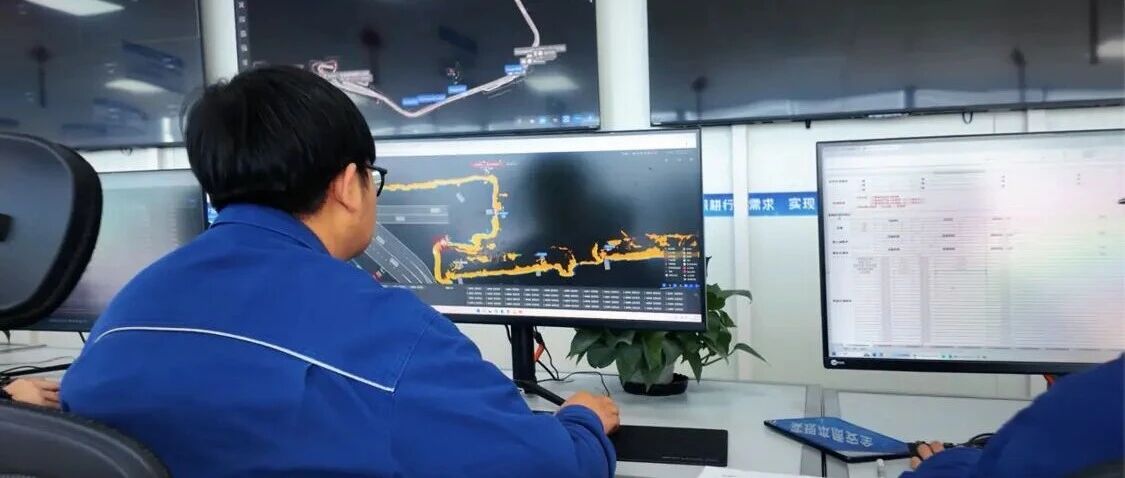
Core Viewpoint - The essence of AI lies in its application rather than its invention, emphasizing the importance of integrating AI into real-world scenarios to drive national strength [1][3]. Group 1: Value of Technology in Application - The value of disruptive technology is ultimately defined by its application scenarios, as demonstrated by historical examples like the graphical user interface and mouse [4]. - Current AI development is at a crossroads where the focus should shift from creating powerful models to effectively integrating them into specific industrial contexts [4][5]. - A complex "adaptation network" is necessary to connect general AI models with industry-specific knowledge and real-time data to address unique challenges in various sectors [5][7]. Group 2: Challenges in Industrial AI Implementation - AI faces three core challenges in industrial applications: extreme and fragmented scenarios, complex and high-risk processes, and the hidden and specialized nature of industry knowledge [7]. - The effectiveness of AI in the real economy will determine whether it becomes a valuable productivity tool or merely an expensive toy [7]. Group 3: Case Study of AI in Mining - The Yimin open-pit coal mine, a significant coal production area, has faced challenges such as safety risks and high operational costs, which are common in the mining industry [8]. - The introduction of 100 electric unmanned mining trucks at Yimin represents a pioneering effort in integrating advanced technologies like 5G-A and cloud systems in harsh environments [10]. Group 4: Layered AI Model Architecture - A layered architecture consisting of L0 (general models), L1 (industry-specific models), and L2 (application models) is proposed to foster collaboration between AI experts and industry practitioners [11]. - This approach allows for the rapid development of customized solutions based on industry models, promoting innovation across various sectors [14]. Group 5: Transformation of Industrial Knowledge - The platform and ecosystem model changes how industry knowledge is transmitted and innovated, turning individual expertise into a digital asset that can be utilized across the industry [12]. - The shift from project-based to platform-based innovation enables scalable and cost-effective solutions, allowing broader participation in the innovation process [14]. Group 6: New Human-Machine Collaboration - AI is positioned to enhance human roles by relieving them from repetitive and dangerous tasks, allowing them to focus on decision-making and innovation [15]. - This new collaboration model aims to preserve valuable industry knowledge and lower the barriers to innovation, ultimately enhancing human value in the workforce [15]. Group 7: Future of AI in Industry - The future of AI will likely focus on practical applications in manufacturing and supply chains rather than on the competition of model parameters [17]. - The goal is to embed intelligence into physical industries, ensuring that AI delivers tangible value in real-world user experiences [17].
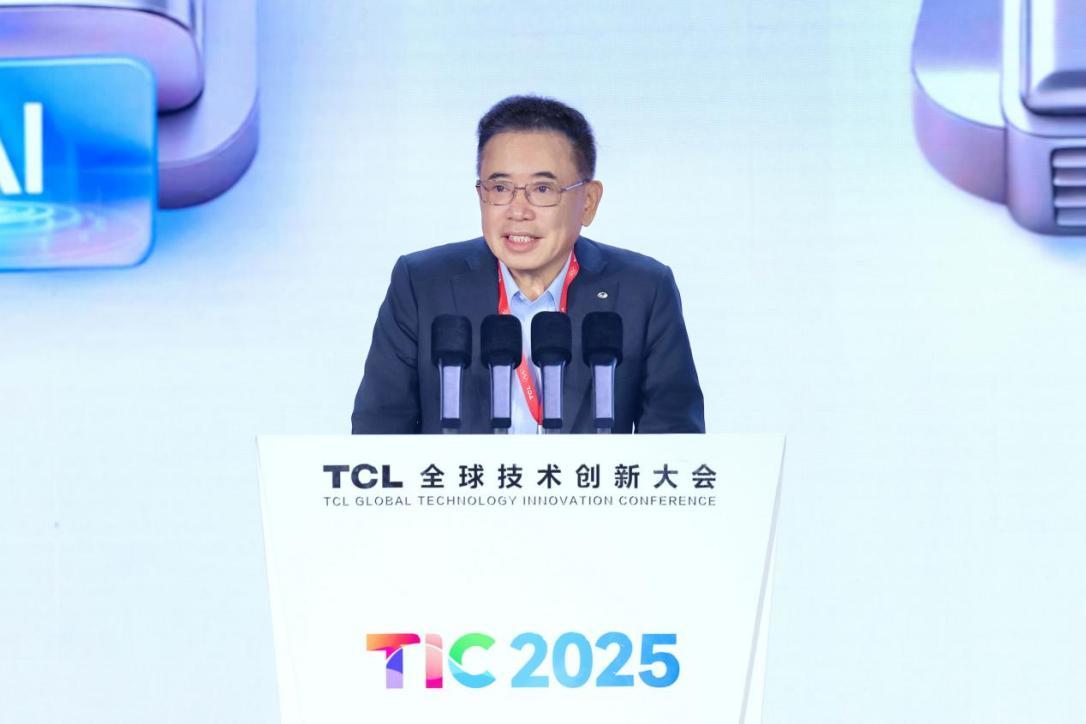
TCL创始人、董事长李东生:2025年公司研发费用预计将达到150亿元
Zheng Quan Ri Bao Wang· 2025-12-13 03:46
Core Insights - The 2025 TCL Global Technology Innovation Conference (TIC2025) was held in Guangzhou, focusing on the theme "AI for Real," discussing how AI can be applied in real-world scenarios to enhance efficiency and redefine various sectors such as transportation, health, and entertainment [1] - The global AI competition is intensifying, primarily centered around model parameters and computational infrastructure expansion, leading to issues like resource waste and lack of practical value creation [1] - TCL's founder and chairman, Li Dongsheng, emphasized the company's commitment to increasing AI investment, with R&D expenses expected to reach 15 billion yuan by 2025, aiming to transition from following and catching up to leading in key technology areas [1] Industry Trends - A significant number of Chinese companies are focusing on practical AI applications, integrating AI with the real economy to create tangible value, contrasting with the global trend of AI infrastructure investment and model competition [1] - The conference highlighted the importance of AI in driving innovation across the entire supply chain, manufacturing, and operational processes, enhancing efficiency and product development [1] - The ultimate goal of AI is to create measurable and sustainable value through real-world applications, rather than just generating hype or theoretical concepts [1] Key Developments - The conference announced ten exemplary AI application scenarios and initiated a global AI talent recruitment plan, showcasing advancements in multimodal models, AI-enabled material development, embodied intelligence, and digital twins [1] - Chinese Academy of Engineering academician Ding Wenhua stated that the arrival of large AI models necessitates practical applications across various industries, emphasizing the importance of AI in R&D and user interaction experiences [1]
TCL:加码“AI向实”,以AI重新定义智慧生活场景与绿色能源科技
Huan Qiu Wang· 2025-12-12 03:21
Core Viewpoint - TCL is committed to increasing investment in AI technology to drive innovation across the entire value chain, including research and development, manufacturing, supply chain, and operations, aiming for significant value realization by 2025 [1][3]. Group 1: AI Application and Impact - The theme of the 2025 TCL Global Technology Innovation Conference is "AI for Real," focusing on how AI can be applied in real-world scenarios to enhance efficiency and redefine various aspects of life, such as travel, health, and entertainment [3][4]. - TCL announced the launch of ten AI application scenarios and a global AI talent recruitment plan, projecting to create comprehensive benefits exceeding 1 billion yuan by 2025 through the implementation of AI applications [3][4]. - The "X-Intelligence 3.0" model, launched by TCL Huaxing, is the first domain-specific large model in the display field with strong reasoning capabilities, expected to penetrate more core areas of production and R&D, serving as a benchmark for intelligent transformation in China's manufacturing industry [4][5]. Group 2: AI in Manufacturing - In the manufacturing sector, TCL integrates AI into semiconductor display and new energy photovoltaic industries, enhancing quality and efficiency, which in turn improves the core value of consumer products [5][6]. - The ADC (Auto Defect Classification) technology implemented by TCL Huaxing has improved defect detection accuracy from 85% to 95%, with plans to upgrade to ADR (Auto Defect Repair) for automated defect repair processes [5][7]. - The "X-Intelligence" model ranks 11th globally in industrial large models and first in the display field, enhancing product development efficiency by 20% and material development efficiency by 30% [7]. Group 3: AI in New Energy Photovoltaics - TCL Zhonghuan utilizes the Deep Blue AI model for automated single crystal growth and digital twin analysis, achieving remote operation of up to 384 furnaces [8][10]. - The company has successfully implemented large-scale applications of G12-sized silicon wafers and has established product layouts across various technological routes, contributing to global energy structure transformation [10]. Group 4: AI in Consumer Products - TCL leverages AI to redefine consumer experiences in various scenarios, including travel, health, and entertainment, ensuring products return to their fundamental principles [11][13]. - The AI/AR glasses developed by TCL serve as personal AI assistants, while smart home appliances like the TCL air conditioner and refrigerator utilize AI for enhanced health and energy efficiency [11][12]. - The TCL AiMe robot represents a significant advancement in AI companionship, offering emotional support and interactive experiences for users [13].
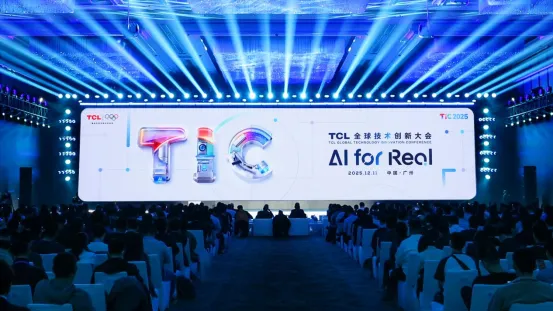
聚焦“AI向实”,2025TCL全球技术创新大会举办
Cai Jing Wang· 2025-12-11 15:42
Core Viewpoint - The 2025 TCL Global Technology Innovation Conference emphasizes the theme "AI for Real," focusing on the practical application of AI in real-world scenarios to enhance efficiency and redefine various aspects of life, including travel, health, and entertainment [1][3]. Group 1: AI Application and Development - TCL is committed to increasing investment in AI technology to drive innovation across the entire supply chain, including research, manufacturing, and operations, aiming for significant value realization [5][7]. - The "X-Intelligence 3.0" model, launched by TCL Huaxing, is the first domain-specific large model in the display field with strong reasoning capabilities, expected to become a central AI intelligence hub for semiconductor display R&D and manufacturing [5][14]. - The ADC (Auto Defect Classification) technology has improved defect detection accuracy from 85% to 95%, showcasing the effectiveness of AI in enhancing manufacturing processes [12][13]. Group 2: AI in Manufacturing - TCL integrates AI into the semiconductor display and new energy photovoltaic industries, enhancing manufacturing, R&D, and operational efficiency, which in turn improves the core value of consumer products [10][19]. - The application of AI in TCL Huaxing has led to cost reductions in large-screen manufacturing and the mass production of printed OLED technology, facilitating the early entry of advanced display technologies into the consumer market [10][18]. - The "Star Intelligence" model ranks first in the display field and significantly enhances product development efficiency, with a 20% improvement in problem-solving and a 30% increase in material development efficiency [14][16]. Group 3: AI in Consumer Products - TCL aims to redefine consumer experiences by returning products to their "first principles," enhancing various smart living scenarios such as travel, health, and entertainment through AI [19][21]. - The AI/AR glasses developed by TCL serve as personal AI assistants, enabling users to explore the world freely [21]. - TCL's smart appliances, such as the new air conditioning system and washing machine, utilize AI to improve health and energy efficiency, providing personalized solutions based on user habits [23][29]. Group 4: Future Outlook - TCL plans to continue responding to the "Artificial Intelligence+" initiative, focusing on original and disruptive technological innovations, with smart manufacturing as a primary battlefield for practical applications of AI [29].
2025TCL全球技术创新大会举办 落实AI应用年内创造综合效益超10亿元
Zheng Quan Shi Bao Wang· 2025-12-11 11:23
Core Insights - The 2025 TCL Global Technology Innovation Conference (TIC2025) focused on the theme "AI for Real," discussing the practical application of AI in real-world scenarios and the creation of tangible value [1][2] - TCL aims to generate comprehensive benefits exceeding 1 billion yuan by advancing AI applications in various sectors by 2025 [1] Group 1: AI Integration in Industry - TCL emphasizes the integration of AI with the real economy, moving beyond theoretical concepts to practical applications that create real value [2] - The company is investing heavily in AI technology to drive innovation across the entire supply chain, including research, manufacturing, and operations [2] - The X-Intelligence 3.0 model, launched by TCL Huaxing, is the first domain-specific large model in the display field, enhancing knowledge systems and learning capabilities [2][3] Group 2: AI Empowerment in Manufacturing - In the semiconductor display and new energy photovoltaic sectors, TCL is integrating AI to enhance manufacturing, research, and operational efficiency [3][4] - The Auto Defect Classification (ADC) technology has improved defect detection accuracy from 85% to 95%, significantly enhancing production efficiency [3] - The X-Intelligence model ranks first in the display field and has improved product development efficiency by 20% and material development efficiency by 30% [3] Group 3: AI Applications in New Energy - TCL Zhonghuan utilizes the Deep Blue AI model for automated operations in single crystal growth, allowing remote control of up to 384 furnaces [4] - The company has achieved zero human contact in the intelligent packaging line, with silicon wafer production waste reduced to below 0.1% [4] Group 4: AI Empowerment in Consumer Products - TCL is redefining consumer experiences through AI in various scenarios, including travel, health, and entertainment [6] - The AI/AR glasses developed by TCL serve as personal AI assistants, enhancing user experiences in exploration [6] - The TCL AiMe robot offers emotional companionship and human-like interaction, representing a new frontier in technology-assisted companionship [6]
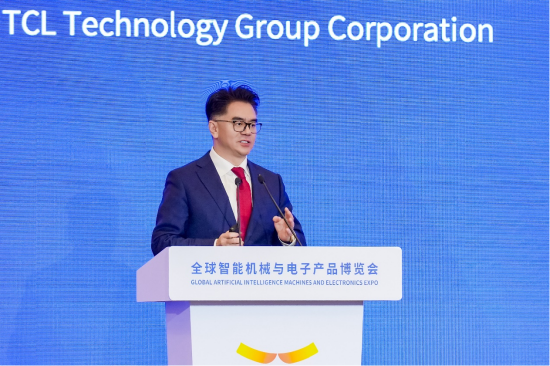
TCL科技COO王成:AI向实,产业发展更具韧性与活力
Xin Lang Cai Jing· 2025-12-05 04:25
Core Insights - TCL Technology has evolved into a global advanced manufacturing group over 44 years, focusing on technological breakthroughs, AI empowerment, ecosystem alliances, and building a complete industrial chain to promote the development of the electronic information industry [1][4]. R&D and Innovation - Over the past six years, TCL has invested more than 60 billion yuan in R&D and has filed over 110,000 patents covering key strategic technologies, material technologies, equipment technologies, and device process technologies [1][4]. AI Strategy - TCL has introduced the "AI to Reality" strategy, integrating AI technology deeply into the entire industrial development process to enhance resilience and vitality [3][6]. - In manufacturing, AI technology is reshaping traditional production models, optimizing costs, improving efficiency, and upgrading quality [3][6]. - In R&D, the use of "AI + simulation" and "Star Intelligence Model" aims to reduce costs and increase efficiency in technological innovation [3][6]. - In operations, intelligent agents are being integrated throughout the business process to promote comprehensive intelligent upgrades [3][6]. Future Investments - To position itself in the next generation of display industry core competitiveness, TCL has initiated the construction of its first high-generation printed OLED production line, the TCL Huaxing T8 project, with an initial investment of 29.5 billion yuan [3][6]. Product Showcase - During the expo, TCL showcased several smart terminal products and cutting-edge technologies, including the TCL SQD-Mini LED TV, Blue Wing fresh air conditioner, Cold Pudding ice-making refrigerator, Big Eye Meng Ultra washing and drying machine, and Thunderbird AR/AI glasses [3][6].