
Mini LED

Search documents
粤开市场日报-20260305
Yuekai Securities· 2026-03-05 07:52
Market Overview - The A-share market indices all rose today, with the Shanghai Composite Index increasing by 0.64% to close at 4108.57 points, the Shenzhen Component Index rising by 1.23% to 14088.84 points, the Sci-Tech 50 up by 1.72% to 1405.35 points, and the ChiNext Index gaining 1.66% to 3216.94 points [1][10] - Overall, 4076 stocks rose while 1304 stocks fell, with a total trading volume of 239 billion yuan, an increase of 243 billion yuan compared to the previous trading day [1] Industry Performance - Among the Shenwan first-level industries, the following sectors saw gains: Communication (+2.84%), Power Equipment (+2.18%), Machinery (+2.05%), Electronics (+2.02%), and Computers (+1.68%). Conversely, the sectors that declined included Agriculture, Forestry, Animal Husbandry, and Fishery (-2.02%), Oil and Petrochemicals (-1.81%), Non-ferrous Metals (-0.64%), Coal (-0.18%), and Transportation (-0.05%) [1][15] Concept Sectors - The leading concept sectors with significant gains today included Mini LED, New Display Technology, Ultra High Voltage, Nuclear Fusion, Cultivated Diamonds, Nuclear Power, Superconductors, Superhard Materials, Cameras, AI Wearable Devices, Third Generation Semiconductors, Virtual Power Plants, OLED, Charging Piles, and Low-priced ChiNext Stocks [2][12]
联建光电股价上涨,前三季度净利润同比增长364.65%
Jing Ji Guan Cha Wang· 2026-02-12 06:04
Group 1: Core Insights - The stock price of Lianjian Optoelectronics (300269) has recently increased, with significant growth in net profit for the first three quarters [1] - The company is involved in aerospace display and Mini LED sectors, and has improved its governance structure [1][3] Group 2: Stock Performance - On February 4, 2026, Lianjian Optoelectronics' stock rose by 1.58%, with a trading volume of 880 million yuan and a net inflow of 27.16 million yuan in the last three days [2] - The turnover rate was 18.60%, and the total market capitalization is approximately 4.937 billion yuan [2] Group 3: Business Developments - As a partner in China's aerospace industry, the company supported the launch of the Shenzhou 20 manned spacecraft in April 2025, providing high-definition display screens for the Dongfeng Satellite Launch Center [3] - The company is expanding its Mini LED market through collaborations and is involved in commercial aerospace and digital marketing [3] Group 4: Governance Structure - On December 30, 2025, the company held an extraordinary shareholders' meeting to approve the reappointment of an accounting firm and the election of independent director Luo Wei as the chairperson of the audit committee, further enhancing its governance structure [4] Group 5: Financial Performance - According to the Q3 2025 report, the company achieved a revenue of 382 million yuan for the first three quarters, a year-on-year decrease of 18.73%, while the net profit attributable to shareholders was 18.23 million yuan, reflecting a year-on-year increase of 364.65% [5] - In the third quarter alone, net profit saw a significant year-on-year increase of 504.25% [5]

2025全球显示器出货增1.1% 联想出货量增长11%增速领跑
Ge Long Hui· 2026-02-03 07:24
Group 1 - The global display market is projected to reach 128 million units in 2025, reflecting a 1.1% increase from the previous year [1] - OLED displays are a significant growth driver, with shipments surging 72% year-on-year to 24.5 million units [1] - Dell remains the market leader with 22.5 million units shipped, despite a 5% decline in market share [1] Group 2 - The display market is expected to encounter three core opportunities in 2026: technological upgrades, expanded usage scenarios, and localized supply chain optimization [2] - The cost reduction of OLED and Mini LED technologies will enhance market penetration and create ample premium pricing opportunities [2] - The gaming industry and content creation ecosystem are driving demand for high-refresh-rate and high-color-accuracy displays [2]

家电行业周报20260131:错期扰动致2月排产承压,白电出口韧性优于内销-20260201
SINOLINK SECURITIES· 2026-02-01 09:17
Investment Rating - The report suggests a positive outlook for leading brands in the home appliance sector, indicating a potential for steady growth due to integrated advantages and strong pricing power [5]. Core Insights - The home appliance industry is currently facing short-term adjustments in both domestic and export sales due to high base effects and the timing of the Spring Festival, with air conditioning production experiencing significant declines [1][12]. - Domestic air conditioning production in February 2026 was 4.555 million units, down 38.1% year-on-year, while export production was 6.93 million units, down 26.5% year-on-year [1][12]. - Refrigerator production also saw a decline, with domestic production at 2.6 million units (down 17.1%) and exports at 3.4 million units (down 8%) [1][15]. - Washing machine production showed a slight increase in exports (up 1.5%), while domestic production fell to 3.1 million units (down 5.9%) [1][16]. - The report highlights that the real estate market's downturn continues to suppress demand for home appliances, although there are signs of a potential recovery in production post-holiday [3][5]. Summary by Sections Air Conditioning Production - February 2026 air conditioning production was impacted by the Spring Festival timing and high base effects, leading to a significant drop in both domestic and export figures [1][12]. - Domestic production was 4.555 million units, a year-on-year decrease of 38.1%, while exports were 6.93 million units, down 26.5% [1][12]. Refrigerator Production - Domestic refrigerator production in February 2026 was 2.6 million units, down 17.1%, with exports at 3.4 million units, down 8% [1][15]. - The decline in domestic sales was attributed to the Spring Festival holiday and weak macro demand, but a recovery is expected in March [1][15]. Washing Machine Production - Domestic washing machine production was 3.1 million units, down 5.9%, while exports increased slightly to 3.2 million units, up 1.5% [1][16]. - The domestic decline is linked to previous policy impacts and a sluggish real estate market, while exports benefited from stable overseas demand [1][16]. Market and Sector Performance - The report notes that the Shanghai and Shenzhen 300 Index increased by 0.08%, while the home appliance index decreased by 2.88% [2][19]. - Key companies showed varied performance, with Samsung New Materials up 23.72% and Tianyin Electromechanical down 18.66% [2][19]. Raw Material Prices - Recent trends show fluctuations in raw material prices, with copper prices up 1.32% and aluminum prices down 2.57% in the last week [2][23]. - Year-to-date, copper prices have increased by 6.35%, while aluminum has risen by 4.15% [2][23]. Real Estate Data - Real estate metrics indicate a continued decline, with new housing starts down 19.9% year-on-year, impacting long-term demand for home appliances [3][31]. Investment Recommendations - The report recommends leading brands such as TCL Electronics, Hisense Visual, Midea Group, and Haier Smart Home for their strong market positions and growth potential in both domestic and international markets [5][42].
TCL电子(01070):与索尼达成战略合作,有望加速电视业务全球扩张
Guoxin Securities· 2026-01-27 05:20
Investment Rating - The investment rating for TCL Electronics is "Outperform the Market" (first coverage) [2][3]. Core Viewpoints - TCL Electronics has entered into a strategic partnership with Sony to establish a joint venture for the development, manufacturing, and sales of home entertainment products, which is expected to accelerate the global expansion of both companies' television businesses [4][5][10]. - The joint venture will leverage Sony's advanced technology and brand value in the audio-visual field, combined with TCL's strengths in display technology, global scale, and efficient manufacturing, to optimize production costs and enhance operational quality [5][10]. - TCL Electronics is positioned as a leading player in the global television market, with a projected shipment of 29 million TVs in 2024, ranking second globally, and leading in Mini LED TV shipments [9][10]. - The company has achieved a compound annual growth rate (CAGR) of 14.5% in revenue from 2016 to 2024, reaching HKD 99.3 billion, with a net profit CAGR of 32.7% to HKD 1.8 billion [5][18]. - The global television market is entering a period of product iteration, with TCL and Hisense gaining market share in key regions, supported by their competitive product offerings and marketing strategies [6][45]. Summary by Sections Joint Venture with Sony - TCL Electronics and Sony signed a non-binding memorandum of understanding to form a joint venture, with TCL holding 51% and Sony 49% [4]. - The joint venture aims to enhance both companies' television and home audio businesses globally, leveraging their respective strengths [10]. Market Position and Growth - TCL Electronics is the leading television manufacturer in China, with a significant presence in overseas markets, where 58% of its revenue is generated [5][18]. - The company is expected to maintain strong growth, with revenue projections of HKD 112.5 billion, HKD 126.5 billion, and HKD 138.1 billion for 2025-2027, reflecting year-on-year growth rates of 13.3%, 12.5%, and 9.2% respectively [8]. Technological Advancements - TCL is a leader in Mini LED technology, with a global shipment of 1.7 million Mini LED TVs in 2024, achieving a market share of 28.8% [7][69]. - The company is continuously investing in R&D to enhance its product offerings, including the upcoming SQD-Mini LED technology, which aims to achieve high color gamut and brightness [7][69]. Financial Performance - TCL Electronics' net profit is projected to reach HKD 2.41 billion, HKD 2.82 billion, and HKD 3.25 billion for 2025-2027, with corresponding year-on-year growth rates of 37.2%, 16.8%, and 15.3% [8][21]. - The company's gross margin is expected to stabilize, with a forecasted improvement in profitability driven by operational efficiencies and market expansion [21][92].
国信证券:首予TCL电子“优于大市”评级 与索尼达成战略合作
Xin Lang Cai Jing· 2026-01-27 04:22
Group 1: Company Overview - TCL Electronics is a leading player in the television industry, with a business scope that includes display, internet services, photovoltaic products, and home appliance marketing [11] - The company is projected to achieve a revenue of HKD 993 billion from 2016 to 2024, with a compound annual growth rate (CAGR) of 14.5%, and a net profit CAGR of 32.7% reaching HKD 18 billion [11] - In 2024, TCL is expected to rank second globally in television shipments, with over 60% of its revenue coming from television sales [11] Group 2: Recent Developments - TCL has entered into a non-binding memorandum of understanding with Sony to establish a joint venture for the development, manufacturing, and sales of home entertainment products, with TCL holding a 51% stake [10] - This partnership aims to leverage Sony's advanced technology and brand value alongside TCL's manufacturing capabilities and global scale, enhancing operational quality and cost efficiency for Sony televisions [10] Group 3: Market Position and Trends - The global television market is stabilizing, but TCL is positioned to benefit from trends such as larger screen sizes and Mini LED technology, which are expected to drive up average television prices [11][12] - The market share of the top four global television brands has increased from 44.5% in 2018 to 56.2% in 2024, indicating an improved industry landscape [11][12] Group 4: Technological Advancements - TCL is a leader in Mini LED technology, with ongoing investments in research and development, and plans to release SQD-Mini LED technology in 2025 [12] - The company has established a vertically integrated supply chain from LED chips to panels and finished products, enhancing its competitive edge [12] Group 5: Future Projections - According to Guosen Securities, TCL's revenue is expected to reach HKD 1125.1 billion, 1265.4 billion, and 1381.4 billion from 2025 to 2027, with year-on-year growth rates of 13.3%, 12.5%, and 9.2% respectively [8] - The projected net profit for the same period is HKD 24.1 billion, 28.2 billion, and 32.5 billion, with corresponding growth rates of 37.2%, 16.8%, and 15.3% [8]


沃格光电2026年1月23日涨停分析:Mini LED+商业航天+研发投入
Xin Lang Cai Jing· 2026-01-23 05:27
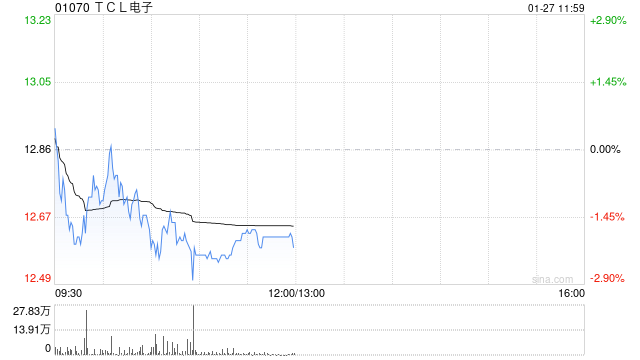
Group 1 - The core viewpoint of the news is that Woge Optoelectronics (stock code: sh603773) has reached its daily limit up, with a price of 42.55 yuan, reflecting a 10.01% increase and a total market capitalization of 9.559 billion yuan [1] Group 2 - Woge Optoelectronics is transitioning from traditional display business to high-end fields such as Mini LED, focusing on glass-based Mini LED backlight modules with an annual production capacity of 6.05 million pieces, aligning with new display technology trends [2] - The company has full-process capabilities in the commercial aerospace sector, including UTG processing and CPI slurry, meeting the flexible substrate and protection needs for satellite flexible solar wings, with ongoing business collaborations and product testing [2] - In the first half of 2025, the company's R&D expenses accounted for 7.44%, higher than the industry average, with a total of 439 patents, indicating strong ongoing investment in R&D to enhance technical strength and drive business transformation [2]

CES最值得关注的技术变量:TCL SQD-Mini LED 如何改写全球大尺寸显示格局?
Feng Huang Wang· 2026-01-12 00:56
Core Viewpoint - TCL is positioning itself as a leader in display technology by showcasing its SQD-Mini LED technology and the X11L television at CES, aiming to redefine what constitutes good picture quality in the industry [2][3][12]. Group 1: Product and Technology Highlights - TCL's X11L television features a peak brightness of 10,000 nits and over 20,000 backlight zones, earning multiple awards at CES, including the "Innovation Display Technology Gold Award" [2]. - The SQD-Mini LED technology combines monochrome blue Mini LED chips with Super QLED, achieving near-pixel-level control of light and significantly improving color accuracy and contrast [6][8]. - The X11L boasts 20,736 zones and an ultra-high contrast ratio of 800,000:1, effectively eliminating color bleeding issues common in RGB Mini LED technologies [6][8]. Group 2: Market Position and Strategy - TCL has achieved the global number one position in Mini LED television shipments with a market share of 28.8% and in 98-inch television shipments with a market share of 49.6% [3]. - In North America, TCL's television shipment volume ranked second with a market share of 13.5% in 2024, and the Mini LED television shipment volume saw a year-on-year growth of 153.3% [9][10]. - The company is focusing on localizing its operations in North America, establishing a complete ecosystem of local R&D, production, and marketing to better meet consumer needs [10]. Group 3: Industry Impact and Future Outlook - TCL's advancements in display technology signify a shift in the global perception of Chinese brands, moving from cost-effective products to high-end technological innovations [12][16]. - The company aims to establish new industry standards with its SQD-Mini LED technology, indicating a transition from merely meeting international standards to setting them [16]. - TCL's strategy includes a dual approach of high-end technology leadership and broad market accessibility, which is expected to reshape the competitive landscape of the global consumer electronics industry [12][16].

直击CES|Mini LED是彩电焦点,中韩企业比拼谁更出色
Di Yi Cai Jing· 2026-01-06 15:00
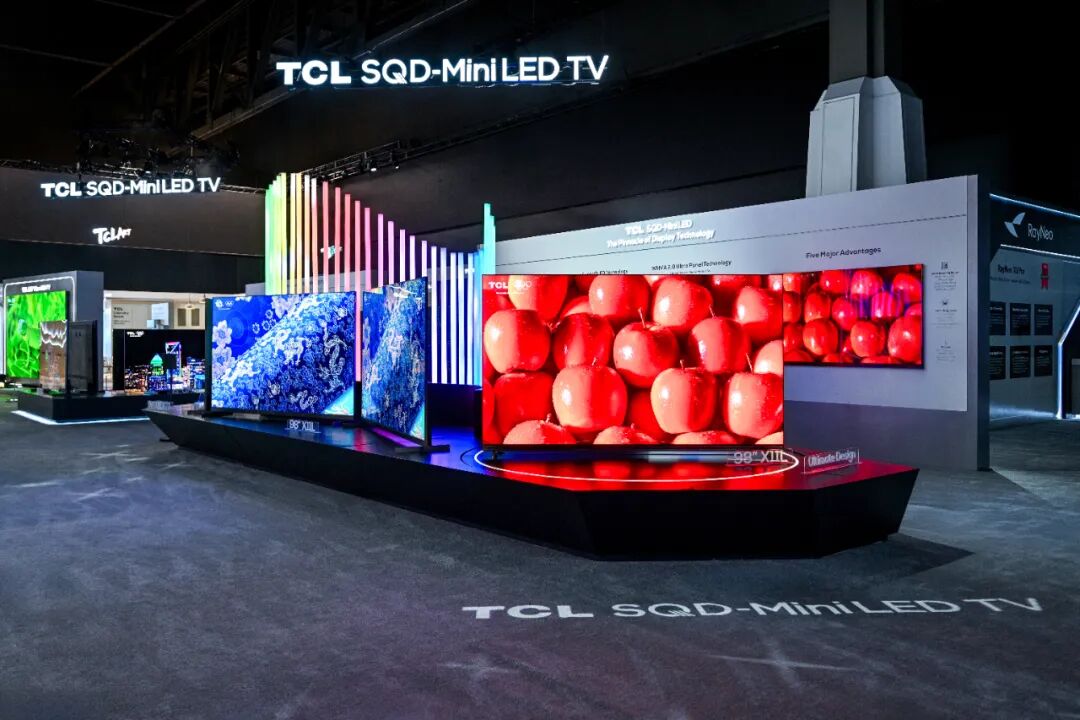
Core Insights - The focus of the 2026 CES is the competition between Chinese and Korean companies in the Mini LED television market, highlighting advancements in RGB-Mini LED technology [2][4] - Major brands like Hisense, Samsung, LG, and TCL are showcasing high-end Mini LED televisions, emphasizing color richness and realism, with AI integration expected to deepen in the industry [2][4] Group 1: Technology Advancements - Hisense introduced RGB-Mini LED technology, incorporating a fourth cyan LED chip to address color issues and achieve 110% BT.2020 color gamut, while reducing blue light and energy consumption [3] - Samsung's Micro RGB Mini LED television utilizes sub-100 micron LED chips to enhance image quality, and LG's Micro RGB Mini LED also achieves 100% BT.2020 color gamut [3][5] - TCL's SQD-Mini LED television combines quantum dot technology with Mini LED, achieving 100% BT.2020 color gamut and a peak brightness of 8500 nits [3][5] Group 2: Market Trends - Mini LED televisions are expected to challenge OLED's position in the high-end market and are projected to grow significantly, with an estimated shipment of 21.1 million units in 2026, a 58% increase year-on-year [9] - Despite an overall decline in global television shipments, Mini LED televisions are anticipated to grow by 40%, reaching a market penetration of 10% [9] - The global shipment of Mini LED televisions is expected to reach 16.12 million units in 2026, marking a 30.1% increase, with the Chinese market leading the growth [10] Group 3: Competitive Landscape - Chinese brands are narrowing the gap with global leaders in the television market, with predictions that they may challenge for the top position by 2026-2027 [11] - The competition among brands has shifted from basic specifications to differentiated display technologies focusing on light sources, chips, and color management systems [5] - AI technology is set to play a significant role in enhancing television experiences, with expectations for deeper integration in 2026, moving towards generative AI applications [11]

诺瓦星云20260105
2026-01-05 15:42
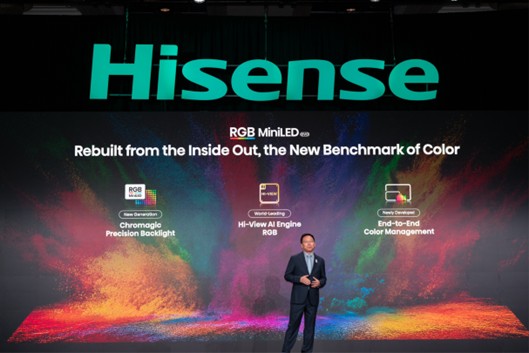
Summary of Nova Star Cloud Conference Call Company Overview - **Company Name**: Nova Star Cloud - **Core Business Areas**: LED, Mini LED (MLEd) display control systems, video processing systems, and cloud computing - **Market Position**: Over 90% market share in the LED sector, with a stable main business over the past two years [3][4] Key Insights and Arguments - **Mini LED Business Growth**: The Mini LED business is experiencing exponential growth, with overseas operations gradually ramping up. 2025 is expected to be a year of stabilization, followed by rapid growth in 2026 [2][3] - **Revenue Forecast**: Due to macroeconomic impacts, revenue growth for 2024 is projected to slow to 7%, with LED business revenue showing single-digit growth. In the first half of 2025, LED revenue is expected to decline year-on-year, while high-margin video processing systems and related businesses are anticipated to grow [2][6] - **Video Processing Systems**: This segment is crucial for Nova Star Cloud, boasting a gross margin of 69.54%, significantly higher than the LED business. It serves high-end clients and has applications in virtual shooting, contributing positively to overall gross margin [2][7] - **Innovation in Chip and Control Systems**: The company is expanding into innovative areas such as driver chips and control systems, which are expected to generate significant revenue increases and improve profit structure and margins [2][3][8] Financial and Investment Insights - **Shareholding Structure**: The company has a stable shareholding structure, with founders holding 23% and 15% of shares, respectively, and having signed a concerted action agreement. The company has invested in Blue Arrow Aerospace, holding a direct stake of 0.8189% and an indirect stake of 0.3582% [4] - **Profit Projections**: Expected net profit for 2025 is around 600 million yuan, potentially reaching 800 million yuan in 2026. Current PE ratio is approximately 20 times, with a potential drop to below 14 times by 2027, indicating investment value [4][9] - **Risks**: Key risks include macroeconomic downturns, underperformance in new product development, and intensified market competition, which investors should monitor closely [4][9] Additional Important Information - **MLed Chip and Equipment**: Nova Star Cloud has made significant advancements in MLed chips and equipment, with driver chips set to commercialize in September 2024, expected to bring in over 100 million yuan in revenue. MLed detection equipment has been widely shipped to major clients [2][8] - **Revenue Breakdown**: In 2024, LED revenue is projected at 1.5 billion yuan, with growth in video processing systems and cloud computing. The shift towards higher-margin products is evident as video processing systems gain a larger share of revenue [6]