
人形机器人产业

Search documents
宇树科技启动IPO,参股公司及产业链动态解析
Sou Hu Cai Jing· 2025-07-21 06:10
Group 1 - Yushu Technology has officially embarked on its IPO journey, having completed its shareholding reform and increased its registered capital from less than 3 million to 364 million yuan [2] - The company has gained significant attention in the humanoid robot sector, especially after its performance during the Spring Festival Gala, and has won the WIPO 2025 Global Award, marking a breakthrough for Zhejiang Province [2] - Yushu Technology has received investments from notable firms such as Geely, Tencent, Alibaba, and Ant Group, indicating strong capital recognition [2] Group 2 - Several A-share companies have indirectly invested in Yushu Technology, leading to significant stock price increases for these companies, including Shenxinfu and Jinfa Technology, which saw their stocks hit the daily limit [3][4] - As of July 17, financing interest in related stocks has risen, with companies like Zhongji Xuchuang and Jinfa Technology experiencing net buying increases, indicating strong performance expectations [5] Group 3 - The humanoid robot industry is entering a "golden development period," with significant advancements in technology and increased commercialization efforts [7] - Key components for humanoid robots, such as harmonic reducers, are seeing improved cost-performance ratios, which may accelerate domestic replacements [7] - The market for humanoid robots is projected to grow significantly, with demand expected to reach 30,000 units by 2025, translating to a market space of approximately 9 billion yuan [7] Group 4 - The humanoid robot concept stocks in the A-share market have shown active performance, with an average increase of nearly 35% year-to-date [8] - Over 70% of humanoid robot-related stocks have seen increased financing, with several companies expected to report improved earnings in the first half of 2025 [8] - The initiation of Yushu Technology's IPO and the rapid developments in the humanoid robot industry are likely to sustain investor interest and drive further growth in the sector [8]


人形机器人产业迎密集催化
第一财经· 2025-07-21 02:09
Core Viewpoint - The robotics industry has rebounded strongly due to multiple catalysts such as capital operations (IPOs, backdoor listings), significant order placements, and policy support, shifting market focus towards industry implementation and value exploration within the supply chain [1][4]. Group 1: Market Dynamics - On July 18, Yushu Technology entered the IPO guidance phase, while the Shanghai Stock Exchange updated the IPO progress of Jiekai Robotics to "under inquiry" [1]. - Major domestic robotics companies like Yushu Technology, Zhiyuan Robotics, and UBTECH received significant orders, indicating that domestic humanoid robots are accelerating breakthroughs from technology development to product implementation [1][5]. - The robotics index (884126.WI) rose over 3% last week, reaching a new high since March, with companies like Shangwei New Materials (688585.SH) experiencing a notable increase of 148.84% [1][4]. Group 2: Institutional Interest - Over ten institutional investors conducted research on listed companies within the robotics supply chain, focusing on the value, scale, and market demand changes across various segments such as manufacturing equipment and transmission systems [2][9]. - The research has expanded beyond core components to include the entire supply chain, highlighting the growing interest in the value and market dynamics of the robotics sector [9][10]. Group 3: Recent Developments - The robotics sector has seen a resurgence in trading activity, with the robotics index increasing by 3.1%, marking the highest level since March 27 [4]. - Significant orders were placed, including a 124 million yuan order for humanoid robots from China Mobile, with Zhiyuan New Creation and Yushu Technology winning portions of the contract [5][6]. - UBTECH secured the largest procurement order for humanoid robots, amounting to 90.51 million yuan, indicating strong demand in the market [6]. Group 4: Industry Trends - The robotics sector has transitioned from a phase of speculative trading to one focused on validating product implementation and technological advancements [8]. - As the humanoid robotics industry progresses in technology breakthroughs and application scenarios, institutional investors are increasingly interested in the entire supply chain, including components like grinding tools and robot cables [10][11]. - The value distribution within the supply chain shows that leading humanoid robot manufacturers are positioned at the high end of the value chain, while contract manufacturers benefit from standardized production and quality control [11].




人形机器人产业迎密集催化:IPO推进、订单落地、机构深入调研
Di Yi Cai Jing· 2025-07-20 11:07
Group 1 - The robot industry experienced a strong rebound due to multiple catalysts such as capital operations (IPO, backdoor listings), significant order placements, and policy support, shifting market focus towards industry implementation and value extraction from the supply chain [1][2] - The robot index rose over 3% last week, reaching a new high since late March, with notable stocks like Upwind New Materials achieving a 148.84% increase, marking eight consecutive trading days of gains [1][2] - Major domestic robot companies, including Yushu Technology and ZhiYuan Robotics, secured important orders, indicating accelerated breakthroughs in domestic humanoid robots from technology development to product implementation [1][3] Group 2 - The acquisition of ZhiYuan Robotics and other events have reignited interest in the robot sector, with the robot index increasing by 3.1%, the highest since March 27 [2] - Upwind New Materials is set to have its shares controlled by ZhiYuan HengYue Technology after a significant share acquisition, pending approval from the shareholders' meeting [2] - The Ministry of Industry and Information Technology emphasized the promotion of humanoid robots and other innovative industries during a recent press conference, indicating a strategic focus on future sectors [2] Group 3 - Yushu Technology and ZhiYuan New Creation won a procurement order from China Mobile for humanoid robots worth 124 million yuan, showcasing the growing market for humanoid robots [3] - UBTECH secured the largest procurement order in the global humanoid robot sector, amounting to 90.51 million yuan, further highlighting the competitive landscape [3] Group 4 - The robot sector has transitioned from a phase of exuberance to a more stable trading environment, with a significant reduction in trading volume and a 20%-30% correction in previously high-performing stocks [4] - Institutional investors are now focusing on the value, scale, and market demand changes across various segments of the robot supply chain, indicating a shift towards more grounded investment strategies [5] Group 5 - Companies involved in high-precision grinding tools and robot cables are gaining attention, with firms like Huachen Equipment and Wanma Co. highlighting their capabilities in producing components essential for humanoid robots [6] - The competitive advantage in robot cables is attributed to long-term R&D efforts and established manufacturing processes, although the current revenue contribution from these products remains relatively small [6] - The distribution of value within the humanoid robot supply chain shows that leading manufacturers capture high-end value through core algorithms and brand barriers, while contract manufacturers benefit from standardized production models [6]

人形机器人产业创新高地,为何花落武汉?
Chang Jiang Ri Bao· 2025-07-17 00:41
Core Insights - The humanoid robot industry is seen as a "barometer" of technological revolution and an "accelerator" for industrial upgrading, with significant developments occurring in Hubei province [1] - Hubei's humanoid robot industry is recognized for its innovative potential and is supported by various policies and funding initiatives aimed at fostering technological advancements [5][9] Group 1: Industry Development - Hubei has showcased its humanoid robots at multiple events, including the third Chain Expo, highlighting the rapid growth and innovation in this sector [1][3] - The province has established a robust industrial chain with over 50 key enterprises involved in humanoid robot manufacturing, covering the entire supply chain from core components to complete systems [6] Group 2: Academic and Research Collaboration - Collaboration among local universities, such as Wuhan University and Huazhong University of Science and Technology, is driving technological innovation in humanoid robots, focusing on key components and intelligent algorithms [4][5] - The establishment of a humanoid robot innovation center in Hubei aims to provide comprehensive technical services and support for industry collaboration [7][8] Group 3: Policy and Financial Support - The local government has implemented a series of policies to accelerate the development of the humanoid robot industry, including financial support for innovation centers and collaborative research projects [9][13] - A significant investment fund of 100 billion yuan has been established to support the humanoid robot and artificial intelligence sectors, indicating strong governmental backing [13] Group 4: Future Goals and Vision - Hubei aims to become a national leader in humanoid robot innovation by 2027, with plans to produce over 10 models and achieve breakthroughs in key technologies [14][15] - The province is actively seeking global partnerships to enhance its technological capabilities and market presence in the humanoid robot industry [14]
模拟芯片行业深度研究报告:需求回暖进行时,国产替代与并购整合共筑成长动能
Huachuang Securities· 2025-06-30 06:14
Investment Rating - The report maintains a "Buy" recommendation for the analog chip industry, indicating a positive outlook for growth and investment opportunities [1]. Core Insights - The analog chip industry is experiencing a recovery in demand, driven by the end of inventory destocking and a resurgence in applications across automotive, industrial automation, and data centers. The market is expected to grow by 6.7% year-on-year in 2025, reaching a size of $84.34 billion [4][6]. - The industry is characterized by high technical barriers and a wide range of applications, with a significant portion of the market still dominated by overseas companies. However, domestic companies are expected to benefit from accelerated localization efforts and mergers and acquisitions [5][6]. - The report highlights the importance of mergers and acquisitions as a key strategy for growth in the analog chip sector, with domestic firms entering a phase of platform integration to enhance competitiveness [6][7]. Summary by Sections Section 1: Overview of the Analog Chip Industry - Analog chips serve as a bridge between the physical and digital worlds, featuring a long product lifecycle and high customization [11]. - The global analog chip market share has remained stable at around 19% of the integrated circuit market, with a projected market size of approximately $81.23 billion in 2023 [11][19]. Section 2: Demand Recovery and Growth Potential - The analog chip market is expected to recover from a downturn, with a projected growth of 6.7% in 2025, driven by structural demand from sectors like automotive and industrial automation [6][39]. - The report identifies key growth drivers, including the increasing penetration of electric vehicles and advancements in AI applications, which are expected to boost demand for high-performance analog chips [6][61]. Section 3: Domestic Replacement and Market Opportunities - The report notes that the domestic market is still largely dominated by foreign companies, but there is significant room for domestic firms to increase their market share through localization and innovation [6][39]. - The domestic analog chip self-sufficiency rate is projected to rise from 9% in 2019 to over 16% by 2024, indicating a positive trend towards local production [6][38]. Section 4: Key Investment Targets - The report suggests focusing on specific companies such as Naxin Microelectronics, Shengbang Co., Si Rui Pu, and Jiehuate, which are well-positioned to benefit from the industry's growth and localization trends [7][39].





张江纪录|开普勒K2“大黄蜂”:20公斤负载创料箱搬运赛项纪录
机器人大讲堂· 2025-06-19 10:55
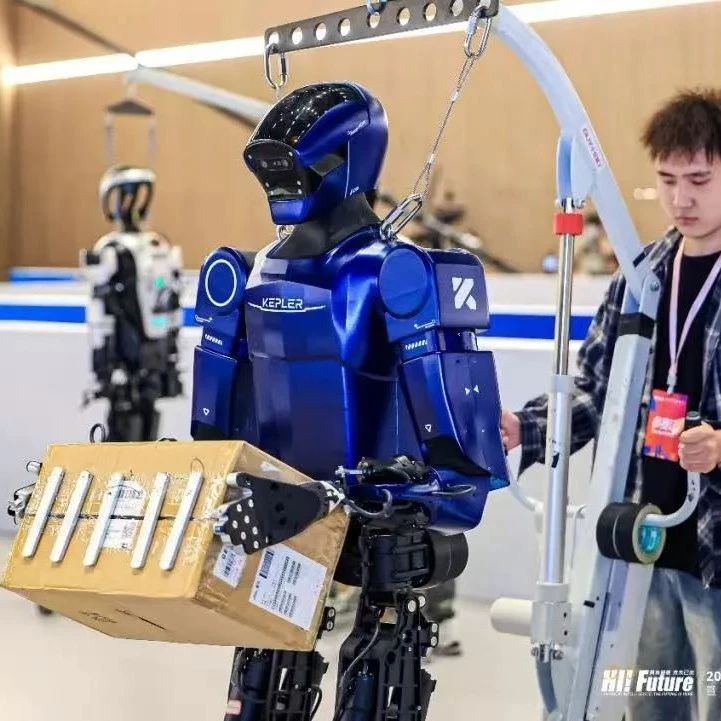
Core Viewpoint - The article highlights the advancements in humanoid robotics, particularly focusing on the Kepler K2 "Bumblebee" team's achievement of a 20-kilogram load record in the industrial scenario of the 2025 International Humanoid Robot Skills Competition, showcasing China's innovation in this field [1][2]. Group 1: Technological Innovations - The K2 "Bumblebee" robot has achieved a charging time of 1 hour and an operational time of 8 hours, which is considered leading in the humanoid robotics industry [3]. - The robot's performance is attributed to the self-developed planetary roller screw actuator, which enhances load capacity and positioning accuracy [3]. - The K2 "Bumblebee" can handle a single-arm load of 15 kilograms and a dual-arm load of up to 30 kilograms, with a base price of $30,000, making it cost-effective for industrial applications [3]. Group 2: Practical Applications - The competition's box handling scenario closely aligns with real industrial tasks, such as logistics and automotive manufacturing, establishing a bridge between research, application, and industry implementation [4][5]. - The K2 "Bumblebee" has already been deployed in real-world settings, performing tasks like car sewing inspection and autonomous loading in various industries, receiving positive feedback for its stability and safety [5]. Group 3: Industry Ecosystem - The Zhangjiang area is recognized for its comprehensive robotics industry chain, which includes components, manufacturing, and software support, fostering innovation in humanoid robotics [7]. - The competition exemplifies the advantages of the Zhangjiang Robotics Valley, which aims to create a globally influential robotics industry hub [7]. Group 4: Future Outlook - Kepler is planning to increase investment in key technology areas and expand pilot projects in logistics and industrial applications, aiming to transition from laboratory to production line [9]. - The company envisions becoming a leader in the humanoid robotics industry over the next 3-5 years, leveraging China's strong manufacturing capabilities to advance from "manufacturing" to "intelligent manufacturing" [9].
人形机器人产业落子何处︱长三角经济观察
Di Yi Cai Jing· 2025-06-18 12:21
Core Insights - The humanoid robot industry in China is experiencing rapid growth, with regional clusters in the Yangtze River Delta, Guangdong-Hong Kong-Macao Greater Bay Area, and Beijing-Tianjin-Hebei forming distinct competitive advantages through differentiated paths of technological implementation and industrial collaboration [1][2] Industry Layout - As of 2025 H1, there are 332 humanoid robot companies in China, with the Yangtze River Delta having the highest concentration at 133 companies, accounting for 40.06% of the national total [2] - The Yangtze River Delta benefits from a dense research network, facilitating significant technology spillover, while the Guangdong-Hong Kong-Macao region relies on major companies like Huawei and Tencent for innovation [2] - The Beijing-Tianjin-Hebei region is characterized by strong technical leadership from institutions like the Chinese Academy of Sciences and Tsinghua University, creating a unipolar magnetic effect centered in Beijing [2] Innovation Capability - As of 2024, China has published 652 effective invention patents in the humanoid robot sector, with the Yangtze River Delta accounting for 33.3% of these patents [4][5] - The top patent applicant, Beijing Institute of Technology, has 181 patents, indicating a strong focus on foundational research in the Beijing-Tianjin-Hebei region [4] Financing Situation - In Q1 2025, there were approximately 37 financing events in the humanoid robot sector, totaling around 3.5 billion yuan, with the number of events reaching 70% of the total from the previous 11 months [6] - The largest single financing round was 120 million USD (approximately 880 million yuan) for Itstone Intelligent Navigation, marking a record in the sector [6] Comparative Advantages - The Guangdong-Hong Kong-Macao region boasts a complete hardware manufacturing system, with 55% of global embodied intelligence supply chain capacity concentrated there, facilitating rapid technology transfer [7] - The Beijing-Tianjin-Hebei region's strength lies in its integration of research, policy, and application, with a high technology achievement conversion rate in medical robotics [8][9] - The Yangtze River Delta has established a comprehensive industrial chain, with over 50% of national production capacity and a high localization rate for core components, enhancing its competitive edge [10][11][12] Regional Collaboration - The Yangtze River Delta's collaborative innovation mechanism is a key differentiator, with a focus on policy coordination and cross-regional industrial integration [12][13] - The region's "Shanghai as the source + Yangtze River Delta incubation" model fosters a unique competitive advantage through multi-dimensional collaboration [12][13]
国信证券晨会纪要-20250617
Guoxin Securities· 2025-06-17 01:42
Macro and Strategy - In May 2025, the growth momentum of the macro economy shifted from exports and investment to consumption, with retail sales of consumer goods increasing by 6.4% year-on-year, up 1.3 percentage points from the previous month [9][10] - Fixed asset investment (excluding rural households) reached 191,947 billion yuan, growing by 3.7% year-on-year, but down 0.3 percentage points from the previous month [9][10] - The unemployment rate in urban areas was 5.0%, a slight decrease of 0.1 percentage points from the previous month, indicating stable employment conditions [9][10] Industry and Company Robotics Industry - The human-shaped robot industry is accelerating, with significant developments such as the launch of the first guide robot and the establishment of new robot departments by major companies [16][23] - The government is actively promoting the application of intelligent elderly care service robots, which is expected to enhance the development of the silver economy [16][24] - Key companies to watch include Top Group, Sanhua Intelligent Control, and others involved in various components of robotics [24] Food and Beverage Industry - The high-end liquor market is under pressure, with prices declining due to regulatory impacts and low economic activity [20][21] - The food and beverage sector saw a decline of 4.42% in the week of June 9-13, 2025, underperforming the Shanghai Composite Index [21] - Key investment recommendations include leading brands like Guizhou Moutai and Wuliangye, which have demonstrated resilience through multiple cycles [21] Real Estate Industry - Real estate development investment fell by 10.7% year-on-year in the first five months of 2025, with new housing starts down 22.8% [25][26] - The government is expected to introduce policies to stabilize the real estate market, with potential opportunities for companies like China Resources Land and Beike-W [26] Agriculture Industry - The USDA's monthly supply and demand report indicates a neutral outlook for soybean supply, while the beef and raw milk sectors are expected to see a positive correlation in market conditions [27][30] - The domestic beef market is projected to experience an upward trend, with prices showing resilience despite seasonal fluctuations [34] - Investment recommendations include leading companies in the livestock sector, such as Guangming Meat and Hai Da Group, which are expected to benefit from market recovery [35]
武汉发布人形机器人产业三年行动方案
news flash· 2025-06-13 09:29
Core Viewpoint - Wuhan has released a three-year action plan and policy measures for the humanoid robot industry, focusing on five major actions to support leading enterprises with ecological dominance and industry competitiveness [1] Group 1: Action Plan - The action plan includes the implementation of a leading whole machine initiative among other actions [1] - The plan aims to establish a municipal-level industrial innovation joint laboratory [1] Group 2: Financial Support - The maximum financial support for enterprises under this plan is set at 60 million yuan [1]
智元远征A2机器人斩获中美欧四项权威认证,这两家核心供应商望受益
Xuan Gu Bao· 2025-05-29 15:44
Group 1 - The Zhiyuan Robotics' Expedition A2 humanoid robot has achieved four product certifications: China CR, EU CE-MD, EU CE-RED, and US FCC, making it the first humanoid robot globally to hold certifications from these three major regions [1] - The Expedition A2 is designed for interactive services, featuring a height of 170 cm, over 50 degrees of freedom, and advanced safety measures, making it suitable for various applications such as marketing, customer service, and exhibition guidance [1] - The successful certification of the Expedition A2 demonstrates Zhiyuan Robotics' product competitiveness and compliance with the highest global market entry standards, indicating a clear trend towards the development of the humanoid robot industry [1] Group 2 - Bozhong Precision Engineering is a core partner of Zhiyuan Robotics, responsible for the assembly of the Expedition series and the exclusive supplier of Tesla's robotic tooling, benefiting from the increased demand for automation equipment due to Tesla's robot mass production [2] - Longxi Co., Ltd. is a leading manufacturer of joint bearings in China, holding over 75% market share domestically and 15% internationally, with a gross margin exceeding 45%, positioning itself as a key supplier for Zhiyuan Robotics [2]

