
伊核问题

Search documents
美国及盟友将8月底定为与伊朗达成核协议的最后期限
news flash· 2025-07-15 21:13
Core Viewpoint - The United States and its allies have reached a consensus that if no agreement is made regarding the Iranian nuclear issue by the end of August, Iran will face severe sanctions [1] Group 1 - The deadline for reaching an agreement on the Iranian nuclear issue is set for the end of August [1] - The potential consequences for Iran include severe sanctions if an agreement is not achieved [1]
美国务卿与三国外长通话 讨论伊核问题等议题
news flash· 2025-07-15 01:33
Group 1 - The core discussion involved U.S. Secretary of State Rubio and foreign ministers from France, Germany, and the UK, focusing on promoting stability in the Middle East and ensuring Iran does not develop or acquire nuclear weapons [1] - The conversation also touched upon the ongoing Russia-Ukraine conflict, with Rubio emphasizing that resolving the dispute through sustained negotiations remains a top priority for President Trump [1]
伊朗外交部最新表态:美伊谈判仍有可能,但外交不应成为“欺骗”和“发动心理战”的工具
Huan Qiu Wang· 2025-07-04 03:02
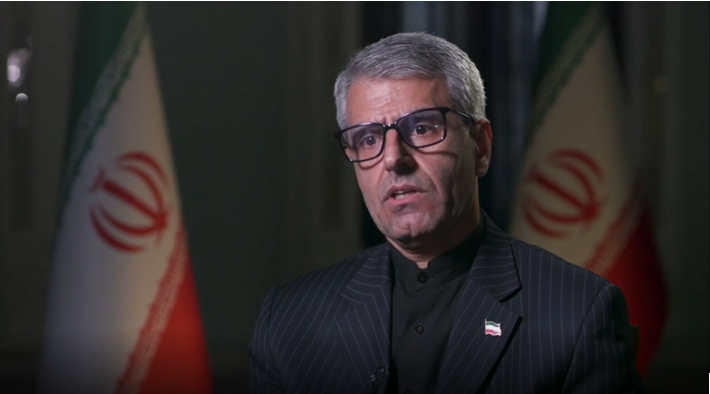
Group 1 - The Iranian Foreign Ministry spokesperson, Baghaei, stated that there are still opportunities for peace negotiations between Iran and the U.S., with efforts being made through secret channels to restart diplomatic solutions [1][3] - Baghaei emphasized that if the U.S. genuinely seeks peace, it must demonstrate sincerity and that diplomacy should not be misused as a tool for deception or psychological warfare [3] - Concerns among Iranian citizens about potential Israeli airstrikes were noted, with Baghaei asserting that Iran would respond to any attacks from Israel [3] Group 2 - Since April, there have been five rounds of indirect negotiations regarding the Iranian nuclear issue, with the sixth round scheduled for June 15 in Muscat, Oman, but was canceled due to a large-scale Israeli airstrike on Iran [3][4] - Following the Israeli attack, Iran retaliated, and on June 22, U.S. forces bombed three Iranian nuclear facilities, leading to a ceasefire on June 24 [3] - U.S. President Trump indicated on June 25 that talks would occur within a week, hinting at a possible easing of sanctions, but no public diplomatic contact has taken place since then [4]

【环时深度】利益冲突和信任缺失成了美伊核谈判两大堵点
Huan Qiu Shi Bao· 2025-07-03 23:00
Core Viewpoint - The article discusses the current state of US-Iran nuclear negotiations, highlighting the challenges and complexities arising from recent events, including Israeli attacks on Iran and the lack of trust between the parties involved [1][12]. Summary by Sections Progress in Negotiations - The first five rounds of indirect talks between the US and Iran resulted in four key agreements: 1. Iran agreed to implement the highest level of transparency and verification mechanisms for its nuclear facilities [2]. 2. Iran consented to dilute or transfer 400 kilograms of enriched uranium to prevent the possibility of building nuclear weapons [2]. 3. Iran will reduce the enrichment level of uranium to below 5% for civilian reserves, alleviating concerns about its potential to enrich uranium to weapon-grade levels [2]. 4. Iran will cooperate with the International Atomic Energy Agency (IAEA) to resolve remaining technical issues [2]. Challenges in Negotiations - The negotiations face significant hurdles due to differing perceptions of sanctions relief. The US insists on Iran taking specific actions first, while Iran views phased sanctions relief as a prerequisite for negotiations [6]. - The core conflict lies in the US's belief that Iran's nuclear program aims to develop weapons, while Iran maintains that its nuclear activities are for peaceful purposes [7]. Impact of Regional Dynamics - The article notes the cyclical nature of the conflict, where Iran's nuclear development prompts Israeli military actions, leading to further negotiations and escalations [5]. - The Israeli policy of "nuclear ambiguity" complicates the situation, as Iran perceives attacks from a nation that does not openly acknowledge its nuclear arsenal as unjustifiable [6]. Potential Withdrawal from NPT - Following recent conflicts, Iran is considering drafting a bill to withdraw from the Treaty on the Non-Proliferation of Nuclear Weapons (NPT), which could lead to severe diplomatic and security challenges for Iran [8][9]. - The article emphasizes that while there are calls within Iran to exit the NPT, such a move would be detrimental to its international standing and security [9]. US Domestic Perspectives - There is a notable preference among the American public for diplomatic solutions over military action regarding Iran's nuclear program, with a majority opposing military strikes [11]. - The article highlights internal divisions within the US government regarding the approach to Iran, with some advocating for military action while others support diplomatic engagement [10]. Future of Negotiations - The article concludes that the path to resuming negotiations is fraught with difficulties, particularly due to Iran's low trust in the US following military actions and the need for assurances against further attacks during negotiations [12]. - Despite the challenges, there remains hope for a peaceful resolution, emphasizing the importance of diplomatic efforts to stabilize the situation in the Middle East [12].
国投期货能源日报-20250703
Guo Tou Qi Huo· 2025-07-03 13:39
Report Industry Investment Ratings - Crude oil: ★★★, indicating a clearer long - term trend and relatively appropriate investment opportunities currently [1] - Fuel oil: ★★★, suggesting a clearer long - term trend and relatively appropriate investment opportunities currently [1] - Low - sulfur fuel oil: ★★★, showing a clearer long - term trend and relatively appropriate investment opportunities currently [1] - Asphalt: ★★★, meaning a clearer long - term trend and relatively appropriate investment opportunities currently [1] - Liquefied petroleum gas: ★☆☆, representing a bullish/bearish bias with a driving force for price increase/decrease, but poor operability on the trading floor [1] Core Views - The geopolitical risk around the Iranian nuclear issue has heated up again, and the risk of trade war has weakened. The theme of loose supply - demand for crude oil continues, and the supply - demand guidance is still negative [2] - Oil prices led the rise of oil product futures, and fuel - related futures closed slightly higher. High - sulfur fuel oil has weak demand and a weakening crack spread, while low - sulfur fuel oil has limited supply pressure but lacks demand drivers and shows a volatile trend [3] - From January to July, the cumulative output of domestic refinery asphalt is expected to increase by 7% year - on - year, and the cumulative shipment volume has increased by 8%. The demand in South China is expected to increase further after "ending the plum rain season", and the third quarter is a key window for demand recovery. The price is expected to fluctuate [4] - The July CP has been significantly reduced, the international market supply is abundant, and the domestic supply is loose. The futures price shows a weakening and volatile trend [5] Summaries by Categories Crude Oil - Overnight international oil prices rose, with the SC08 contract up 1.56%. The geopolitical risk around the Iranian nuclear issue has heated up again, and the risk of trade war has weakened [2] - The supply - demand theme of crude oil remains loose. Last week, the US EIA crude oil inventory increased by 3.845 million barrels more than expected, and the gasoline apparent demand was lower than expected. The global oil inventory accumulation trend cannot be reversed by the peak - season factor under the expected rapid production increase of OPEC+ [2] Fuel Oil & Low - Sulfur Fuel Oil - Oil prices led the rise of oil product futures, and fuel - related futures closed slightly higher [3] - High - sulfur fuel oil has low demand for ship bunkering and deep - processing. The demand boost from power generation in the Middle East and North Africa in summer is discounted due to the high crack spread valuation. After the short - term boost of oil prices by good news, the crack spread of high - sulfur fuel oil has weakened [3] - Low - sulfur fuel oil has limited short - term supply pressure due to the solid - flow effect, but lacks demand drivers and shows a volatile trend [3] Asphalt - From January to July, the cumulative output of domestic refinery asphalt is expected to increase by 7% year - on - year, and the cumulative shipment volume of 54 sample refineries has increased by 8% year - on - year [4] - The demand in South China is expected to increase further after "ending the plum rain season" in early July. The third quarter is a key window for demand recovery [4] - The latest inventory data shows a slight inventory increase of 0.7 million tons, and the price is expected to fluctuate [4] Liquefied Petroleum Gas - The July CP has been significantly reduced, the international market supply is abundant, and the US propane inventory is rising rapidly, putting pressure on international prices [5] - Affected by refinery operations, the external sales volume of domestic gas continued to increase last week, strengthening the loose domestic supply situation [5] - After the rapid disappearance of the premium from political risk and the driving force of crude oil, attention should be paid to the recovery rhythm of overseas exports, and the futures price shows a weakening and volatile trend [5]
综合晨报-20250703
Guo Tou Qi Huo· 2025-07-03 02:16
Group 1: Energy - Brent 09 contract rose 2.78%. Geopolitical risks in the Middle East around the Iran nuclear issue have heated up again, and the trade war risk has weakened. The theme of loose supply and demand in the crude oil market continues, and the supply - demand guidance is still negative [1] - Night - time oil prices rose 3% due to positive news of US - Vietnam tariffs. High - sulfur fuel oil (FU) is in a weak oscillation, while low - sulfur fuel oil (LU) is boosted in the short term [21] - Night - time oil prices rose 3%, and asphalt is expected to follow the upward trend. Supply and demand are expected to increase, and the de - stocking trend is expected to continue [22] - The 7 - month CP of liquefied petroleum gas was significantly lowered, and the market is in a weak oscillation [23] Group 2: Metals - Overnight, the international copper price led the rise at a high level. The market is trading the probability of a July interest rate cut. Short - term Shanghai copper's upward trend tests 81,000, and long - term high - level short - allocation is recommended [3] - Overnight, Shanghai aluminum oscillated at a high level. The social inventory of aluminum ingots increased slightly, and there is a risk of a phased correction [4] - Cast aluminum alloy follows the fluctuation of Shanghai aluminum. If the spread between the far - month contracts on the disk expands, consider a long - ADC12 and short - AL strategy [5] - The spot price of alumina is around 3,100 yuan, and the upward space is limited [6] - Overnight, the precious metals oscillated strongly. The market's expectation of an interest rate cut has increased, and attention is focused on the non - farm payrolls data [2] - Zinc has strong support at 22,000 yuan/ton in the short term, and a short - allocation strategy is recommended in the medium and long term [7] - Shanghai lead is consolidating above 17,000. The supply - demand contradiction is not prominent, and attention is paid to whether it can stand firm at 17,000 [8] - Shanghai nickel is oscillating at a high level in the rebound. Technically, it is at the end of the rebound, waiting for a short - selling opportunity [9] - Tin prices oscillated overnight. It is advisable to short - allocate the far - month contracts [10] Group 3: Building Materials and Chemicals - Multi - silicon futures' main contract rose to the daily limit. The short - term upward space depends on the implementation of supply - side regulation policies [12] - Industrial silicon futures prices rose strongly. Due to the interweaving of long and short themes, the market is expected to oscillate [13] - Night - time steel prices oscillated. Supply and demand in the steel market are both increasing, and the short - term is expected to remain strong [14] - Iron ore prices rose overnight. Supply is expected to decline, and the short - term trend is expected to follow the finished products and oscillate strongly [15] - Coke prices rose. There is an expectation of a price increase, and the price is expected to oscillate strongly [16] - Coking coal prices rose. Policy may reduce production, and the price is expected to oscillate strongly [17] - Manganese silicon prices rose. The inventory has decreased, but the upward pressure above 6,750 is large [18] - Silicon iron prices rose. Demand is okay, and the price is expected to oscillate strongly [19] - Polyvinyl chloride (PVC) is following the cost fluctuations in the short term and may oscillate at a low level in the long term. Caustic soda is strong in the short term but under pressure in the long term [28] - PX and PTA prices are in a weak oscillation. The supply - demand pattern may gradually become looser [29] - Ethylene glycol is continuing a small - scale rebound and is expected to oscillate at the bottom [30] Group 4: Agricultural Products - The USDA reports on soybeans are neutral. Domestic soybean meal is in a weak oscillation [35] - Soybean oil and palm oil prices rose. A long - allocation strategy on dips is recommended in the long term [36] - Canadian rapeseed prices rose. Domestic rapeseed products are expected to oscillate in the short term [37] - The price of domestic soybeans rebounded from a low level. Weather and policies need to be focused on in the short term [38] - Corn futures are in an oscillating trend. The supply rhythm affects the market [39] - Hog futures rose significantly. The rebound space is limited in the medium term, and policy support is expected in the long term [40] - Egg futures fell. Short - selling on rallies is recommended [41] - U.S. cotton prices rose. Domestic cotton inventory is expected to be tight, and buying on dips is recommended [42] - U.S. sugar is in a downward trend, and domestic sugar is expected to oscillate [43] - Apple futures are oscillating, and a short - selling strategy is recommended [44] - Wood futures are oscillating. Supply has some positive factors, but the price is still weak [45] - Pulp futures rose slightly. The inventory is still high year - on - year, and it is expected to oscillate at a low level [46] Group 5: Others - The freight rate of the container shipping index (European line) is expected to be stable in July. The progress of the Gaza negotiations may affect the far - month contracts [20] - Urea market supply and demand have improved marginally, and the short - term market is in a strong oscillation [24] - Methanol futures are expected to fluctuate narrowly in the short term [25] - Styrene prices are in a weak trend. Supply and demand support is insufficient [26] - Polypropylene and polyethylene are in a weak fundamental situation [27] - Glass futures rose significantly, but it is recommended to wait and see due to high inventory and weak demand [32] - Natural rubber supply is increasing, and inventories are rising. A rebound from an oversold position is possible [33] - Soda ash is strong in the short term, but the upward space is limited due to expected demand reduction [34] Group 6: Financial Markets - A - share market is in a weak oscillation. In the style configuration, technology and growth should be increased on the basis of dividend assets [47] - Treasury bond futures closed up across the board. Be aware of the risk of increased volatility in the short term [48]
伊朗:暂停合作!
中国基金报· 2025-07-02 23:12
来源:央视新闻 参考消息 北京日报 当地时间7月2日, 伊朗总统佩泽希齐扬批准暂停与国际原子能机构合作。 伊朗正式颁布法律 暂停与国际原子能机构合作 当地时间6月26日,伊朗议会议长卡利巴夫通过其社交账号表示,经宪法监护委员会批准,伊 朗暂停与国际原子能机构合作的法律已于当天正式颁布。 他同时批评国际原子能机构为战争和侵略行为提供便利,沦为以色列政权的代理人,伊朗将 在确保本国核设施安全之前,停止与该机构的一切合作。 "伊核计划被推迟约1至2年" 美国防部再称摧毁伊朗核设施 当地时间7月2日,美国国防部发言人肖恩·帕内尔表示,美国目前的评估是 伊朗核设施已被 摧毁,伊朗核计划已被推迟约1至2年 。 本月早些时候,美国对伊朗的三处核设施发动打击。美国总统特朗普和其他白宫官员多次高 调宣布胜利,但有关"伊朗核设施已被摧毁"的说法外界并不认可。美国媒体更是屡屡"拆 台"。目前,与伊朗核能力有关的伊核设施受损情况、是否转移浓缩铀,各方表态仍不统一。 美国务院:伊朗暂停与国际原子能机构的合作"不可接受" 当地时间7月2日,美国国务院称,伊朗选择暂停与国际原子能机构的合作是"不可接受的", 伊朗必须立即全面与国际原子能机 ...

整理:中东局势跟踪(7月3日)
news flash· 2025-07-02 21:48
Group 1 - The U.S. State Department finds Iran's decision to suspend cooperation with the International Atomic Energy Agency unacceptable, emphasizing the need for Iran to fully cooperate without further delays [6] - Iran's Foreign Minister stated that there is currently no accurate information regarding damage to nuclear facilities, but it appears these facilities are currently non-operational, pending an assessment report on their potential restart [7] - The U.S. Department of Defense reiterated that the destruction of Iran's nuclear facilities has delayed the Iranian nuclear program by approximately 1 to 2 years [4] Group 2 - Ongoing airstrikes by Israel in Gaza have resulted in 108 fatalities [1] - Hamas is reviewing a newly received draft for a ceasefire agreement in Gaza [2] - An Iranian official warned of a devastating response if enemies launch another invasion [3] - The Israeli Foreign Minister indicated it is time to reinitiate "sanction countermeasures" against Iran [5]
格罗西的忠告与伊核问题的走向
经济观察报· 2025-06-30 10:17
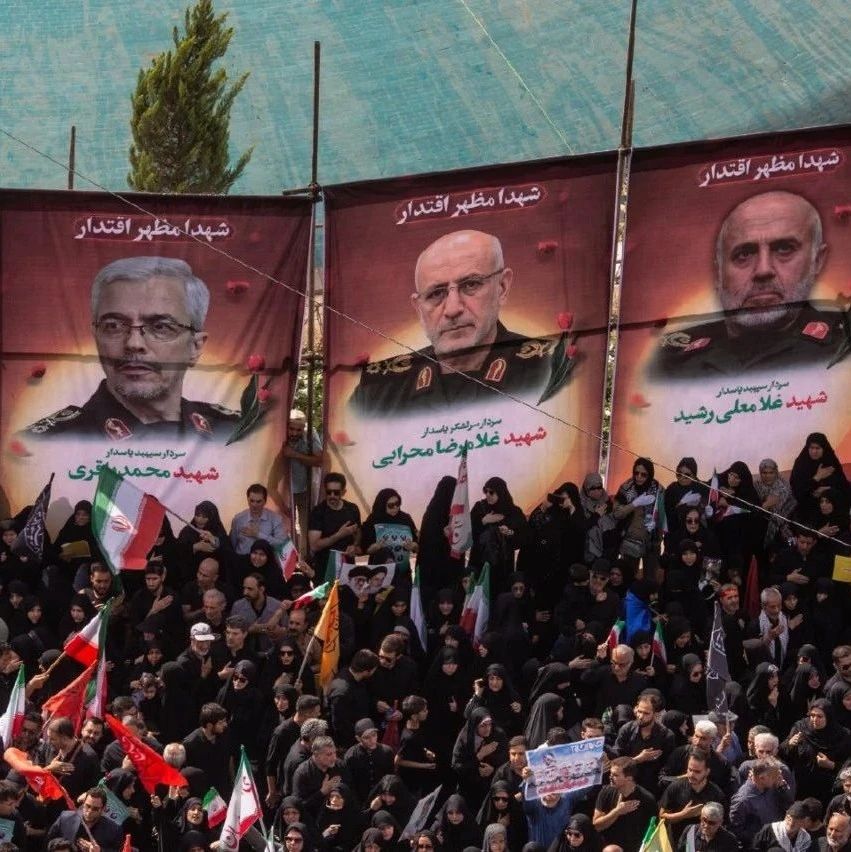
Core Viewpoint - For Iran, as long as it retains its "green mountains," it cannot be considered a loss. The "green mountains" refer to the survival of the regime and the capability to develop nuclear energy [1][12]. Group 1: Iran's Responses - The first response was a symbolic retaliation, where Iran launched 14 missiles at the U.S. Al Udeid Air Base in Qatar, resulting in no casualties due to prior warnings [3]. - The second response involved celebrating a perceived victory, with public celebrations in Iran and a speech from Supreme Leader Khamenei, who claimed victory over "false Jewish nationalism" and the U.S. [4]. - The third response was a national mourning ceremony held in Tehran for over 60 individuals, including high-ranking military officials and civilians, who died in the conflict [6]. Group 2: Future Negotiations - It is anticipated that Iran will soon return to the negotiation table, as indicated by U.S. President Trump's confidence in reaching an agreement regarding Iran's nuclear program [8][17]. - The U.S. aims to place Iran's nuclear development under strict supervision by the International Atomic Energy Agency (IAEA) and may also seek to limit Iran's missile development capabilities [13]. - Iran's Foreign Minister has publicly requested that Trump show respect towards Iran's leadership if he genuinely wishes to negotiate [8]. Group 3: Nuclear Capabilities - Despite the U.S. bombing of Iranian nuclear facilities, the IAEA Director General stated that some aspects of Iran's nuclear program may still exist, and Iran possesses significant nuclear expertise and industrial capabilities [10]. - The resolution of the Iranian nuclear issue is suggested to require agreements and verification systems rather than military action [10][11].
伊朗核设施是否完全摧毁再起争议!专家称虽遭削弱但仍有基础
Nan Fang Du Shi Bao· 2025-06-30 05:51
Group 1 - The core viewpoint is that while the U.S. claims to have completely destroyed Iran's nuclear facilities, there are conflicting reports regarding the actual damage and Iran's ability to recover its nuclear capabilities [1][2] - U.S. President Trump stated that three Iranian nuclear facilities were completely destroyed, leaving only "thousands of tons of rock" at the site, and denied any transfer of materials by Iran prior to the attack [1] - The U.S. Department of Defense criticized media reports suggesting limited damage from the attacks, labeling them as "fake news" and asserting that the military's actions were a significant victory [1] Group 2 - The Director General of the International Atomic Energy Agency (IAEA), Grossi, indicated that despite damage to Iranian nuclear facilities, Iran retains the capability to produce enriched uranium within months [2] - Grossi emphasized that while the facilities were severely damaged, they were not completely destroyed, and Iran still possesses the industrial and technical capacity to resume operations quickly [2] - Analysis from experts suggests that while much of Iran's nuclear infrastructure may have been damaged, the country still has the foundational elements necessary to rebuild or restore its nuclear capabilities over an uncertain timeframe [2]