供应链金融

Search documents
高质量金融服务助力提升乡村振兴成色
Jin Rong Shi Bao· 2025-12-16 02:46
把深山里的土特产擦亮成"金字招牌",为忙碌的生产线注入"强心剂"……在广袤的农村大地上,我 国银行业的金融服务正渗透进经济生产生活的各个环节。 近日召开的中央经济工作会议提出,统筹推进以县城为重要载体的城镇化建设和乡村全面振兴,推 动县域经济高质量发展。持续巩固拓展脱贫攻坚成果,把常态化帮扶纳入乡村振兴战略统筹实施,守牢 不发生规模性返贫致贫底线。 2025年作为巩固拓展脱贫攻坚成果同乡村振兴有效衔接5年过渡期的最后一年,乡村全面振兴扎实 推进、农业农村现代化迈出坚实步伐。展望2026年,专家认为,银行业支持乡村振兴仍有较大空间。 乡村振兴信贷投放力度持续加大 "中央经济工作会议对乡村全面振兴工作的部署,核心要义在于'系统统筹'与'底线坚守'。"苏商银 行特约研究员高政扬在接受《金融时报》记者采访时表示,从实践层面看,政策要求在推进产业、要 素、生态等一体化进程中,兼顾增长质效与底线守护,走出一条兼具包容性与可持续性的高质量乡村振 兴路径。 与此同时,需要看到的是,在乡村振兴领域,产业链协同融资机制尚不完善。"面对农业产业链上 下游的资金堵点,跨行业、跨区域的协同融资渠道尚未完全打通。此外,中长期资金支持力度 ...

每日市场观-20251212
Caida Securities· 2025-12-12 10:36
Market Overview - After the Federal Reserve's interest rate cut, market sentiment has turned cautious due to potential rate hikes from the Bank of Japan[1] - Major A-share indices opened high but closed lower: Shanghai Composite Index down 0.70%, Shenzhen Component down 1.27%, and ChiNext down 1.41%[1] - Total trading volume in both markets reached 1.89 trillion yuan, a slight increase from the previous trading day, but over 4,300 stocks declined, indicating weakened buying momentum[1] Sector Performance - Structural opportunities are concentrated in two main lines: - The renewable energy sector, particularly wind and nuclear power, shows sustained investment value due to policy catalysts[1] - Semiconductor equipment-related ETFs have seen net inflows this week, indicating a potential rebound in the oversold tech sector[1] - The real estate, retail, and cultural media sectors led the decline, while hard tech themes like nuclear fusion received increased funding[1] Economic Outlook - The World Bank has raised its 2025 economic growth forecast for China by 0.4 percentage points, citing more proactive fiscal policies and a diversified export market as key factors[7] - The focus on domestic demand is expected to support resilient and sustainable growth in the coming years[7] Fund Dynamics - In the recent Hong Kong stock market adjustment, public funds are accelerating their investments, with several funds announcing early closures for fundraising[13] - A-share assets have seen increased allocations from fund advisors, indicating a strategic positioning for the upcoming year-end market trends[14]

太极股份打造“焦煤在线”新一代智能交易平台正式投运,以自主可控安全体系与数据服务赋能产业升级
Xin Lang Cai Jing· 2025-12-12 04:22
Core Viewpoint - The launch of the "Coking Coal Online" intelligent trading platform marks a significant step in the digital transformation of the national coking coal industry, focusing on self-controllable technology systems and data service capabilities [1][2][3] Group 1: Platform Features - The platform has established a digital service system that integrates trading, logistics, indices, payment settlement, and finance into a "five-dimensional" intelligent service framework [1][2] - The upgrade enhances data service capabilities, achieving comprehensive coverage from enterprise registration to contract fulfillment, effectively breaking down information silos and providing solid data support for upstream and downstream collaboration in the industry [1][2] Group 2: Security Measures - The platform adheres to national cybersecurity level protection requirements, constructing a multi-layered, all-link information security defense system [1][2] - It employs self-controllable encryption algorithms to strengthen the protection of key processes such as data transmission and storage, implementing multiple protections for sensitive information and ensuring comprehensive audit trails for all critical operations [1][2] Group 3: Technical Architecture - The platform utilizes advanced microservices and distributed architecture, offering high performance, easy scalability, and strong stability, allowing flexible integration with various internal and external systems for payment, settlement, and logistics [3] - This self-controllable technical architecture provides a reliable foundation for future development of industry credit evaluation systems and expansion of supply chain financial services [3] Group 4: Operational Efficiency - The new trading system enhances real-time performance, security, and reliability while optimizing processes and innovating trading models, significantly reducing operational costs in the industry [2][3] - This development supports the continuous evolution of the energy industry ecosystem towards a more efficient and intelligent direction [2][3]

金融向实新答卷:恒丰银行以“数据+供应链+园区”破解民营与科创融资难题
Di Yi Cai Jing· 2025-12-11 12:04
Core Viewpoint - The article discusses how Hengfeng Bank is transforming national financial strategies into practical solutions to address financing challenges faced by the real economy, particularly for small and micro enterprises and rural revitalization efforts [1]. Group 1: Data Utilization - Hengfeng Bank leverages regional big data to create precise "enterprise profiles," addressing the information asymmetry that small and micro enterprises face in securing financing [2]. - The bank utilizes local credit platforms to gather multidimensional data, enabling the construction of comprehensive risk control models for clients [2][3]. - The "Xihui Loan" product integrates over 40 core data points, allowing for rapid loan approvals, with some loans disbursed in as little as 72 hours [4]. Group 2: Supply Chain Financial Innovation - Hengfeng Bank has developed a digital supply chain finance brand, "Hengrong E," which facilitates online processes for credit applications and loan disbursements, significantly reducing the time and effort required from businesses [5]. - The bank's innovative approach to "domestic order financing" allows for financing based on the core enterprise's payment capacity and historical cooperation with suppliers, thus providing timely financial support [6]. - The bank has successfully provided substantial loans to key suppliers in various industries, enhancing operational efficiency and financial flow within supply chains [5][6]. Group 3: Focus on Industrial Parks and Innovation - Hengfeng Bank aims to support technology enterprises in industrial parks by providing tailored financial services that align with their growth cycles, addressing the common issue of insufficient collateral [7][8]. - The bank's "factory mortgage loan" product has successfully supported multiple small and micro enterprises in industrial parks, facilitating their first-time financing and overall growth [9]. - The collaboration between banks and industrial parks enhances the identification of quality enterprises, reduces service costs, and improves risk management through continuous interaction and data sharing [9].
浙商银行重庆分行将提供200亿元意向融资支持制造业发展
Sou Hu Cai Jing· 2025-12-11 11:42
Core Viewpoint - Zhejiang Commercial Bank's Chongqing Branch has signed a cooperation agreement with the Chongqing Economic Information Commission to enhance the integration of innovation, industry, finance, and talent, aiming to promote high-quality development of the real economy in Chongqing [1][3]. Group 1: Financial Support and Collaboration - Over the next five years, Zhejiang Commercial Bank's Chongqing Branch plans to provide no less than 20 billion yuan in financing support for the high-quality development of the manufacturing industry in Chongqing, in line with national financial policies and its own credit standards [3]. - The collaboration will focus on key industrial clusters, strategic emerging industries, intelligent manufacturing, and green manufacturing, aiming to meet the diverse financial needs of manufacturing enterprises through innovative financial products and optimized service models [3]. Group 2: Service Capabilities and Industry Focus - The bank has been actively serving the real economy in Chongqing, leveraging its supply chain finance and digital service advantages to address financing challenges faced by small and micro enterprises in various sectors, including energy, automotive, and steel [3]. - The bank aims to enhance its supply chain finance capabilities, focusing on modern manufacturing clusters and key industrial chains, while increasing financial support for advanced manufacturing and green low-carbon industries [3]. - Additionally, the bank will continue to leverage its strengths in innovation finance and talent banking to provide efficient and high-quality financial services to enterprises [3].


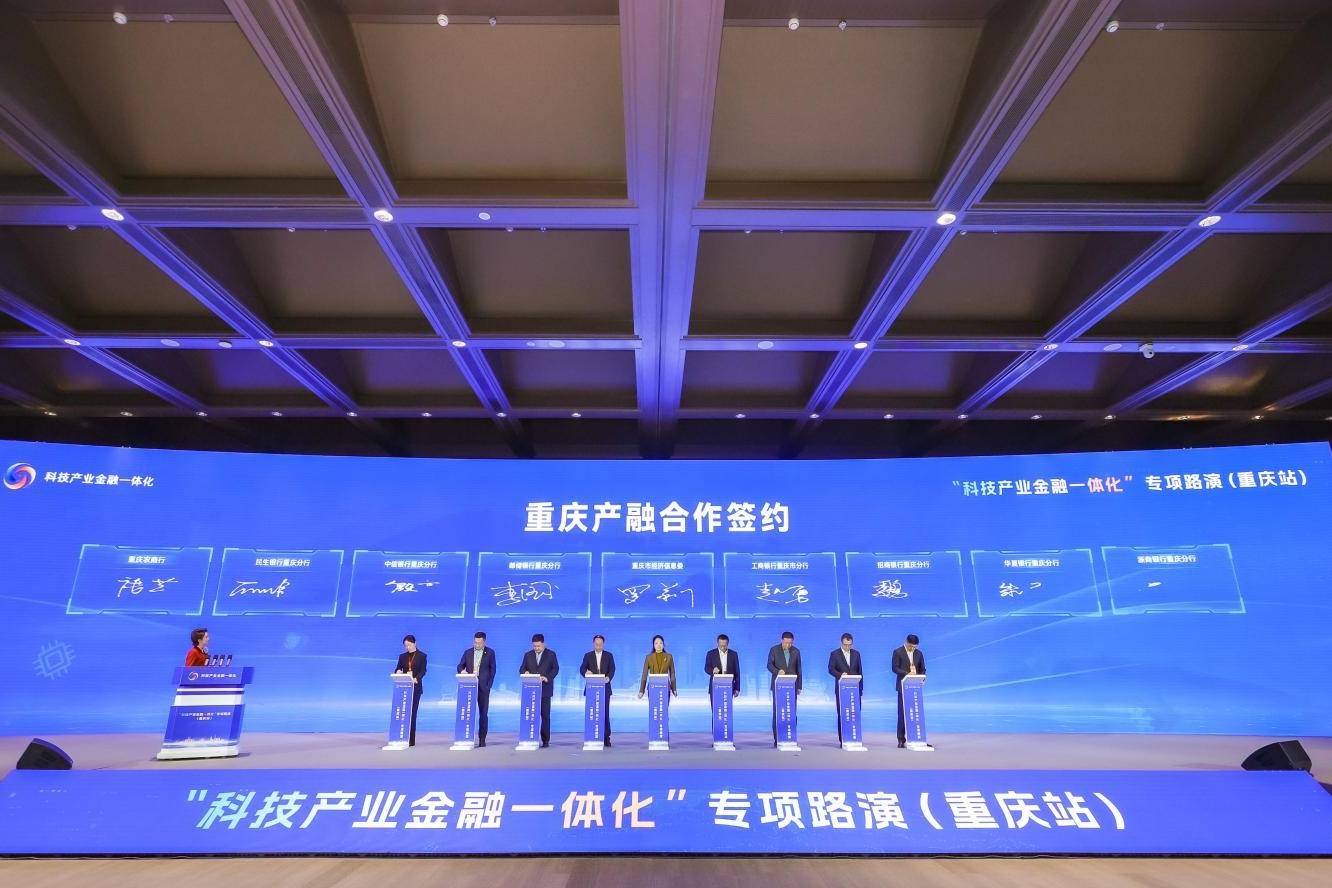
建设三大中心,天津“十五五”打出“别样”金融牌
Sou Hu Cai Jing· 2025-12-11 09:28
Core Viewpoint - Tianjin aims to establish a unique financial landscape during the 14th Five-Year Plan, focusing on serving the real economy and developing niche financial sectors rather than competing with other cities on a broad scale [1] Financial Innovation and Industry Collaboration - The core challenge for Tianjin is to enhance the financial support for the manufacturing sector, ensuring that financial resources effectively nourish the industry [2] - The proposal emphasizes the development of a financial innovation operational demonstration zone and the construction of characteristic financial aggregation areas, marking an upgrade from previous strategies [2] - Key areas of financial innovation include technology finance, green finance, inclusive finance, pension finance, and digital finance, aligning with Tianjin's focus on "new quality productivity" [2] - The proposal highlights the importance of deep collaboration between finance and the entire industrial chain, aiming to create a financial ecosystem that supports industrial renewal [2] Global Leasing Centers - Tianjin sets ambitious goals to build globally influential leasing centers for aircraft, ships, and offshore exports, directly competing with world-class leasing hubs like Dublin [3] - The city leverages its advanced manufacturing base to enhance competitiveness in high-end equipment, which in turn supports the leasing industry [3] - The initiative to develop offshore leasing is seen as a significant reform, aiming to break down barriers in cross-border financial services [3] Commercial Factoring Development - The proposal includes a goal to establish Tianjin as the national capital of commercial factoring, which is crucial for addressing financing challenges faced by small and medium-sized enterprises [4][5] - Commercial factoring is viewed as a key tool for improving the financing conditions of the real economy by unlocking the value of accounts receivable [5] - The development of a commercial factoring hub requires not only the aggregation of enterprises but also the establishment of a supportive ecosystem, including industry standards and regulatory improvements [5] Overall Financial Reform Strategy - Tianjin's financial reforms are closely tied to the real economy, aiming to activate financial resources to support high-end manufacturing and drive industrial upgrades [6] - The dual engines of leasing and factoring are expected to alleviate financing difficulties for enterprises and create a replicable "Tianjin model" for financial development [6]
刚买下支付牌照的小红书,为何关停了“小红卡”?
Xin Lang Cai Jing· 2025-12-11 08:29
Core Viewpoint - Xiaohongshu has made a strategic move by acquiring a payment license, but it simultaneously announced the suspension of its local life membership program "Xiaohong Card," indicating a complex strategic landscape with both expansion and contraction elements [1][8]. Group 1: Payment License Acquisition - Xiaohongshu acquired 100% of Dongfang Electronic Payment Co., Ltd., gaining a payment license that allows for core functions such as user recharge, consumption, and transfer, which aligns with its e-commerce and local life payment needs [3][10]. - The acquisition of the payment license is expected to optimize cost structures, improve merchant settlement efficiency, and provide valuable data assets for the platform [3][10][11]. - Previously, Xiaohongshu relied on third-party payment channels, incurring high transaction fees estimated at around 2.4 billion yuan annually based on a projected GMV of over 400 billion yuan for 2024 [2][9]. Group 2: Suspension of Xiaohong Card - The "Xiaohong Card," launched in September 2025 with an annual fee of 168 yuan, aimed to create a premium membership experience in cities like Shanghai, Hangzhou, and Guangzhou, but will be suspended starting January 1, 2026 [5][12]. - The suspension is attributed to high operational costs and a mismatch with Xiaohongshu's core online content-driven model, which contrasts with the "heavy operation" nature of local life services [5][12][13]. - The decision to pause the program allows Xiaohongshu to reallocate resources towards more critical areas, particularly the integration of its e-commerce and payment systems [6][13].
兴业银行济宁分行:创新供应链金融,精准滴灌绿色建材产业链
Qi Lu Wan Bao· 2025-12-11 08:21
Core Insights - The "Jining Characteristic Industry Financial Empowerment Action" was officially launched on June 27, focusing on enhancing the green building materials industry through innovative financial services [1] - The initiative aims to address funding challenges faced by upstream green building material companies, which are critical for urban construction and public welfare projects [2] Financial Empowerment Action - The action is organized by the Jining Municipal Social Work Department and the Jining Financial Supervision Bureau, with support from the Jining Banking Association [1] - The initiative emphasizes collaboration between banks and enterprises to create a mutually beneficial development path for the industry [1] Funding Challenges - The green building materials industry in Zoucheng City is under significant financial pressure due to prolonged payment cycles for municipal projects, which affects the stability of supply chains [2] - Major urban renewal projects, including the renovation of 64.4 kilometers of combined sewer systems, have a total investment of several billion yuan, highlighting the reliance on timely funding for construction materials [2] Innovative Financial Products - The bank has developed a comprehensive supply chain financial product system to meet the diverse needs of different enterprises [3] - The "e-bill loan" product allows companies to apply for loans up to 10 million yuan without financial statements, streamlining the financing process [3] - The "commercial bill discount" service leverages the credit of core enterprises to help suppliers quickly convert receivables into cash [3] - The "domestic letter of credit" product provides credit support for state-owned enterprises while managing risks through future collateral [3] Reverse Factoring Innovation - The "domestic reverse factoring" service simplifies the financing process for suppliers, allowing for immediate access to funds upon confirmation from the general contractor [4] Performance Metrics - From 2024 to 2025, the bank facilitated 230 million yuan in supply chain financing for over 40 enterprises in the green building materials sector [5] - Specific allocations include 50 million yuan for urban drainage projects and 80 million yuan for affordable housing projects, addressing urgent funding needs [5] Risk Management and Efficiency - The reverse factoring model shifts focus to the creditworthiness of core enterprises, mitigating traditional risks associated with receivables [6] - The online financing platform enables suppliers to complete all operations digitally, significantly reducing the time from application to funding to as little as 3 hours [6] Commitment to Industry Development - The bank's financial support has been crucial for the development of various green building materials, contributing to urban infrastructure projects and improving living conditions [7] - The innovative financial services have reduced financing costs by over 20% compared to traditional loans, promoting inclusive finance [7] - The bank aims to replicate its successful model in other sectors, contributing to the high-quality economic development of Jining City [7]

传统信贷碰壁?医疗企业别慌,四大融资模式救急
Sou Hu Cai Jing· 2025-12-10 05:54
Core Viewpoint - The article discusses the financing difficulties faced by small and medium-sized medical enterprises and presents four practical supply chain financing models as solutions to alleviate these challenges [1]. Group 1: Inventory Financing - Inventory financing allows medical companies to convert their stock into liquid funds, particularly beneficial for consumables and pharmaceuticals [3]. - The front-end procurement model enables companies to purchase goods with the help of financing partners, requiring only a 20% deposit while the rest is covered by the financier [3]. - The dynamic pledge model allows companies to pledge their inventory to obtain approximately 70% of its value in loans, providing flexibility in sales during peak seasons [5]. Group 2: Accounts Receivable Financing - The accounts receivable financing model addresses the slow cash flow due to hospital payment terms, allowing suppliers to transfer their receivables to a financing platform for immediate cash [7]. - This model can significantly speed up the funding process, with some transactions completed in as little as one hour, improving efficiency by 90% compared to traditional methods [9]. - The model emphasizes the importance of assessing the payment capabilities of hospitals to ensure the reliability of the financing [9]. Group 3: Joint Venture Profit Sharing - The joint venture profit-sharing model involves shared risk and profit between the financing partner and the medical enterprise, with the financier covering 80% of the costs [11]. - This model requires close collaboration and transparency between the parties, ensuring that funds are used appropriately and that profit-sharing agreements are clear [13]. - It is particularly suitable for projects with high profits but long payment terms, such as medical equipment procurement [11][13]. Group 4: Future Outlook - The article concludes that traditional credit methods are not the only option for medical enterprises, and supply chain financing offers adaptable solutions [15]. - With advancements in financial technology, these financing models are expected to become more accessible, enabling companies to manage their operations effectively and overcome funding challenges [15].
农行苏州分行金融赋能纺织产业高质量发展
Jiang Nan Shi Bao· 2025-12-09 13:58
Core Viewpoint - The traditional manufacturing industry, particularly the textile and apparel sector in Suzhou, is undergoing a transformation towards modernization, supported by financial services from Agricultural Bank of Suzhou, enhancing the entire supply chain's efficiency and competitiveness [1][2]. Group 1: Industry Transformation - The textile and apparel industry in Suzhou has evolved from its historical roots in silk weaving to become a significant player in modern industrialization, impacting everyday life [1]. - The integration of smart technologies in production processes, such as automated sewing systems and intelligent supply chain solutions, is crucial for the industry's digital transformation [1][2]. - During the "Double Eleven" shopping festival, Bosideng achieved over 100 million yuan in sales, showcasing the effectiveness of data and AI in driving digital transformation [1]. Group 2: Financial Support and Innovation - Agricultural Bank of Suzhou has provided nearly 8 billion yuan in group credit to support the transformation of companies like Bosideng, addressing funding challenges faced by suppliers [2]. - The bank's "Yin Piao e-Rong" product offers online financing solutions for upstream suppliers, ensuring quick access to funds and improving raw material supply efficiency [2]. - A tailored "Bosideng Industry Chain e-Loan" has reached a balance of 563 million yuan, demonstrating the bank's commitment to supporting downstream distributors with innovative financial services [2]. Group 3: Local Industry Development - The wool sweater market in Wujiang District has seen a resurgence, with local businesses adapting to consumer demands for high-quality, stylish winter apparel [3]. - Local textile enterprises have shifted from homogeneous competition to focusing on product quality and design, enhancing their market competitiveness [3][4]. - Agricultural Bank of Suzhou has implemented various financial products to support small and micro enterprises, facilitating their growth and contributing to the local economy [4]. Group 4: Future Prospects - The textile and apparel industry in Suzhou is expected to continue thriving under the guidance of Agricultural Bank of Suzhou, enhancing domestic demand and solidifying the foundation of the real economy [5].