
半导体产业

Search documents
瀚天天成递表港交所 高额政府补助支撑利润增长
Ju Chao Zi Xun· 2025-10-14 15:17
Core Viewpoint - Hantian Technology (Xiamen) Co., Ltd. has submitted an IPO application to the Hong Kong Stock Exchange, with CICC as the exclusive sponsor, amidst a competitive global semiconductor industry and China's push for self-sufficiency in the supply chain [1][3]. Group 1: Company Overview - Hantian Technology specializes in the research, production, and sales of silicon carbide (SiC) epitaxial wafers, which are crucial for third-generation wide bandgap semiconductor materials [3]. - The company's products have extensive applications in sectors such as electric vehicles, photovoltaic power generation, smart grids, rail transportation, and aerospace [3]. Group 2: Financial Performance - The company's revenue for the years 2022 to 2024 was reported as 441 million yuan, 1.143 billion yuan, and 974 million yuan, respectively, indicating a revenue decline of 14.72% in 2024 [3]. - Despite the revenue drop, the company's profit for 2024 increased to 166 million yuan, a year-on-year growth of 36.52% [3]. - The significant increase in profit is largely attributed to government subsidies, which rose to 1.35 billion yuan, 4.74 billion yuan, and 1.119 billion yuan over the same period, with subsidies accounting for 67.24% of the profit in 2024 [3][4]. Group 3: Operational Adjustments - The company has significantly reduced its workforce from a peak of 833 employees at the end of 2023 to 592 by the end of 2024, resulting in a turnover rate of 28.93% [4]. - This reduction in personnel is seen as a strategy to maintain profit margins amid declining revenue, raising concerns about the company's business expansion pace and internal management [4]. Group 4: Future Prospects - Hantian Technology aims to raise funds through its IPO to enhance its research capabilities and expand production capacity, capitalizing on the long-term growth in demand for silicon carbide driven by global energy transition [4].


半导体精品公众号推荐!
国芯网· 2025-10-14 04:44
如何更加高效的获取高质量的信息 在碎片化的时代里 收获满满? 2025年,半导体人只需关注5个公众号 半导体技术天地 半导体论坛 振兴国产半导体产业! 信息爆 炸的时代 更需要断舍离 ID:ic2018ic ▲长按二维码"识别"关注 专注半导体产业技术,技术资料,专家讲解。欢迎关注! ↓↓↓值得您的关注↓↓↓ 国芯网 ID:CSF211ic ▲长按二维码"识别"关注 半导体行业第一的微信公众平台,50万的从业人员都已关注! ↓↓↓值得您的关注↓↓↓ ▲长按二维码"识别"关注 半导体行业圈,半导体人自己的圈子,请关注! ↓↓↓值得您的关注↓↓↓ 全球电子市场 ID:xinlun99 ▲长按二维码"识别"关注 芯媒评论,请关注! ↓↓↓值得您的关注↓↓↓ 半导体行业圈 ID:ic211ic 半导体产业联盟 ID:icchinaunion ▲长按二维码"识别"关注 半导体全产业链联盟,请关注! ***************END************** * 半导体论坛微信群 8万人在群,所有微信群免费开放! 加群步骤: 第一步:扫描下方二维码,关注中国半导体论坛微信公众号。 iccountry 第二步:在公众 ...
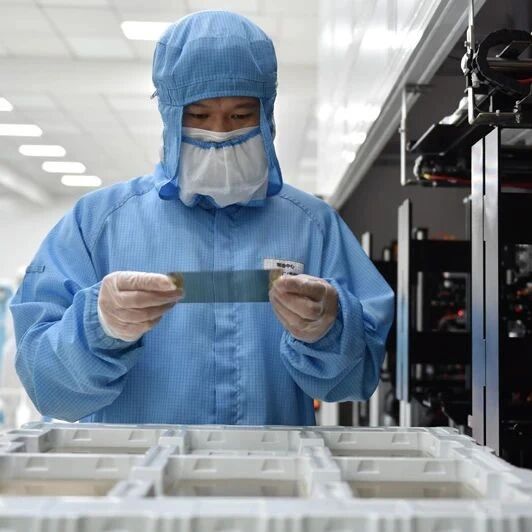
行业盛会助力产业发展!芯片ETF直线拉升,华大九天上涨16.35%
Mei Ri Jing Ji Xin Wen· 2025-10-13 02:21
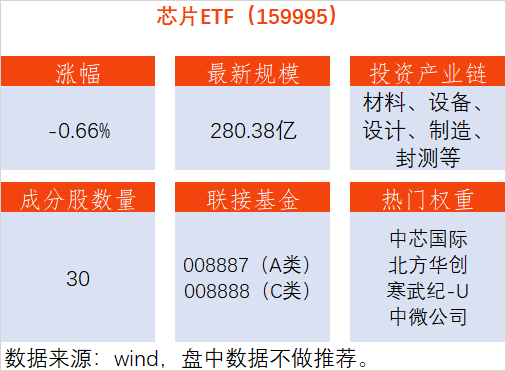
Market Overview - On October 13, A-shares experienced a collective decline, with the Shanghai Composite Index dropping by 1.25% during intraday trading [1] - The sectors showing gains included power generation equipment, aerospace and military, and precious metals, while the petroleum and chemical, and soft drink sectors faced the largest declines [1] Semiconductor Sector Insights - The 2025 Bay Area Semiconductor Industry Ecosystem Expo will gather top decision-makers in the semiconductor industry to discuss future development directions [3] - The International Third-Generation Semiconductor Innovation and Entrepreneurship Competition focuses on cutting-edge technologies and trends in the third-generation semiconductor industry, promoting collaborative development in the Yangtze River Delta region [3] - Huaxi Securities indicated that the convening of industry events will help the Chinese semiconductor industry find its position in the global landscape, enhance competitiveness and innovation, and inject new momentum into the sector [3] Chip ETF Performance - The Chip ETF (159995) tracks the Guozheng Chip Index, which includes 30 leading companies in the A-share semiconductor industry across materials, equipment, design, manufacturing, packaging, and testing [3] - Notable component stocks include SMIC, Cambrian, Changdian Technology, and Northern Huachuang [3]
突发!闻泰科技对荷兰半导体子公司控制权暂时受限 公司股票明起复牌!
Zheng Quan Ri Bao Wang· 2025-10-12 12:46
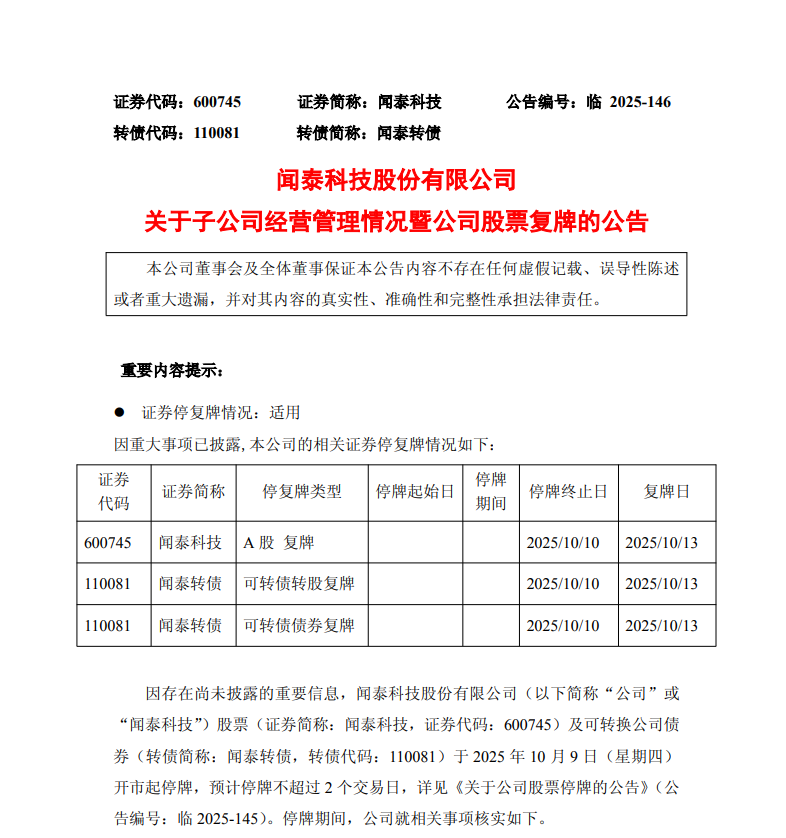
本报记者 李万晨曦 10月12日,闻泰科技股份有限公司(证券简称"闻泰科技",证券代码:600745)发布公告披露重要信息,同时,公司股票 及可转换公司债券(转债简称:闻泰转债,转债代码:110081)将自2025年10月13日(星期一)开市起复牌,公司可转换公司 债券"闻泰转债"恢复转股。 子公司控制权暂时受限 公告提到,近期,公司子公司安世半导体有限公司(以下简称"安世半导体")以及安世半导体控股有限公司(以下简 称"安世半导体控股")(以下合称"安世")收到荷兰经济事务与气候政策部下达的部长令(Order)和阿姆斯特丹上诉法院企业 法庭(以下简称"企业法庭")的裁决。具体来看: 荷兰时间2025年9月30日,荷兰经济事务与气候政策部对安世下达部长令(Order),要求安世及其下属所有子公司、分公 司、办事处等全球30个主体对其资产、知识产权、业务及人员等不得进行任何调整,有效期为一年。 此外,荷兰时间2025年10月1日,安世半导体控股以及安世半导体(荷兰注册主体)法定董事兼首席法务官Ruben Lichtenberg(CLO,荷兰籍)在获得其他两位高管,即首席财务官Stefan Tilger(CFO, ...

2025湾芯展10月15日深圳开幕
Zhong Guo Jing Ji Wang· 2025-10-11 02:20
Core Insights - The 2025 Bay Area Semiconductor Industry Ecological Expo ("Bay Chip Expo") will be held from October 15 to 17 in Shenzhen, aiming to create a platform for deep integration of the semiconductor industry chain, supply chain, and value chain [1][2] - The expo will feature over 600 participating companies and an exhibition area exceeding 60,000 square meters, significantly larger than the previous year's 40,000 square meters and 400 companies [1][2] Marketization - The expo will introduce high-end forums such as the International Lithography Conference and Chip Academic Conference, providing customized one-on-one matchmaking services to enhance participation and collaboration [2] Cutting-edge Technology - The expo will include four core exhibition areas: wafer manufacturing, advanced packaging, compound semiconductors, and chip design, along with three special exhibition areas focusing on AI chips, RISC-V ecosystem, and Chiplet technology [2] Internationalization - The event will attract over 600 leading companies and institutions from more than 20 countries, featuring international professional forums to promote global collaboration in the semiconductor industry [2] Branding - The expo will implement a comprehensive resource integration service mechanism combining online, exhibition, and offline elements to enhance the influence of China's semiconductor brands [2] Industry Highlights - The expo will showcase significant projects and innovations from leading companies, with participation from over 5,000 professional buyers from top firms like BYD, Foxconn, DJI, and Yangtze Memory Technologies [3] - The event will also announce the "2024 China Chip Science Top Ten Advances" and launch a 5 billion yuan Shenzhen Semiconductor Industry Investment Fund [3] Regional Development - Longgang District will establish a semiconductor industry cluster covering 138 hectares, aiming to create a high-quality environment for innovation and talent development [4] - As of mid-2025, Longgang's semiconductor and integrated circuit industry has expanded to 215 companies, forming a scale of over 100 billion yuan [4]
当β遇见半导体!暴涨行情,藏在“芯”里?
券商中国· 2025-10-09 23:05
Core Viewpoint - The article highlights the significant transformation occurring in China's semiconductor industry, driven by technological advancements and increased domestic support for local chip manufacturers, marking a shift from mere usability to practicality and performance [1][2][15]. Group 1: Industry Developments - Shanghai Microelectronics has validated its 28nm immersion lithography machine, breaking ASML's monopoly in mid-process technology [1] - SMIC is testing domestically produced DUV lithography machines, indicating progress in local manufacturing capabilities [1] - The CCP etching machine from Zhongwei has entered the 5nm advanced process, with domestic RF power supply surpassing 60% for the first time [1] - Tencent has completed compatibility with major domestic chips, while other tech giants like Alibaba Cloud and Baidu are increasing their procurement of domestic computing power [2][15]. Group 2: Market Performance - From September 10 to October 9, SMIC's stock price reached new highs six times, with other leading equipment companies like Zhongwei and Tuojing Technology seeing stock price increases of over 40% [1] - The STAR semiconductor materials and equipment index rose over 30% during the same period, significantly outperforming the broader market [1]. Group 3: Investment Opportunities - The article suggests that professional investors may find value in the semiconductor sector, particularly through the STAR semiconductor ETF (588170), which focuses on critical segments of the industry [2][18]. - The semiconductor materials and equipment index has a higher concentration of key segments compared to mainstream semiconductor indices, indicating a strategic investment opportunity [18]. Group 4: Future Projections - UBS forecasts that global wafer fab equipment spending will reach $119 billion by 2027, with China accounting for $39 billion of that [6]. - The global semiconductor revenue is expected to nearly double from 2024 to 2030, exceeding $1 trillion [7]. - The STAR semiconductor materials and equipment index is projected to show significant revenue growth, outperforming other indices [19]. Group 5: Challenges and Strategic Shifts - The article emphasizes that the path to domestic replacement is not linear but involves overcoming significant technological barriers and dependencies [16]. - The "Big Fund Phase III" has been established with a registered capital of 344 billion yuan, focusing on key segments like equipment and materials, which is expected to boost market confidence [12][14]. - The shift in focus from policy-driven growth to market-driven demand is seen as a crucial turning point for the semiconductor industry [16].

半导体设备ETF(159516)涨超5%,盘中流入超1.5亿份,连续5日净流入超30亿元,规模超80亿元居同类第一
Mei Ri Jing Ji Xin Wen· 2025-10-09 03:35
Core Insights - The semiconductor equipment ETF (159516) has seen significant inflows, with 158 million shares traded and a net inflow of 32 million yuan, indicating strong investor interest in semiconductor equipment assets [1] - According to data from SEMI and SEAJ, global semiconductor manufacturing equipment spending is projected to reach 33.07 billion USD in Q2 2025, representing a 23% increase compared to Q2 2024 [1] - The semiconductor equipment ETF tracks the semiconductor materials and equipment index (931743), which focuses on the upstream materials and equipment sectors of the semiconductor industry, serving as an important reference for investors to capture opportunities in the sector [1] Industry Summary - The semiconductor industry is expected to experience growth driven by advanced process expansion and domestic equipment breakthroughs over the next three years, with "advanced process expansion" becoming a key theme for self-sufficiency [1] - The index covered by the semiconductor equipment ETF includes companies involved in semiconductor material supply and equipment manufacturing, highlighting sectors with high technical barriers and growth potential [1]
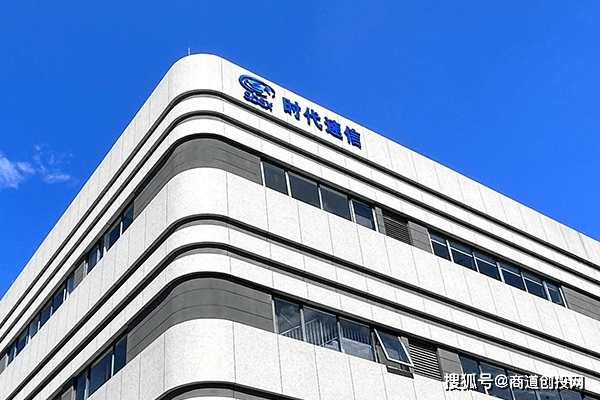
商道创投网·会员动态|时代速信·完成数亿元D轮融资
Sou Hu Cai Jing· 2025-10-08 11:25
Core Insights - Shenzhen Times Speed信 Technology Co., Ltd. has completed a D-round financing of several hundred million RMB, exclusively invested by Wuxi Liangxi District Government and Bohua Capital [2][4] Company Overview - Established in 2017, Times Speed信 is headquartered in Shenzhen with subsidiaries in Beijing, Chengdu, and Wuxi. The company has a research and development team of over 150 experts from renowned companies such as Qorvo, NXP, Infineon, and China Resources Microelectronics, all with over 10 years of industry experience [3] - The company specializes in providing comprehensive solutions for first-generation Si RF, second-generation GaAs, and third-generation GaN semiconductor chips and modules, having successfully developed over 2000 chip models, with hundreds widely used in key domestic projects, effectively breaking foreign technology monopolies and achieving import substitution [3] Financing Purpose - The recent financing will primarily be used to accelerate the research and production of RF chips and modules in the new generation of satellite internet and to support the construction of a research and production base in Wuxi Liangxi District's satellite IoT industry base. The founder stated that this financing will enhance the company's technological strength and market competitiveness in the high-end RF chip sector, promoting rapid development in emerging fields like satellite internet [4] Investment Rationale - Bohua Capital expressed that Times Speed信 has demonstrated strong technological research and market potential in the RF chip field. The team possesses a solid industry background and has successfully developed numerous high-performance chips, breaking foreign technology monopolies. The investment is seen as a means to help the company expand its market share and drive industry innovation, particularly in the new generation of satellite internet [5] - From a macro perspective, the government is actively promoting the development of the semiconductor industry, implementing a series of supportive policies to guide social capital into high-tech fields. The financing received recognition from both the government and professional investment institutions, reflecting the company's core competitiveness in the RF chip sector [5]
南大光电股价涨5.08%,南方基金旗下1只基金位居十大流通股东,持有1026.79万股浮盈赚取2187.06万元
Xin Lang Cai Jing· 2025-09-30 03:02
Core Viewpoint - Nanda Optoelectronics experienced a 5.08% increase in stock price, reaching 44.03 CNY per share, with a trading volume of 1.945 billion CNY and a turnover rate of 6.88%, resulting in a total market capitalization of 30.432 billion CNY [1] Company Overview - Jiangsu Nanda Optoelectronics Materials Co., Ltd. is located in Suzhou Industrial Park, Jiangsu Province, and was established on December 28, 2000, with its listing date on August 7, 2012 [1] - The company specializes in the production, research, and sales of advanced electronic materials, with applications in integrated circuits, flat panel displays, LEDs, third-generation semiconductors, photovoltaics, and semiconductor lasers [1] - The revenue composition of the main business includes: specialty gas products 60.95%, precursor materials (including MO sources) 27.80%, others 7.02%, and additional 4.23% [1] Shareholder Information - Nanda Optoelectronics has a significant shareholder in the form of the Southern Fund, which has a fund that entered the top ten circulating shareholders, holding 10.2679 million shares, accounting for 1.56% of circulating shares [2] - The Southern CSI 500 ETF (510500) has achieved a return of 30.2% year-to-date and 43.13% over the past year, ranking 1800 out of 4220 and 1608 out of 3846 respectively [2] Fund Performance - The Southern CSI Semiconductor Industry Index Initiated A (020839) increased its holdings in Nanda Optoelectronics by 65,800 shares, now holding 227,400 shares, which constitutes 4% of the fund's net value [4] - The fund has recorded a year-to-date return of 62.07% and a one-year return of 111.53%, ranking 273 out of 4220 and 86 out of 3846 respectively [4]

2025年1-8月工业企业效益数据点评:利润率获持续推动,工企利润同比增速转正
BOHAI SECURITIES· 2025-09-29 10:58
Group 1: Profit Growth and Trends - The profit growth rate of industrial enterprises in the first eight months of 2025 turned positive, increasing by 0.9% year-on-year[1] - In August 2025, the profit of industrial enterprises saw a significant monthly increase of 20.4% year-on-year[1] - The operating revenue of industrial enterprises maintained stability, achieving a year-on-year growth of 2.3% in the first eight months[3] Group 2: Economic Indicators - The industrial added value for the same period grew by 6.2% year-on-year, a slight decrease of 0.1 percentage points compared to the first seven months[3] - The revenue profit margin for industrial enterprises was 5.24%, showing a year-on-year decline of 1.9%, but the decline rate narrowed compared to the first seven months[3] - Among 41 major industrial sectors, 17 sectors achieved positive profit growth in the first eight months, with notable increases in transportation equipment manufacturing and resource recycling industries[4] Group 3: Future Outlook and Risks - The future profitability of industrial enterprises will depend on the implementation of "anti-involution" policies, particularly in capacity management, which is a key observation point[4] - There are risks related to the optimization of market competition order and external environmental uncertainties that could disrupt domestic economic stability[5] - The semiconductor industry's profitability is expected to improve due to increased capital expenditure by domestic AI companies[4]