
国际消费中心城市

Search documents
广州市召开餐饮业发展座谈会
Guang Zhou Ri Bao· 2025-08-23 01:55
Core Insights - Guangzhou is focusing on enhancing its reputation as a culinary hub, emphasizing the importance of the restaurant industry in driving consumption and economic stability [2][3][4] - The city aims to implement high-quality development initiatives in the restaurant sector, leveraging major events like the Canton Fair and National Games to boost consumer engagement [3][4] Group 1: Government Initiatives - A meeting was held to discuss the development of the restaurant industry, with participation from various restaurant leaders who provided feedback on promoting Cantonese cuisine and expanding consumer incentives [2][3] - The government is committed to creating a favorable market environment for restaurants, ensuring food safety, and enhancing support policies for businesses [3][4] Group 2: Industry Development - The restaurant sector is seen as vital for both livelihood and economic growth, with a diverse range of culinary offerings available in Guangzhou [3] - There is a push for innovation and adaptation within the restaurant industry to meet evolving consumer demands and enhance competitiveness [4]
武汉内需外贸比翼齐飞
Sou Hu Cai Jing· 2025-08-22 02:12
Core Insights - Wuhan is promoting both domestic demand and foreign trade, aiming to share the industrial benefits of its development with the world [3] - The city is positioning itself as an international consumption center, with a focus on enhancing consumer experiences and expanding high-quality consumption [4][5] Domestic Consumption - Wuhan SKP, opened in July 2022, has attracted nearly 20 million visitors in its first year and features over 1,000 international brands, making it the most comprehensive international brand mall in Central China [4] - The mall's unique "box + K Avenue" model, which includes 42 standalone stores, is designed to enhance consumer engagement and attract foot traffic [5] - The introduction of a tax refund policy for outbound travelers is expected to boost consumption and transform tourism into a more significant economic driver [6] Cross-Border E-commerce - The Alibaba Global AliExpress (Wuhan) Cross-Border E-commerce Industrial Park has facilitated over 1 billion yuan in import and export trade for local businesses within its first year [8] - The park serves as a training hub for companies looking to expand internationally, helping them navigate overseas markets and increase sales [8] - From January to July this year, the park has helped local enterprises achieve a trade volume of 3.4 billion yuan, more than three times the total for the previous year [9] Trade Growth - Wuhan's total import and export value reached 214.27 billion yuan in the first half of the year, marking a 22.3% year-on-year increase and accounting for 53.3% of Hubei province's total trade [9] - This growth rate is 13.6 percentage points higher than the same period last year, indicating a sustained double-digit growth trend [9]


引领推动新消费 北京增添国潮特色
Bei Jing Shang Bao· 2025-08-13 23:12
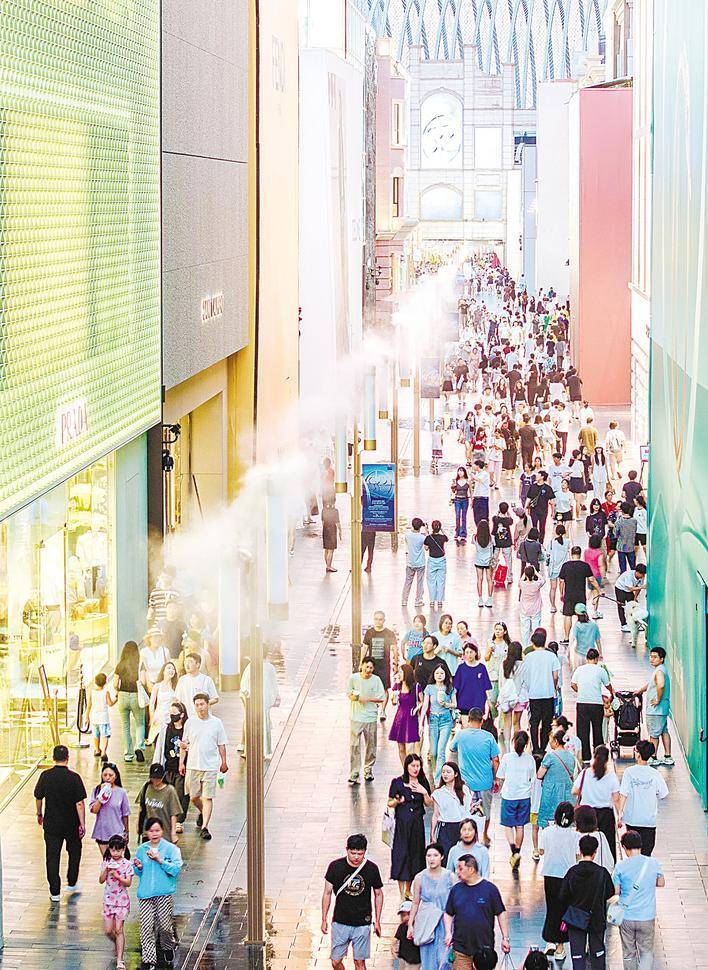
"过去两年,王府井商圈标杆项目在国际品牌首店、旗舰店、老字号、北京传统文化方面有很多亮点, 部分项目闭店改造也是商圈升级创新的体现,可以给消费者带来更多元化的体验。"仲量联行华北区战 略顾问部总监王飞指出。 此外,北京还将建设新型消费圈,以环球主题公园等项目建设为重点,布局一批高品质消费设施。布 局"多点一区"消费新载体,将回天地区打造成"商圈+生活圈+夜经济"消费重镇。 通州区人民政府副区长董明慧介绍:"即将开园的环球主题公园是北京的文旅消费新地标。依托环球主 题公园,通州区将打造文旅商融合发展示范区。在环球主题公园内城市大道,布局了融合中西方特色的 多功能影院、高品质餐饮、品牌专卖店,引入国际化电影产业元素,举办品牌电影文化活动,推动国际 商业品牌集聚,培育具有全球影响力的消费打卡地。在环球主题公园周边区域建设旅游休闲商业服务街 区,引入餐饮酒吧、帐篷露营、亲子游乐等配套设施,打造'沿河不夜街'。" 5月31日,北京培育建设国际消费中心媒体通气会在京召开。北京市商务局副局长、一级巡视员孙尧对 培育建设国际消费中心城市的总体思路和主要措施进行了介绍。据悉,北京将推动实施消费新地标打造 行动、消费品牌矩阵培育 ...
解码重庆:“消费第一城”怎样炼成
Zhong Guo Jing Ying Bao· 2025-08-13 13:08
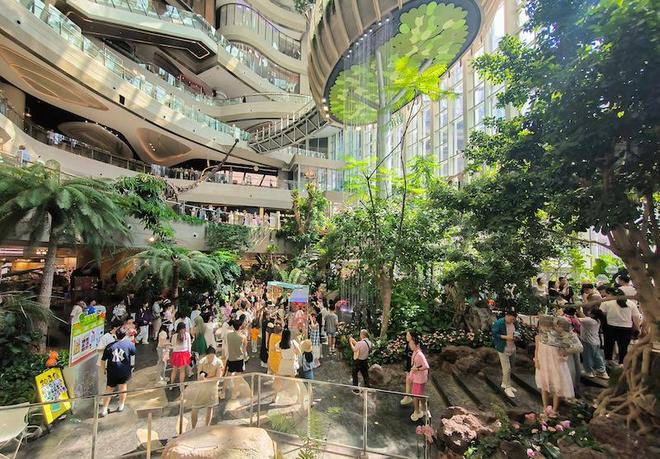
Core Insights - Chongqing has become the "consumption capital" of China, with a retail sales total of 830 billion yuan in the first half of the year, surpassing Shanghai and showing a year-on-year growth of 4.5% [1][3] Group 1: Local Consumption and Tourism - Local consumption is a significant driver of tourism, with areas like Xiaohongshu's "must-visit" destinations attracting many visitors due to unique shops and vibrant atmospheres [3][4] - The strategy of positioning areas as "old streets" rather than "scenic spots" encourages repeat visits from locals, with 60% of consumers in Xiaohongli being local residents [4][5] - The local government is focusing on increasing residents' income to boost consumption, with initiatives aimed at creating job opportunities and supporting youth employment [5][9] Group 2: Celebrity Influence - The "celebrity effect" is leveraged in various commercial areas, with events featuring popular figures like TFboys significantly increasing foot traffic and sales [7][8] - Xiaohongli has successfully attracted fans of celebrities, leading to a surge in visitors and foreign tourists, with a notable increase in international customers at local cafes [8][9] Group 3: Diverse Consumption Scenarios - Chongqing is promoting nighttime consumption through events like the "Nightlife Festival," which includes drone light shows and themed activities to attract visitors [10][11] - Unique indoor attractions, such as the "Light Forest" project, provide cool environments for visitors during hot summer days, enhancing the overall shopping experience [12][13] - The city plans to develop multi-dimensional consumption scenarios, integrating its unique geography with various entertainment and dining experiences to create a vibrant night economy [13][14]
增强开放意识强化开放措施提升开放水平 加快打造文旅强市和国际消费中心城市
Zheng Zhou Ri Bao· 2025-08-13 01:01
Core Viewpoint - The meeting led by Zhengzhou's municipal secretary emphasizes the importance of enhancing the city's international openness and tourism, aiming to create a world-class cultural tourism destination and an international consumption center to support high-quality economic development [1][2]. Group 1: Policy and Strategy - The meeting focused on optimizing the transit visa exemption policy and improving related services to provide a safer, more convenient, and efficient experience for international tourists [1]. - The city aims to leverage its unique geographical and cultural advantages to promote inbound tourism and enhance cultural exchange [1]. Group 2: Implementation Measures - There is a call for streamlining entry and exit procedures, improving urban infrastructure, and creating a market-oriented, legal, and international business environment to attract more foreign visitors [2]. - The city plans to increase international promotion of its cultural tourism, utilizing modern media such as short videos and live broadcasts to tell Zhengzhou's stories effectively [2]. Group 3: Market Development - The focus will be on understanding the diverse needs of overseas tourists and developing high-quality, unique tourism routes to enhance the city's appeal as an international consumption center [2]. - The goal is to position cultural tourism as a pillar industry for Zhengzhou, showcasing its unique attractions like the Yellow River and the legacy of the Yellow Emperor [2].
外籍人员上半年在深非现金支付超8587万笔,金额超118亿元 深圳,国际消费活力十足
Shen Zhen Shang Bao· 2025-08-11 22:46
Core Insights - The "International Friendly Consumption Purchase" event in Shenzhen has officially launched, featuring the release of the International Friendly Consumption Map and a list of international friendly shopping malls, with 19 shopping districts highlighted as new benchmarks for international consumption in Shenzhen [1][2] Group 1: International Consumption Initiatives - The event emphasizes the theme "Shenzhen Summer, Global Enjoyment," focusing on internationalization, convenience, and quality, providing various consumer benefits to attract global consumers [1] - The 19 highlighted shopping districts include major areas such as Shenzhen MixC, K11 ECOAST, and Qianhai One City, which offer high-quality international services to both domestic and foreign visitors [1] Group 2: Payment and Tax Refund Innovations - Shenzhen has established a new payment system for foreign visitors, enhancing the convenience of international payments through mobile payment options, with over 85.87 million non-cash payment transactions amounting to over 11.8 billion yuan in the first half of the year [3] - The city has implemented an "immediate purchase and refund" policy for tax refunds, with over 1,000 stores participating and 12 shopping districts offering this service, significantly improving the consumer experience [3][4] Group 3: Growth in Tax Refunds - The scale of tax refunds in Shenzhen has seen rapid growth, with sales of tax refund goods and business volume increasing by 1.6 times and 3.9 times year-on-year, respectively [4] - Shenzhen's domestic brands, such as DJI and Huawei, account for 34.5% of the tax refund goods, leading the nation [4] Group 4: Shopping Season Activities - The "Shopping Season in China 2025" is currently underway, running from August to October, featuring over 670 promotional activities designed to enhance consumer experience [5] - The event includes various themed activities and special offers across shopping centers and financial institutions, aiming to create a globally influential shopping carnival [5][6] Group 5: New Retail Developments - Shenzhen's first city duty-free store is expected to open by the end of August, combining duty-free and taxable goods in a 2,000 square meter immersive commercial space [6] - This new retail space aims to provide international quality consumer services and enhance Shenzhen's global appeal [6]
深圳,国际消费活力十足!19大商圈引领,国际友好消费地图发布
Sou Hu Cai Jing· 2025-08-11 13:18
Core Insights - Shenzhen is enhancing international consumption through diverse services, launching the "International Friendly Consumption Purchase" event as part of the "2025 Shenzhen Summer Consumption Season" [1][3] - The event features the release of an international friendly consumption map and a list of 19 benchmark shopping districts, aiming to establish Shenzhen as an international consumption center [3][4] Group 1: International Consumption Initiatives - The "International Friendly Consumption Purchase" event is themed "Shenzhen Summer, Global Enjoyment," focusing on internationalization, convenience, and quality [3] - The 19 benchmark shopping districts include prominent locations such as Shenzhen MixC, K11 ECOAST, and Qianhai One City, providing high-quality international services to both domestic and foreign tourists [3][4] Group 2: Payment and Tax Refund Innovations - Shenzhen has developed a new payment system for foreign visitors, enhancing the convenience of international payments through mobile payment options [4][5] - From January to June this year, foreign visitors conducted over 85.87 million non-cash payment transactions in Shenzhen, totaling over 11.8 billion yuan, with significant contributions from South Korea, the USA, and Singapore [5] - The city has implemented an "immediate purchase and refund" policy for tax refunds, with over 1,000 stores participating and a significant increase in tax refund sales and processing volume [5][6] Group 3: Shopping Season Activities - The "2025 Shenzhen Shopping Season" runs from August to October, featuring over 670 promotional activities centered around key themes and holidays [6] - The first city-based duty-free store is set to open by the end of August, aiming to create an immersive shopping experience for global customers [6]

多地创新开展国际消费中心城市培育建设—— 打造国际消费新标杆
Jing Ji Ri Bao· 2025-08-10 21:58
Core Viewpoint - The cultivation and construction of international consumption center cities is a significant decision by the central government aimed at boosting consumption, promoting high-quality development, and better meeting the needs of people's lives [1] Group 1: Innovation in Consumption Scenarios - Cities are actively innovating and enriching consumption scenarios to attract personalized and quality demands from tourists, enhancing tourism services [2] - Beijing is integrating its rich historical culture with the trends of Generation Z through various innovative consumption spaces, such as the opening of the Qianmen Night Technology Experience Hall [2] - The "Shanghai Summer" international consumption season has seen a 42.2% year-on-year increase in the number of overseas visitors and a 68.2% increase in foreign card spending [3] Group 2: Optimization of Consumption Environment - Beijing's Wangfujing area is undergoing transformation with the introduction of high-quality flagship stores and outdoor activities, enhancing the shopping experience [5] - In 2023, nearly 400 new flagship stores opened in Beijing, with around 200 events held, significantly boosting the area's vibrancy [6] - Guangzhou has achieved a 99.9% acceptance rate for foreign cards among key merchants, facilitating international tourists' shopping experience [6] Group 3: Strengthening Institutional Innovation - Shanghai has pioneered the "immediate refund" service for departure tax refunds, significantly improving consumer experience, with a 126.7% year-on-year increase in tax refund transactions [7] - Beijing has expanded its departure tax refund services to include city-wide points, enhancing convenience for international travelers [7] - Guangzhou is implementing 129 pilot tasks to expand service industry openness, with experiences being replicated nationwide [8] Group 4: Policy Support and Future Outlook - The cultivation of international consumption center cities is included in the national "14th Five-Year Plan," with continuous policy support and innovative practices expected to elevate China's consumption to a higher level [8]
消费第一城易主:重庆超上海,武汉又拿了个第一
Sou Hu Cai Jing· 2025-07-31 15:26
Core Insights - The consumption landscape in China has shifted, with Wuhan leading in growth and Chongqing surpassing Shanghai to become the top consumption city [3][10][11] - The report highlights the significant rise of western cities like Chengdu and Chongqing, indicating a new consumption potential in these regions [10][12] - The government aims to enhance international consumption center cities, with Wuhan targeting a retail sales total of 900 billion yuan by the end of the year [9][10] Group 1: Wuhan's Consumption Growth - Wuhan recorded the highest growth rate among the top ten cities, achieving a 7.3% increase in consumption [5][9] - The opening of new retail spaces, such as Sam's Club and WS Dolphin membership store, reflects the strong consumer demand in Wuhan [5][7] - Wuhan's retail market is expected to see an additional 333,000 square meters of quality retail space in the second half of the year [7][9] Group 2: Rise of Western Cities - Chongqing's retail sales reached 830 billion yuan, surpassing Shanghai's 826 billion yuan, marking it as the new consumption leader [11] - Chengdu's retail sales totaled 562.23 billion yuan, overtaking both Shenzhen and Guangzhou to become the fourth-largest consumption city [10][12] - The population growth and rising disposable income in these cities are driving their consumption potential [12][14] Group 3: Competitive Landscape in the Yangtze River Delta - Hangzhou's retail sales growth of 6% places it third among the top ten cities, with a significant increase in total retail sales [18][19] - The competition between Hangzhou and Nanjing has intensified, with Hangzhou now leading by over 200 billion yuan in retail sales [20][24] - Hangzhou's proactive consumption policies have contributed to its growth, particularly in electronics and automotive sectors [28][33]
商务部:持续深化国际消费中心城市培育建设
Zhong Guo Chan Ye Jing Ji Xin Xi Wang· 2025-07-30 00:10
Core Insights - The Ministry of Commerce reported significant achievements in the cultivation of international consumption center cities, highlighting that five cities account for over 1/8 of the national retail sales, with national-level demonstration pedestrian streets making up 1/4 of the total [1] - The initiative, approved by the State Council in July 2021, has shown positive results after four years, with a focus on enhancing the international consumption environment and promoting various consumption types [1][2] Dimension Summaries International Dimension - The five cities have improved payment convenience and optimized tax refund services, creating a more welcoming international consumption environment. Since the implementation of new tax refund policies, the number of tax refund stores in Beijing and Shanghai has exceeded 1,400, and Guangzhou has surpassed 500, leading to a 94.6% increase in national tax refund sales in the first half of the year [1][2] Consumption Dimension - There has been a comprehensive enhancement in consumption leadership, with a focus on new consumption types such as digital, green, and health. Over the past four years, 12,000 domestic and international brand flagship stores have been introduced, alongside various high-profile events and exhibitions to promote consumption [2] Center Dimension - The five cities have actively explored innovations in expanding quality supply and optimizing the consumption environment, resulting in 16 innovative measures and 12 exemplary practice cases selected by the Ministry of Commerce for replication and promotion [2] Urban Dimension - The cities have improved urban functions and vitality by aligning with internationally renowned cities in commercial space planning and creating iconic shopping districts. Additionally, there is a focus on daily consumer needs, particularly for the elderly and children, to enhance the warmth of urban consumption [2] Future Directions - The Ministry of Commerce plans to continue deepening the cultivation of international consumption center cities, aiming to create an international consumption environment, expand quality consumption supply, and innovate diverse consumption scenarios to foster prosperous commerce and satisfied citizens [3]