线上线下消费融合

Search documents
团圆饭订单同比增长超两倍 抖音生活服务带动新春消费热潮
Xiao Fei Ri Bao Wang· 2026-02-26 08:17
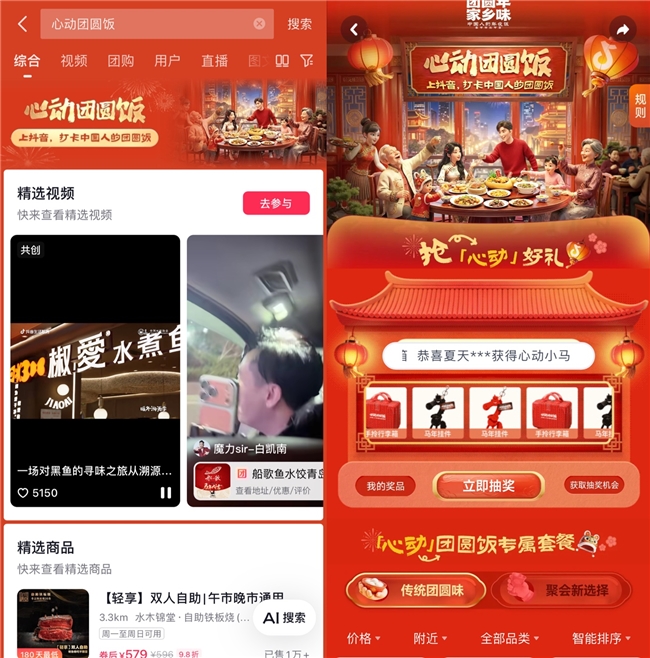
Core Insights - Douyin Life Services has reported significant growth in various consumption categories during the 2026 Spring Festival, driven by themed activities, with notable increases in intangible cultural heritage experiences, dining, and tourism [1] Group 1: Consumption Growth - From February 14 to February 22, the order volume for reunion dinner packages increased by 216% year-on-year, while the sales of "intangible cultural heritage + market" group purchases surged by 764% [1] - Group purchase sales in third-tier cities and below rose by 66% [1] Group 2: Offline Dining Initiatives - The "Heartfelt Reunion Dinner" campaign, running from January 9 to February 28, aimed to stimulate offline dining consumption, featuring a special program with 20 culinary experts and generating over 28 billion views across related topics [2] - The campaign included 7 live broadcasts across major cities, achieving over 1.6 billion exposures and more than 70,000 payment orders, with transaction amounts exceeding 10 million [5] Group 3: Consumer Trends - Orders for reunion dinner packages for families of 3-6 people increased by 61%, and orders for group purchases on New Year's Eve rose by 245% [6] - Local cuisine became the most popular choice for reunion dinners, with group purchase orders increasing by 343% on the day [6] - Urban seniors and seasoned middle-class consumers emerged as the main drivers of high-quality reunion dinner consumption, while young consumers from small towns contributed significantly to the overall dining market [6] Group 4: Cultural and Tourism Integration - The "New Spring Eating, Drinking, and Playing Festival" featured immersive experiences in popular locations, leading to a 43% increase in searches related to "temple fairs/markets" on Douyin [7] - The "Discover Hidden Cities with Flavor" series engaged 46 cities, resulting in over 95 billion views and helping over 100,000 merchants achieve sales exceeding 3 billion [7] Group 5: Social Responsibility Initiatives - Douyin Life Services collaborated with local brands to provide warm meals for frontline workers during the Spring Festival, emphasizing the importance of social responsibility and community support [11][13] - The initiative aims to foster a sense of warmth and respect within the community, encouraging more businesses and citizens to participate in charitable actions [11] Group 6: Future Outlook - Douyin Life Services plans to continue enhancing local consumption scenarios and activating the physical economy through innovative models, contributing to the sustained recovery and high-quality development of the consumption market [12]

马年新春启新程:线上非遗直播燃消费 线下文旅盛宴润巴蜀
Sou Hu Cai Jing· 2026-02-07 19:35
Group 1 - The core viewpoint of the articles highlights the integration of online and offline experiences in promoting traditional cultural heritage and New Year consumption, showcasing a vibrant blend of modern and traditional elements [2][19]. - Douyin e-commerce reported a threefold increase in sales of brand New Year gift boxes during the New Year festival, with over 70% sold through live streaming, indicating the significant role of live commerce in driving sales [3][6]. - The "Hometown New Year Goods" initiative by Douyin e-commerce has expanded the reach of regional specialties, with sales of local flavor gift boxes increasing by 223% year-on-year, reflecting a trend towards diversified and quality-oriented consumer preferences [6][10]. Group 2 - A seven-hour live streaming event featured well-known brands and local heritage products, achieving nearly 900,000 exposures and a transaction amount of 232,000 yuan, demonstrating the effectiveness of media-led live commerce in promoting cultural heritage [10][14]. - The offline cultural tourism activities in Sichuan included nearly 3,000 events and over 30 million yuan in consumer vouchers, enhancing the festive atmosphere and promoting local culture through various forms of engagement [15][19]. - The "Cloud Heritage" initiative, a collaboration between Chengdu and Sichuan Airlines, represents an innovative approach to integrating cultural heritage with tourism, showcasing a new model for public cultural branding [17][19].

事关稀土,商务部最新回应(12月4日发布会实录)
Xin Lang Cai Jing· 2025-12-04 09:45
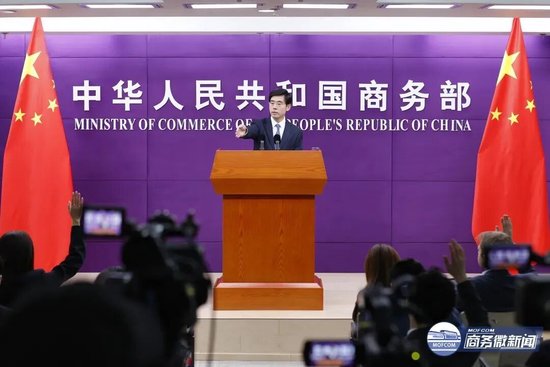
Group 1: Consumer Promotion and Economic Activities - The Ministry of Commerce plans to enhance online and offline consumption integration, focusing on improving people's livelihoods and stimulating consumption during the year-end shopping season [7][25] - A series of promotional activities will be organized, including the "Spring Consumption Season" and "Online New Year Goods Festival," to create a vibrant consumption atmosphere [7][25] - The Ministry aims to innovate consumption scenarios by promoting new business models and environments, enhancing consumer experiences in areas like service consumption and digital consumption [7][25] Group 2: China-France Economic Cooperation - French President Macron's visit to China is a reciprocal trip following the historic state visit by President Xi last year, highlighting the strong economic ties between the two nations [9][27] - From January to October, bilateral trade between China and France reached $68.75 billion, a year-on-year increase of 4.1%, with total bilateral investment exceeding $27 billion [9][27] - A memorandum to strengthen bilateral investment was signed, promoting a fair and predictable business environment for enterprises from both countries [9][27][28] Group 3: Rare Earth Export Controls - The Chinese government is conducting rare earth export controls in accordance with laws and regulations, ensuring timely approval for compliant applications intended for civilian use [12][30] - The government is also exploring the implementation of general licensing mechanisms to provide stability and predictability for businesses affected by export controls [12][30] Group 4: Japan-China Relations and Investment - The Ministry of Commerce emphasizes the importance of Japan's investment in China, despite recent tensions due to political statements from Japanese officials [15][33] - China remains an attractive destination for foreign investment, with 54,000 new foreign-invested enterprises established this year, reflecting a 14.7% year-on-year increase [15][33][34] - The Chinese government continues to advocate for an open investment environment, welcoming foreign investors to share in China's development opportunities [15][34]
李勇坚:线上线下消费 走向深度融合(专家点评)
Ren Min Ri Bao· 2025-09-18 09:26
Group 1 - The core viewpoint is that online brands are increasingly investing in offline stores to enhance the integration of online and offline consumption, driven by various factors [1][2] - The online retail penetration rate for physical goods reached 24.9% of total social retail sales in the first half of this year, indicating that offline still holds a significant 75% market share, suggesting potential growth for online brands in offline spaces [1] - Operating costs for a typical physical clothing store range from 300,000 to 400,000 yuan, which is comparable to the costs of achieving similar foot traffic online, especially considering higher online return rates [1] Group 2 - Physical stores enhance consumer experience and improve purchase conversion rates, with new retail formats like pop-up stores and concept stores emerging to provide better experiential value [1] - Physical stores can visually showcase brand image and increase customer loyalty, indicating a complementary relationship between physical and online stores rather than a substitutive one [1] - The trend of online brands moving into offline spaces is not a fleeting decision but a strategic move based on factors like traffic costs, user experience, and brand image, potentially leading to synergistic effects [2]


线上线下消费 走向深度融合(专家点评)
Ren Min Ri Bao· 2025-09-17 21:57
Core Insights - Online brands are increasingly expanding their offline presence by opening physical stores to enhance the integration of online and offline consumption [1][2] - The rising costs of online operations and the potential for offline business growth are driving this trend, as online retail accounted for 24.9% of total retail sales in the first half of the year, leaving a significant 75.1% market share for offline sales [1] - Physical stores improve consumer experience and conversion rates, with new retail formats like pop-up stores and concept stores emerging to enhance experiential value [1] Group 1 - The cost of opening a typical physical clothing store ranges from 300,000 to 400,000 yuan, which is comparable to the costs of achieving similar foot traffic online, especially considering higher online return rates [1] - Physical stores can directly showcase brand image and enhance customer loyalty, creating a complementary relationship with online stores [1] - Many brands are adopting an omnichannel strategy to increase brand appeal and customer repurchase rates, converting consumer traffic into growth opportunities [1][2] Group 2 - The competitiveness of physical stores remains strong, and the shift of online brands to offline is a strategic decision based on factors like traffic costs, user experience, and brand image [2] - The future may see an increasing number of online brands moving offline to accelerate their omnichannel strategies, better meeting the diverse and quality-oriented demands of consumers [2]
解码重庆:“消费第一城”怎样炼成
Zhong Guo Jing Ying Bao· 2025-08-13 13:08
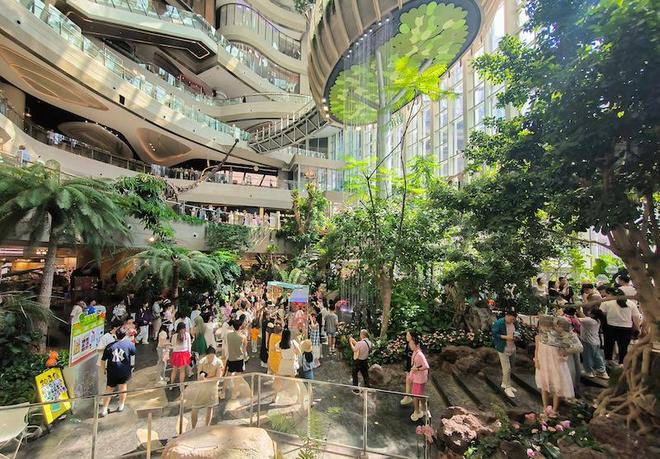
Core Insights - Chongqing has become the "consumption capital" of China, with a retail sales total of 830 billion yuan in the first half of the year, surpassing Shanghai and showing a year-on-year growth of 4.5% [1][3] Group 1: Local Consumption and Tourism - Local consumption is a significant driver of tourism, with areas like Xiaohongshu's "must-visit" destinations attracting many visitors due to unique shops and vibrant atmospheres [3][4] - The strategy of positioning areas as "old streets" rather than "scenic spots" encourages repeat visits from locals, with 60% of consumers in Xiaohongli being local residents [4][5] - The local government is focusing on increasing residents' income to boost consumption, with initiatives aimed at creating job opportunities and supporting youth employment [5][9] Group 2: Celebrity Influence - The "celebrity effect" is leveraged in various commercial areas, with events featuring popular figures like TFboys significantly increasing foot traffic and sales [7][8] - Xiaohongli has successfully attracted fans of celebrities, leading to a surge in visitors and foreign tourists, with a notable increase in international customers at local cafes [8][9] Group 3: Diverse Consumption Scenarios - Chongqing is promoting nighttime consumption through events like the "Nightlife Festival," which includes drone light shows and themed activities to attract visitors [10][11] - Unique indoor attractions, such as the "Light Forest" project, provide cool environments for visitors during hot summer days, enhancing the overall shopping experience [12][13] - The city plans to develop multi-dimensional consumption scenarios, integrating its unique geography with various entertainment and dining experiences to create a vibrant night economy [13][14]
正式启动!100场以上!
Sou Hu Cai Jing· 2025-05-31 09:51
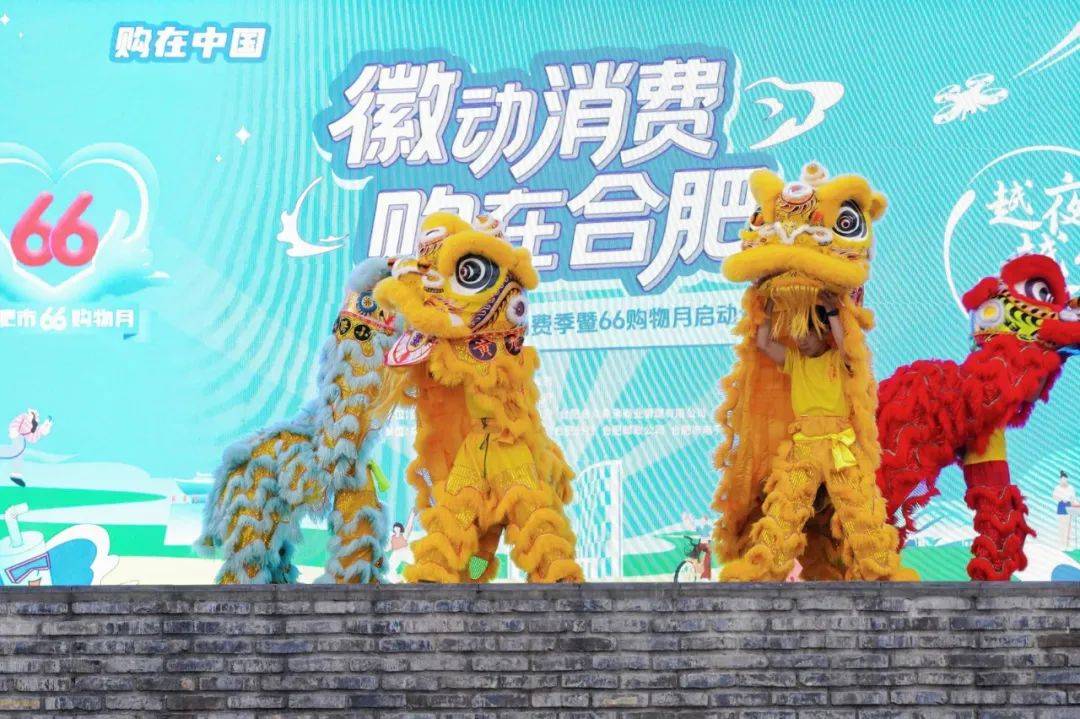
Core Viewpoint - The launch of the "Hui Dong Consumption in Hefei" 2025 Night Economy Consumption Season and the "66 Shopping Month" aims to stimulate summer consumption through a series of coordinated activities and promotions, enhancing the city's night economy and overall consumer engagement [2][10]. Group 1: Event Overview - The night economy consumption season is themed "The Later the Night, the More Hefei," focusing on offline consumption venues and integrating various sectors such as commerce, tourism, culture, and sports [4]. - A series of "1+5+N" activities will be organized, including a main launch event and over 100 themed activities centered around five consumption scenarios: night shopping, night tasting, night touring, night appreciation, and night fitness [4][5]. Group 2: Promotional Activities - Financial platforms will offer unique consumption discounts, creating interactive topics like "2025 Hefei Night Economy Internet Celebrity Map" to ignite new consumer enthusiasm [5]. - The "66 Shopping Month" will focus on online platforms, featuring six thematic sections including "Smart Manufacturing Trend Products," "Green Renewal Month," and "Cross-Border Shopping Carnival," with a total of 66 key themed activities planned [5][7]. Group 3: Economic Impact - Hefei has been recognized as a national pilot city for retail innovation and has issued over 890 million yuan in subsidies for trade-in programs and consumption vouchers, indicating strong governmental support for consumer spending [10]. - From January to April, the city's online retail sales of physical goods grew by 31% year-on-year, reflecting a stable and positive development in the consumption market [10].