枢纽经济

Search documents
“中欧班列指数”正式启动 为“钢铁驼队”发展提供数字标尺
Xin Hua She· 2025-09-23 16:07
据了解,中欧班列已累计开行超过11万列,发展逐步进入质量提升的关键转型期。"中欧班列指数"可为 行业提供一把衡量发展水平、引导资源优化配置的"数字标尺"。"我们将深挖中欧班列内在价值,分阶 段搭建指数矩阵体系,构建起指数生态,努力将指数打造成为国际物流数字化治理的标杆成果,争取为 国际陆路运输规则、标准制定提供关键数据支撑。"李宗佺说。 新华财经西安9月24日电(记者姜辰蓉、吕轩昂)由中国开发区协会陆港分会与中国经济信息社联合研 发的"中欧班列指数"23日正式启动。这一指数的启动,是2025欧亚经济论坛中国陆港与物流枢纽发展会 议的重要内容,标志着中欧班列这一贯穿亚欧大陆的"钢铁驼队",迈入数字化评估与高质量发展新阶 段。 2025欧亚经济论坛23日在陕西省西安市开幕。在活动上,新华指数研究院研究员李宗佺在介绍"中欧班 列指数"时说,这一指数从战略导航、协同赋能、共享互联三个核心价值出发,以超越物流的理念进行 设计,覆盖"通道-枢纽-产业-贸易"全链条,系统评估中欧班列在提升物流效能、促进区域协同、增强供 应链韧性等方面的作用,从运输规模、运行效率、贸易质量、服务水平多维度刻画中欧班列的发展现状 与潜力,为战 ...
郑州发布十大攻坚方案 全力推进融入服务全国统一大市场建设
Zheng Zhou Ri Bao· 2025-09-19 01:02
Core Viewpoint - The construction of a unified national market is a significant decision made by the central government, with Zhengzhou positioned as a key player in this initiative [1][2]. Group 1: Policy Initiatives - Zhengzhou's government has issued ten key plans to facilitate the integration into the national unified market, focusing on various sectors such as market access, enterprise migration, and logistics [2]. - The "Market Access Barrier Cleanup and Rectification Work Plan" aims to eliminate unreasonable market access barriers and create a fair market environment [3]. - The "Enterprise Migration Facilitation Reform Work Plan" intends to streamline the migration process for businesses, reducing documentation requirements by over 70% and processing time to within six working days by the end of 2025 [4]. Group 2: Logistics and Infrastructure - Zhengzhou plans to enhance its logistics capabilities by constructing an international comprehensive transportation hub and a commercial logistics center, aiming to lower logistics costs and improve efficiency [7]. - The city will develop a modern warehousing system with a three-tier cloud warehouse network and expedite the construction of several large-scale warehouse projects [8]. - Efforts will be made to improve international logistics channels, targeting 3,600 freight train operations annually and increasing cargo throughput at Zhengzhou Airport to over 1 million tons [9]. Group 3: Financial Services - The "Integrated Financing Credit Service Construction Work Plan" focuses on enhancing the "Zhenghao Rong" platform to achieve a financing credit limit of 100 billion yuan and support over 300 billion yuan in loans for small and micro enterprises by 2025 [11]. - The plan includes establishing a risk mitigation mechanism and promoting a "credit loan" model to facilitate financing for small businesses [11]. Group 4: Regional Development - The "Zhengzhou Urban Circle Deep Cooperation Development Work Plan" aims to enhance collaboration across transportation, industry, culture, ecology, and services within the urban circle [15]. - The plan emphasizes the construction of a modern industrial system and the promotion of advanced manufacturing clusters, particularly in the new energy vehicle sector [15]. Group 5: Open Economy - The "External Opening Level Improvement Work Plan" seeks to leverage both domestic and international markets, aiming for a significant increase in cross-border e-commerce transactions to over 150 billion yuan, with a year-on-year growth of 6% [18]. - The plan includes initiatives to enhance international cooperation and streamline trade processes, targeting 5,500 enterprises with import and export activities [18].
五张“王牌”,枢纽武汉竞逐全球
Chang Jiang Ri Bao· 2025-09-11 04:25
Core Insights - Wuhan has been approved to build a production service-type national logistics hub, completing the layout of five types of national logistics hubs during the "14th Five-Year Plan" period, making it unique among provincial capital cities in China [1][2] - The city is positioned as a key player in reshaping China's economic geography, serving as a "super interface" that connects global resources and markets [1][2] Logistics Hub Development - Wuhan's geographical advantage along the Yangtze River has been crucial in establishing its logistics hubs, differentiating it from other inland cities like Zhengzhou and Changsha [1][2] - The city has successively been approved for five types of national logistics hubs: port-type, land port-type, air port-type, commercial service-type, and production service-type, becoming the second city in China to achieve this after Chongqing [2][3] Economic Connectivity - Wuhan serves as a critical node in the "Belt and Road" initiative, facilitating the movement of goods from inland China to global markets [1][6] - The city has developed a robust logistics network, including 58 stable cross-border routes for the China-Europe Railway Express, enhancing its role in international supply chains [6][7] Infrastructure and Efficiency - The construction of logistics facilities like the Hano International Logistics Park and the Tianhe Airport Bonded Logistics Center has significantly improved customs efficiency and logistics capabilities [6][7] - The logistics system in Wuhan has integrated data management, allowing for seamless transitions between different transport modes, which has improved inventory turnover rates and reduced logistics costs [7][8] Future Prospects - Wuhan aims to leverage its logistics hubs to enhance domestic and international economic circulation, positioning itself as a global logistics center [8][9] - The city is focusing on developing high-tech industries and enhancing service trade, digital trade, and green trade to support its growth as an inland open highland [8][9]


中欧班列:“钢铁驼队”跑出消费升级“加速度”
Xiao Fei Ri Bao Wang· 2025-08-28 02:41
Core Insights - The China-Europe Railway Express has become a vital link for international trade, facilitating the export of Chinese goods and the import of high-quality European products, thus serving as a "golden channel" for connecting markets [1][2][3] Group 1: Operational Performance - As of August 26, the China-Europe Railway Express has operated 450 trains this year, marking a historical high for the same period, with over 47,000 TEUs transported, reflecting a year-on-year increase of 10,500 TEUs, or 28.8% [1] - The "East Corridor" of the China-Europe Railway Express saw over 2,000 trains in the first five months of 2025, accounting for 26.3% of the national total, with return trains making up 31.9% [1] - Cumulatively, over 110,000 trains have been operated, with a total cargo value exceeding $450 billion, and the range of transported goods has expanded to over 53 categories and more than 50,000 types, with high-value items like automotive parts and machinery increasingly dominating the cargo mix [1] Group 2: Consumer Impact - The efficiency of the China-Europe Railway Express benefits ordinary consumers by providing imported goods such as German milk, French wine, and Italian coffee at competitive prices, breaking the stereotype of high-priced products at train stations [2] - The establishment of a global supply chain network with 11 regular routes covering over 30 countries and 130 cities has enabled low-cost and efficient delivery of goods to consumers [2] Group 3: Economic Transformation - The China-Europe Railway Express is reshaping regional economic structures, with cities like Xi'an and Zhengzhou leveraging the railway to create "hub economies" that translate imported goods into tangible benefits for local residents [3] - The railway has evolved from a mere transportation channel to an "economic corridor," allowing Chinese consumers to access higher-quality products at lower prices and enabling Chinese enterprises to engage more effectively in global division of labor [3] - The initiative aligns with the Belt and Road Initiative, transforming it from a vision into reality, and fostering new expectations for improved living standards among the populace [3]
中部第一大省河南,正在批量制造“枢纽”
Sou Hu Cai Jing· 2025-08-21 06:19
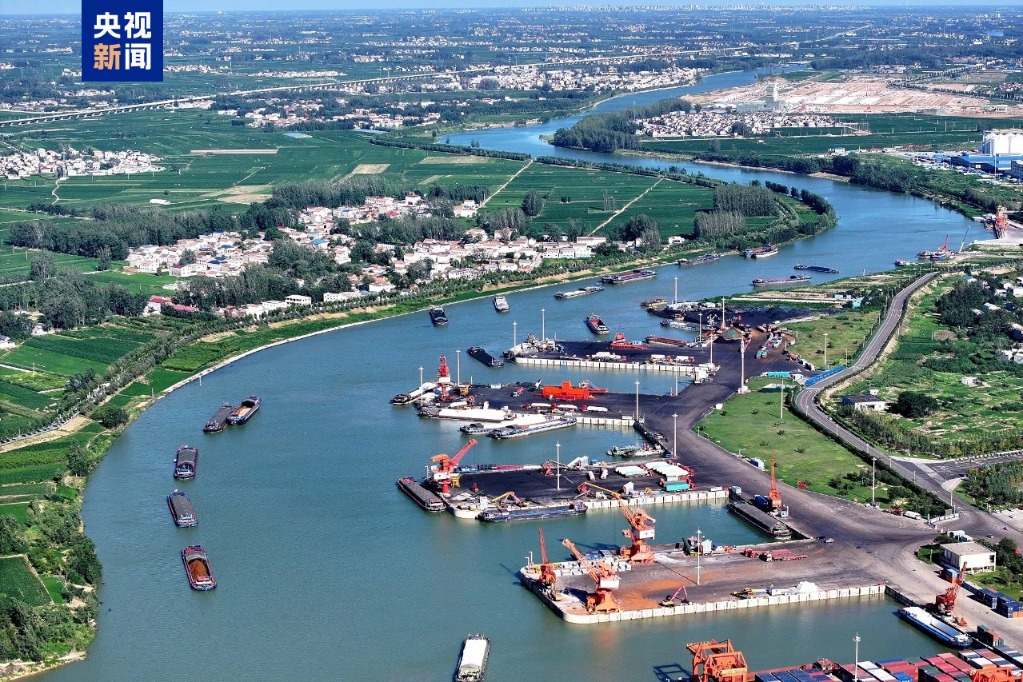
Core Insights - Henan province is focusing on developing its hub economy by establishing six pilot areas, including Zhengzhou and other key cities, to address its transportation and logistics shortcomings [2][3] - Zhengzhou, as a major transportation hub, has a well-developed high-speed rail network but lacks comprehensive logistics infrastructure compared to other cities like Chongqing and Wuhan [2][3] - The province aims to enhance its logistics capabilities through investments in high-speed rail, air transport, and water transport, with significant funding allocated for these projects [5][7][8] Transportation Development - Henan's transportation infrastructure has seen rapid growth, with over 2,200 kilometers of high-speed rail operational by the end of last year, making it the seventh province in China to achieve city-to-city high-speed rail connectivity [5][6] - The province is also focusing on air cargo, with Zhengzhou Airport achieving a cargo throughput of 825,000 tons last year, a 35.8% increase, and aims to reach 1.2 million tons this year [7][8] - Water transport is being prioritized, with plans to enhance river navigation and port capacity, targeting a significant increase in inland shipping mileage and port throughput by 2030 [7][8] Economic Strategy - The concept of "hub economy" has been integrated into Henan's economic development strategy, with a three-year action plan aimed at establishing internationally influential hub economies by 2025 [8][9] - Zhengzhou is positioned as the core of this hub economy, with a focus on developing high-value industries such as electronics, automotive, and equipment manufacturing [15][16] - The province is exploring a new model of hub economy development that emphasizes the integration of transportation logistics with industrial growth, aiming to reverse recent economic declines [16][19] Challenges and Opportunities - Despite the advancements in transportation, there are concerns about the underutilization of Henan's logistical advantages, with a need for better coordination and industrial development [8][9] - Zhengzhou's logistics capabilities are currently limited, with a need for more integrated logistics services and modern supply chain solutions to fully leverage its hub status [19] - The development of new rail lines and highways is expected to enhance connectivity and support the growth of secondary hubs in cities like Luoyang and Pingdingshan [14][15]
“链”动发展新动能
He Nan Ri Bao· 2025-08-20 23:30
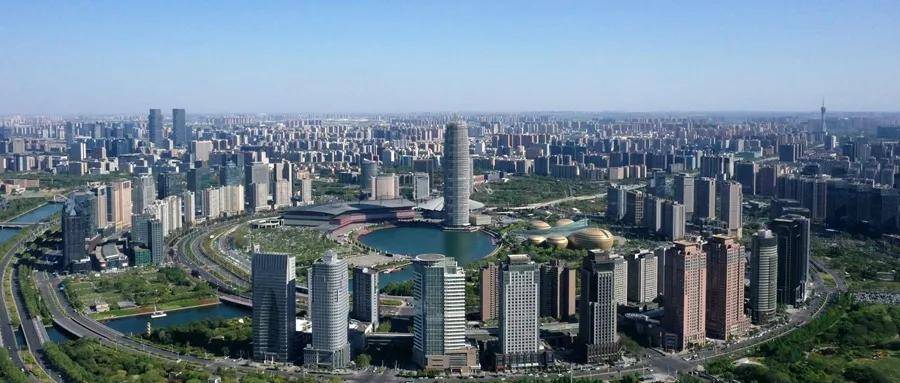
Core Viewpoint - The opening of BYD's racetrack in Zhengzhou Airport Economic Comprehensive Experimental Zone signifies the company's commitment to integrating with local development and enhancing the automotive industry through innovation and cultural promotion [1] Group 1: Company Developments - BYD's racetrack is a comprehensive testing ground focused on new energy vehicles, aimed at hosting professional events, testing vehicle performance, and promoting racing culture [1] - The establishment of the racetrack is part of BYD's broader strategy to deepen its presence in Zhengzhou, which includes the launch of a vehicle production base and the opening of the "Di Space" new energy vehicle science museum [1] Group 2: Industry Impact - The development of new projects by leading companies like BYD is expected to stimulate investment and strengthen the foundation of the real economy [1] - The integration of resources such as capital, talent, and production materials is crucial for accelerating industrial momentum and enhancing the competitive edge of the automotive sector [1] - The focus on leveraging transportation advantages to boost economic growth highlights the potential for creating new growth points and igniting strong economic development engines [1]

中部第一大省,批量制造“枢纽”
Mei Ri Jing Ji Xin Wen· 2025-08-20 15:32
Core Viewpoint - Henan province is taking significant steps to develop its hub economy by establishing six hub economy pilot areas, aiming to enhance its logistics and transportation capabilities, particularly in Zhengzhou, which is currently lagging behind other cities in terms of hub construction [1][2][6]. Transportation Development - Henan has entered a "explosive period" of transportation construction, achieving significant advancements in "water, land, and air" transport, with high-speed rail becoming a key focus [2][3]. - By the end of last year, Henan's high-speed rail operating mileage exceeded 2,200 kilometers, with plans to surpass 3,000 kilometers, making it one of the leading provinces in the country [3]. - The province is also focusing on high-speed rail logistics, with the introduction of high-speed freight lines, positioning itself as a benchmark for high-speed rail logistics [3][5]. Economic Strategy - The province aims to transform its transportation advantages into economic benefits, with a three-year action plan to establish an internationally influential hub economy pilot area by 2025 [6][15]. - Zhengzhou is positioned as the core driver of the hub economy, with specific policies aimed at enhancing its logistics capabilities and industrial development [6][14]. Challenges and Shortcomings - Despite the advancements in transportation, the hub economy in Henan faces challenges, including an imbalance in industrial development and insufficient collaborative capabilities among hubs [9][10]. - Zhengzhou has been removed from certain national logistics hub lists, indicating a need for improvement in its industrial structure and innovation capacity [9][10]. Future Directions - Henan is working on constructing more "diversion" channels to enhance its transportation network, with new high-speed rail stations being developed to connect various cities [10][13]. - The province is also focusing on expanding its highway network to improve interconnectivity and support economic growth [13][14]. - The development of specific industries in each hub city is being emphasized, with targeted growth in sectors such as electronic information, automotive, and advanced manufacturing [14][15].
六核引擎转动中原支点——看河南枢纽经济先行区的破壁探索
He Nan Ri Bao· 2025-08-18 23:45
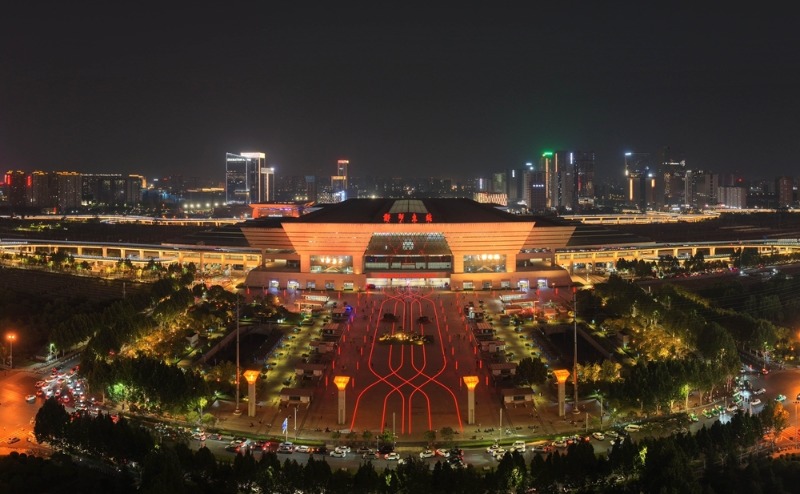
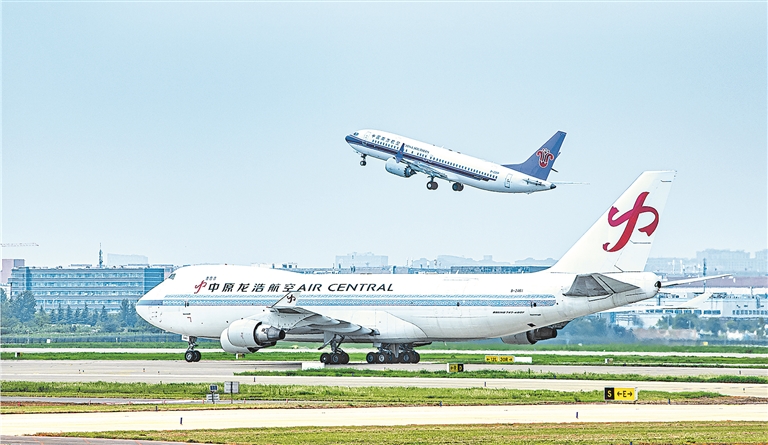
Core Viewpoint - The establishment of six hub economic pilot zones in Henan Province aims to leverage the region's transportation advantages to enhance its economic development and integration into national and global markets [1][22]. Group 1: Overview of Hub Economic Pilot Zones - The six designated hub economic pilot zones include Zhengzhou, Luoyang, Pingdingshan, Anyang, Shangqiu, and the group of Zhoukou-Luoyang, focusing on transportation and logistics as core elements for development [2][21]. - Each pilot zone has unique advantages, such as Zhengzhou's status as a major international logistics hub and Luoyang's role as a comprehensive transportation center [3][21]. Group 2: Transportation Infrastructure and Economic Impact - Zhengzhou Airport handles over 500 passenger flights and 70 cargo flights daily, with a total cargo volume of 56.9 million tons in 2023, marking a 24% increase year-on-year [4][5]. - The integration of various transportation modes, including air, rail, and water, is crucial for enhancing logistics efficiency and reducing operational costs for businesses in the region [6][18]. Group 3: Strategic Development and Collaboration - The pilot zones are designed to foster cross-regional cooperation, particularly between Zhoukou and Luoyang, to avoid competition and enhance collaborative development [12][19]. - The focus is on creating a comprehensive transportation network that supports the growth of hub-preferred industries and optimizes supply chain efficiency [18][19]. Group 4: Future Prospects and Goals - The initiative aims to transform Henan into a significant hub for national and international trade, with a projected import-export value of 409.44 billion yuan for Zhengzhou's aviation port area in 2024 [7][20]. - The development of these pilot zones is expected to stimulate economic growth, enhance logistics capabilities, and integrate Henan more deeply into global trade networks [16][22].
打造枢纽经济新高地
He Nan Ri Bao· 2025-08-17 23:26
Core Viewpoint - The establishment of hub economy pilot zones in Henan Province is expected to inject new vitality into high-quality economic development, leveraging the province's unique geographical advantages and transportation infrastructure [1][2]. Group 1: Hub Economy Development - Hub economy is defined as a highly concentrated and interconnected economic phenomenon that relies on urban and comprehensive transportation hubs, facilitating the flow of people, goods, information, and capital [1]. - The hub economy is seen as a powerful engine for economic and social development, promoting industrial agglomeration and structural optimization through a "snowball" effect [1]. Group 2: Strategic Advantages of Henan - Henan Province is positioned as a crucial transportation hub in China, with a developed "米" shaped high-speed rail network and significant international connectivity through initiatives like the Zhengzhou-Luxembourg "Air Silk Road" [1]. - The province's cross-border e-commerce platforms enable nearly 10,000 local enterprises to engage in global trade, enhancing the hub economy's growth potential [1]. Group 3: Challenges and Competitiveness - Despite progress, challenges remain, such as insufficient hub capabilities in cities like Luoyang, Shangqiu, and Nanyang, and the need for improved intermodal transport systems [2]. - Competition is intensifying as neighboring provinces like Shaanxi, Hubei, and Hunan increase investments in hub construction, including airport development and freight subsidies [2]. Group 4: Future Development Plans - Specific plans for hub economy pilot zones include creating a logistics distribution center in Luoyang, a core hub for waterway transport in Zhoukou-Luohe, and a high-efficiency connection in Zhengzhou [2]. - The integration of transportation and economic development is expected to accelerate the release of the multiplier effect of the hub economy [2].
探索新路径 河南发布枢纽经济先行区建设名单
Yang Shi Xin Wen· 2025-08-14 03:06
Core Viewpoint - The Henan Provincial Development and Reform Commission and the Transportation Department have identified key areas for the construction of hub economy pilot zones, aiming to explore new pathways and models for hub economy development [1][3]. Group 1: Hub Economy Pilot Zones - Henan is the first province in China to coordinate the layout and construction of hub economy development carriers at the provincial level [3]. - Six hub economy pilot zones have been prioritized for development: - Zhengzhou (focusing on the Airport Economic Zone and Economic and Technological Development Zone) - Luoyang (centered on Yichuan County) - Pingdingshan (mainly in Weidong District and High-tech Industrial Development Zone) - Anyang (primarily in Tangyin County) - Shangqiu (focusing on the Urban-Rural Integration Demonstration Zone) - Zhoukou-Luohe (centered on Zhoukou Port Development Zone and Luohe Urban-Rural Integration Demonstration Zone) [3][5]. Group 2: Characteristics of Hub Economy Pilot Zones - The hub economy pilot zones are characterized by a focus on hub functions, innovation-driven openness, factor aggregation, industrial development, and economic elevation as their core objectives [5]. - The establishment of these six pilot zones is expected to serve as a new engine for the development of the hub economy in Henan Province, facilitating significant progress towards building internationally influential hub economy pilot zones [5].