自由现金流

Search documents
成交额超2亿元,自由现金流ETF(159201)冲击4连涨,最新规模达101.91亿元
Xin Lang Cai Jing· 2026-01-22 02:36
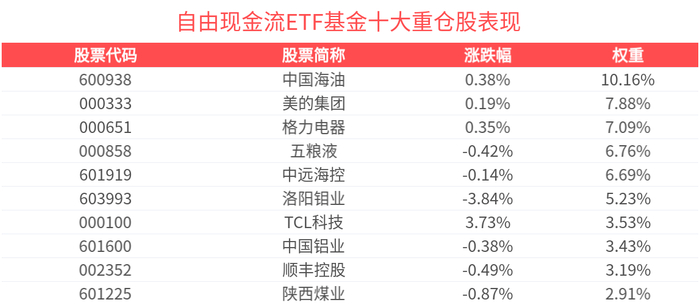
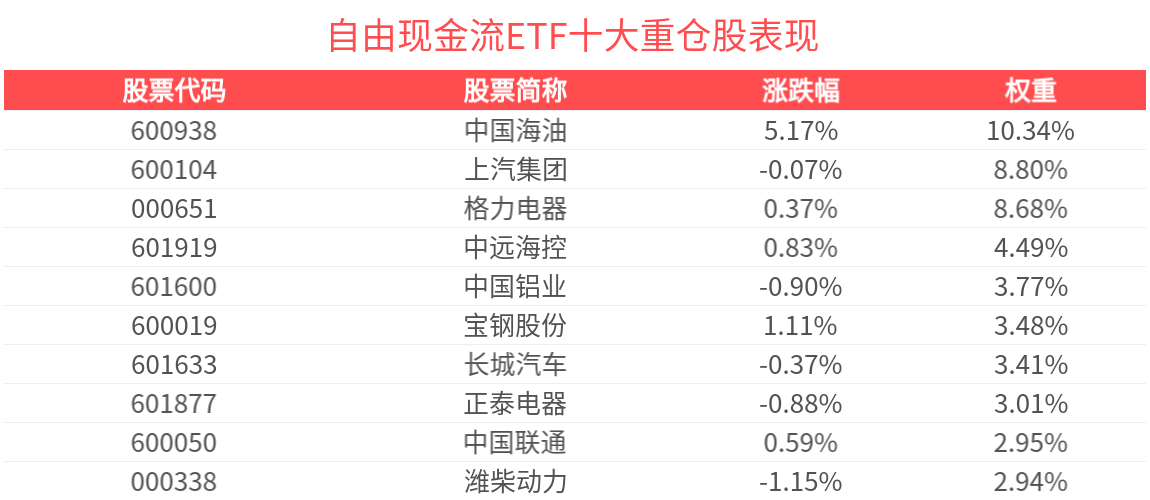
| 股票代码 | 股票简称 | 涨跌幅 | 权重 | | --- | --- | --- | --- | | 600938 | 甲国海海 | 5.17% | 10.34% | | 600104 | 上汽集团 | -0.07% | 8.80% | | 000651 | 格力电器 | 0.37% | 8.68% | | 601919 | 中远海控 | 0.83% | 4.49% | | 601600 | 中国铝业 | -0.90% | 3.77% | | 600019 | 宝钢股份 | 1.11% | 3.48% | | 601633 | 长城汽车 | -0.37% | 3.41% | | 601877 | 正泰电器 | -0.88% | 3.01% | | 600050 | 中国联通 | 0.59% | 2.95% | | 000338 | 潍柴动力 | -1.15% | 2.94% | (以上所列股票仅为指数成份股,无特定推荐之意) 自由现金流ETF(159201),场外联接(华夏国证自由现金流ETF发起式联接A:023917;华夏国证自由现金流ETF发起式联接C:023918)。费率方面,自由现 金流ETF ...

2026年或将迎来“盈利修复”稳健行情,自由现金流ETF(159201)成均衡配置利器
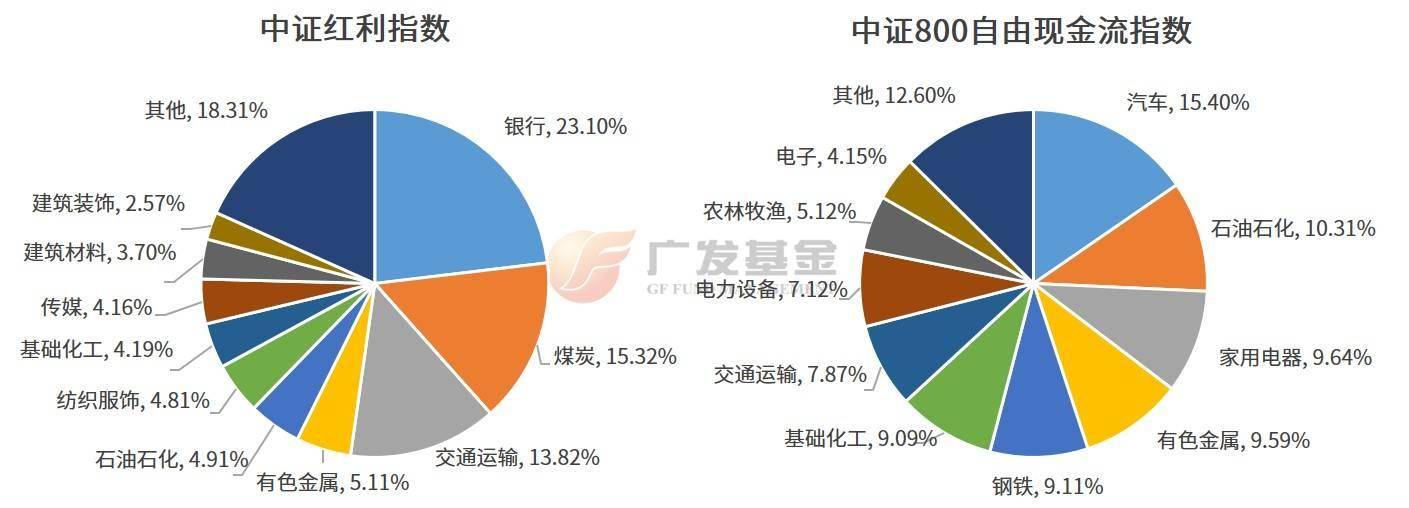
Mei Ri Jing Ji Xin Wen· 2026-01-21 07:32
Group 1 - The Freedom Cash Flow ETF (159201) experienced a rebound, increasing approximately 0.4%, with constituent stocks such as Silver Nonferrous and Mengbaili hitting the daily limit, while Zhejiang Longsheng and Zhuhai Group saw gains exceeding 5% [1] - Over the past 10 trading days, the Freedom Cash Flow ETF (159201) recorded net inflows in 8 of those days, totaling over 548 million yuan, with the latest fund size reaching 10.03 billion yuan and shares at 7.843 billion, both hitting record highs since inception [1] - According to the chief strategist at Kaiyuan Securities, the market's driving force is expected to shift from "asset revaluation" to "profit recovery" around 2026, suggesting a transition to a "slow upward trend" rather than a "rapid rise and fall" [1] Group 2 - The Freedom Cash Flow ETF (159201) and its linked funds (A: 023917; C: 023918) closely track the National Index of Free Cash Flow, selecting stocks with positive and high cash flow after liquidity, industry, and ROE stability screening, indicating high quality and strong risk resistance, suitable for long-term investment [2] - The fund management fee is set at an annual rate of 0.15%, and the custody fee at 0.05%, both representing the lowest rates in the market, maximizing benefits for investors [2]
投资进化论丨自由现金流vs红利,怎么选?
Sou Hu Cai Jing· 2026-01-20 10:15
Core Viewpoint - Dividend funds have been favored by conservative investors for a long time, but since 2025, free cash flow index funds have gained significant attention in the market as another product that emphasizes shareholder returns [1] Group 1: Understanding Free Cash Flow - Free cash flow is defined as the cash available after all operating costs, taxes, debt payments, and necessary capital expenditures have been deducted, representing the cash that can be freely allocated [2] - Free cash flow serves as a "litmus test" for assessing a company's health, indicating its ability to maintain operations, manage short-term debts, and support dividends, buybacks, or reinvestments [2] Group 2: Differences Between Free Cash Flow Strategy and Dividend Strategy - The core logic of the dividend strategy focuses on a company's willingness to distribute dividends, while the free cash flow strategy emphasizes a company's ability to generate cash for distribution [4] - Dividend strategy primarily generates returns through dividend income, while free cash flow strategy focuses on capital appreciation, often involving companies in growth phases with higher potential for valuation increases [5] Group 3: Industry Distribution - The industry distribution of the two strategies differs significantly; the dividend index tends to favor traditional, mature industries like finance and energy, while the free cash flow index includes sectors such as consumer goods and cyclical industries [6] Group 4: Historical Performance - Over the past five years, the free cash flow index has shown stronger offensive performance and higher elasticity compared to the dividend index, which has demonstrated more stability and defensive characteristics [10] - The cumulative return of the CSI 800 Free Cash Flow Index was 171.47% with an annualized return of 22.92% and an annualized volatility of 20.64%, while the CSI Dividend Index had a cumulative return of 53.43% with an annualized return of 9.25% and an annualized volatility of 16.17% [11] Group 5: Investor Suitability - The dividend index is more suitable for conservative investors with cash flow needs, while the free cash flow index is better suited for investors with a higher risk tolerance seeking long-term capital growth [12]
大行评级丨美银:坚定看多IBM,目标价升至335美元,高利润软件与现金流成核心支撑
Ge Long Hui· 2026-01-20 08:17
美国银行证券分析师Wamsi Mohan发表研报,将IBM(IBM.US)目标价从315美元上调至335美元,同时维 持"买入"评级。该行表示,IBM拥有强劲的自由现金流前景,同时高利润率软件业务占比提升,这将抵 消短期面临的不利因素。 ...

成交额超3亿元,自由现金流ETF(159201)近5个交易日净流入2.07亿元
Sou Hu Cai Jing· 2026-01-20 06:15
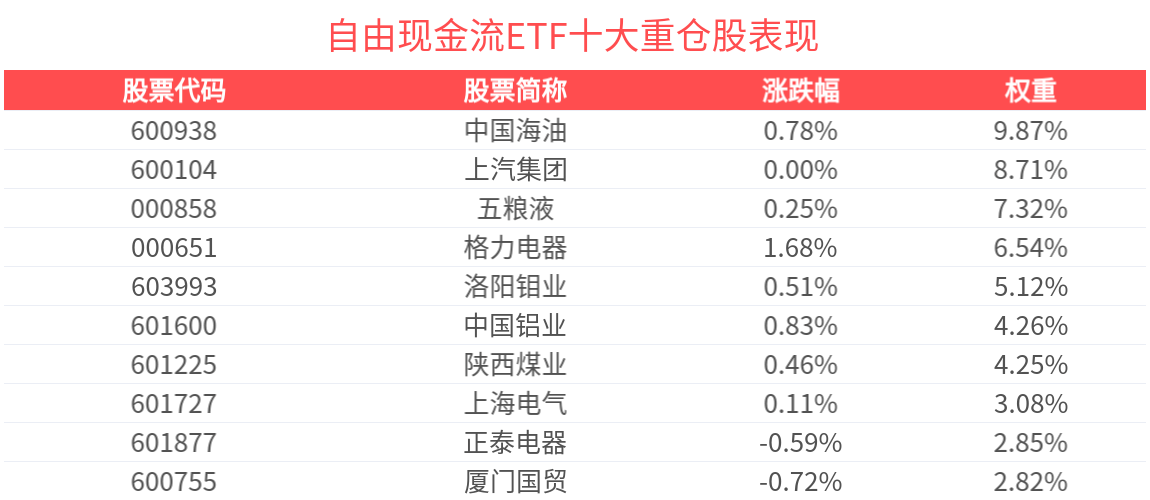
Core Viewpoint - The National Index of Free Cash Flow has shown a positive trend, with significant increases in both the index and its constituent stocks, indicating strong market performance and investor interest in companies with high and stable free cash flow [1][2]. Group 1: Index Performance - As of January 20, 2026, the National Index of Free Cash Flow rose by 0.60%, with constituent stocks such as Nanshan Aluminum and Satellite Chemical experiencing notable gains of 7.65% and 6.05%, respectively [1]. - The Free Cash Flow ETF (159201) increased by 0.55%, reaching a latest price of 1.28 yuan, with a trading volume of 3.69 billion yuan [1]. - Over the past week, the Free Cash Flow ETF has averaged a daily trading volume of 4.77 billion yuan [1]. Group 2: Fund Inflows and Performance - In the last five trading days, the Free Cash Flow ETF attracted a total of 207 million yuan, bringing its total shares to 7.75 billion and total assets to 9.834 billion yuan, marking a record high since its inception [1]. - The ETF has seen a net inflow of 2.4535 million yuan in financing this month, with a current financing balance of 116 million yuan [1]. - The net value of the Free Cash Flow ETF has increased by 21.74% over the past six months, with a maximum monthly return of 7% and a historical holding period profit probability of 100% over six months [1]. Group 3: Top Constituent Stocks - As of December 31, 2025, the top ten weighted stocks in the National Index of Free Cash Flow include China National Offshore Oil Corporation, SAIC Motor, and Gree Electric Appliances, collectively accounting for 51.95% of the index [2]. - The top weighted stocks and their respective weights are: China National Offshore Oil (9.87%), SAIC Motor (8.71%), and Gree Electric Appliances (6.54%) [4]. Group 4: ETF Management and Fees - The Free Cash Flow ETF has a management fee of 0.15% and a custody fee of 0.05%, which are among the lowest in comparable funds [4].
市场回归“业绩基本面”,“牛市”根基依旧牢固,自由现金流ETF(159201)份额规模创新高
Mei Ri Jing Ji Xin Wen· 2026-01-20 04:54
Group 1 - The core viewpoint of the news highlights the performance of the Free Cash Flow ETF (159201), which has seen a 0.08% increase in early trading on January 20, with leading stocks like Nanshan Aluminum, Satellite Chemical, and Fostda rising over 5% [1] - The Free Cash Flow ETF (159201) has experienced net inflows in 8 out of the last 10 trading days, totaling over 628 million yuan, indicating strong investor interest [1] - The latest share count of the Free Cash Flow ETF reached 7.75 billion, with a total scale of 9.834 billion yuan, both marking new highs since its inception [1] Group 2 - The Free Cash Flow ETF (159201) and its linked funds closely track the National Index of Free Cash Flow, selecting stocks with positive and high cash flow after liquidity, industry, and ROE stability screening, making it suitable for long-term investment [2] - The fund management fee is set at an annual rate of 0.15%, and the custody fee at 0.05%, both of which are among the lowest in the market, maximizing benefits for investors [2] Group 3 - Institutions believe that the expectation of a "slow bull" market is rising, focusing on performance fundamentals, with recent market acceleration and thematic speculation leading to some sectors and stocks becoming "locally overheated" [1] - Regulatory authorities have begun to strengthen counter-cyclical adjustments in the market, signaling a push for rational and stable market operations [1] - In the medium to long term, the A-share market is expected to maintain strong upward momentum due to factors such as increased household savings entering the market, improved performance from "anti-involution," and a new wave of technological industrial revolution [1]
YANCOAL AUS(03668) - 2025 Q4 - Earnings Call Transcript
2026-01-20 02:02
Financial Data and Key Metrics Changes - Yancoal achieved a record production of 10.4 million tons of attributable saleable coal in Q4 2025, contributing to an annual total of 38.6 million tons, also a record for the company [4][5] - Cash operating costs were reported at AUD 93 per ton, within the guidance range of AUD 89-AUD 97 per ton [4][5] - The company’s cash balance increased by AUD 307 million over the quarter, reaching over AUD 2 billion with no debt [5][15] Business Line Data and Key Metrics Changes - Total ROM coal production increased by 20% compared to Q3 2025, reaching 18.9 million tons, while saleable coal production rose by 11% to 13.6 million tons [8][9] - The attributable share of saleable coal was 10.4 million tons, which includes an additional 3.75% interest in the Moolarben joint venture [9] Market Data and Key Metrics Changes - The average realized price for coal improved by 6% to AUD 148 per ton, driven by a 6% increase in thermal coal prices to AUD 138 per ton and a 4% increase in metallurgical coal prices to AUD 203 per ton [5][13] - International coal markets showed mixed performances, with Japan increasing coal imports by 16%, while China’s annual imports fell by 18% due to strong domestic production [11][12] Company Strategy and Development Direction - Yancoal aims to maintain operational momentum into 2026, with guidance on production, cash operating costs, and capital expenditure to be provided in the upcoming financial results [6] - The company emphasizes cost control and aims to deliver unit costs around the middle of the guidance range, reinforcing its position as a leading low-cost coal exporter [15][51] Management's Comments on Operating Environment and Future Outlook - Management expressed optimism about the operational performance and the financial position, highlighting the importance of disciplined cost control and the ability to leverage improving coal prices [51] - The CEO noted that the company’s strong cash position allows for considerations of dividends and potential growth opportunities [5][15] Other Important Information - The total recordable injury frequency rate improved to 6.14, below the industry average of 7.45, indicating a commitment to safety performance [8] - The company plans to process additional ROM coal that could not be converted to saleable coal in Q4 2025 during the first quarter of 2026 [32] Q&A Session Summary Question: Current stockpiles and inventory levels - Management confirmed that sales and production are back to normal and matched, indicating a strong quarter for both production and sales [19] Question: Comments on New South Wales coal royalties - Management stated there have been no discussions regarding changes to coal royalties in New South Wales [20] Question: Production profile of Hunter Valley Operations - Management reported a strong fourth quarter for Hunter Valley Operations, with effective mitigation of wet weather impacts through prior capital investments [23][24] Question: Insights on coal market outlook - Management noted a slight recovery in coal prices towards the end of Q4, with expectations for demand to pick up post-Chinese New Year [26] Question: Dividend framework and cash balance implications - Management reiterated the dividend framework, indicating a review of the final position after the year-end to determine capacity for dividend allocation [35][36] Question: Free cash flow generation and capital management - Management discussed the strong cash flow generation and emphasized the importance of being cost-competitive while balancing growth opportunities [39][40] Question: U.S. coal import potential - Management clarified that Australia does not supply coal to mainland USA, as the U.S. is a significant coal producer itself [42] Question: Hypothetical scenarios regarding joint ventures - Management refrained from commenting on market hypotheticals, indicating it is too early to form views on potential changes [46]
牛市下半场-实物再通胀-2026年度投资策略
2026-01-20 01:50
Summary of Key Points from Conference Call Records Industry Overview - The A-share market is transitioning from a traditional model reliant on real estate and credit impulses to a new paradigm focused on prudent spending, efficient turnover, and equity enhancement, termed "weight loss and muscle gain" [1][2] - The structure of Return on Equity (ROE) in A-shares has undergone a revolutionary change, with the drag from real estate nearing its end, while technology, manufacturing, and dividend sectors are seeing stable increases in ROE [1][2] Core Insights and Arguments - Since 2018, the contribution of ROE from financial and real estate sectors has declined, while ROE in technology (TMT) and high-end manufacturing has significantly increased, from 3% to 7% and from 5% to 6%, respectively [1][7] - Free cash flow is highlighted as a crucial indicator of corporate profitability quality, with A-share non-financial companies generating a stable 20-25 yuan of free cash flow per 100 yuan of EBITDA, a phenomenon not seen in the past 20-30 years [1][13] - The A-share market is shifting from a scenario of "only growing bones, not meat" to one where dividend capabilities are significantly enhanced, leading to a market characterized by more gains and fewer losses [1][15] Important but Overlooked Content - The traditional economic model has shown that real estate and credit impulses significantly impact the stock market, especially during economic downturns, where relaxed real estate policies convert future growth prospects into credit, leading to increased mortgage loans [3][4] - The new paradigm emphasizes direct financing over bank cash financing, which supports long-term asset allocation in stocks, similar to how U.S. residents invest a portion of their income into the stock market through pensions or annuities [5] - The transition from old to new economic drivers has resulted in a notable increase in ROE contributions from technology and high-end manufacturing sectors, while the real estate sector's contribution has diminished to nearly zero [6][9] - The financial and real estate sectors have performed poorly in recent years, with the ROE for the financial sector dropping from 13% in 2018 to 8.8% currently, and the real estate sector experiencing continuous losses [8][11] - Future trends in the A-share market will increasingly rely on emerging industries and high-quality profitability, with sectors like communication, media, electronics, and machinery showing significant ROE increases [12][14] Future Investment Outlook - If dividend repurchase behaviors can be sustained, the overall ROE of A-shares is expected to increase by an additional 3 percentage points over the next decade [14] - The A-share market is projected to become a crucial component of residents' asset allocation, enhancing the market's attractiveness to capital and boosting investor confidence [14][17] - The influx of resident capital into the stock market is expected to stabilize market dynamics, moving away from short-term speculative behaviors to a focus on long-term returns [18][19]
自由现金流指数涨超1%,关注同类中超额收益第一的自由现金流ETF易方达(159222)
Mei Ri Jing Ji Xin Wen· 2026-01-19 07:10
Group 1 - The core viewpoint of the article highlights the active performance of sectors such as chemicals, steel, energy storage, and power grid equipment, with the National Free Cash Flow Index rising by 1.4% as of 14:35 on January 19 [1] - Among the constituent stocks, Pinggao Electric reached the daily limit, Weichai Power increased by over 7%, and both Chint Electric and Inner Mongolia Erdos rose by over 5% [1] - The Free Cash Flow ETF, E Fund (159222), saw a net subscription of 3 million units during the trading session, achieving net subscriptions on 9 out of the last 10 trading days [1] Group 2 - The National Free Cash Flow Index selects stocks based on free cash flow rate and adjusts quarterly, with the top three industries being automotive, oil and petrochemicals, and home appliances, focusing on high-quality "cash cow" companies that offer strong defensive attributes [1] - The E Fund Free Cash Flow ETF aims to achieve excess returns through refined management while closely tracking the National Free Cash Flow Index, reporting an excess return of 2.43% relative to the index over the past six months, ranking first among peers, with a tracking error of only 0.06% [1] - The management fee rate for the ETF is set at 0.15% per year, providing investors with a low-cost tool for core allocation in a volatile market [1]



聚焦顺周期,布局高价值,自由现金流ETF(159233)交投活跃
Xin Lang Cai Jing· 2026-01-19 03:32
Core Viewpoint - The market is witnessing a strong performance in the free cash flow index, with significant gains in related sectors, particularly in cyclical industries, driven by recent positive developments in the automotive and transportation sectors [1][2]. Group 1: Free Cash Flow Index Performance - The CSI Free Cash Flow Index (932365) increased by 1.08%, with notable gains from stocks such as Xinhua Department Store (+9.99%), Zhongmin Energy (+9.93%), and Pinggao Electric (+9.76%) [1]. - The Free Cash Flow ETF (159233) rose by 1.28%, closing at 1.26 yuan, and is designed to track the CSI Free Cash Flow Index, focusing on cyclical industries [1]. Group 2: Automotive Sector Developments - A new electric vehicle quota agreement between China and Canada is expected to accelerate the entry of Chinese electric vehicles into the North American market, with a reduction in tariffs from 100% to 6.1% for a quota of 49,000 vehicles annually [1]. - The China Automobile Association projects that vehicle exports will reach 7.4 million units by 2026, reflecting a year-on-year growth of 4.3% [1]. Group 3: Transportation Sector Insights - The 2026 Spring Festival travel season is set to begin on February 2, with an expected 539 million passengers, marking a 5.0% increase year-on-year, which will boost demand in the transportation sector [2]. - The Spring Festival is anticipated to enhance profitability across various transportation segments, including railways, civil aviation, and logistics, leading to improved cash flow stability for transportation companies [2].