芯片制造

Search documents
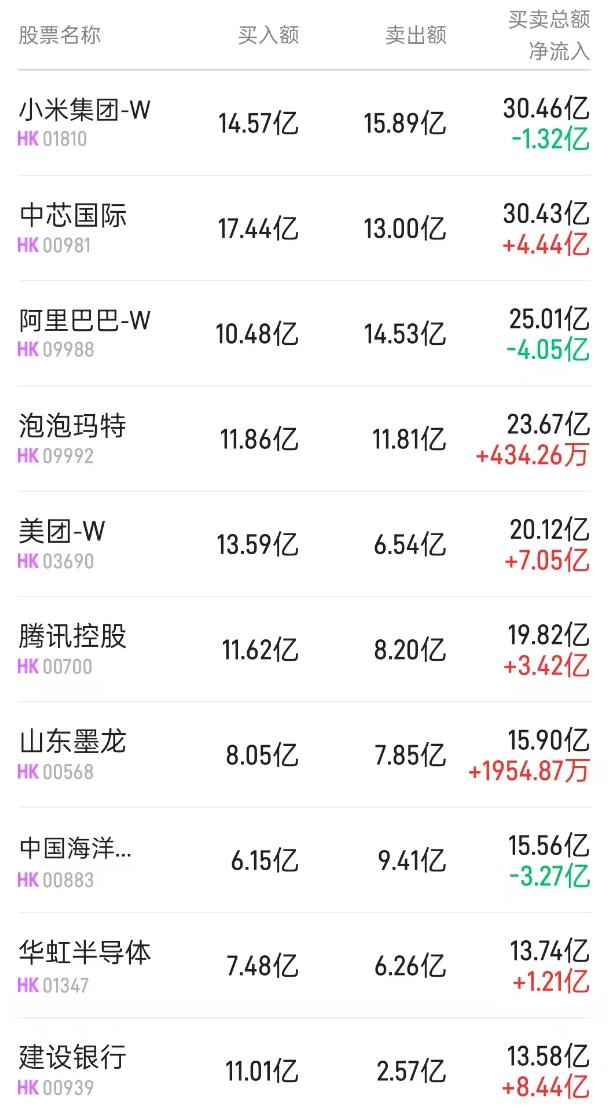
北水动向|北水成交净买入78.95亿 北水再度加仓芯片股 全天抢筹美团(03690)超15亿港元
智通财经网· 2025-06-23 10:01
Summary of Key Points Core Viewpoint - The Hong Kong stock market experienced significant net inflows from northbound trading, with a total net buy of 78.95 billion HKD on June 23, 2023, indicating strong investor interest in certain stocks while others faced net sell-offs [1]. Group 1: Net Buying and Selling Activities - The top net bought stocks included Meituan-W (03690) with 15.14 billion HKD, China Construction Bank (00939) with 8.43 billion HKD, and SMIC (00981) with 6.78 billion HKD [4][5]. - The stocks with the highest net selling included Alibaba-W (09988) with 12.85 billion HKD, CNOOC (00883) with 3.26 billion HKD, and Xiaomi Group-W (01810) with 3.18 billion HKD [5]. Group 2: Company-Specific Developments - Meituan announced a strategic transformation to expand its instant retail business, which includes exploring a "next-day delivery + self-pickup" model and shutting down operations in certain regions while retaining key markets like Guangdong and Hangzhou [4]. - China Construction Bank's stable asset quality and strong dividend yield were highlighted in a report by Zhongtai Securities, which recommended the banking sector due to its resilience in a "weak cycle" environment [4]. - SMIC's net buying was influenced by reports of potential changes in U.S. policy regarding technology exemptions for major semiconductor companies operating in China [5]. - Alibaba's net selling was attributed to its restructuring efforts, integrating Ele.me and Fliggy into its e-commerce division to enhance synergies in the instant retail sector [5].






共享基经丨与AI一起读懂ETF(十九):科创芯片、科创半导体主题,有何不同?
Mei Ri Jing Ji Xin Wen· 2025-06-18 09:28
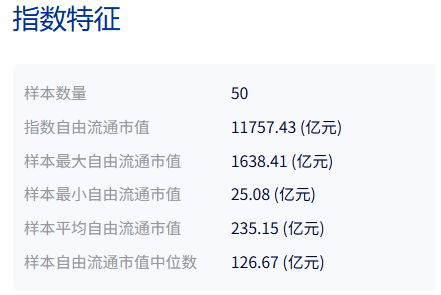
Core Viewpoint - The article discusses the performance and characteristics of two indices related to the semiconductor sector on the STAR Market, namely the STAR Chip Index and the STAR Semiconductor Materials and Equipment Index, highlighting their differences and similarities in terms of sample selection, industry focus, top-weighted stocks, performance, and valuation levels [1][16]. Group 1: Differences - Sample Selection: The STAR Chip Index includes 50 stocks related to semiconductor materials, equipment, chip design, manufacturing, and testing, with an average market capitalization of approximately 235 billion yuan. In contrast, the STAR Semiconductor Materials and Equipment Index consists of 30 stocks focused on semiconductor materials and equipment, with an average market capitalization of about 149 billion yuan [1][2][3]. - Industry Focus: The STAR Chip Index emphasizes the chip design segment, with over 50% weight in integrated circuit design, while the STAR Semiconductor Materials and Equipment Index focuses on semiconductor materials and equipment, with over 50% weight in semiconductor equipment [4][6]. - Top Ten Weights: The cumulative weight of the top ten stocks in the STAR Chip Index is 58.42%, with companies like Haiguang Information and SMIC having weights exceeding 8%. The STAR Semiconductor Materials and Equipment Index has a cumulative weight of 72.42% for its top ten stocks, with companies like Hu Silicon Industry and Hwa Hai Qing Ke also exceeding 8% [8][10]. Group 2: Performance and Valuation - Index Performance: Over the past year to five years, the STAR Chip Index has outperformed the STAR Semiconductor Materials and Equipment Index. However, the STAR Chip Index has shown slightly higher volatility in the past year, while the latter has had higher annualized volatility over three and five years [11][12]. - Valuation Levels: The STAR Chip Index's price-to-book ratio has risen to above the historical 70th percentile, indicating a high valuation, whereas the STAR Semiconductor Materials and Equipment Index remains around the historical 30th percentile, reflecting a significant difference in market perception between chip design and manufacturing segments [13][16]. Group 3: Similarities - Sample Space: Both indices consist of stocks listed on the STAR Market, requiring a listing period of over six months and excluding stocks with delisting risk warnings, ensuring a focus on established companies [17]. - Industry Category: Both indices belong to the semiconductor industry theme, representing a detailed depiction of the semiconductor sector on the STAR Market, which includes many leading companies in this field [17].
法国也要搞2nm晶圆厂
半导体行业观察· 2025-06-15 02:29
Core Viewpoint - France is aiming to establish itself as a key technology hub in Europe by producing advanced semiconductors, specifically targeting the production of chips in the 2nm to 10nm range, and is seeking to attract TSMC and Samsung to set up facilities in the country [1][4][6]. Group 1: European Semiconductor Strategy - Following the U.S. push for domestic chip production, Europe is now focusing on local manufacturing to meet semiconductor demands, with France's President Macron expressing the necessity of developing a domestic supply chain [1][2]. - Macron highlighted the importance of semiconductors for national security and economic independence, indicating a shift towards self-sufficiency in chip production within Europe [1][5]. - The potential establishment of TSMC or Samsung facilities in France is seen as crucial for achieving advanced semiconductor manufacturing capabilities [6][7]. Group 2: Challenges and Current Landscape - There are concerns regarding the feasibility of TSMC's German factory becoming operational quickly, which raises doubts about the prospects of similar facilities in France [2]. - France currently lacks involvement in developing products that require advanced semiconductors, primarily focusing on mature process nodes like 16nm, particularly in the automotive sector [2][5]. - The shift of production from East to West necessitates Europe to secure a stable chip supply, as reliance on U.S. imports may incur additional costs due to tariffs [2]. Group 3: Investment and Collaboration - Macron announced a significant investment of €109 billion (approximately $125.6 billion) in the AI sector over the coming years, which is part of France's broader strategy to enhance its technological infrastructure [7]. - Collaborations are being formed, such as between Nvidia and Mistral AI, to develop AI cloud infrastructure, which aligns with France's ambitions in the semiconductor and AI domains [6][7].


印度首颗芯片,终于来了,28nm工艺
半导体行业观察· 2025-06-12 00:41
Core Viewpoint - India is set to launch its first domestically produced semiconductor chip by mid-2025, marking a significant milestone in its semiconductor manufacturing journey, despite the technology being based on 28nm and 90nm nodes, which are considered outdated compared to global standards [1][2][4]. Group 1: Semiconductor Development - The introduction of 28nm and 90nm chips is not aimed at competing with leading manufacturers but rather at establishing a foothold in the semiconductor industry [2][4]. - The Indian government is actively supporting semiconductor parks and attracting global investments, indicating a shift from mere promotional activities to actual production [2][3]. - The chips are being tested and will be mass-produced once validated, representing a genuine product rather than just prototypes [2][4]. Group 2: Strategic Importance - The production of these chips signifies India's move towards self-reliance in semiconductor manufacturing, reducing dependency on imports and enhancing national sovereignty [3][4][5]. - The initiative is not just about producing chips but also about building infrastructure, talent, and political will to support the semiconductor industry [4][5]. - The launch of the 28nm process is seen as a foundational step towards addressing global chip shortages and geopolitical challenges [4][5]. Group 3: Long-term Vision - This development is viewed as a long-term strategy for India to secure a place in the semiconductor manufacturing landscape, moving beyond software development to hardware production [5]. - The significance of the 28nm process lies in its potential to drive various electronic products, from automotive to industrial applications, thus integrating India into the global supply chain [2][4].
鸿蒙电脑搭载5纳米X90芯片,中国芯片制造能力已达世界一流
Xin Lang Cai Jing· 2025-05-25 07:24
关于芯片的制造水平,因为我被有关方面警告过若干次,知道的信息也不敢在外面说。既然央视新闻频 道已经公开,这个就是公开的信息了。鸿蒙电脑搭载的是X90芯片,5纳米的工艺。这条消息说明几个 问题:1.中国已经拥有了先进制程电脑芯片的设计能力,5纳米的电脑芯片,这个水平和世界一流水平 是一致的,现在的电脑芯片,用5纳米制程的也不是很多。所以鸿蒙电脑非常强大,不仅仅是系统软件 全新设计,是面向未来的操作系统,同时在硬件水平也是和世界一流持平的,甚至有可能超过世界一流 的水平。2.中国已经拥有了5纳米芯片的商业化的生产能力,华为的这颗芯片不可能由台积电代工,一 定是自己生产制造和封装的。尽管至今我们不知道是哪个厂做了这颗芯片,我们也不必去打听,我们一 定要知道,中国可以做5纳米的芯片,相信3纳米、2纳米也没有多大的问题。我毫不怀疑很快的中国的 先进制程芯片大量的生产能力会喷发出来,在未来的三年,中国不但是成熟制程芯片世界最强,中国的 先进制程芯片也会是世界最强。我相信不久就会看到产业链的喷发,大量产品的面世。3.中国已经不存 在芯片被卡脖子这件事情,芯片领域的各个方面问题都在陆续被解决,下面我们要做的事情就是要把自 己 ...

苹果代工厂,全力搞芯片
半导体芯闻· 2025-05-23 10:26
如果您希望可以时常见面,欢迎标星收藏哦~ UTAC成立于1997年,总部位于新加坡,提供半导体芯片的封装与测试服务,其应用涵盖消费电 子、计算设备、安全设备及医疗领域。 除新加坡外,该公司还在泰国、中国和印尼设有生产基地,并拥有覆盖美国、欧洲和亚洲的全球销 售网络。其客户主要包括"无晶圆厂"公司(即将芯片制造外包的公司)、集成器件制造商和晶圆代 工厂。 UTAC未披露其财务表现,但消息人士称,其年度息税折旧摊销前利润(EBITDA)估计约为3亿 美元。 参考链接 由于信息尚属机密,两位消息人士均拒绝具名。富士康对此拒绝置评,UTAC、Wise Road和杰富 瑞尚未立即回应置评请求。 近年来,全球芯片制造业受到国家安全和技术竞争的影响,尤其是在中美之间。传统上,半导体依 赖高度全球化的制造供应链,但美国已采取措施限制中国大陆获取先进芯片和高端制造工具, 消息人士表示,由于UTAC在中国大陆的业务,该公司预计将吸引非美国的财务型和战略型竞购 者。 富士康是苹果公司的主要供应商,也是全球最大的电子产品代工制造商。根据其官网,近年来富士 康已将业务拓展至半导体制造,作为其长期增长战略的一部分。 来源:内容 编译自路 ...
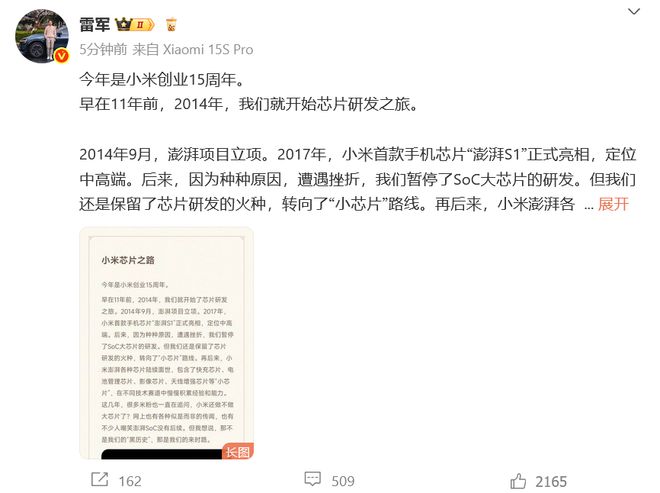
雷军:造芯艰难,玄戒四年多投入已超135亿
第一财经· 2025-05-22 11:11
微信编辑 | 夏木 推荐阅读 中方正告:必将付出沉重代价! 2025.05. 22 本文字数:943,阅读时长大约2分钟 今日,雷军在微博上回顾了小米的造芯之路。11年间,小米经历了挫折和困境,如今终于收获 了3nm芯片小米玄戒O1。以下是雷军微博内容: ...
雷军:小米自研SoC芯片采用3nm制程
Guan Cha Zhe Wang· 2025-05-19 04:16
Core Viewpoint - Xiaomi's upcoming self-developed SoC chip "Xuanjie O1" is set to be released, utilizing a second-generation 3nm process technology, surpassing market expectations and marking a significant milestone for China's semiconductor industry [1] Group 1: Chip Development and Investment - Xiaomi has invested over 135 billion RMB in the development of the Xuanjie chip as of April this year, with an expected investment of over 60 billion RMB this year [1] - The R&D team for the Xuanjie chip has grown to over 2,500 members, positioning Xiaomi among the top three in the domestic semiconductor design sector in terms of investment and team size [1] Group 2: Industry Context and Challenges - The semiconductor industry is experiencing a slowdown in Moore's Law, with international giants also reducing their pace in chip miniaturization, making this a critical moment for China's chip development [1][3] - The design and manufacturing of chips are equally important, and achieving breakthroughs in both areas is essential for China to catch up with global leaders [2][3][7] Group 3: Historical Context and Future Prospects - Xiaomi has been committed to semiconductor and operating system development since 2014, with over 100 billion RMB invested in R&D over the past five years [5] - The Xuanjie chip, with 19 billion transistors, represents a significant achievement in mobile SoC design, allowing Xiaomi to compete with global giants like Apple and Samsung [5] - The breakthrough in 3nm chip design is expected to have a positive impact on the domestic industry, attracting talent and enhancing product synergy [7]
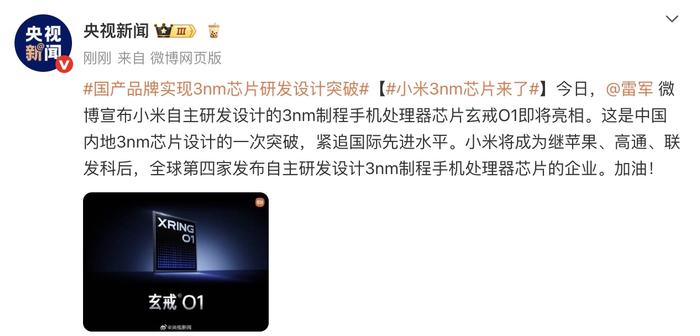
中国芯片“两条腿”走路,追平国际最先进设计水平!
Guan Cha Zhe Wang· 2025-05-19 03:59
Core Viewpoint - Xiaomi's upcoming release of the self-developed SoC chip "Xuanjie O1" utilizing 3nm process technology marks a significant milestone for China's semiconductor industry, achieving parity with the world's most advanced design levels and positioning Xiaomi as the fourth global smartphone manufacturer with in-house SoC design capabilities [1][2]. Group 1: Industry Significance - The successful design of the 3nm chip fills a critical gap in the global semiconductor landscape, showcasing China's advancements in high-end chip design [1]. - The chip industry relies on both design and manufacturing, emphasizing the need for Chinese companies to excel in both areas to compete globally [1][2]. - Xiaomi's achievement is seen as a catalyst for the domestic semiconductor industry, potentially boosting talent confidence and driving innovation within the supply chain [2]. Group 2: Historical Context and Future Outlook - Xiaomi's journey in chip development began in 2014 with the establishment of Pinecone Electronics, demonstrating resilience despite earlier setbacks, such as the challenges faced with the Surge S1 chip [2]. - The company has invested over 100 billion yuan in research and development over the past five years, leading to a transformative breakthrough in mobile SoC technology [2]. - The current slowdown of Moore's Law and the deceleration of international giants present a unique opportunity for China to advance in semiconductor technology [2].
雷军首次回应小米SU7事故,全网沸腾了
Xin Lang Cai Jing· 2025-05-17 18:25
Core Viewpoint - Xiaomi and its founder Lei Jun are currently facing significant challenges and controversies, particularly related to the recent SU7 car accident, which has raised questions about the company's quality and safety standards [1][2][4]. Group 1: Impact of SU7 Incident - The SU7 accident has led to intense scrutiny and criticism of Xiaomi, with Lei Jun acknowledging the unexpected severity of the incident's impact on the company [2][4][7]. - The incident has highlighted the difficulties of entering the automotive industry, marking a significant crisis for Xiaomi [3][7]. - Public expectations for Xiaomi have increased dramatically, with Lei Jun realizing the company's substantial influence and responsibility in the automotive sector [7]. Group 2: Quality and Safety Concerns - Following the SU7 accident, there have been widespread concerns regarding the effectiveness of Xiaomi's intelligent driving systems and transparency in data [6]. - Xiaomi has renamed its driving assistance features to clarify their capabilities, reflecting a response to regulatory pressures and public criticism [6]. - Ongoing quality issues have emerged, including complaints from SU7 owners about design flaws and discrepancies between promotional claims and actual product performance [9][11]. Group 3: Chip Development - Lei Jun announced the upcoming release of Xiaomi's self-developed mobile SoC chip "Xuanjie O1," marking a significant milestone in the company's technological advancement [13]. - The development of chips is seen as a critical step for Xiaomi in establishing itself as a leader in hard technology, following previous setbacks in chip development [15][16].