
轻资产模式

Search documents
豪掷332亿“联姻”开云后 欧莱雅CEO放话准备收购阿玛尼
Yang Zi Wan Bao Wang· 2025-10-24 04:15
Core Insights - L'Oréal is aggressively reshaping the beauty industry landscape through significant capital operations, including a €4 billion acquisition of Kering's beauty business and securing a 50-year beauty license for Gucci, Balenciaga, and Bottega Veneta [1][2] - The CEO has indicated readiness to negotiate the acquisition of the Armani brand, signaling a dual strategy of "licensing + acquisition" to intensify competition against rivals like Estée Lauder [1][4] Group 1: Strategic Acquisition - The €4 billion deal with Kering includes the outright purchase of the high-end niche fragrance brand Creed and a 50-year beauty license for Gucci, Bottega Veneta, and Balenciaga, alongside exploring new opportunities in health and longevity sciences [2] - The transaction is expected to be completed in the first half of 2026, with L'Oréal also required to pay royalties to Kering, positioning L'Oréal to lead in the high-growth niche fragrance market [2] Group 2: Financial Performance - L'Oréal's recent financial report shows a sales figure of €32.8 billion for the first three quarters of 2025, reflecting a year-on-year growth of 3.4%, with a notable acceleration to 4.9% in the third quarter [3] - The North Asia region has achieved its first positive growth in two years, with the Chinese mainland market showing single-digit growth in the third quarter, driven by the recovery of premium cosmetics and innovative products from brands like Lancôme and Helena Rubinstein [3] Group 3: Competitive Strategy - L'Oréal's strategic moves clearly demonstrate its ambition to compete with Estée Lauder, particularly in light of Estée Lauder's $2.8 billion acquisition of Tom Ford's entire business [4] - L'Oréal employs a flexible long-term licensing model for luxury brands like Gucci, allowing it to leverage their influence without the operational burden of fashion business management [4] Group 4: Industry Expansion - The collaboration between L'Oréal and Kering signifies a broader competitive landscape in the beauty industry, extending beyond traditional cosmetics into the health and longevity sectors [5] - L'Oréal's latest financial report highlights double-digit growth in online channels and strong performance in hair care and fragrance categories, indicating a focus on high-growth segments and digital channels [7] - The competition among beauty giants is evolving beyond product offerings to encompass brand matrices, channel innovation, and future technologies, intensifying the battle for market positioning [7]


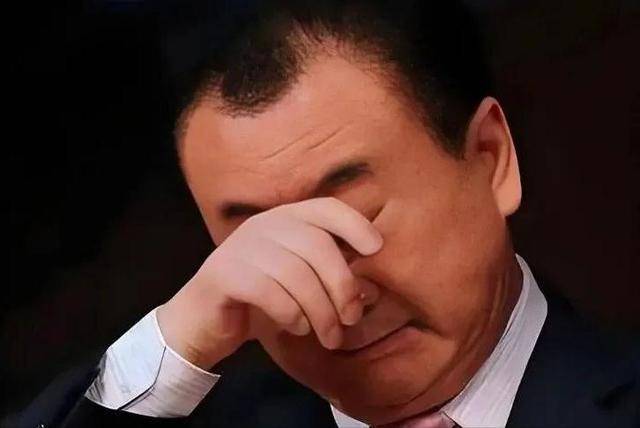
首付到老赖,一年蒸发820亿,还被万科告上法庭,王健林能翻身吗
Sou Hu Cai Jing· 2025-10-21 09:45
Core Viewpoint - Wang Jianlin's financial struggles are highlighted, with significant debt and cash flow issues leading to a series of asset sales and legal disputes with former allies [1][5][26]. Group 1: Financial Crisis - Wang Jianlin's family wealth has evaporated by over 800 billion, and his ranking has dropped significantly due to financial mismanagement and failed investments [6][8]. - The crisis began with two major bets on the company's public listing, which ultimately failed, leading to immense buyback pressures [8][9]. - In 2021, a new strategic investment was made to alleviate the pressure, but it resulted in a loss of control over key assets [11][15]. Group 2: Asset Sales - Wang Jianlin initiated a large-scale asset sale to address debt, including nearly 100 Wanda Plazas, with significant transactions involving major companies like Tencent and JD [19][21]. - Despite these sales, the financial situation did not improve as many transactions were completed as debt offsets rather than generating new cash flow [24]. Group 3: Legal Disputes - Vanke has filed a lawsuit against Wanda, marking a significant shift from their previous partnership, which has further damaged Wang Jianlin's reputation [3][30]. - The lawsuit stems from a previous collaboration that has now turned contentious, with Vanke seeking repayment for investments made [28][30]. Group 4: Reputation and Future Prospects - The ongoing financial and legal troubles have severely impacted Wang Jianlin's business reputation, making it difficult to pursue new ventures [26][34]. - Despite attempts to pivot towards a "light asset" model in the cultural tourism sector, progress has been slow, and trust in his leadership has diminished [32][34].

分红超210亿却背债百亿?海澜之家冲刺港股,库存百亿现金吃紧
Zheng Quan Shi Bao· 2025-10-20 22:53
Core Viewpoint - HLA's financial challenges are growing, with stagnant revenue, high inventory, and cash flow issues overshadowing its ambitions for a secondary listing in Hong Kong [1][2][31]. Group 1: Financial Performance - HLA's revenue has shown alternating patterns of slight increases and declines, with a 1.73% increase in H1 2025 but a 3.1% drop in net profit [1][7][32]. - The company's main brand revenue has been declining, while group buying and other brand revenues are small and costly, with overseas revenue accounting for less than 2% [1][2][14]. - HLA's inventory reached 10.255 billion yuan in H1 2025, representing 57.83% of net assets, with a turnover period of 323 days [1][16][19]. Group 2: Cash Flow and Debt - HLA's cash reserves plummeted by 42.91% in 2024, with operating cash flow decreasing by 55.7%, leading to over 10 billion yuan in short-term debt [1][21][22]. - By H1 2025, accounts payable exceeded cash reserves, indicating a tight cash flow situation [22][23]. - Despite cash flow pressures, HLA maintained high dividend payouts, totaling 6.516 billion yuan over three years, raising concerns about the sustainability of this strategy [24][25][26]. Group 3: Business Model and Market Position - HLA's unique financial model, which relies on delayed payments to suppliers and franchisee ownership, is facing challenges as market saturation increases [27][28]. - The company has been transitioning towards a more diversified brand strategy, including a focus on family-oriented products and international partnerships [11][29]. - HLA's market share in the men's clothing sector remains at 4.7%, but its revenue from the main brand is declining, with a significant drop in sales from core products [4][14][30]. Group 4: Future Prospects - HLA's upcoming secondary listing in Hong Kong aims to enhance its international brand image and diversify capital operations, but financial instability may hinder investor confidence [2][31][32]. - The company is exploring global expansion, with recent growth in overseas revenue, but the overall impact remains limited [32].

分红超210亿却背债百亿?85后清华少帅掌舵,江阴男装龙头冲刺港股,库存百亿现金吃紧
券商中国· 2025-10-20 15:28
Core Viewpoint - HLA Home has cumulatively distributed over 21 billion yuan in dividends since its A-share listing, but its financial statements reveal increasing cracks, including stagnant revenue growth and declining net profits, raising concerns about its upcoming Hong Kong listing [1][4][52]. Group 1: Financial Performance - HLA Home's revenue has alternated between slight increases and declines over the years, with a 1.73% increase in the first half of 2025, but a 3.1% decrease in net profit [1][11][12]. - The company's main brand revenue has been declining, and overseas revenue accounts for less than 2% of total revenue [1][2]. - The company has faced significant inventory issues, with inventory reaching 10.255 billion yuan in the first half of 2025, accounting for 57.83% of net assets and a turnover period of 323 days [2][24]. Group 2: Cash Flow and Debt - HLA Home's cash flow has been under pressure, with a 42.91% drop in monetary funds in 2024 and a 55.7% decrease in operating cash flow [2][28]. - The company has over 10 billion yuan in short-term debt, and its accounts payable exceed its cash reserves, indicating a tight cash flow situation [2][29]. - Despite these challenges, HLA Home has maintained high dividend payouts, distributing 6.516 billion yuan in cash dividends over the last three years, which raises concerns about the sustainability of this strategy amid declining profits [30][31]. Group 3: Business Model and Market Position - HLA Home's unique business model, which relies on a "light asset" and "quasi-financial" approach, has been instrumental in its rapid growth but is now facing challenges as market conditions change [39][41]. - The company has shifted its strategy under new leadership to focus on brand modernization and expanding its product range, including women's and children's clothing [14][47]. - However, the core brand's revenue continues to decline, with a 7.22% drop in 2024, and the company is increasingly reliant on its group purchasing and other brands for revenue growth [16][50]. Group 4: Market Challenges - HLA Home's inventory issues are exacerbated by a high percentage of unsold goods, with over 46.9 billion yuan of inventory aged over one year, leading to potential write-downs [27][21]. - The company's sales expenses have increased significantly, while R&D spending remains low, indicating a potential imbalance in investment priorities [48][50]. - The upcoming Hong Kong listing aims to enhance capital and international presence, but fundamental issues such as product competitiveness and supply chain stability remain unresolved [53][52].

8城办公租金同比跌15.7%,英格卡携“商业+办公”模式入局上海
Sou Hu Cai Jing· 2025-10-15 12:06
Core Insights - The report from the Opinion Index Research Institute highlights a trend of deep binding between office space service brands and property owners, indicating a shift in the market dynamics [2] Investment and Sales Trends - From January to August 2025, the total investment and sales of office buildings in China were 230.1 billion yuan and 177.6 billion yuan, respectively, showing year-on-year declines of 17.8% and 7.9% [2] - The investment and sales of office buildings have shown a continuous downward trend for several months, reflecting a persistent lack of confidence among developers and cautious demand from enterprises [2] - The new construction area of office buildings decreased by 21.9% year-on-year, while the completed area increased by 9.3%, indicating a short-term inventory pressure in the market [2] Rental Market Performance - In August 2025, the average rental price for office buildings in eight key cities was 2.52 yuan per square meter per day, down 6.9% month-on-month and 15.7% year-on-year [5][6] - The rental prices have been declining for six consecutive months, with significant pressure on the rental market due to weak demand from enterprises [6] - Shanghai was the only city to see a rental price increase, with a month-on-month growth of 5.07% to 3.73 yuan per square meter per day, driven by resilient demand from the financial and professional services sectors [6] Market Segmentation and Trends - The office rental market is experiencing a divergence among cities, with some cities like Guangzhou and Wuhan seeing rental declines exceeding 10% [7] - The demand from small and medium-sized enterprises (SMEs) is closely linked to the office space service market, with the SME Development Index showing a slight increase, indicating some resilience in the sector [9][10] Company Performance and Strategies - IWG Group reported a total revenue of 2.2 billion USD in the first half of 2025, a 2% year-on-year increase, with a notable growth in its light-asset model [18] - The number of IWG's global office centers grew to 4,260, with over 1 million offices, reflecting the effectiveness of its light-asset strategy [19] - Creative Port reported a slight decline in revenue to 384 million yuan, but improved profitability due to cost control and closure of unprofitable locations [19][21] New Market Entrants - The launch of Hej!Workshop by the Ingka Group in Shanghai represents a new entrant in the office space sector, focusing on flexible office solutions and leveraging commercial synergies [16][17]
一脉阳光(2522.HK):轻资产模式驱动业绩增长 数据资产与出海开启新成长曲线
Ge Long Hui· 2025-10-14 04:31
Core Viewpoint - The company is expected to achieve steady growth in H1 2025, driven by its light-asset, modular imaging solution service model, which is anticipated to increase revenue and customer numbers [1][3] Financial Performance - In H1 2025, the company reported revenue of 467 million yuan, a year-on-year increase of 12.9%, and a net profit attributable to shareholders of 16.44 million yuan, a year-on-year increase of 328.6% [1][2] - The adjusted EBITDA after deducting non-recurring items was 135 million yuan, reflecting an 18.7% year-on-year growth [1] Business Segmentation - Imaging center service revenue was 300 million yuan, down 6.1% year-on-year, primarily due to macroeconomic fluctuations and stricter medical industry regulations [2] - Imaging solution revenue reached 161 million yuan, up 88.9% year-on-year, attributed to a significant increase in customer numbers [2] - OneCloud service revenue was 65 million yuan, down 31.9% year-on-year, mainly due to a decrease in one-time software sales [2] Strategic Initiatives - The company has implemented a "one certificate, multiple sites" model to facilitate efficient expansion through regional shared sub-centers [2] - In June, the company completed the acquisition of 70% of Gaomai Health, enhancing its capabilities in nuclear medicine [2] - As of June 30, 2025, the company had 11 imaging centers under construction, expected to begin operations in the second half of the year [2] Market Expansion - The company has successfully adopted a light-asset modular product strategy, lowering customer entry barriers and adding 354 new clients during the reporting period [3] - The company has signed 15 project contracts in overseas markets, marking significant progress in its international expansion [3] Data and AI Development - The company is advancing its data and AI initiatives, establishing a complete "data-algorithm-scenario" ecosystem [3] - The launch of the "CT chest lesion annotation data" product on the Shanghai Data Exchange signifies a transition of data from "resource" to "asset" [3] - Strategic partnerships with industry leaders like iFlytek Medical and Huawei Cloud are being formed to develop smart medical solutions [3] Outlook - The company anticipates continued revenue improvement in H2 2025, supported by the operation of new imaging centers and the light-asset model [3] - The OneCloud platform, along with policies for imaging result recognition and cloud indexing, is expected to enhance operational efficiency and synergy [3] Profitability and Cost Management - The gross margin for H1 2025 was 29.4%, a decrease of 9.2 percentage points year-on-year, due to increased competition and regulatory changes [4] - Effective cost control measures led to a reduction in sales expenses by 18.42% and administrative expenses by 32.50% [4][5] - The net cash flow from operating activities increased by 172.6% to 93.02 million yuan, attributed to improved management of receivables [5] Profit Forecast and Valuation - Short-term revenue growth is expected to be driven by the rapid expansion of light-asset imaging solutions and new imaging centers [5] - Long-term growth is anticipated through the synergistic effects of the company's three main business segments, supported by AI technology [5] - Revenue projections for 2025-2027 are 1.005 billion, 1.241 billion, and 1.494 billion yuan, with corresponding net profit estimates of 33 million, 79 million, and 122 million yuan [5]
华大智造“IP出海”获1.2亿美元,自有CoolMPS测序技术授权瑞士生物公司
Zhi Tong Cai Jing· 2025-10-12 09:45
Core Viewpoint - The strategic technology licensing agreement between BGI Genomics and Swiss Rockets AG marks a significant step in BGI's globalization strategy, allowing the company to maximize the value of its CoolMPS sequencing technology while maintaining control over its core markets in Greater China and the Asia-Pacific region [1][2][3] Financial Arrangement - The agreement includes a total of at least $120 million in upfront payments, milestone payments, and a tiered revenue-sharing model based on net sales during the agreement period [1][2] - Swiss Rockets will pay a one-time upfront fee of $20 million and an additional $20 million in milestone payments, providing BGI with $40 million in guaranteed revenue that will improve cash flow without incurring R&D and commercialization costs in the European and American markets [2][5] Strategic Implications - The licensing agreement allows BGI to leverage Swiss Rockets' local advantages to bypass the challenges of independently entering the European and American markets, such as channel development and regulatory compliance, thus achieving global market penetration more efficiently [3][4] - BGI's strategy focuses on core technologies and assets while optimizing resource allocation by licensing out non-core technologies like CoolMPS, which complements its main product line [3][6] Market Context - Swiss Rockets is an innovative enterprise with several leading biotech companies under its umbrella, demonstrating significant progress in clinical research and commercial partnerships [4] - The transaction reflects a broader industry trend where Chinese life science companies are shifting from "product output" to "technology output," indicating a maturation of the sector [6] Valuation and Market Potential - An independent valuation report assessed the intangible assets related to CoolMPS at approximately $10.63 million, with North America and Europe accounting for $5.14 million and $2.58 million, respectively, supporting the pricing of the licensing agreement [6] - The licensing agreement is expected to positively impact BGI's future performance and enhance its global commercialization and profitability capabilities [6]

博菲电气(001255)股权转让实现“三重利好”
Zhong Jin Zai Xian· 2025-10-10 09:17
Core Viewpoint - The announcement of the sale of 100% equity in Zhejiang Bofei New Energy Technology Co., Ltd. by Bofei Electric is a strategic move aimed at optimizing business operations and ensuring continuity in its photovoltaic composite materials project [2][4]. Group 1: Transaction Details - Bofei Electric sold its wholly-owned subsidiary for a transaction price of RMB 38,522,517.26 [2]. - The sale is not merely an asset disposal but a strategic layout for business continuity and optimization [2]. Group 2: Operational Continuity - After the transaction, Bofei Green Energy, a subsidiary, will lease the facilities from Bofei New Energy to continue operating the photovoltaic composite materials project, ensuring seamless production and stability [3]. - This arrangement helps avoid risks associated with project relocation or restart, maintaining production quality and operational continuity [3]. Group 3: Financial Impact - The transaction is expected to positively impact Bofei Electric's net profit for 2025, with the sale price significantly exceeding the audited equity of Bofei New Energy [5]. - The assessed value of the subsidiary's equity shows a substantial increase, with a growth rate of 103.32%, which will contribute to the company's investment income and enhance annual net profit [5][6]. Group 4: Financial Structure Improvement - Post-transaction, the overall asset-liability ratio of Bofei Electric is expected to decrease, alleviating financial leverage pressure [7]. - The high liabilities of Bofei New Energy will be removed from the consolidated financial statements, leading to a dual financial improvement of reduced liabilities and increased cash flow [7].

暴跌19%,曾击败耐克的“神鞋”天塌了!
商业洞察· 2025-10-06 10:00
Core Viewpoint - The 19% revenue decline in the 2024 financial report of Li-Ning Group highlights the significant challenges faced by Reebok in the Chinese market, marking a critical point in its journey [3]. Group 1: Historical Context and Brand Evolution - Reebok, once a dominant player in the fitness market with a revenue of $1.4 billion in 1987, has seen its sales plummet, now earning less than Nike's sales in the first hour of the Tmall 618 shopping festival [3]. - The brand's rise in the 1990s was fueled by successful products like the Freestyle aerobics shoe, which helped it achieve $2.7 billion in sales by 1991 [7]. - Reebok's decline began with strategic missteps, including a focus on products under $90, missing the trend of sneakers as status symbols [8]. Group 2: Acquisition and Strategic Errors - Adidas acquired Reebok for $3.8 billion in 2006, intending to leverage its basketball resources against Nike, but this move is now seen as a significant miscalculation [10]. - Post-acquisition, Reebok lost its exclusive NBA resources and faced challenges in brand positioning, leading to a 44% drop in sales in Q2 2020 and a market value reduction to $1 billion [11]. Group 3: Current Challenges and Business Model - After being sold to Authentic Brands Group (ABG), Reebok fell into a "light asset trap," where operational control was handed over to Li-Ning Group, limiting brand management and quality control [12]. - ABG's strategy of "centralized strategy, decentralized execution" has proven problematic, as the Chinese sports market has shifted towards precise segmentation, with competitors like Li-Ning and Anta investing heavily in localized operations [13]. - Reebok's reliance on shared resources from Li-Ning has resulted in longer product development cycles and insufficient marketing budgets compared to Nike [13]. Group 4: Future Outlook and Lessons - The narrative of Reebok serves as a cautionary tale for brands, emphasizing the difficulty of maintaining relevance without a robust core capability to adapt to changing consumer demands [15]. - Despite ABG's claims of growth opportunities in the Asia-Pacific market, the 19% revenue decline signals underlying issues that need addressing [18]. - Potential acquisition rumors by Anta could represent a last chance for Reebok to revitalize its brand, provided it avoids repeating past mistakes [18].

王健林被“限高”又取消 商业大佬如何面对人生低谷
Mei Ri Jing Ji Xin Wen· 2025-09-29 14:07
Core Insights - Wang Jianlin, due to a 186 million yuan enforcement case related to Wanda's cultural tourism project, was issued a high consumption restriction order, which was later rescinded, highlighting the challenges faced by the real estate industry in China [1] - The rapid expansion model characterized by "high leverage, high turnover, and high returns" is becoming obsolete, as evidenced by Wanda Group's current enforcement cases totaling 5.262 billion yuan and over 70 billion yuan in total enforcement amounts across its subsidiaries [1][2] - Wang Jianlin's strategy of asset sales reflects a significant shift in the company's focus from diversification to a streamlined model centered on commercial management and cultural tourism [2] Company Actions - Since the beginning of 2023, Wanda has sold over 85 Wanda Plazas, including a significant sale of 48 plazas to a consortium of institutions in May 2025 [2] - Wang Jianlin has divested from various overseas assets, including stakes in Legendary Entertainment and a yacht company, indicating a strategic retreat from high-risk investments [2] - The company has not applied for debt restructuring, opting instead for asset sales to maintain creditworthiness, which has concentrated pressure on achieving quick and profitable sales [2][3] Industry Context - Wang Jianlin is recognized as an early adopter of the shift from heavy asset investment to a lighter asset model, aiming to reduce operational risks and restructure the business model [2] - The ongoing debt repayment journey of Wang Jianlin is seen as a reflection of the broader industry challenges, where even prominent figures must navigate significant pressures [3][4] - The resilience demonstrated by Wang Jianlin in seeking new investment opportunities amidst industry downturns is noted as a testament to entrepreneurial spirit and commitment [3][4]