
量化宽松政策

Search documents
贵金属专家交流
2025-09-28 14:57
Summary of Key Points from the Conference Call Industry Overview - The silver market possesses dual attributes as both an industrial and precious metal, with over 60% of its demand stemming from industrial uses, particularly in the photovoltaic (PV) sector [2][4][8] - The development of the PV industry significantly impacts silver demand, necessitating close attention to applications in PV and conductive materials, as well as macroeconomic factors like central bank policies and the dollar's performance [2][4] Core Insights and Arguments - Despite recent increases in silver prices, investor sentiment remains disappointed due to silver's higher short-term volatility compared to gold and a slowdown in PV demand growth, which raises concerns about future price trajectories [2][8] - The price relationship between silver and gold remains fundamentally unchanged, indicating a strong correlation where silver has not diverged from gold's trends [2][9] - Historical patterns suggest that surges in silver prices often signal the end of a precious metals bull market and a potential hard landing for the U.S. economy, which could lead to rapid price increases following quantitative easing by the Federal Reserve [2][17] - The current market is viewed as being in a "catch-up" phase, where silver prices are expected to rise alongside a continuing gold bull market, albeit at a slower pace than during a full bull run [2][18] Important but Overlooked Content - The silver market has shown an upward trend despite not meeting the high expectations set for it, particularly in the context of the ongoing gold bull market, which has seen gold prices approach $3,500 [6][12] - The interplay between silver and gold prices is influenced by broader economic conditions, including the potential for a hard landing in the U.S. economy and subsequent monetary policy responses [10][21] - The demand for silver in industrial applications, especially in the PV sector, is critical for its price outlook, and any shortfall in this demand could adversely affect silver prices [10][32] - The concept of "hidden inventory" in the silver market complicates price predictions, as fluctuations in this inventory do not always correlate directly with market prices [29][31] Future Outlook - The future trajectory of silver prices will depend on multiple factors, including the development of the PV industry, global macroeconomic conditions, and the dynamics of related precious metals markets like gold and platinum [7][21] - The potential for a hard landing in the U.S. economy remains a key factor that could trigger significant price movements in silver, similar to past market behaviors [13][14] - Investors are advised to focus on the overall trend in precious metals rather than short-term fluctuations, as the long-term outlook remains positive amid ongoing gold market strength [20][22]
日本央行会议纪要:内部加息阵营隐现裂痕 中性利率论争浮出水面
Xin Hua Cai Jing· 2025-09-25 09:28
Core Viewpoint - The Bank of Japan (BOJ) maintains a cautious yet optimistic stance on the current economic and inflation situation, with notable internal disagreements on the pace of monetary policy normalization [1][4]. Monetary Policy Decisions - The BOJ decided to keep the benchmark interest rate unchanged at 0.5% for the fifth consecutive meeting, aligning with market expectations [1]. - The BOJ unanimously approved the initiation of selling its holdings of Exchange-Traded Funds (ETFs) and Japanese Real Estate Investment Trusts (J-REITs), with the sale scale expected to be roughly equivalent to the amount of stocks purchased from financial institutions [1]. Inflation Dynamics - Inflation is primarily driven by rising food prices, with core inflation expected to remain weak; current core inflation is estimated to be between 1.5% and 2.5% [2]. - Despite a recent consumer price index increase of 2.5% to 3.0%, policymakers believe this rise lacks sustainability, and core inflation may revert to lower levels once food price shocks dissipate [2]. Interest Rate Hikes - There is a growing call for interest rate hikes, with two members advocating for an immediate increase to 0.75%, citing that the current policy rate is below neutral levels and that the output gap is closing [3][4]. - Some members emphasize the importance of timely rate hikes from a risk management perspective, suggesting that the technical preparations for a policy shift are in place [3]. External Economic Influences - The external environment, particularly U.S. tariff policies, is a significant concern for BOJ members, with worries about indirect impacts on export industries [5]. - While some members view the U.S.-Japan trade agreement as a stabilizing factor, there are warnings about the potential negative effects of U.S. tariff policies on Japanese exports and production [5]. Asset Management Strategies - The focus is shifting towards optimizing the asset structure on the balance sheet, with calls for a "market impact neutral" asset portfolio [6]. - There are concerns that reducing the balance sheet to pre-financial crisis levels could impair short-term interest rate control, indicating a cautious approach to exiting unconventional monetary policies [6]. Gradual Adjustment Path - The majority of members advocate for a cautious approach, emphasizing the need to monitor key variables such as U.S. monetary policy shifts and the impact of declining corporate profits on wage negotiations [7]. - The BOJ's baseline scenario remains unchanged, indicating a temporary stagnation in economic growth and core inflation improvement, while some members propose decisive adjustments if inflation continues to exceed targets [7].
Gold Is A $4T Liquidity Sponge: BTC USD Fair Value At $250,000
Yahoo Finance· 2025-09-25 08:18
Core Insights - The current market dynamics are heavily influenced by fear, leading to a significant influx of capital into safe-haven assets such as gold, bonds, high-quality equities, and cryptocurrencies [1][2]. Gold Market - Gold prices have shown a remarkable upward trend, increasing nearly +45% over the past ten months, from approximately $2,640 in late 2024 to a peak of $3,824 [2]. - The total market capitalization of gold has inflated by nearly $4 trillion recently, now exceeding $25.2 trillion, reflecting a substantial capital shift into this asset [4]. - This surge in gold's market cap indicates its role as a liquidity sponge, suggesting that institutional investors are preparing for potential economic turbulence [4]. Cryptocurrency Market - Despite the significant rise in gold, Bitcoin has maintained a steady position above $110,000, rebounding from a sharp dip on September 22 [2]. - Analysts remain optimistic about Bitcoin's potential, with predictions suggesting it could surge above $200,000, with a fair value estimated at $250,000 [5]. - The expanding global money supply, with M2 growing nearly +9% over the past year, positions Bitcoin as a prime beneficiary of this liquidity influx [6].
特朗普连收两个坏消息,日本在暗中做手脚,美联储事关降息新动作
Sou Hu Cai Jing· 2025-09-24 10:41
Group 1 - The Federal Reserve has indicated that there is currently no strong reason to further cut interest rates, with only one expected cut in 2025 [1] - The Bank of Japan's decision to gradually reduce its massive asset portfolio has raised significant concerns on Wall Street, signaling potential disruptions to the global financial system [3][5] - Japan's quantitative easing policy has historically provided crucial liquidity support to the U.S. financial markets, and any shift in this strategy could impact U.S. financial stability [5][7] Group 2 - The strengthening of the yen could severely impact carry trade strategies that rely on a weak yen, potentially leading to significant shifts in international capital flows [9] - The internal divisions within the Federal Reserve, with differing opinions on interest rate cuts, create uncertainty regarding U.S. monetary policy amidst external pressures [9][15] - The ongoing divergence in monetary policies between the U.S. and Japan is creating a complex situation that could fundamentally reshape capital flows in the Asia-Pacific region and beyond [13][18] Group 3 - The pressure from the Trump administration on the Federal Reserve is undermining the traditional independence of the central bank, which could diminish the credibility of its policies [15] - The recent policy adjustments by the Bank of Japan represent a significant challenge to the long-standing financial cooperation model between the U.S. and Japan [16][18] - The evolving global financial landscape, characterized by polarized monetary policies, presents both challenges and opportunities for countries seeking sustainable development paths [20]

刚刚!“黑天鹅”突袭!崩了
Sou Hu Cai Jing· 2025-09-19 13:59
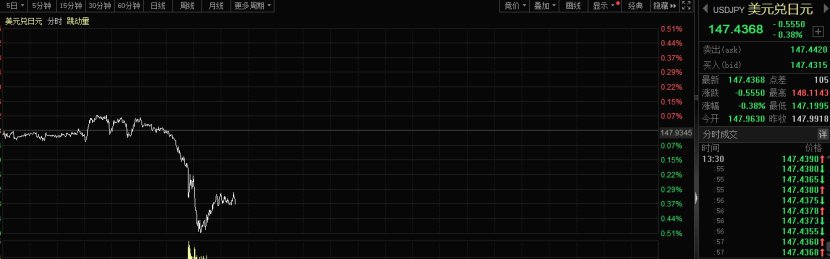
Core Viewpoint - The Japanese yen strengthened significantly on September 19, leading to a sharp decline in the Japanese stock market and a ripple effect across Asian markets, driven by the Bank of Japan's decision to begin selling its holdings of domestic exchange-traded funds [1][2]. Group 1: Bank of Japan's Policy Decision - The Bank of Japan maintained its benchmark interest rate at 0.5%, marking the fifth consecutive meeting without change, which was in line with market expectations [2]. - The announcement of gradually selling off its holdings in domestic exchange-traded funds caused market turbulence, with the Nikkei index dropping by 1.6% [2]. - Analysts interpret this move as a significant step away from the ultra-loose monetary policy of the Abe administration, indicating a potential tightening of policy [5]. Group 2: Economic Indicators and Market Reactions - Despite some signs of weakness, the Japanese economy is described as being on a path of moderate recovery, with stable private consumption and moderate growth in capital expenditure [5]. - A media survey indicated that most observers expect the Bank of Japan to raise the benchmark interest rate by January next year, with a 58% probability of a rate hike by the end of the year [5]. - The strengthening of the yen is expected to impact various markets, particularly through the reversal of carry trade positions, which could lead to significant market adjustments [5][6]. Group 3: Historical Context and Future Implications - Historical data shows that reversals in yen carry trade have occurred in specific periods, leading to yen appreciation and pressure on equity and commodity markets [6]. - Current carry trade volumes in yen are significantly lower than historical highs, suggesting a reduced scale of arbitrage trading due to narrowing interest rate differentials between the US and Japan [6].
日本飞出“黑天鹅”,影响有多大?
Zheng Quan Shi Bao· 2025-09-19 08:14
Group 1 - The Bank of Japan (BOJ) has decided to gradually start selling its holdings of domestic exchange-traded funds (ETFs), indicating a tightening of monetary policy despite maintaining the policy interest rate at 0.5% for the fifth consecutive meeting [3][6] - Following the BOJ's announcement, the Japanese yen strengthened significantly, leading to a drop in the Nikkei index by 1.6% and causing a ripple effect across Asian markets, including declines in the Hang Seng Tech Index and South Korean stock indices [1][3][4] - Analysts suggest that the BOJ's move marks a significant step away from the ultra-loose monetary policies of the Abe administration, potentially signaling an interest rate hike in October [6][8] Group 2 - The BOJ's hawkish stance has led to expectations of a potential interest rate increase, with a survey indicating that most observers anticipate a rate hike before January next year, and market expectations of a 58% chance of a rate increase by the end of the year [6][9] - The normalization of monetary policy, including interest rate hikes and balance sheet reduction, is expected to exert upward pressure on the yen, which could lead to the unwinding of carry trade positions [8][9] - Historical data shows that past reversals of yen-funded carry trades have led to yen appreciation, declines in U.S. Treasury yields, and upward pressure on gold prices, while putting pressure on equity and commodity markets [8][9]

美国非农数据爆冷,现货金价冲击3600美元
Sou Hu Cai Jing· 2025-09-06 08:34
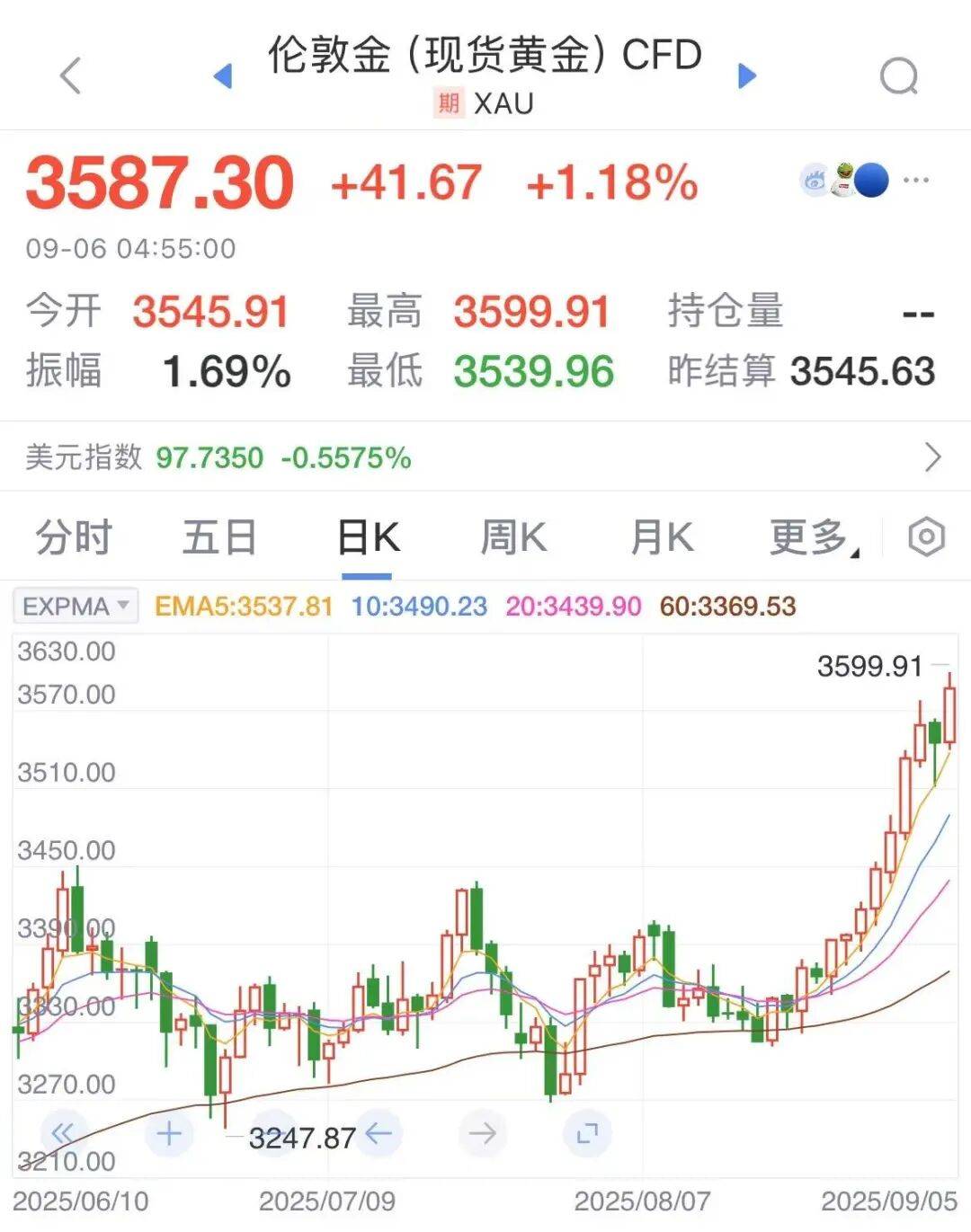
Group 1 - The core point of the article highlights the disappointing U.S. employment data for August, with non-farm payrolls increasing by only 22,000, significantly below expectations, and the unemployment rate rising to 4.3%, the highest level since 2021 [1] - The unexpected employment data has increased market expectations for the Federal Reserve to cut interest rates in September and potentially more cuts throughout the year [1] - Following the employment report, there was a notable influx of capital into the gold market, pushing the London spot gold price to around $3,600 per ounce, marking the first time it reached this level [1] Group 2 - The non-farm data serves as a significant bullish stimulus for the gold market, which has been in a bullish trend since August 26, coinciding with Fed Chair Powell's dovish remarks at the Jackson Hole global central banking conference [3] - Following Powell's speech, subsequent U.S. economic data has supported expectations for a new round of quantitative easing, and the largest gold ETF has seen continuous inflows [3] - Geopolitical developments, including the ongoing Russia-Ukraine conflict, complex Middle East situations, and U.S. military deployments in Latin America, are providing additional support for gold bulls [3] Group 3 - Technically, international gold prices have experienced a four-month consolidation since April, successfully breaking through the previous historical high of $3,500 per ounce, indicating the start of a new upward trend [5] - Market sentiment has shifted from divergence to a consensus bullish outlook, with potential targets for gold prices projected to reach around $3,733 per ounce, and possibly even $4,000 per ounce [5] - The current phase of international gold prices is seen as the early stage of a new bullish trend, suggesting a need to align with market movements to mitigate risks [5]
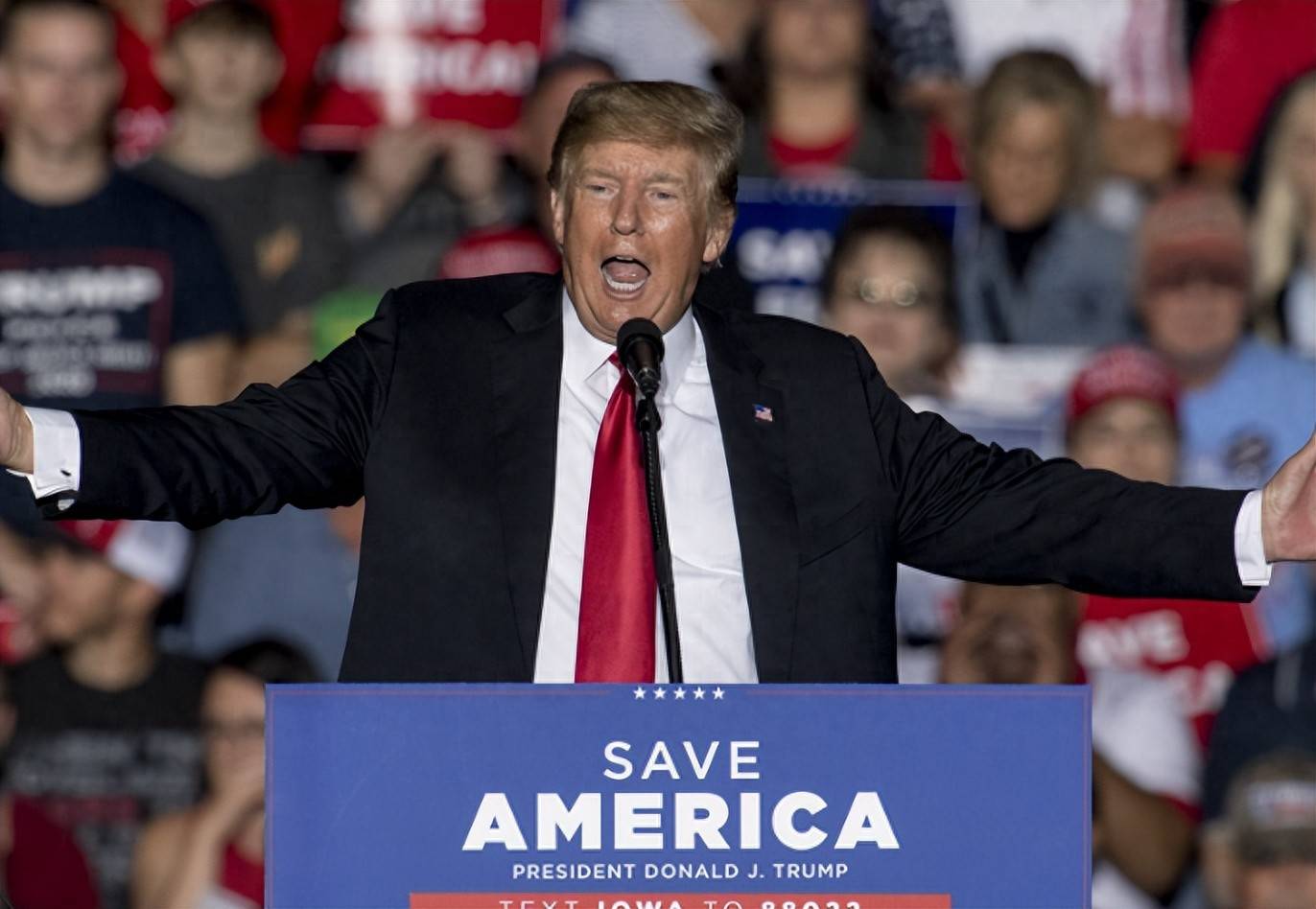
桥水基金达利欧:美国有两件事情如发生将是巨大警示讯号!一是实现新一轮的量化宽松政策,二是美国政府获得对美联储的控制权
Sou Hu Cai Jing· 2025-09-05 07:42
Core Insights - Ray Dalio, founder of Bridgewater Associates, indicates that the long-term debt cycle that began in 1945 is nearing its end, with the U.S. on the brink of significant conflict and transformation [1][3] - Dalio warns that the U.S. government's debt supply and demand situation is deteriorating like cancer, posing substantial risks to the actual value of U.S. currency and debt [1][3] Economic Conditions - Current economic indicators such as growth, inflation, real interest rates, and central bank debt monetization suggest that the U.S. economy appears to be in a favorable equilibrium, misleading observers into thinking everything is on track [3] - However, Dalio believes that the reality is much graver, as the U.S. government’s debt situation is worsening significantly [3] Stages of Economic Decline - Dalio identifies that the U.S. is in a dangerous "fifth stage" of an internal cycle, characterized by deteriorating fiscal conditions that could lead to class conflict [3] - He predicts that the U.S. and the world are approaching a "sixth stage" of chaos, typically associated with revolutions or civil wars, due to excessive debt and low governance efficiency [3] - Dalio forecasts that chaos in the U.S. is almost certain to occur within the next 5 to 10 years [3]

桥水基金创始人达利欧:美国正身处极具危险性的“第五阶段”
Huan Qiu Wang· 2025-09-05 00:56
Core Insights - Ray Dalio, founder of Bridgewater Associates, emphasizes that the U.S. is entering a critical phase of its long-term debt cycle, which he believes is nearing its end, leading to significant conflict and transformation [1][3] - Dalio identifies two alarming signals for the U.S. economy: the implementation of a new round of quantitative easing and the government gaining control over the Federal Reserve, indicating a deteriorating debt situation [2][3] - He outlines a six-stage internal cycle for nations, with the U.S. currently in the dangerous fifth stage, characterized by worsening fiscal conditions and potential class conflict [3][4] Economic Conditions - The U.S. government currently spends approximately $7 trillion annually while generating $5 trillion in revenue, resulting in a 40% budget deficit, which is rapidly increasing the national debt [5][6] - Dalio suggests that reducing the budget deficit to around 3% of GDP is essential to mitigate bankruptcy risks, as the current deficit is projected to be 6.4% of GDP for the fiscal year 2024 [6] Global Perspectives - Dalio highlights China's remarkable achievements over the past 40 years, including a 20-fold increase in per capita income and a poverty rate below 1%, viewing these as some of the greatest accomplishments in human history [7] - He predicts that the next 5 to 10 years will be a period of significant change for major global orders, emphasizing the importance of education, a conducive domestic environment, and avoiding external conflicts for national strength [8] Technological Impact - Dalio expresses optimism about the transformative potential of artificial intelligence (AI) across various sectors, predicting substantial advancements in the next five years [9] - However, he remains skeptical about AI's ability to delay the next global debt crisis, citing historical patterns where technological advancements are often hindered by heavy debt burdens and political strife [9]
美国桥水基金创始人瑞·达利欧:美国正身处极具危险性的“第五阶段”
Huan Qiu Wang· 2025-09-04 23:00
Group 1 - Ray Dalio emphasizes that the current U.S. debt situation is deteriorating, likening it to cancer, and warns of potential significant risks to the economy [1][2][3] - Dalio identifies two critical warning signs for the U.S. economy: the implementation of a new round of quantitative easing and the government gaining control over the Federal Reserve [2][3] - The U.S. is believed to be in a dangerous "fifth stage" of its internal cycle, characterized by worsening fiscal conditions and potential class conflict, leading to a "sixth stage" of chaos [3][4] Group 2 - Dalio suggests that the best way to reduce the risk of U.S. government bankruptcy is to cut the budget deficit to around 3% of GDP, as the current deficit is approximately 6.4% of GDP for the 2024 fiscal year [6] - The U.S. government currently spends about $7 trillion annually while generating $5 trillion in revenue, leading to a 40% overspend and rapidly increasing debt [5][6] - Dalio notes that the interest on the debt, which is about $1 trillion annually, consumes a significant portion of government spending, exacerbating the fiscal crisis [6] Group 3 - Dalio highlights China's remarkable achievements over the past 40 years, including a 20-fold increase in per capita income and a poverty rate below 1% [7] - He predicts that the next 5 to 10 years will see significant changes in global order, emphasizing the importance of education, a conducive domestic environment, and avoiding external conflicts for China [8] - Dalio expresses optimism about the potential of artificial intelligence to drive progress across various fields, although he remains skeptical about its ability to delay the next global debt crisis [9][10]