
制度型开放

Search documents
江苏开放型经济不断书写外资活力奔涌新传奇——百年巨头 百亿重仓 百分满意
Xin Hua Ri Bao· 2025-08-13 23:28
Core Viewpoint - Scania's significant investment in Jiangsu, China, reflects confidence in the region's open economic environment and the benefits of recent policy changes for foreign investment [1][4][5]. Group 1: Investment and Expansion - Scania has established its third global industrial production base in Rugao, Jiangsu, with plans to launch its first complete vehicles in Q4 2023 [1]. - The company has committed over 10 billion yuan to various projects, including a powertrain project and a research and development company set to be established in 2024 [1]. - As the first wholly foreign-owned commercial vehicle manufacturer in Jiangsu, Scania has benefited from favorable policies that have expedited project approvals [2]. Group 2: Policy Support and Efficiency - The removal of foreign investment restrictions in 2020 has been pivotal for Scania, allowing for rapid establishment and expansion in the Chinese market [1][2]. - Jiangsu's government has provided substantial support, including tax exemptions on imported equipment and a streamlined approval process that significantly reduces project timelines [2][3]. - The "project service window" in Rugao has enhanced efficiency, allowing for faster inspections and approvals, which has been crucial for Scania's operations [3]. Group 3: Local Supply Chain Development - Scania aims to achieve over 85% localization of its vehicle components, which will help reduce costs and improve delivery times [3]. - The company has established partnerships with 40 local suppliers, with peak annual procurement exceeding 1 billion yuan [3]. - The focus on local sourcing and collaboration with domestic suppliers is expected to enhance Scania's competitive edge in the market [3]. Group 4: Broader Economic Impact - Scania's investment is part of a larger trend, with Jiangsu attracting significant foreign capital, evidenced by a 19.5% share of national foreign investment in the first half of the year [4]. - The province's proactive measures to create a favorable investment environment have led to increased reinvestment from foreign companies, with notable growth in investments from Germany, Luxembourg, and Japan [4][5]. - Jiangsu's commitment to open policies and support for foreign enterprises is seen as a catalyst for sustainable high-quality economic development [6].
百年巨头 百亿重仓 百分满意
Xin Hua Ri Bao· 2025-08-13 22:56
Core Viewpoint - Scania's significant investment in Jiangsu, China, reflects the company's confidence in the region's open economic environment and the benefits of recent policy changes that facilitate foreign investment [1][4]. Group 1: Investment and Expansion - Scania is establishing its third global industrial production base in Rugao, Jiangsu, with plans to roll out its first complete vehicles in Q4 2023 [1]. - The company has committed over 10 billion yuan to enhance its operations in Jiangsu, including a powertrain project and the establishment of a research and development center in 2024 [1][4]. - As the first wholly foreign-owned commercial vehicle manufacturer in Jiangsu, Scania has benefited from favorable policies that expedite project approvals and reduce costs [2][4]. Group 2: Policy and Government Support - The removal of foreign ownership limits in 2020 has been pivotal for foreign companies like Scania, allowing them to enter and invest in the Chinese market more effectively [1][2]. - Jiangsu's government has implemented supportive measures, such as tax exemptions on imported equipment for R&D centers, which have encouraged Scania to reinvest in technology development [2][5]. - A dedicated project service team has streamlined the approval process for Scania, significantly reducing the time required for facility inspections and registrations [3]. Group 3: Local Supply Chain Development - Scania aims to achieve over 85% localization of its vehicle components by collaborating with local suppliers, which will help reduce costs and improve delivery times [3]. - The company has already established partnerships with 40 local suppliers, with peak annual procurement exceeding 1 billion yuan [3]. - The strategy of localizing parts production is expected to enhance Scania's competitiveness in the Asian market, particularly as it plans to export "Jiangsu-made" commercial vehicles to Southeast Asia and Japan [4]. Group 4: Economic Impact and Future Outlook - Jiangsu has attracted significant foreign investment, with actual foreign capital usage reaching $11.54 billion in the first half of the year, accounting for 19.5% of the national total [4]. - The province's proactive measures to create a favorable investment environment have led to a notable increase in reinvestment from foreign enterprises, with profits reinvested rising by 5.9% year-on-year [4][5]. - The ongoing efforts to enhance the open economy in Jiangsu are expected to sustain high-quality development and attract more global capital [5].
沪深股指连拉阳线凸显中国资产价值
Guo Ji Jin Rong Bao· 2025-08-13 13:16
Group 1 - The stock indices in Shanghai and Shenzhen have been rising since August, with trading volumes frequently surpassing 1 trillion yuan, indicating a robust market driven by multiple interwoven factors rather than just short-term sentiment [1] - The macroeconomic policies have been strengthened this year, fostering a positive interaction between an effective market and a proactive government, leading to significant growth in high-tech manufacturing investments and exports in sectors like new energy vehicles and lithium batteries [1] - The capital market is not merely a passive reflection of the economy but actively influences it through institutional innovations, such as allowing unprofitable hard-tech companies to list on the Sci-Tech Innovation Board [1] Group 2 - Amid rising unilateralism and protectionism globally, investors are increasingly valuing certainty and growth potential, with China’s complete industrial system and large market providing a rare combination of low volatility and medium-high returns for international investors [2] - The trend of international capital flowing into Chinese A-shares, including sovereign wealth funds and pension funds, reflects a "flight to quality" as investors seek safer and more stable assets during times of uncertainty [2] Group 3 - The concept of "common prosperity" is being realized through financial supply-side structural reforms, with a growing demand for quality equity assets among both high-net-worth individuals and small to medium investors, facilitated by reforms in the Sci-Tech Innovation Board and the establishment of new investment products [3] - The capital market is increasingly becoming a platform for the public to share in economic growth, breaking the old pattern of capital monopoly and allowing ordinary workers to participate in value distribution through equity and funds [3] Group 4 - China's capital market is undergoing steady institutional opening, with initiatives like the Shanghai-Hong Kong Stock Connect and the Bond Connect, enhancing its global financial integration and stability [4] - The focus on "safe and controllable" and "orderly opening" in China's modernization contrasts with Western views, emphasizing the need for macro-prudential policies to mitigate cyclical fluctuations while pushing for domestic reforms aligned with international standards [4]
上海政法学院师生在14省市开展外商投资法实施评估调研专题调研
Sou Hu Cai Jing· 2025-08-13 07:13
Core Viewpoint - Strengthening the rule of law in foreign-related matters and promoting institutional openness is a crucial reform task in the modernization of China [1] Group 1: Implementation of the Foreign Investment Law - The effectiveness of the implementation of the Foreign Investment Law and related regulations is a fundamental issue as China enters the "14th Five-Year Plan" period [1] - The Law provides facilitative policy measures for foreign investment enterprises and regulates government behavior to ensure fair treatment of both domestic and foreign enterprises [3] Group 2: Research and Findings - The Law and its implementation have been evaluated through a high-level social practice project initiated by Shanghai University of Political Science and Law, which involved field research in 14 provinces and nearly 30 cities [3] - Preliminary statistics from surveys indicate that 92% of foreign enterprises feel they are treated fairly in terms of market access, reflecting the effectiveness of government services [3] - Local governments have established investment promotion departments or foreign enterprise workstations to provide information services, communication platforms, and complaint mechanisms for foreign investors [3]

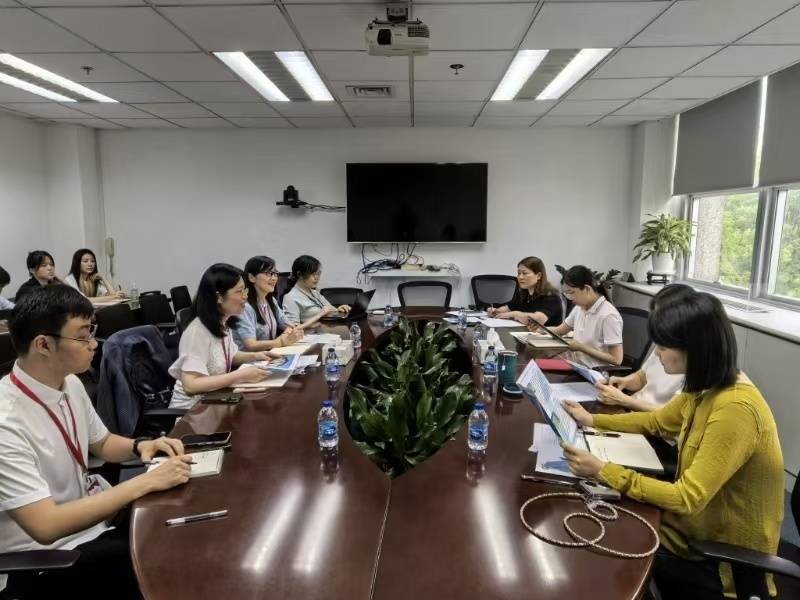
省政府召开稳外贸稳外资工作专题会议许昆林主持并讲话
Xin Hua Ri Bao· 2025-08-12 23:11
Core Viewpoint - The provincial government emphasizes the importance of stabilizing foreign trade and foreign investment to support economic recovery and maintain a strong economic foundation, as highlighted by President Xi Jinping's directives [1][2]. Group 1: Strategies for Foreign Trade and Investment - The government aims to build a balanced and diversified foreign trade market, consolidating traditional market shares while exploring potential in emerging markets such as ASEAN, Central Asia, Africa, and Latin America [2]. - There is a focus on nurturing competitive foreign trade enterprises and supporting large foreign trade companies in transforming into supply chain enterprises, while also enhancing support for private enterprises in their international ventures [2]. - The government plans to expand new growth areas in foreign trade by promoting service trade, digital trade, and green trade, along with exploring carbon footprint management and certification services [2]. Group 2: Support Mechanisms and Infrastructure - A comprehensive support mechanism for key foreign investment projects will be established, aiming to attract more foreign investment and encourage multinational companies to set up regional headquarters [2]. - The Jiangsu Free Trade Zone will play a leading role in enhancing the support for foreign trade and investment, with initiatives to improve development zones and promote cross-border e-commerce [2]. - The government will advance institutional openness by aligning with international high-standard trade rules and providing tangible support to foreign trade enterprises affected by external shocks [2].
贸易政策合规工作进一步加强
Xin Hua Wang· 2025-08-12 05:58
Core Viewpoint - The State Council's recent issuance of the "Opinions on Further Strengthening Trade Policy Compliance Work" aims to clarify the guiding ideology of trade policy compliance, enhance compliance mechanisms, and promote the construction of a higher-level open economy system, thereby providing guidance for current and future trade policy compliance efforts [2][3]. Group 1: Achievements in Compliance Work - Strengthening trade policy compliance is a crucial means to steadily expand institutional openness and is an important aspect of building a higher-level open economy [3]. - Since joining the WTO, China has implemented various measures to ensure that trade policies comply with WTO rules and commitments made upon accession [3]. - The compliance work has shown positive results, with improved compliance capabilities and commitment fulfillment levels across various provincial governments and relevant departments [3]. Group 2: Importance of WTO Rules - WTO rules represent the "underlying logic" of high-standard international trade rules, promoting principles such as openness, non-discrimination, and transparency, which align with China's socialist market economy reform direction [4]. - Strengthening trade policy compliance will help create a first-class business environment and promote a unified national market, facilitating the smooth flow of production factors and efficient resource allocation [4]. Group 3: Key Tasks Outlined in the Opinions - The "Opinions" outline six key tasks to enhance trade policy compliance mechanisms, including clarifying compliance work targets and requiring government departments to conduct compliance assessments of trade policies [5][6]. - It emphasizes the responsibility of policy-making departments to evaluate the compliance of proposed policies according to the principle of "who formulates, who evaluates" [6]. - Compliance assessments must be conducted strictly against WTO rules and China's commitments, with necessary modifications made if risks of non-compliance are identified [7]. Group 4: Enhancing Compliance Evaluation Capabilities - The "Opinions" call for a comprehensive and accurate implementation of new development concepts, better coordination of domestic and international situations, and improved mechanisms to enhance the ability to utilize international rules to safeguard China's development rights [8]. - The Ministry of Commerce will lead efforts to enhance compliance training, establish regular training and communication systems, and improve compliance evaluation capabilities [8]. - There will be a focus on compliance supervision and incentives, with timely rectification for non-compliance and recognition for units that perform well in compliance work [8].
中国成为全球贸易“稳定之锚”
Xin Hua Wang· 2025-08-12 05:57
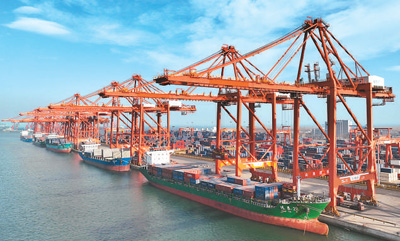
Core Insights - China's economic performance in the first quarter exceeded expectations, with a GDP growth of 5.4% year-on-year, which is significantly higher than analysts' forecasts [4][5][10] - The 137th Canton Fair and the 5th China International Consumer Products Expo showcased China's role as a global trade stabilizer, attracting a record number of international buyers and exhibitors [3][4][9] Economic Data - In the first quarter, China's import and export scale reached a historical high, exceeding 10 trillion yuan for eight consecutive quarters [4][6] - The Canton Fair attracted 148,585 overseas buyers from 216 countries and regions, marking a 20.2% increase compared to the previous session [3][4] - The Consumer Expo featured over 1,700 companies and 4,200 brands, with participation from 65 Fortune 500 companies, setting a new record for scale [4][9] Trade Relations - ASEAN remains China's largest trading partner, with a year-on-year growth of 7.1% in trade volume [6] - Trade with the EU grew by 1.4%, while trade with Belt and Road Initiative countries reached 5.26 trillion yuan, a 2.2% increase year-on-year [6][7] Policy and Market Outlook - China is implementing policies to boost domestic demand and consumption, aiming to stabilize and expand consumer spending [7][10] - The government is committed to high-level opening-up and expanding institutional openness, which is expected to create greater opportunities for global enterprises [8][10] Global Impact - China's contribution to global economic growth remains around 30%, reinforcing its role as a key engine for world economic recovery [10] - The Consumer Expo serves as a platform for global consumption, facilitating the entry of international products into the Chinese market and promoting Chinese goods abroad [9][10]

首家新设外商独资证券公司明年上半年展业
Xin Hua Wang· 2025-08-12 05:47
Core Viewpoint - Standard Chartered Securities (China) Limited has received a license from the China Securities Regulatory Commission (CSRC) to operate in the securities and futures business, marking a significant step in China's financial market opening to foreign investment [1][2]. Group 1: Industry Opening - The securities and futures industry in China is steadily progressing towards high-level openness, with several international institutions accelerating their investments and business expansions in the country [2]. - The approval of Standard Chartered Securities as the first wholly foreign-owned securities company reflects the ongoing normalization of foreign investment access in China's financial sector [2][3]. - The CSRC has indicated that it will continue to enhance the convenience for foreign institutions to operate in China, including the removal of foreign ownership limits in securities and fund companies [3]. Group 2: Market Dynamics - The entry of foreign institutions is expected to create a differentiated competitive landscape, enhancing the development of domestic securities firms and improving the efficiency of capital market resource allocation [4][5]. - Foreign asset management firms are anticipated to bring valuable experience and innovative investment strategies to the Chinese market, benefiting domestic investors through diversified asset allocation [4]. - Standard Chartered Securities aims to leverage its global network to provide differentiated products and services in China's onshore capital market, acting as a bridge between domestic and international investors [4]. Group 3: Regulatory Developments - The CSRC has implemented several regulatory changes this year to facilitate foreign investment, including the introduction of a negative list for overseas listings and the optimization of trading mechanisms [7][8]. - The ongoing reforms are indicative of China's commitment to maintaining an open attitude towards foreign enterprises across various sectors, positioning China as a key market for global growth in the coming years [7].

释放制度创新红利 上海自贸区77条试点措施复制推广
Xin Hua Wang· 2025-08-12 05:45
Core Viewpoint - The State Council of China has issued a notification to enhance the integration of the Shanghai Free Trade Zone with international high-standard economic and trade rules, promoting a high-level institutional opening-up through 77 pilot measures across seven areas [1][2]. Group 1: Pilot Measures - The notification outlines 34 measures to be replicated and promoted in other free trade zones, including innovations in digital RMB application scenarios, optimization of cross-border capital management for multinational companies, and the establishment of a negative list for data export [1]. - Additionally, 43 measures are to be promoted nationwide, focusing on cross-border electronic payment applications, encouraging the acceptance of commercial password testing results, and enhancing the digitalization of government procurement platforms [1][2]. Group 2: Focus Areas - Key areas of focus include accelerating the opening-up of sensitive service trade sectors such as finance and telecommunications, improving the liberalization and facilitation of goods trade, and implementing high-standard digital trade rules [2]. - Strengthening intellectual property protection, advancing government procurement reforms, and deepening state-owned enterprise reforms are also highlighted as essential for creating a fair competitive environment for domestic and foreign entities [2]. Group 3: Implementation and Risk Management - The notification emphasizes the need for local regions to tailor the replication and promotion of measures based on their specific circumstances, focusing on demand and problem orientation [2]. - It also stresses the importance of balancing openness and security, enhancing risk assessment and prevention mechanisms, and establishing a transparent and efficient regulatory system [2][3].
做大国际朋友圈 耕好开放试验田 建设上合示范区 青岛以开放主动赢得发展主动
Ren Min Ri Bao· 2025-08-12 02:16
Group 1 - AstraZeneca has made continuous investments in Qingdao, Shandong for three consecutive years, with a new production base expected to be operational by the end of 2028 [1] - Germany's Almayer Group has also increased its investment for the fourth time, establishing a new calcined alumina plant in Qingdao, indicating strong foreign interest in the region [1] - The Chinese government emphasizes the importance of high-level opening up and reform, aiming to create new opportunities for economic development in Qingdao [1] Group 2 - The China-Europe Railway Express from Qingdao reaches Europe in just 17 days, while truck transport to Moscow takes only 7 days, showcasing the efficiency of logistics in the region [2] - Qingdao has established a comprehensive logistics network, connecting over 700 ports in more than 180 countries and regions, with 32 regular China-Europe Railway routes linking 54 cities in 23 countries [2] - The city is actively expanding its international logistics channels to enhance trade and industry integration, indicating significant growth potential [2] Group 3 - Qingdao's Free Trade Zone has implemented a "white list" system for medicinal and food products, significantly reducing transaction costs for businesses by 50% [3] - Over 60 companies in the medicinal and food sector have settled in the Qingdao Free Trade Zone, creating a multi-industry chain that includes import, processing, and cross-border trade [3] - Recent reforms have eliminated restrictions on trade volume for small and medium enterprises, allowing more businesses to benefit from the new policies [3] Group 4 - The establishment of the China-Shanghai Cooperation Organization Local Economic and Trade Cooperation Demonstration Zone in Qingdao aims to enhance industrial internet services and support for smart home appliance industries [4] - The Haier Group's industrial internet ecosystem has seen a significant increase in orders, reflecting the success of the new industrial model [4] Group 5 - Qingdao is enhancing its policy framework to improve information sharing, logistics connectivity, and project collaboration among Shanghai Cooperation Organization member states [5] - The Shandong government has proposed 23 support measures across four areas to accelerate the development of the Shanghai Cooperation Organization Demonstration Zone [6] - Continuous efforts are being made to promote higher levels of opening up and to inject new momentum into regional cooperation [6]

