
数字孪生

Search documents
英伟达推出新的机器人开发工具库与模型
Xin Lang Cai Jing· 2025-08-12 03:17
Core Insights - NVIDIA announced the launch of the new NVIDIA Omniverse library and NVIDIA Cosmos World Foundation Model (WFM) to accelerate the development and deployment of robotic solutions [1] Group 1 - The new library and model are supported by the new NVIDIA RTX PRO servers and NVIDIA DGX Cloud [1] - These tools will assist developers in creating physically accurate digital twins, capturing and reconstructing the real world in simulations [1] - The offerings aim to generate synthetic data for training physical AI models and to build AI agents that understand the physical world [1]


研判2025!中国实时云渲染行业技术框架、市场规模、竞争格局及未来趋势分析:数字化建设驱动实时云渲染产业蓬勃向上,催化实时云渲染技术快速发展[图]
Chan Ye Xin Xi Wang· 2025-08-12 01:05
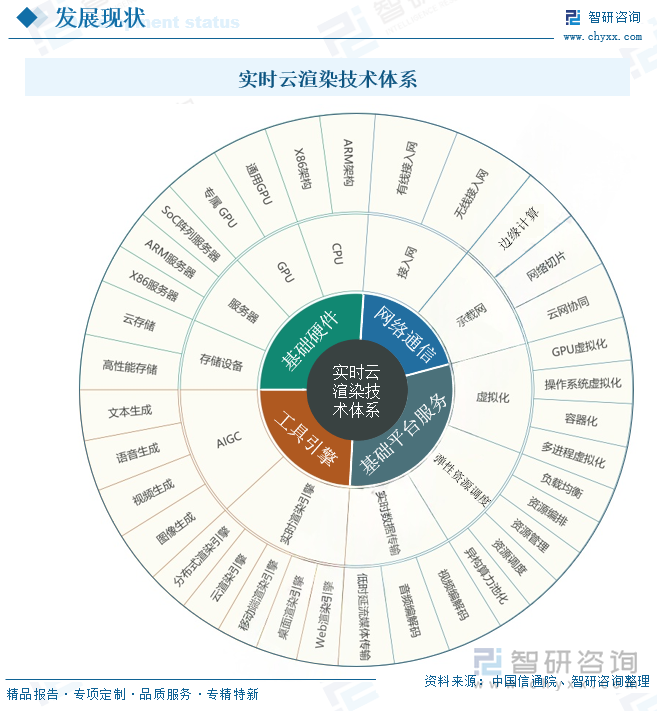
Core Insights - Real-time cloud rendering is an emerging rendering method based on rapid advancements in cloud computing, virtualization, and rendering engines, enabling high-quality video streaming of complex 2D or 3D graphics in real-time [1][2][7] - The global real-time cloud rendering market is projected to grow from $1.595 billion in 2020 to $4.03 billion by 2024, achieving a compound annual growth rate (CAGR) of 26% [7][9] - In China, the market is expected to reach 8 billion yuan in 2024, with a year-on-year growth of 45.5%, significantly outpacing the global market [9] Market Overview - Real-time cloud rendering enhances user experiences across various sectors, including entertainment, film, tourism, architecture, social interaction, and office applications, as well as cutting-edge fields like the metaverse and digital twins [1][9] - The service is categorized into three main applications: cloud gaming, cloud-native, and other scenarios, with cloud gaming being the primary application due to its established industry framework and large user base [11][13] Competitive Landscape - The real-time cloud rendering market consists of independent rendering cloud vendors and cloud computing providers, each offering different capabilities and solutions [13] - Independent vendors, like Ruiyun Technology, provide platforms compatible with multiple computing resources, while cloud computing firms, such as Alibaba Cloud, offer integrated "compute + render" platforms but with limited application support [13] Business Model - Various pricing models exist for cloud rendering services, including billing by duration, frame count, or node count, with many platforms adopting a dual-track pricing model based on configuration and time [15] Industry Trends - The real-time cloud rendering market is evolving towards large-scale, diversified, and specialized services, driven by the increasing complexity of application scenarios and the demand for high-quality rendering [19] - Enhanced infrastructure capabilities are necessary to meet the growing demands for computing power, storage speed, and network bandwidth [20] - The integration of artificial intelligence with real-time cloud rendering is improving rendering quality and system responsiveness, enhancing user interaction [21] - The industry ecosystem is expanding, attracting more participants and driving growth, although many applications are still in early development stages [22]





测绘股份: 华泰联合证券有限责任公司关于南京市测绘勘察研究院股份有限公司募投项目延期的核查意见
Zheng Quan Zhi Xing· 2025-08-11 16:17
Core Viewpoint - The company has decided to postpone the expected completion dates for two fundraising projects to December 31, 2027, due to changes in market demand and project progress [5][10][11] Fundraising Overview - The company raised a net amount of RMB 398,479,171.59 from the issuance of convertible bonds, which was fully received on March 8, 2023 [1][3] - The total investment for the fundraising projects is RMB 40,668.21 million, with RMB 39,847.92 million planned to be allocated from the raised funds [3][5] Project Progress - As of June 30, 2025, the cumulative investment in the projects is RMB 3,848.06 million, representing 9.66% of the planned investment [5][9] - The two main projects are: 1. Urban Lifeline Safety Monitoring Platform Construction 2. Digital Twin Computing Center and Production Base Construction [5][6] Delay Reasons - The delay is attributed to the unimplemented purchase and renovation of properties totaling RMB 84.20 million, which accounts for 26.17% of the planned investment [5][6] - The company aims to optimize existing resources and reduce costs due to a slowdown in urban infrastructure investments [5][6] Future Plans - The company will continue to manage the raised funds strictly and will focus on equipment purchases and R&D investments [9][10] - The company plans to actively explore potential market demands related to the fundraising projects and will invest in phases according to actual progress [9][10] Approval Process - The board of directors and the supervisory board have approved the postponement of the project completion dates, confirming that the decision complies with relevant regulations and does not harm shareholder interests [10][11]

测绘股份: 关于公司可转债募集资金投资项目延期的公告
Zheng Quan Zhi Xing· 2025-08-11 16:16
Core Viewpoint - The company has decided to extend the expected completion date for two fundraising projects to December 31, 2027, due to current market conditions and project progress [1][12][13] Fundraising Overview - The company raised a net amount of approximately RMB 398.48 million from the issuance of convertible bonds on March 2, 2023, with all funds received by March 8, 2023 [1][2] - The funds are being managed in accordance with relevant regulations, ensuring dedicated accounts for their storage and use [2][6] Project Progress - The two main projects funded by the raised capital are: 1. Urban Lifeline Safety Monitoring Platform Construction 2. Computing Power Center and Production Base for Digital Twin [3][4] - As of June 30, 2025, the cumulative investment in these projects was approximately RMB 39.85 million, with a progress rate of 9.66% [5][6] Delay Reasons - The delay in project completion is attributed to: - A total of RMB 84.20 million planned for property acquisition and renovation not yet implemented, representing 26.17% of the total planned investment [6][8] - A slowdown in investment in urban infrastructure due to macroeconomic pressures [8][10] Project Details - The Urban Lifeline project aims to integrate and enhance government and enterprise monitoring systems using advanced technologies like IoT and big data [7][8] - The Computing Power Center is designed to optimize cost structures and enhance data security, although it currently does not generate direct revenue [8][9] Future Plans - The company plans to use the remaining funds primarily for equipment purchases and research and development, while actively exploring potential market demands related to the projects [10][12] - The company will optimize resource allocation and monitor project progress closely to ensure timely completion [10][11]
2025世界机器人大会主论坛大咖观点(二)
机器人圈· 2025-08-11 03:13
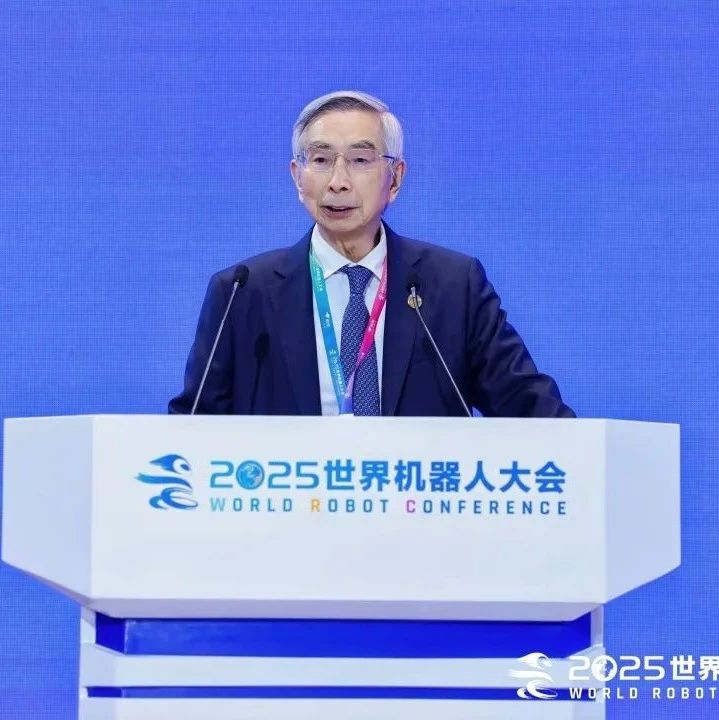
Core Viewpoint - The World Robot Conference emphasizes the importance of innovation and application in robotics, showcasing advancements in technology and the need for interdisciplinary collaboration in the field [1][3]. Group 1: Key Presentations - Ni Guangnan, an academician from the Chinese Academy of Engineering, highlighted the significance of "AI + spatial computing" as a new paradigm that bridges the physical and digital worlds, essential for enhancing robot intelligence [3]. - Vašek Hlaváč from Czech Technical University discussed the development of a unique visual guidance method for industrial robots, which improves precision in flexible assembly tasks through custom datasets and machine learning [5]. - Seng Chuan Tan, the incoming president of the World Federation of Engineering Organizations, emphasized the need for engineers to evolve from traditional roles to innovative problem solvers with interdisciplinary skills [7]. Group 2: Challenges and Opportunities - Gao Feng from Shanghai Jiao Tong University identified four key challenges in robot invention: functional-driven design, performance integration, behavioral intelligence, and specific engineering applications [9]. - Alexander Verl, chair of the International Federation of Robotics Technical Committee, discussed the limitations of current robots and the potential of digital twins and AI to enhance their capabilities [11]. - Sergej Fatikow from the University of Oldenburg presented innovations in micro-robotics for precision manufacturing, emphasizing the importance of nanotechnology in driving breakthroughs [13]. Group 3: Industry Applications - Zhang Jiafan from ABB Robotics highlighted that industrial robots currently cover only 20%-30% of industrial needs, indicating significant untapped potential for AI applications in decision-making and control [15]. - Zeng Guang from Zoomlion discussed the integration of humanoid robots into manufacturing systems, emphasizing the need for comprehensive knowledge and AI-driven platforms for effective deployment [17]. - Hu Luhui from Zhicheng AI pointed out the core pain points in the industry, including high costs and safety issues, and advocated for deep collaboration between physical and intelligent systems to overcome these challenges [19]. Group 4: Medical and Agricultural Innovations - Bradley Nelson from ETH Zurich presented the application of micro-robots in medicine, particularly for targeted drug delivery and remote surgeries, showcasing their potential to address significant healthcare challenges [21]. - Jens Kober from Delft University of Technology discussed the automation of agriculture in the Netherlands, emphasizing the need for cost-effective solutions to labor shortages and the importance of addressing real pain points in the industry [29]. - Yaniv Maor from Tevel highlighted the challenges in automating fruit picking, focusing on the need for flexible robotic systems that can adapt to diverse environments and fruit varieties [31]. Group 5: Future Directions and Market Trends - Dennis Gutowsky from FESTO introduced bio-inspired robotics, showcasing innovations that mimic natural mechanisms to enhance robotic design and functionality [33]. - The dialogue on embodied intelligence emphasized the need for reliable and transparent AI systems to foster trust and collaboration between humans and robots [34][36]. - The discussions highlighted the importance of open-source models to build user trust and the necessity for predictable AI systems to ensure effective human-robot interaction [42][44].
研判2025!中国重型燃气轮机行业发展历程、产业链全景、发展现状、竞争格局及发展趋势分析:自主创新加速突破,2025年百亿市场开启新纪元[图]
Chan Ye Xin Xi Wang· 2025-08-11 01:15
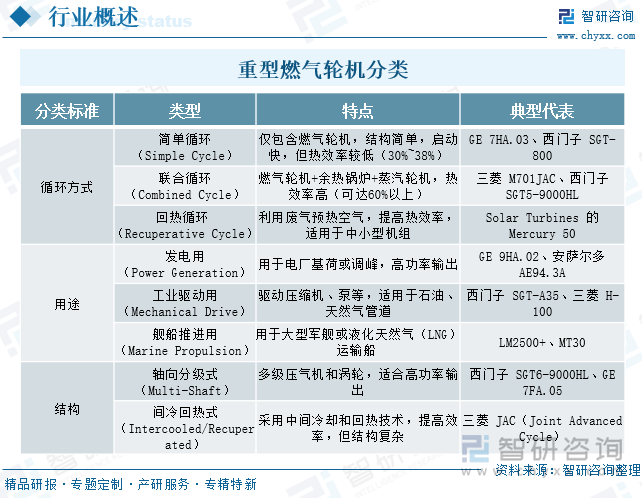
Core Insights - The heavy-duty gas turbine is a key power equipment in modern industry, converting thermal energy into mechanical energy, with a single unit power typically exceeding 50MW, and is widely used in power generation, industrial drives, and marine propulsion [1][4] - China has made significant breakthroughs in the heavy-duty gas turbine sector since launching the R0110 project in 2002, achieving complete self-research capabilities by 2024, with the market expected to reach 100 billion yuan by 2025 [1][16] - The industry is transitioning from being an "energy heart" to a "green engine," contributing to global energy transformation with advancements in hydrogen integration technology and digital twin management [1][22] Industry Overview - Heavy-duty gas turbines are classified based on cycle type (simple, combined, recuperative), application (power generation, mechanical drive, marine propulsion), and structure (multi-shaft, intercooled) [2][3] - The market for heavy-duty gas turbines in China reached 80 billion yuan in 2024, accounting for 10% of the overall market, with a projected growth to over 100 billion yuan in 2025 [16][18] Development History - The heavy-duty gas turbine sector in China has evolved from reliance on foreign technology to achieving significant self-sufficiency, with key milestones including the successful ignition of a 300MW F-class turbine in 2024 [4][16] - The establishment of the China Aviation Engine Group has accelerated technological advancements, enabling China to become one of the top five countries in heavy-duty gas turbine development [4][16] Industry Chain - The industry chain includes upstream material production (high-temperature alloys, titanium alloys), midstream turbine manufacturing led by state-owned enterprises, and downstream applications in power generation and industrial drives [6][8] - Domestic companies have achieved scale in mid-low end production, but high-end materials and precision processing still rely on imports, indicating a need for increased self-sufficiency [6][8] Current Market Status - The heavy-duty gas turbine market in China is characterized by a competitive landscape dominated by foreign giants (GE, Siemens, Mitsubishi) holding over 80% market share, while domestic companies are gradually increasing their market presence [18][19] - The F-class turbines have seen a domestic production rate exceeding 85%, while the H/J-class turbines still rely heavily on imports [18][19] Future Trends - The industry is moving towards low-carbon, intelligent, and diversified development paths, with hydrogen integration and digital twin technologies expected to enhance efficiency and reduce emissions [21][22] - The demand for gas turbines in new applications such as data centers and marine equipment is expected to grow significantly, driven by the need for high-efficiency, compact power solutions [22][24]




中国钢铁产业锻造高质量发展新范式观察
Xin Hua Cai Jing· 2025-08-10 23:37
Core Viewpoint - The Chinese steel industry is focusing on innovation-driven high-quality development amidst global economic green recovery and deep industrial chain adjustments, as discussed during the 14th China International Steel Conference and the inaugural China International Steel Week held in Shanghai from August 5 to 10 [1] High-end Development - The Chinese steel industry has invested 1.2 trillion yuan (approximately 1.2 billion) over the past decade for capacity replacement, achieving nearly 300 million tons of capacity reset and spending over 1 trillion yuan on R&D to push product upgrades towards high-end development [2] - The world's first flexible production model third-generation thin slab continuous casting and rolling production line has been established, reducing the time from molten steel to steel coil to just 25 minutes, which is one-eighth of traditional hot continuous rolling processes [2] - Ansteel Group has produced hot-formed wheel steel with a strength six times that of aluminum alloy wheels, while maintaining comparable weight and dimensional accuracy, at a cost of only 70% of aluminum alloy wheels [2] Technological Innovation - The Ministry of Industry and Information Technology has issued the "Steel Industry Normative Conditions (2025 Edition)," emphasizing the need to strengthen technological innovation capabilities, establish research institutions, and increase R&D investment to enhance product innovation and quality brand building [3] - Technological innovation is becoming the core engine for the steel industry's transformation and upgrade, leading to the emergence of internationally competitive high-end products and a leap towards new productive forces [3] Intelligent Transformation - The steel industry's intelligent transformation is accelerating, with the integration of artificial intelligence, digital twins, and industrial internet technologies driving the entire industry chain towards "digital intelligence" [4] - The WesCarber carbon neutrality digital platform developed by Hebei Steel focuses on carbon neutrality goals, achieving over 510 million carbon data collections across 40 processes with an automation coverage rate exceeding 75% [4] - China Baowu has initiated the "2526" project to promote localized applications of DeepSeek, redefining steel production with AI, marking a significant step in its digital and intelligent transformation [4][5] Green Development - The Chinese steel industry is advancing a green revolution driven by technological innovation, focusing on ultra-low emissions transformation, low-carbon technology R&D, and digital empowerment to establish a comprehensive green manufacturing system [7] - By June 2025, 598 million tons of steel production capacity will have undergone ultra-low emissions transformation, with an expected 80% coverage by the end of the year, involving an investment of over 300 billion yuan [7] - The Chinese low-carbon steel emission standards have gained recognition from multiple international professional organizations, aligning with global climate governance and the Paris Agreement [8]
中国元宇宙产业迈入“场景爆发期”
Si Chuan Ri Bao· 2025-08-10 22:39
Group 1 - The metaverse concept is experiencing a resurgence in 2025, driven by significant technological breakthroughs and strong national support [1] - The implementation of the national standard GB/T 45993-2025 for the metaverse and the establishment of a standardization committee signal a shift from a "technology stacking phase" to a "scene explosion phase" in China's metaverse industry [1][3] - Hardware and software advancements, exemplified by new VR and MR devices like Meta Quest 3S and Apple Vision Pro, are enhancing user experience and accessibility [1] Group 2 - The practical applications of mature technology are evident, such as the "Metaverse Neo World" in Shanghai, which has attracted major gaming companies and created an integrated industrial ecosystem [2] - The industrial sector is becoming a focal point for the metaverse's value, with predictions that 47% of global enterprises will actively engage in the industrial metaverse by 2027 [2] - Early adopters like Siemens and Renault are leveraging digital twin technology and AR systems to improve operational efficiency and reduce costs [2] Group 3 - The announcement of the metaverse standardization committee by the Ministry of Industry and Information Technology indicates China's proactive approach to establishing a metaverse standard system [3] - The focus on developing foundational standards for metaverse terminology, digital human coding, and industry application standards reflects a strategic direction towards integrating metaverse technology into the real economy [3] - This initiative aims to accelerate the transition from virtual to real, driving industrial upgrades and value creation [3]
2025年中国工控系统行业产业链、发展现状、细分市场、竞争格局及发展趋势研判:政策驱动国产替代加速,2025年市场规模破3200亿[图]
Chan Ye Xin Xi Wang· 2025-08-10 00:36
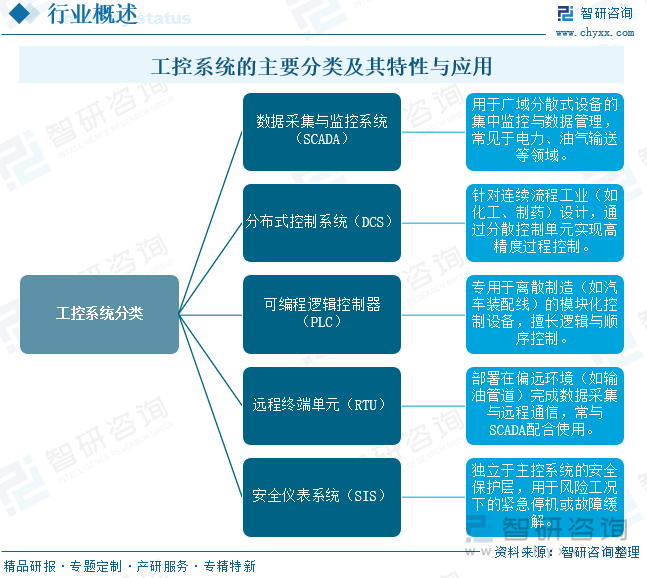
Core Insights - The industrial control system (ICS) industry in China is undergoing a strategic transformation from traditional automation to intelligent and autonomous systems, driven by policy guidance and technological innovation, resulting in a market size of over 300 billion yuan with a compound annual growth rate exceeding 10% [1][6][14] - The market structure shows a clear distinction where foreign companies dominate the high-end market while domestic firms are rising in the mid-range segment, with significant advancements in localization [1][20] Industry Overview - ICS refers to the combination of hardware and software used to monitor, control, and manage industrial production processes, ensuring safety, efficiency, and stability [2] - The main categories of ICS include SCADA, DCS, PLC, RTU, and SIS, with further segmentation by industry and control levels [2] Development Background - The Chinese government has prioritized the development of ICS, implementing various policies to enhance network security, data management, and digital transformation, thereby supporting the industry's shift towards autonomy and intelligence [8][9] Industry Chain - The ICS industry has established a complete ecosystem, with upstream focusing on core components and software, midstream on manufacturing and system integration, and downstream applications in diverse sectors like renewable energy and smart manufacturing [10] Current Market Analysis - The ICS market in China is projected to exceed 300 billion yuan in 2024, with expectations to reach 320 billion yuan by 2025, driven by policy support and technological advancements [14] - The DCS market is expected to reach 14.8 billion yuan in 2024, with over 95% penetration in the petrochemical and power sectors [17] Competitive Landscape - The competitive landscape is characterized by foreign companies leading the high-end market, while domestic firms like Inovance Technology and Zhongkong Technology are gaining ground in the mid-range market [20][21] - Siemens holds a 48% market share in the PLC sector, while domestic companies are achieving significant localization breakthroughs [20] Future Trends - The ICS industry is moving towards intelligent upgrades driven by technology integration, with AI and edge computing enhancing system capabilities [24] - The push for localization and global expansion is accelerating, with domestic companies expected to increase their international market share significantly by 2030 [26] - Safety and sustainability are becoming core competitive factors, with a focus on reducing energy consumption and enhancing cybersecurity measures [27]


一年来苏州市第十七批科技镇长团促成项目合作金额超2.25亿元
Su Zhou Ri Bao· 2025-08-10 00:23
Group 1 - The Suzhou Technology Town Leaders Team has signed 225 technology and research cooperation contracts with a total value exceeding 225 million yuan, facilitated financing connections for 139 enterprises amounting to over 1.3 billion yuan, and introduced 23 new innovative platforms [1][6] - The team is focused on strategic emerging industries, key industrial clusters, and rural revitalization, with the 18th batch of the team being formed to continue promoting talent and technological innovation [1][2] - The team consists of over 100 members from nearly 40 universities and institutions, enhancing collaboration between local areas and national research entities [2][6] Group 2 - The team has facilitated over 20 industry-academia-research collaborations in the new generation information technology sector, with a total technical contract value exceeding 20 million yuan [2] - The team has established an "Industrial AI Empowerment High-Precision Manufacturing Technology Innovation Center" and a joint center for automotive interior surface micro-nano manufacturing [2][3] - The team has helped companies like Xingtong Medical Technology achieve breakthroughs in R&D and application through technology transfer agreements, including an 8 million yuan contract for a patented technology [5] Group 3 - The team has addressed financing challenges for enterprises, helping secure 1.93 billion yuan in funding for key technology projects [6][7] - The team has implemented targeted strategies to attract high-level, young, and skilled talent, resulting in the establishment of a technology transfer center and local job fairs that attracted over 2,000 young talents [7][8] - The team has supported traditional craftsmanship and rural cultural tourism development, exemplified by the establishment of the Suzhou Craft Academy and various training programs [8][9] Group 4 - The team has fostered a sustainable innovation ecosystem by linking university technology outputs with enterprise validation and market returns [3][9] - The team has enhanced the influence of Suzhou's intelligent connected vehicle industry through collaborative agreements with major automotive companies, totaling over 62 million yuan in technical contracts [5][6]