数字货币

Search documents
香港稳定币牌照申请窗口开启发钞行有望抢占先机
Zheng Quan Shi Bao· 2025-07-31 18:33
Core Viewpoint - The implementation of the "Stablecoin Regulation" in Hong Kong marks a significant step towards the formalization of stablecoin issuance, with the Hong Kong Monetary Authority (HKMA) releasing guidelines for licensed stablecoin issuers [1][2]. Group 1: Regulatory Framework - The guidelines set clear application thresholds for stablecoin issuers, including financial conditions, personnel qualifications, reserve assets, custody and redemption requirements, jurisdiction, and transitional arrangements [1]. - The application window for stablecoin issuer licenses is open until September 30, with expectations that only a few licenses will be granted initially, possibly just 2 to 3 [2][3]. Group 2: Key Players - Major commercial banks in Hong Kong, such as Bank of China (Hong Kong) and Standard Chartered Bank (Hong Kong), are expected to be the first to apply for stablecoin issuer licenses due to regulatory compliance and business needs [2]. - Other potential applicants include Chinese banks, sandbox testing companies, large state-owned enterprises, and internet companies with payment licenses [4]. Group 3: Market Dynamics - The competition for the first batch of stablecoin licenses is intense, with the application scenarios being a critical consideration for approval, including digital asset trading, cross-border payments in global trade, and traditional asset tokenization [4]. - As of the end of July, 44 financial institutions in Hong Kong have upgraded to the first type of securities trading license, with an increase of 3 since the end of June, indicating a growing interest in virtual asset trading [6]. Group 4: Future Prospects - There is a strong anticipation for the emergence of offshore RMB-backed stablecoins, with recent initiatives like the launch of tokenized funds by Huaxia Fund (Hong Kong) exploring this possibility [8].
中国居民财富搬家路线图暨非银金融行业投资机会:存款潮涌,逐险而行
Guoxin Securities· 2025-07-31 11:19
Investment Rating - The report maintains an "Outperform" rating for the non-bank financial sector [2] Core Insights - The trend of "deposit migration" is likened to "living water" for wealth, facilitating an influx of incremental funds into risk assets. The continuous decline in deposit rates encourages clients to seek higher returns and diversified allocations, prompting financial institutions to innovate products that meet varying risk-return needs [3][4] - The non-bank financial sector presents significant investment opportunities due to performance elasticity, with the capital market entering a valuation recovery phase. The report outlines three phases of a bull market: valuation repair, hot sector rotation, and valuation bubble [3][4] - The report highlights a clear trend of increasing fixed-term deposits among residents, with the proportion exceeding 70% in early 2023 and projected to reach 72.28% by 2025, indicating a shift in savings behavior [16][21] Summary by Sections 1. Deposit Section: Turning Point of Wealth Migration - The report discusses the ongoing trend of wealth migration among residents, emphasizing the shift towards riskier assets as deposit rates decline [3][4] 2. Macro Trends: Sources of Increased Risk Appetite - The report identifies that the decline in deposit rates and the search for higher returns are driving residents to explore various financial products, including bank wealth management and public funds [3][4] 3. Asset Management Section: Adjustments in the "Dumbbell Structure" - The report notes that the asset management sector is experiencing a shift as residents move from traditional savings to more diversified investment products, reflecting a broader trend in wealth management [3][4]
但斌二季度持仓大动作:重仓英伟达还不够 科技主线外还有“暗线”?
Mei Ri Jing Ji Xin Wen· 2025-07-31 09:29
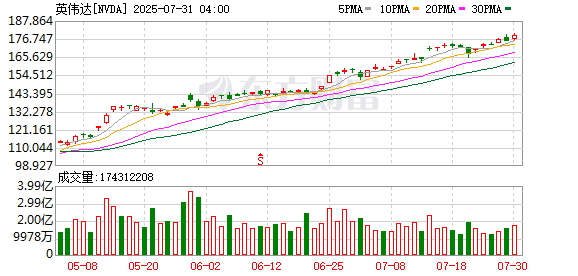
今年二季度,美股在关税摩擦冲击后迅速回暖,并不断突破新高。近期,私募大佬但斌执掌的东方港湾海外基金公布了其2025年二季度的持仓动向。 数据显示,其持仓规模上涨至11.27亿美元,持仓标的也增加到13只。从但斌的美股持仓来看,仍以科技龙头为主,英伟达继续位居第一重仓股,谷歌则跃 升为第二大重仓股。 值得一提的是,但斌在加密资产领域展开尝试,首次买入Coinbase,而该季度Coinbase股价飙涨超103%。 继续重仓英伟达,加仓谷歌 2025年第二季度,但斌执掌的东方港湾再度上调了美股持仓规模。其海外基金Oriental Harbor Investment Master Fund近日向美国证监会提交13F报告,其二季 度持仓动向也随之披露。截至二季度末,该基金共持有13只美股标的,市值总计11.267亿美元,较一季度末的8.68亿美元显著上升。 私募排排网统计数据显示,整体来看,但斌二季度的布局主要围绕"AI技术、算力设施、AI应用"展开。从持仓标的来看,仍以科技龙头为主,英伟达继续位 居第一重仓股,期末持有126.78万股,且该股二季度股价表现亮眼,上涨45.77%。同时,但斌还持有2倍做多英伟达ETF1 ...






《稳定币条例》生效在即,金融科技ETF华夏(516100)连续回调倒车接人
Mei Ri Jing Ji Xin Wen· 2025-07-31 06:55
Group 1 - The three major indices collectively declined on July 31, with Pinduoduo and ChatGPT concepts leading the gains, while the seafood and rare metals sectors fell [1] - The financial technology ETF Huaxia (516100) experienced a significant drop of 1.37% after an initial surge, with mixed performance among its holdings [1] - Recent frequent policy announcements regarding stablecoins, including the implementation of Hong Kong's stablecoin regulations on August 1, are expected to benefit the stablecoin industry [1] Group 2 - The Huaxia financial technology ETF closely tracks the CSI Financial Technology Theme Index, covering software development, internet finance, and the digital currency industry, with a stablecoin content of 23.43%, the highest in the market [2] - The index includes leading stocks such as Tonghuashun, Dongfang Caifu, and Runhe Software, as well as popular stablecoin-related stocks [2]
收评:沪指探底回升涨0.17% 旅游、石油板块涨幅居前
Jing Ji Wang· 2025-07-31 06:32
中国经济周刊-经济网讯 截至今日收盘,上证综指报3615.72点,涨幅0.17%,成交额8196.28亿元; 深证成指报11203.03点,跌幅0.77%,成交额10246.52亿元;创业板指报2367.68点,跌幅1.62%,成交额 4998.73亿元。 盘面上看,水产品午后拉升,中水渔业涨停;旅游板块走强,凯撒旅业、天府文旅等涨停;石油、 传媒、食品饮料、商业连锁、银行等板块涨幅居前;数字货币概念、固态电池概念、人形机器人概念、 多元金融、券商板块等跌幅居前。 编辑:何颖曦 ...
金融工程日报:沪指冲高回落,创业板全天走弱-20250730
Guoxin Securities· 2025-07-30 15:20
- The report does not contain any quantitative models or factors related to construction, testing, or evaluation[1][2][3]
21书评|“数据合作社”应使用什么样的数字货币?
2 1 Shi Ji Jing Ji Bao Dao· 2025-07-30 11:19
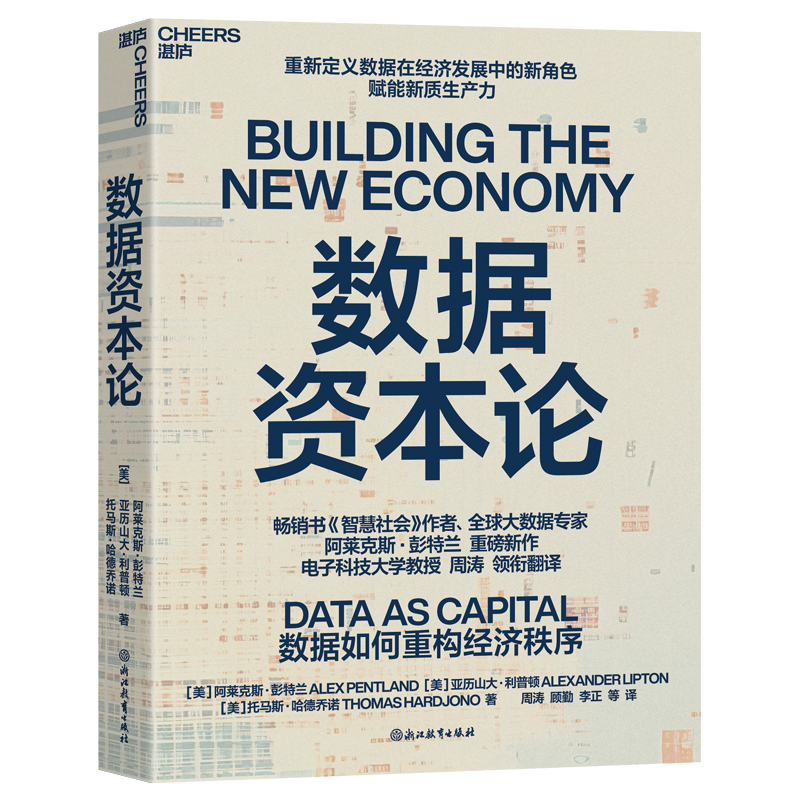
Core Insights - The book "Data Capitalism" presents a fresh perspective on the digital economy, emphasizing the need to redefine and redistribute production factors in the digital age [1][3] - It envisions an economic transformation driven by data and artificial intelligence, advocating for a more resilient and equitable economic system [3][4] Data as a New Production Factor - Data is recognized as a core production factor alongside land, labor, and financial capital, but its ownership is concentrated in the hands of a few [5] - The authors argue for a rethinking of data ownership and usage rights, proposing innovative mechanisms like data cooperatives to serve communities rather than tech monopolies [5][6] Emergence of Resilient Systems - The shift from centralized to distributed economic systems is highlighted, showcasing examples like medical data sharing networks and urban innovation alliances [6] - Data cooperatives are proposed as a model where individuals can share their data while maintaining privacy, enhancing decision-making within communities [6] Future of Digital Currency - The concept of decentralized data cooperatives extends to finance, suggesting a new type of digital currency system based on data and algorithms [7] - This new financial architecture aims to create a transparent and efficient financial system, potentially transforming transaction methods and benefiting global trade [7] AI Governance and Ethical Considerations - The role of AI algorithms in the new economy is examined, with a focus on the ethical implications of data and AI governance [8] - The need for transparent and responsible algorithm systems is emphasized to ensure fairness and avoid biases, aligning with China's goals for a sustainable digital economy [8] Transition to a Digital Era - The digital revolution is seen as a new era, raising questions about balancing efficiency and equity, protecting privacy while unlocking data value [9] - The book advocates for a future where data is a shared asset, allowing everyone to be data owners rather than passive users, promoting social justice in the digital age [9]
数据复盘丨水产养殖、油气设服等概念走强 龙虎榜机构抢筹14股
Zheng Quan Shi Bao Wang· 2025-07-30 10:24
Market Overview - The Shanghai Composite Index closed at 3615.72 points, up 0.17%, with a trading volume of 819.63 billion yuan [1] - The Shenzhen Component Index closed at 11203.03 points, down 0.77%, with a trading volume of 1024.65 billion yuan [1] - The ChiNext Index closed at 2367.68 points, down 1.62%, with a trading volume of 503.32 billion yuan [1] - The STAR 50 Index closed at 1058.57 points, down 1.11%, with a trading volume of 35.32 billion yuan [1] - The total trading volume of both markets was 1844.28 billion yuan, an increase of 41.11 billion yuan compared to the previous trading day [1] Sector Performance - Strong sectors included steel, oil and petrochemicals, media, food and beverage, banking, and textiles [3] - Active concepts included aquaculture, oil and gas services, dairy, heparin, film and television, and marine economy [3] - Weak sectors included electric equipment, computers, automobiles, defense and military, securities, telecommunications, machinery, and real estate [3] - The computer sector saw the largest net outflow of funds, amounting to 89.79 billion yuan [5] Fund Flow - The net outflow of main funds from the Shanghai and Shenzhen markets was 52.9 billion yuan [4] - The net outflow from the ChiNext was 21.25 billion yuan, while the Shanghai 300 index saw a net outflow of 12.33 billion yuan [5] - Only four sectors saw net inflows: media (10.72 billion yuan), social services (1.99 billion yuan), food and beverage (1.61 billion yuan), and retail (0.75 billion yuan) [5] Individual Stock Performance - A total of 1890 stocks experienced net inflows, with 41 stocks receiving over 1 billion yuan in net inflows [6] - The stock with the highest net inflow was Yingweike, with 867 million yuan [7] - Conversely, 3255 stocks faced net outflows, with 159 stocks seeing over 1 billion yuan in net outflows [8] - The stock with the highest net outflow was Ningde Times, with 1.293 billion yuan [9] Institutional Activity - Institutions had a net sell of approximately 72.4 million yuan, with 14 stocks seeing net purchases and 14 stocks seeing net sales [10] - The stock with the highest net purchase by institutions was Xizang Tianlu, with 126 million yuan [11]





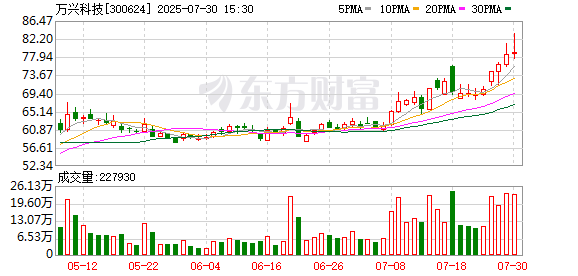
万兴科技:公司不涉及互联网金融业务
Mei Ri Jing Ji Xin Wen· 2025-07-30 08:54
Group 1 - The company, Wanxing Technology, primarily focuses on the sales and services of digital creative software products [2] - The company does not engage in internet finance business [2]