
专精特新

Search documents
北交所周观察第五十二期(20251116):北交所开市四周年,一二级市场共振打造服务专精特新主引擎
Hua Yuan Zheng Quan· 2025-11-16 08:11
Group 1 - The report highlights the steady expansion of the Beijing Stock Exchange (BSE) market, with the number of listed companies increasing to 282 and total market capitalization approaching 1 trillion yuan, with over 50% being national-level "little giant" enterprises in specialized and innovative sectors [2][5][22] - Daily trading volume has surged from 2 billion yuan to nearly 30 billion yuan, indicating improved pricing efficiency and liquidity [2][5][22] - The number of qualified investors has reached nearly 9.5 million, with institutional funds such as public funds and social security funds accelerating their investments, marking a significant shift towards long-term capital in the market [2][5][22] Group 2 - The BSE has entered a new phase with the simultaneous operation of the North Certificate 50 and specialized and innovative indices, with expectations for the early issuance of specialized and innovative index funds [2][5][22] - The report suggests continued focus on the construction of the BSE index system and the launch of the North Certificate 50 ETF, which is anticipated to attract incremental capital [2][5][22] - The report identifies several key investment themes, including the promotion of public fund products targeting small and medium-sized stocks, and sectors with strong policy support and growth certainty, such as lithium batteries, energy storage, and AI power [2][5][22] Group 3 - The overall price-to-earnings (PE) ratio for BSE A-shares remains at 49X, with a slight decline in PE ratios across various boards, indicating a cooling market sentiment [10][11][22] - The average PE ratio for newly listed companies from January 1, 2024, to November 14, 2025, is 13.76X, with an average first-day price fluctuation of 264% [21][24][22] - The report notes that two companies passed the review and one company registered during the week, indicating a normalization in the IPO process on the BSE [22][16]
本周北证50波动平缓,固态、锂电材料等关注度显著提升
Soochow Securities· 2025-11-16 07:59
Market Performance - As of November 14, 2025, the North Exchange 50 Index decreased by 0.56% compared to the previous week[29] - The average market capitalization of North Exchange A-shares is 3.194 billion yuan[30] - The average daily trading volume for North Exchange A-shares was approximately 21.38 billion yuan, down 5.89% from the previous week[30] Industry Insights - The focus on solid-state and lithium battery materials has significantly increased, with notable stock price increases in related companies such as Andar Technology (up 13.15%) and Rongyi Precision (up 20.52%)[38] - The State Council issued 13 targeted policy measures to stimulate private investment, aiming to create a more favorable environment for private enterprises[12] Investment Recommendations - The report suggests prioritizing investments in sectors with high industry prosperity and scarcity, such as robotics, commercial aerospace, and energy storage[38] - The price-to-earnings (PE) ratios for various markets as of November 14, 2025, are as follows: North Exchange A-shares at 49.21, ChiNext at 43.38, Shanghai Main Board at 12.69, Shenzhen Main Board at 23.03, and Sci-Tech Innovation Board at 70.80[38] Risks - Key risks include policy risk, liquidity risk, and external environmental volatility, which could impact market stability[39]
一周快讯丨国家中小企业发展基金二期要来了;东莞双母基金落地;广西人工智能母基金招GP;香港引导基金招GP
FOFWEEKLY· 2025-11-16 06:00
Core Insights - The article highlights a surge in the establishment of mother funds across various regions in China, focusing on sectors such as artificial intelligence, electronic information, semiconductors, integrated circuits, new materials, high-end manufacturing, and low-altitude economy [2][3] Fund Establishment - Multiple regions including Shenzhen, Wuhan, Shanghai, Beijing, Zhengzhou, and Jinan have announced the establishment of funds, primarily targeting artificial intelligence, semiconductors, new energy, and high-end equipment [2] - The Jiangsu province has launched a 30 billion yuan mother fund aimed at emerging industries, while Dongguan has initiated a dual mother fund with a total scale of 60 billion yuan focusing on core industries [6][7] - The establishment of the second phase of the National SME Development Fund has been approved by the State Council, aiming to attract more social capital to support the growth of early-stage SMEs [4][5] Investment Focus - The newly established funds are strategically targeting sectors such as AI, digital economy, and advanced manufacturing, with specific funds like the 10 billion yuan AI fund in Zhengzhou focusing on core technology breakthroughs and application scenarios [13] - The Hong Kong Innovation and Technology Fund has entered the public selection phase for fund managers, with a total scale of 10 billion HKD, aimed at supporting strategic emerging industries [12] Market Confidence - The recent fundraising activities in the primary market have injected strong confidence, with several institutions announcing successful fundraising rounds, including a dual-currency fund by MONOLITH totaling 4.88 billion USD [3][20] - The establishment of various funds reflects a growing confidence among investors in China's hard technology and strategic emerging industries, as indicated by the successful fundraising of 12.5 billion yuan by Chip Union Capital [21][22] Regional Initiatives - Shantou High-tech Zone has established its first industrial investment fund to address challenges in financing and technology transfer, while Jinan has launched two funds totaling 100 billion yuan for aerospace and low-altitude economy projects [10][17] - The establishment of the AI-focused fund in Guangxi, with a scale of 3.3 billion yuan, aims to promote industrial transformation and upgrade in the region [11] Collaborative Efforts - The collaboration between various stakeholders, including government entities and private investors, is emphasized, as seen in the establishment of the Shenzhen Innovation Fund with a scale of 20 billion yuan, focusing on hard technology sectors [14][15] - The integration of financial and industrial resources is a key theme, with funds like the 100 billion yuan AIC fund in Wuhan targeting high-end equipment manufacturing and biomedicine [16]


北交所市值超九千亿,国家级专精特新“小巨人”企业占比过半
Sou Hu Cai Jing· 2025-11-15 04:54
Core Insights - The total market value of the Beijing Stock Exchange has exceeded 900 billion yuan, with over half of the companies classified as national-level specialized and innovative "little giant" enterprises [1] - The Beijing Stock Exchange has become a primary platform for serving innovative small and medium-sized enterprises [1] Financial Performance - As of October 30, 279 companies listed on the Beijing Stock Exchange have disclosed their third-quarter reports, with an average operating income of 520 million yuan, representing a year-on-year growth of 6% [1] - The average net profit for these companies is approximately 32.99 million yuan, with 230 companies achieving profitability, resulting in a profit margin of 80% [1] Bond Market Activity - The Beijing Stock Exchange has cumulatively issued over 13 trillion yuan in government bonds, supporting the implementation of national strategies [1] - It has also facilitated the issuance of over 990 billion yuan in local government bonds to support regional economic development [1] - The exchange has introduced 10 specialized bond varieties, including sci-tech bonds, green bonds, and bonds supporting small and micro enterprises, enhancing the bond market's role in supporting technological innovation [1]
北交所开市四年:扩容逾3倍市值近万亿 广泛覆盖新质生产力产业
Xin Jing Bao· 2025-11-15 01:37
Core Insights - The Beijing Stock Exchange (BSE) has significantly grown since its inception four years ago, with the number of listed companies increasing from 81 to 282, and total market capitalization approaching 910 billion yuan [1][3][4] Group 1: Market Growth and Structure - The BSE has seen a steady increase in market scale, with a total market value exceeding 910 billion yuan, moving towards the "trillion club" [1] - The proportion of small and medium-sized enterprises (SMEs) listed on the BSE is nearly 80%, with over 50% being national-level specialized and innovative "little giant" enterprises [1][3] - The average daily trading volume has risen from less than 1 billion yuan to nearly 30 billion yuan, with a turnover rate of around 6% [1][2] Group 2: Institutional Participation - There are over 9.5 million qualified investors participating in the BSE, with public funds and social security funds accelerating their investments [2] - The performance of BSE-themed funds has been strong, with medium to long-term capital becoming a backbone of the market [2] Group 3: Financing and Support for SMEs - The BSE has facilitated over 60 billion yuan in cumulative financing, with 90% of listed companies receiving venture capital support [3] - The exchange has established a collaborative ecosystem to support the development of SMEs, including partnerships with various government departments [3][4] Group 4: Industry Coverage - The BSE has a broad coverage of new productive forces industries, with over 40% of listed companies in high-end equipment manufacturing [4] - The exchange has developed a unique path to serve specialized and innovative SMEs, providing direct financing support tailored to their characteristics [4] Group 5: Investor Returns and Governance - Over 90% of listed companies have distributed a total of 19.86 billion yuan in dividends since the exchange's inception, with 16 companies distributing more than their total fundraising amounts [6] - The BSE emphasizes investor protection and has implemented strict measures against financial fraud, enhancing corporate governance for SMEs [6] Group 6: Future Outlook - The BSE is set to expand its market structure, having already established a bond market that supports national and local government debt issuance, totaling over 13 trillion yuan [7] - Future initiatives will focus on enhancing services for innovative SMEs, as stated by the BSE chairman during the 2025 Financial Street Forum [7]
“专精特新”的财技魔术:嘉德利电子IPO文件惊现两套产能账本
Sou Hu Cai Jing· 2025-11-15 01:13
Core Viewpoint - Jia De Li Electronic Materials Co., Ltd. has submitted an IPO application to raise 725 million yuan, with significant concerns regarding its financial metrics and operational practices, despite its high profitability and industry position [1][3][21] Financial Metrics Concerns - Jia De Li's revenue and net profit from 2022 to 2024 showed fluctuations, with revenues of 550 million yuan, 528 million yuan, and 734 million yuan, and net profits of 192 million yuan, 141 million yuan, and 238 million yuan respectively, indicating a 38.95% revenue growth and a 68.99% net profit increase in 2024 [4] - The company's gross profit margins from 2022 to 2024 were 49.29%, 41.91%, and 46.29%, significantly higher than the industry average of 41.31%, 33.22%, and 32.88% [6][7] - Research and development expenses were only 3.25% of revenue in 2024, lower than the industry average of 3.81%, raising questions about the sustainability of its high profit margins [6][7] Capacity Utilization Issues - Jia De Li reported capacity utilization rates of 107.74%, 99.52%, and 102.89% from 2022 to 2024, but these figures were calculated using a non-standard method that inflated the actual utilization rate [8][10] - When calculated using the standard formula of actual production over capacity, the utilization rates were significantly lower at 86.42%, 79.64%, and 79.95% [10] Debt Structure and Liquidity Concerns - Short-term debt surged from 8.68 million yuan in 2022 to 50.50 million yuan in 2024, indicating a nearly fivefold increase, with total debt reaching 62.51 million yuan in 2025 [11][12] - The rapid increase in short-term debt raises concerns about the company's cash flow and financial stability, especially given its high net profit margins [11] Supply Chain Risks - Jia De Li relies heavily on a single overseas supplier, Borouge, for over 90% of its polypropylene resin, posing significant supply chain risks [13][14] Ownership and Control Issues - The company has a highly concentrated ownership structure, with the actual controllers holding 95.89% of the shares, and a recent introduction of external investors included a buyback agreement contingent on the company's IPO success [15][17] Disclosure and Internal Control Concerns - The IPO prospectus contained errors and raised questions about the quality of disclosures, alongside past issues of providing guarantees to related parties, indicating weaknesses in internal controls [19][20] Conclusion - Despite presenting a strong image of profitability and market position, Jia De Li's financial practices, reliance on single suppliers, and ownership structure present significant risks that could impact its IPO prospects and investor confidence [21]

4岁北交所“身家”逾9000亿元
Sou Hu Cai Jing· 2025-11-15 00:20
Core Insights - The Beijing Stock Exchange (BSE) has celebrated its fourth anniversary, showing significant growth in liquidity, investor numbers, and market capitalization [2][3] - The BSE has transitioned from 81 listed companies and a market cap of less than 300 billion to 282 listed companies with a total market cap exceeding 900 billion [2] - The BSE's average annual addition of 50 new companies has resulted in a market cap increase of over 200% since its inception [2] Market Performance - The BSE's benchmark index, the Bei Zheng 50 Index, has surged by 46% this year, outperforming major A-share indices [3] - The average revenue of BSE companies in the first three quarters was 520 million, with a year-on-year growth of 6% [5] - The average net profit for BSE companies was approximately 32.99 million, with 230 out of 279 companies reporting profitability, indicating an 80% profit margin [5] Investor Participation - The number of qualified investors in the BSE has reached nearly 9.5 million, contributing to improved liquidity [4] - The average daily trading volume in the BSE has increased to 28.1 billion this year, a 128% increase compared to last year's daily average of 12.3 billion [4] - Institutional investors are increasingly participating, with public funds steadily increasing their holdings in BSE stocks [4] Future Outlook - Multiple institutions are optimistic about the long-term development of the BSE, anticipating increased trading activity and market attention due to the introduction of specialized indices and new stock offerings [3][4] - The upcoming launch of the Bei Zheng specialized index products and the anticipated Bei Zheng 50 ETF is expected to attract additional capital into the market [4]
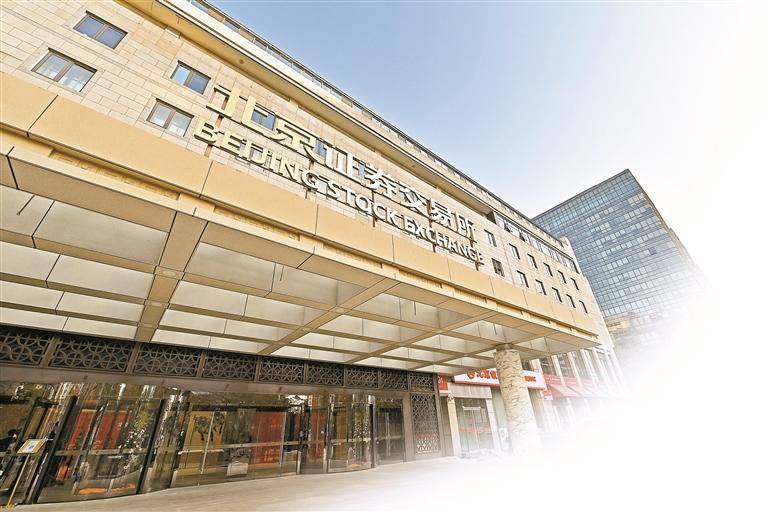
北交所市值超九千亿 国家级专精特新“小巨人”企业占比过半
Yang Shi Xin Wen· 2025-11-14 23:44
Core Insights - The Beijing Stock Exchange (BSE) has surpassed a market capitalization of 900 billion yuan, with national-level specialized and innovative "little giant" enterprises accounting for over half of the listings [1] - As of November 14, the BSE has 282 listed companies, with over 80% being small and medium-sized enterprises (SMEs) and nearly 90% being privately owned [1] - The average operating income of 279 companies that disclosed their Q3 reports is 520 million yuan, reflecting a year-on-year growth of 6%, while the average net profit stands at 32.99 million yuan [1] - Approximately 230 companies are profitable, indicating a profitability rate of 80% [1] Market Structure and Support - The BSE has established a regulatory framework tailored to the characteristics of SMEs, with an inclusive market access mechanism that supports growth-stage and unprofitable companies in their listing endeavors [1] - Continuous regulation aligns with practical realities, balancing the compliance costs for SMEs [1] Bond Market Developments - The BSE has issued over 13 trillion yuan in government bonds, contributing to the implementation of national strategies [1] - It has also facilitated the issuance of over 990 billion yuan in local government bonds, supporting regional economic development [1] - The exchange has introduced various specialized bond types, including sci-tech bonds, green bonds, and bonds supporting small and micro enterprises, enhancing the bond market's role in supporting technological innovation [1]
四载风华向阳开——北交所厚植创新型中小企业成长沃土
Shang Hai Zheng Quan Bao· 2025-11-14 18:39
Group 1 - The Beijing Stock Exchange (BSE) has 282 listed companies, with nearly 80% being small and medium-sized enterprises (SMEs), and over half classified as national-level specialized and innovative "little giant" enterprises [3][4] - Since its inception, the BSE has raised over 60 billion yuan, averaging 2 billion yuan per company, and the total market capitalization of listed companies has exceeded 900 billion yuan [3][4] - The BSE has distributed dividends totaling 19.86 billion yuan, with 16 companies having distributed more than their total IPO fundraising amount [3][7] Group 2 - The BSE 50 Index has increased by over 50% this year, reflecting strong market confidence in the growth potential of China's SMEs [4][7] - The BSE has implemented continuous institutional innovations, including flexible listing standards and diverse financing mechanisms, to support the growth of innovative enterprises [4][5] - The introduction of targeted convertible bonds has provided SMEs with precise financing options, enhancing their growth potential [5][7] Group 3 - The BSE has formed five major industrial clusters, supporting technological innovation across various sectors, including new energy materials and biomedicine [6] - The market supply continues to expand, with the median profit of companies queued for listing in 2024 exceeding 8 million yuan, indicating growing recognition of the BSE platform [7][8] - A comprehensive regulatory system has been established to protect investors and ensure the sound operation of listed companies [7][8] Group 4 - Collaborative efforts among intermediary institutions, long-term funds, and government departments are creating a supportive ecosystem for innovative SMEs [8] - Over 60 securities firms are actively involved in BSE listing sponsorship, transitioning from traditional models to comprehensive financial support [8] - The BSE is advancing reforms to enhance market functions, institutional foundations, service systems, and open ecosystems, including the expedited launch of the BSE 50 ETF [9]

北证市场总市值迈向万亿 打造专精特新企业“特色店”
Zheng Quan Shi Bao· 2025-11-14 18:32
Core Insights - The Beijing Stock Exchange (BSE) has significantly grown over four years, with 282 listed companies and a total market capitalization of approximately 900.835 billion yuan, approaching the one trillion yuan mark [1] - Over 80% of the listed companies are in strategic emerging industries and advanced manufacturing, with 53% being national-level specialized and innovative "little giant" enterprises, indicating a strong concentration of innovative entities [1] Market Performance - Seven companies have a market capitalization exceeding 10 billion yuan, with Betterray leading at 42.038 billion yuan, followed by Jinbo Biological at 27.593 billion yuan [2] - Among the 275 stocks, 228 have doubled in price since their issuance, with notable performers like Xingtum Measurement Control and Litong Technology seeing price increases over tenfold [2] - The average first-day gain for the 20 new stocks listed this year was 3.25 times, showcasing a strong profit-making effect [2] Expert Opinions - Experts believe that the BSE serves as a "specialty store" for specialized and innovative enterprises, emphasizing its role in connecting capital markets with small and medium-sized enterprises (SMEs) [3] - The introduction of the North Exchange 50 ETF is anticipated to enhance market liquidity and attract more investments, facilitating the growth of specialized and innovative companies [4] Future Outlook - Recommendations include aligning listing standards and regulatory requirements with the realities of SMEs, and creating a comprehensive service system throughout the business lifecycle [5] - There is a call for a focus on the quality of companies rather than quantity, with an emphasis on the innovative attributes and stability of performance during the IPO process [6] - Future expectations include the total market capitalization of the BSE surpassing one trillion yuan, the emergence of companies with a market cap of one billion yuan, and daily trading volumes reaching one billion yuan [6]