
大模型

Search documents
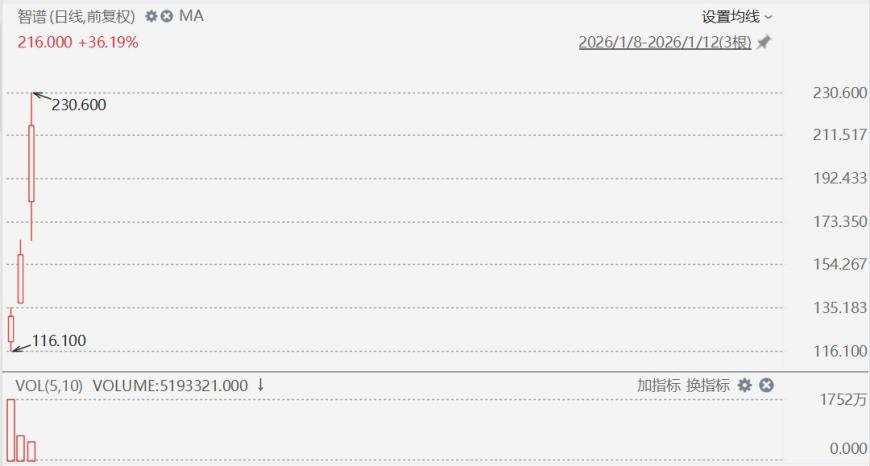
智谱飙升超45%,市值突破千亿
Ge Long Hui· 2026-01-12 05:54
Core Viewpoint - The stock price of Zhipu (2513.HK), known as the "first global large model stock," surged by 45.34% to 230.6 HKD on its third trading day, reaching a market capitalization of 101.4 billion HKD [1] Group 1: Strategic Partnerships - Zhipu has announced a strategic partnership with Didi to explore key technologies in General Artificial Intelligence (AGI) and their applications in the transportation sector [1] - The collaboration aims to advance the implementation of Agent scenarios and talent development in the large model field, enhancing intention alignment and reasoning capabilities in transportation contexts [1] Group 2: Company Achievements - Zhipu is one of the earliest companies in China to engage in large model research, having introduced the GLM pre-training paradigm and released several significant models, including the first hundred-billion model and the first open-source trillion model [1] - The company is recognized for maintaining a comprehensive model system that aligns with global top-tier standards, earning it the title of "China's OpenAI" [1] Group 3: Financial Projections - Zhipu is projected to exceed 100 million USD in revenue by 2025, with local deployment revenue accounting for 85% and cloud revenue increasing from 0% to 15% over the past two years [1] - The cloud revenue share is expected to continue rising this year, driven by high-cost performance coding tools [1]

大模型能干的事很多,智能体赚钱的其实不多
3 6 Ke· 2026-01-12 05:19
Core Insights - The article discusses the financial struggles of large AI models and their inability to generate profits, with companies like OpenAI projected to lose $14 billion annually until 2029 [1]. - It highlights the reliance on venture capital (VC) funding for sustaining operations in the AI sector, particularly in China where VC support is lacking [5]. - The article contrasts the profitability of certain AI applications, noting that while some companies like Midjourney are profitable, many AI agents face significant challenges in achieving financial viability [8][24]. Financial Performance of AI Companies - OpenAI is expected to be unprofitable until 2029, with annual losses of $14 billion [1]. - Anthropic is projected to reach profitability by 2028 but is currently also incurring losses [2]. - Newly listed MiniMax is losing $500 million annually, similar to another company, Zhipu [3]. - DeepSeek is reportedly profitable, but the overall trend indicates that foundational models are generally unprofitable [4]. AI Agents and Profitability - Glean, an AI agent, has an annual recurring revenue (ARR) of $200 million, but the company is likely to continue seeking additional funding due to the high costs associated with AI operations [6]. - Many successful AI agents are heavily reliant on large-scale financing and acquisitions to sustain their operations [7]. - Companies like Midjourney have demonstrated profitability with a small workforce, generating $500 million annually with only 40 employees, indicating a different operational model [8]. Challenges in AI Implementation - The article identifies two main barriers to profitability for AI agents: precision and cost [9][20]. - Precision refers to the ability of AI to reliably perform tasks in specific business contexts, where high-stakes decisions require near-perfect accuracy [11][15]. - Cost considerations include model costs, which vary between international and domestic models, and the additional expenses associated with personnel and operational overhead [20][21]. The Concept of "Unmanned Companies" - The emergence of "unmanned companies" is presented as a necessary evolution for achieving profitability without relying on VC funding [24]. - These companies would utilize a system of AI agents to drive business operations, with human roles being supportive rather than central [24]. - The transition to unmanned companies is complex and requires a rethinking of production relationships, emphasizing the need for AI to take precedence in operational roles [24][26]. Future Outlook - The article suggests that the pace of AI development may be slower than that of the internet due to ongoing technological instability and the complexities of restructuring production relationships [26]. - Companies are encouraged to consider long-term strategies rather than short-term gains, as the journey towards profitable AI applications is likened to a marathon [26].
为什么深圳硬件圈都在谈论千问?
雷峰网· 2026-01-12 03:34
Core Viewpoint - The article emphasizes that AI has transitioned from being a mere functional plugin to a fundamental system capability, marking a significant shift in the hardware innovation landscape as large models become the default capability in smart devices [2][9]. Group 1: AI Hardware Landscape - The AI hardware landscape is witnessing a resurgence, with over 200 mainstream hardware manufacturers participating in events like the Alibaba Cloud Tongyi Intelligent Hardware Expo and CES, showcasing a variety of AI applications [3][4]. - The integration of large models, such as Qianwen, into over 1,000 smart devices across 76 categories indicates a strong industry signal that AI is moving beyond screens into the physical world [4][12]. Group 2: Historical Challenges - The AI hardware sector has faced significant challenges over the past decade, including uncontrollable model capabilities, difficult commercial logic, and high engineering complexity, which have hindered the successful implementation of AI in hardware [8][9]. Group 3: Turning Point in AI Hardware - Recent exhibitions signal a turning point for AI hardware, shifting the focus from showcasing model capabilities to system engineering, indicating that AI is now a reliable and efficient foundational capability [9][10]. - Alibaba Cloud's development of a multimodal interaction development kit allows manufacturers to integrate core model capabilities with various interaction technologies, significantly lowering the barriers for hardware selection and adaptation [10][11]. Group 4: Qianwen as a Universal Foundation - Qianwen has emerged as a universal foundation for AI hardware, with Alibaba Cloud collaborating with all AI hardware categories, indicating a shift from single-function AI to comprehensive system capabilities [14][15]. - The comprehensive AI capabilities provided by Qianwen address key pain points in AI hardware implementation, creating a complete ecosystem from models to tools and platforms [16][21]. Group 5: Market Impact and Future Outlook - The AI hardware market in China has surpassed 1.1 trillion yuan, marking a transition from conceptual exploration to large-scale implementation [12]. - The integration of over 1,000 smart devices with Qianwen signifies a clear signal that AI is deeply connecting with the physical world, transforming hardware into intelligent systems that continuously learn and evolve [23][24].
AI会抢走金融人的饭碗吗?行业大咖秀共识:那1%的灵感与温度机器永远学不会
Di Yi Cai Jing· 2026-01-12 03:25
Group 1 - The core idea of the conference is that in the era of AI, human creativity, judgment, and responsibility remain irreplaceable by technology [1] - The conference highlighted the importance of integrating human insight with technological advancements in finance, emphasizing that AI should be seen as a creator and reshaper rather than a mere replacement [1] - Liu Xiaochun from Shanghai New Financial Research Institute stressed that financial innovation should focus on the essence of finance rather than technology itself, categorizing technology into three levels: financial technology, institutional technology, and scientific technology [2] Group 2 - Yuan Yue, chairman of Zero Point Data, outlined the transition from financial technology (FT) to financial intelligence (FI), indicating a shift towards intelligent decision-making in finance [3] - He introduced a framework for understanding the core technologies supporting risk control and service optimization, emphasizing the limitations of large language models in high-sensitivity fields like finance [3] - The conference also explored the mutual empowerment between financial technology and content creation, discussing how both sectors can benefit from each other [3][6] Group 3 - Zhang Wenyu from Zhejiang University of Finance and Economics highlighted the fundamental impact of AI on various industries, particularly finance, marking the emergence of a new era of AI capabilities since the launch of ChatGPT [4][5] - He emphasized that while 99% of routine tasks may be automated, the unique human qualities of creativity and insight are essential for navigating complex scenarios [5] - Zhu Guangye, a financial investment entrepreneur, acknowledged the reality of AI replacing many repetitive tasks in finance but noted that certain roles still require human judgment and experience, particularly in nuanced situations [5][6]
大模型IPO走向分野
3 6 Ke· 2026-01-12 03:22
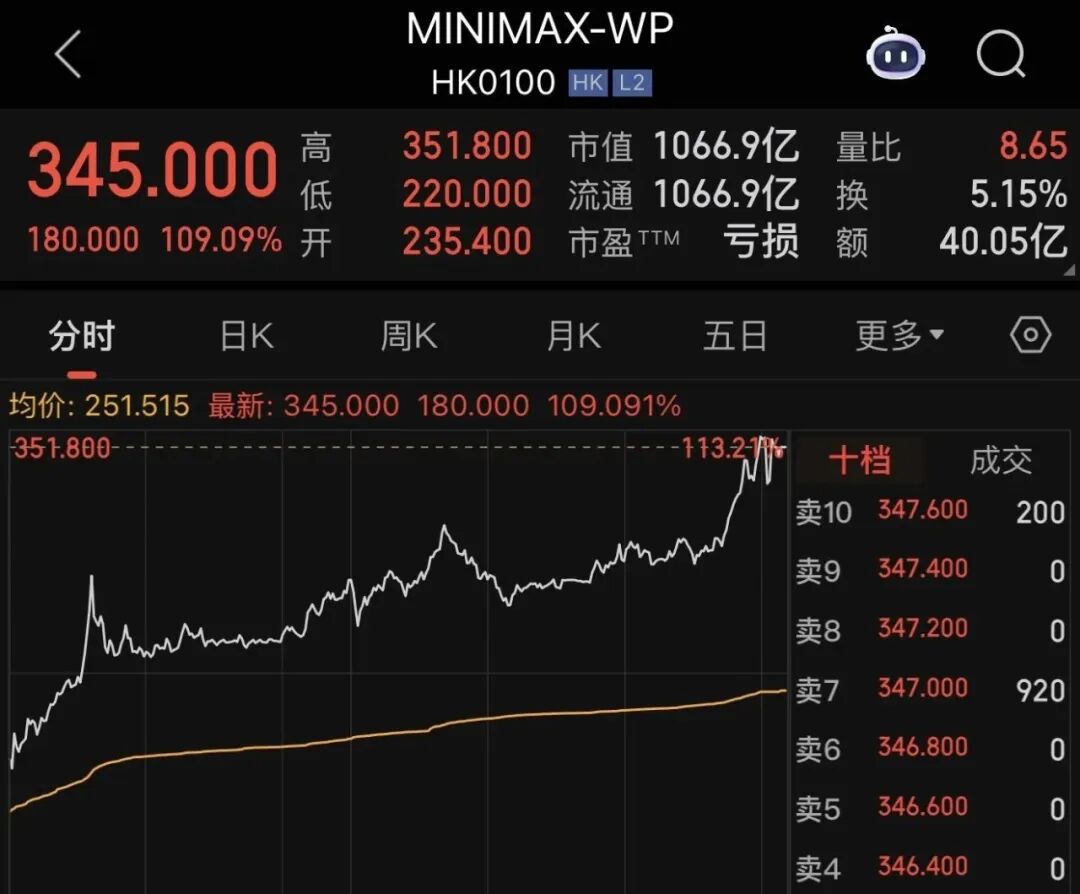
Core Insights - The article discusses the contrasting market responses to the IPOs of two AI companies, Zhiyun and MiniMax, highlighting their different commercialization strategies and market perceptions [1][3]. Group 1: Market Performance - Zhiyun, referred to as the "first global large model stock," saw its share price rise by 13.2% to 131.5 HKD on its first trading day after an initial dip [1]. - MiniMax experienced a strong performance, closing at 345 HKD, which represents a 109.1% increase from its issue price [1]. Group 2: Commercialization Strategies - Zhiyun focuses on delivering AI capabilities as "deployable engineering" within B2B services, while MiniMax emphasizes creating "consumable products" for the C-end market [3][4]. - The financial models of both companies show significant differences, with Zhiyun adopting a long-term technology approach and MiniMax taking a more aggressive, efficiency-driven strategy [3]. Group 3: Revenue Structure - For Zhiyun, localized deployment revenue is projected to account for over 80% of total revenue in 2024 and the first half of 2025, indicating a strong B-end orientation [4]. - MiniMax's revenue structure reflects a product and platform model, with over 71% of its revenue coming from AI-native applications like Hai Luo AI and Xing Ye [8][10]. Group 4: Market Sentiment and Future Outlook - The market's perception of Zhiyun is mixed, with some investors viewing it through a familiar lens of high margins and project-based revenue, while others see it as a platform-based business model in disguise [7]. - MiniMax's approach aligns more closely with consumer internet companies, focusing on user growth and cost efficiency, which has garnered positive market sentiment [10][11]. Group 5: Cost Structure and Cloud Dependency - MiniMax's reliance on cloud services is significant, with projected expenditures on Alibaba Cloud reaching up to 135 million USD annually by 2028 [12]. - Both companies' commercialization paths highlight a shared dependency on cloud infrastructure, with MiniMax exposing its costs directly while Zhiyun integrates them into its overall solutions [12][13].
最近会开放一批端到端&VLA的岗位需求
自动驾驶之心· 2026-01-12 03:15
Core Insights - The consensus among industry experts indicates that 2026 will be a pivotal year for the development of end-to-end (E2E) and VLA (Vision-Language Alignment) technologies in autonomous driving, with a focus on optimizing production processes rather than making significant algorithmic changes [1] - The industry is actively recruiting experienced algorithm engineers and developing talent to tackle the complex challenges ahead, particularly in areas such as BEV perception, large models, diffusion models, and reinforcement learning [1] Course Overview - The course on E2E and VLA autonomous driving is designed to provide a comprehensive learning path from principles to practical applications, developed in collaboration with industry leaders [3] - The course covers various aspects of E2E algorithms, including their historical development, advantages and disadvantages of different paradigms, and current trends in both academia and industry [6][7] - Key technical keywords that are expected to be frequently encountered in job interviews over the next two years are emphasized in the course content [7] Course Structure - Chapter 1 introduces the concept of E2E algorithms, discussing their evolution from modular approaches to current paradigms like VLA [6] - Chapter 2 focuses on the background knowledge necessary for understanding E2E technologies, including VLA, large language models, diffusion models, and reinforcement learning [11] - Chapter 3 delves into two-stage E2E algorithms, exploring their emergence and comparing them with one-stage approaches [7] - Chapter 4 presents one-stage E2E algorithms and VLA, highlighting various subfields and their contributions to achieving the ultimate goals of E2E systems [8] - Chapter 5 involves a practical assignment on RLHF (Reinforcement Learning from Human Feedback) fine-tuning, demonstrating how to build and experiment with pre-training and reinforcement learning modules [9] Learning Outcomes - The course aims to elevate participants to the level of an E2E autonomous driving algorithm engineer within approximately one year, covering a wide range of methodologies including one-stage, two-stage, world models, and diffusion models [15] - Participants will gain a deeper understanding of key technologies such as BEV perception, multimodal large models, reinforcement learning, and diffusion models, enabling them to apply their knowledge in real-world projects [15]

2025 年,关于 AI 的 22 条心得
3 6 Ke· 2026-01-12 03:10
Group 1 - The release of GPT-4 has caused a global sensation, highlighting the capabilities of large models to surpass human rational thinking [1] - OpenAI's recent lack of significant achievements has led to a perception that open-source models have substantially outperformed closed-source models [1] - The development trajectory of OpenAI is seen as a double-edged sword, with its leadership being both a source of success and potential failure [1] Group 2 - The emergence of AI has transformed models into essential production factors, marking a shift from the information age to a new era where "dialogue equals production" [7] - The ability to produce models and code will become crucial for organizations and individuals, similar to the importance of understanding scientific experiments in the 20th century [6] - Knowledge post-2023 is characterized as being influenced by AI, leading to a significant change in how information is generated and perceived [13][14] Group 3 - The AI revolution has made certain professions, such as teachers and therapists, less susceptible to replacement due to their inherent complexity and human interaction requirements [9][10] - The traditional approach to hiring for various roles is shifting towards leveraging AI models to perform tasks that were previously done by multiple specialists [12] - The next three years are expected to see an explosive growth in AI-based software and research outcomes, fundamentally altering societal structures [13] Group 4 - The half-life of technical knowledge has decreased significantly, now averaging between 18 months to 3 years, increasing the demand for learning and cognitive abilities [19][20] - The importance of psychology is expected to rise in the AI era, focusing on how humans can better interact with AI systems [22][23] - Companies like Anthropic are employing psychologists to define concepts that relate closely to human knowledge structures, indicating a growing intersection between AI and psychology [24] Group 5 - The AI coding field has experienced a significant productivity leap, with expectations of 10x to 100x increases in efficiency across various knowledge work sectors [25][26] - The development of agents in AI is evolving, with future iterations expected to incorporate more complex functionalities and optimizations [28][29] - The cognitive gap is becoming a new divide, as AI enhances work efficiency, making it crucial for individuals to adapt to new workflows and technologies [30][31]
腾讯混元3年变形始末
第一财经· 2026-01-12 03:00
Core Viewpoint - Tencent is aggressively recruiting talent in the AI field, particularly for its large language model (LLM) project, "混元" (Hunyuan), aiming to compete with top global models. The company is experiencing a significant shift in its organizational structure and talent acquisition strategy to enhance its capabilities in AI development [10][20][23]. Group 1: Recruitment and Talent Acquisition - Tencent's "青云计划" (Qingyun Plan) targets top graduates for AI roles, directly competing with ByteDance's "Top Seed" program [10]. - The company is offering substantial salary increases, with some candidates seeing their compensation double upon joining Tencent from ByteDance [10][13]. - Key hires from Microsoft and other leading AI teams have been made to bolster Tencent's LLM capabilities, with a focus on candidates from specific high-profile companies [12][18]. Group 2: Leadership Changes and Organizational Structure - The appointment of Yao Shunyu as the chief AI scientist marks a pivotal change in Tencent's approach to its LLM project, granting him direct reporting lines to the company's president [20][21]. - Yao's leadership is expected to streamline decision-making and resource allocation, contrasting with the previous complex management structure [21][46]. - Organizational adjustments have been made to align with the demands of large model development, including the establishment of new departments focused on AI infrastructure and data [45][46]. Group 3: Competitive Landscape and Market Position - Tencent's late entry into the large model space has raised concerns about its competitive position, as it trails behind companies like OpenAI, Baidu, and ByteDance in model performance [23][24]. - The company is under pressure to deliver competitive models quickly, with industry insiders noting that its self-developed models have not been featured prominently in benchmark comparisons [23][24]. - The shift in focus towards LLMs is seen as a response to the urgent need for Tencent to catch up in the rapidly evolving AI landscape [23][47]. Group 4: Model Development Strategy - Yao Shunyu emphasizes a shift towards post-training and a more methodical approach to model updates, contrasting with the previous rapid release cycle [18]. - The upcoming "混元2.0" model, with 406 billion parameters, is anticipated to reflect Yao's influence, although it is unlikely to be entirely his work due to the typical training timelines [52]. - The strategy moving forward will likely involve leveraging proven methodologies from successful models in the industry to accelerate development [47][49].


智谱飙升超30%,股价突破200港元大关,市值突破900亿
Jin Rong Jie· 2026-01-12 02:58
本文源自:金融界AI电报 "全球大模型第一股"智谱(2513.HK)今日为上市第三个交易日,股价继续上涨,盘中一度飙升超30%至 207港元,再创上市新高,市值升至910亿港元。 ...
港股异动 | 微创机器人-B(02252)早盘涨超7% 微创机器人近期完成全球首例大模型自主手术动物实验
智通财经网· 2026-01-12 02:32
Core Viewpoint - MicroPort Scientific Corporation (微创机器人-B) has successfully completed the world's first "large model autonomous surgery" in vivo animal experiments, utilizing its self-developed "Neuron MicroGenius" multimodal autonomous surgical model, marking a significant milestone in surgical robotics [1] Group 1: Company Achievements - The company’s stock rose over 7% in early trading, currently at 26.7 HKD with a trading volume of 115 million HKD [1] - The autonomous surgery experiment is unprecedented in existing literature and medical practice, showcasing the capability of the surgical robot to perform key surgical steps autonomously in a living animal [1] Group 2: Order Statistics - The company reported that its cumulative order volume for core products, including laparoscopic, orthopedic, and vascular intervention devices, has surpassed 230 units [1] - The Tumi laparoscopic surgical robot has achieved over 160 commercial orders globally, with nearly 120 new orders received this year [1] - According to public statistics, Tumi's global order volume is projected to rank among the top two worldwide by 2025 [1]
