云计算

Search documents
深圳市天眼智联科技有限公司成立 注册资本500万人民币
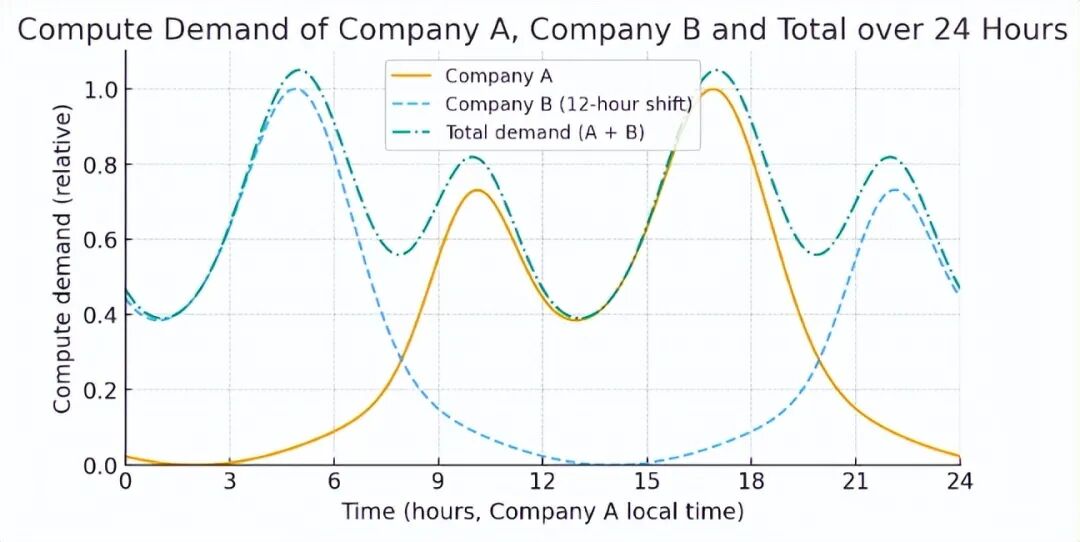
Sou Hu Cai Jing· 2025-12-17 04:56
天眼查App显示,近日,深圳市天眼智联科技有限公司成立,法定代表人为刘墙,注册资本500万人民 币,经营范围为一般经营项目是:智能无人飞行器制造;智能无人飞行器销售;输配电及控制设备制 造;智能输配电及控制设备销售;服务消费机器人制造;服务消费机器人销售;智能机器人的研发;智 能机器人销售;工业机器人安装、维修;微特电机及组件销售;发电机及发电机组销售;技术服务、技 术开发、技术咨询、技术交流、技术转让、技术推广;信息系统集成服务;云计算装备技术服务;基于 云平台的业务外包服务;软件外包服务;计算机系统服务;量子计算技术服务;互联网数据服务;软件 开发;人工智能基础软件开发;网络与信息安全软件开发;数据处理和存储支持服务;智能控制系统集 成;信息系统运行维护服务;农业机械服务;农业机械销售;农业机械租赁;农作物病虫害防治服务; 林业有害生物防治服务;国内贸易代理;电子产品销售;计算机软硬件及辅助设备零售;人工智能公共 数据平台;人工智能公共服务平台技术咨询服务;技术进出口;货物进出口。(除依法须经批准的项目 外,凭营业执照依法自主开展经营活动),许可经营项目是:无。 ...
巨头合谋AI未来:亚马逊(AMZN.US)拟百亿美元注资OpenAI 加速挑战英伟达(NVDA.US)芯片霸权
Zhi Tong Cai Jing· 2025-12-17 04:28
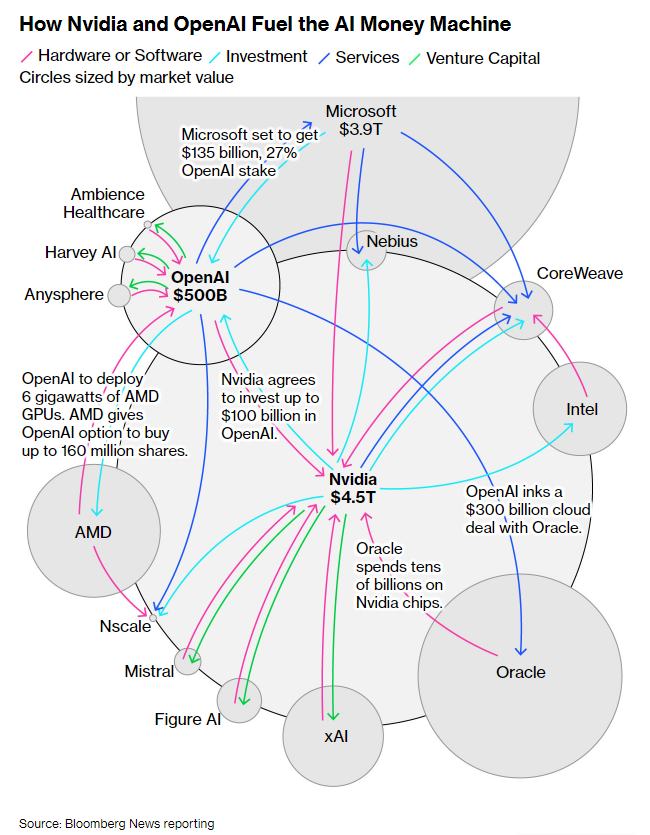
Group 1 - OpenAI is in investment talks with Amazon, aiming to raise $10 billion or more and considering the use of Amazon's AI chips [1] - OpenAI announced plans to spend $38 billion over the next seven years to lease server resources from Amazon's AWS [1] - The financing will help OpenAI fulfill its long-term commitment to lease servers from at least five cloud service providers, including AWS, for AI model development [1] Group 2 - The discussions began after OpenAI's corporate restructuring last October, which paved the way for a potential public listing [1] - If an agreement is reached, Amazon's Trainium AI training chips will gain a new customer, enhancing Amazon's influence in the AI sector and competing with Nvidia [1] - Analysts note that Trainium chips are a strategic key for Amazon in the AI field, complementing its cloud computing business [2] Group 3 - Amazon aims to attract enterprise customers with cost-effective advantages, stating that Trainium chips can drive AI models with lower costs and higher efficiency compared to Nvidia GPUs [2] - OpenAI has indicated it will obtain Nvidia AI chip computing power through AWS but may integrate more chip solutions in the future [2] - OpenAI's valuation reached $500 billion in a recent employee share sale, making it the highest-valued startup globally, surpassing SpaceX [5] Group 4 - The rapid rise of OpenAI highlights the investment frenzy surrounding AI technology, which is seen as having the potential to reshape industries and economic landscapes [5] - However, Wall Street analysts have warned of potential bubble risks due to cyclical investment transactions, where companies invest heavily in potential customers to maintain spending on their products [5]


A股最赚钱新股诞生
财联社· 2025-12-17 03:59
Market Overview - The A-share market experienced narrow fluctuations in the morning, with the Shanghai Composite Index showing slight movement while the ChiNext Index rose over 1% [1] - The trading volume in the Shanghai and Shenzhen markets reached 1.02 trillion yuan, a decrease of 98.7 billion yuan compared to the previous trading day [1] - There was a rapid rotation of market hotspots, with over 3,700 stocks declining across the market [1] Sector Performance - The lithium mining sector showed strong performance, with Jinyuan Co. achieving two consecutive trading limits in four days and Shengxin Lithium Energy hitting the daily limit [3] - Liu Yufei, a metal analyst at CITIC Securities, predicts that storage battery demand will exceed expectations due to 2025 energy storage policies, increased battery capacity, and trade-in policies boosting demand for power batteries [3] - Global demand for lithium salts is expected to continue to exceed expectations due to sustained market conditions in energy storage and power batteries [3] Company Spotlight - Muxi Co. debuted on the Shanghai Stock Exchange's Sci-Tech Innovation Board with an issue price of 104.66 yuan per share [3] - On its first trading day, Muxi Co. opened significantly higher, with an intraday peak increase of over 700%, reaching 895 yuan, and closing at 824.5 yuan, representing a 687.8% increase from the issue price [3] - The theoretical maximum profit from a single subscription could reach 395,000 yuan, surpassing the recently listed Moer Thread, making it the most profitable new stock since the full registration system was implemented in A-shares [3] - Founded in September 2020 and headquartered in Shanghai, Muxi Co. is a rare "full-stack GPU" design and production company in China, specializing in high-performance general-purpose GPU chips and solutions, widely applied in AI computing, data centers, cloud computing, and autonomous driving [3]

协创数据:拟斥资不超90亿采购服务器,用于提供云算力服务
Bei Ke Cai Jing· 2025-12-17 03:57
Core Viewpoint - The company, Xiechuang Data, announced plans to purchase servers from multiple suppliers for a total amount not exceeding 9 billion yuan, primarily to provide cloud computing services to clients [1] Group 1: Company Announcement - The company has approved the procurement of servers through its fourth board meeting, which will be submitted for shareholder approval [1] - The total procurement amount is expected to be no more than 9 billion yuan [1] - The transaction does not constitute a major asset restructuring or a related party transaction [1] Group 2: Strategic Considerations - The information regarding the counterparties involved in the transaction is not disclosed due to commercial confidentiality and strategic development considerations [1]

协同发展 创新赋能 安全筑基
Jin Rong Shi Bao· 2025-12-17 02:12
Core Insights - The financial development logic is shifting from "scale expansion" to "quality upgrade," with digital finance being reshaped by new technologies such as AI, big data, blockchain, and cloud computing, emphasizing intelligent, scenario-based, and inclusive finance as new competitive advantages globally [1] - Digital finance is accelerating its penetration into the entire financial service chain, becoming a key engine for improving the quality and efficiency of the financial industry, while also presenting new challenges such as data security and cross-border regulatory adaptation [1] Digital Finance and Technological Finance Collaboration - The core content of building a strong financial nation is to vigorously develop digital finance and technological finance, where technological finance provides support and digital finance offers operational methods [2][3] - Policies are being implemented to enhance the deep integration of technological finance, digital finance, and the real economy, with local policies accelerating their implementation [3] Policy Framework and Local Initiatives - A framework for the deep integration of technological finance, digital finance, and the real economy is being rapidly improved, with local policies like those from Beijing's Haidian District focusing on creating a diversified financial service system that meets the financing needs of technology enterprises [3] - Key initiatives include upgrading venture capital ecosystems, expanding credit for technological innovation, enhancing support for public listings, and extending technology insurance to better serve small and medium-sized enterprises [3] Core Value of Digital Finance - Digital finance is recognized as a "key engine" for serving the real economy, with a consensus that it should act as an accelerator for high-quality economic development [4] - The core value of digital finance lies not only in exploring new markets but also in enhancing the survival capabilities of the financial industry, helping it operate steadily in complex environments [4] Trends in Digital Finance - The "China Financial Technology and Digital Finance Development Report (2025)" identifies five trends in digital finance, including the integration of generative AI into core banking operations, the evolution of AI agents into collaborative business partners, breakthroughs in quantum computing for financial applications, differentiated strategies for digital investments, and the importance of data governance and security for future growth [4] Challenges in Digital Finance - Despite positive trends, digital finance faces challenges such as insufficient compliance for cross-border data flow and lagging regulation for new business models, necessitating a balance between innovation and security [5] - The relationship between innovation and security in digital finance should be viewed as a mutually reinforcing cycle, promoting high-level financial regulation and innovation to prevent risks while fostering an inclusive innovation environment [5]
数字孪生水利体系建设进展如何?这场发布会详细介绍
Xin Hua She· 2025-12-17 01:31
原标题:数字孪生水利体系建设进展如何?这场发布会详细介绍 数字孪生水利体系建设,是推动水利高质量发展、保障国家水安全的重要途径。当前数字孪生水利 体系建设取得哪些进展?面向未来,数字孪生水利体系建设如何更进一步?水利部16日举行新闻发布 会,介绍相关情况。 水利部信息中心主任付静介绍,数字孪生水利体系,即通过大数据、云计算、人工智能等数智技术 和水利业务深度融合,把江河湖泊、水利工程"搬进"数字世界来实现进行智能模拟、预报的调度预演, 为水旱灾害防御、水资源管理与调配等水利工作提供"大脑"。 水利部副部长王宝恩表示,按照"需求牵引、应用至上,数智赋能、提升能力"原则,"十四五"以来 我国数字孪生水利体系建设取得多方面成效。 数字孪生水利体系框架基本形成。王宝恩介绍,水利部门完成94项数字孪生流域建设先行先试任 务,分批推进14个省级水网先导区数字孪生水网建设,数字孪生三峡、南水北调等11个重点工程投入实 战应用,49处数字孪生灌区先行先试、230个数字孪生农村供水工程建设取得阶段成效。 "天空地水工"一体化监测感知系统加快构建。"目前我国已形成涵盖34颗遥感卫星、180余部测雨雷 达、13.6万处地面水文报汛 ...
拓展数字金融服务实体经济广度深度
Jing Ji Ri Bao· 2025-12-17 00:40
Core Viewpoint - Digital finance is a powerful tool for optimizing financial services and is essential for the development of technology finance, green finance, inclusive finance, and pension finance. It aims to deepen the integration of finance and digital technology, enhancing the breadth and depth of financial services to better support the real economy and meet societal needs [1] Group 1: Digital Finance and Real Economy - Digital finance applies technologies such as big data, cloud computing, blockchain, and artificial intelligence to create new products, services, and business models, breaking traditional financial information barriers and enabling more efficient capital flow to the real economy [1] - By addressing information asymmetry in traditional financial services, digital finance can build a multidimensional credit assessment system, providing comprehensive customer information to financial institutions, thus optimizing financing structures and directing funds to key areas of the real economy [2] Group 2: Addressing Financial Resource Misallocation - Traditional financial models often concentrate resources on large enterprises, neglecting small and micro enterprises. Digital finance enhances the precision of products and services, improving the financing environment for small and medium-sized enterprises [3] - Digital finance can effectively assess the risks and creditworthiness of innovative enterprises, providing efficient and low-cost financial services that meet the needs of startups and growth-stage technology companies [3] Group 3: Cost Reduction and Efficiency Improvement - Digital finance promotes the use of digital currencies and mobile payments, streamlining business processes and enhancing payment efficiency, which in turn improves the effectiveness of financial services to the real economy [4] - The integration of advanced technologies allows financial institutions to establish real-time risk monitoring systems, reducing operational costs and enhancing service delivery [4] Group 4: Expanding Coverage and Depth - Digital finance should provide flexible credit support to new employment forms and innovative business entities, bridging the digital divide and extending services to traditional industries [5] - There is a need to deepen the application of data elements and promote the sharing of public and financial data, exploring innovations in data asset financing and enhancing financial services throughout the entire lifecycle of enterprises [5] Group 5: Mechanism Improvement and Development Quality - Accelerating the construction of digital financial infrastructure and optimizing computing power layout are essential for building a secure and reliable technological foundation [6] - Implementing differentiated incentive policies and establishing a robust regulatory framework will help ensure the safe and effective expansion of digital financial services [6]
《2025胡润全球高质量企业TOP1000》榜单在深发布 15家深圳企业上榜全球1000强
Shen Zhen Shang Bao· 2025-12-17 00:30
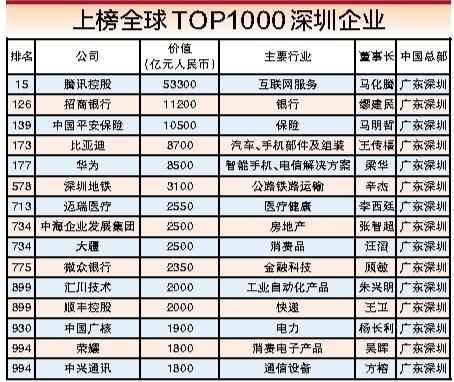
Group 1 - The "2025 Hurun Global High-Quality Enterprises TOP 1000" list was released, highlighting global economic trends, with the US leading with 410 companies, followed by China with 158, and Japan with 63 [2] - Nvidia surpassed Microsoft and Apple to become the world's most valuable company, valued at 3.28 trillion RMB, while Apple remains second at 2.86 trillion RMB [2] - Walmart is noted as the highest revenue-generating company on the list, with an annual income of 4.8 trillion RMB, while Alphabet holds the title for the highest profit at 790 billion RMB [2] Group 2 - Shenzhen ranks 11th globally with 15 companies on the list, an increase of 3 from the previous year, with 5 companies located in the Futian District [3] - The Greater Bay Area has 38 companies listed, accounting for 24% of China's total, indicating significant regional economic strength [3] - Notably, 8 non-Chinese companies have established their China headquarters in Shenzhen, ranking fourth among Chinese cities [3] Group 3 - The list reflects the concentration of wealth driven by artificial intelligence, with 11 companies valued at over 1 trillion USD, up from 4 five years ago [4] - The top 10 companies have doubled in value to 18.4 trillion RMB, nearing the total market capitalization of A-shares and H-shares combined [4] - Companies like TSMC and Tencent showed remarkable performance, with TSMC increasing by 410 billion RMB and Tencent by 200 billion RMB [4] Group 4 - Companies experiencing significant value declines include Meituan (down 200 billion RMB) and Shein (down 100 billion RMB), along with others like GF Securities, Mindray Medical, Wanhua Chemical, and Sinopec [5]




毛锦凰:拓展数字金融服务实体经济广度深度
Jing Ji Ri Bao· 2025-12-17 00:05
Core Viewpoint - Digital finance is a powerful tool for optimizing financial services and is crucial for advancing technology finance, green finance, inclusive finance, and pension finance [1] Group 1: Integration of Digital Technology in Finance - Digital finance integrates technologies such as big data, cloud computing, blockchain, and artificial intelligence into the financial sector, creating new products, services, and business models [1] - This integration helps break down traditional financial information barriers and expands service boundaries, allowing funds to flow more efficiently to the real economy [1] Group 2: Addressing Information Asymmetry - Traditional financial services face information asymmetry, making it difficult for institutions to accurately assess credit risks, leading to high financing thresholds [2] - Digital finance can build a multidimensional credit assessment system by deeply mining data, providing comprehensive customer information to financial institutions [2] - As of February 2025, banks have issued loans totaling 37.3 trillion yuan through a national integrated financing credit service platform, effectively meeting corporate financing needs [2] Group 3: Avoiding Resource Misallocation - Traditional financial models often concentrate credit resources on large enterprises, neglecting small and micro enterprises due to high risks and costs [3] - Digital finance enhances the precision of products and services, improving the financing environment for small and micro enterprises [3] - For instance, over 70% of enterprises receiving credit from WeBank's "Micro Business Loan" have annual revenues below 10 million yuan [3] Group 4: Reducing Costs and Increasing Efficiency - Digital finance supports the use of digital currencies and mobile payments, enabling financial institutions to shorten business processes and reduce manual intervention [4] - The application of technologies like AI and blockchain allows for real-time risk monitoring and cost reduction [4] - The "14th Five-Year Plan" emphasizes the need for financial institutions to accelerate digital transformation and enhance service quality for the real economy [4] Group 5: Expanding Coverage and Precision - Digital finance should provide flexible credit support to new employment forms and bridge the digital divide for special groups [5] - Financial services should extend to traditional industries and create a comprehensive financial service system covering the entire innovation chain [5] - Enhancing rural digital inclusive finance and optimizing service points in central and western regions is also essential [5] Group 6: Improving Mechanisms for Development Quality - Accelerating the construction of digital financial infrastructure and optimizing computing power layout is crucial for building a secure and reliable technical foundation [6] - Implementing differentiated incentive policies can lower service costs and establish a market-oriented pricing and risk-sharing mechanism [6] - Strengthening data security and establishing a transparent regulatory system are necessary to ensure the safe and controllable expansion of digital financial services [6]
CoreWeave:英伟达“干儿子”真能子凭父贵?
3 6 Ke· 2025-12-16 23:32
Core Viewpoint - The emergence of new cloud companies like CoreWeave in the AI era is reshaping the traditional cloud service business model, focusing on the integration of supply and demand in the IaaS sector [1] Group 1: Cloud Computing Business Model - CoreWeave's business model in the IaaS sector emphasizes the integration of upstream supply and downstream demand, leveraging large-scale demand to share costs of data center construction and R&D [2] - Demand integration involves shared data centers, which enhance capacity utilization by smoothing out usage peaks and troughs across different industries and time zones [3] - Supply integration requires a complete operational IaaS cloud computing center built on three layers of infrastructure: civil construction and energy supply, IT and non-IT hardware, and software and engineering capabilities [5][6] Group 2: Demand and Supply Integration - The first layer of infrastructure (civil construction and energy) accounts for approximately 5% to 10% of total data center investment, with the main costs arising after operations begin [6] - The second layer (IT equipment) constitutes 60% to 70% of hardware investment, with servers being the most critical component, accounting for 40% to 50% of total investment [8] - Non-IT equipment, including power and cooling systems, represents about 20% to 30% of total investment, with a decreasing share in AI data centers [9] Group 3: Long-term Uncertainty - The core value of IaaS cloud services comes from the integration of computing power demand and production factors, which requires strong capabilities in both demand and supply chain integration [10] - CoreWeave's customer structure is highly concentrated, with approximately 80% of its revenue in FY2024 coming from two clients, Microsoft and NVIDIA, indicating a significant dependency on a few large customers [11][12] Group 4: Customer and Supplier Dynamics - CoreWeave's reliance on a limited number of major clients poses a risk, as losing a key customer could severely impact revenue [12] - The company’s major suppliers are also concentrated, with three suppliers accounting for 80% to 90% of total procurement, limiting CoreWeave's bargaining power [26][29] Group 5: Core Competencies - CoreWeave's strength lies in its engineering capabilities, allowing rapid deployment of data centers, but it lacks significant software and programming expertise compared to competitors [17][21] - The company primarily offers hardware rental services, which limits its ability to provide higher-value services and expand its customer base beyond large tech firms [24][34] Group 6: Market Position and Future Outlook - CoreWeave's current business model may not sustain long-term competitiveness against larger cloud service providers, given its reliance on a few major clients and limited service offerings [34] - The company must enhance its technical capabilities and diversify its customer base to reduce dependency on large clients and improve its market position [25][34]